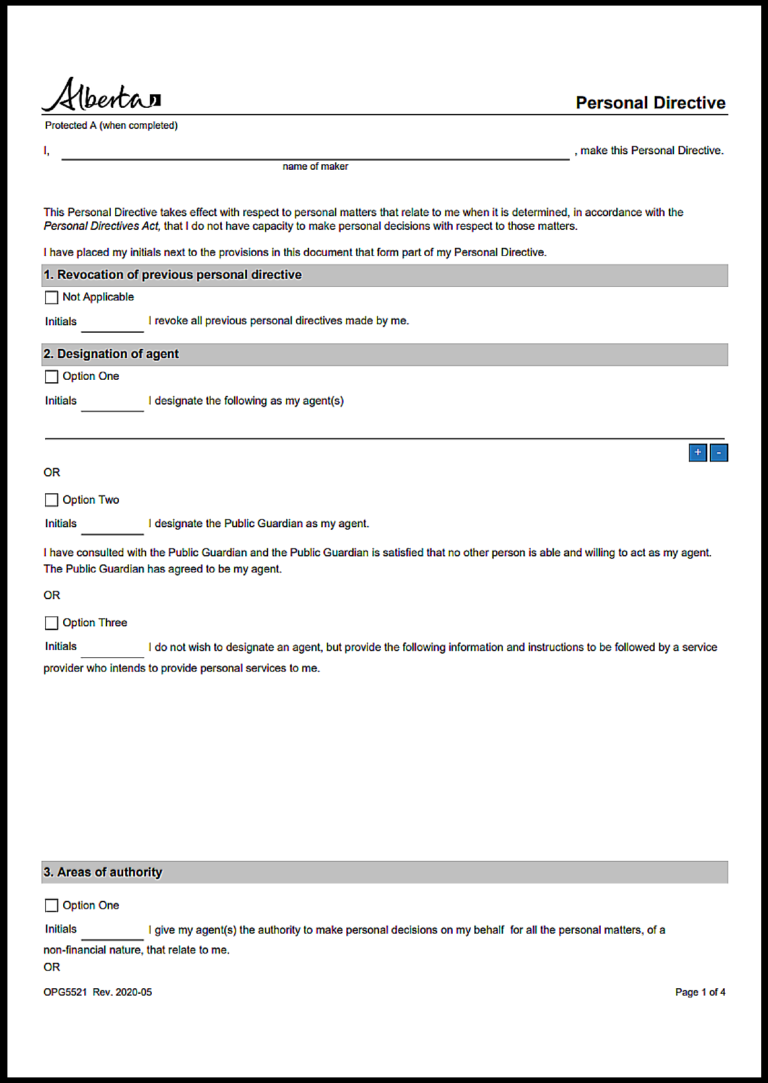
Free Ontario Power of Attorney Form (Legal Template Canada)
Ontario Power of Attorney Form — if you’ve never thought about it before, it usually comes up at a stressful moment. Maybe a parent falls sick, you’re planning a long trip, or you suddenly need someone to handle your finances. That’s when this document becomes essential.
In Ontario, a Power of Attorney (POA) is not just a casual document. I’ve seen families in Ontario run into serious delays because a Power of Attorney was signed incorrectly or didn’t clearly give the authority they thought it did. When people wait until a medical emergency happens, they’re often shocked to learn that even close family members cannot automatically manage finances or make decisions without the proper legal document in place.”
It must follow strict rules under the Substitute Decisions Act. If done right, it can protect your finances and make life much easier for your family.
Free Power of Attorney Template Ontario
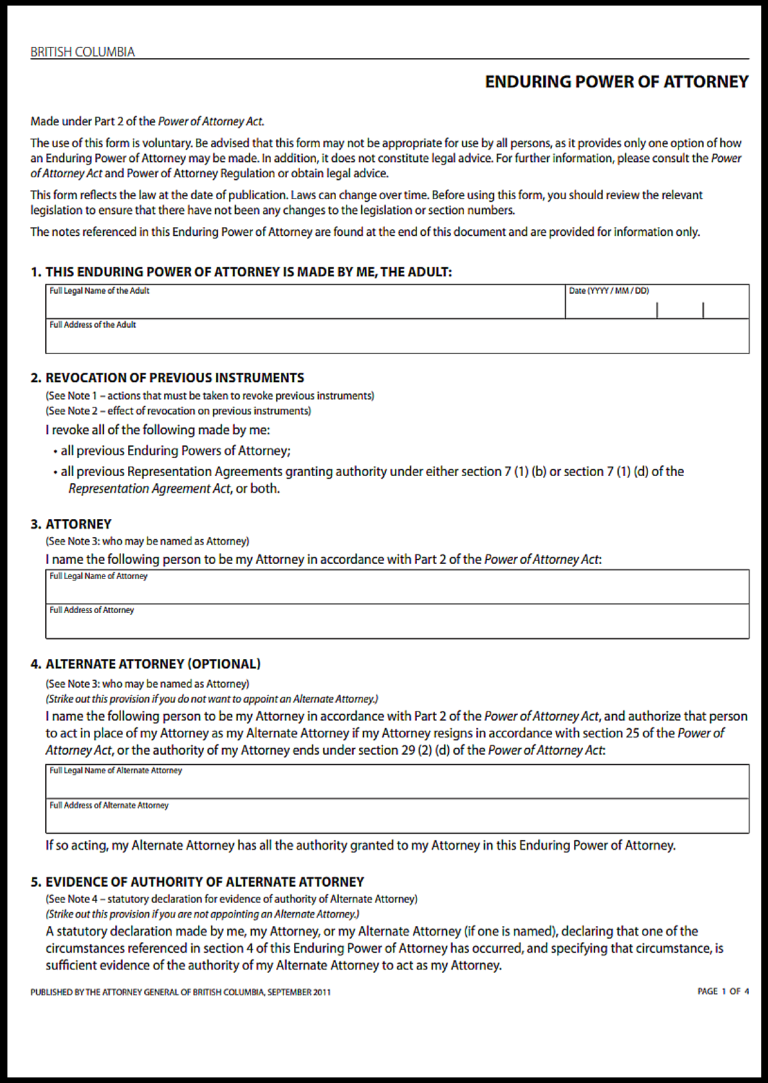
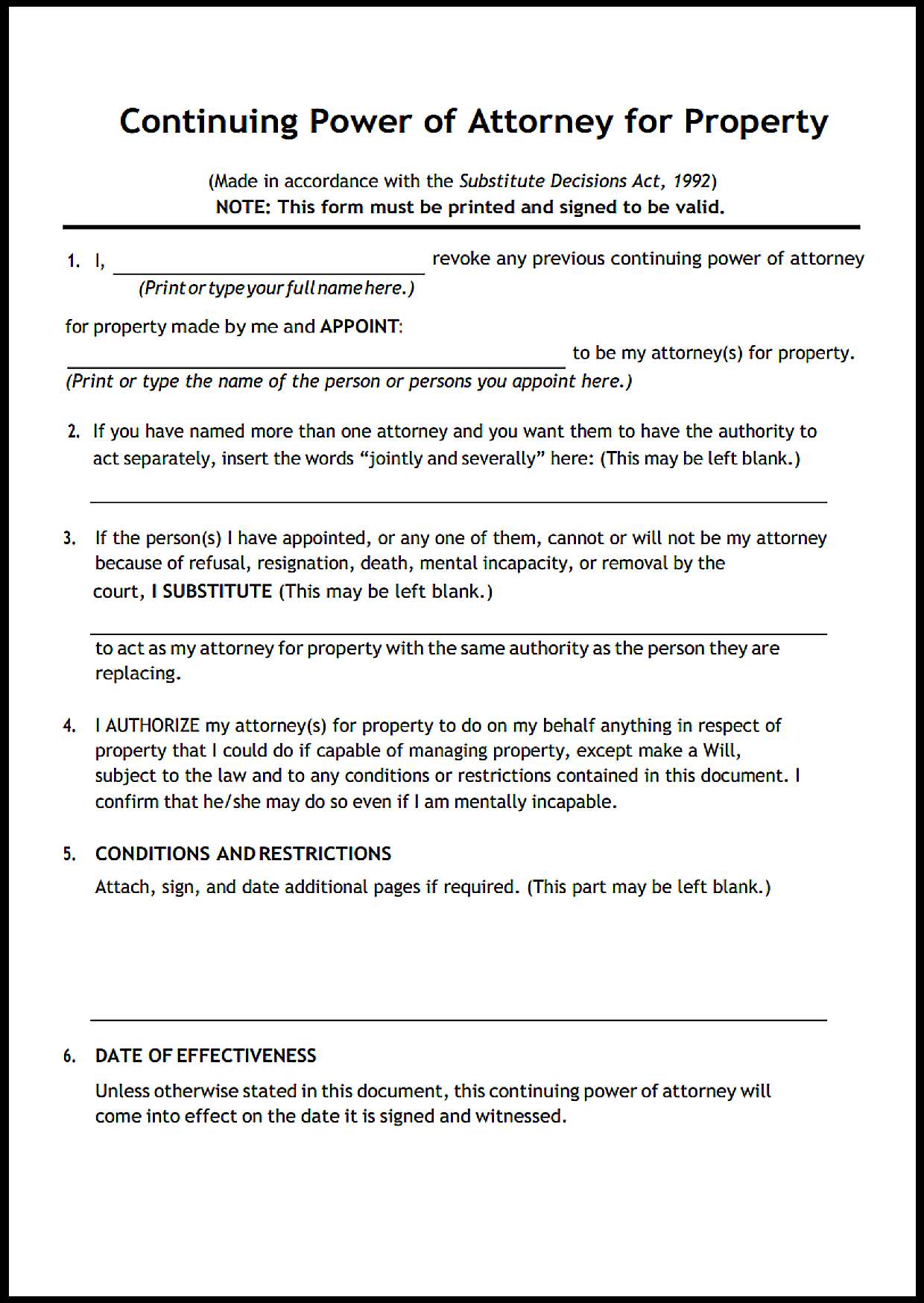
Below is a clean, ready-to-use template for a Power of Attorney for Property in Ontario. You can copy, edit, and print it.
Ontario POA Witness Rules, Capacity Standards, and Legal Requirements
| Topic / Issue | Ontario Legal Rule | Governing Statute |
|---|---|---|
| Primary governing law | Ontario Power of Attorney forms are governed under provincial substitute decision-making law. | Substitute Decisions Act, 1992, S.O. 1992, c. 30 |
| Federal law involvement | No federal law governs Ontario Power of Attorney forms. | Provincial jurisdiction only |
| Nature of jurisdiction | Power of Attorney forms are regulated entirely by Ontario law. | Substitute Decisions Act, 1992 |
| Recent amendment | Ontario permanently legalized virtual witnessing if at least one witness is a licensed Ontario lawyer or paralegal. | Substitute Decisions Act, 1992 (2021 amendments) |
| Who can sign | The grantor (person creating the POA) must sign the document. | SDA, s. 7(1) & s. 44 |
| Witness requirements | Two witnesses must be present at the same time as the grantor signs. | SDA, s. 10(1) & s. 48(1) |
| Disqualified witnesses | The attorney, their spouse/partner, the grantor’s spouse/partner, the grantor’s child, and anyone under 18 cannot witness the document. | SDA, s. 10(2) & s. 48(2) |
| Notarization requirement | Notarization is not legally required for validity. | Common law principles |
| Minimum age for Property POA | Grantor must be at least 18 years old. | SDA, s. 8(1) |
| Minimum age for Personal Care POA | Grantor must be at least 16 years old. | SDA, s. 47(1) |
| Capacity for Property POA | Grantor must understand property ownership, value, and the attorney’s authority. | SDA, s. 8(1) |
| Capacity for Personal Care POA | Grantor must understand the attorney’s concern for their welfare and possible need for help. | SDA, s. 47(1) |
| Duration of validity | POA remains valid until revoked, death of the grantor, or incapacity/death/resignation of the attorney. | SDA, s. 12(1) & s. 53(1) |
| Continuing POA wording | A Continuing Power of Attorney must clearly state authority continues during incapacity. | SDA, s. 7(1) |
| Personal Care authorization | Personal Care POA must clearly authorize personal care decisions. | SDA, s. 46 |
| Filing requirement | No government filing or registration is generally required. | Ontario private contract rules |
| Real estate exception | POA must be registered at the Land Registry Office if used for real estate transactions. | Land Titles Act / Registry Act |
| Improper witnessing | Using a prohibited witness can invalidate the POA. | SDA, s. 10(2) & s. 48(2) |
| Capacity problems at signing | POA may be invalid if the grantor lacked legal capacity at signing. | SDA, s. 8 & s. 47 |
| Contemporaneous signing rule | Grantor and witnesses must sign in each other’s presence physically or virtually. | SDA, s. 10(1) & s. 48(1) |
| Ontario virtual witnessing rule | Ontario allows virtual witnessing through video communication technology. | SDA, s. 10 & s. 48 |
| Ontario age difference | Ontario allows Personal Care POAs starting at age 16, unlike many provinces requiring full age of majority. | SDA, s. 47 |
| Attorney compensation rule | Attorneys for property may receive statutory compensation unless the POA states otherwise. | SDA, s. 40 and O. Reg. 26/95 |
One of the most surprising Ontario rules is that a Power of Attorney for Personal Care can be created at age 16, while a Property POA requires age 18. Ontario also has detailed mental-capacity tests that focus on whether the person truly understands the powers being granted and the possible consequences.
Another important rule is the strict witness restriction. Many people accidentally ask a child, spouse, or even the appointed attorney to witness the form, but Ontario law specifically prohibits this. If the wrong person signs as a witness, the document can become invalid.
While Ontario’s Substitute Decisions Act (s. 3.1) permanently authorizes remote audio-visual witnessing—provided at least one witness is an Ontario-licensed lawyer or paralegal—this does not permit electronic signatures. Under the Electronic Commerce Act, 2000, s. 31(1), POAs are expressly excluded from e-signature validity. All parties must apply ‘wet-ink’ signatures to identical physical counterparts during the live video session. Financial institutions and the Land Registry Office will instantly reject a digitally signed document.
Download the free Ontario Power of Attorney form below to create a document that properly follows Ontario law.
What Is a Power of Attorney Form in Ontario?
A Power of Attorney is a legal document that allows someone (called an attorney) to act on your behalf.
Under Ontario law, this authority can cover:
- Property (financial decisions)
- Personal care (health and medical decisions)
This article focuses on financial/property POA, which includes managing money, paying bills, and handling assets.
This document is part of a broader legal framework explained in the Ontario power of attorney complete guide, where you can understand how authority is legally assigned. It is often used alongside guidance from the process for setting up power of attorney in Ontario to ensure proper execution.
Types of Power of Attorney Forms in Ontario
Continuing Power of Attorney for Property
This is the most commonly used form in Ontario because it continues even if you become mentally incapable. It is mainly used for long-term planning, especially for aging individuals or serious medical conditions. In most Power of Attorney situations, this is the safer and more practical choice.
Non-Continuing (General) Power of Attorney
This type is more temporary in nature. It is useful when you need someone to manage your finances for a short period, like while traveling. However, it automatically ends if you become mentally incapable, which makes it less suitable for long-term protection.
Power of Attorney for Personal Care
This covers health and medical decisions, such as treatment choices or care arrangements. It is a completely separate document and is not included in the template above, but it is often created alongside a financial POA for full protection.
When Do You Actually Need This Form? (Real-Life Scenarios)
Many people delay making a POA until it’s too late. In real life, this document becomes useful in situations like traveling abroad for long periods or when elderly parents need help managing bills and bank accounts.
It is also important in medical emergencies where a person becomes unable to make decisions. Business owners often use it to delegate financial responsibilities temporarily.
Without a POA, your family may need to go through a legal court process to gain control of your finances, which can be time-consuming and costly.
Depending on your needs, you may also require more specific formats such as a financial control authorization document or a healthcare decision authorization form. These documents divide responsibilities clearly between financial and personal care matters.
Key Sections Explained (So You Don’t Make Mistakes)
Choosing the Right Attorney
Choosing the right person is the most critical part of this document. The attorney must be someone you trust completely because they will have access to your financial matters.
They should be responsible, organized, and capable of handling paperwork. Many people choose a family member, while others prefer a professional.
Powers You Can Give
You can give broad or limited authority depending on your comfort level. Most people include powers related to banking, paying bills, managing investments, and handling taxes.
Being clear about these powers helps avoid confusion later and ensures your attorney knows exactly what they are allowed to do.
Adding Limits or Conditions
You are not required to give full control. Many people add conditions, such as restricting the sale of property or limiting access to certain accounts.
This is especially useful when you want to protect major assets while still allowing basic financial management.
Effective Date Options
A POA can either start immediately or only under certain conditions in the future. Immediate activation is more common because it is simple and avoids delays during emergencies.
Legal Rules for Valid Power of Attorney in Ontario
Under Ontario law, a Power of Attorney must meet strict requirements. If even one rule is missed, the document may become invalid.
Here are the key legal rules:
- Must be signed by the grantor
- Must have two valid witnesses
- The grantor must be mentally capable
Also, certain people cannot act as witnesses, including the attorney and their spouse or partner.
Validity Checklist
| Requirement |
Mandatory in Ontario
|
| Grantor signature | Yes |
| Two witnesses | Yes |
| Notarization | No |
| Mental capacity | Yes |
How to Fill Out the Ontario Power of Attorney Form (Step-by-Step)
- Filling out the form is straightforward if you take it step by step. Start by entering your personal details and clearly identifying your attorney.
- Then select the correct type of POA and define the powers carefully. If needed, add restrictions to control how your assets are managed.
- Finally, sign the document in front of two witnesses and store it in a safe place. It’s also important to share copies with your attorney and a trusted family member.
Tip: Keep a copy with your important documents and inform your family.
Common Mistakes to Avoid
These mistakes happen more often than you think:
- Choosing the wrong person as attorney
- Not clearly defining powers
- Forgetting witness requirements
- Using US or non-Ontario templates
- Not updating after life changes (marriage, divorce, etc.)
Risks and Misuse
A Power of Attorney gives serious control over your finances.
Risks include:
- Financial abuse
- Mismanagement of assets
- Lack of transparency
To reduce risk:
- Appoint more than one attorney
- Require joint decisions
- Ask for regular financial reports
Continuing vs General Power of Attorney (Simple Comparison)
| Feature | Continuing POA | General POA |
| Works after incapacity | Yes | No |
| Purpose | Long-term planning | Temporary use |
| Common users | Elderly, illness cases |
Travelers, short-term needs
|
Can You Make a Power of Attorney Without a Lawyer in Ontario?
Yes, under Ontario law, you can create a Power of Attorney without a lawyer using a proper template. For simple situations, this works well and is legally valid.
However, if your finances are complex, you own property, or run a business, it is safer to consult a lawyer. Professional advice ensures your document is complete and legally strong.
FAQs
Is a Power of Attorney form free in Ontario?
Yes, templates are freely available. However, professional legal advice may involve costs depending on your situation.
Does a POA need to be notarized in Ontario?
No, notarization is not required. However, two witnesses are mandatory for the document to be valid.
Can I have more than one attorney?
Yes, you can appoint multiple attorneys who can act jointly or separately depending on your preference.
When does a POA end?
Pursuant to the Substitute Decisions Act, s. 12(1), a POA terminates upon the grantor’s death or formal written revocation. However, it also instantly voids if the appointed attorney dies, resigns, or becomes incapable (with no alternate named). Crucially, a Property POA is immediately terminated if the Ontario Superior Court of Justice appoints a Guardian of Property, or if the Public Guardian and Trustee (PGT) assumes statutory guardianship.
Can I cancel my Power of Attorney?
Yes, under the Substitute Decisions Act, s. 12(1) and s. 53(1), you can revoke a POA anytime you retain the requisite mental capacity. However, a written Notice of Revocation is legally void unless it is executed with the exact same formalities as the original document (signed in the contemporaneous physical or virtual presence of two qualified witnesses). Alternatively, executing a new POA automatically revokes all prior ones of the same type unless the new document contains a specific multiple-POA savings clause.