Alberta Power of Attorney Form Template & Guide
Alberta Power of Attorney Form is a legal document that allows you to give someone you trust the authority to manage your financial and legal matters. This guide explains how it works, when you need it, and how to complete it correctly under Alberta law.
In Alberta, a Power of Attorney (POA) is an important part of estate planning. It helps protect your finances if you cannot manage them yourself due to illness, travel, or aging. Under Alberta law, this document only applies to financial and legal matters, not medical decisions.
I’ve seen many Alberta families run into serious financial problems because a Power of Attorney was never signed before a medical emergency or loss of capacity. In real client situations, the biggest mistakes usually happen when people assume a spouse or adult child can automatically manage bank accounts or property without proper legal authority.
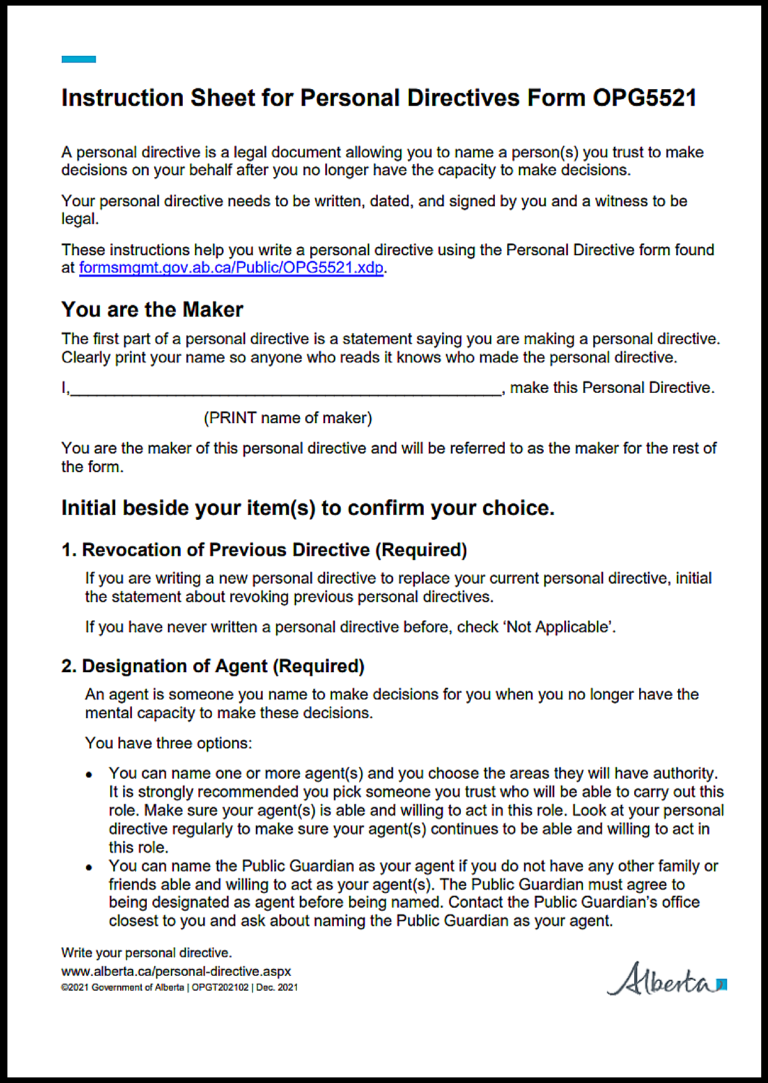
In most estate planning situations, people use a POA along with a will and a personal directive. If you want full protection, you should consider all these documents together so there are no gaps in decision-making.
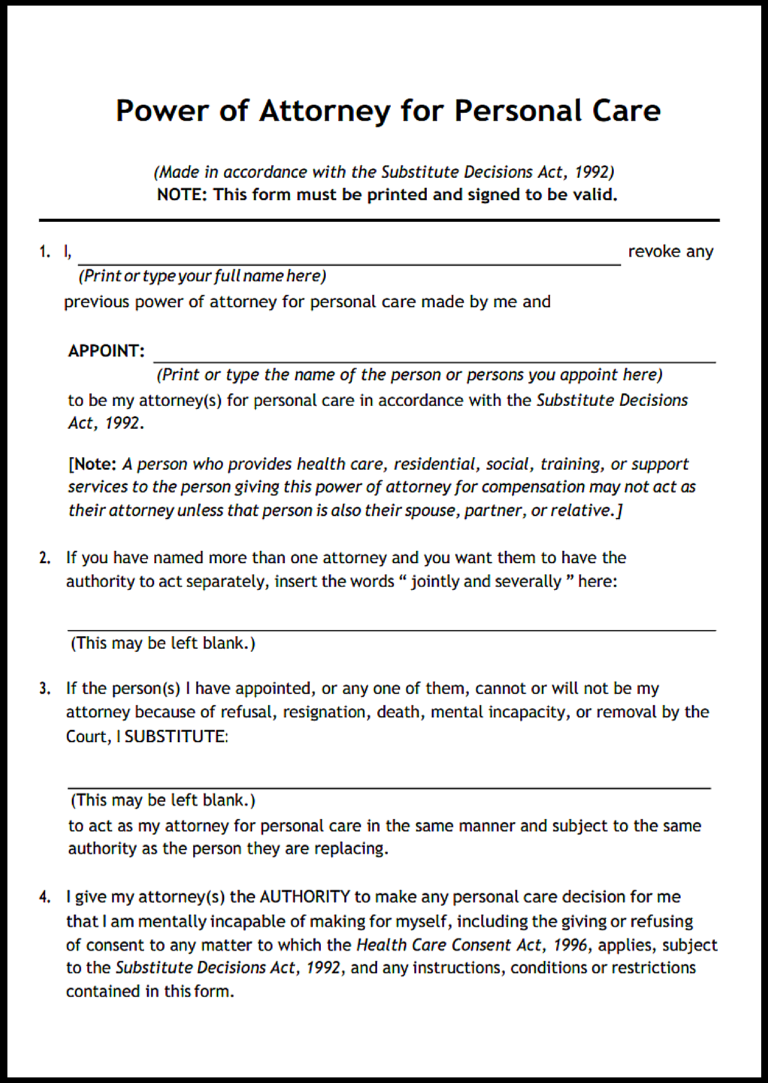
Free Alberta Power of Attorney Form Template
You can use this simple template to create your Alberta Power of Attorney document. It is flexible and can be customized based on your needs.
Alberta Power of Attorney Rules That Commonly Cause Problems
| Topic / Issue | Alberta Legal Rule | Governing Statute |
|---|---|---|
| Main governing law | Powers of Attorney created under Alberta law are primarily governed by Alberta’s Powers of Attorney Act, although federal law or requirements may be relevant to particular transactions or institutions. | Powers of Attorney Act, RSA 2000, c P-20 |
| Federal law status | The creation and execution of an Alberta Power of Attorney are primarily governed by Alberta law. | Powers of Attorney Act, RSA 2000, c P-20 |
| Recent legal update | Land Titles has specific procedures for certain documents, including some documents that may be witnessed or completed using approved remote procedures. The requirements depend on the particular Land Titles transaction and document. | Land Titles Act, RSA 2000, c L-4 |
| Who can sign | The donor must execute the Power of Attorney in accordance with the signing requirements of Alberta’s Powers of Attorney Act. | Powers of Attorney Act, s. 2(1)(b) |
| Witness requirement | The Power of Attorney must be executed and witnessed in accordance with the requirements of Alberta’s Powers of Attorney Act. | Powers of Attorney Act, s. 2(1)(b) |
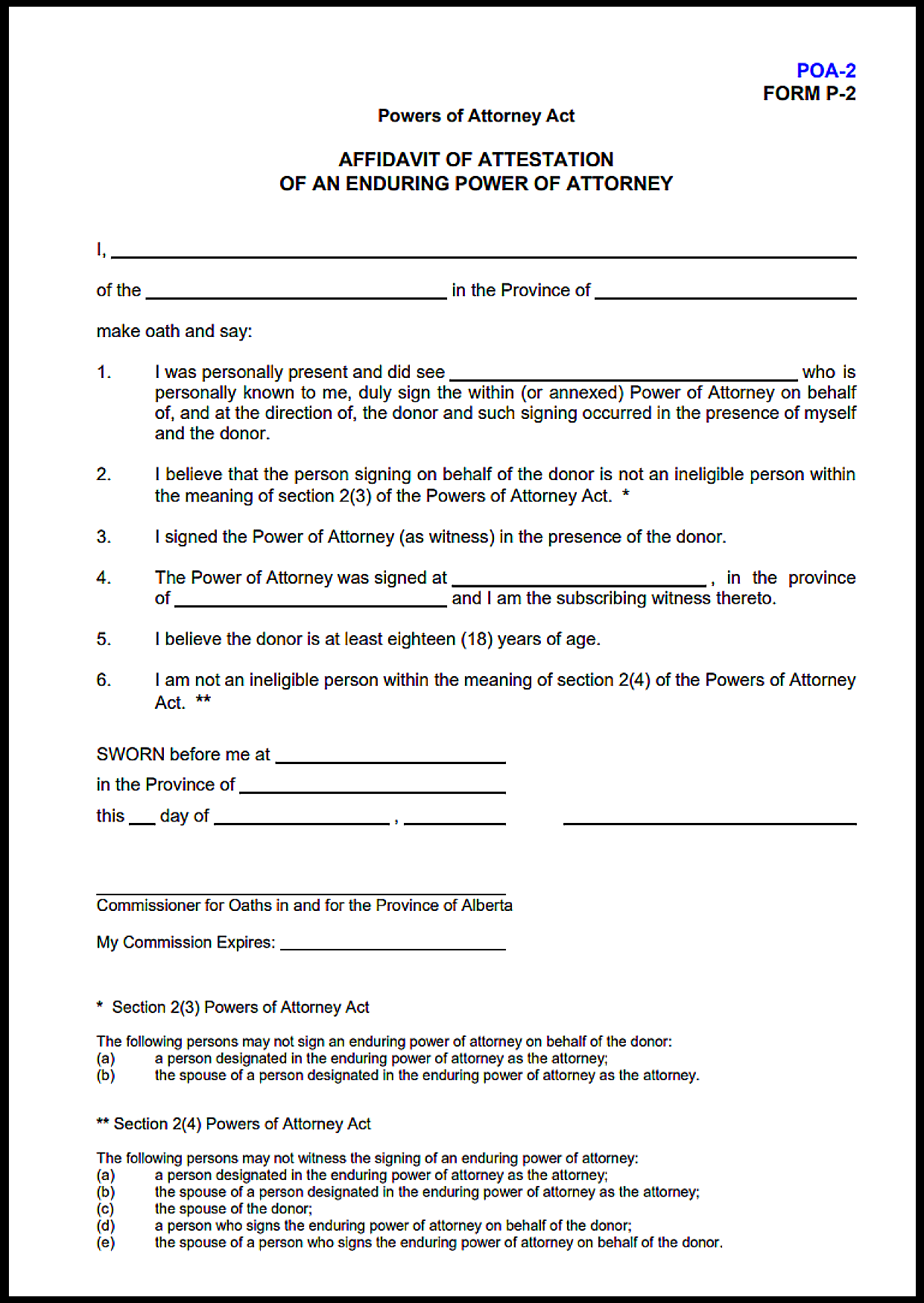
| Disqualified witnesses | Certain people are disqualified from acting as witnesses, including the attorney and specified spouses, adult interdependent partners and persons signing on the donor’s behalf, as set out in the Powers of Attorney Act. | Powers of Attorney Act, s. 2(4) |
| Notarization requirement | A Power of Attorney does not generally require notarization solely because it is a Power of Attorney. Land Titles transactions may have additional witnessing, affidavit, commissioning or registration requirements depending on the document and transaction. | Land Titles Act, s. 155 & 156 |
| Age and mental capacity | The donor must meet Alberta’s legal requirements for capacity when making the Power of Attorney. An enduring power of attorney is void if the donor is mentally incapable of understanding its nature and effect when it is executed. | Powers of Attorney Act, s. 2(1)(a) |
| Expiration rules | The effect of incapacity depends on the type of Power of Attorney. A General Power of Attorney generally ends when the donor becomes mentally incapable, while an Enduring Power of Attorney can continue despite incapacity or take effect upon incapacity if properly drafted. | Powers of Attorney Act, s. 5 |
| Enduring clause requirement | An Enduring Power of Attorney must state that it continues despite the donor’s subsequent mental incapacity or infirmity, or that it takes effect upon the donor’s mental incapacity or infirmity. | Powers of Attorney Act, s. 2(1)(c) |
| Filing requirement | There is no general central registry for ordinary Powers of Attorney, although a Power of Attorney may need to be dealt with through Land Titles or another institution for a particular transaction. | Powers of Attorney Act |
| Real estate registration | When a Power of Attorney is used in a land transaction, the applicable Alberta Land Titles registration and execution requirements must be followed. | Land Titles Act |
| Invalid witness issue | Using a person who is disqualified from acting as a witness can affect the validity of an Enduring Power of Attorney under Alberta law. | Powers of Attorney Act, s. 2(4) |
| Missing enduring wording | Without the required enduring wording, the document does not qualify as an Enduring Power of Attorney and does not provide the statutory enduring effect after the donor’s incapacity. | Powers of Attorney Act, s. 2(1)(c) |
| Lack of mental capacity | An Enduring Power of Attorney is void if, when it is executed, the donor is mentally incapable of understanding its nature and effect. | Powers of Attorney Act, s. 2(1)(a) |
| Alberta witness difference | Alberta has its own statutory execution and witnessing requirements for Powers of Attorney, which should be followed for an Alberta document. | Powers of Attorney Act, s. 2(1)(b) |
| Healthcare decision limitation | A Power of Attorney deals with financial and property matters. Personal and health-care decisions are addressed through an Alberta Personal Directive. | Personal Directives Act |
| Springing POA rules | Where an Enduring Power of Attorney is made contingent on incapacity, the document and Alberta law determine how the triggering incapacity is established; where the statutory default applies, written declarations from two medical practitioners may be required. | Powers of Attorney Act |
The distinction between a General Power of Attorney and an Enduring Power of Attorney is critical in Alberta. A General Power of Attorney generally ends when the donor becomes mentally incapable, while an Enduring Power of Attorney can continue despite incapacity or take effect when incapacity occurs if the document is properly drafted.
Witnessing requirements deserve careful attention because using a person who is disqualified from acting as a witness can affect the validity of an Enduring Power of Attorney. The safest approach is to follow the statutory witness restrictions when the document is signed.
A Power of Attorney and Personal Directive serve different purposes in Alberta. Financial and property authority belongs in the appropriate Power of Attorney, while personal and health-care decisions are addressed through a Personal Directive.
Errors in execution or drafting can create practical problems, including delays with financial institutions or Land Titles transactions and disputes about whether the attorney has authority to act.
What Is an Alberta Power of Attorney Form?
An Alberta Power of Attorney form allows a person (called the donor) to give authority to another person (called the attorney) to manage financial matters. This includes handling bank accounts, paying bills, or managing property.
It is important to understand what it does and what it does not do. A POA covers financial and property responsibilities. It does not allow personal or healthcare decisions, and it cannot replace a will.
Some key points to remember:
- It gives legal authority to act on your behalf
- It can be temporary or long-term
- It only works within the limits you define
If you need someone to make personal or medical decisions, you must create a Personal Directive instead.
This form provides a structured way to assign decision-making authority. For a full understanding of how it works within estate planning, refer to the complete will preparation guide.
Types of Power of Attorney in Alberta
General Power of Attorney
A General Power of Attorney is mainly used for short-term or specific situations. It is useful when you are unavailable but still mentally capable.
It generally ends if the donor becomes mentally incapable. This means it is not suitable for long-term incapacity planning.
- Used during travel or temporary absence
- Suitable for specific financial tasks
- Generally ends if the donor becomes mentally incapable
Enduring Power of Attorney
An Enduring Power of Attorney is designed for long-term protection. It can continue even if the donor loses mental capacity.
Under Alberta law, the document must state that it continues despite the donor’s subsequent mental incapacity or infirmity, or that it takes effect upon the donor’s mental incapacity or infirmity. Without this wording, it does not provide the statutory enduring effect after incapacity.
- Used for aging or illness planning
- Can continue after mental incapacity
- Commonly used for long-term incapacity planning
Immediate vs Springing Powers
You can also decide when your POA becomes active. This is an important choice because it affects control over your finances.
- Immediate → can take effect according to the terms of the document, including upon signing
- Springing → starts only when a condition is met (like incapacity)
An Enduring Power of Attorney can be drafted to take effect upon incapacity, but the document should clearly address the event that triggers the authority and how that event is established.
When Do You Need a Power of Attorney Form?
A Power of Attorney is useful in many real-life situations. It can help reduce delays and legal complications when you cannot act yourself.
For example, a person traveling abroad may need someone to manage their bank account in Canada. Similarly, an elderly person may want their child to handle finances if health declines.
Common situations include:
- Planning for aging or memory loss
- Living or working outside Canada
- Managing property from a distance
- Emergency hospitalization
In these cases, a properly effective Power of Attorney can allow the attorney to act on the donor’s behalf without a court appointment, subject to the document’s terms and any requirements imposed by the relevant institution or transaction.
You may also need related documents like a medical power of attorney or a financial authorization document depending on your needs.
Key Elements Required for a Valid POA in Alberta
Legal Capacity of the Donor
The donor must understand the document they are signing. They should know what powers they are giving and the risks involved.
An Enduring Power of Attorney is void if, when it is executed, the donor is mentally incapable of understanding its nature and effect.
Proper Witnessing
The Power of Attorney must be executed and witnessed in accordance with the requirements of Alberta’s Powers of Attorney Act.
- The witness cannot be a person who is disqualified under the Act
- The witness must follow the applicable statutory witnessing requirements
The execution requirements should be followed carefully because an error can affect whether the document is legally effective.
Clear Authority Definition
The document must clearly explain what the attorney can and cannot do. Vague or unclear wording can cause confusion or legal issues later.
- List specific financial powers
- Add limits if needed
- Avoid general or unclear language
Compliance with Alberta Law
The POA must follow Alberta legal rules, especially for enduring powers. If the format or wording is incorrect, the document may not be accepted.
It is always a good idea to compare it with other estate planning documents to ensure consistency.
How to Fill Out the Alberta Power of Attorney Form
Filling out the form correctly is important to avoid future problems. Each section should be completed carefully.
Start by entering full legal names exactly as they appear on official documents. Then choose the correct type of POA based on your needs.
Next, clearly define the powers you are giving. Do not leave this section vague. After that, select when the POA will become active.
Finally, sign the document in accordance with Alberta’s applicable execution and witnessing requirements. Without proper execution, the document may not be legally valid.
Some quick tips:
- Double-check all details before signing
- Keep a copy in a safe place
- Share it with your attorney
Common Mistakes That Can Invalidate the Form
Many people make small mistakes that cause big legal problems later. These mistakes can make the POA invalid or unusable.
Some of the most common issues include:
- Missing or incorrect witness
- Unclear or incomplete powers
- Choosing the wrong type of POA
- Not updating after major life changes
- Signing without full understanding
Avoiding these mistakes can help ensure your document works as intended when needed.
Legal Limits of a Power of Attorney in Alberta
A Power of Attorney has clear legal limits. Even though the attorney has authority, it is not unlimited.
The attorney must act honestly and within the authority given by the donor and applicable law.
| Rule | Explanation |
| No medical decisions |
Personal and healthcare decisions are addressed through a Personal Directive.
|
| Cannot change a will |
Estate decisions are separate from a POA.
|
| Must act honestly |
The attorney must act in accordance with applicable duties and the authority granted.
|
| Legal accountability |
Misuse can lead to legal action.
|
These limits help protect the donor from misuse of power.
Risks and Misuse of Power of Attorney
Because an attorney may have access to financial information and authority over the donor’s property, choosing the attorney carefully is an important safeguard.
Financial Abuse Risks
The attorney may misuse funds or make unauthorized transactions. This can cause serious financial problems for the donor.
Lack of Oversight
There is no automatic monitoring system that reviews every transaction made by an attorney. This means the attorney’s actions may not be regularly checked unless someone raises concerns.
How to Reduce Risk
You can reduce risks by taking practical precautions. Choosing the right person is the most important step.
- Select someone trustworthy
- Add clear limits to powers
- Appoint more than one attorney
- Ask for regular updates
In complex cases, legal advice can provide extra protection.
Alberta-Specific Legal Rules You Should Know
Alberta’s execution rules matter most when the document is intended to operate as an Enduring Power of Attorney. Check the signing, witnessing and incapacity provisions before relying on the document.
- Enduring POA must clearly state it continues after incapacity
- Witness rules must be strictly followed
- Lawyers are not required but are helpful for complex situations
Following these requirements can help ensure the document is properly executed and effective under Alberta law.
Real-Life Example
A senior in Alberta starts showing early signs of dementia. To prepare, she creates an Enduring Power of Attorney and appoints her daughter as her attorney.
Later, when her condition worsens, the daughter may be able to manage the donor’s bank accounts and pay bills under the Enduring Power of Attorney, subject to its terms and any requirements imposed by the financial institution.
This example shows how advance planning can help reduce delays and uncertainty if the donor later loses capacity.
Power of Attorney vs Personal Directive (Alberta)
Many people confuse these two documents, but they serve different purposes.
| Feature | Power of Attorney | Personal Directive |
|---|---|---|
| Purpose | Financial/legal decisions | Healthcare and personal decisions |
| Active When | As stated in document | When person lacks capacity, according to the directive and applicable law |
| Covers | Money and property | Medical and personal matters |
Both documents can be important parts of complete planning.
Frequently Asked Questions
Is a Power of Attorney form legally binding in Alberta?
Yes, if it meets the applicable legal requirements under Alberta law, it can be legally binding and effective according to its terms.
Do I need a lawyer to create one?
No, a lawyer is not generally required. However, for complex financial situations, legal advice is recommended.
Can I revoke my Power of Attorney?
Yes, as long as you have the legal capacity to revoke it, you can generally cancel or replace your POA in accordance with Alberta law.
What happens if there is no POA?
If no POA exists and someone later loses the capacity to manage their finances, family members may need to use another