Ontario Medical Power of Attorney (Rights, Rules & Forms)
Ontario Medical Power of Attorney is something most people don’t think about—until a crisis happens. Imagine being in an accident and unable to speak. Doctors need quick decisions, but your family is unsure what you would want. That situation creates stress, delays, and sometimes conflict.
In my work as a paralegal in Ontario, I’ve seen families end up in painful disputes because no clear personal care decisions were written down before a medical emergency happened. I also see people assume their spouse or adult child can automatically decide everything for them, but Ontario’s consent laws do not always work that way without the proper document in place.
Under Ontario law, you can avoid this by choosing someone you trust to make healthcare decisions for you. This person is called your “attorney for personal care.”
In this article, I’ll walk you through everything in simple terms—what it means, how it works in Ontario, and how to use a free template properly.
Free Ontario Medical Power of Attorney Template
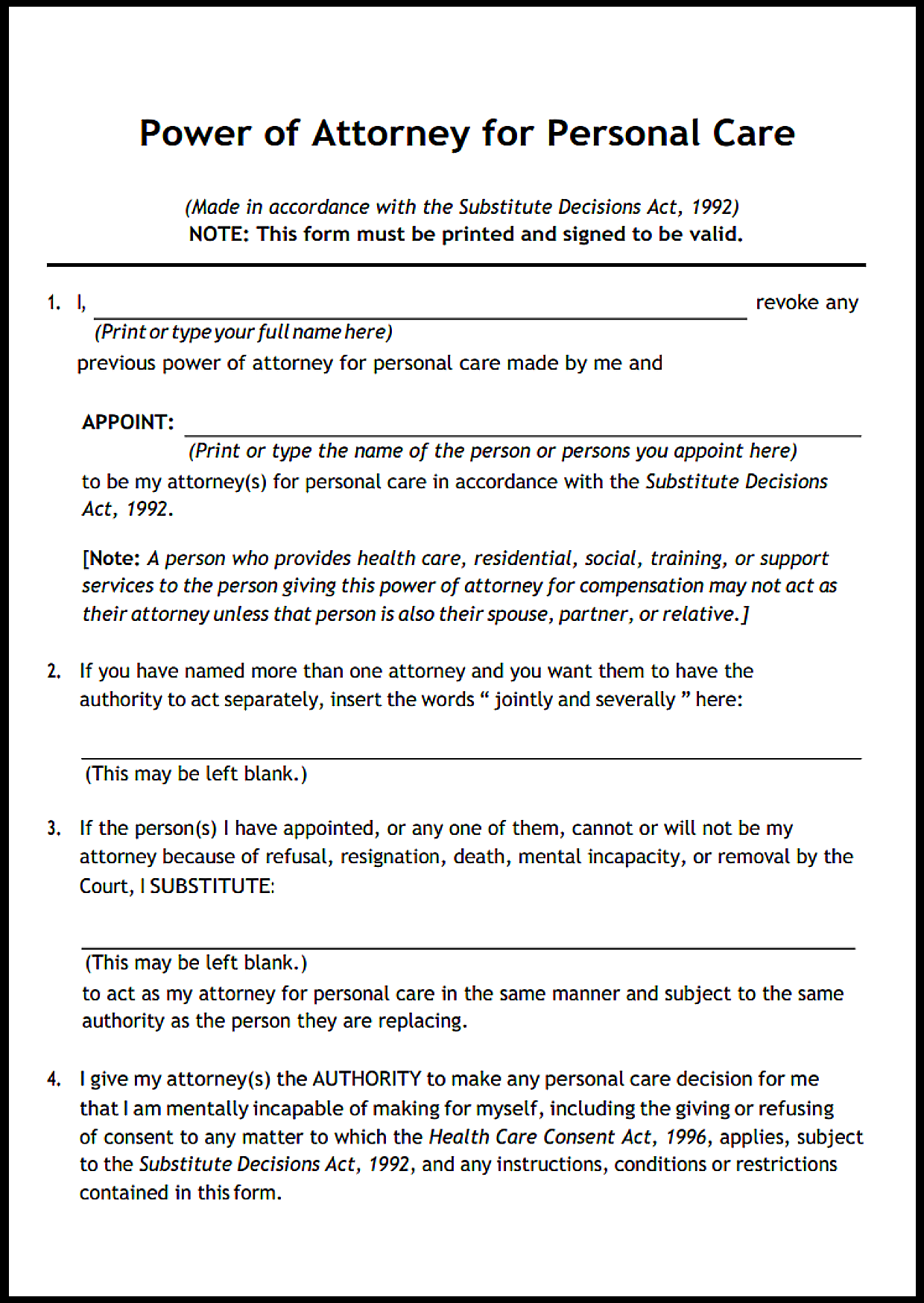
Below is a simple, usable template based on Ontario requirements. In Ontario, this document is officially called a Power of Attorney for Personal Care.
Ontario Medical POA Witness Rules, Capacity Requirements, and Legal Validity
| Topic / Issue | Ontario Legal Rule | Governing Statute |
|---|---|---|
| Primary governing law | Ontario Medical Power of Attorney documents are governed under Ontario substitute decision-making law. | Substitute Decisions Act, 1992, S.O. 1992, c. 30 |
| Related healthcare consent law | Clinical consent and treatment issues are also governed under Ontario healthcare consent legislation. | Health Care Consent Act, 1996 |
| Federal law involvement | No federal law governs Ontario Medical Power of Attorney documents. | Provincial jurisdiction only |
| Recent amendment | Ontario permanently legalized virtual witnessing through audio-visual technology effective May 20, 2021. | Accelerating Access to Justice Act, 2021 |
| Who can legally sign | The Grantor signs the document. Another person may sign in the Grantor’s presence and at their direction if physically unable. | SDA, s. 48(1) |
| Witness requirements | Two witnesses must be present at the same time when the Grantor signs. | SDA, s. 48(1) |
| Disqualified witnesses | The attorney, their spouse/partner, the Grantor’s spouse/partner or child, anyone under 18, or anyone under guardianship cannot witness the document. | SDA, s. 48(2) |
| Notarization requirement | Notarization is optional and not legally required for validity. | Common law principles |
| Minimum age requirement | A person who is at least 16 years of age is statutorily presumed capable of giving or revoking a Power of Attorney for Personal Care. | SDA, s. 44 |
| Mental capacity standard | The Grantor must understand that the attorney has genuine concern for their welfare and may need to make decisions for them. | SDA, s. 47(1) |
| Expiry rules | The document automatically terminates upon the Grantor’s death, the execution of a new POAPC, express revocation, the court appointment of a guardian of the person, or if the sole attorney dies, resigns, or becomes incapable. | SDA, s. 53(1) |
| Mandatory wording requirement | Ontario law does not require special “magic wording” if the intent to create a Power of Attorney for Personal Care is clear. | SDA, s. 48 |
| Required authority description | The document must clearly authorize personal care decisions such as healthcare, nutrition, shelter, hygiene, or safety decisions. | SDA provisions regarding personal care authority |
| Filing requirement | No filing or registration with ServiceOntario or government offices is required. | Ontario private contract rules |
| Storage recommendation | The document should be stored safely and shared with attorneys and healthcare professionals. | Ontario practice guidance |
| Improper witnessing | The document may become invalid if signed before prohibited witnesses. | SDA, s. 48(2) |
| Underage signing | The document is invalid if the Grantor is under 16 at signing. | SDA, s. 47(1) |
| Conflict-of-interest attorney rule | Paid caregivers generally cannot act as attorney unless they are also a spouse, partner, or relative. | SDA, s. 46(3) |
| Ontario age difference | Ontario allows Medical POAs beginning at age 16, unlike provinces requiring age 18 or 19. | SDA, s. 47 |
| Ontario virtual witnessing rule | Ontario permanently allows virtual witnessing if at least one witness is a licensed Ontario lawyer or paralegal. | Accelerating Access to Justice Act, 2021 |
One important Ontario rule many people do not realize is that a Medical Power of Attorney can legally be created at age 16. That is younger than many other provinces and can matter in serious medical situations involving teenagers or young adults.
Another major rule involves witnesses. Ontario law strictly bans certain people from witnessing the document, including your attorney, your child, and anyone under 18. Many families accidentally ignore this rule when signing documents at home, which can create validity problems later during a medical emergency.
Ontario’s permanent virtual witnessing system is also unique because it allows signing through video calls if at least one witness is an Ontario lawyer or paralegal. These rules matter because hospitals and healthcare providers may refuse to rely on a document that was signed incorrectly or witnessed improperly. A small signing mistake can create delays, confusion, or family disputes during urgent medical decisions. Download the free Ontario Medical Power of Attorney template below to create a document that properly follows Ontario legal requirements.
What Is a Medical Power of Attorney in Ontario?
In Ontario, this document is legally known as a Power of Attorney for Personal Care under the Substitute Decisions Act. It allows a trusted person (called an attorney) to make healthcare decisions for you if you become mentally incapable.
This includes treatment decisions, choosing care facilities, and even life-support choices. Many people confuse it with financial POA, but they are completely different documents. One controls health decisions, while the other handles money and property.
A healthcare authorization document is a key part of estate planning and is explained in detail within the Ontario power of attorney legal guide, where different types of authority are outlined. This document specifically focuses on personal care decisions and complements the general authorization form used in Ontario.
When Do You Need a Medical Power of Attorney?
You usually need this before something goes wrong. Most people create it as a precaution, not because of an immediate issue. It becomes useful in situations like accidents, serious illness, or mental incapacity.
- After an accident where you are unconscious
- During serious illness or aging
- Before surgeries or risky treatments
- If you live alone or far from family
For example, if someone is unconscious after an accident, doctors need consent for treatment. Without a POA, decisions may be delayed or made by default legal rules instead of your personal wishes.
What Decisions Can Your Attorney Make?
Your attorney has legal responsibility to act in your best interest and follow your wishes. Their role is not just formal—it directly affects your care and life decisions.
Medical Treatment Choices
They can approve or refuse treatments, surgeries, and medications depending on your condition and preferences.
Long-Term Care & Living Arrangements
They may decide whether you move to a nursing home or receive care at home, depending on what is best for your health.
End-of-Life Care
This includes decisions about life support, CPR, and palliative care. These are sensitive decisions, so clear instructions are very important.
Access to Medical Information
They can speak with doctors and access your medical records to make informed decisions.
In many cases, individuals also prepare a financial authority document to ensure both medical and financial responsibilities are covered. If you’re starting from scratch, reviewing the legal steps to assign decision-making authority helps ensure compliance.
Legal Rules in Ontario You Must Follow
Under Ontario law, your document must meet certain legal conditions to be valid. These rules come from the Substitute Decisions Act and must be followed strictly.
- You must be mentally capable when signing
- You need two valid witnesses
- The attorney must be at least 18 years old
Who Cannot Be a Witness?
Some people are not allowed to act as witnesses:
- Your attorney or their spouse
- Anyone under 18
When Does It Take Effect?
Activation depends strictly on the type of decision required. For immediate medical treatment, the POAPC becomes operational the moment your treating healthcare practitioner evaluates you at the bedside and finds you incapable of making that specific clinical decision under the Health Care Consent Act, 1996. You do not need a formal ‘declaration of incapacity’ from a judge or an SDA Capacity Assessor for your attorney to authorize medical care.
Key Elements That Make the Document Valid
A valid document is not just about filling a form—it must clearly show your intent and meet legal standards.
Clear Identification of Parties
Both the grantor and attorney must be clearly identified with full details.
Specific Powers Granted
You should clearly mention that healthcare decisions are allowed. Vague wording can create problems later.
Instructions or Restrictions
You can include personal beliefs, treatment limits, or religious preferences. This helps your attorney make the right choices.
Proper Signatures & Witnessing
Without proper signatures and witnesses, the document may not be accepted. This is one of the most common mistakes.
How to Fill Out the Ontario Medical POA (Step-by-Step)
Filling out the document is simple if you follow a clear process.
Step 1 – Choose the Right Person
Pick someone trustworthy, responsible, and emotionally strong. This person should be able to handle difficult decisions.
Step 2 – Discuss Your Wishes
Have an honest conversation about your medical preferences. This step is often skipped but is very important.
Step 3 – Complete the Template
Fill all sections carefully. Avoid leaving blanks or unclear instructions.
Step 4 – Sign with Witnesses
Follow Ontario rules strictly. Sign in front of two valid witnesses.
Step 5 – Share Copies
Give copies to your doctor, family, and attorney so everyone is aware of your decisions.
Common Mistakes to Avoid
Many people make small mistakes that create big problems later. Avoid these:
- Choosing someone unreliable
- Not discussing your wishes
- Missing witness requirements
- Writing unclear instructions
- Not updating after major life changes
Medical vs Financial Power of Attorney (Ontario)
This comparison helps clear confusion between the two types of POA:
| Feature | Medical POA | Financial POA |
| Purpose | Health decisions | Money/property |
| Legal Name | Personal Care | Continuing POA |
| Activation | Incapacity |
Can be immediate
|
| Decisions | Treatment, care | Banking, assets |
In simple terms, one protects your health decisions, while the other protects your finances.
Risks and Misuse Scenarios (Important EEAT Section)
Even though most attorneys act honestly, risks can still happen. This is why choosing the right person and writing clear instructions is very important.
Some common risks include:
- Attorney ignoring your wishes
- Family disagreements
- Delays due to unclear documents
To prevent these problems:
- Choose your attorney carefully
- Write clear and specific instructions
- Inform your family about your decision
- Keep your document updated
Real-Life Example (Trust-Building Section)
A real situation in Ontario involved a patient who became incapable without a POA. Family members disagreed about treatment, which caused delays and emotional stress.
In another case, a person had a clear POA with written instructions. Their attorney followed their wishes, and decisions were made quickly without conflict. This shows how important proper planning is.
FAQs About Ontario Medical Power of Attorney
Is it legally binding in Ontario?
Yes, it is legally binding if it is properly signed and witnessed according to Ontario law. Following the correct format is important for validity.
Can I change or cancel it?
Yes, you can change or cancel it at any time as long as you are mentally capable. Updates should be done clearly in writing.
Do I need a lawyer?
No, a lawyer is not always required. A simple template works for most people, but legal advice is helpful for complex situations.
Can family override my attorney?
No, family members cannot override your attorney. The appointed person has legal authority unless a court decides otherwise.
What happens if I don’t have one?
If you don’t have one, Ontario law will appoint decision-makers in a fixed order. This may not match your personal choice.