How to Get Power of Attorney in Ontario (Free Template)
How to get Power of Attorney in Ontario is something many families think about only when it’s too late. The truth is, setting it up is much easier than most people expect—and it can save serious stress later.
If you’re helping aging parents, planning ahead, or just want control over your future decisions, this guide will walk you through everything step by step—based on Ontario law.
A Power of Attorney (POA) is a legal document that lets someone you trust make decisions for you if you can’t. I’ve seen families in Ontario end up in expensive court applications because they assumed a verbal agreement or unsigned form was enough. When people create a Power of Attorney properly before a health crisis happens, it usually saves their loved ones a huge amount of stress and delay.
Under Ontario law, this process is governed by the Substitute Decisions Act, 1992, and it’s designed to be simple enough for most people to do without a lawyer.
Last Updated: August 2026
How to Get Power of Attorney in Ontario (Free Template)
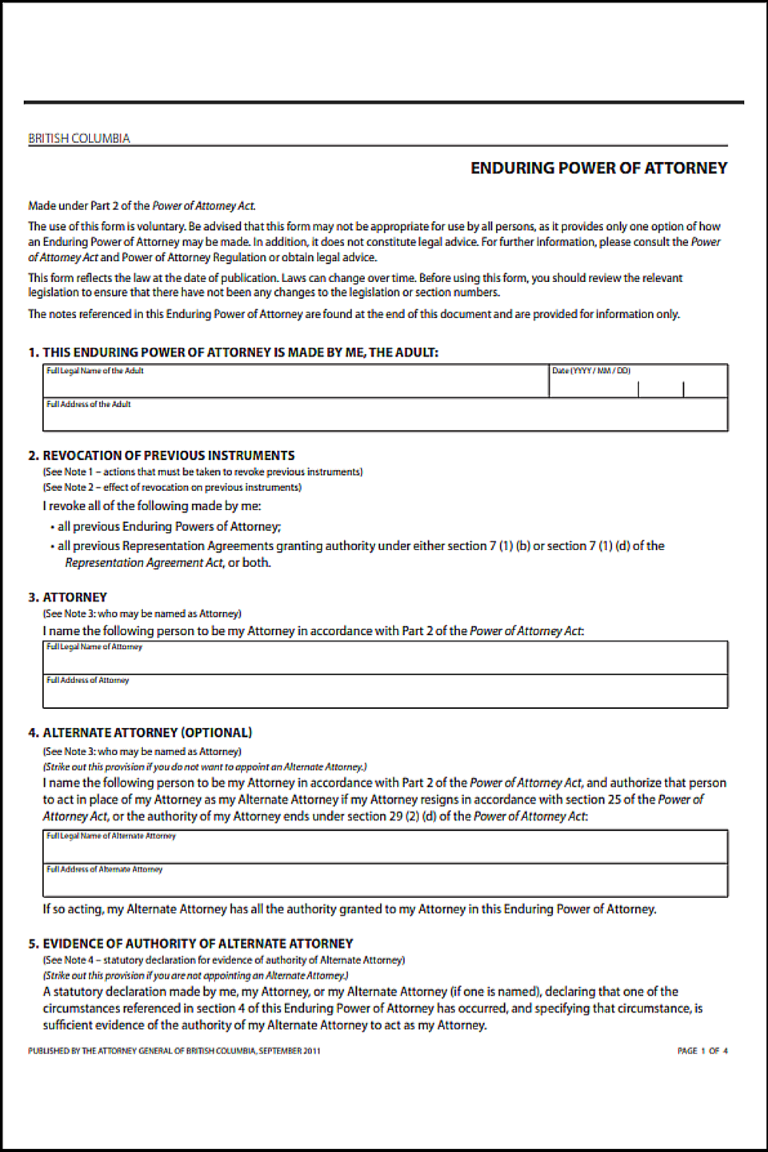
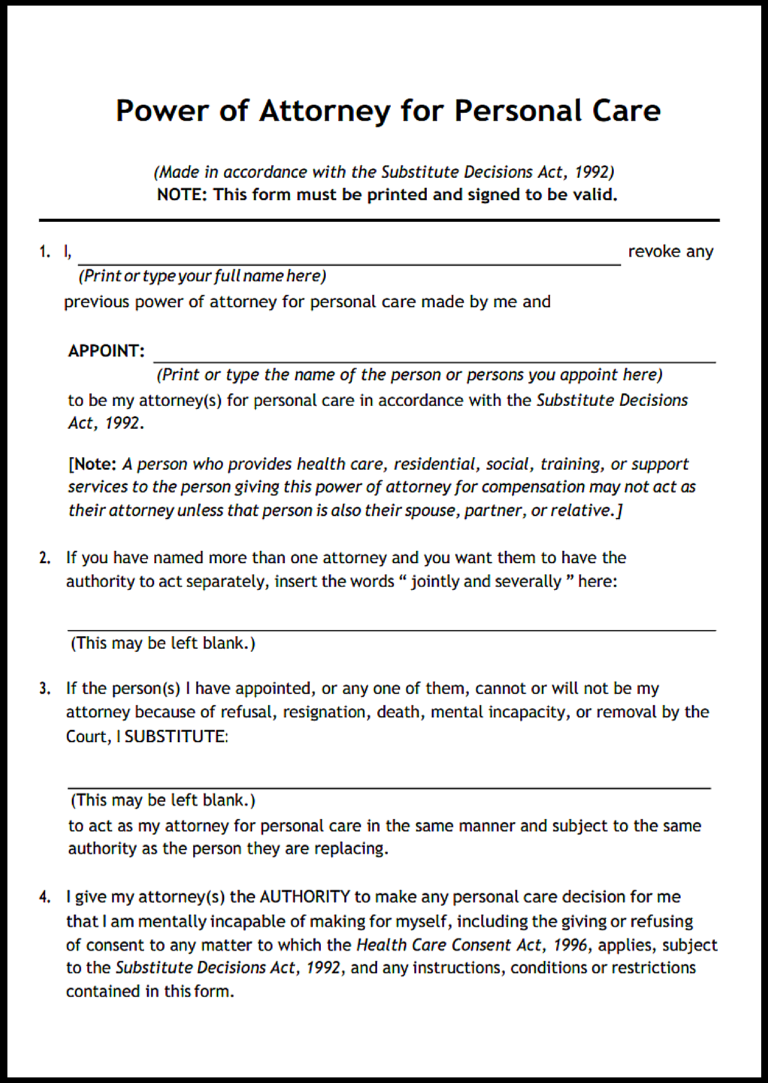
Here’s a simple, Ontario-compliant template you can use. You can copy and customize it based on your needs.
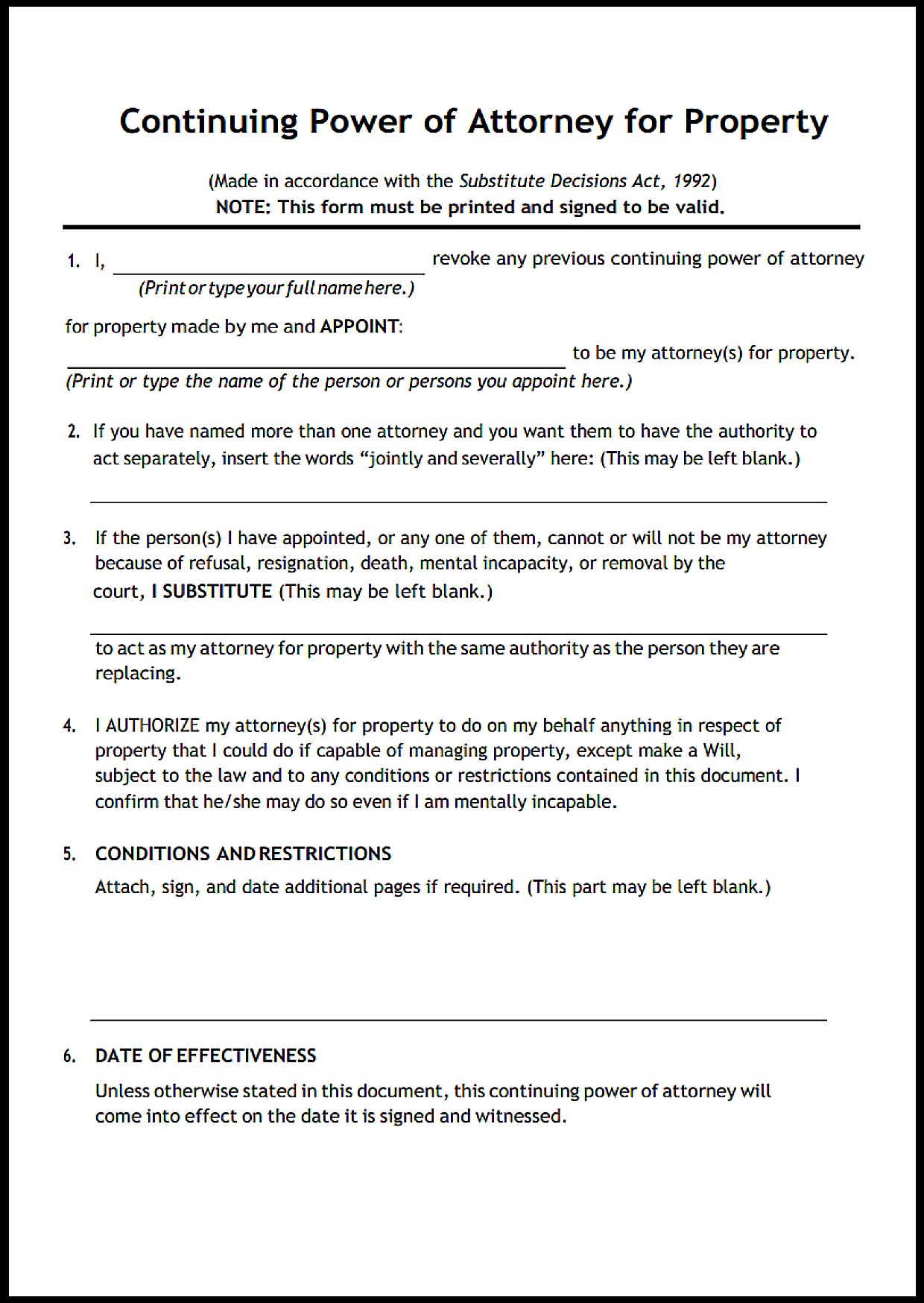
Ontario Power of Attorney Legal Requirements and Signing Rules
| Topic / Issue | Ontario Legal Rule | Governing Statute |
|---|---|---|
| Primary governing legislation | Powers of Attorney in Ontario are governed under provincial substitute decision-making laws. | Substitute Decisions Act, 1992 |
| Federal law involvement | There is no federal statute governing Ontario Powers of Attorney. | Provincial jurisdiction only |
| Jurisdiction type | Ontario POA law is purely provincial. | Substitute Decisions Act, 1992 |
| Recent amendments | Ontario permanently legalized virtual witnessing for POAs in 2021 through legislative amendments. | Accelerated Access to Justice Act, 2021 |
| Who can legally sign | The grantor signs the POA. If unable, another person may sign in the grantor’s presence and at their direction. | SDA, s. 10(1) |
| Witness requirements | Two witnesses are required and must sign in the grantor’s presence. | SDA, s. 10(1) |
| Disqualified witnesses | The attorney, the attorney’s spouse or partner, the grantor’s spouse or partner, the grantor’s child, anyone under 18, and anyone under guardianship cannot witness the document. | SDA, s. 10(2) |
| Notarization requirement | Notarization is not legally required for the original POA document. | Common law / bank policy |
| Property POA age requirement | A person must be at least 18 years old for a Property POA. | SDA, s. 8(1) |
| Personal Care POA age requirement | A person may create a Personal Care POA at age 16. | SDA, s. 47(1) |
| Mental capacity requirement | The grantor must understand their property, the authority granted, and the possible effects on their finances. | SDA, s. 8 |
| Expiry and validity | A POA remains valid until revoked, the grantor dies, or the attorney resigns or dies. | SDA, s. 12 |
| Continuing POA wording requirement | A Continuing POA must clearly state that it continues during the grantor’s incapacity. | SDA, s. 7(1) |
| Effect of missing continuing clause | Without continuing language, the POA automatically becomes invalid once the grantor loses mental capacity. | SDA, s. 7(1) |
| Filing requirement | Ontario does not require government filing or registration for standard POAs. | Ontario POA rules |
| Private document status | A POA is treated as a private legal document. | Ontario practice rules |
| Land registry exception | A POA must be registered at the Land Registry Office before selling or mortgaging real estate on behalf of the grantor. | Land Titles Act; Registry Act |
| Improper witnessing invalidity | A POA becomes invalid if a prohibited person witnesses the document. | SDA, s. 10(2) |
| Capacity invalidity | A POA is invalid if the grantor lacked the required mental capacity at signing. | SDA, s. 8 |
| Virtual witnessing difference | Ontario permanently permits virtual witnessing through audio-visual communication if one witness is a licensed Ontario lawyer or paralegal. | SDA virtual witnessing amendments |
| Ontario age difference | Ontario allows Personal Care POAs at age 16, unlike many provinces requiring age 18 or 19. | SDA, s. 47(1) |
One of the most important Ontario rules is the requirement for “continuing” language in a financial Power of Attorney. Many people assume every POA automatically stays valid after mental incapacity, but Ontario law says otherwise. If this wording is missing, the document can become useless at the exact moment it is needed most. That can create serious delays when families need to pay bills, manage investments, or handle property during a medical emergency.
The witness rules are also stricter than many people realize. A document signed with the wrong witness — such as the grantor’s child or the appointed attorney — may become technically invalid under Ontario law. This matters in real life because banks and financial institutions often closely review POAs before accepting them.
Ontario’s permanent virtual witnessing option is another major difference compared to some provinces. It allows people to complete POAs remotely when proper legal requirements are followed. Download the free Ontario Power of Attorney template below to create a legally compliant document with confidence.
What Does “Getting Power of Attorney” Mean in Ontario?
There are two key roles:
- Grantor → You (the person giving authority)
- Attorney → The person you trust to act for you
In Ontario, there are two main types:
- Continuing Power of Attorney (Property/Financial)
Stays valid even if you become mentally incapable - Power of Attorney for Personal Care
Covers health care and personal decisions
In most Power of Attorney situations, people create both types to be fully protected.
Setting up legal authority requires understanding the structure explained in the Ontario power of attorney complete guide, which outlines legal responsibilities and document types. This process typically begins with preparing a valid power of attorney form in Ontario.
Step-by-Step: How to Get Power of Attorney in Ontario
Step 1 – Decide Which Type You Need
Start by choosing the right type:
- Financial (Continuing POA) → for money, property, bills
- Personal Care POA → for medical and lifestyle decisions
Example:
If an elderly parent becomes ill and cannot manage bills, a financial POA allows you to step in immediately.
Step 2 – Choose the Right Person
This is the most important decision.
Your attorney should be:
- Trustworthy
- Responsible with money
- Available when needed
You can:
- Choose more than one person
- Name a backup attorney
Under Ontario law, an attorney is legally required to act in your best interest, keep records, and avoid conflicts.
Step 3 – Prepare the Document
You have two options:
- Use a template (like above)
- Use a legal service or lawyer
Make sure you:
- Clearly list the powers given
- Decide if it’s continuing or limited
- Avoid vague wording
Step 4 – Sign with Proper Witnesses
This is where many people make mistakes.
Ontario requires:
- 2 witnesses present at signing
Cannot be a witness:
- Your attorney or their spouse/partner
- Your own spouse or partner
- Your child (or someone you treat as your child)
- Someone under 18
- Someone whose property or person is under guardianship
If this step is done wrong, your POA can become invalid.
Step 5 – Store and Share the Document
After signing:
- Keep the original in a safe place
- Give copies to:
- Your attorney
- Family members
- Bank or financial institutions
A POA is only useful if people know it exists.
As part of the process, you may also need to decide between creating a healthcare decision document or a financial management authorization, depending on your situation. Each serves a different legal purpose under provincial law.
Legal Rules for Power of Attorney in Ontario
Under the Substitute Decisions Act, 1992, these rules apply:
- You must sign voluntarily
- You must be mentally capable when signing
- You need 2 valid witnesses
- No government registration is required
This last point is important—Ontario does NOT require you to file your POA with the government.
Continuing vs Limited Power of Attorney
| Feature | Continuing POA | Limited POA |
| Valid after incapacity | Yes | No |
| Scope | Broad | Specific |
| Duration | Long-term | Temporary |
| Common use | Aging, illness |
Travel, property sale
|
Tip:
Most people choose a continuing POA for long-term protection.
When Should You Get a Power of Attorney?
The best time is before something goes wrong.
Common situations:
- Aging parents need help
- Planning for medical emergencies
- Traveling or living abroad
- Managing property remotely
Think about this:
If you suddenly can’t handle your finances, who will pay your bills?
Without a POA, your family may need to go to court—which takes time and money.
Common Mistakes to Avoid
These mistakes happen more often than you think:
- Choosing someone unreliable
- Not understanding the powers given
- Improper witnessing (invalid document risk)
- Not updating the document over time
- Not informing family members
A simple error can make your POA useless when you need it most.
Risks and Misuse of Power of Attorney
A POA is powerful—and it can be misused if you’re not careful.
Risks include:
- Financial abuse
- Lack of oversight
- Family disputes
How to protect yourself:
- Choose someone you fully trust
- Limit powers if unsure
- Ask for regular updates or records
- Keep communication open with family
Real-Life Example (Ontario Scenario)
Let’s say an elderly parent becomes seriously ill.
Without a POA:
- Family cannot access bank accounts
- Bills go unpaid
- Legal delays happen
With a POA:
- The attorney steps in immediately
- Bills are paid on time
- Stress is reduced for everyone
This is why having a POA in place before problems arise is so important.
Do You Need a Lawyer to Get Power of Attorney in Ontario?
No—you do not legally need a lawyer.
You can:
- Use a free template
- Prepare and sign it yourself
However, consider a lawyer if:
- You have large or complex assets
- There are family conflicts
- You own a business
For simple situations, a properly signed document is usually enough.
FAQs
Can I make Power of Attorney online in Ontario?
Yes, you can prepare it online—but it must still meet Ontario signing and witness requirements.
How much does it cost?
- Free (DIY template)
- $250–$500+ for a basic POA (often higher if part of a full will and estate package)
Can I change or cancel it later?
Yes. As long as you are mentally capable, you can revoke or update your POA at any time.
Does it work outside Ontario?
Sometimes. It depends on the laws of the other province or country.
Who keeps the original document?
Usually:
- The grantor keeps it
- A trusted person or lawyer may also store it