Ontario Financial Power of Attorney (Free Template & Guide)
Ontario Financial Power of Attorney is one of those documents most people don’t think about—until something goes wrong. Imagine you’re traveling abroad or suddenly dealing with an illness, and bills still need to be paid, investments managed, or property handled. Without proper authority, even your closest family member may not be able to step in.
That’s where a financial POA becomes essential. I’ve seen families in Ontario run into frozen bank accounts and delayed property transactions because a financial POA was never signed before a medical emergency happened. In many cases, people assume a spouse or adult child can automatically manage finances, but under Ontario law, that authority usually needs to be written down properly.
It gives someone you trust the legal right to manage your money and property when you can’t. You don’t need a legal background to understand this—we’ll keep it practical and easy.
Free Ontario Financial Power of Attorney Template
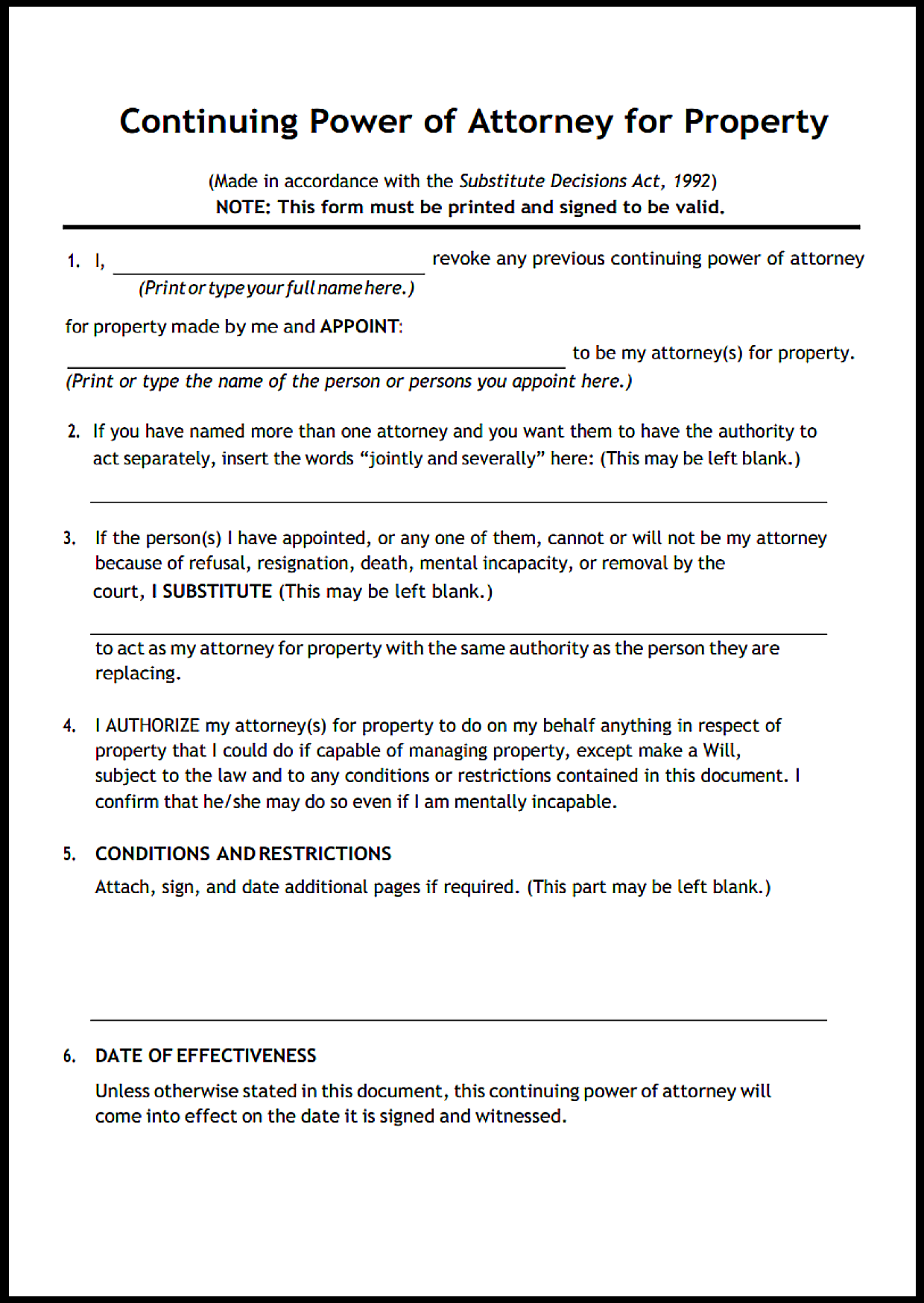
Below is a simple and usable Free Ontario Financial Power of Attorney Template. You can copy, edit, and print it.
What Is a Financial Power of Attorney in Ontario?
A financial Power of Attorney, also called a Power of Attorney for Property, allows someone (your attorney) to manage your finances on your behalf. This includes handling bank accounts, paying bills, managing investments, and dealing with property.
Under Ontario law (Substitute Decisions Act), an attorney must always act in your best interest and keep proper records. This document only covers financial matters, not health or personal care decisions.
For example, if an elderly parent becomes ill, their child can use this document to manage their bank account and pay expenses without going to court. Without it, legal processes become slow and expensive.
This document plays a critical role in managing property and financial matters, as explained in the complete Ontario power of attorney guide. It is commonly prepared alongside the standard legal authorization form to formally assign financial control.
Types of Financial Power of Attorney in Ontario
Continuing Power of Attorney for Property
This is the most commonly used type in Ontario. It continues to work even if you become mentally incapable. It is mainly used for long-term planning and is highly recommended for elderly individuals or those planning ahead.
Non-Continuing (General) Power of Attorney
This type is temporary and becomes invalid if the grantor becomes mentally incapable. It is useful for short-term needs like traveling abroad or handling temporary financial tasks.
Limited or Specific Financial Authority
This gives authority for only specific tasks. For example, you can allow someone to sell your property or manage one account only. It reduces risk because powers are restricted.
When Do You Need a Financial Power of Attorney?
Many people think this document is only for old age, but it is useful in many situations. It helps avoid stress and legal delays during emergencies.
Common situations include:
- Aging parents or health issues
- Long travel or working abroad
- Managing property remotely
- Emergency situations
- Handling investments or business matters
Creating this document early is always a safer approach.
For full coverage, many individuals also create a personal care decision document, ensuring both financial and healthcare decisions are addressed. To properly set up these documents, refer to the Ontario legal process for assigning authority.
What Powers Can You Give? (Scope of Authority)
The powers you give can be broad or limited depending on your situation. You are in full control of what your attorney can and cannot do.
Common Powers Include:
- Managing bank accounts and paying daily obligations.
- Handling investments (Under recent SLRA amendments, attorneys can now maintain existing beneficiary designations when transferring/renewing registered plans like RRSPs).
- Buying, selling, or encumbering real estate (subject to anti-fraud rules and LRO registration).
- Filing taxes and managing government benefits.
You can also restrict powers, such as allowing bill payments but not property transactions.
Legal Requirements in Ontario
This is one of the most important parts. If these rules are not followed, your document may become invalid.
Under Ontario law:
- The grantor must sign the document
- Two valid witnesses are required
- The grantor must be mentally capable
Who Cannot Be a Witness:
- The appointed attorney or their spouse/partner.
- The Grantor’s spouse, partner, child, or someone treated as a child.
- Anyone under 18 years of age.
- Anyone whose property is under a statutory or court-appointed guardianship (SDA s. 10(2)).
There is no requirement to register the document in Ontario, but it must be stored safely.
Legal Requirements Summary Table
| Requirement | Details |
| Signature |
Must be signed by the grantor
|
| Witnesses |
Two valid witnesses required
|
| Mental Capacity |
Must understand the document
|
| Registration | Not required for general banking, but mandatory at the Land Registry Office (LRO) under the Land Titles Act if transacting or encumbering real estate. |
| Storage |
Keep original in a safe place
|
How to Fill Out the Ontario Financial POA (Step-by-Step)
Creating this document is simple if you follow the right steps carefully.
Step 1: Choose the Right Attorney
Select someone trustworthy, responsible, and capable of handling finances. This decision is very important.
Step 2: Decide Powers and Limits
Clearly mention what powers you are giving. Avoid unclear or broad wording if you want control.
Step 3: Set Effective Date
You can choose whether the POA starts immediately or only when you become incapable.
Step 4: Sign with Witnesses
Sign the document in front of two valid witnesses. Missing this step can make the document invalid.
Step 5: Store and Share Copies
Keep the original document safe and give copies to your attorney and trusted family members.
Common Mistakes to Avoid
Many people make small mistakes that create big problems later.
- Choosing an untrustworthy person
- Not clearly defining powers
- Missing witness signatures
- Not updating after life changes
- Keeping the document inaccessible
Keeping your document updated is just as important as creating it.
Risks and Misuse (Important EEAT Section)
A financial POA gives significant control, so misuse is possible if not handled carefully.
Common risks include:
- Financial abuse by the attorney
- Unauthorized transactions
- Family disputes
- Lack of monitoring
To reduce risks:
- Ask for regular financial records
- Appoint co-attorneys
- Limit certain powers
- Keep family informed
An attorney is legally required to act honestly and in your best interest under Ontario law.
Financial POA vs Continuing POA
| Feature | Financial POA |
Continuing POA
|
| Valid after incapacity | No | Yes |
| Use case | Temporary needs |
Long-term planning
|
| Risk level | Medium |
Higher responsibility
|
In most cases, a Continuing POA is better for long-term security.
Real-Life Example
Consider a situation where a father becomes seriously ill and cannot manage his finances. His daughter, who has a Continuing Power of Attorney, takes over his financial responsibilities. She pays bills, manages his bank account, and handles investments without any legal delays.
Because the document is already prepared, there is no need for court involvement. This saves time, money, and stress for the entire family.
FAQs
Is a lawyer required in Ontario?
No, it is not legally required. However, legal advice is helpful for complex situations.
Can I revoke a financial POA?
Yes, you can cancel it anytime as long as you are mentally capable.
When does it take effect?
It depends on your choice—either immediately or upon incapacity.
Can more than one attorney be appointed?
Yes, you can appoint multiple attorneys to act jointly or independently.
Is notarization required in Ontario?
No, notarization is not required. Two witnesses are enough.