Estate Planning Checklist Canada: Step-by-Step Guide
Estate Planning Checklist Canada is the easiest way to organize your legal, financial, and personal wishes before it’s too late. Many families in Canada face stress, confusion, or even disputes when someone becomes ill or passes away without a proper plan.
In real life, this happens often: a person becomes suddenly incapable after an accident, and no one has legal authority to manage their finances or healthcare. Or someone passes away without a will, leaving family members confused about asset distribution.
I’ve seen Ontario families end up in expensive court applications simply because a Power of Attorney was never signed or a will was outdated after a major life change. When people wait too long, loved ones are often left trying to untangle legal and financial decisions during an already stressful time.
Last Updated: August 24, 2026
Estate planning helps you:
- Protect your family
- Control how your assets are distributed
- Avoid legal complications
- Ensure your wishes are respected
Under Ontario law, estate planning is especially important because rules around wills, probate, and Powers of Attorney are province-specific. In this guide, you’ll get a free checklist template, clear explanations, and practical legal tips.
What Is an Estate Planning Checklist Canada
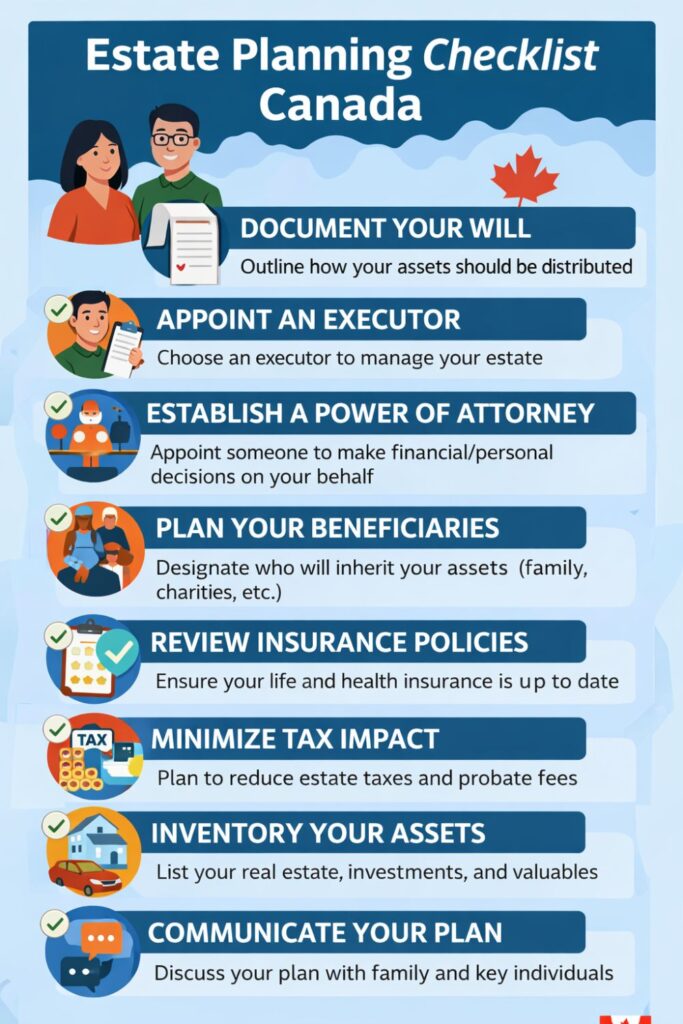
An estate planning checklist is a simple step-by-step list that helps you prepare all parts of your estate plan. It is not a legal document, but it guides you before creating one.
In Canada, especially in Ontario, laws like the Substitute Decisions Act and the Succession Law Reform Act control how estates are managed and distributed. Because of this, using a checklist helps reduce mistakes and confusion. It also makes sure you don’t forget important details like digital assets or backup beneficiaries.
Without a checklist, many people miss key steps, which later causes problems such as delays in probate or family disagreements.
Who Needs an Estate Plan in Canada?
Estate planning is important for almost everyone, not just older people. Any adult in Ontario can benefit from it.
- Young adults (18+) should have at least a basic plan because they can legally create a will and Power of Attorney.
- Married couples and common-law partners need planning, especially since Ontario intestacy laws do not give common-law spouses automatic rights to inherit without a will.
- Parents with minor children should name a guardian to avoid court decisions.
- Business owners must plan for business continuity and ownership transfer.
- Seniors or retirees need planning for incapacity and smooth asset distribution.
For example, a young person in an accident without a Power of Attorney may force their family to go through court just to manage finances.
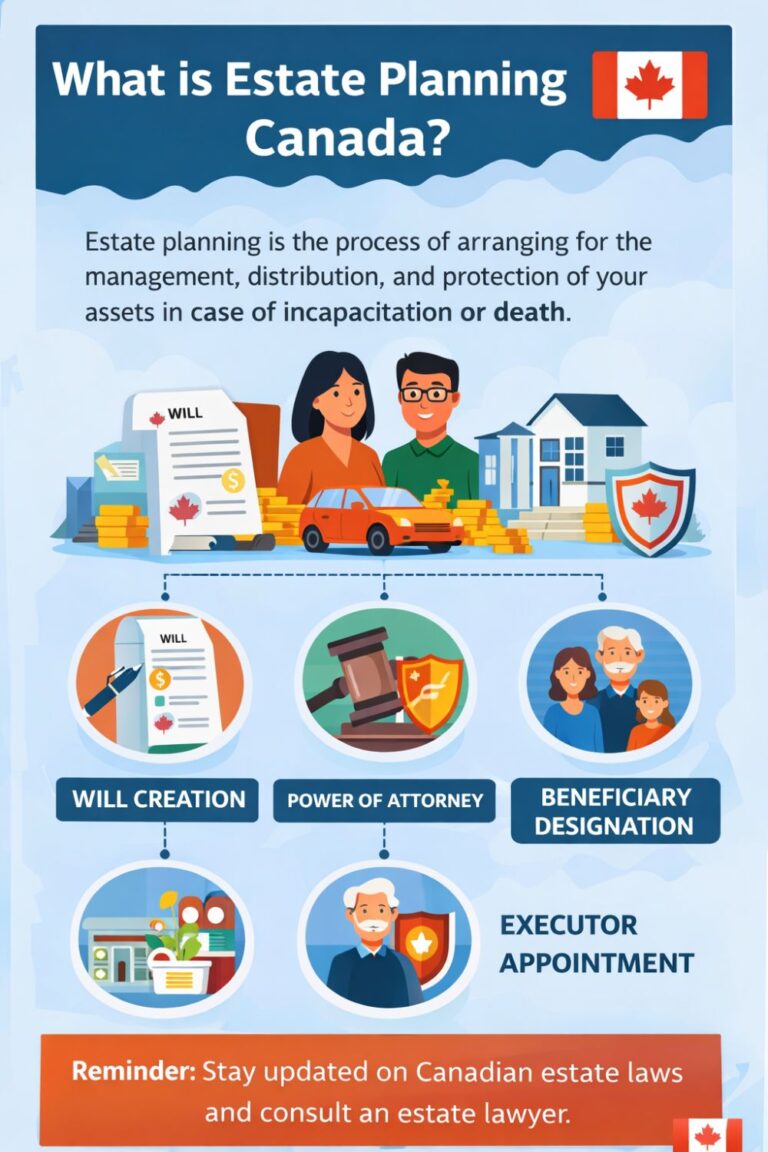
Key Parts of an Estate Plan
Will (Last Will and Testament)
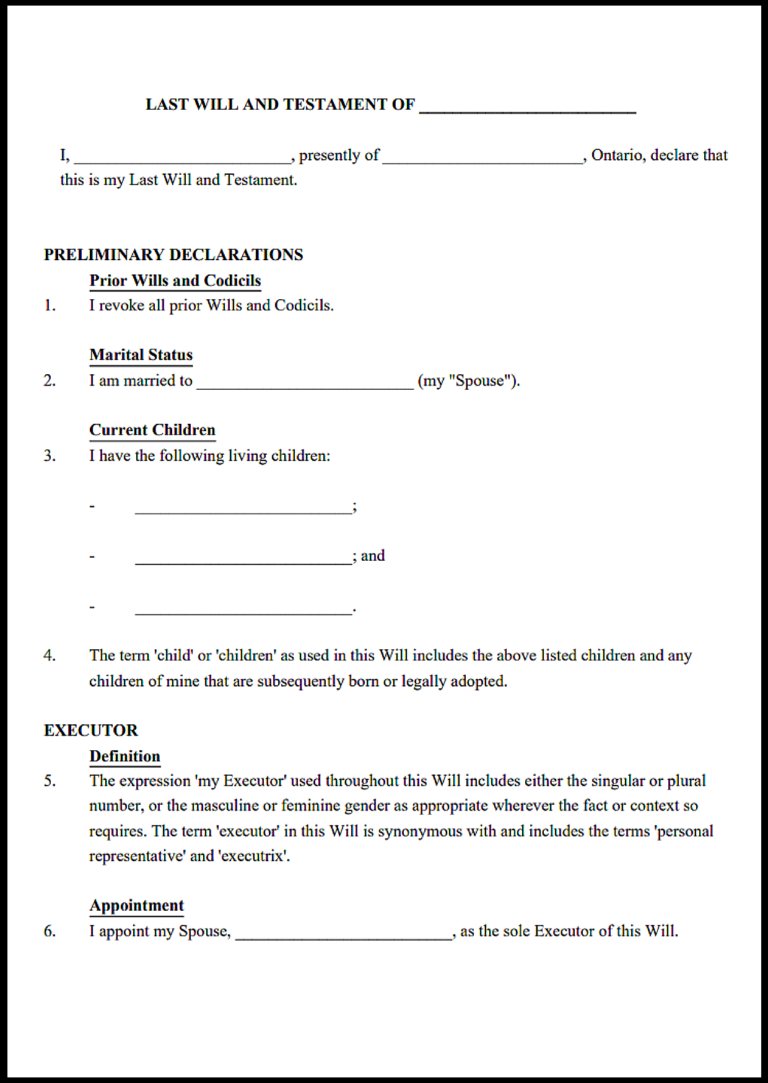
A will is the main legal document that controls how your assets are distributed after death. Under Ontario law, it must be properly signed and witnessed. Without a will, your estate is distributed according to legal rules, not your personal wishes. This can create unwanted outcomes for your family.
Power of Attorney (POA)
A Power of Attorney allows someone to act on your behalf if you cannot. There are two types in Ontario: one for property (financial matters) and one for personal care (health decisions). If someone becomes incapable, a POA avoids court involvement and delays.
Beneficiaries & Asset Distribution
Clearly naming beneficiaries is very important. You should also include alternate beneficiaries in case the primary one is unavailable. Keeping this information updated helps avoid disputes and ensures your assets go to the right people.
Guardianship Planning
If you have minor children, you can name a guardian in your will. Courts usually follow your choice. Without this, the court decides who will take care of your child, which may not match your wishes.
Insurance & Financial Planning
Life insurance plays an important role in estate planning. It can help pay debts, support family members, and cover estate costs like taxes or probate fees. This reduces financial stress on your loved ones.
Step-by-Step: How to Use This Checklist
Keep it simple and practical:
- Start by listing all assets and debts
- Choose your executor and beneficiaries carefully
- Create your will and Power of Attorney documents
- Store documents in a safe, accessible place
- Review your plan every few years
Ontario Laws You Must Know Before Planning
Before creating your estate plan, it is important to understand key legal rules in Ontario. In Ontario, you must be at least 18 years old to make a will or a Power of Attorney for Property, and at least 16 years old to make a Power of Attorney for Personal Care. A will must be signed in front of two witnesses, and those witnesses should not be beneficiaries.
The Substitute Decisions Act governs how Power of Attorney works, especially when someone becomes incapable. The Succession Law Reform Act controls how estates are distributed if there is no will. Probate, also called Estate Administration Tax in Ontario, may apply when assets are transferred after death.
Common Estate Planning Mistakes in Canada
Many people make avoidable mistakes when planning their estate. Not having a will is one of the most common issues, and it often leads to legal complications. Choosing the wrong executor can also create problems if that person is not responsible or capable.
Another common mistake is not updating documents after major life changes like marriage or divorce. Ignoring digital assets is also a growing issue, as many important accounts are now online. Some people rely only on DIY templates without understanding legal rules, which can make documents invalid.
Real-Life Example (Why This Checklist Matters)
Consider a situation where a person dies without a will in Ontario. Their estate is distributed according to law, not personal wishes, which can lead to family disputes. In another case, if someone becomes mentally incapable without a Power of Attorney, the family must go to court to gain control over finances.
These situations are stressful, time-consuming, and expensive. A simple checklist and proper planning can prevent these problems and make things easier for your family.
Estate Planning Checklist vs Will (Quick Comparison)
| Feature | Checklist | Will |
| Purpose | Organize planning |
Legal instructions
|
| Legal status | Not binding |
Legally enforceable
|
| Use | Preparation tool |
Final decision document
|
Tax & Financial Considerations (Canada)
In Canada, there is no inheritance tax, but taxes can still apply after death. Under the concept of deemed disposition, assets are treated as if they were sold at death, which can create capital gains tax.
In Ontario, Estate Administration Tax (probate fee) is $0 on the first $50,000 of estate value, and $15 per $1,000 on the portion above $50,000. Proper planning can help reduce tax impact and protect more of your assets for your beneficiaries.
When Should You Update Your Estate Plan?
You should update your estate plan whenever major life changes happen. Events like marriage, divorce, or the birth of a child can affect your wishes and legal situation. Buying property or having significant financial changes also requires updates.
Even if nothing major changes, it is a good idea to review your estate plan every 2–3 years to ensure everything is still accurate and relevant.
Frequently Asked Questions
Is an estate planning checklist legally binding in Canada?
No, it is only a planning tool. Legal documents like a will or Power of Attorney are required for it to be enforceable.
Do I need a lawyer for estate planning in Ontario?
It is not mandatory, but highly recommended. A lawyer ensures your documents meet legal requirements and reduces the risk of mistakes.
What happens if I die without a will in Canada?
Your estate is distributed according to provincial law, which may not match your wishes.
How much does estate planning cost in Ontario?
Costs vary depending on complexity. Simple plans are more affordable, while detailed estate plans cost more.
Can I create my estate plan online?
Yes, but you must be careful. Online tools may not fully meet Ontario legal requirements.
Final Thoughts
Estate planning is important for everyone, not just wealthy individuals. It gives you control over your future and protects your family from unnecessary stress. Starting with a simple checklist makes the process easier and more manageable.
Taking action today can prevent serious problems tomorrow. Regularly review your plan and update it as your life changes.