N12 Form Ontario | Free PDF & Word
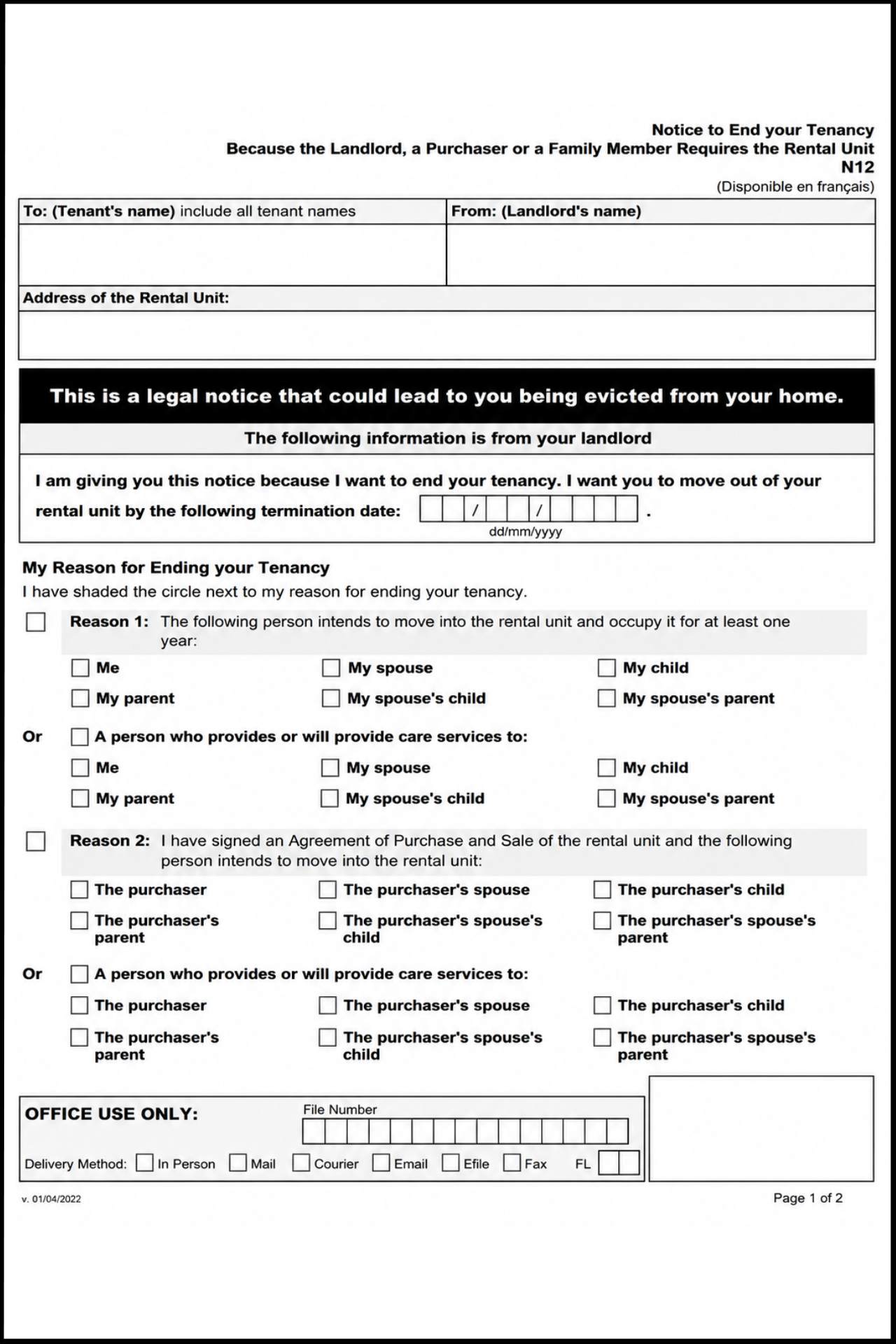
N12 Form Ontario is used when a landlord wants to end a tenancy because they, a purchaser, or a qualifying family member requires the rental unit for residential use, but the form is often misunderstood by both landlords and tenants. Under Ontario’s Residential Tenancies Act, 2006, the notice must meet specific requirements, and the Landlord and Tenant Board (LTB) can review whether the termination was issued properly and in good faith.
In practice, I’ve seen disputes where a landlord served an N12 but failed to provide the required compensation or later could not show that the unit was actually needed for the stated purpose, leaving the matter to be decided through the LTB process. A generic eviction notice template from another province usually misses Ontario’s required LTB form and the rules that apply specifically to landlord-use terminations. This page explains how the N12 Form Ontario works, when it can be used, what landlords and tenants need to check before relying on it, and the mistakes that can create problems later.
N12 Form Ontario
Legal Process And Required Timelines For An Ontario N12 Form
An N12 is not an immediate eviction order. It is a notice that starts a legal process, and the tenant does not have to leave simply because the landlord delivers the form.
Under Section 48(2) of the Residential Tenancies Act, 2006, the landlord must provide at least 60 days’ written notice using the official Form N12. The termination date must also match the last day of the rental period or the end date of a fixed-term lease.
For example, a landlord in Mississauga who gives an N12 notice on April 15 cannot choose an unrelated mid-month termination date. The date must follow the rental period rules set by Ontario law.
The notice must identify the reason for ending the tenancy, including who requires the rental unit. This may include:
- The landlord.
- A purchaser of the property.
- The landlord’s or purchaser’s spouse.
- The landlord’s or purchaser’s child or parent.
- An eligible caregiver.
The person named in the notice must genuinely intend to occupy the unit as a primary residence for at least one year. This requirement exists to prevent landlords from using an N12 simply as a way to remove a tenant.
A landlord who wants possession but does not have a genuine intention to occupy the unit cannot rely on an N12. The notice must be connected to the specific legal reason stated under Ontario tenancy law.
If the tenant does not move out voluntarily after the termination date, the landlord cannot force them to leave. The landlord must apply to the LTB using an L2 Application to End a Tenancy and Evict a Tenant along with the required documents.
The landlord has a strict 30-day period after the termination date to file the application if the tenant remains in the unit. Missing this deadline can cause the N12 to expire.
For instance, if a landlord in Ottawa serves an N12 and the tenant stays after the stated termination date, the landlord must follow the LTB process instead of changing locks or removing belongings.
Who Can Serve An Ontario N12 Form And How
An N12 can only be used by a landlord or a properly authorised person acting on the landlord’s behalf. The notice is not available for every type of property owner or situation.
Under the Residential Tenancies Act, 2006, s. 43(1)(d), the landlord or authorised representative may serve the notice. However, ownership structure matters.
A corporate landlord cannot use an N12 for its own use. The property must be owned entirely or partly by an individual for an own-use N12 situation.
For example, if a rental building in Hamilton is owned only by a corporation, the corporation cannot issue an N12 simply because the company wants the unit available for someone connected to the business.
The notice must also identify the correct person who requires the rental unit. A landlord cannot leave the reason vague or fail to explain who will occupy the property.
Mandatory Occupant Affidavit at Filing (§ 71.1)
To prevent bad-faith filings, Section 71.1(1) of the RTA imposes a strict evidentiary threshold: when a landlord files an L2 eviction application with the LTB, they must submit a sworn affidavit or declaration from the person who intends to move into the unit confirming their genuine commitment to occupy the property for at least one year.
Furthermore, under Section 71.1(3), the landlord must disclose on the application whether they have served an N12 or N13 notice for any rental unit within the preceding two years. Failing to include this mandatory sworn statement at the time of filing will cause the LTB to reject the application.
A common problem occurs when landlords complete the notice correctly but cannot support the reason later. For example, a landlord may state that a family member needs the unit but later be unable to show that the person actually intended to live there.
The LTB focuses on whether the notice was issued for the genuine reason stated, not simply whether the paperwork was completed.
What Makes An Ontario N12 Form Invalid Or Illegal
An N12 notice can fail if the landlord does not follow Ontario’s required rules. A correct reason alone is not enough; the procedure must also be followed.
One of the most serious errors is failing to pay the required compensation. Under the Residential Tenancies Act, 2006, s. 48.1 and s. 49.1, the landlord must pay the tenant compensation equal to one month’s rent, or offer another acceptable rental unit, before the required deadline.
If the compensation is not provided on time, the N12 can become invalid even if the landlord genuinely intended to move into the property.
For example, a landlord in Vaughan may issue an N12 because they plan to occupy the unit themselves. If they forget to provide the required compensation before the termination date, the tenant can challenge the notice at the LTB.
Another common mistake is choosing the wrong termination date.
An N12 cannot be used to end a fixed-term lease early. The termination date must follow the rules in the Residential Tenancies Act and cannot simply be selected based on when the landlord wants possession.
A corporate ownership mistake can also invalidate an N12. If a property is fully owned by a corporation, the landlord cannot rely on the own-use provisions that apply to individual ownership situations.
Consequences Of Getting An Ontario N12 Form Wrong
A defective N12 notice can create problems for the landlord and delay the process of ending the tenancy. The LTB can dismiss an application if the landlord has not followed the requirements set out under Ontario’s tenancy rules.
The most common failures include:
- Not paying the required one month’s rent compensation on time.
- Selecting a termination date that does not match the rental period or fixed-term lease requirements.
- Using an N12 when the landlord does not have a genuine intention to occupy the unit.
- Using an N12 for an ownership structure that does not qualify under the Act.
For example, a landlord in Brampton may serve an N12 because they want to move into the rental property. If the landlord later cannot prove that they intended to live there, the tenant may raise the issue before the LTB.
Ontario has also introduced stronger consequences for bad-faith N12 evictions. Under the amendments connected with the Helping Homebuyers, Protecting Tenants Act, 2023 (Bill 97), maximum administrative fines increased for bad-faith conduct involving these types of evictions.
A landlord who treats an N12 as a shortcut instead of following the proper legal process may face additional consequences beyond simply losing the eviction application.
Summary of Applicable Laws
| Topic | Rule | Governing Statute |
|---|---|---|
| Minimum notice period | Landlord must provide at least 60 days’ written notice, and the termination date must match the rental period or fixed-term lease | Residential Tenancies Act, 2006, S.O. 2006, c. 17, s. 48(2) |
| Good faith occupancy | The named person must genuinely intend to occupy the rental unit as their primary residence for at least one year | Residential Tenancies Act, 2006, S.O. 2006, c. 17, s. 48(1) |
| Compensation requirement | Tenant must receive one month’s rent compensation or another acceptable rental unit before the required deadline | Residential Tenancies Act, 2006, S.O. 2006, c. 17, s. 48.1 & s. 49.1 |
| Ownership restriction | A fully corporate-owned property cannot use an N12 for landlord or family member own use | Residential Tenancies Act, 2006, S.O. 2006, c. 17, s. 48(5) |
| LTB enforcement filing | If the tenant does not leave, the landlord must apply through the LTB process within the required timeframe | Residential Tenancies Act, 2006, S.O. 2006, c. 17, s. 69(2) |
The 1-Year Bad Faith Presumption For N12 Evictions
Ontario has specific protections against landlords who use an N12 notice without genuinely intending to occupy the rental unit.
Under the Residential Tenancies Act, 2006, s. 57(5), if certain events happen within one year after an N12 eviction, such as the unit being advertised for rent, rented to someone else, or sold, the LTB may presume the eviction was done in bad faith.
The effect of this rule is significant because the landlord may need to prove why the original N12 was issued and explain what happened after the tenant left.
For example, a tenant in Toronto may leave after receiving an N12 because the landlord says they need the unit for personal use. If the property is advertised for a new tenant shortly afterward, the former tenant may bring the matter before the LTB.
The limitation is that each situation depends on the facts presented to the Board. The landlord may have circumstances that explain the change, but they must be prepared to address the concern.
This protection makes Ontario different from many other provinces because the Residential Tenancies Act creates a specific one-year presumption connected to N12-related bad faith concerns.
Myth-Busting: Common Confusion About The N12 Form
Myth: “My landlord can evict me whenever they want if they need the property.”
Reality: A landlord cannot simply end a tenancy because they want the unit back. An N12 requires a valid reason under Ontario law, proper notice, compensation, and genuine intent to occupy the unit.
Myth: “Receiving an N12 means I have to leave immediately.”
Reality: An N12 does not create an immediate eviction. The landlord must provide the required notice period, and if the tenant does not leave voluntarily, the landlord must obtain an LTB order.
Myth: “Compensation is optional if the landlord has a real reason.”
Reality: Compensation is a required part of the N12 process. Failure to provide it within the required timeframe can make the notice invalid.
Myth: “A corporation can issue an N12 because the company needs the property.”
Reality: A fully corporate-owned property cannot use an N12 for landlord own use or family member use under the restrictions in the Residential Tenancies Act.
Frequently Asked Questions
How much notice does a landlord have to give with an N12 in Ontario?
A landlord must provide at least 60 days’ written notice. The termination date must also match the last day of the rental period or the end date of a fixed-term lease.
Does my landlord have to pay me if they issue an N12?
Yes. The landlord must provide compensation equal to one month’s rent or offer another rental unit acceptable to the tenant.
If the required compensation is not provided on time, the N12 may be invalid.
Can a corporation evict me using an N12 for its own use?
No. A fully corporate-owned property cannot use an N12 for landlord own use or family member use. The ownership requirements under Ontario law must be met.
What happens if my landlord re-rents the unit after using an N12?
If the unit is re-rented, advertised, or sold within one year after the N12 eviction, the LTB may presume the eviction was done in bad faith.
The landlord may need to provide evidence explaining the circumstances.
Can my landlord use an N12 to end my fixed-term lease early?
No. An N12 cannot be used to end a fixed-term lease before the lease term expires. The termination date must follow the requirements under the Residential Tenancies Act.
What happens if I do not move out after receiving an N12?
The landlord cannot remove you without an LTB order. If the tenant does not leave voluntarily, the landlord must apply to the LTB using the proper enforcement process.