Manitoba Roommate Agreement | Free Printable Template
A Manitoba Roommate Agreement is often the document people wish they had signed before a shared living arrangement starts to unravel. While Manitoba’s Residential Tenancies Act sets out the framework for tenancy relationships, it does not automatically resolve every disagreement between roommates over rent contributions, utilities, deposits, guests, or move-out responsibilities.
In practice, I’ve seen situations where one roommate left a shared rental unexpectedly, and when the dispute surfaced, the Residential Tenancies Branch had limited authority because the disagreement was primarily between the occupants rather than the landlord and tenant. That’s where a well-prepared roommate agreement becomes valuable—it records expectations while everyone is still on the same page.
Below you’ll find the key clauses, practical considerations, and Manitoba-specific issues that should be addressed before sharing a home.
Free Manitoba Roommate Agreement Template
Below is a simple Manitoba roommate agreement template that can be customized for most shared housing situations.
Manitoba Roommate Agreement Rules That Surprise Most Renters
| Topic / Issue | Manitoba Legal Rule | Governing Statute |
|---|---|---|
| Governing Law for Co-Tenants | If roommates jointly signed the master lease with the landlord, the arrangement is governed by Manitoba residential tenancy law. | The Residential Tenancies Act, C.C.S.M. c. R119 |
| Governing Law for Shared Accommodation | If the arrangement is between a leaseholder and an occupant sharing space, it is treated as shared accommodation and governed by common law contract principles rather than RTB tenancy protections. | Manitoba RTB policy; common law contract principles |
| Federal Jurisdiction | Manitoba roommate agreements fall under provincial jurisdiction only. | No federal acts apply |
| Who Can Legally Sign | Any adult or emancipated minor acting as a co-tenant or occupant may sign the agreement. | The Age of Majority Act, C.C.S.M. c. A7, s. 1 |
| Witness Requirements | Witnesses are not legally required for validity, though recommended for evidence purposes. | Common law principles |
| Notarization Requirement | Roommate agreements do not require notarization or commissioner swearing. | Common law principles |
| Age and Mental Capacity | A person must generally be at least 18 years old and capable of understanding the agreement. | The Age of Majority Act, C.C.S.M. c. A7, s. 1 |
| Limitation Period | Claims for breach of a roommate agreement must generally begin within 2 years after discovery of the claim. | The Limitation of Actions Act, C.C.S.M. c. L150, s. 2 |
| Mandatory Language Rules | Manitoba law does not require specific statutory wording, warnings, or boilerplate clauses for roommate agreements. | Common law principles |
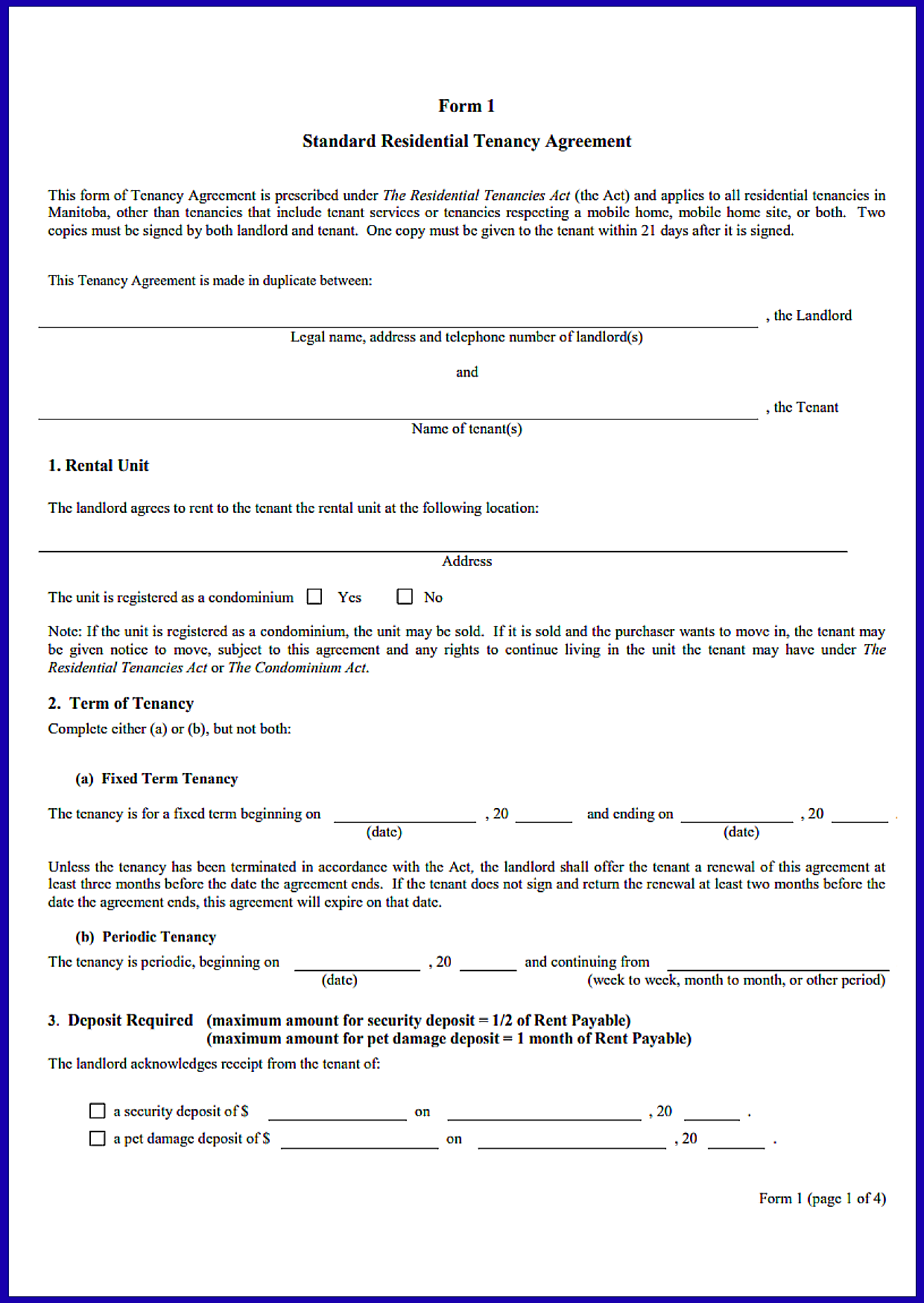
| Relationship to Form 1 | Unlike landlord-tenant leases, roommate agreements do not require Manitoba Form 1. | Residential tenancy framework distinction |
| Filing Requirements | Roommate agreements are private contracts and do not need to be filed or registered with the RTB, Service Manitoba, or Land Titles Office. | Common law principles |
| Enforcement Venue | Shared accommodation disputes are generally handled through the Manitoba Court of King’s Bench or Small Claims Court rather than the RTB. | Manitoba court jurisdiction rules |
| Invalid RTB Rights Clauses | Clauses claiming a roommate occupant can file RTB disputes may be unenforceable because the RTB lacks jurisdiction over occupant-versus-tenant disputes. | The Residential Tenancies Act, s. 1 |
| Minor Signing Risks | Agreements signed by minors may be voidable at the minor’s option. | The Age of Majority Act, s. 1 |
| Conflict With Master Lease | A roommate agreement cannot override restrictions contained in the original master lease. | Residential Tenancies Regulation; Form 1 terms |
| Manitoba Age Difference | Manitoba allows legally binding roommate agreements at age 18, unlike some provinces where the age of majority is 19. | The Age of Majority Act, s. 1 |
| RTB Exclusion for Shared Spaces | If a roommate shares a kitchen or bathroom with the leaseholder, the RTB may completely lack jurisdiction over the dispute. | Manitoba RTB shared accommodation policy |
| Security Deposit Practices | Deposit demands above half of one month’s rent may conflict with Manitoba residential tenancy standards and become difficult to enforce. | The Residential Tenancies Act deposit framework |
One of the most misunderstood Manitoba roommate rules is that the Residential Tenancies Branch may not handle disputes at all when roommates share a kitchen or bathroom with the leaseholder. Many renters assume every housing disagreement automatically falls under the RTB, but shared accommodation disputes are often treated as private contract matters instead. That means roommates may need to rely on Small Claims Court rather than tenancy dispute officers if problems arise.
Another important difference is Manitoba’s lower age of majority. An 18-year-old university student can usually sign a legally binding roommate agreement here, while the rules are different in several other provinces. The table also highlights why roommate agreements cannot override the original master lease. If the landlord bans pets or unauthorized occupants, a private roommate contract cannot legally cancel those restrictions. Getting these details wrong can lead to unpaid rent disputes, removal conflicts, or unenforceable clauses that fail when someone moves out unexpectedly. Download the free Manitoba Roommate Agreement template below to help avoid common shared-housing mistakes.
A roommate agreement helps tenants clearly outline shared living responsibilities, rent contributions, and household expectations within a rental property. To understand how these arrangements connect with broader tenancy rules, you can review the complete lease agreement guide in Canada together with the Manitoba tenant rights guide before creating the agreement.
Is a Roommate Agreement Legally Enforceable in Manitoba?
Yes, in many situations, roommate agreements can be legally enforceable in Manitoba because they are treated as private contracts under common law principles.
Roommate Agreements vs Residential Leases
There is an important legal difference between a landlord-tenant lease and a roommate agreement.
|
Agreement Type
|
Who It Covers | Main Law |
| Residential Lease | Landlord and tenant | Manitoba Residential Tenancies Act |
| Roommate Agreement | Roommates sharing housing | Manitoba common law contract principles |
| Sublet Agreement | Tenant and subtenant | Residential Tenancies Act + landlord consent rules |
Under Manitoba law, the Residential Tenancies Act mainly applies to landlords and tenants. It usually does not cover disputes between roommates themselves.
For example:
- Two friends splitting an apartment may rely mainly on contract law
- A tenant renting out a spare bedroom may create a private roommate arrangement
- Shared kitchen or bathroom arrangements often fall outside RTB authority
Shared Accommodation Rules in Manitoba
Shared accommodation generally means occupants share living spaces such as:
- Kitchen
- Bathroom
- Laundry area
- Living room
If the owner or head tenant lives in the same property and shares these facilities, the arrangement may fall outside Manitoba Residential Tenancies Branch jurisdiction.
This is one of the most misunderstood parts of Manitoba rental law.
Many people assume the RTB handles all housing disputes, but roommate disagreements often need to be resolved privately or through civil court processes instead.
Summary of Applicable Laws
| Topic | Rule |
Governing Statute
|
| Landlord-tenant relationships | Residential tenancy rules |
Manitoba Residential Tenancies Act (C.C.S.M. c. R119)
|
| Sublet and assignment approval | Landlord written consent required |
Residential Tenancies Regulation – Form 3
|
| Legal age to sign contracts | Parties must have legal capacity |
The Age of Majority Act (C.C.S.M. c. A7)
|
| Roommate agreements | Governed as private contracts |
Manitoba Common Law Contract Principles
|
| Wrongful lockouts or evictions | Self-help eviction risks |
Common Law Breach of Contract Principles
|
This document is commonly used alongside a standard Manitoba lease agreement when multiple tenants occupy the same property. Temporary housing arrangements may also involve a Manitoba sublease agreement if one roommate plans to move out before the original lease term ends.
What Should Be Included in a Manitoba Roommate Agreement?
A strong roommate agreement should clearly explain financial responsibilities, shared living rules, and move-out procedures.
Names of All Roommates
Include:
- Full legal names
- Phone numbers or email addresses
- Identification of the main leaseholder
- Emergency contact information if desired
This helps avoid confusion later if disputes happen.
Property Information
The agreement should clearly identify:
- Full rental address
- Which bedroom belongs to each roommate
- Shared areas
- Parking spaces if applicable
- Storage areas
If only one roommate has access to certain spaces, write that down clearly.
Rent Sharing Terms
Clearly explain:
- Monthly rent amount
- Each roommate’s share
- Payment due date
- Accepted payment methods
- Late payment expectations
For example, one roommate may pay 60% because they occupy the larger bedroom.
Utility and Internet Costs
Shared housing costs often create arguments when rules are unclear.
Include details about:
- Hydro
- Internet
- Water
- Parking fees
- Streaming subscriptions
- Shared grocery supplies
You can divide costs equally or by percentage.
Cleaning and Household Duties
Simple chore rules can prevent major conflicts.
Common responsibilities include:
- Kitchen cleaning
- Garbage removal
- Bathroom cleaning
- Vacuuming
- Snow removal
- Shared supply purchases
Many roommates rotate chores weekly to keep things fair.
Guest and Overnight Visitor Rules
Guest policies should be discussed before moving in together.
Include rules about:
- Overnight visitors
- Parties
- Noise levels
- Smoking
- Pets
- Shared parking use
This section is especially important in small apartments.
Move-Out and Notice Terms
Good agreements explain what happens if someone wants to leave early.
Include:
- Required notice period
- Early move-out rules
- Replacement roommate process
- Final bill payment responsibilities
Without written rules, disagreements often happen during move-out.
Security Deposit Arrangements
The agreement should explain:
- Who originally paid the deposit
- How refunds will be handled
- Damage responsibility
- Cleaning deductions
Documenting deposits carefully helps prevent future money disputes.
Landlords screening additional occupants may also request a rental application form to verify tenant information and maintain accurate tenancy records before approving shared occupancy.
Manitoba Sublet vs Roommate Agreement: Important Differences
Many renters accidentally confuse a roommate arrangement with a sublet. Under Manitoba law, they are not always the same thing.
When a Roommate Becomes a Subtenant
A roommate arrangement can become a sublet if:
- The original tenant moves out
- Another person takes over occupancy
- The new occupant pays rent directly for possession of the unit
Lease assignments are different again because they transfer lease responsibilities permanently.
Landlord Consent Requirements
Under Manitoba law, landlord written consent is required for sublets or assignments.
The Residential Tenancies Regulation uses Form 3 (Notice of Sublet or Assignment) for these situations.
A tenant should never assume they can replace themselves with another occupant without approval.
Risks of Using the Wrong Agreement
Using the wrong type of agreement can create serious problems such as:
- Unauthorized occupants
- Lease violations
- Deposit disputes
- Eviction risks
- Refusal of replacement tenants
Many disputes happen because roommates never clarified whether the arrangement was a simple roommate situation or a legal sublet.
Common Roommate Disputes in Manitoba
Most roommate problems involve money, noise, or shared responsibilities.
Missed Rent Payments
If one roommate stops paying rent, the other occupants may still owe the landlord the full amount.
Written agreements help by showing:
- Payment obligations
- Due dates
- Late fee expectations
- Cost-sharing responsibilities
In many cases, roommates may need Small Claims Court if disputes cannot be resolved privately.
Utility Bill Arguments
Common problems include:
- Unequal hydro usage
- Late bill payments
- Internet overuse
- Shared account confusion
Clear written percentages can reduce these disputes.
Damage to Shared Property
Disagreements often happen over:
- Furniture damage
- Pet damage
- Broken appliances
- Cleaning costs
Keeping photos and receipts is a smart precaution.
Noise, Guests, and Lifestyle Conflicts
Shared living arrangements can become stressful when expectations are unclear.
Common conflicts involve:
- Loud music
- Overnight guests
- Smoking
- Parties
- Different work schedules
Quiet hours should always be written into the agreement.
What Happens if a Roommate Refuses to Leave?
A head tenant cannot simply lock someone out or remove their belongings without legal risk.
Under common law principles, self-help evictions may create liability for:
- Wrongful eviction
- Breach of contract
- Property damage claims
In serious disputes, civil court or Small Claims Court may become necessary.
How to Fill Out a Manitoba Roommate Agreement Properly
Discuss Expectations Before Signing
Before signing anything, roommates should discuss:
- Money responsibilities
- Cleaning expectations
- Privacy concerns
- Guests
- Shared purchases
Most conflicts happen because people assume everyone has the same expectations.
Put Every Important Rule in Writing
Verbal agreements are difficult to prove later.
Use simple and direct wording for:
- Rent amounts
- Utility splits
- Parking rights
- Chore schedules
- Pet approvals
Written agreements provide stronger evidence if disagreements happen.
Keep Signed Copies
Each roommate should keep:
- Printed copies
- Digital copies
- Photos of signed pages
- Shared cloud storage backups
This prevents disputes over changed terms later.
Update the Agreement When Circumstances Change
Agreements should be updated if:
- A new roommate moves in
- Rent increases
- Utility costs change
- Pets are approved
- Parking arrangements change
Old agreements can quickly become outdated.
Mistakes That Can Make Roommate Problems Worse
Using Vague Payment Terms
Avoid unclear wording like:
- “Pay rent sometime near the start of the month”
- “Split bills fairly”
Instead, write exact amounts and deadlines.
Ignoring Guest Rules
Many roommate conflicts begin with overnight guests staying too often.
Set limits clearly from the beginning.
Assuming the RTB Will Resolve Roommate Disputes
This is one of the biggest mistakes in Manitoba shared housing situations.
The Residential Tenancies Branch often does not handle roommate-only disputes involving shared accommodation.
Locking Out a Roommate Without Legal Authority
Changing locks or removing belongings without proper legal process can create liability risks.
Even outside the Residential Tenancies Act, courts may still protect occupancy rights under contract law.
Forgetting to Document Deposits and Shared Purchases
Always keep records for:
- Damage deposits
- Furniture purchases
- Shared appliances
- Utility payments
Screenshots and receipts can become important evidence later.
Real-Life Manitoba Roommate Scenarios
Student Apartment Shared by Three Tenants
Three university students rent an apartment together and divide:
- Rent equally
- Hydro equally
- Internet equally
They rotate kitchen and bathroom cleaning weekly to avoid arguments.
Head Tenant Renting Out a Basement Room
A tenant rents a basement bedroom while sharing the kitchen and bathroom with the homeowner.
Because facilities are shared, the arrangement may fall outside Manitoba RTB coverage.
A written roommate agreement becomes especially important in this situation.
Replacing a Roommate Mid-Lease
One roommate moves out before the lease ends.
The remaining tenants want to replace them with another person, but the landlord requires approval first.
The roommates also need to decide:
- How the damage deposit will be transferred
- Who pays outstanding bills
- When the replacement occupant officially takes over
Frequently Asked Questions
Is a roommate agreement legally binding in Manitoba?
Yes. In many situations, a roommate agreement can be legally enforceable as a private contract under Manitoba common law.
Can a roommate be removed without notice?
Usually, no. Locking out a roommate or removing belongings without proper legal steps may create wrongful eviction or breach of contract claims.
Does the Residential Tenancies Branch handle roommate disputes?
Not always. Many roommate disputes involving shared accommodation fall outside RTB jurisdiction.
Can roommates split utilities unevenly?
Yes. Roommates can agree to divide utilities however they choose as long as everyone agrees in writing.
Is notarization required for a roommate agreement?
No. Manitoba roommate agreements generally do not require notarization to be valid.
What happens if one roommate stops paying rent?
The remaining tenants may still owe the landlord the full rent amount. The dispute between roommates may need to be resolved privately or through Small Claims Court.
Can a landlord refuse a replacement roommate?
Yes. In some situations involving sublets, assignments, or lease changes, landlord approval may legally be required.