Manitoba Rental Application | Complete Tenant Application Form
A Manitoba Rental Application is often the first document exchanged before a residential tenancy begins, but it’s also where many avoidable disputes start. In Manitoba, landlords frequently use application forms to screen prospective tenants, yet problems can arise when an application is drafted in a way that appears to create tenancy obligations before a formal agreement is in place.
I’ve seen situations where a landlord accepted money during the application stage and later faced questions at the Residential Tenancies Branch about whether a tenancy had already been formed and whether the funds had to be returned. Generic Canadian rental forms often overlook Manitoba’s specific approach to tenancy applications, applicant information, and the timing of deposits, which can create confusion for everyone involved. This page explains how Manitoba rental applications work, what information can be requested, common mistakes to avoid, and how the application process fits into a residential lease arrangement.
Free Manitoba Rental Application Template
Below is a clean and practical template you can copy and use.
Manitoba Rental Application Rules That Surprise Most Landlords
| Topic / Issue | Manitoba Legal Rule | Governing Statute |
|---|---|---|
| Governing legislation | Manitoba rental applications are governed by provincial tenancy, privacy, and human rights laws, alongside federal privacy rules for personal information handling. | The Residential Tenancies Act, SM 1993, c 30; The Personal Investigations Act, CCSM c P34; The Human Rights Code, CCSM c H175; PIPEDA, SC 2000, c 5 |
| Jurisdiction | Landlord-tenant matters are provincial, while personal information and credit-check privacy rules also engage federal privacy law. | Constitution Act, 1867, s. 92(13); PIPEDA, SC 2000, c 5 |
| Who can legally sign | Prospective tenants, landlords, authorized property managers, co-signers, and guarantors may sign the application or related schedules. | The Residential Tenancies Act, SM 1993, c 30, s 1(1) and s 16 |
| Witness requirements | Witnesses are not legally required for a Manitoba rental application. | N/A (Common Law) |
| Notarization requirement | Rental applications do not need notarization or commissioning. | N/A (Common Law) |
| Age and mental capacity | Applicants must generally be 18 years old to enter a fully binding contract without a guarantor. Age discrimination is prohibited except for authorized 55+ housing. | The Age of Majority Act, CCSM c A7, s 1; The Human Rights Code, CCSM c H175, s 9(1) & s 21(1) |
| Processing timelines | Applicants may withdraw before acceptance. Landlords should notify applicants of approval or refusal as soon as possible. | Residential Tenancies Branch Policy Director’s Guidelines, Sub-Section 1.15 |
| Credit and background checks | Written consent must be included before conducting personal, credit, or criminal investigations. | The Personal Investigations Act, CCSM c P34, s 3 & s 6 |
| Written disclosure after investigation | If written consent is not built into the application, landlords must notify the applicant in writing within 10 days after granting or refusing tenancy. | The Personal Investigations Act, CCSM c P34 |
| Application fees | Landlords cannot charge application or processing fees. | The Residential Tenancies Act, SM 1993, c 30, s 11(1) & s 12 |
| Holding deposits | Any money collected at application must go toward the security deposit if approved or be returned if rejected. | The Residential Tenancies Act, Section 2.6 & s 10 |
| Security deposit limit | A security deposit collected during the application process cannot exceed one-half of one month’s rent. | The Residential Tenancies Act, SM 1993, c 30, s 29(1) |
| Filing requirements | Rental applications are private documents and are not filed with the RTB or Land Titles Office. | Private contract protocol under Manitoba law |
| Discriminatory screening clauses | Applications cannot refuse tenants based on protected grounds such as social assistance, children, or citizenship-related conditions. | The Human Rights Code, CCSM c H175, s 9(1) & s 21(1) |
| Illegal non-refundable fees | Non-refundable processing or credit-check fees are invalid and unenforceable. | The Residential Tenancies Act, SM 1993, c 30, s 11(1) & s 12 |
| Over-limit deposits | Landlords cannot demand a full month’s rent upfront during the application stage as a security deposit. | The Residential Tenancies Act, SM 1993, c 30, s 29(1) |
| Co-signer vs guarantor distinction | Manitoba distinguishes between co-signers on the tenancy agreement and guarantors signing separate guarantee contracts. | Residential Tenancies Branch policy interpretation |
One of the biggest surprises in Manitoba is that landlords cannot charge rental application fees at all. In many provinces, tenants expect to pay credit-check or processing costs, but Manitoba law blocks landlords from passing those expenses onto applicants. Another important rule is the written consent requirement for credit and background checks. If a landlord skips that step, they can create privacy problems very quickly.
The deposit rules also matter more than many people realize. A landlord asking for a full month’s rent upfront during the application process can accidentally violate Manitoba deposit laws. That becomes a serious issue if the applicant later files a complaint with the Residential Tenancies Branch or raises a human rights concern.
These rules protect both sides during the screening stage. Tenants know their personal information cannot be collected carelessly, while landlords reduce the risk of disputes by using a compliant application form. Even one illegal fee or discriminatory question can expose a landlord to refund orders, penalties, or formal complaints.
Download the free Manitoba Rental Application template below to make sure your screening process follows Manitoba rules properly.
Before approving a new tenant, landlords often review the main Canadian lease agreement guide to better understand how rental documents are commonly structured across provinces. Applicants may also want to review the Manitoba tenant rights guide before signing any housing agreement.
What Is a Manitoba Rental Application?
A Manitoba rental application is a screening document, not always a lease. Landlords use it to decide whether to approve a tenant.
In most rental situations, it helps verify:
- Income
- Rental history
- References
- Creditworthiness
However, there is an important risk in Manitoba. If a landlord accepts a security deposit and signs the application, it can legally become a tenancy agreement—even if a formal lease is not signed yet.
Rental Application vs Lease Agreement
A rental application:
- Used for screening tenants
- Not always legally binding
A lease agreement:
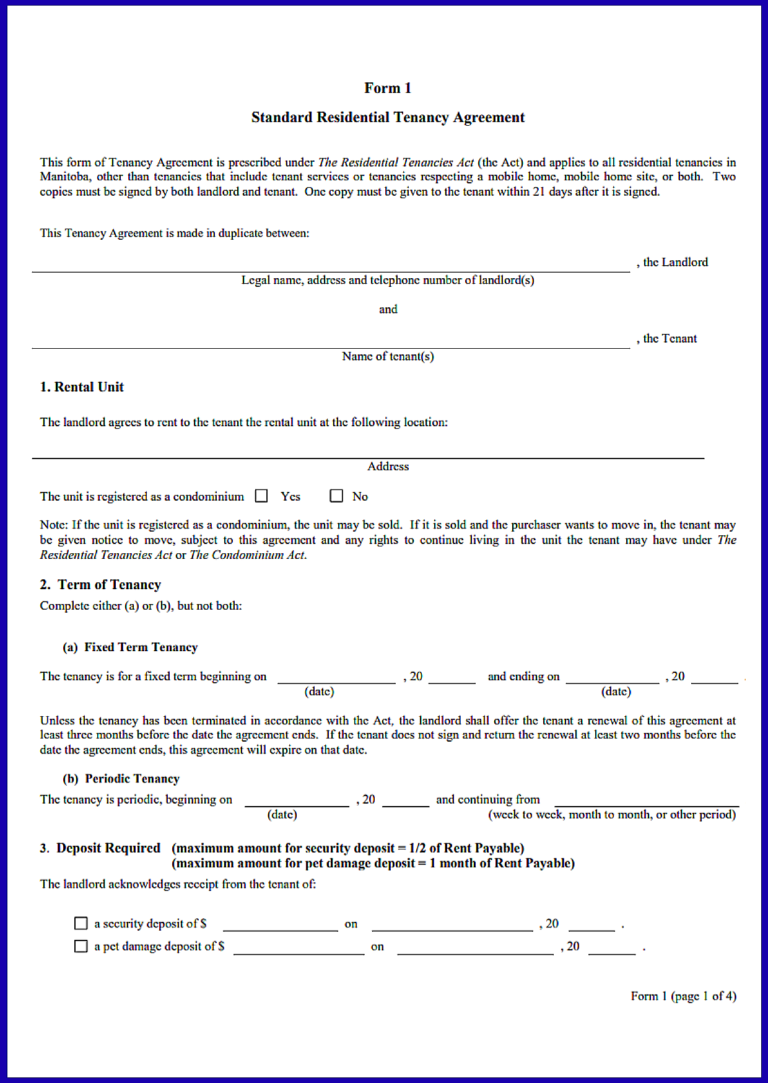
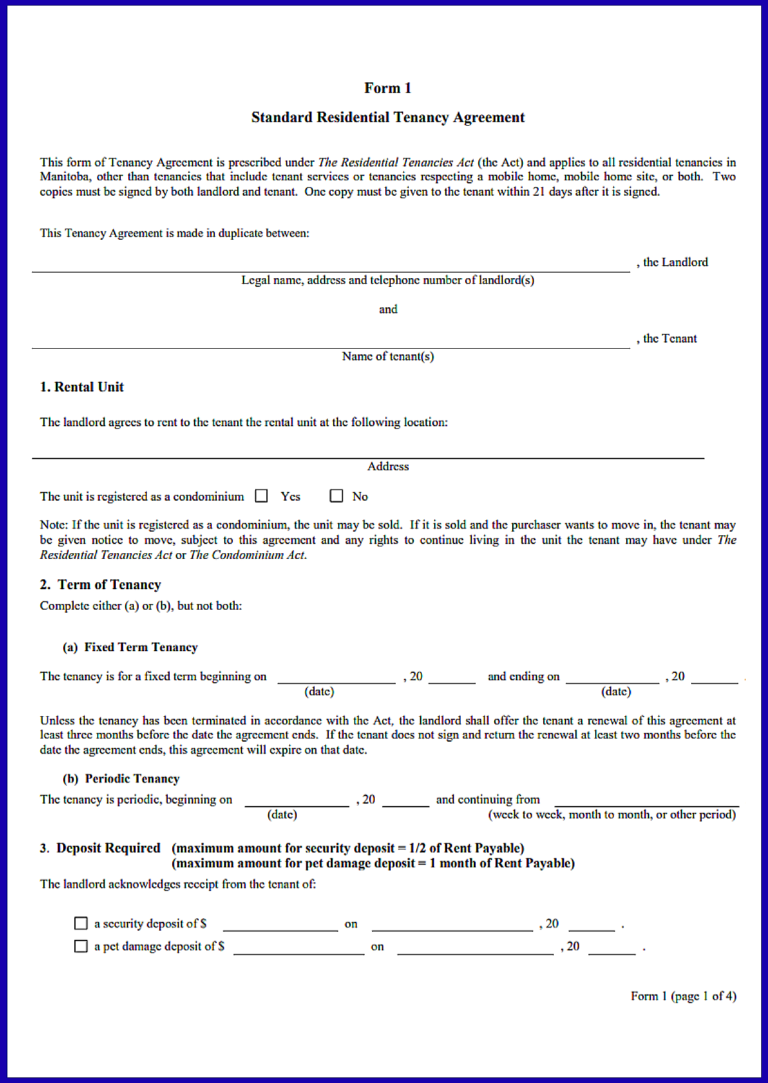
- A formal contract (like Manitoba Form 1)
- Creates a legal tenancy
Is a Rental Application Legally Binding in Manitoba?
Usually, no. But it can become binding if:
- A deposit is accepted
- The landlord approves the applicant
- Both parties act as if an agreement exists
Under common law, actions can create a contract even without a formal lease.
This screening document is commonly used before preparing a standard Manitoba lease agreement or a month-to-month rental contract for shorter tenancy arrangements.
Manitoba Laws That Apply to Rental Applications
Are Rental Application Fees Legal in Manitoba?
No. Under Manitoba law, landlords are not allowed to charge application fees.
This includes:
- Processing fees
- Holding fees
- Review fees
Even small charges are illegal. The RTB can order refunds or penalties.
Security Deposit Rules in Manitoba
- Maximum: ½ month’s rent
- Must provide a receipt
- Must be returned if the application is rejected
A landlord may keep the deposit only in limited cases, such as when:
- The applicant is approved
- The applicant refuses to move in
Pet Deposit Rules
- Maximum: 1 month’s rent
- Only allowed if the tenant has a pet
- Separate from the security deposit
| Deposit Type | Maximum Amount | When Allowed |
| Security Deposit | ½ month’s rent | All tenancies |
| Pet Deposit | 1 month’s rent | Only if tenant has pets |
After a tenant is approved, landlords often issue a rent receipt document to help maintain accurate payment records throughout the tenancy period.
Tenant Screening Rules Landlords Must Follow
Landlords must follow strict rules when screening tenants. They must respect privacy laws and human rights protections.
Credit Check Consent Requirements
Under Manitoba law, landlords must:
- Give written notice before checking credit
- Get clear consent from the applicant
The notice must be easy to understand and clearly visible.
Information Landlords Can Legally Request
Landlords can ask for:
- Employment details
- Income verification
- Rental history
- References
- Emergency contacts
Information Landlords Should Avoid Asking For
Landlords must avoid collecting unnecessary or sensitive data, such as:
- Mandatory Social Insurance Number (SIN)
- Banking passwords
- Excessive ID copies
- Personal data not needed for renting
Under federal privacy law, only necessary information can be collected.
Human Rights Protections for Manitoba Renters
The Human Rights Code protects tenants from discrimination.
Landlords cannot refuse tenants based on:
- Race
- Religion
- Disability
- Family status
- Source of income (like assistance programs)
Complaints can be made to the Manitoba Human Rights Commission.
Common Mistakes That Make Rental Applications Risky
Charging Illegal Application Fees
Even a small fee can lead to complaints and penalties. Many landlords make this mistake without knowing the law.
Collecting Too Much Personal Information
Asking for too much data can break privacy laws. It also increases risk if the data is leaked or misused.
Accepting Deposits Before Final Approval
This is one of the biggest mistakes. Accepting money too early can turn the application into a legal tenancy.
Using Discriminatory Screening Practices
Examples to avoid:
- Rejecting someone because of their income source
- Asking about family plans
- Treating applicants differently based on background
How to Fill Out a Manitoba Rental Application
Steps for Tenants
- Gather references before applying
- Prepare proof of income
- Read consent terms carefully
- Check deposit rules before paying
Steps for Landlords
- Use clear and fair screening criteria
- Keep all records secure
- Provide receipts immediately
- Document every step of the process
Best Practices for Digital Rental Applications
- Use secure file sharing tools
- Allow electronic signatures
- Store data safely
- Limit access to personal information
Real-Life Manitoba Rental Application Scenarios
Example of a Legal Screening Process
A landlord:
- Collects basic information
- Gets written consent
- Runs a credit check
- Reviews references
- Approves the tenant
- Then collects the deposit
This follows Manitoba law properly.
Example of an Illegal Application Fee
A landlord charges $50 to “process” applications.
This is illegal. The tenant can file a complaint with the RTB and get a refund.
Example of a Deposit Dispute
A tenant pays a deposit but later changes their mind.
If the landlord already accepted them, the landlord may keep part of the deposit for lost rent.
What Happens After the Rental Application Is Approved?
Once approved:
- The landlord prepares the lease agreement
- The tenant signs the official contract
- Deposits are handled properly
- A move-in condition report is completed
When to Use a Manitoba Lease Agreement
After approval, both parties should sign a formal lease. This ensures clear terms and legal protection.
Frequently Asked Questions
Can landlords charge rental application fees in Manitoba?
No. All application fees are illegal.
Can a landlord ask for my SIN number?
They can ask, but it must be optional—not mandatory.
Is a rental application the same as a lease?
No. It is only a screening document unless it becomes binding through actions like accepting a deposit.
Can a landlord keep my security deposit if I am rejected?
No. It must be returned if your application is denied.
Are online rental applications legal in Manitoba?
Yes, as long as they follow privacy and consent laws.
Can landlords refuse tenants based on income assistance?
No. This is considered discrimination under Manitoba law.
How much deposit can a landlord request in Manitoba?
- Security deposit: ½ month’s rent
- Pet deposit: up to 1 month’s rent