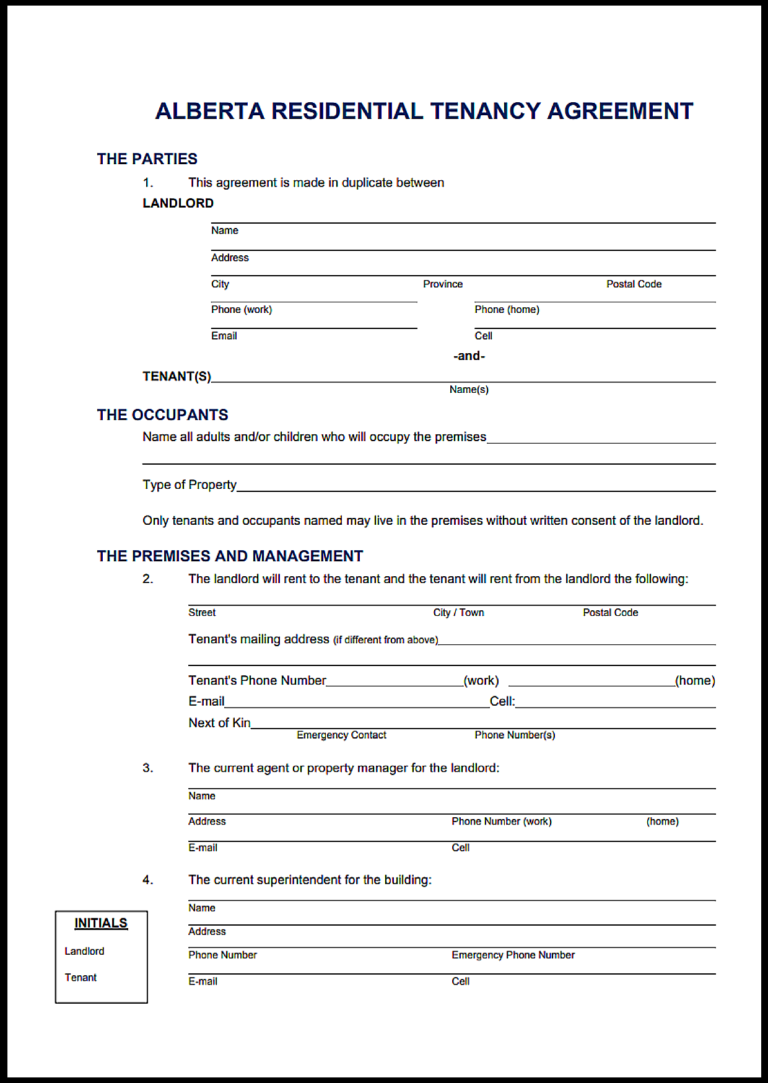
Free Alberta Roommate Agreement (PDF & WORD Template)
Alberta Roommate Agreement is something many people skip at first, but later regret. I’ve seen roommate disputes in Alberta turn serious because nothing was written down about shared bills, damage, or notice before moving out. Many first-time renters assume verbal promises are enough, but under Alberta rental rules, unclear arrangements often leave one roommate unfairly paying the cost
Living with roommates may seem easy, but problems like rent sharing, cleaning, or guests can quickly create tension. That’s why having a simple written agreement is very helpful from the beginning.
This article gives you a free Alberta-specific template, along with a clear explanation in simple English. It is useful for students, renters, and anyone sharing a home.
Last Updated: November 2026
Table of Contents
ToggleFree Alberta Roommate Agreement Template
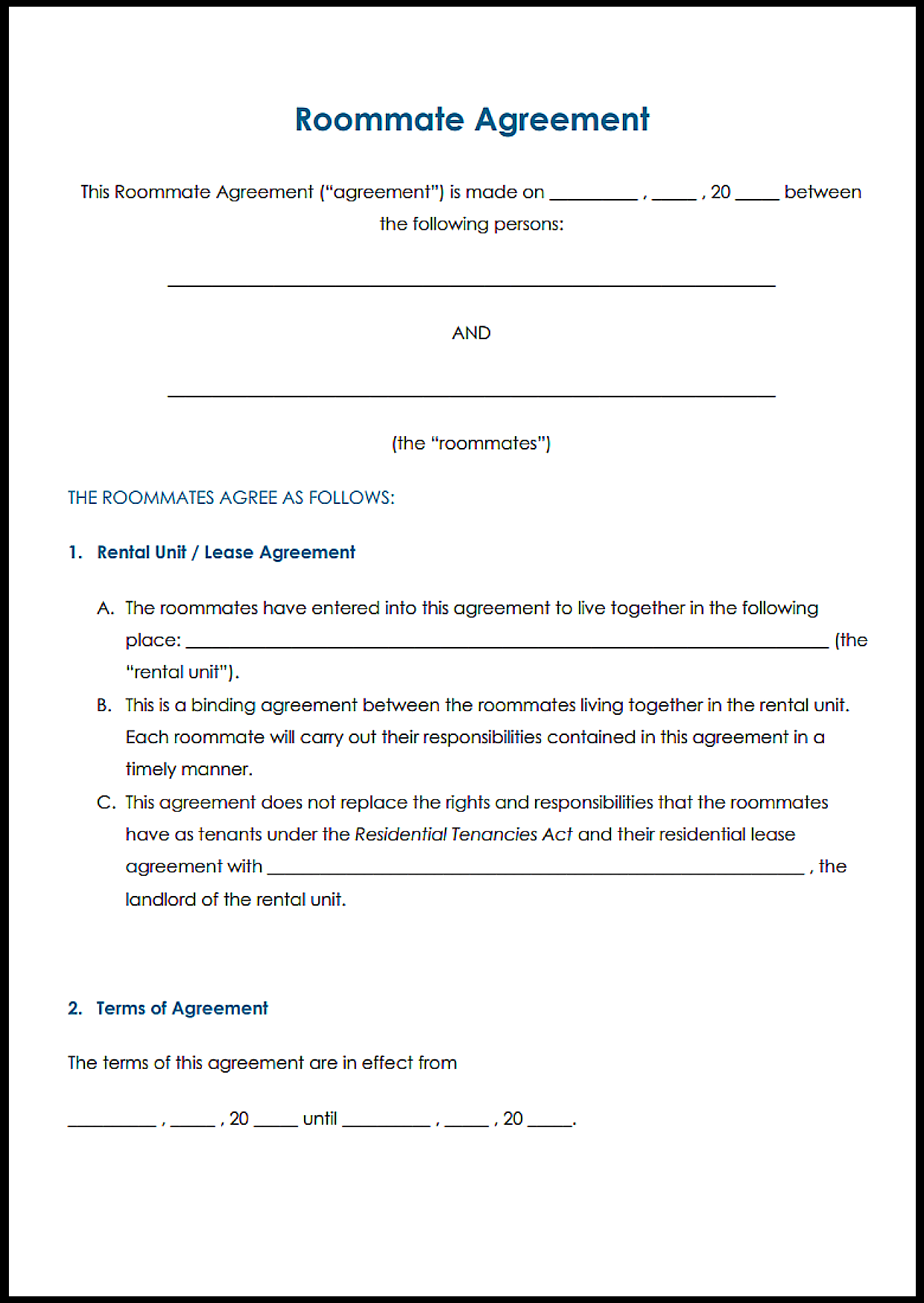
You can use this template directly. Just fill in the details clearly and make sure all roommates sign it.
Alberta Roommate Agreement Laws and Legal Limits You Should Understand
| Topic / Issue | Alberta Legal Rule | Governing Statute |
|---|---|---|
| Governing legislation | Roommate agreements are generally governed by contract law between the people who sign them. The landlord–tenant relationship is governed by Alberta tenancy legislation where the Act applies. | Residential Tenancies Act, SA 2004, c R-17.1 |
| Federal application | Roommate agreements are primarily a matter of provincial contract and property law. Federal legislation may still apply to particular issues within federal jurisdiction. | Constitution Act, 1867, s. 92(13) |
| RTA limitation | The Residential Tenancies Act generally governs the landlord–tenant relationship rather than ordinary disagreements between co-tenants. However, the Act may apply where one roommate is legally a landlord or sublandlord and the other is their tenant or subtenant. | Residential Tenancies Act, SA 2004, c R-17.1 |
| Sharing space with landlord | Under section 2(2)(c), the RTA does not apply to rooms in the living quarters of a landlord if the landlord actually resides in those quarters. Simply sharing a kitchen or bathroom is not the complete statutory test. | Residential Tenancies Act, SA 2004, c R-17.1, s. 2(2)(c) |
| Recent RTA amendments | Effective April 1, 2026, RTDRS application fees are $75 for claims of $7,500 or less and $150 for claims over $7,500. A counterapplication over $7,500 costs $100 when it meets the applicable requirements. RTDRS applications must concern premises and claims covered by the applicable tenancy legislation. | Alberta RTDRS filing fees |
| Who can sign | People who have the legal capacity to enter into a contract may sign. Whether an agreement involving a minor is enforceable depends on the applicable legal rules and circumstances. | Alberta contract law |
| Witness requirement | An ordinary private roommate agreement does not generally require a witness by statute. Having an independent witness can nevertheless help establish that the parties signed the document. | Alberta contract law |
| Notarization | Notarization is not generally required to make an ordinary private roommate agreement valid. | Alberta contract law |
| Minimum age and capacity | Alberta’s age of majority is 18 under section 1 of the Age of Majority Act. However, this does not mean every agreement involving someone under 18 is automatically invalid. Contractual capacity and enforceability depend on the circumstances. | Age of Majority Act, RSA 2000, c A-6, s. 1 |
| Time limit to sue | Under section 3(1) of the Limitations Act, the basic limitation period is generally two years from when the claimant knew or ought to have known the relevant facts. A ten-year ultimate limitation period also applies, subject to statutory exceptions. | Limitations Act, RSA 2000, c L-12, s. 3(1) |
| Mandatory wording | Alberta does not prescribe a specific statutory form or mandatory wording for an ordinary private roommate agreement. The terms should clearly record what the parties have agreed to do. | Alberta contract law |
| Recommended clarification clause | The agreement should explain that it governs the arrangements between the signing roommates and does not replace the main lease or automatically determine whether the RTA applies. | Residential Tenancies Act, SA 2004, c R-17.1 |
| Filing requirements | An ordinary roommate agreement is a private document and does not generally need to be registered or filed with a government office or RTDRS. | No general filing requirement |
| Invalid clauses | A roommate agreement cannot, without the landlord’s agreement, change the landlord’s contractual rights under the main lease. It also cannot remove statutory protections that apply under Alberta law. | Residential Tenancies Act, SA 2004, c R-17.1 |
| Illegal purpose | A contractual term requiring unlawful conduct may be unenforceable. The effect depends on the wording, purpose, and circumstances of the agreement. | Alberta contract law |
| Human rights violations | Private roommate arrangements are not automatically exempt from human-rights law. Section 5 of the Alberta Human Rights Act addresses discrimination in the tenancy of commercial units and self-contained dwelling units. Whether it applies to a particular room-sharing arrangement depends on the nature of the accommodation and the parties’ relationship. | Alberta Human Rights Act, RSA 2000, c A-25.5, s. 5 |
| RTDRS jurisdiction | RTDRS handles eligible landlord–tenant applications under the Residential Tenancies Act and Mobile Home Sites Tenancies Act. It is not a general tribunal for every disagreement between people sharing a home. A qualifying subtenancy may require a different analysis. | Alberta RTDRS – How to apply |
| Court handling disputes | Private contractual claims between roommates may be brought in the appropriate Alberta court. The Alberta Court of Justice Civil Division can hear eligible claims up to $100,000, plus interest and costs. Claims exceeding that monetary limit may proceed in the Court of King’s Bench. | Alberta Court of Justice – Civil Division |
Roommate disagreements in Alberta are not automatically matters for the Residential Tenancy Dispute Resolution Service (RTDRS). The correct process depends on the legal relationship between the people involved. For example, two people named on the same lease may have a private contractual disagreement, while a tenant who sublets a room to another person may have a landlord–tenant relationship with that occupant.
This distinction matters when someone stops paying rent or moves out unexpectedly. The RTDRS only handles eligible applications under the applicable tenancy legislation; it does not resolve every private disagreement between housemates.
Section 2(2)(c) of Alberta’s Residential Tenancies Act also contains a specific exemption for rooms in a landlord’s living quarters when the landlord actually resides there. This is not simply a rule that applies whenever a tenant shares a kitchen or bathroom with a landlord. Check the actual living arrangement before assuming that the RTA does not apply.
The limitation period deserves attention too. Under section 3(1) of Alberta’s Limitations Act, a claimant generally has two years from discovering, or when they ought to have discovered, the relevant injury and its connection to the defendant’s conduct. The section also establishes a ten-year ultimate limitation period, subject to exceptions. Do not assume that every claim automatically starts on the date someone moves out.
A generic online template may also create problems if it promises something that conflicts with the main lease. Before signing, check the lease, clarify each person’s responsibilities, and make sure the agreement reflects the actual living arrangement.
A written agreement cannot prevent every disagreement, but it can give roommates a clearer way to deal with shared expenses, damage, and early departures.
What Is a Roommate Agreement in Alberta?
A roommate agreement is a private contract between the people sharing a home. It records how they will divide expenses, use common areas, and manage household responsibilities. The landlord is not automatically a party to this agreement.
It is commonly used in shared housing situations such as student apartments, homes rented by friends, and properties where one tenant rents a room to another person. The main lease establishes the landlord–tenant relationship where the Residential Tenancies Act applies. The roommate agreement deals with the separate arrangements between the people who sign it.
-
It defines daily responsibilities.
-
It explains how rent and household expenses will be divided.
-
It records agreed rules for shared spaces and visitors.
-
It provides a written reference if disagreements arise.
When Should You Use a Roommate Agreement?
It is best to prepare the agreement before moving in, while everyone has an opportunity to discuss the arrangements openly.
It is especially helpful when:
-
You are sharing rent with friends or strangers.
-
Rooms are different sizes, so rent contributions are unequal.
-
Utilities, groceries, or internet costs are shared.
-
You want to establish household rules before problems arise.
For example, two students sharing an apartment may agree to divide electricity costs equally, even though one person works from home and uses more power. Recording the agreed arrangement makes it easier to settle the bill without relying on different recollections.
The agreement should also be checked against the main lease agreement signed with the landlord. A private arrangement between roommates does not automatically change the landlord’s rights or obligations under that lease.
Key Clauses Every Alberta Roommate Agreement Should Include
Rent and Payment Responsibilities
State exactly how much each roommate must contribute and when payment is due. If one person collects everyone’s contributions before paying the landlord, record that arrangement clearly.
-
Specify each person’s rent contribution.
-
Include the payment deadline and accepted payment method.
-
Explain how roommates will deal with a missed or late contribution.
-
Clarify whether any additional charges are shared.
Remember that a private agreement to divide rent does not necessarily limit the landlord’s ability to enforce the main lease against the tenants who signed it.
Utilities and Shared Expenses
Decide how household bills will be divided before the first bill arrives. This is particularly important when one roommate’s name is on the utility account.
-
Choose an equal split or an agreed percentage.
-
Identify expenses such as electricity, natural gas, water, internet, and shared supplies.
-
Explain how unexpected bills will be handled.
-
Set a deadline for reimbursing the person who paid the account.
Keep copies of invoices and payment confirmations so everyone can check the amounts.
Cleaning and Household Duties
Cleaning arrangements are easier to manage when everyone knows what they are responsible for. Instead of relying on verbal reminders, write down how shared areas will be maintained.
-
Create a weekly cleaning schedule.
-
Separate personal spaces from shared spaces.
-
Assign responsibilities for garbage, bathrooms, and kitchen areas.
-
Agree on how household supplies will be purchased.
Guests and Visitors Policy
Guests can cause disagreements when roommates have different expectations about privacy and overnight stays. Discuss these rules before someone regularly invites visitors.
-
Agree on reasonable limits for overnight stays.
-
Establish expectations for parties and gatherings.
-
Discuss advance notice for longer visits.
-
Make sure guest arrangements comply with the main lease.
Quiet Hours and Lifestyle Rules
Different work schedules and daily routines can make shared accommodation difficult. Set reasonable expectations that allow everyone to use the home comfortably.
-
Agree on quiet hours.
-
Discuss smoking and drinking in shared areas.
-
Consider work-from-home and study schedules.
-
Set expectations for shared entertainment spaces.
Household rules should also be consistent with the lease and applicable law.
Exit and Replacement Rules
A roommate leaving early can create financial problems for everyone else. This section should explain what happens when someone wants to move out before the agreed date.
-
State the agreed notice period between roommates.
-
Explain how outstanding rent and bills will be settled.
-
Set out the process for finding a replacement.
-
Clarify when landlord approval or consent is required.
Under section 22(6) of Alberta’s Residential Tenancies Act, where the Act applies, a tenant generally requires the landlord’s consent to assign or sublet the premises. The legal treatment of a replacement roommate depends on whether the person is becoming a co-tenant, subtenant, or occupant.
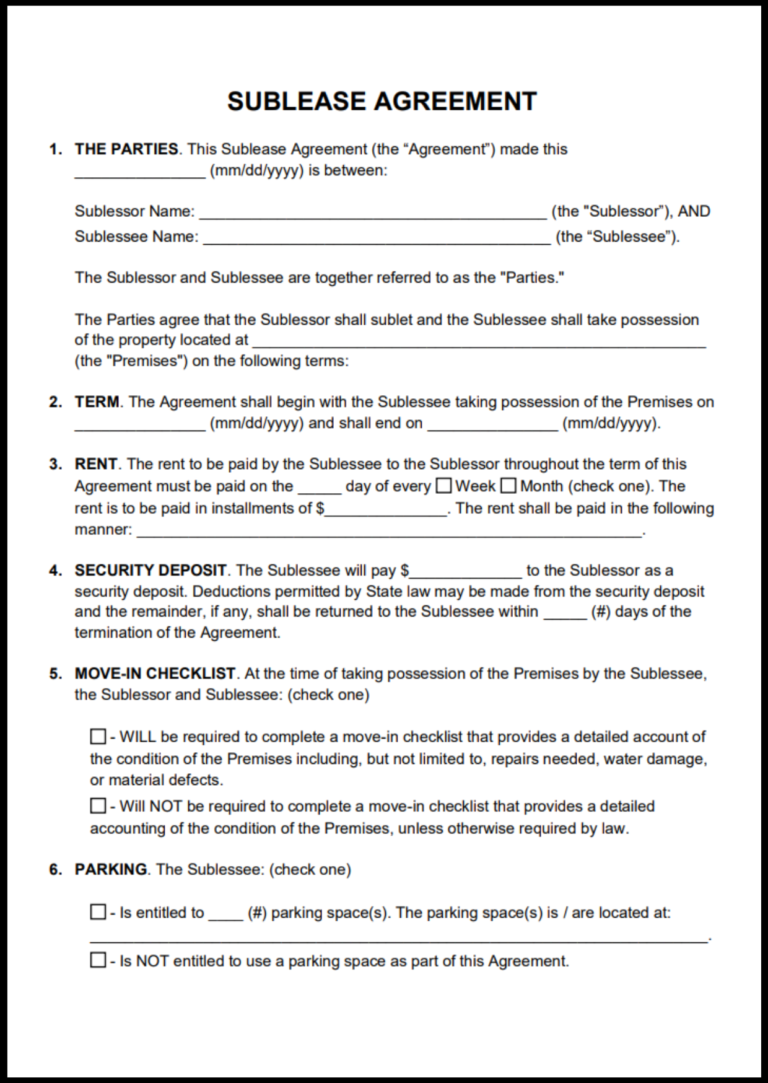
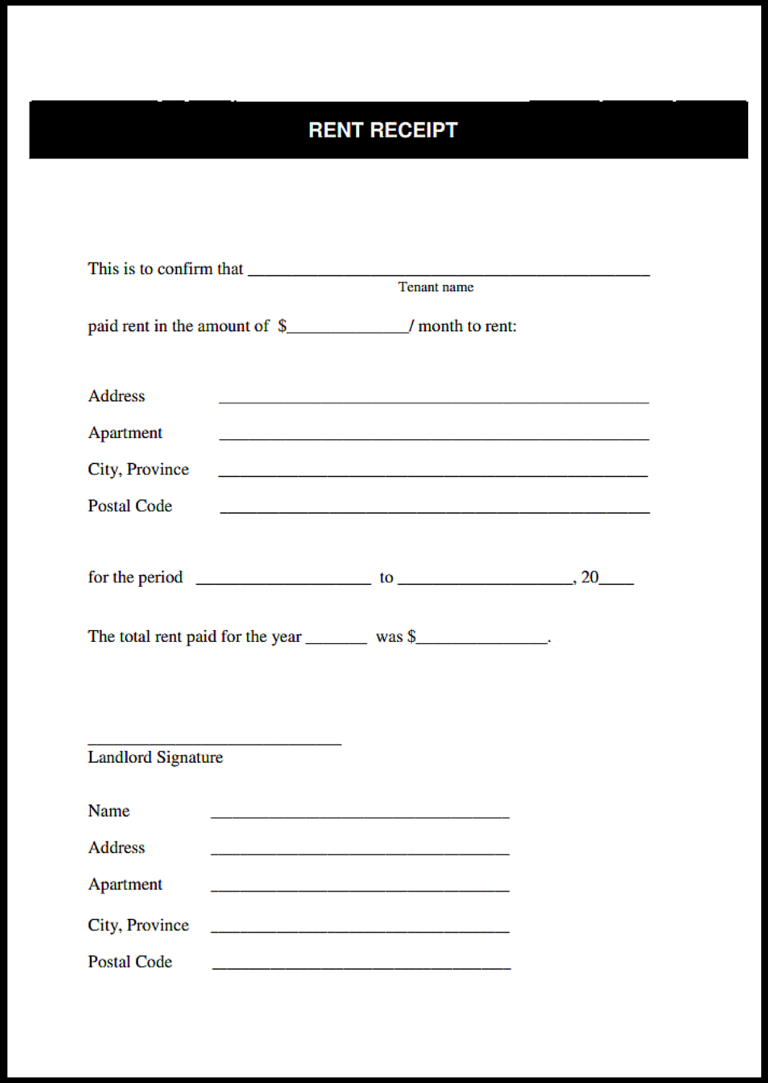
A sublease agreement may be appropriate where a tenant rents all or part of the premises to another person. Supporting documents such as a rent receipt can also help record payments.
Is a Roommate Agreement Legally Valid in Alberta?
Yes. A roommate agreement can be legally binding in Alberta when the usual requirements for an enforceable contract are satisfied. The outcome depends on the parties’ intentions, the agreement’s terms, and the circumstances in which it was made.
Before signing, make sure the agreement:
-
Clearly identifies everyone entering into it.
-
Explains each person’s financial and household responsibilities.
-
Records the terms that everyone has agreed to.
-
Does not contain terms that conflict with applicable legislation.
-
Is signed and dated by the parties.
A signature is useful evidence of agreement, but signing alone does not guarantee that every clause will be enforceable.
The roommate agreement also does not automatically change the main lease. If a proposed arrangement affects the landlord’s contractual rights, obtain any consent required under the lease or applicable law.
Alberta Rules You Should Know Before Signing
The main lease and the roommate agreement deal with different relationships. The lease establishes the landlord–tenant obligations, while the roommate agreement records the arrangements between the people sharing the property.
Important points to understand:
-
Rent liability: If several roommates sign the same lease, the lease may make them jointly and severally responsible for the rent. Check the actual wording rather than assuming each person is liable only for their agreed share.
-
Security deposit: Where the Residential Tenancies Act applies, the landlord must follow its security-deposit rules. Roommates should separately record how they contributed to the deposit and how they intend to divide any refund.
-
Landlord involvement: A landlord is not automatically bound by a separate roommate agreement. The agreement generally governs only the people who enter into it.
-
Replacement occupants: A change in who lives at the property may require landlord consent or compliance with the main lease, depending on whether the arrangement is an assignment, sublease, or another occupancy arrangement.
Key Legal Difference Table
| Rule | Roommate Agreement |
Lease Agreement
|
| Who it applies to | Roommates who sign it |
Landlord and named tenants
|
| Legal control | Contract law and applicable legislation |
Residential Tenancies Act, where applicable, and the lease terms
|
| Covers | Rent contributions, utilities, chores, visitors, and shared responsibilities |
Rent payable to the landlord, tenancy conditions, and statutory obligations
|
| Effect on the landlord | Does not automatically bind the landlord |
Establishes the landlord–tenant contractual relationship
|
| Legal limitations | Cannot unilaterally change the landlord’s rights or remove statutory protections |
Cannot waive rights that the RTA makes non-waivable
|
If one roommate does not pay their agreed share, the others may still face liability under the main lease if they signed it. They may have a separate contractual claim against the roommate who failed to contribute. The result depends on the lease and the roommate agreement.
Common Problems a Roommate Agreement Can Prevent
Rent disagreements are easier to resolve when everyone knows what they agreed to pay. In Alberta, this is particularly important when several roommates sign one lease but privately divide the rent between themselves. Record each person’s contribution, payment date, and responsibility for shared expenses so that a missed payment does not become a disagreement about what was originally promised.
A written agreement can also address:
-
How unpaid rent contributions will be recovered between roommates.
-
Who pays for damage caused by a particular occupant or guest.
-
How shared utility accounts will be settled.
-
What happens when someone wants to leave before the agreed date.
-
How a replacement occupant will be selected and approved.
Keep payment records and written communications. They can become important evidence if a disagreement turns into a civil claim.
Mistakes to Avoid When Creating a Roommate Agreement
The problems usually begin when roommates assume they understand the same arrangement differently. One person may expect 30 days’ notice before someone moves out, while another believes they can leave whenever they want. Write down the agreed notice procedure, payment responsibilities, and replacement-roommate process before anyone moves in.
-
Unclear rent contributions: State each person’s exact share and the date payment must reach the person responsible for paying the landlord.
-
No early-exit procedure: Explain how much notice roommates should give one another and how outstanding expenses will be settled.
-
Unapproved replacements: Check the main lease and obtain any landlord consent required before arranging an assignment or sublease.
-
Unrecorded payments: Keep receipts, bank-transfer records, and written confirmation of shared expenses.
-
Conflicting terms: Make sure the roommate agreement does not promise something that the main lease or applicable legislation prohibits.
Have every roommate review the final version before signing. A clear agreement is much easier to rely on than an arrangement based on different recollections of verbal conversations.
How to Fill Out and Use This Template (Step-by-Step)
Take time to discuss the arrangements before completing the document. Everyone should understand their responsibilities and have an opportunity to request changes.
-
Fill in everyone’s full name and the property address.
-
Decide each person’s rent contribution and payment deadline.
-
Record how utilities and other shared expenses will be divided.
-
Agree on cleaning, guests, and quiet hours.
-
Explain the procedure for moving out or finding a replacement.
-
Check the main lease for restrictions or consent requirements.
-
Print and sign copies for everyone.
-
Keep a digital backup and payment records.
If the agreement involves a sublease or a change to the named tenants, check the applicable Alberta tenancy requirements before proceeding.
Roommate Agreement vs Lease Agreement
These documents serve different purposes, even when everyone living in the property signs the same main lease.
| Feature | Roommate Agreement |
Lease Agreement
|
| Parties involved | The roommates who enter into the agreement |
The landlord and the named tenants
|
| Purpose | Divide household responsibilities and shared expenses |
Establish the landlord–tenant relationship
|
| Legal framework | Contract law and applicable common law |
The Residential Tenancies Act, where it applies, and the lease terms
|
| Covers | Rent contributions, utilities, chores, guests, and early departure |
Rent payable to the landlord, tenancy conditions, and statutory rights and duties
|
| Main limitation | Cannot unilaterally change the landlord’s rights under the main lease |
Cannot remove statutory tenant protections where the RTA applies
|
A roommate agreement can be useful even when all roommates have signed the same lease. It records how they intend to manage their responsibilities between themselves, rather than replacing the landlord’s agreement.
Who Needs an Alberta Roommate Agreement Most?
You may benefit from an Alberta roommate agreement even if you are sharing a home with friends. It becomes especially important when one person pays a larger rent share, another handles utility accounts, or someone plans to move out before the lease ends.
-
Students sharing an apartment who need to divide rent, internet, and utility payments.
-
Working professionals who have agreed to different rent contributions based on room size.
-
Friends renting together who want a clear process if one person moves out early.
-
A tenant who plans to have another person occupy part of the rental premises, subject to the lease and any landlord consent required by law.
If you are moving into a room in another person’s home, first establish whether you are becoming a tenant, a subtenant, or an occupant. That distinction can affect which legal protections and dispute-resolution options are available.
Frequently Asked Questions (FAQs)
Is a roommate agreement legally binding in Alberta?
Yes, a roommate agreement can be legally binding in Alberta if the usual requirements for an enforceable contract are met. The agreement should clearly identify the parties, set out their responsibilities, and record the terms they have accepted. Whether a particular clause can be enforced depends on its wording and the circumstances.
Can one roommate remove another?
One roommate cannot simply remove another person’s belongings, change the locks, or force them out without considering their legal status and applicable procedures. The correct process depends on whether the person is a co-tenant, subtenant, or occupant. If the Residential Tenancies Act applies, its protections and procedures must be considered. Check the main lease and seek legal advice before attempting to remove someone.
What happens if a roommate stops paying rent?
The consequences depend on the main lease and the roommate agreement. If several roommates signed the same lease and are jointly and severally liable, the landlord may be able to pursue the other named tenants for unpaid rent. A roommate who pays more than their agreed share may have a separate contractual claim against the person who failed to contribute.
Do I need a lawyer to create this agreement?
No. You can prepare an ordinary roommate agreement without hiring a lawyer. However, legal advice may be worthwhile if one roommate is subletting to another, someone is leaving before the lease ends, or the agreement involves significant financial responsibilities. A lawyer can also review terms that may conflict with the main lease or Alberta legislation.
Can this override the lease agreement?
No. A roommate agreement does not automatically change the landlord’s rights or obligations under the main lease. It can establish separate responsibilities between roommates, but it cannot unilaterally amend the landlord–tenant contract or remove statutory protections that apply under Alberta law.