British Columbia Separation Agreement [Free Template & Guide]
A British Columbia Separation Agreement can save separating spouses months of court appearances, but only if the details behind the document are handled properly from the start. In BC, the Family Law Act gives the court broad authority to reopen agreements where income, debts, pensions, or property weren’t fully disclosed, which is why rushed online templates often create bigger problems later.
I’ve seen disputes reach the Supreme Court of British Columbia years after signing because one spouse didn’t realise excluded property or business income had never been properly addressed in the agreement. Most people searching for this document are trying to keep matters civil, avoid unnecessary legal fees, and get some certainty during an already difficult separation, but they also want reassurance that what they sign won’t unravel later. This article covers how separation agreements work in British Columbia, what clauses are commonly included, when the court may refuse to enforce terms, and the practical steps that help prevent costly disputes down the road.
Last Updated: September 2026
Last Updated: September 2026
Table of Contents
ToggleFree British Columbia Separation Agreement Template
This general template can help many couples organize separation terms privately before or instead of court proceedings. It should reflect your real circumstances and may need legal review for complex matters.
British Columbia Separation Agreement Laws and Court Enforcement Rules
| Topic / Issue | British Columbia Legal Rule | Governing Statute |
|---|---|---|
| Governing legislation | Separation agreements in British Columbia are primarily governed by the Family Law Act, while the federal Divorce Act may also apply to married spouses in divorce proceedings and to issues within federal divorce jurisdiction. | Family Law Act, SBC 2011, c. 25 and Divorce Act, RSC 1985, c. 3 (2nd Supp.) |
| Who can legally sign | A person is a spouse under the Family Law Act if married or if they lived in a marriage-like relationship continuously for at least 2 years; for some parts of the Act, a person may also qualify as a spouse if they have a child with the other person. | Family Law Act, SBC 2011, c. 25, s. 3 |
| Witness requirements | For written agreements respecting property and debt or spousal support, each spouse’s signature must be witnessed by at least one other person. The same person may witness both signatures. | Family Law Act, SBC 2011, c. 25, ss. 93(1) and 164(1) |
| Notarization requirements | British Columbia law does not generally require notarization simply because a separation agreement is being made. Where the Family Law Act requires witnessing, the statutory witnessing requirement should be followed. | Family Law Act, SBC 2011, c. 25, ss. 93 and 164 |
| Age and mental capacity | British Columbia’s general age of majority is 19. Parties should also have sufficient capacity to understand the nature and consequences of the agreement. | Age of Majority Act, RSBC 1996, c. 7; common-law principles |
| Time limits for claims | Under s. 198, specified claims by married spouses generally must be started within 2 years after divorce or nullity, while spouses in a marriage-like relationship generally have 2 years after separation. A separate 2-year period can apply to an application to set aside or replace certain agreements, measured from when the grounds were discovered or reasonably ought to have been discovered. | Family Law Act, SBC 2011, c. 25, s. 198 |
| Child-related agreement rules | Parenting arrangements and contact terms must be in the child’s best interests. Child support is governed by the applicable child-support rules and is not simply a matter of private agreement. | Family Law Act, SBC 2011, c. 25, s. 37 |
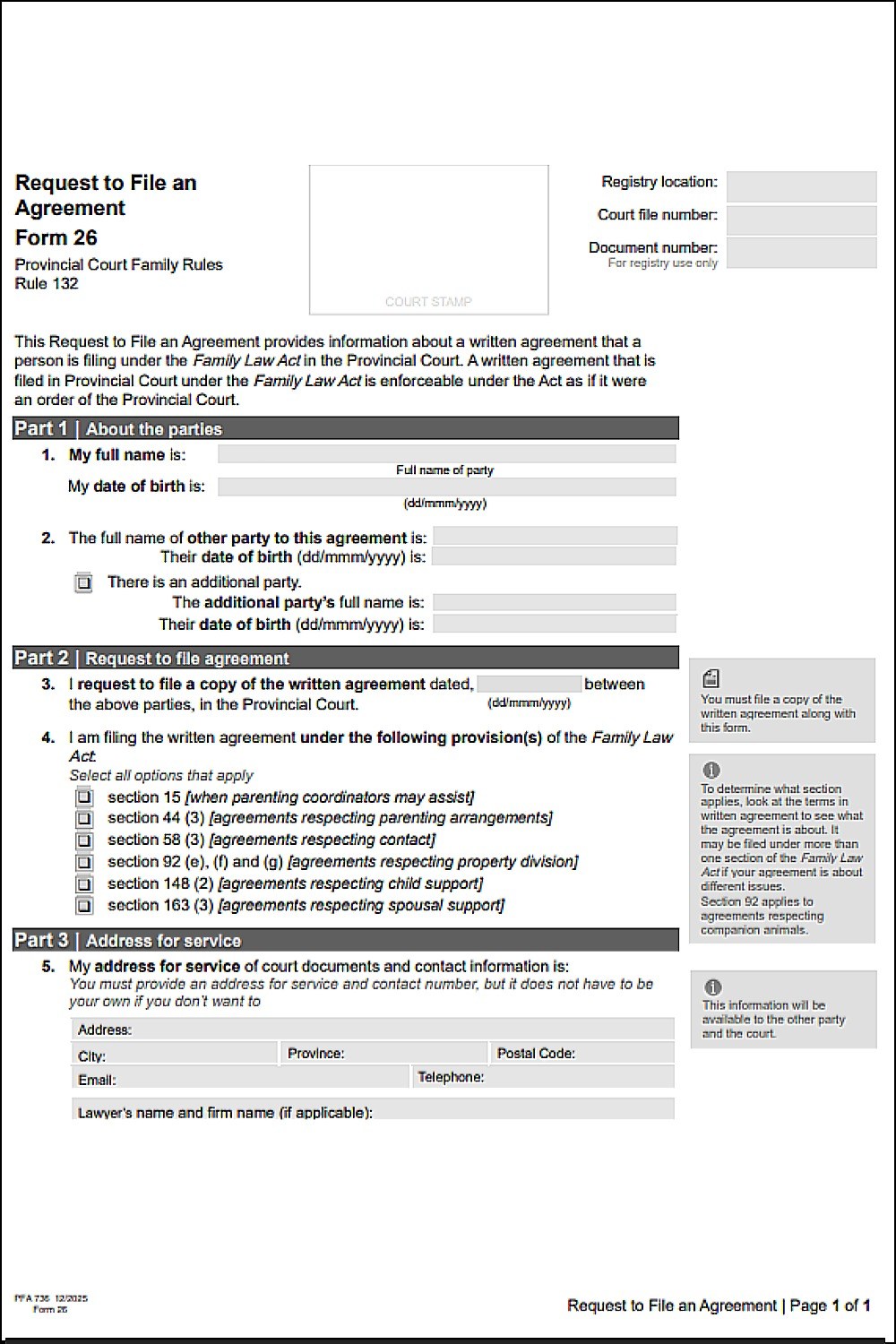
| Filing requirements | A separation agreement can be binding without being filed in court. Certain written agreements, including agreements dealing with parenting, child support or spousal support, can be filed so they can be enforced like a court order. | Family Law Act, SBC 2011, c. 25 |
| Support enforcement | Qualifying written child-support and spousal-support agreements can be filed with the court and enforced as if they were court orders; support agreements may also be enrolled with the BC Family Maintenance Agency for enforcement. | Family Law Act, SBC 2011, c. 25 |
| Real estate transfers | If the agreement requires a transfer of registered land, the necessary land-title documents must be completed and filed through British Columbia’s land-title system. | Land Title and Survey Authority of British Columbia requirements |
| Failure to disclose finances | The Supreme Court may set aside or replace all or part of a property-and-debt agreement where a spouse failed to disclose significant property, debts or other information relevant to negotiating the agreement. | Family Law Act, SBC 2011, c. 25, s. 93(3)(a) |
| Duress or lack of understanding | An agreement may be set aside where, for example, one spouse took improper advantage of the other spouse’s vulnerability, the spouse did not understand the nature or consequences of the agreement, or another common-law ground makes the agreement voidable. | Family Law Act, SBC 2011, c. 25, s. 93(3) |
| Significant unfairness | The court may set aside or replace certain property or spousal-support agreement terms where the statutory test for significant unfairness is met. | Family Law Act, SBC 2011, c. 25, ss. 93(5), 164(5) |
| Common-law property rights | Qualifying spouses in a marriage-like relationship can have statutory property and debt rights under the Family Law Act, although the rules and qualifying requirements depend on the part of the Act involved. | Family Law Act, SBC 2011, c. 25 |
| Companion animal rules | BC law gives companion animals specific treatment in family-law property disputes. Agreements can address ownership or possession, and a court considering a companion-animal order must consider factors including each spouse’s care, family violence, the child’s relationship with the animal, and each spouse’s ability to meet the animal’s needs. | Family Law Act, SBC 2011, c. 25, ss. 92 & 97 |
One of the biggest surprises for many separating couples in British Columbia is that qualifying spouses in a marriage-like relationship can have statutory property and debt rights under the Family Law Act. Many people wrongly assume that living together without marriage means there are no legal obligations, but BC law can still create major financial responsibilities after separation. Another important rule is BC’s “significantly unfair” standard. The court may set aside or replace certain agreement terms when the statutory test for significant unfairness is met. That makes full financial disclosure and careful drafting extremely important in real life.
The newer rules about companion animals also catch many families off guard because pets are no longer treated exactly like furniture or vehicles during disputes. Parenting terms matter just as much because courts focus heavily on the child’s best interests when reviewing parenting arrangements. Getting these rules wrong can lead to court challenges, delayed settlements, financial losses, or unenforceable terms later. The free British Columbia Separation Agreement template below can help create clearer and more legally organized separation terms.
A separation agreement helps couples document important decisions regarding property division, financial responsibilities, and family arrangements after a relationship ends. To understand how these legal documents fit within broader family and estate planning, you can review the British Columbia cohabitation agreement template together with the British Columbia prenuptial agreement guide.
Types of Separation Agreements in British Columbia
Not every BC separation agreement looks the same. The contents depend heavily on the issues being settled. A couple dealing only with property and debt needs a different level of detail from parents settling parenting, child support and spousal support at the same time.
Married Spouse Separation Agreement
This is commonly used by legally married spouses living apart. It often covers:
- Property division
- Spousal support
- Child support
- Parenting schedules
- Debt allocation
In many real-life situations, couples use this before divorce to create stability while larger legal steps are pending.
Common-Law Separation Agreement
Under British Columbia’s Family Law Act, common-law partners may still have major legal rights, especially regarding property and support. A written agreement can clarify:
- Shared home ownership
- Debt responsibility
- Support obligations
- Parenting terms
A common-law couple may benefit from a separation agreement, particularly where property, debt, support or children are involved. Whether the Family Law Act applies depends on the parties’ circumstances and the specific issue.
Separation Agreement With Children
When children are involved, the agreement should focus heavily on the child’s best interests. This usually includes:
- Parenting schedules
- Decision-making responsibilities
- Holiday arrangements
- Child support
Separation Agreement Without Children
When there are no children, the agreement can focus on property, debt, pensions and support. In BC, those issues can still involve statutory rights and deadlines, so the document should identify what is being divided, transferred, retained or released.
Temporary Separation Agreement
Useful when couples want short-term structure while deciding on reconciliation, divorce, or longer-term separation.
|
Agreement Type
|
Best For | Main Focus |
| Married Spouse | Married couples |
Full family, support, property
|
| Common-Law | Unmarried long-term partners |
Property, support
|
| With Children | Parents |
Parenting + support
|
| Without Children | Child-free couples | Assets + debts |
| Temporary | Short-term arrangements | Immediate rules |
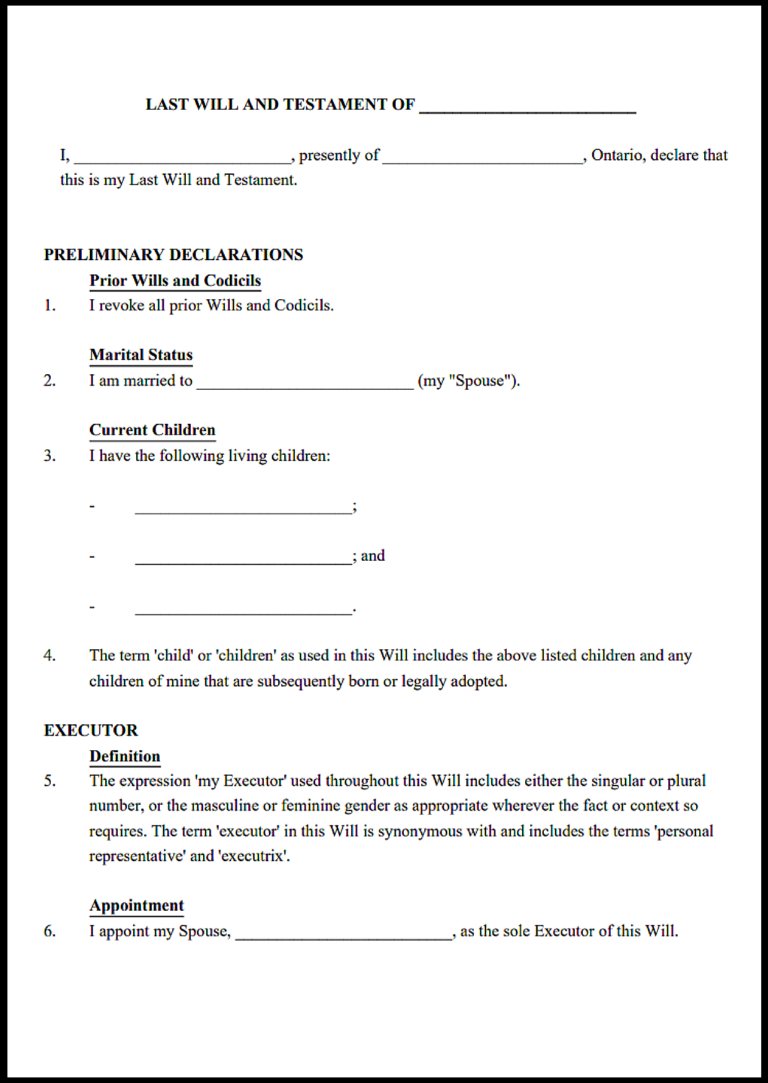
Major life changes often require updates to other legal planning documents as well. Individuals reviewing their financial affairs may also want to update a British Columbia last will and testament or review a British Columbia will template guide to ensure their estate plans reflect their current circumstances.
Key Elements of a Valid Separation Agreement
A useful BC separation agreement should do more than record that the couple has separated. It should identify the people involved, explain the parenting and support arrangements where applicable, and clearly account for property and debt. The legal rules for setting aside an agreement also make disclosure and understanding especially important.
Full Legal Identification
Include:
- Full names
- Addresses
- Relationship status
- Separation date
Parenting Arrangements
If children are involved, vague terms often lead to conflict. Important details include:
- Weekly schedules
- Holidays
- Education decisions
- Health decisions
Financial Support
Clear support terms should explain:
- Child support amounts
- Spousal support amounts
- Payment frequency
- Duration
Property and Debt Division
Many disputes happen because couples forget to list all major financial matters, including:
- Family homes
- Vehicles
- Savings
- Retirement accounts
- Credit cards
- Loans
Dispute Resolution
Good agreements often include future conflict solutions such as:
- Mediation
- Arbitration
- Court
Legal Advice and Proper Signing
Independent legal advice is not generally required simply to make a separation agreement, but obtaining advice before signing can help each person understand their rights and may reduce later disputes about the agreement.
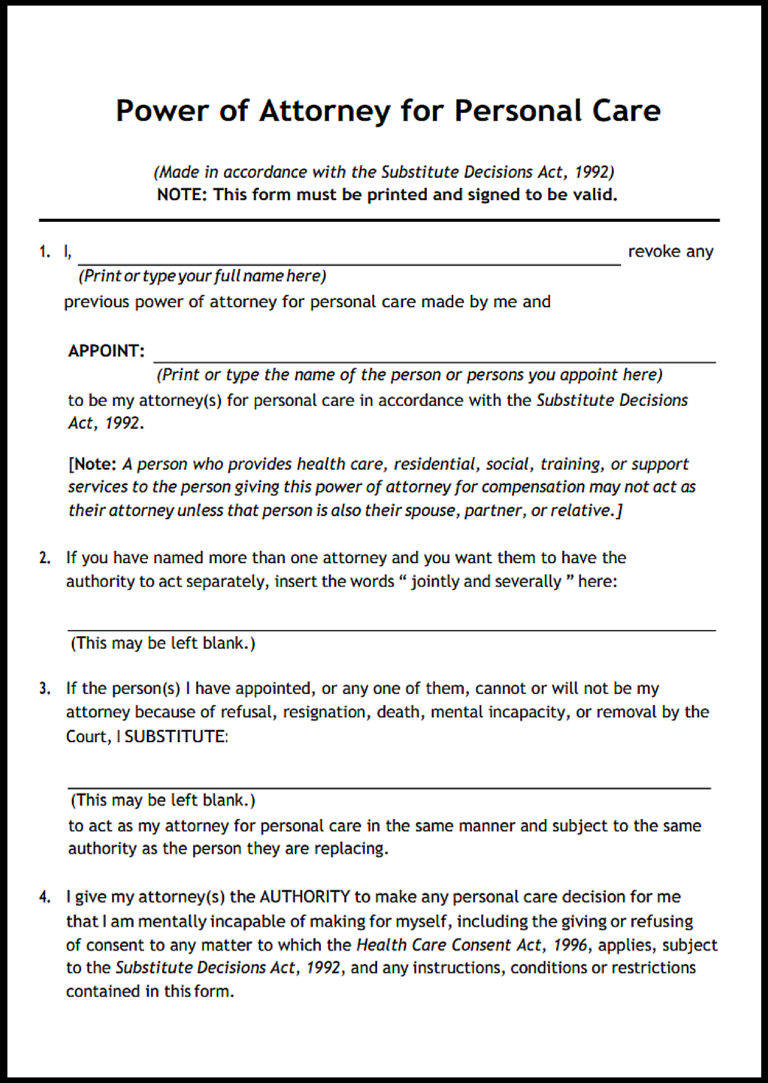
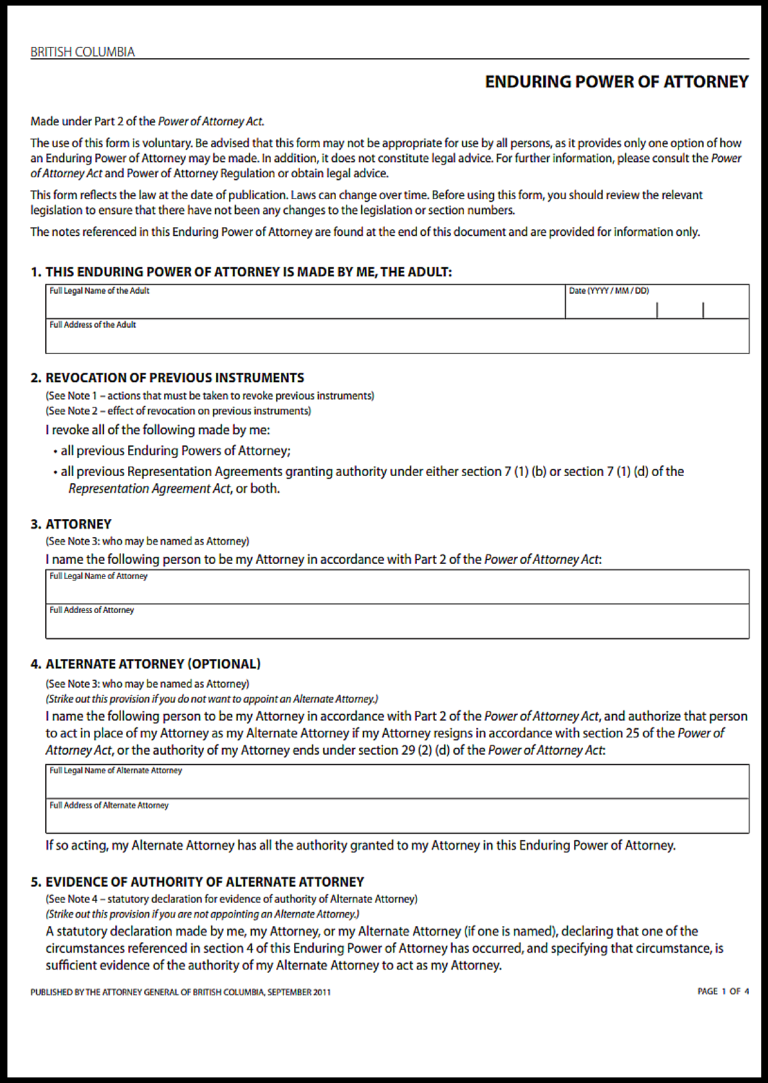
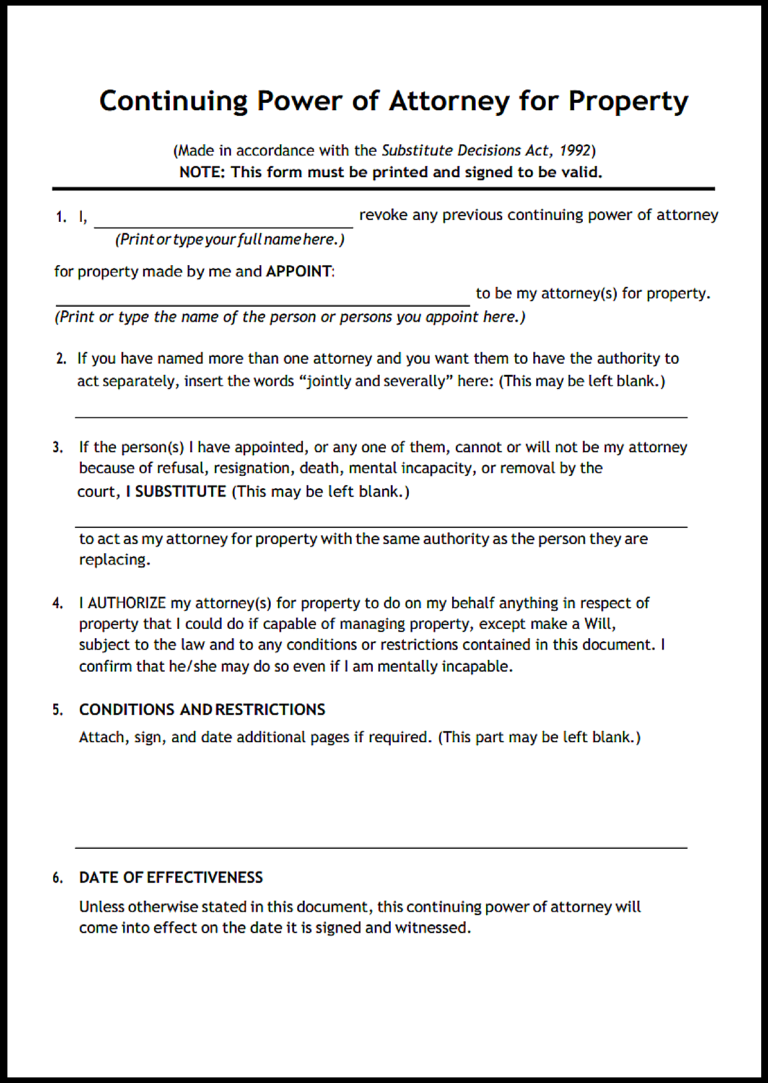
In some situations, separating spouses may need someone to manage financial matters on their behalf during a transition period. For that reason, it can be helpful to review a British Columbia power of attorney template and the process for obtaining a power of attorney in British Columbia.
How to Create or Complete This Document
Start with the facts that can be checked: the separation date, children, income, property, debts, pensions and any business interests. Those details should be settled before the final wording is treated as complete.
Begin by gathering accurate financial and family information, including property, debts, income, and parenting needs. Couples should clearly identify which type of separation agreement fits their situation.
When drafting terms:
- Be specific about parenting schedules
- Clearly assign debt responsibility
- List all major assets
- Explain support obligations
- Include future dispute resolution methods
For example, saying “shared parenting” is often too vague. A better agreement explains exact schedules, holidays, and decision-making roles.
After drafting, review the document carefully against the facts and the BC legal requirements that apply. For agreements where the Family Law Act requires witnessing, proper signatures and witnessing help satisfy the statutory requirements.
|
Common Mistake
|
Why It Causes Problems
|
| Vague parenting terms |
Leads to disputes
|
| Missing debt details |
Unexpected liability
|
| Ignoring pensions |
Financial imbalance
|
| No legal review |
Weaker protection
|
Legal Overview in British Columbia
The Family Law Act is the main BC statute to check when a separation agreement deals with parenting, support, property or debt. The exact rules differ by issue, so the relevant statutory provision should be checked rather than treating every clause as subject to one general enforceability test.
- Child support
- Parenting responsibilities
- Spousal support
- Property division
- Debt allocation
Under British Columbia law, courts may review agreements in the circumstances provided by the Family Law Act, including certain cases involving significant unfairness, improper advantage, lack of understanding, or inadequate disclosure.
Important Legal Rules
- Child support should generally follow legal guidelines
- Parenting arrangements must prioritize the child’s best interests
- Common-law partners may still have property rights
- Verbal promises are far less reliable than written agreements
A separation agreement does not itself grant divorce, but it often provides a clear framework for future legal steps.
Common Mistakes and Choosing the Right Type
The expensive mistakes are often the issues that were left vague at signing. Pensions, business interests, excluded property, debt, support and required property transfers can all create problems if the agreement does not deal with them clearly.
Common mistakes include:
- Ignoring pensions or retirement savings
- Forgetting tax implications
- One-sided support terms
- Missing parenting details
- Failing to update after major life changes
Choosing the right structure matters.
- Married with children often need comprehensive agreements
- Common-law couples may focus more on property and debt
- Low-conflict separations may work well privately
- Temporary living changes may need interim agreements
Families with businesses, major investments, or complex finances often benefit from more detailed legal review.
Related resources may also help:
- British Columbia child custody agreement
- Parenting plan template
- Child support agreement
- Spousal support agreement
- Cohabitation agreement
- Property division agreement
FAQ
Is a separation agreement legally binding in British Columbia?
Yes. A separation agreement can be binding in British Columbia, but the court may set aside or replace certain terms in the circumstances allowed by the Family Law Act, including certain cases involving non-disclosure, vulnerability, lack of understanding or significant unfairness.
Do common-law couples need one?
A common-law couple may benefit from a separation agreement, particularly where property, debt, support or children are involved. Whether the Family Law Act applies depends on the parties’ circumstances and the specific issue.
Can we create our own separation agreement?
Yes, but legal review can help reduce mistakes and improve enforceability.
Does a separation agreement replace divorce?
No. Divorce legally ends marriage, while separation agreements organize separation terms.
What if one person does not follow the agreement?
Mediation, arbitration, or court enforcement may become necessary. For qualifying support agreements, filing and enforcement options may also be available through the BC court system and the BC Family Maintenance Agency.