British Columbia Prenuptial Agreement (Free Template & Guide)
A British Columbia Prenuptial Agreement is often searched right after an engagement, a second marriage discussion, or a conversation about protecting a business, inheritance, or property that one person is bringing into the relationship. What catches many couples off guard is that the strongest challenge to a marriage agreement usually isn’t the wording itself — it’s incomplete financial disclosure before the document is signed, something the courts can scrutinise closely under the Family Law Act.
I’ve seen situations where an agreement looked settled for years, only for a dispute in the British Columbia Supreme Court to focus on assets that were never fully disclosed during the negotiation stage. That’s one reason generic Canadian templates frequently miss the mark in BC, where fairness, disclosure, and the circumstances surrounding the signing matter just as much as the final terms. Below you’ll find what a BC prenup can cover, how it should be signed, and the issues that commonly lead to challenges later on.
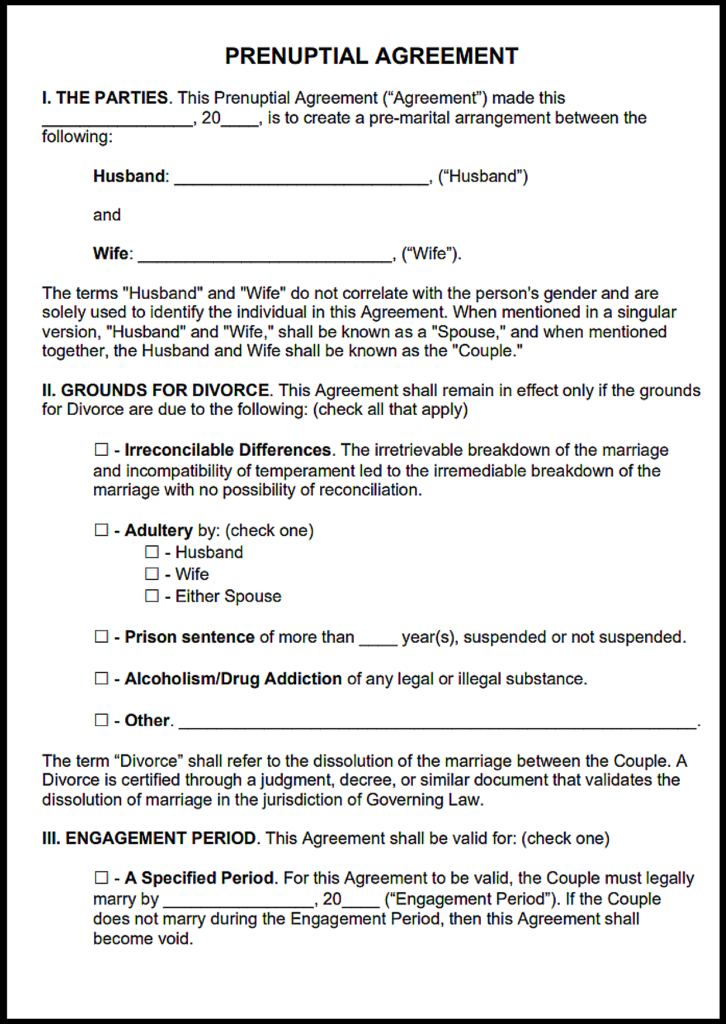
Free British Columbia Prenuptial Agreement Template
You can copy, edit, and customize this template based on your situation. Keep it clear and accurate.
British Columbia Prenuptial Agreement Laws, Court Challenges, and Property Rules
| Topic / Issue | British Columbia Legal Rule | Governing Statute |
|---|---|---|
| Primary provincial legislation | Prenuptial agreements in British Columbia are mainly governed by provincial family property and support laws. | Family Law Act, SBC 2011, c. 25 |
| Federal legislation | Divorce and some spousal support matters fall under federal law. | Divorce Act, RSC 1985, c. 3 (2nd Supp.) |
| Nature of law | Property, debt, and support rules are mainly provincial, while divorce and some support matters are federal. | Family Law Act, SBC 2011, c. 25 and Divorce Act, RSC 1985, c. 3 (2nd Supp.) |
| Effective date of Family Law Act | The Family Law Act replaced the Family Relations Act on March 18, 2013. | Family Law Act, SBC 2011, c. 25 |
| 2023 amendments | Amendments effective in May 2024 added rules related to companion animals (pets). | Family Law Act, SBC 2011, c. 25 |
| Who can sign | “Spouses” can sign, including married couples and couples in a marriage-like relationship for at least 2 years. | FLA s. 3 & s. 92 |
| Witness requirements | There is no statutory witness requirement, though witnessing is commonly used to prove signatures. | No statutory requirement — governed by common law principles |
| Notarization requirement | A notary is not legally required for validity. | No statutory requirement — governed by common law principles |
| Age requirement | Parties must be at least 19 years old. | Age of Majority Act, s. 1 |
| Mental capacity | Each party must understand the nature and consequences of the agreement when signing. | FLA s. 93(3)(c) |
| Time limits for signing | There is no deadline to sign the agreement. It may be signed before or during the relationship or marriage. | FLA s. 92(1) |
| Mandatory wording | British Columbia does not require a prescribed statutory form or script. | Family Law Act |
| Disclosure acknowledgment | Agreements commonly include acknowledgment of financial disclosure to reduce legal challenges. | FLA s. 93 |
| Independent legal advice acknowledgment | Agreements commonly include acknowledgment of independent legal advice as a best practice. | FLA s. 93 |
| Filing requirement | Marriage agreements are private contracts and do not need government filing or registration. | Family Law Act |
| Land transfer exception | If land ownership is transferred, Form A transfer documents must be filed with the Land Title Office BC. | Land Title Office BC procedures |
| Failure to disclose assets or debts | Courts may set aside agreements if one spouse failed to disclose important financial information. | FLA s. 93(3)(a) |
| Improper advantage | Courts may invalidate agreements if one spouse took advantage of the other’s vulnerability or distress. | FLA s. 93(3)(b) |
| Lack of understanding | Courts may overturn agreements if one spouse did not understand the agreement’s consequences. | FLA s. 93(3)(c) |
| Significant unfairness test | Courts may set aside agreements that become “significantly unfair” over time. | FLA s. 93(5) |
| Common-law spouse inclusion | BC applies the same property division rules to common-law couples after 2 years of cohabitation. | Family Law Act, Part 5 |
| Excluded property regime | Property owned before the relationship usually remains excluded property, but increases in value may be shared equally. | Family Law Act, s. 85 |
One of the most important rules in British Columbia is the “significant unfairness” test. Even if a prenup was properly signed years earlier, a court can still review it later if the outcome becomes significantly unfair after time passes or one spouse heavily relied on the agreement. That gives BC courts more power to review prenups than in many other provinces.
Another major rule is BC’s excluded property system. Many people assume that owning property before marriage fully protects it forever, but in BC, the increase in value during the relationship can still become shared property. This often surprises couples with homes, investments, or family businesses.
The table also shows that full financial disclosure matters just as much as signing the document itself. If someone hides debts, bank accounts, or assets, a court may cancel all or part of the agreement. Real-life disputes often happen because couples rushed the process, skipped legal advice, or relied on vague online forms that did not reflect BC law properly.
Download the free British Columbia Prenuptial Agreement template to create a clearer and stronger financial plan before marriage.
A prenuptial agreement helps couples outline financial responsibilities, property ownership, and asset protection arrangements before marriage. To understand how these legal agreements fit into broader family and estate planning matters, you can review the main estate planning documents guide together with the British Columbia cohabitation agreement template, which is commonly used by unmarried couples managing shared finances and property.
What Is a Prenuptial Agreement in British Columbia?
A prenuptial agreement is a written contract made before marriage. Under British Columbia law, it is also called a “marriage agreement.”
It mainly deals with financial matters such as:
- Property division
- Debt responsibility
- Spousal support
It does not decide child custody or parenting issues. Courts always decide those based on the child’s best interests.
Example:
If one partner owns a house before marriage, the prenup can clearly state that the house stays theirs even after separation.
When Should You Consider a Prenup?
A prenup is not just for wealthy people. It is useful in many real-life situations.
You should consider it if:
- You are entering a second marriage
- You already own property, savings, or investments
- One partner has significant debt
- Your family is contributing financially (like gifting money)
- You expect to receive an inheritance
Real-life scenario:
A person receives family land from parents. Without a prenup, part of its value increase could be shared after separation. A prenup can protect that asset.
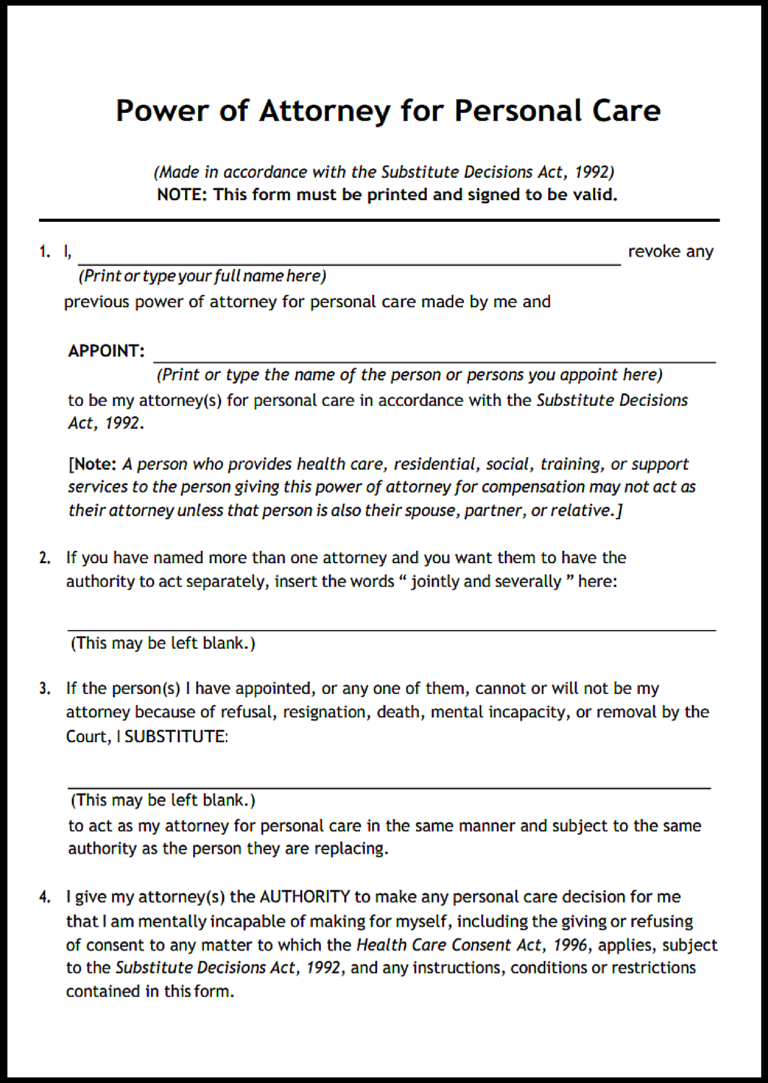
Marriage and long-term financial planning often involve several related legal documents depending on the couple’s circumstances. Some individuals also prepare a British Columbia will template to protect inheritance wishes, while others create a power of attorney document for future financial and legal decision-making responsibilities.
What Can Be Included in a BC Prenuptial Agreement?
Property and Asset Division
Under British Columbia law, property is divided into:
- Family property (shared)
- Excluded property (owned before marriage or received as gifts/inheritance)
A prenup can clearly define what stays separate.
Spousal Support Terms
You can:
- Limit support
- Set specific payment terms
- Waive support
However, courts can still review fairness.
Debt Protection
The agreement can state:
- Who pays which debts
- Protection from partner’s loans or liabilities
Business and Investments
If one partner owns a business:
- Ownership can remain separate
- Future income rules can be defined
Inheritance and Gifts
You can protect:
- Family property
- Gifts from parents
- Future inheritance
Couples reviewing property division and financial obligations may also benefit from reading the British Columbia separation agreement guide to better understand how assets and responsibilities may be handled if the relationship later ends.
Legal Rules for Prenuptial Agreements in British Columbia
Under the Family Law Act (BC), certain rules must be followed.
| Requirement | Explanation |
| Written Agreement |
Must be in writing, not verbal
|
| Signed by Both Parties |
Both must sign voluntarily
|
| Witness Required |
At least one witness must sign
|
| Full Disclosure |
All assets and debts must be shared honestly
|
| Fairness |
Court can cancel unfair terms
|
In most estate planning situations, courts will respect the agreement only if it is fair and transparent.
How to Make Your Prenup Valid and Enforceable
To ensure your agreement holds up in court, follow these steps carefully.
- Be fully honest about all finances
- Avoid signing under pressure or close to the wedding date
- Each partner should get independent legal advice
- Use clear and simple language
- Keep signed copies safe (physical and digital)
A well-prepared prenup reduces the chance of legal disputes later.
Common Mistakes That Can Make a Prenup Invalid
Many agreements fail because of simple mistakes.
- Hiding assets or debts
- One-sided or unfair terms
- Not getting legal advice
- Signing under emotional pressure
- Using generic templates without editing
Even a small error can lead to the court rejecting the agreement.
What Happens If You Don’t Have a Prenup in BC?
If you don’t create a prenup, BC law will decide everything.
| Situation |
Result Under BC Law
|
| Property division |
Equal division of family property
|
| Debt sharing |
Shared responsibility in many cases
|
| Business assets |
May be divided or valued
|
| Spousal support |
One partner may have to pay
|
Example:
Without a prenup, a business started during marriage could be split or compensated financially.
Can a Prenuptial Agreement Be Challenged in Court?
Yes, courts in British Columbia can review and change a prenup.
Common reasons include:
- Lack of financial disclosure
- Unfair or unreasonable terms
- Pressure or coercion during signing
A judge may:
- Cancel the agreement
- Change certain clauses
- Enforce only part of it
Prenuptial vs Cohabitation Agreement
Both agreements are similar but used in different situations.
| Feature | Prenuptial Agreement |
Cohabitation Agreement
|
| When used | Before marriage |
For live-in couples
|
| Legal status | Becomes marriage agreement after wedding |
Applies during cohabitation
|
| Purpose | Protect assets before marriage |
Define rights without marriage
|
Both are governed under British Columbia law.
Step-by-Step: How to Fill Out the Template
Follow this simple process to complete your prenup correctly.
Step 1: Add personal and marriage details
Write full legal names and planned wedding date.
Step 2: List all assets and debts
Include:
- Property
- Savings
- Loans
- Investments
Step 3: Decide division rules
Clearly state what happens in case of separation.
Step 4: Add support and special clauses
Include spousal support, business ownership, or inheritance protection.
Step 5: Sign with a witness
Both parties must sign in front of a witness.
Step 6: Consult a lawyer
This step is strongly recommended to avoid future problems.
FAQs About British Columbia Prenuptial Agreements
Is a prenup legally binding in BC?
Yes, if it follows the Family Law Act rules. It must be fair, written, signed, and based on full disclosure.
Can we write our own prenup without a lawyer?
Yes, but it is risky. Without legal advice, courts may not enforce it.
How much does a prenup cost in BC?
Costs vary. Basic agreements may cost a few hundred dollars, while detailed legal drafting can cost more.
Can a prenup include child custody terms?
No. Parenting and custody decisions are always decided by the court based on the child’s best interests.
Can we change a prenup after marriage?
Yes. You can update it through a new agreement, often called a postnuptial agreement, signed by both parties.