Manitoba Freelance Contract (Free Template PDF & WORD)
A freelancer once slid a stack of unpaid invoices across my desk and said the client kept changing the scope because “we never really wrote it down.” That conversation has stayed with me because the problem wasn’t the work. It was the missing agreement behind it.
A Manitoba Freelance Contract is commonly used by independent contractors, consultants, designers, writers, developers, photographers, and small businesses hiring project-based help across the province. In Manitoba, freelance relationships are shaped by common law contract principles. If personal customer or client information is collected during a project, the province lacks its own active private-sector privacy statute because the historical Personal Information Protection and Identity Theft Prevention Act was never proclaimed into force. Instead, data protection obligations fall completely under the federal Personal Information Protection and Electronic Documents Act (PIPEDA).
A payment dispute can turn into money you simply can’t recover because the contract never explained when invoices were due, who owned the finished work, or what happened after endless revisions. That’s usually where things fall apart. You’re probably trying to get the project moving, not spend another week trading emails over terms that should’ve been settled at the start.
I represented a Manitoba graphic designer who lost several thousand dollars after a client insisted the quoted price covered months of extra work, and there wasn’t a written change process to prove otherwise. It wasn’t dramatic. Just expensive. Fill in this template before the work begins, review every payment and scope clause, and have both parties sign the final version.
Free Manitoba Freelance Contract Template
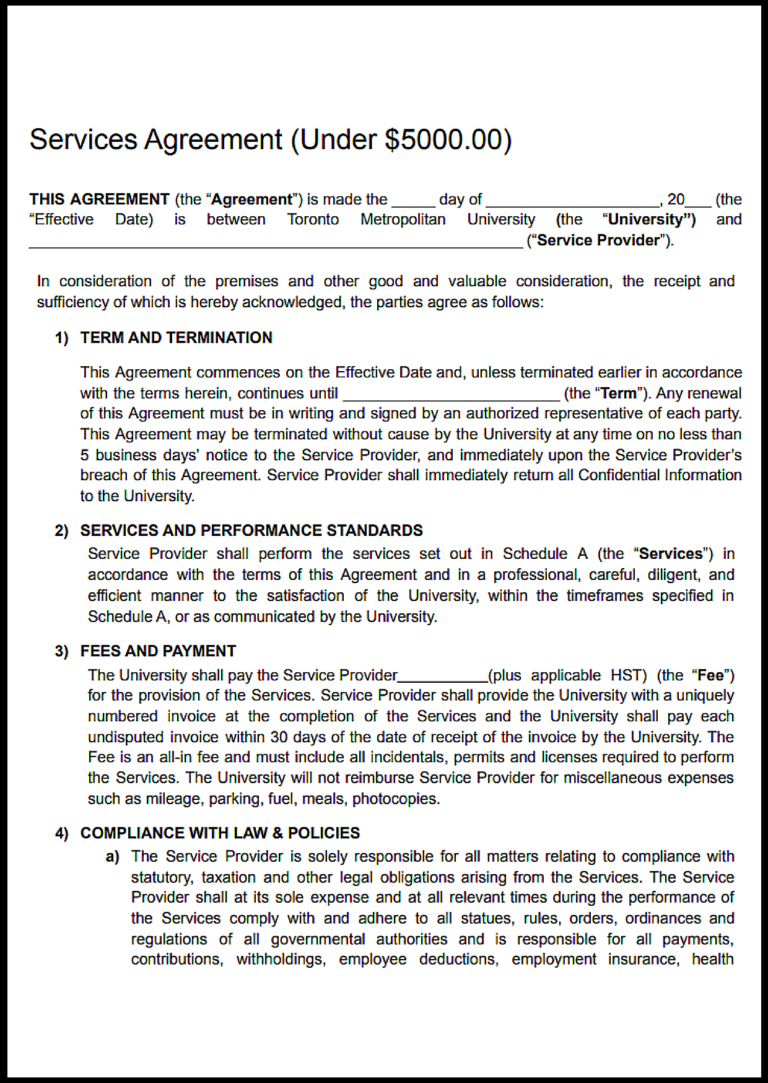
Below is a simple fill-in-the-blank Manitoba freelance contract template for general business use.
Manitoba Freelance Contract Laws, Copyright Rules & Worker Classification Risks
| Topic / Issue | Manitoba Legal Rule | Governing Statute |
|---|---|---|
| Governing legislation | Freelance arrangements are bound by provincial common law contract principles, updated statutory discovery timelines, and federal intellectual property legislation. | The Limitations Act, C.C.S.M. c. L150; Copyright Act, R.S.C. 1985, c. C-42 |
| Electronic agreements | Validates electronic execution, digital communication parameters, and online contract formations for modern freelance projects. | The Electronic Commerce and Information Act, C.C.S.M. c. E55 |
| Business name compliance | Freelancers operating under trade names or brand names may need registration with Manitoba Companies Office. | The Business Names Registration Act, C.C.S.M. c. B110 |
| Tax classification | Federal tax law governs freelancer versus employee classification risks. | Income Tax Act, R.S.C. 1985, c. 1 (5th Supp.) |
| Who can legally sign | Freelancers acting personally or authorized business officers may legally sign contracts. | The Corporations Act, C.C.S.M. c. C225, s. 23; The Partnership Act, C.C.S.M. c. P30, s. 7 |
| Witness requirements | Witnesses are not legally required for Manitoba freelance contracts. | No statutory requirement — governed by common law principles |
| Notarization requirements | Freelance contracts generally do not require notarization. | No statutory requirement — governed by common law principles |
| Age requirements | Parties must generally be at least 18 years old, and contracts signed by minors for non-necessaries may be voidable. | The Age of Majority Act, C.C.S.M. c. A7, s. 1 |
| Mental capacity | Parties must understand the obligations and risks of the contract when signing. | No statutory requirement — governed by common law principles |
| Limitation period | Any civil litigation to recover unpaid freelance fees or claim an invoice breach must start within a 2-year window from discovery. | The Limitations Act, S.M. 2021, c. 44, s. 6 |
| Copyright ownership | Freelancers automatically own copyright in creative work unless rights are assigned in writing. | Copyright Act, R.S.C. 1985, c. C-42, s. 13(3) |
| Moral rights waiver | Moral rights cannot be assigned and must be expressly waived in writing. | Copyright Act, R.S.C. 1985, c. C-42, s. 14.1 |
| Contract filing requirements | Manitoba freelance contracts are private agreements and do not require government filing. | No public registration requirement |
| Trade name registration trigger | Freelancers using business aliases or brand names may need formal registration. | The Business Names Registration Act, C.C.S.M. c. B110, s. 2(1) |
| Worker misclassification risk | Freelancers treated like employees may legally be reclassified as employees. | Income Tax Act, R.S.C. 1985, c. 1 (5th Supp.); The Employment Standards Code, C.C.S.M. c. E110 |
| Overbroad non-compete clauses | Excessive non-compete restrictions may be struck down as illegal restraints of trade. | No statutory requirement — governed by common law principles |
| Dissolved corporation risk | Contracts signed by dissolved corporations may become invalid or create personal liability exposure. | The Corporations Act, C.C.S.M. c. C225, s. 205 |
| Manitoba limitation rule difference | Establishes a definitive 2-year basic limitation framework, repealing old historical multi-year statutory timelines. | The Limitations Act, S.M. 2021, c. 44 |
| Manitoba trade name rule difference | Manitoba has stricter business name registration rules for freelancers using expanded personal brand names. | The Business Names Registration Act, C.C.S.M. c. B110, s. 2(1) |
One of the most important Manitoba freelance rules involves copyright ownership. Many clients assume paying for creative work automatically transfers ownership, but federal copyright law usually gives the freelancer ownership unless the contract includes a proper written assignment clause. This becomes extremely important in projects involving website design, photography, branding, software code, or written content. Another major issue is worker classification. Manitoba businesses cannot avoid employment obligations simply by labeling someone a freelancer if the actual relationship looks like regular employment with fixed schedules, supervision, and company control.
These rules matter in real business situations because unclear contracts often create disputes over unpaid invoices, intellectual property ownership, or tax obligations long after the project ends. Manitoba’s strict 2-year limitation period also means freelancers who wait too long to pursue unpaid accounts may lose their legal recovery rights completely. Getting these details wrong can lead to CRA reassessments, invalid restrictive clauses, ownership disputes, or expensive legal claims. Download the free Manitoba Freelance Contract template below to help avoid common compliance and payment mistakes.
What Makes a Freelancer Different From an Employee in Manitoba?
Why Worker Classification Matters
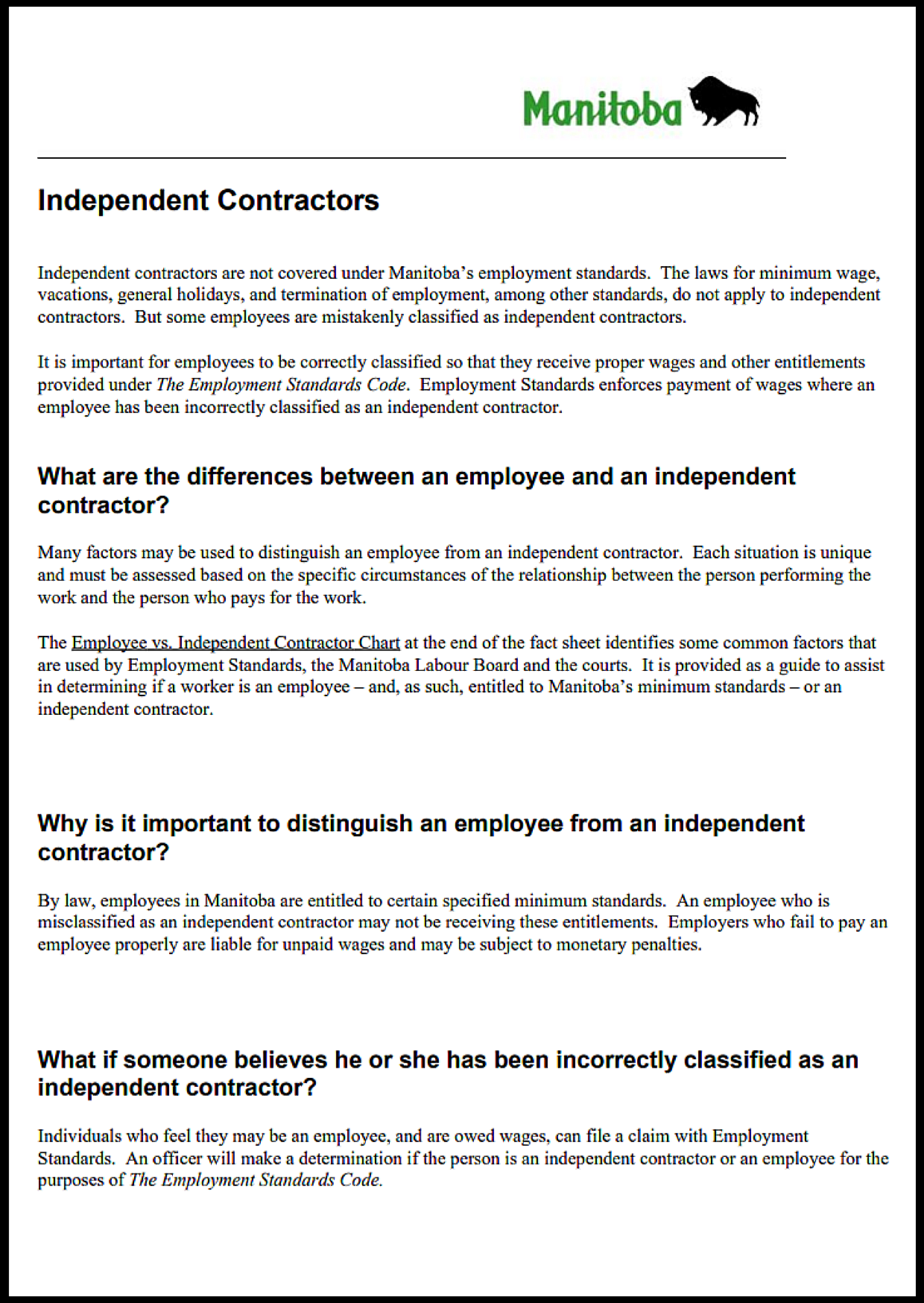
Under Manitoba law, simply calling someone a “freelancer” does not automatically make them an independent contractor.
Courts and government agencies look at the actual working relationship. Manitoba commonly applies a “control test” to determine whether someone is truly independent.
Factors may include:
- Who controls work hours
- Who provides equipment
- Whether the worker can serve multiple clients
- How financially independent the worker is
A written contract helps, but labels alone are not legally binding.
Signs a Freelancer May Actually Be an Employee
A worker may legally look more like an employee if:
- The client controls daily work schedules
- The client provides most tools and equipment
- The worker only works for one business
- The relationship is ongoing and permanent
- The worker cannot freely subcontract work
Risks of Misclassifying Workers
Misclassification can create serious legal and tax problems.
Possible risks include:
- Unpaid vacation pay claims
- CPP and EI contribution problems
- Payroll tax reassessments
- Employment Standards complaints
- Government audits and penalties
Businesses are legally expected to classify workers properly under Manitoba and federal rules.
Laws That Affect Classification
| Topic | Main Rule | Governing Law |
| Employee vs Contractor Status | Labels alone are not binding | The Employment Standards Code |
| Payroll Taxes | Employees require deductions | Income Tax Act |
| WCB Coverage | Some contractors may be deemed workers | The Workers Compensation Act |
| Legal Relationship Tests | Courts examine control and independence | Common Law Principles |
Freelancers often work under related agreements depending on the services being provided. Long-term professional projects may involve a consulting agreement template, while businesses hiring self-employed workers may also use an independent contractor agreement.
Key Terms Every Manitoba Freelance Contract Should Include
Scope of Work
The contract should clearly explain exactly what services the freelancer will provide.
Avoid vague wording like:
- “Marketing support”
- “Website assistance”
- “General consulting”
Instead, use specific descriptions and milestones.
Example:
- Create 10 Instagram posts monthly
- Design a five-page website
- Deliver logo files in PDF and PNG format
Clear scopes help prevent scope creep and endless revisions.
Payment Structure
Freelance agreements usually use either:
- Flat-fee pricing
- Hourly billing
The contract should also explain:
- Deposit requirements
- Invoice schedules
- Accepted payment methods
- Late payment fees
- Currency disclosure
Written payment schedules reduce invoice disputes significantly.
Project Deadlines and Revisions
The agreement should explain:
- Delivery deadlines
- Client approval timelines
- Number of included revisions
- Extra revision charges
Without revision limits, many freelancers end up performing unpaid extra work.
Ownership of Copyright and Creative Work
Under Canada’s federal Copyright Act, freelancers usually own copyright by default unless ownership is assigned in writing.
This often surprises businesses.
Examples of protected work include:
- Website designs
- Marketing graphics
- Photography
- Written content
- Software code
If a client wants full ownership, the contract should contain a clear copyright assignment clause.
Confidentiality and Non-Disclosure Terms
Freelancers often access sensitive business information.
A confidentiality clause can protect:
- Client lists
- Marketing plans
- Internal documents
- Trade secrets
- Login credentials
These clauses are especially important for consultants and software developers.
Ending the Agreement
The contract should explain:
- Notice periods
- Immediate termination rights
- Non-payment remedies
- Breach of contract rules
- Return of files and property
Clear termination rules help both sides exit the relationship professionally.
When freelance work includes access to private client information, parties may also include a non-disclosure contract to help protect confidential business materials.
Intellectual Property Rules Freelancers Should Know
Default Copyright Ownership in Canada
Under the federal Copyright Act, the freelancer is usually the first owner of copyright when creating work as an independent contractor.
This is different from normal employee relationships where employers often own the work automatically.
Without written assignment language, clients may only receive limited usage rights.
Common IP Mistakes Businesses Make
Many businesses incorrectly assume payment automatically transfers ownership.
Common mistakes include:
- Missing assignment clauses
- Unclear licensing language
- No portfolio usage permissions
- Confusing revision ownership rules
These disputes often appear after a project becomes commercially valuable.
Best Practices for IP Clauses
A strong freelance contract should explain:
- Whether rights are exclusive or non-exclusive
- Whether ownership fully transfers
- Whether freelancers may display work in portfolios
- When ownership transfers after payment
Simple and direct wording usually works best.
Payment, Taxes, and GST/HST Responsibilities
Who Handles Taxes?
Freelancers are generally responsible for handling their own taxes.
Unlike employees, clients usually do not automatically deduct:
- Income tax
- CPP contributions
- EI premiums
Freelancers should keep proper records and save money for tax obligations.
GST/HST Registration Rules
Freelancers may need GST/HST registration depending on revenue levels and business activities.
In Canada, small supplier rules may apply if annual taxable revenue remains below the federal threshold.
Once registration becomes required, GST/HST usually must be added to invoices.
Late Payment Problems in Freelance Work
Late payments are one of the most common freelance disputes.
Typical issues include:
- Missed invoices
- Partial payments
- Scope creep
- Client approval delays
A written contract helps by clearly defining payment schedules, late fees, and deliverable approval processes.
Manitoba Consumer Protection Rules for Freelancers
When Consumer Protection Laws Apply
Many freelance agreements are business-to-business (B2B) contracts.
However, Manitoba consumer protection laws may apply if the freelancer sells services directly to individual consumers online.
This is especially important for:
- Online coaching
- Website services sold through a website
- Consumer design services
- Digital marketing packages sold online
Required Disclosures for Online Consumer Contracts
Under Manitoba’s Consumer Protection Act rules for internet agreements, online consumer contracts should clearly disclose:
- Total price
- Currency
- Payment terms
- Cancellation rights
If disclosures are missing, consumers may receive extra cancellation rights.
Cancellation Risks Under Consumer Protection Laws
In some cases, consumers may have up to 30 days to cancel certain online agreements if required disclosures were not properly provided.
Businesses offering online freelance services should review website checkout and contract processes carefully.
WCB and Industry-Specific Risks for Manitoba Freelancers
What Is WCB Coverage?
The Workers Compensation Board (WCB) provides workplace injury insurance coverage in Manitoba.
Some freelancers may voluntarily obtain coverage, while others may fall under mandatory industry rules.
Mandatory Industries and “Deemed Workers”
Certain industries have stricter rules.
Examples include:
- Construction
- Trucking
- Other regulated sectors
In some cases, contractors may legally become “deemed workers” unless they maintain their own WCB accounts.
Why Businesses Request WCB Clearance Certificates
Businesses often request WCB clearance certificates to verify contractor compliance.
This helps protect businesses from liability for unpaid WCB premiums owed by contractors.
In regulated industries, missing WCB clearances can create serious financial risks.
Common Freelance Contract Mistakes in Manitoba
Using Generic Online Templates
Many online templates are written for U.S. laws and may not fit Manitoba legal requirements.
Common problems include:
- Wrong governing law clauses
- Incorrect tax language
- Missing Canadian copyright rules
- Invalid employment disclaimers
Forgetting IP Ownership Terms
Without written ownership terms, businesses and freelancers may later fight over who owns the completed work.
This problem is very common in:
- Website design
- Photography
- Branding work
- Software development
Vague Scope of Work Language
Unclear project descriptions often create:
- Endless revisions
- Extra unpaid work
- Delayed approvals
- Billing disputes
Detailed milestone descriptions reduce these risks.
Missing Independent Contractor Clauses
Although clauses alone do not determine worker status, they still help clarify the parties’ intentions.
A proper agreement should explain:
- Tax responsibilities
- Lack of employee benefits
- Independent business status
Unfair or One-Sided Indemnity Clauses
Manitoba courts generally respect freedom of contract, but extremely unfair clauses may sometimes be challenged as unconscionable.
This risk increases when:
- One side has much stronger bargaining power
- The clause is unusually harsh
- The freelancer assumes liability for the client’s own negligence
Balanced indemnity wording is usually safer.
Is a Manitoba Freelance Contract Legally Enforceable?
Basic Legal Requirements
Most freelance contracts become legally enforceable when they contain:
- Offer
- Acceptance
- Consideration (something of value)
- Legal capacity
In Manitoba, the age of majority is 18.
Do Freelance Contracts Need Witnesses or Notarization?
In most business contract situations, standard freelance contracts do not require witnesses or notarization.
Simple signed agreements are generally enough.
Electronic Signatures in Manitoba
Electronic signatures are commonly accepted for business agreements in Canada.
Many freelancers and businesses use:
- PDF signatures
- E-signature platforms
- Digitally signed contracts
Keeping organized copies of signed agreements is important.
Summary of Applicable Laws
| Topic | Rule | Governing Statute |
| Worker Classification | Courts examine actual relationship | The Employment Standards Code |
| Business Name Registration | Trade names may require registration | The Business Names Registration Act |
| WCB Coverage | Certain industries require compliance | The Workers Compensation Act |
| Consumer Internet Agreements | Disclosure rules apply to B2C contracts | The Consumer Protection Act |
| Copyright Ownership | Freelancer usually owns copyright first | Copyright Act |
| Taxes and GST/HST | Freelancers generally manage own taxes | Income Tax Act |
| Contract Capacity | Age of majority is 18 |
The Age of Majority Act
|
How to Fill Out a Manitoba Freelance Contract Properly
Information You Should Prepare Before Signing
Before signing, both parties should confirm:
- Detailed scope of work
- Payment schedule
- Ownership rights
- Deadlines and milestones
- Tax information
- Revision limits
Clear communication early helps avoid disputes later.
Tips Before Sending the Contract
Before sending the agreement:
- Review revision limits carefully
- Confirm independent contractor status
- Check Manitoba governing law wording
- Save signed copies securely
- Ensure payment timelines are realistic
Small contract details often prevent major business problems later.
Frequently Asked Questions
Is a verbal freelance agreement valid in Manitoba?
Yes. Verbal agreements may still be legally valid. However, proving the exact terms is much harder without a written contract.
Does a freelancer need a registered business name in Manitoba?
If a freelancer operates under a business name different from their personal legal name, registration may be required under Manitoba business name rules.
Who owns the copyright in freelance work?
In most cases, the freelancer owns copyright by default unless rights are assigned in writing.
Can a freelancer be treated as an employee?
Yes. Manitoba law looks at the actual working relationship, not just the contract label.
Does a freelance contract need to be notarized?
No. Standard freelance agreements usually do not require notarization or witnesses.
Can freelancers charge GST/HST in Manitoba?
Yes. Registered freelancers generally charge GST/HST on taxable services where applicable.
What happens if a client refuses to pay?
The freelancer may pursue collection efforts, negotiation, mediation, or legal claims depending on the amount involved and the contract terms.