Ontario Job Offer Letter Template (Free PDF, WORD)
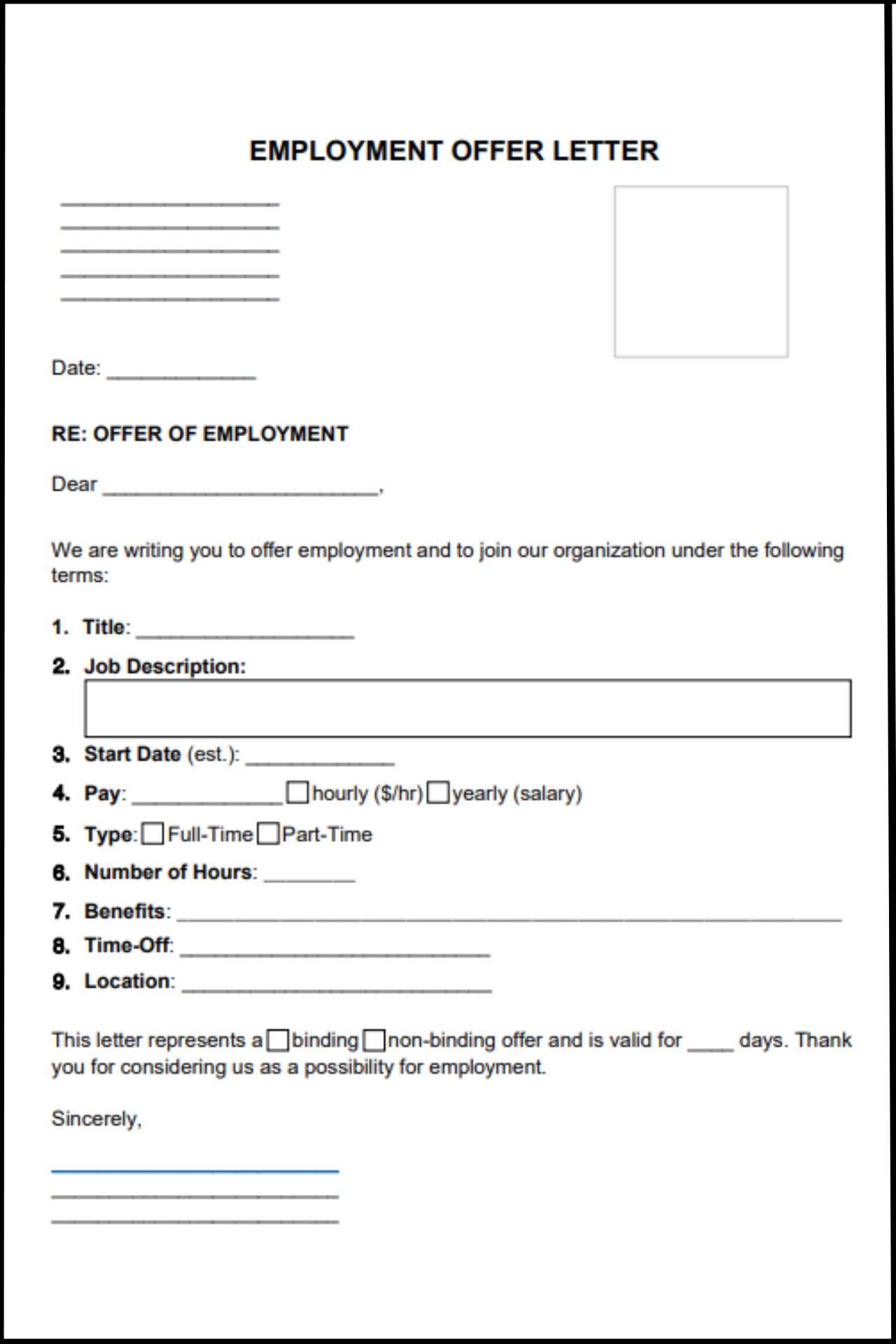
Job Offer Letter Template Ontario is usually searched by employers who want to hire someone properly without creating avoidable employment disputes later. A surprising number of problems begin with a short, generic offer letter that doesn’t clearly record the terms of employment or reflect Ontario’s written employment information requirements introduced under the Employment Standards Act, 2000 for certain employers.
I’ve seen situations where a simple hiring email became the centre of a disagreement over wages and working hours, with the missing details later examined during proceedings before the Ontario Superior Court of Justice. A carefully prepared Ontario-specific job offer letter helps set expectations from the beginning and creates a clear written record of the employment relationship. This page includes a free Ontario job offer letter template, explains what information should be included, and highlights the mistakes employers should avoid.
Table of Contents
ToggleJob Offer Letter Template Ontario
Key Clauses Of An Ontario Job Offer Letter
A job offer letter is often viewed as a hiring document, but under Ontario law it becomes the foundation of the employment relationship. Every important term should be written clearly because disputes frequently arise months or even years after the employee begins work.
For example, a software company in Waterloo hired a new employee using a one-page internet template. The salary was recorded, but the termination wording copied from an American template referred to “at-will employment.” When the employment later ended, the employer discovered that the clause did not reflect Ontario law and created significant legal risk.
The strongest Ontario offer letters explain the employment relationship in plain language while ensuring every important clause complies with the Employment Standards Act, 2000.
The Six Mandatory Disclosure Clauses (25+ Employees)
Under O. Reg. 285/01, section 1.2(2) (as amended by O. Reg. 477/24), employers with 25 or more employees in Ontario on a new hire’s start date are legally required to provide six specific written employment disclosures. Pursuant to section 1.2(1), this written statement must be delivered before the employee’s first day of work—or, if providing it prior to day one is not practicable, as soon after that day as is reasonably possible.
The written information must include:
- The employer’s legal name and operating name, if different.
- Employer contact information, including address, telephone number, and one or more contact names.
- A general description of where the employee is expected to perform work.
- The employee’s starting hourly wage, salary, or commission rate.
- The employer’s pay period and pay day.
- A general description of the employee’s anticipated hours of work.
Many employers mistakenly assume these details can be supplied after the employee starts work. Ontario’s current rules require qualifying employers to provide this information before the employee’s first working day.
A practical example involves a construction company in Ottawa that hired several new workers during a busy season. Employment started immediately, but written information regarding work location and anticipated hours was provided weeks later. Although the employees began working successfully, the employer had failed to meet the statutory disclosure requirement introduced through the Working for Workers amendments.
This mandatory disclosure requirement applies only to employers with 25 or more employees. Smaller employers are not subject to this specific requirement, although providing the same information remains a good employment practice.
The Termination Clause
The termination clause is often the most heavily scrutinized section of an Ontario offer letter.
Under Ontario law, any termination provision must meet or exceed the minimum notice and severance requirements established by the Employment Standards Act, 2000. Section 5(1) prevents employers from contracting out of those statutory minimum standards.
One of the most common mistakes is copying an American “at-will employment” clause into an Ontario offer letter. Ontario does not recognize at-will employment. A clause attempting to remove or reduce minimum ESA entitlements risks being struck down entirely.
Imagine a manufacturing employer in Windsor using a template downloaded from a U.S. website. The clause states employment may end “at any time without notice.” Even if every other part of the offer letter is professionally drafted, that wording conflicts with Ontario employment standards and can eliminate the employer’s intended contractual protection.
Termination provisions deserve careful drafting because a single non-compliant sentence may affect the entire clause.
The Non-Compete Clause (Prohibited For Most Employees)
Ontario takes a much stricter approach to non-compete agreements than many other provinces.
Section 67.2(1) of the Employment Standards Act, 2000 prohibits employers from including non-compete clauses for standard employees except in very limited circumstances involving certain executives or the sale of a business.
Despite this rule, employers occasionally continue using older templates that automatically include broad non-compete restrictions.
For instance, a marketing agency in Toronto hires a graphic designer using an outdated employment template prepared several years earlier. The offer letter prohibits the employee from working for any competitor after leaving the company. Because the employee is not covered by one of the limited statutory exceptions, that non-compete clause is automatically void.
This restriction does not prevent employers from protecting confidential business information through other lawful contractual provisions where appropriate. The statutory prohibition specifically targets non-compete clauses for most employees.
The Wage And Pay Period Clause
Compensation should never be described vaguely.
Ontario’s disclosure requirements expect employers subject to the July 2025 amendments to clearly identify the employee’s starting wage or commission rate together with the established pay period and pay day.
Rather than stating that wages “will be discussed later,” the offer letter should record the exact compensation arrangement from the beginning.
Consider a hospitality employer in Mississauga hiring seasonal staff. If the offer letter simply promises “competitive wages” without recording the agreed hourly rate or explaining when employees will be paid, unnecessary confusion can arise immediately after employment begins.
Accurate compensation clauses benefit everyone involved. Employees understand exactly what has been offered, while employers create a clear written record that can prevent later misunderstandings.
What Makes An Ontario Job Offer Letter Legally Enforceable
An Ontario job offer letter becomes the foundation of the employment relationship once it is accepted. While Ontario law does not require witnesses or notarization, the document should be properly signed by the employer, or an authorized agent, and the prospective employee. Under the Employment Standards Act, 2000, section 1(1), an authorized representative may act on behalf of the employer when issuing employment documents.
For example, a growing business in London allows its Human Resources manager to sign offer letters on behalf of the company. As long as the HR manager has authority to do so, the employment contract is properly executed without the company owner personally signing every document.
Unlike some legal documents, there is no statutory witness requirement for an Ontario job offer letter. It also does not need to be notarized or filed with ServiceOntario, the Ministry of Labour, or any government office. The offer letter remains a private employment contract between the employer and employee.
Ontario also has rules regarding age and contractual capacity. Minimum working ages vary depending on the industry under the Occupational Health and Safety Act, while the Age of Majority and Accountability Act provides that individuals generally become fully bound by contracts at age 18. Employment agreements that benefit a minor are generally still enforceable.
Employers should also remember their record-keeping obligations. Employment contracts and related employment records must be retained for at least three years under the Employment Standards Act requirements.
A limitation worth remembering is that signing the document alone does not automatically make every clause enforceable. If any provision violates the Employment Standards Act, a court may refuse to enforce that clause regardless of the signatures.
Rights And Obligations Of Each Party Under The Offer Letter
A properly drafted offer letter protects both the employer and the employee by clearly recording the employment relationship before work begins.
Employees working for employers with 25 or more employees have the right to receive the mandatory written information required by O. Reg. 285/01, section 1.2(2) before their first day of work. They also remain entitled to the minimum employment standards provided by the Employment Standards Act, 2000, regardless of what the offer letter says.
Employers have an equally important responsibility. Every clause should comply with Ontario employment standards because one non-compliant provision can affect the enforceability of other contractual protections.
Imagine a transportation company in Barrie offering employment to a new dispatcher. The employer carefully records the wage, work location, anticipated hours, and pay schedule but copies a termination clause from an outdated template that falls below ESA minimum standards. Although most of the agreement is accurate, that single clause can create significant legal exposure.
The employer’s obligation extends beyond preparing a professional-looking document. Every provision should be reviewed to ensure it reflects Ontario law rather than employment practices borrowed from another province or another country.
What Happens If An Ontario Offer Letter Violates The ESA
One of the most expensive mistakes Ontario employers make involves the termination clause.
Section 5(1) of the Employment Standards Act, 2000 prevents employers from contracting out of the minimum employment standards established by the Act. If a termination clause provides less than those statutory minimums, Ontario courts may strike down the entire clause rather than correcting only the problematic wording.
I’ve seen employers rely on templates purchased online because they appeared professionally drafted. Unfortunately, many were created for American employers or provinces with different employment legislation. By the time the employment relationship ended, correcting the mistake was no longer possible.
Another issue affects employers with 25 or more employees. Failing to provide the six mandatory written disclosures before the employee’s first day is itself a statutory compliance issue, separate from any later termination dispute.
The practical lesson is straightforward. An offer letter should never be treated as a generic hiring document because errors made at the recruitment stage often become much more expensive when employment ends.
When You Don’t Need A Lawyer Vs When You Do
Many straightforward hiring situations can be handled using a well-prepared Ontario-specific template.
For example, a small retail business with fewer than 25 employees hiring a cashier at an agreed hourly wage may only need a carefully drafted offer letter reflecting Ontario employment standards.
However, certain situations deserve professional legal review.
These include:
- Drafting or reviewing termination clauses.
- Attempting to include restrictive covenants.
- Hiring employees in federally regulated industries governed by the Canada Labour Code.
- Employers with 25 or more employees ensuring compliance with the mandatory July 2025 disclosure requirements.
- Complex executive employment arrangements.
Seeking legal advice before issuing the offer letter is usually far less expensive than defending an employment dispute after the employee has already been hired.
Summary of Applicable Laws
| Topic | Rule | Governing Statute |
|---|---|---|
| Who can sign | Employer (or authorized agent) and the employee | Employment Standards Act, 2000, S.O. 2000, c. 41, s. 1(1) |
| Mandatory disclosures (25+ employees) | Six specific written details required before first day | Employment Standards Act, 2000 (O. Reg. 285/01, s. 1.2(2), as amended by O. Reg. 477/24) |
| No contracting out | Termination terms cannot fall below ESA minimums | Employment Standards Act, 2000, S.O. 2000, c. 41, s. 5(1) |
| Non-compete prohibition | Non-competes are void for non-executive employees | Employment Standards Act, 2000, S.O. 2000, c. 41, s. 67.2(1) |
| Record retention | Employment records must be be kept for at least three years | Employment Standards Act requirements |
Dual-Layer Severance: What Ontario Offer Letters Must Account For
Ontario differs from many other provinces because employers may need to account for two separate statutory termination entitlements. Along with termination pay, some employees with five or more years of service working for qualifying larger employers may also qualify for Severance Pay under section 64 of the Employment Standards Act, 2000.
A business in Hamilton that copies a termination clause from an Alberta template may correctly address notice requirements while completely overlooking Ontario’s separate severance pay structure. That omission can leave the termination provision vulnerable.
This distinction is one reason generic Canadian employment templates frequently fail to reflect Ontario employment law.
Why Ontario’s Rules Are Stricter Than Other Provinces
Ontario has introduced several employment protections that are considerably more prescriptive than those found elsewhere in Canada.
One major difference is the statutory prohibition against most non-compete clauses under section 67.2(1) of the Employment Standards Act. Provinces such as Alberta and British Columbia continue to evaluate non-compete agreements primarily under common law reasonableness principles, while Ontario generally prohibits them for standard employees.
Ontario also requires qualifying employers with 25 or more employees to provide six specific written employment disclosures before a new employee’s first day. Many other provinces leave the contents of offer letters largely to common law principles.
Employers expanding into Ontario often discover that simply reusing employment contracts from another province is not enough.
Common Mistakes That Get Ontario Job Offer Letters Struck Down
Several drafting errors appear repeatedly.
- Using an American-style “at-will” employment clause.
- Including a prohibited non-compete clause for a standard employee.
- Omitting the mandatory six written disclosures required for employers with 25 or more employees.
- Drafting termination provisions that provide less than the minimum Employment Standards Act entitlements.
- Forgetting Ontario’s separate severance pay obligations where applicable.
Careful drafting at the hiring stage can prevent costly disputes years later.
Frequently Asked Questions
What must an Ontario job offer letter include for larger employers?
Employers with 25 or more employees must provide the employer’s legal name, contact information, anticipated work location, starting wage or commission, pay period and pay day, and anticipated hours of work before the employee’s first day.
Can a job offer letter include a non-compete clause in Ontario?
Generally no. Section 67.2(1) of the Employment Standards Act prohibits non-compete clauses for standard employees except in limited statutory exceptions.
What happens if a termination clause violates the ESA?
Ontario courts may strike down the entire termination provision if it provides less than the minimum standards required by the Employment Standards Act.
Does a job offer letter need to be signed by both parties in Ontario?
Yes. The employer, or an authorized representative, and the prospective employee should sign the offer letter before employment begins.
Do small businesses need to follow the same disclosure rules?
The mandatory six-point written disclosure requirement applies to employers with 25 or more employees, although all employers must still comply with the Employment Standards Act.
Is an “at-will” employment clause valid in Ontario?
No. Ontario does not recognize American-style at-will employment, and termination provisions must comply with the minimum standards established by the Employment Standards Act.