Alberta Medical Consent Form Free (PDF & WORD)
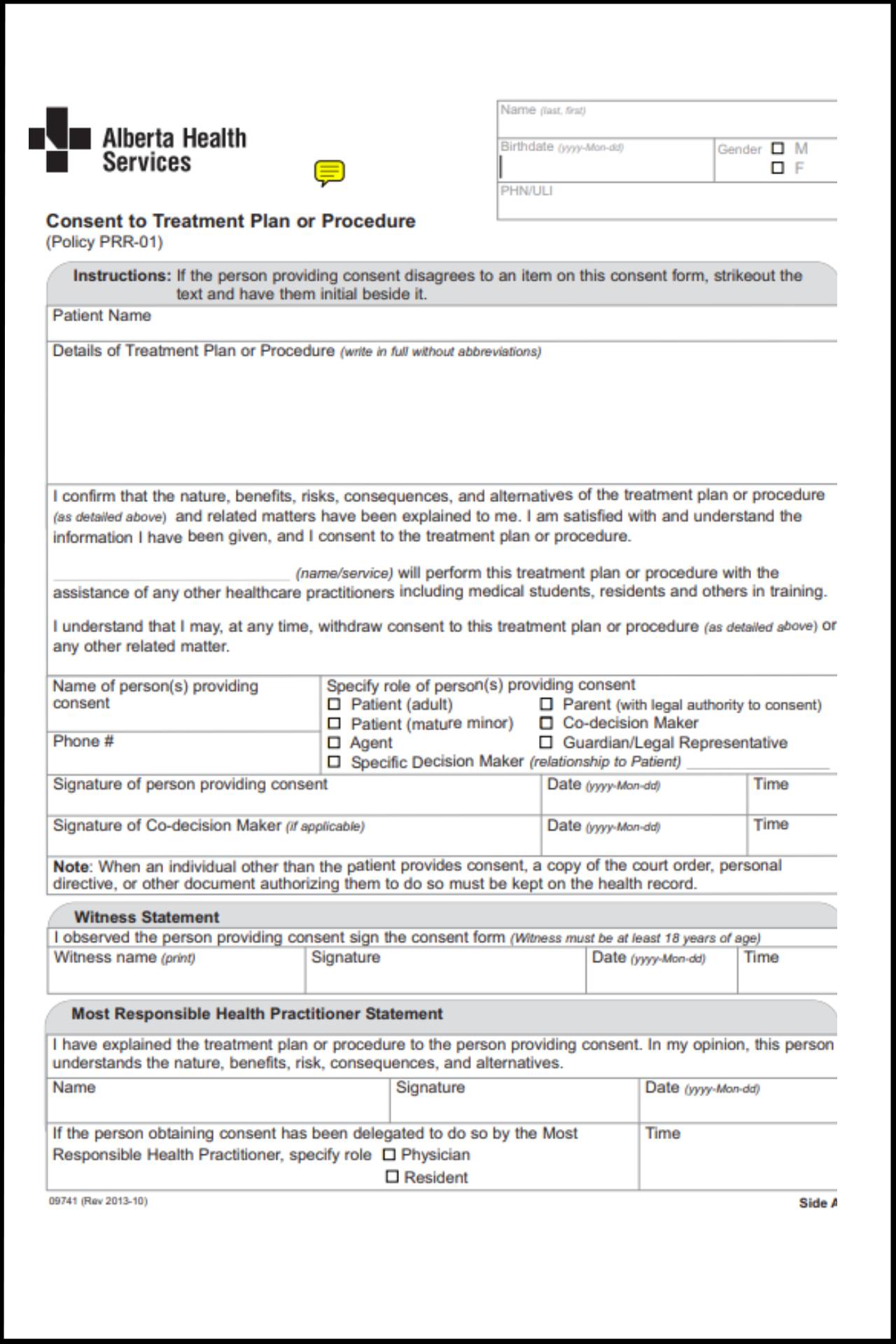
Alberta medical consent form is a phrase many parents search before leaving a child with grandparents, relatives, or another trusted caregiver, hoping they’ll be prepared if medical treatment becomes necessary. While Alberta’s Family Law Act determines who has authority to make decisions for a child, healthcare providers may also consider whether a mature minor is capable of consenting to treatment without a guardian in certain situations.
I’ve seen families leave only a handwritten permission note with grandparents, only to have healthcare staff request proof of guardianship before providing non-emergency treatment, and disputes over parental authority can later surface before the Court of King’s Bench of Alberta. Taking time to prepare the right document can make those situations much easier for everyone involved. Below you’ll find a free Alberta Medical Consent Form template, who should sign it, when it’s appropriate to use, and what information should always be included.
Table of Contents
ToggleAlberta Medical Consent Form
Does This Medical Consent Form Actually Hold Legal Weight?
Yes, if the consent is provided by someone who has legal authority and the capacity to make the decision. Alberta does not have one statute that creates a standard medical treatment consent form. Instead, general consent for treatment is governed by common law principles established in Reibl v. Hughes, which require informed consent, legal capacity, and disclosure of material risks.
The rules are different when the form authorizes the disclosure of medical records. Under section 34 of the Health Information Act, written consent must identify the purpose of the disclosure, specify who will receive the information, and acknowledge that the consent may be revoked. Readers can review the official legislation here: Health Information Act (Alberta).
Imagine a parent from Calgary sending a child to summer camp. The parent signs a medical treatment consent form in case emergency treatment becomes necessary while they cannot be contacted. If the camp also needs permission to receive the child’s medical information, the written consent requirements under the Health Information Act must also be met.
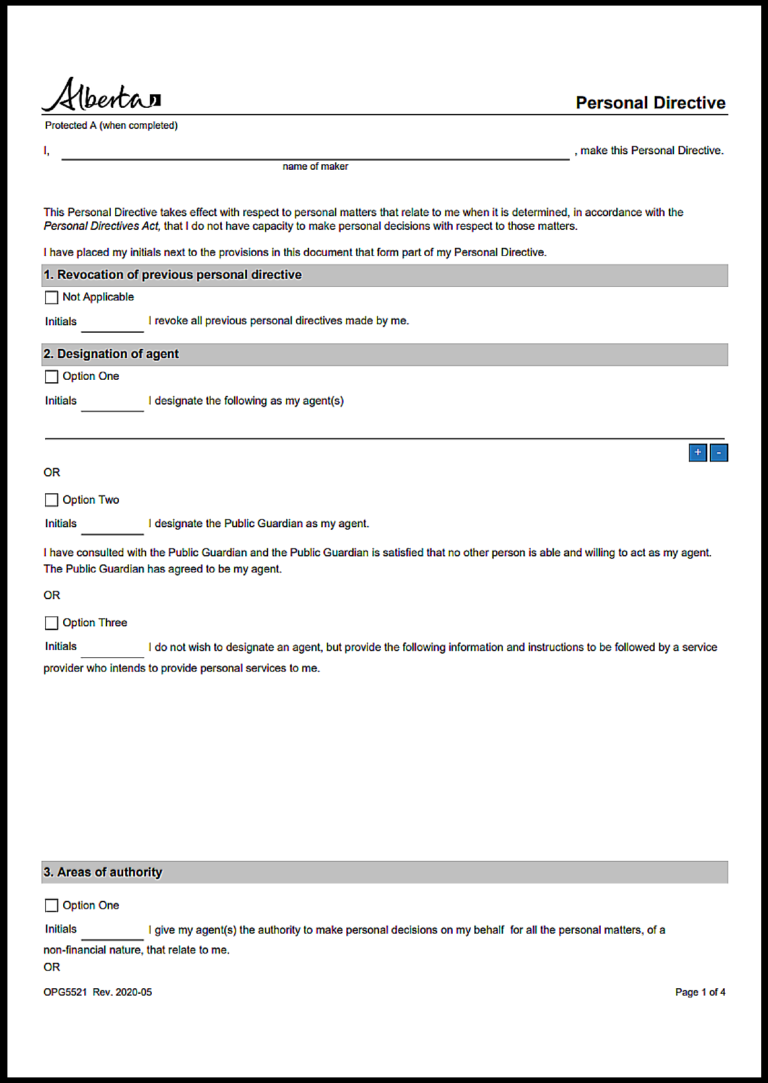
Different rules apply if the patient has lost decision-making capacity. In those situations, authority may rest with an appointed Agent under an activated Personal Directive or another substitute decision-maker recognized under the Adult Guardianship and Trusteeship Act. A standard medical consent form cannot replace those legal arrangements.
If you’re also preparing travel documents for a child, see our Child Travel Consent Letter Alberta. For questions about legal guardianship, our Alberta Guardian Consent Form explains who has authority to make decisions for a child.
Who Can Legally Sign an Alberta Medical Consent Form
Who signs the form depends on who requires treatment and whether that person has legal capacity to consent.
The following individuals may sign, depending on the circumstances:
- A mentally competent adult who is 18 years of age or older.
- A mature minor who understands the nature and consequences of the proposed treatment under the common law mature minor doctrine.
- An appointed Agent acting under an activated Personal Directive in accordance with Personal Directives Act, s. 14.
- A court-appointed guardian or specific decision-maker acting under the Adult Guardianship and Trusteeship Act, including sections 26 and 100.
- A parent or legal guardian with decision-making authority for a child under Family Law Act, s. 21.
One of the most common mistakes people make is assuming that any close family member can automatically consent to treatment for another adult. Alberta does not use an automatic statutory family hierarchy for general medical consent. If an adult loses capacity without an activated Personal Directive, healthcare providers must follow the substitute decision-making process established under the Adult Guardianship and Trusteeship Act.
For example, an elderly resident in Red Deer is admitted to hospital after becoming seriously ill. His adult son believes he can immediately approve treatment because he is the closest relative. However, if an activated Personal Directive names the patient’s sister as the Agent, she has the legal authority to make healthcare decisions. If no Personal Directive exists, healthcare providers must follow Alberta’s substitute decision-making framework before accepting consent.
Parents should also remember that authority to consent for a child depends on legal guardianship, not simply biological parenthood. If parenting responsibilities are shared or restricted by agreement or court order, the person with legal decision-making authority should provide the consent.
Temporary Delegation of Guardian Authority (FLA § 21(1)(m))
When parents leave a child in the care of grandparents, relatives, or temporary caregivers, Section 21(1)(m) of the Family Law Act explicitly empowers a legal guardian to appoint a person to act on their behalf in an emergency or during temporary absence. Including this statutory delegation language directly in a medical consent form provides healthcare professionals with clear statutory confirmation that the temporary caregiver has formal authorization to facilitate urgent examinations, diagnostic testing, and non-invasive medical care when parents cannot be reached immediately.
Families dealing with parenting arrangements may also find our Alberta Parenting Agreement Template helpful. Adults planning for future healthcare decisions should also consider creating an Alberta Personal Directive Template, while financial decision-making is handled separately through an Alberta Enduring Power of Attorney Template.
What Makes a Medical Consent Form Invalid in Alberta
A medical consent form is only effective if the person signing it has the legal authority to do so and the consent is given voluntarily by someone with the capacity to make the decision. Alberta law does not require a standard government form, but it does require the right person to provide consent in the right circumstances.
A medical consent form may be invalid if:
- It is signed by someone who does not have legal authority to consent for the patient.
- It conflicts with an activated Personal Directive, which takes priority under Personal Directives Act, RSA 2000, c P-6, s. 14.
- The patient lacked the capacity to consent and no authorized substitute decision-maker signed the document.
- Consent was obtained through coercion or without adequate disclosure of the material risks, contrary to the common law principles established in Reibl v. Hughes.
- The form authorizes the disclosure of health information but does not satisfy the written consent requirements under Health Information Act, RSA 2000, c H-5, s. 34.
A family in Edmonton discovered this after an elderly relative became incapable of making healthcare decisions. The patient’s nephew signed a medical consent form believing he could authorize treatment. Because an activated Personal Directive had already appointed another Agent, the healthcare provider could not rely on the nephew’s consent. Confirming who holds legal authority before treatment is requested helps avoid these situations.
Summary of Applicable Laws
| Topic | Rule | Governing Statute |
|---|---|---|
| Adult advance consent | An appointed Agent may make healthcare decisions after a Personal Directive is activated | Personal Directives Act, RSA 2000, c P-6, s. 14 |
| Incapacitated adults | Court-appointed guardians and specific decision-makers may consent in appropriate cases | Adult Guardianship and Trusteeship Act, SA 2008, c A-4.2, ss. 26 & 100 |
| Consent for minors | Parents or guardians with legal authority may consent for a child | Family Law Act, SA 2003, c F-4.5, s. 21 |
| Health information | Written consent is required to disclose health information | Health Information Act, RSA 2000, c H-5, s. 34 |
| Mature minor | No fixed statutory age; capacity is assessed individually | Common law (A.C. v. Manitoba, 2009 SCC 30) |
Alberta vs. Other Provinces: No Fixed Age, No Family Waterfall
Alberta approaches medical consent differently from many other provinces. Unlike Ontario and British Columbia, Alberta does not have a statutory list that automatically gives family members authority to consent to general medical treatment for an incapacitated adult. Instead, healthcare providers rely on an activated Personal Directive or the substitute decision-making process under the Adult Guardianship and Trusteeship Act.
The rules for minors are also different. Alberta does not set a fixed age at which a young person can automatically consent to medical treatment. Instead, healthcare providers consider whether the child has sufficient maturity and understanding under the common law mature minor doctrine.
If you are preparing future healthcare instructions, our Alberta Personal Directive Template explains how to appoint an Agent before capacity is lost.
Myth-Busting: Does a Power of Attorney Cover Medical Decisions in Alberta?
No. An Enduring Power of Attorney only gives another person authority to manage financial and property matters. It does not authorize healthcare decisions.
Medical decision-making is handled separately through a Personal Directive. If an adult loses capacity and has an activated Personal Directive, the appointed Agent has authority to make healthcare decisions within the scope of that directive. Where no Personal Directive exists, the Adult Guardianship and Trusteeship Act determines how substitute decision-makers are appointed.
Many Albertans assume that signing one document covers every future decision. It does not. Financial authority and healthcare authority are created under different Alberta laws and require separate planning.
If you have not yet prepared one, see our Alberta Enduring Power of Attorney Template for financial decisions and our Alberta Personal Directive Template for healthcare decisions.
A Real Example: Consenting to Treatment for a Child in Red Deer
Emma was travelling for work and left her ten-year-old son with his grandparents in Red Deer for several days. Before leaving, she completed a medical consent form and provided copies of the child’s health card and emergency contact information.
When the child needed treatment for a sports injury, the healthcare provider reviewed the consent and confirmed who had legal authority under the Family Law Act before proceeding. Because the documentation had been prepared in advance, the grandparents were able to assist while the child’s parent was contacted.
Situations like this show why preparing the correct paperwork before an emergency occurs is far easier than trying to resolve questions at a hospital or clinic.
Frequently Asked Questions
Can a 16-year-old consent to medical treatment in Alberta?
Possibly. Alberta has no fixed statutory age for medical consent. A minor who understands the nature and consequences of the treatment may be able to consent under the common law mature minor doctrine.
Does a medical consent form need to be notarized or witnessed?
No. Alberta law does not impose a statutory witnessing or notarization requirement for a general medical consent form.
Can my Enduring Power of Attorney make medical decisions for me?
No. An Enduring Power of Attorney only covers financial and property matters. Healthcare decisions are governed through a Personal Directive.
What happens if I lose capacity without a Personal Directive?
Healthcare providers may rely on the substitute decision-making process established under the Adult Guardianship and Trusteeship Act to identify who may make decisions on your behalf.
Do grandparents need a signed medical consent form?
Although Alberta law does not require a standard government form, a signed medical consent form can help demonstrate the authority given to grandparents or another caregiver when a parent cannot be reached.