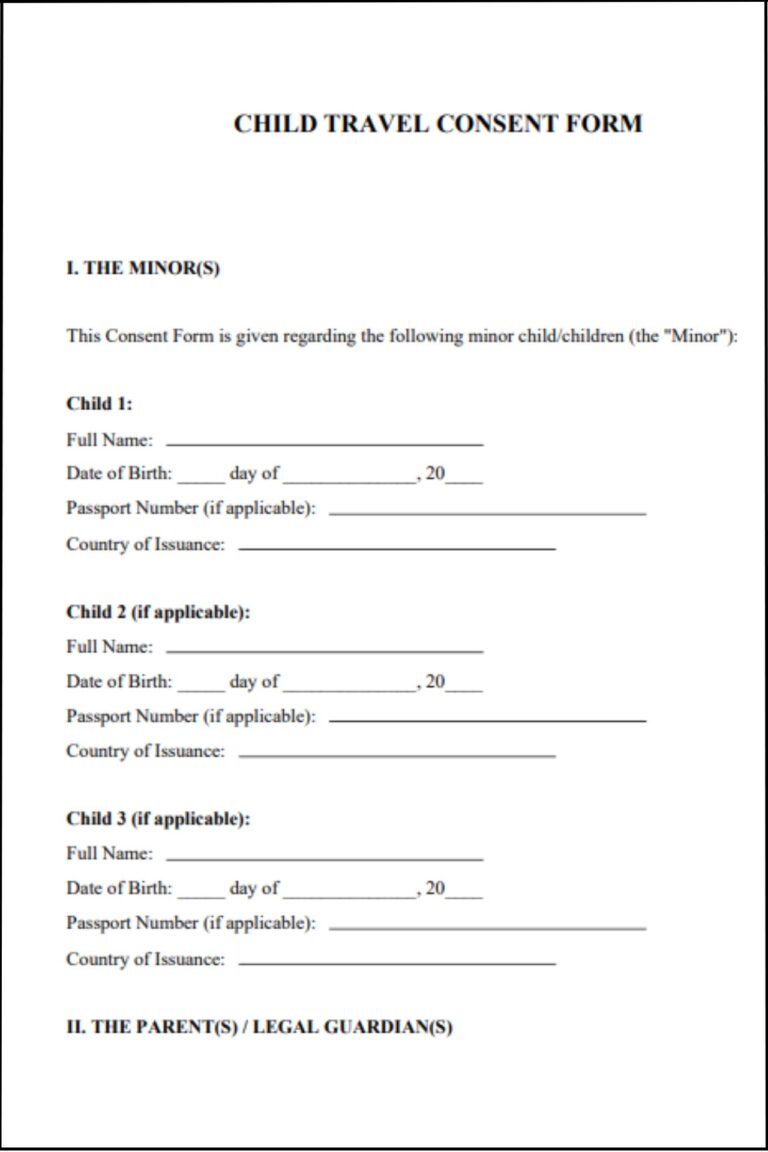
Child Travel Consent Letter Alberta: Free Template & PDF
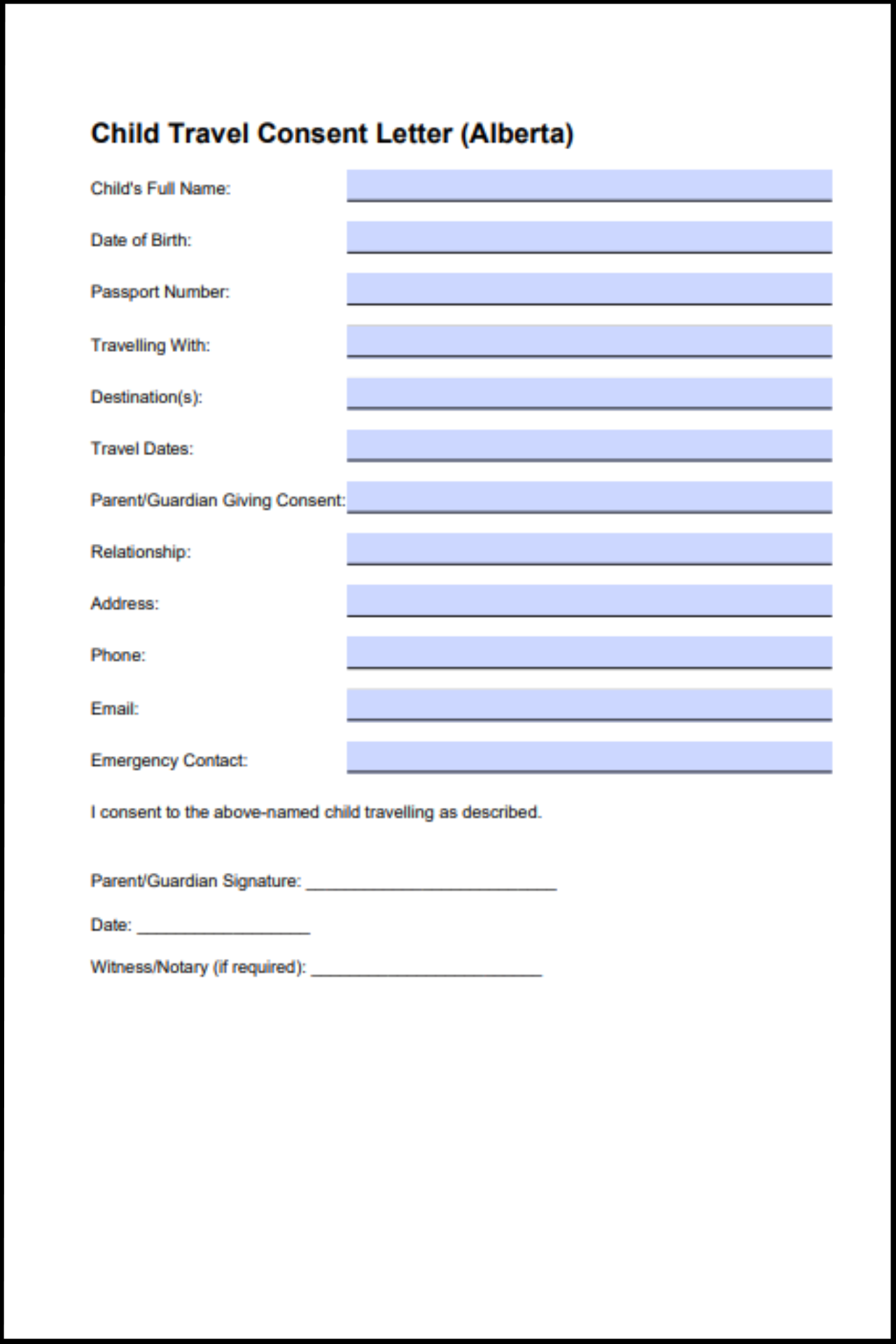
Child travel consent letter Alberta is a search many parents make shortly before an international trip, often after discovering that carrying a passport isn’t always enough when a child is travelling without one or both parents. While Alberta’s Family Law Act governs parenting and guardianship issues, the Government of Canada recommends that children travelling abroad carry a signed consent letter from any parent or guardian who is not accompanying them, helping to avoid delays with airlines and border officials.
I’ve seen separated parents arrive at the airport with only their parenting order, only to find they were asked for a consent letter before boarding, and similar travel disputes can later become relevant in proceedings before the Court of King’s Bench of Alberta. Taking a few extra minutes to prepare the correct document can make international travel much smoother. Below you’ll find a free Child Travel Consent Letter Alberta template, when it’s recommended, what information it should include, and the supporting documents you should carry.
Table of Contents
ToggleChild Travel Consent Letter Alberta
Does a Child Travel Consent Letter Hold Up at the Border?
A Child Travel Consent Letter is not a document filed with the Alberta government or any court, but it is widely used as evidence that a child has permission to travel without one or both guardians. The Government of Canada recommends carrying a consent letter for children travelling abroad whenever a child is travelling internationally with only one parent, a grandparent, another relative, or another trusted adult. Although there is no Alberta law requiring every child to carry one, airline staff, border services officers, and foreign immigration officials may request it before allowing the child to continue their journey.
For example, a parent travelling from Calgary to Mexico with their child may be asked by airline staff to produce a consent letter signed by the non-travelling guardian before boarding. Carrying the document alongside the child’s passport and any relevant parenting documents helps answer those questions quickly and reduces the likelihood of unnecessary delays.
One of the most common mistakes Alberta families make is assuming that a parenting order or the child’s birth certificate replaces a travel consent letter. Those documents may establish guardianship or the child’s identity, but they do not necessarily confirm that the non-travelling guardian has consented to a particular trip.
Although notarization is not required under Alberta law, having the consent letter notarized is commonly recommended because some airlines and foreign immigration authorities place greater confidence in a notarized document during international travel. Before leaving Canada, travellers should review the Government of Canada’s Travel Advice and Advisories for destination-specific entry requirements and any additional documents that may be requested.
If your family’s travel plans are based on an existing parenting arrangement, our Alberta Parenting Agreement Template explains how parenting responsibilities can affect travel decisions. Where guardianship is the key issue, our Alberta Guardian Consent Form provides additional guidance on establishing legal authority to make decisions for a child.
Who Needs to Sign the Consent Letter (and Who Can’t)
A Child Travel Consent Letter should be signed by a guardian who has decision-making responsibility for the child. Under Alberta’s Family Law Act, guardians are responsible for making significant decisions affecting a child’s upbringing, including matters relating to travel. Simply being a biological parent does not automatically determine who has authority to sign if a parenting order or guardianship arrangement provides otherwise.
A common example involves separated parents in Edmonton. A father may believe that being listed on the child’s birth certificate automatically allows him to sign the travel consent letter. However, where a court order or guardianship arrangement allocates decision-making responsibility differently, the consent should come from the guardian who has legal authority to make that decision.
A Child Travel Consent Letter is commonly used when:
- One parent is travelling internationally with the child.
- A grandparent is taking the child on holiday.
- Another relative or family friend is accompanying the child.
- A school, sports team, or youth organisation is travelling outside Canada.
- Parents are separated or divorced and only one guardian is travelling with the child.
The consent letter does not replace an existing parenting order or guardianship order. If a court order restricts travel or requires additional consent before a child leaves Canada, those requirements continue to apply regardless of what is written in the consent letter.
When Alberta Families Actually Need This Letter
Many Alberta families only discover the importance of a Child Travel Consent Letter after booking an international trip. While some journeys proceed without anyone requesting the document, others involve routine questions from airline staff or border officials who need confirmation that the child has permission to travel.
The document is particularly useful when:
- One parent travels outside Canada without the other parent.
- Grandparents take grandchildren on vacation.
- Children travel with an aunt, uncle, coach, or family friend.
- School exchanges or educational tours involve international travel.
- Sports teams compete outside Canada.
- Children travel under shared parenting arrangements.
Imagine a mother from Calgary taking her daughter to Disneyland while the child’s father remains in Alberta. Even if both parents fully support the holiday, airline staff may still ask whether the travelling parent has written permission from the other guardian. Producing a properly completed consent letter usually resolves the issue within minutes.
Similarly, grandparents from Lethbridge travelling with grandchildren on an overseas cruise may be asked to show written permission from the children’s guardians before boarding or when entering another country. Having the consent letter ready helps avoid delays and demonstrates that the child’s travel has been properly authorised.
Along with the consent letter, families should carry copies of any supporting documents that relate to the trip, such as the child’s passport, birth certificate, parenting orders, or contact information for the non-travelling guardian. These documents help answer any questions that may arise during international travel.
What Makes a Child Travel Consent Letter Invalid in Alberta
A Child Travel Consent Letter works best when it contains complete and accurate information. Small mistakes can delay a trip because airline staff or border officials may ask for more documents before allowing the child to travel.
Common mistakes include:
- A guardian with decision-making responsibility did not sign the letter.
- The travel dates or destination are incorrect.
- The child’s name does not match the passport.
- The letter conflicts with a parenting order or guardianship arrangement.
- Contact details for the non-travelling guardian are missing.
- Someone changed the document after it was signed.
- The letter omits temporary emergency medical consent for the accompanying adult.
Including Emergency Medical Authorization
In addition to international travel permission, a well-drafted consent letter should include an explicit emergency medical authorization clause. Under Section 21 of Alberta’s Family Law Act, authorizing medical, dental, and surgical treatment is a fundamental guardian responsibility.
If a child suffers an unexpected illness or injury while travelling outside Canada with only one parent, a grandparent, or a sports team coach, foreign healthcare providers may refuse or delay treatment without documented consent from all legal guardians. Adding a brief clause authorizing the accompanying adult to consent to necessary medical care ensures the child receives immediate attention in an emergency.
A family from Edmonton learned this the hard way before a holiday to Europe. They changed their return flight but forgot to update the consent letter. Airline staff noticed the different dates and asked several questions before allowing them to board. Updating the letter before travelling would have avoided the delay.
Summary of Applicable Laws
| Topic | Rule | Governing Law |
|---|---|---|
| Guardianship | Guardians with decision-making responsibility may consent to travel | Family Law Act, SA 2003, c F-4.5 |
| International travel | The Government of Canada recommends carrying a consent letter | Government of Canada Travel Guidance |
| Official form | Alberta has no mandatory provincial consent letter | Government of Canada Consent Letter |
| Filing requirement | No filing or registration is required | Alberta law |
| Supporting documents | Parenting orders may also be relevant | Family Law Act |
Alberta vs. Other Provinces: Age of Majority and Guardianship Differ
Each province has its own family law rules. Alberta uses the Family Law Act to determine who has guardianship and decision-making responsibility. A template written for another province may not reflect Alberta’s legal terminology.
Families should review any national template before using it. The document should match their parenting arrangements and any existing court orders. This is especially important after separation or divorce.
A Real Example: Travelling Alone With Your Child From Calgary
Sarah planned a holiday to Mexico with her nine-year-old son. The child’s father stayed in Alberta. Before leaving Calgary, she completed a Child Travel Consent Letter and packed copies of the child’s passport, birth certificate, and travel itinerary.
At the airport, airline staff asked whether she had written permission from the child’s other guardian. Sarah handed over the signed consent letter immediately. The staff completed their checks within minutes, and the family continued their trip without further delay.
Many Alberta families face similar situations. Preparing the letter before travelling is much easier than trying to resolve questions at the airport.
Frequently Asked Questions
Do I need a Child Travel Consent Letter for travel within Canada?
It is not usually required. However, carrying one can help if a child is travelling with only one guardian or another adult.
Does the letter need to be notarized?
Alberta does not require notarization. Even so, many families choose to notarize the document because some airlines and foreign border officials prefer it for international travel.
Can a grandparent travel with my child using this letter?
Yes. A grandparent or another trusted adult can travel with the child when they carry a consent letter signed by the appropriate guardian.
What if only one guardian has decision-making responsibility?
The guardian with legal authority should complete and sign the consent letter.
Should I carry other documents?
Yes. Bring the child’s passport and any documents that support the trip. These may include a birth certificate, parenting order, travel itinerary, and emergency contact details.