Legal Bill of Sale Requirements Ontario: What You Need to Include
Bill of Sale Requirements Ontario are important to understand if you are buying or selling anything privately. Many people think it’s optional—but in real situations, it can protect you from serious disputes.
Buying or selling something privately in Ontario? A Bill of Sale helps prove ownership, confirms payment, and avoids future problems. Still, many people are confused about what must be included and when it’s actually required.
I’ve seen private sales in Ontario turn into expensive disputes simply because the parties relied on text messages or verbal promises instead of a proper Bill of Sale. When someone comes to me after the deal has already gone wrong, the biggest problem is usually missing details that could have protected both sides from the start.
This article explains the exact legal requirements in Ontario, when you need it, and how to write one properly—plus a free template you can use right away.
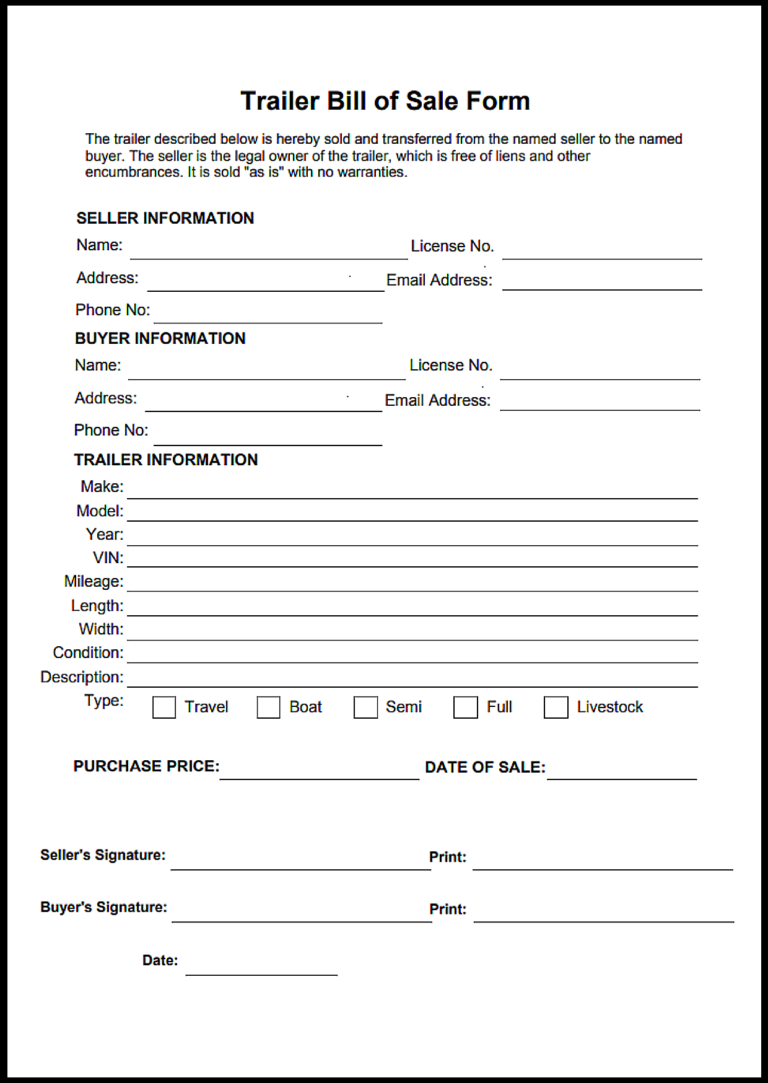
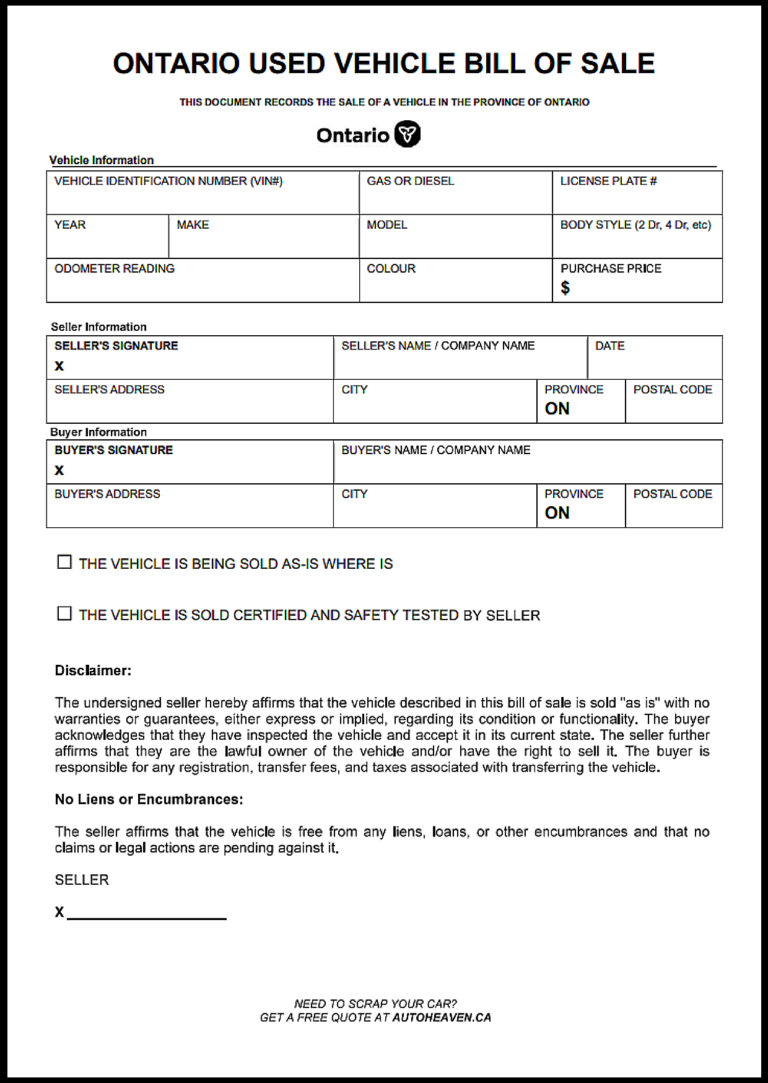
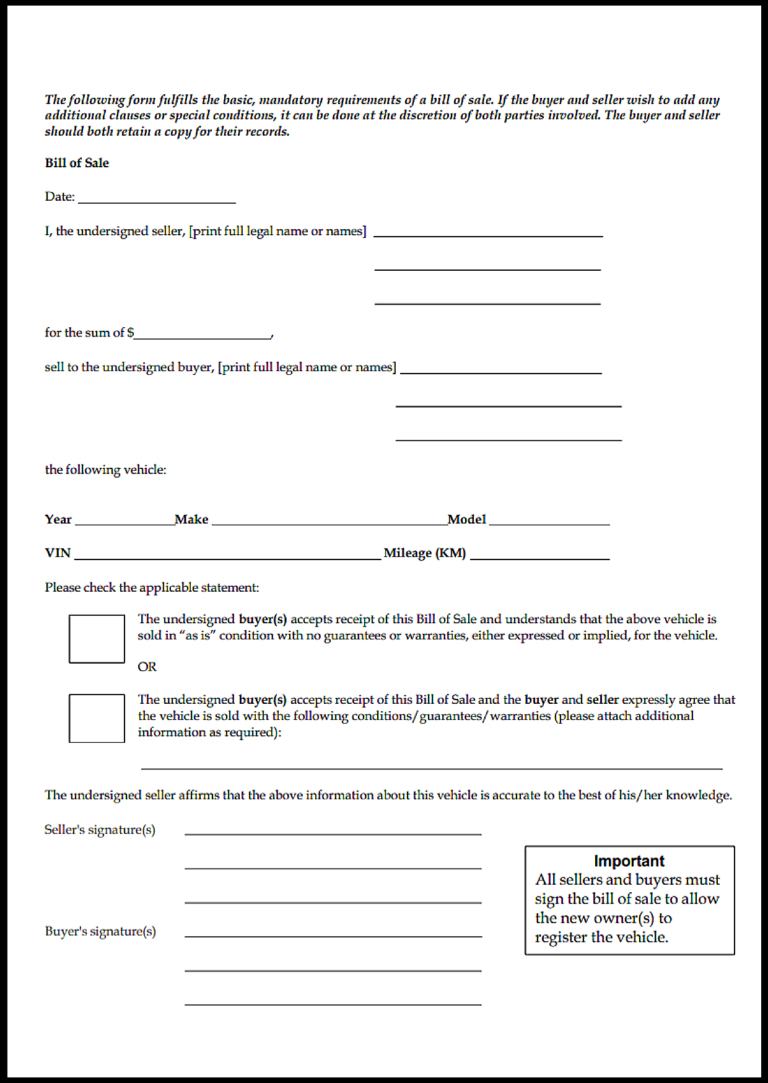
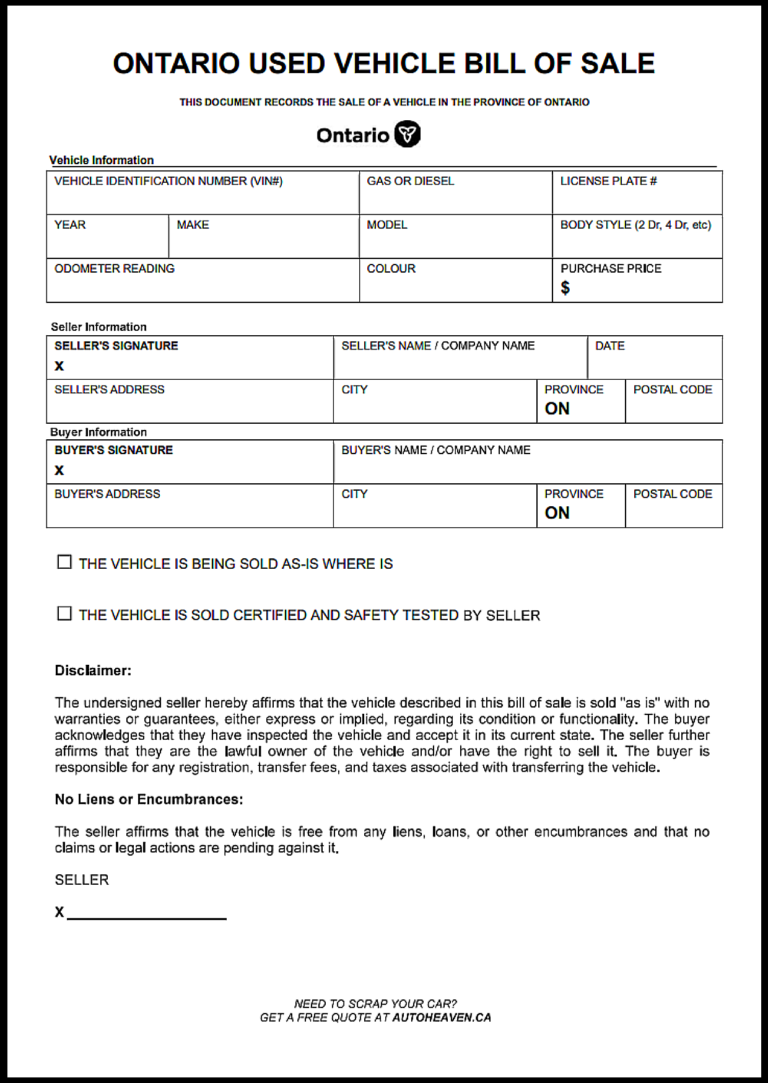
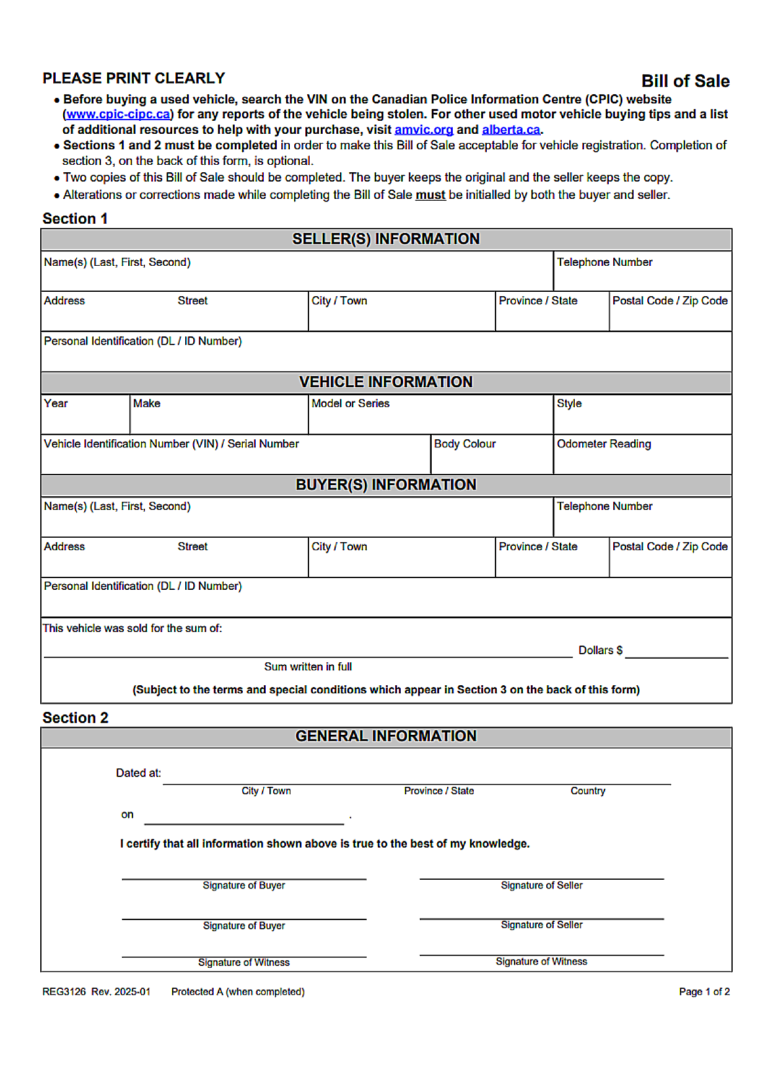
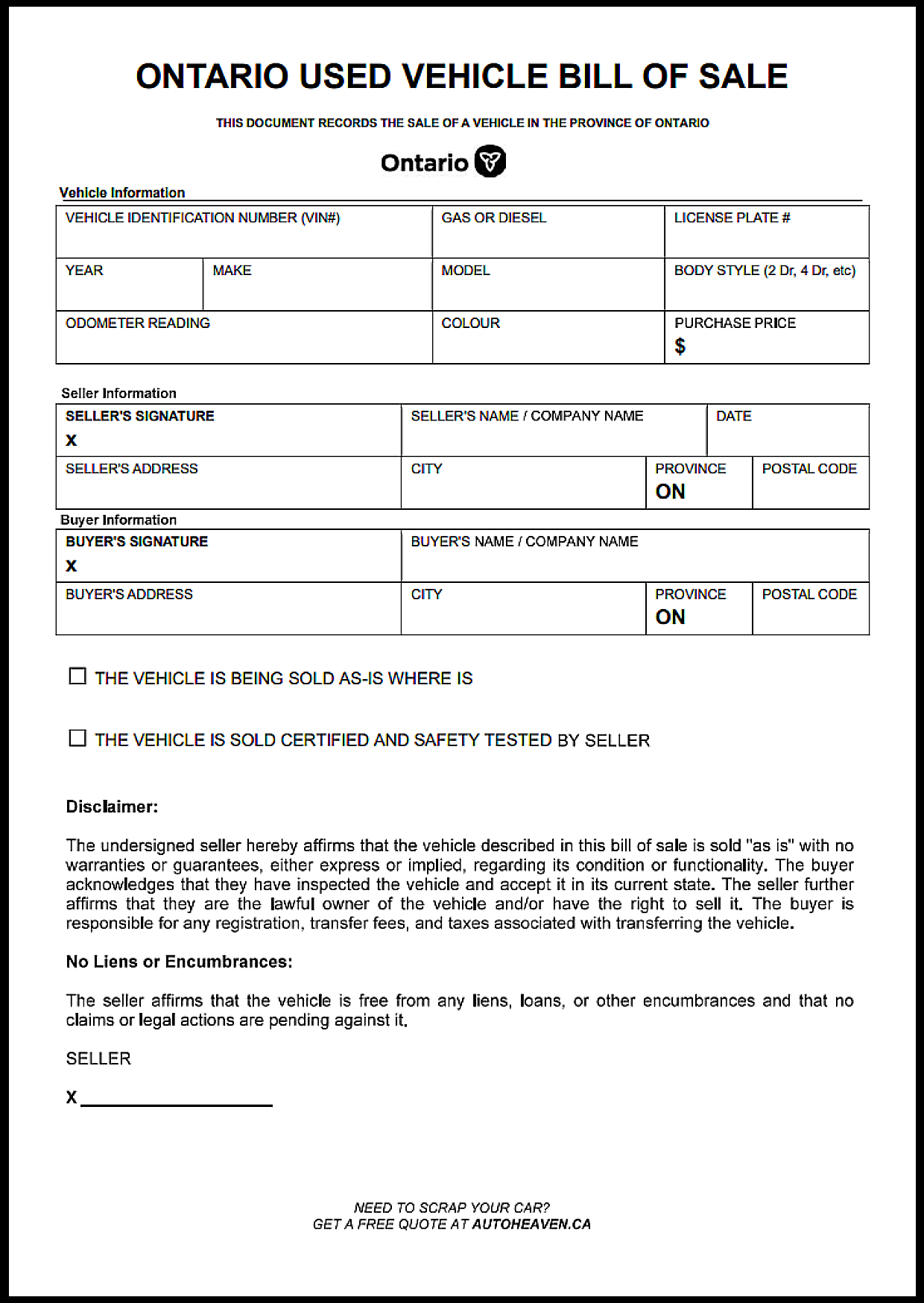
Free Bill of Sale Template (Ontario)
You can use this simple and practical template for most private sales in Ontario.
Ontario Bill of Sale Legal Requirements and Statutory Rules
| Topic / Issue | Ontario Legal Rule | Governing Statute |
|---|---|---|
| General governing law | Bills of Sale for general personal property are governed by Ontario contract and sale of goods law. | Sale of Goods Act, R.S.O. 1990, c. S.1 |
| Vehicle transactions | Vehicle Bills of Sale are governed by Ontario vehicle transfer laws. | Highway Traffic Act, R.S.O. 1990, c. H.8 |
| Consumer transactions | Statutory protections apply to consumer-to-business transactions, dealer networks, remote sales, and unfair trade practices. | Consumer Protection Act, 2023, S.O. 2023, c. 12, Sched. 1 |
| Federal involvement | No federal law controls the form of a Bill of Sale in Ontario. | Purely provincial jurisdiction |
| Who can sign | Any person or corporation with legal title to the property may sign. | Sale of Goods Act, s. 3 |
| Witness requirement | Witnesses are not legally required. | N/A |
| Notarization | Notarization is generally not required except for certain family gift tax exemptions. | N/A |
| Age and capacity | Contractual competence requires reaching the legal age of majority (18). Contracts with minors for non-necessaries remain voidable at their option. | Age of Majority and Accountability Act, R.S.O. 1990, c. A.7, s. 1; Sale of Goods Act, R.S.O. 1990, c. S.1, s. 3 |
| Vehicle transfer deadline | Buyers must register the vehicle transfer within 6 days. | Highway Traffic Act, s. 11(2) |
| Mandatory vehicle details | Vehicle Bills of Sale must include VIN, make, model, year, sale price, date, and signatures. | Highway Traffic Act |
| “As Is” wording | Explicit, unambiguous text is strictly required to effectively contract out of and negative default statutory implied conditions of quality and fitness. | Sale of Goods Act, R.S.O. 1990, c. S.1, s. 15 & s. 53 |
| Filing requirement for personal property | General Bills of Sale do not need government filing to remain valid. | Private contract under Ontario law |
| Vehicle registration process | Vehicle transfer documents must be presented to ServiceOntario for ownership transfer. | Highway Traffic Act |
| Lien searches | Buyers should check the PPSR for registered liens on valuable property. | Personal Property Security Act (PPSA) |
| Missing UVIP | Failure to provide a UVIP can prevent vehicle registration transfer. | Highway Traffic Act, s. 11.1 |
| False purchase price | Providing a false purchase price may result in tax fraud consequences. | Retail Sales Tax Act |
| Mental incapacity or intoxication | A sale may become voidable if a person lacked legal capacity at signing. | Sale of Goods Act, s. 3(1) |
| Ontario-specific UVIP rule | Ontario uniquely requires sellers to provide a UVIP in private vehicle sales. | Highway Traffic Act |
| Retail Sales Tax calculation | Private vehicle transfers trigger a 13% Retail Sales Tax (RST) calculated on the greater of the actual purchase price or the Canadian Red Book wholesale value. | Retail Sales Tax Act, R.S.O. 1990, c. R.31; O. Reg. 1012 |
| Family gift exemption | Tax-free family transfers require a sworn statement commissioned by a notary or Commissioner of Oaths. | Ontario family gift transfer requirements |
Ontario has some surprisingly strict vehicle sale rules compared to many other provinces. The biggest example is the Used Vehicle Information Package (UVIP). In Ontario, sellers must provide this package before a buyer can properly register a used vehicle. Many people only discover this after the sale is complete, which can delay ownership transfer and create major frustration in real life.
Another important rule involves Retail Sales Tax. Ontario may calculate tax using the vehicle’s wholesale value instead of the price written on the Bill of Sale. This matters because writing an artificially low sale price can trigger tax problems and possible fraud investigations later.
Deploying precise “As Is, Where Is” legal nomenclature is operationally vital in all private transfers of personal property. Under section 15 of the Sale of Goods Act, transactions are subject to strict implied conditions regarding merchantable quality and fitness for a specific purpose. To properly shield a private seller from future civil liability concerning latent or patent defects, the text must unequivocally trigger section 53 of the Act, establishing that the buyer assumes all performance risks and waives any default statutory recourse.
These rules show why a properly written Ontario Bill of Sale is not just paperwork — it protects both parties when problems arise. Download the free Ontario Bill of Sale template below and make sure your document is legally complete.
What Are Bill of Sale Requirements in Ontario?
Under Ontario law, there is no single rule that makes a Bill of Sale mandatory for every transaction. However, it becomes very important in many real-life situations.
A Bill of Sale acts as legal evidence of a contract under the Sale of Goods Act. It shows that a transaction took place and records the agreed terms.
Understanding the legal requirements of a bill of sale ensures your document is valid and enforceable. For practical examples, refer to the main bill of sale guide and formats like the vehicle bill of sale.
When it becomes essential:
- Vehicle sales (strict requirements apply)
- High-value private sales (like electronics or equipment)
- Disputes over ownership or condition
- Tax and accounting records
In simple terms:
| Situation | Legally Required |
Strongly Recommended
|
| Car or vehicle sale | Yes | Yes |
| Private item sale | No | Yes |
| Business asset sale | No | Yes |
| Legal dispute | No | Critical |
Where a Bill of Sale is not a statutory prerequisite for an asset registry, it functions as primary documentary evidence of an executed contract. In formal civil litigation, the Ontario Small Claims Court (for claims up to $35,000) or the Ontario Superior Court of Justice (for claims exceeding $35,000) relies on this signed instrument under the Rules of Civil Procedure to confirm the definitive passing of title, the date of risk transfer, and the terms of consideration.
When Is a Bill of Sale Required in Ontario?
Vehicle Purchases (Most Important Case)
This is where a Bill of Sale matters the most.
In Ontario:
- Required for cars, motorcycles, and trailers
- Needed for registration and tax calculation
- Must include specific details like VIN and sale price
You will also need to complete ownership transfer through ServiceOntario.
Private Sales of Goods
This includes:
- Furniture
- Phones and electronics
- Tools and equipment
In most private sale situations, a Bill of Sale:
- Protects the seller from future claims
- Protects the buyer from fraud
Without it, it becomes your word vs. theirs.
Business or Asset Transfers
For business transactions:
- Equipment sales
- Inventory transfers
- Tools or machinery
A Bill of Sale helps with:
- Tax reporting
- Accounting records
- Ownership clarity
Mandatory Information You Must Include
This is the most important section. Missing details can make your Bill of Sale weak or useless.
Buyer and Seller Details
- Full legal names
- Complete addresses
- Avoid nicknames or short forms.
Item Description
- Clear and accurate description
- Include make, model, and condition
- Add VIN or serial number if applicable
For vehicles, this is mandatory.
Sale Price and Payment Terms
- Exact amount paid
- Payment method (cash, transfer, etc.)
This helps calculate taxes and avoid disputes.
Date of Sale
- Must include the exact date
- Important for legal and tax purposes
Signatures (Critical)
- Both buyer and seller must sign
- Without signatures, the document is weak in court
This is what makes it legally enforceable.
Special Rules for Vehicle Bill of Sale in Ontario
Vehicle sales have stricter rules than regular items.
UVIP Requirement
The seller must provide a Used Vehicle Information Package (UVIP).
This includes:
- Vehicle history
- Liens (debts on vehicle)
- Ownership details
Without UVIP, the buyer cannot properly register the vehicle.
Ownership Transfer Process
After the sale:
- Buyer must register the vehicle through ServiceOntario
- Bring Bill of Sale + UVIP
- Complete transfer within a set time
Sales Tax Considerations
Ontario applies Retail Sales Tax (RST) based on:
- Purchase price OR
- Vehicle’s fair market value
Even if you write a lower price, tax may still be calculated differently.
You can also explore how these rules apply when drafting documents by reviewing how to write a bill of sale. Additional clarity can be found in when this document is required.
Is a Bill of Sale Legally Required or Optional?
This is where many people get confused.
The truth:
- Not always legally required
- BUT almost always necessary
Key difference:
| Type | Meaning |
| Legal requirement |
Law says you must have it
|
| Practical necessity |
You need it to protect yourself
|
In most private sale situations, not having one can cause:
- Ownership disputes
- Payment disagreements
- Legal trouble
Courts may use a Bill of Sale as primary evidence.
Common Mistakes That Make a Bill of Sale Invalid
These mistakes happen often—and can cause serious problems.
Missing Signatures
Without signatures, it may not hold up legally.
Incorrect or Incomplete Item Details
Wrong VIN or missing description can:
- Delay registration
- Cause ownership disputes
Omission of an “As-Is” Clause
If you don’t include “as-is”:
Absent an explicit exclusion clause, the transaction remains subject to all implied conditions of quality and fitness under the Sale of Goods Act. If the chattel contains undisclosed defects, the buyer can initiate a civil action for breach of statutory conditions, exposing the seller to judicial damages or a court-ordered rescission of the contract.
Fake or Incorrect Information
This can lead to:
- Legal penalties
- Fraud accusations
- Voided agreements
Real-Life Example
Let’s say you sell a used bike privately.
Without a Bill of Sale:
- Buyer later says the bike had issues
- Claims you misled them
- No proof of agreed condition
With a Bill of Sale:
- “As-is” condition clearly written
- Signed by both parties
- Dispute becomes easy to resolve
This is why even small sales should use one.
Do You Need a Notary for a Bill of Sale in Ontario?
In most cases, NO.
A notarized document is not required for:
- Private sales
- Vehicle transactions
- General goods
When you might need it:
- Very high-value assets
- Legal disputes
- Business contracts
For normal use, a signed document is enough.
Bill of Sale vs Ownership Transfer
Many people think they are the same—they are not.
| Document | Purpose |
| Bill of Sale |
Proof of transaction
|
| Ownership/Registration |
Legal ownership record
|
For vehicles:
- You need BOTH
- One without the other is incomplete
How to Write a Proper Bill of Sale (Step-by-Step)
Follow this simple process:
- Write full details of buyer and seller
- Describe the item clearly
- Add sale price and payment method
- Include date of sale
- Add “as-is” clause if needed
- Get signatures from both parties
- Make two copies (one each)
Keep language simple and clear. No need for complex legal words.