How to Write a Bill of Sale in Ontario | Free Template & Instructions
How to Write Bill of Sale Ontario is one of the most common questions when buying or selling something privately. Whether it’s a motor vehicle, a regular bicycle, or furniture, a Bill of Sale serves as your primary contractual proof of transfer. However, note that while general personal property is exempt from provincial taxes, motor vehicles trigger strict statutory tax and transfer rules under Ontario law
I’ve seen Ontario buyers get stuck with registration delays or ownership disputes simply because key details were missing from a handwritten Bill of Sale. When people come to me after the deal has already gone wrong, it’s usually because they thought a simple verbal agreement was enough.
It protects both the buyer and the seller under Ontario law and helps avoid future disputes. The good news? You don’t need a lawyer to create one.
Last Updated: September 2026
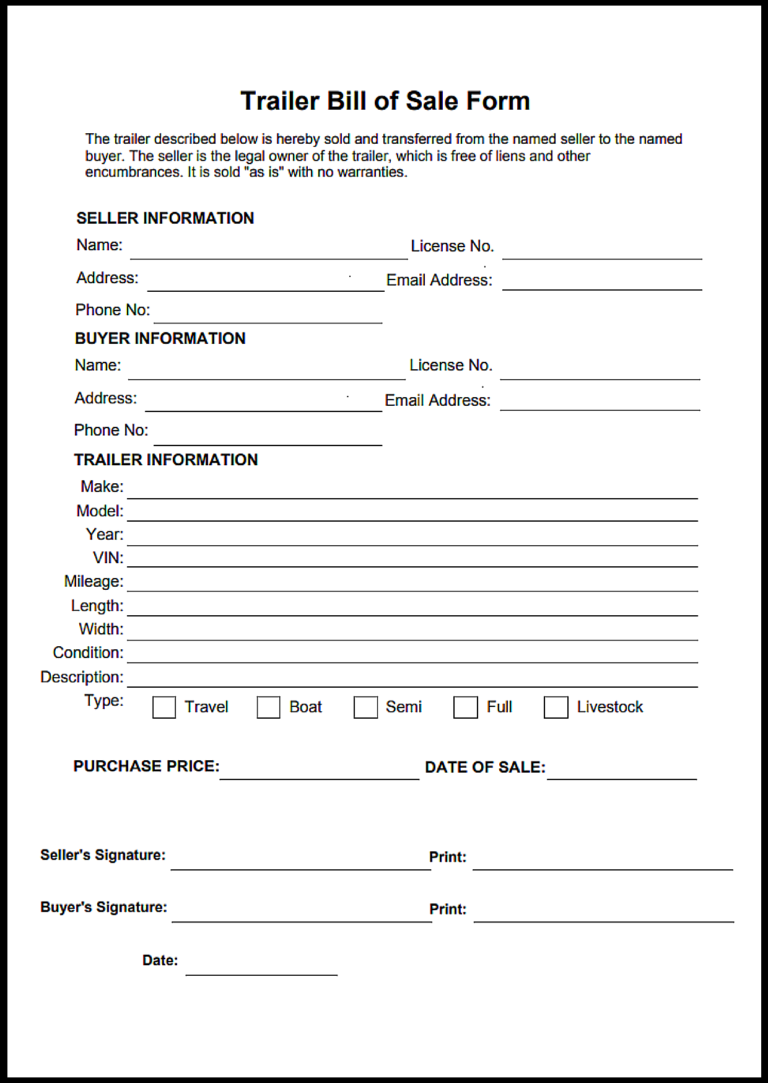
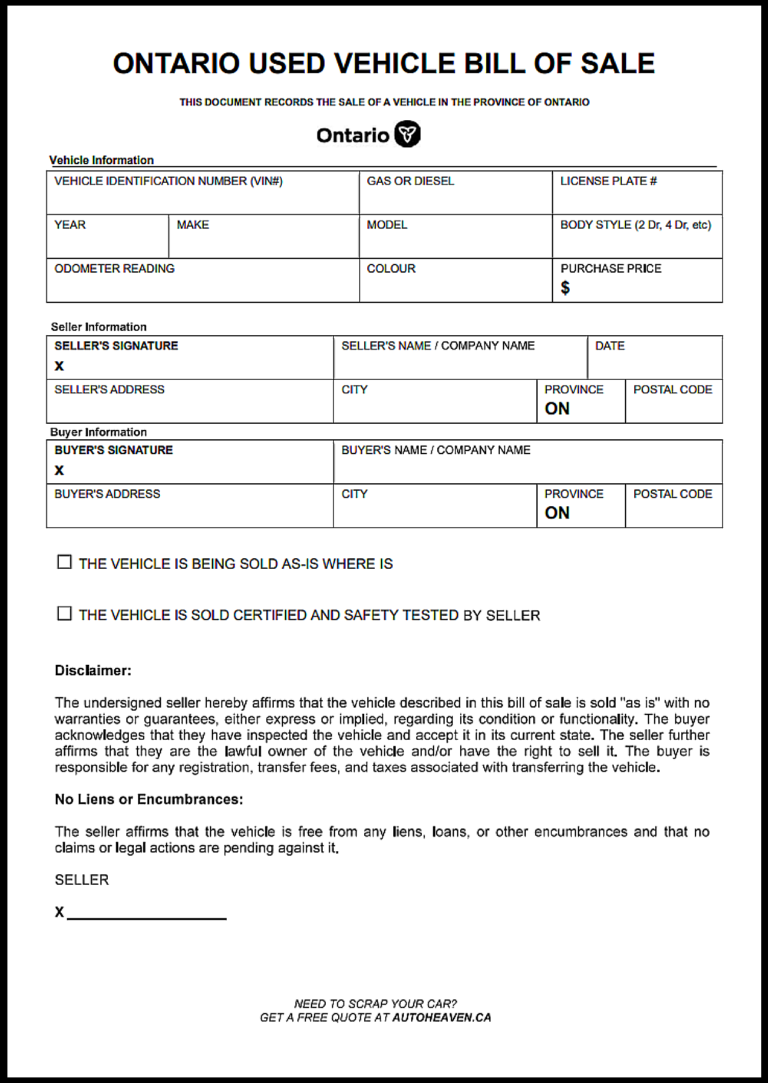
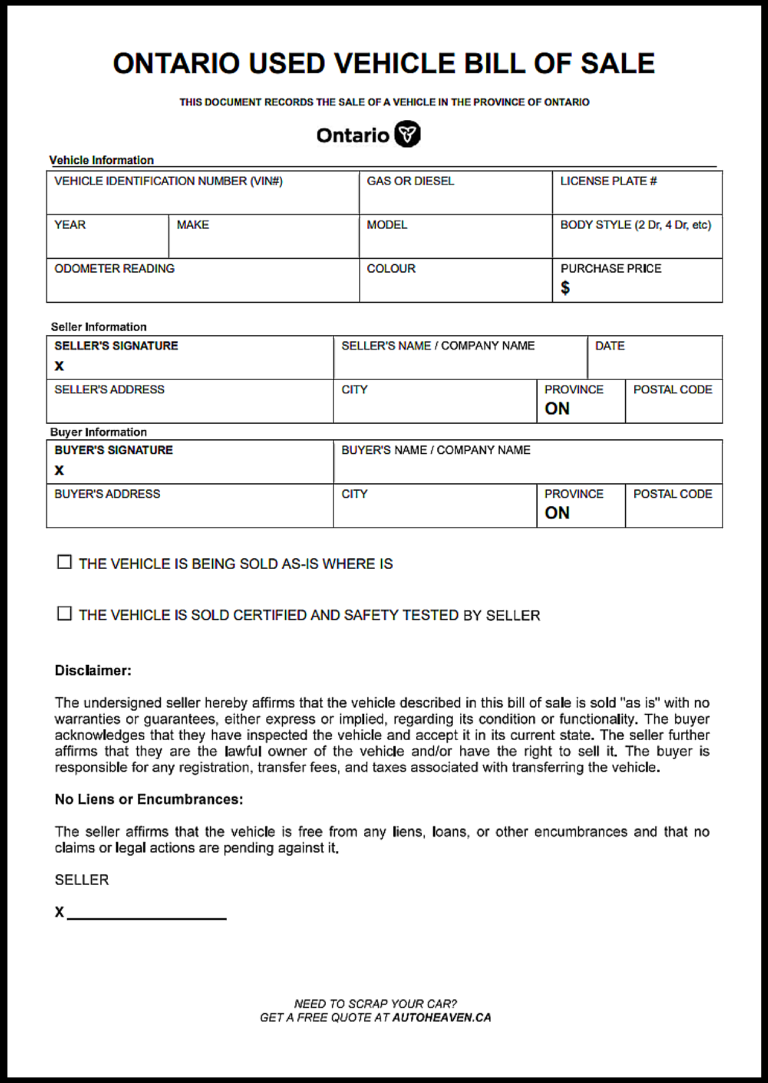
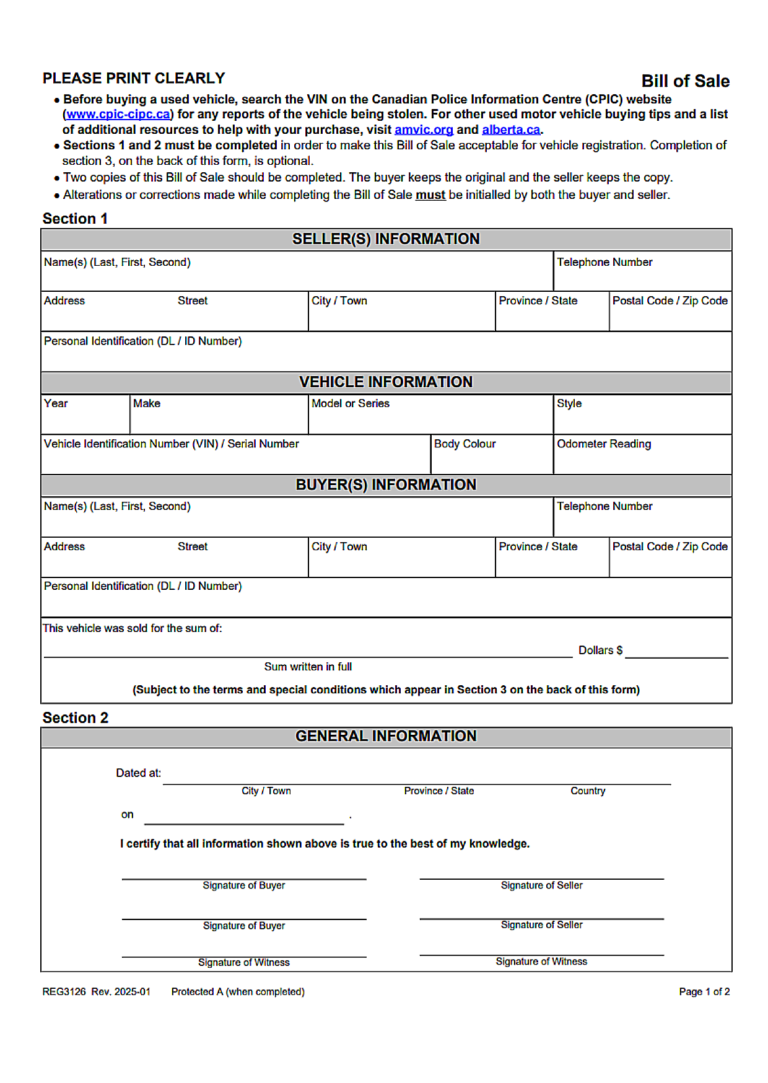
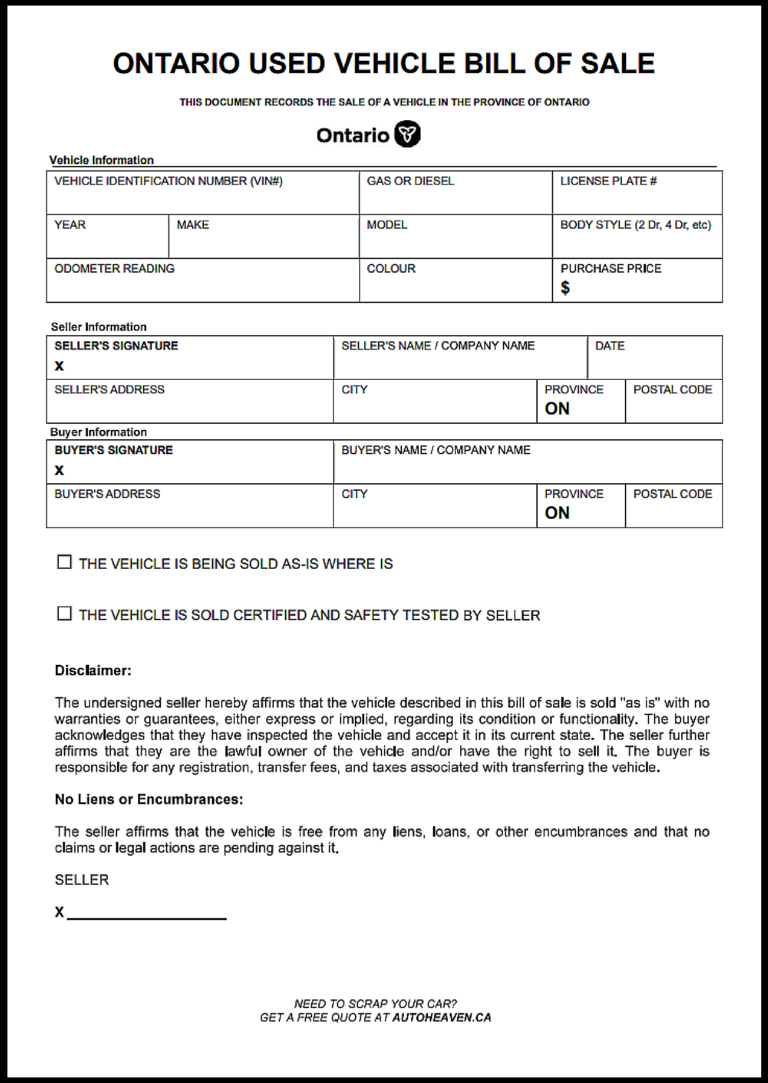
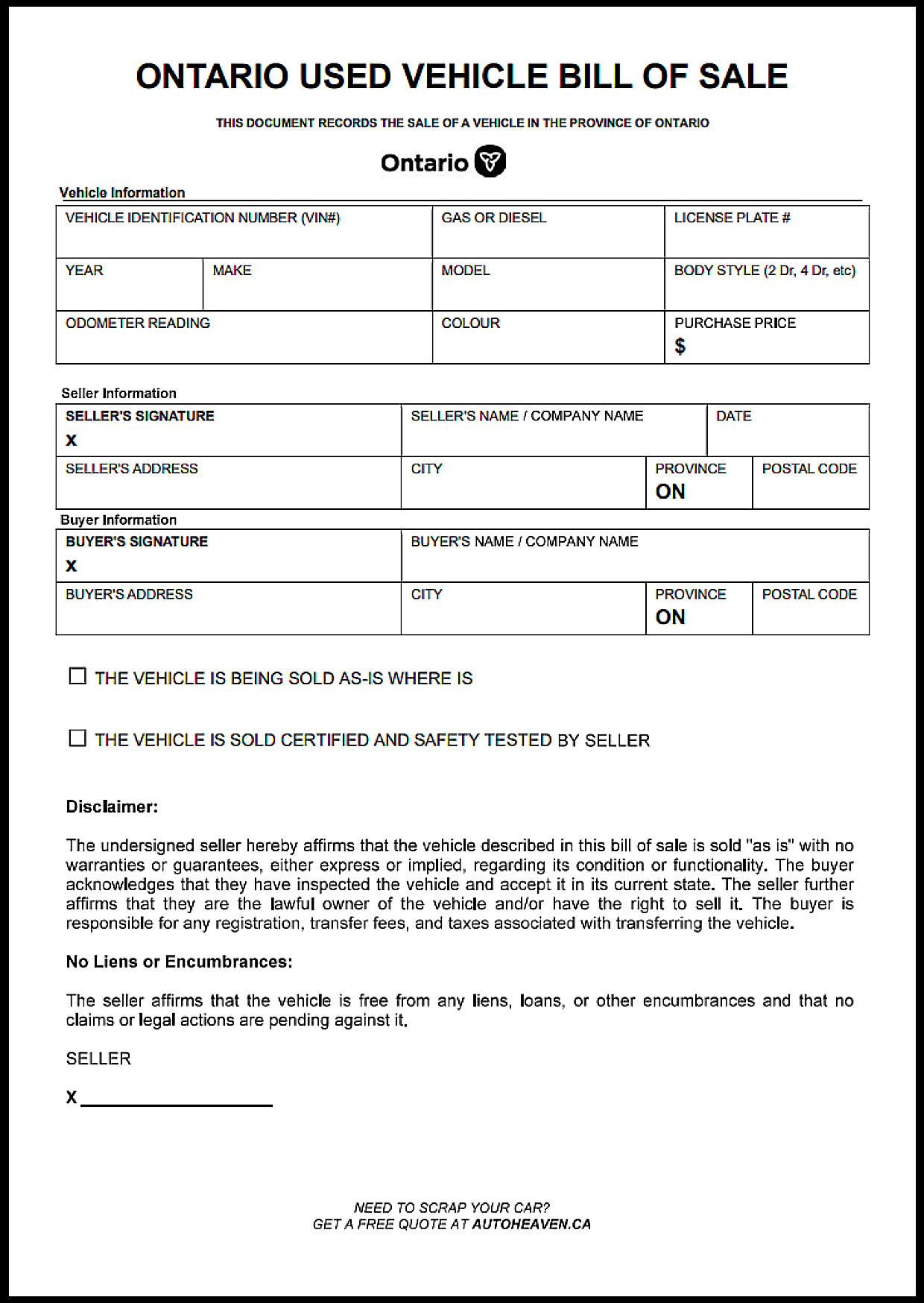
Free Bill of Sale Template (Ontario)
Use this simple and legally relevant template. You can copy, print, or write it by hand.
Ontario Bill of Sale Laws and Legal Requirements You Must Know
| Topic / Issue | Ontario Legal Rule | Governing Statute |
|---|---|---|
| Governing law for sale of personal property | Private sales of goods in Ontario can be governed by the Sale of Goods Act and general contract law, depending on the transaction and the property involved. | Sale of Goods Act, R.S.O. 1990, c. S.1 |
| Governing law for vehicle and trailer transfers | Vehicle and trailer ownership transfers are regulated under the Highway Traffic Act and related vehicle-registration rules. | Highway Traffic Act, R.S.O. 1990, c. H.8 |
| Tax calculation during registration | Bill of Sale information is used as part of the documentation for calculating applicable Retail Sales Tax on specified vehicles. | Retail Sales Tax Act, R.S.O. 1990, c. R.31 |
| Federal involvement | There is no single federal statute that generally governs ordinary private Bills of Sale for personal property in Ontario, although federal laws can apply to particular transactions. | Federal law depends on the transaction |
| Who can sign | The seller should be the owner of the goods or a person authorized to sell them. For vehicle transactions, the required seller information and signatures should correspond with the transaction and registration documents. | Ontario contract and vehicle-registration rules |
| Witness requirement | A witness is not generally required for an ordinary private Bill of Sale, although the parties may choose to have one. | General Ontario law |
| Notarization requirement | Notarization is not generally required for an ordinary Bill of Sale. Certain vehicle-transfer exemptions may require a prescribed sworn statement or other documentation. | Ontario vehicle-transfer rules |
| Legal age and capacity | Ontario’s general law governs contractual capacity. Under the Sale of Goods Act, a person lacking contractual capacity may still be liable to pay a reasonable price for goods that qualify as “necessaries.” | Sale of Goods Act, R.S.O. 1990, c. S.1, s. 3 |
| Vehicle transfer deadline | The buyer of a motor vehicle or trailer for which a permit has been issued must apply for a new permit within six days after becoming the owner. | Highway Traffic Act, R.S.O. 1990, c. H.8, s. 11(2) |
| Required vehicle details | A vehicle Bill of Sale must contain the required information, including the VIN, make, year and power source, body type, colour and model if available, purchase price, seller information, buyer information, and sale or purchase date. | Ontario vehicle-registration requirements |
| “As-Is” wording | An “as-is” clause can record the parties’ agreement about the condition of the item, but it does not automatically eliminate every statutory or contractual obligation. | Sale of Goods Act, s. 15 |
| Registration requirement | For an applicable used-vehicle registration, the buyer must bring the required documents to ServiceOntario, including the UVIP and Bill of Sale. | Highway Traffic Act and Ontario registration requirements |
| Tax valuation rule | For an automobile, van or truck with an empty weight of 2,200 kilograms or less, 13% RST is generally based on the greater of the purchase price or Canadian Red Book wholesale value. Other specified vehicles are generally taxed at 13% of the purchase price. | Retail Sales Tax Act and Ontario RST guidance |
| Missing UVIP consequence | For an applicable used-vehicle sale, the seller must provide the UVIP, and the purchaser must deliver it before obtaining a new vehicle permit. | Highway Traffic Act, s. 11.1 |
| Incorrect VIN consequence | The VIN should be copied accurately because Ontario requires the VIN on the vehicle Bill of Sale and the vehicle and registration records should correspond. | Ontario vehicle-registration requirements |
| Fundamental mistake rule | A clear description of the goods is important because it helps establish exactly what the parties agreed to sell and purchase. | Ontario contract and sale-of-goods law |
| Ontario-specific UVIP requirement | For an applicable private sale of a used motor vehicle, Ontario requires the seller to provide the buyer with a valid Used Vehicle Information Package (UVIP). | Highway Traffic Act, s. 11.1 |
| Ontario tax difference | Ontario’s 13% RST applies to specified vehicles. Bicycles and electric bicycles are not specified vehicles for this RST regime. | Ontario Retail Sales Tax guidance |
For a private sale of a used motor vehicle in Ontario, the seller must provide the buyer with a valid Used Vehicle Information Package (UVIP). The buyer must also complete the registration process within six days after becoming the owner. The seller has separate permit-transfer responsibilities, including removing the number plates, retaining the plate portion of the permit, and completing and signing the transfer application on the vehicle portion.
The VIN should be copied carefully because Ontario requires it on the vehicle Bill of Sale. Tax treatment also depends on the type of specified vehicle. For an automobile, van or truck with an empty weight of 2,200 kilograms or less, 13% RST is generally based on the greater of the purchase price or the Canadian Red Book wholesale value. Other specified vehicles, including motorcycles and trailers, are generally taxed at 13% of the purchase price. Bicycles and electric bicycles are not specified vehicles under Ontario’s RST rules.
Before signing, check the buyer and seller information, purchase price, sale date, item description, and VIN where applicable. For a vehicle sale, also make sure the Bill of Sale is consistent with the UVIP and vehicle permit.
What Is a Bill of Sale and Why It Matters in Ontario
A Bill of Sale is commonly used in private transactions and provides a written record of the sale. For an Ontario vehicle transaction, it is part of the documentation used during the registration process. Government of Ontario
A Bill of Sale is not a mandatory separate document for every type of private sale. However, it can provide useful evidence of the transaction and the terms the parties agreed to.
It helps you:
- Record the purchase price
- Identify the buyer and seller
- Describe the item being sold
- Record the date of the transaction
- Keep evidence of agreed terms
- Support the vehicle-registration process where applicable
For example, if you buy a used car privately, the Bill of Sale forms part of the documentation you use when registering the vehicle.
Writing a bill of sale correctly ensures that the important transaction details are recorded. To understand the full structure, review the main bill of sale guide along with examples like the vehicle sale format.
When You Need a Bill of Sale in Ontario
A separate Bill of Sale is not required for every private sale, but it is useful when you want a clear written record of the transaction.
You typically need it when:
- Buying or selling a vehicle
- Registering a vehicle with ServiceOntario
- You want a clear written record of the transaction
- You need to record the agreed price, date, condition, or other terms
Real-life example:
You buy a used car from a private seller. The Bill of Sale records the purchase price and other required information. For a used vehicle, Ontario also requires the UVIP and other registration documents.
Key Information You Must Include (Step-by-Step)
A Bill of Sale should clearly identify the parties, the property, the price, and the main terms of the transaction.
Buyer and Seller Details
- Full legal names
- Addresses
- Contact details (optional but helpful)
Accurate Description of the Item
Clearly describe what is being sold:
- Type of item
- Brand or model
- VIN for vehicles
- Serial number where applicable
- Other identifying details that distinguish the item
For a vehicle, Ontario requires specific information, including the VIN, make, year and power source, body type, colour and model if available.
Sale Price and Payment Terms
- Exact amount paid
- Payment method (cash, e-transfer, cheque)
- Payment terms, if payment will be made later
Date of Sale
The date should be recorded clearly.
This is important for:
- Keeping a transaction record
- Establishing when the sale occurred
- Vehicle registration requirements
- Tax documentation where applicable
Condition Clause (“As-Is” vs Warranty)
The condition terms should reflect what the parties actually agreed to.
| Condition Type | What It Means |
| As-Is |
Records that the buyer accepts the item subject to the condition and terms stated in the agreement
|
| Warranty |
Records a promise by the seller concerning the condition, performance, or other specified feature of the item
|
An “as-is” clause can be useful, but it should not be treated as an automatic legal shield. Ontario’s Sale of Goods Act contains specific implied conditions and warranties in certain circumstances.
Signatures of Both Parties
- Both parties should sign the document
- The signatures confirm the parties’ agreement to the recorded terms
- A witness is optional for an ordinary Bill of Sale
How to Write a Bill of Sale (Step-by-Step Process)
This process covers the basic information you should record. Vehicle transactions also have Ontario-specific registration and documentation requirements.
Step 1: Gather buyer and seller details
Step 2: Describe the item clearly
Step 3: Agree on price and payment terms
Step 4: Add condition or warranty terms that accurately reflect the agreement
Step 5: Review and sign copies
Tip: Always make two copies — one for the buyer and one for the seller.
Special Rules for Vehicle Bill of Sale in Ontario
Vehicle sales have extra requirements.
When selling a car in Ontario, the Bill of Sale must include:
- VIN (Vehicle Identification Number)
- Make and year
- Power source
- Body type
- Colour
- Model, if available
- Sale price
- Seller information
- Buyer information
- Sale or purchase date
Ontario’s official guidance also states that the Bill of Sale can be handwritten. It must contain the required information and be signed and dated by both the buyer and seller.
It is used together with:
- Used Vehicle Information Package (UVIP)
- Vehicle ownership permit
- Safety Standards Certificate, if required
The buyer must complete the registration process within six days after becoming the owner. The seller must also complete the required transfer information on the vehicle portion of the permit and remove their plates.
For most privately purchased used vehicles, 13% RST applies. For automobiles, vans and trucks with an empty weight of 2,200 kilograms or less, the tax is generally based on the greater of the purchase price or Canadian Red Book wholesale value. Other specified vehicles, such as motorcycles and trailers, are generally taxed on the purchase price.
Important: Missing or inconsistent information can create problems during registration, so check the Bill of Sale against the vehicle and the other registration documents.
You may also want to explore variations such as the as-is agreement. Ensuring compliance with Ontario legal requirements is essential when drafting.
Common Mistakes to Avoid When Writing a Bill of Sale
For a vehicle sale, a missing VIN, incorrect purchase price, incomplete buyer or seller information, or incomplete transfer documentation can create problems when the buyer registers the vehicle.
Avoid these:
- Missing signatures
- Incomplete item description
- No sale price listed
- Incorrect VIN for a vehicle
- Missing buyer or seller information
- Using vague wording
- Using an “as-is” clause without clearly stating what the parties agreed about the item’s condition
These errors can make it harder to establish the terms of the transaction or complete a vehicle-registration process.
Is a Handwritten Bill of Sale Legal in Ontario?
Yes. For an Ontario vehicle transaction, the original Bill of Sale can be handwritten as long as it contains the required information and is signed and dated by the buyer and seller.
There is:
- No prescribed requirement that the vehicle Bill of Sale be typed
- No requirement for special paper
- No requirement that the document be printed rather than handwritten
What matters most is:
- Accuracy
- Completeness
- Clear identification of the parties and property
- Proper signatures and date
Legal Risks Without a Proper Bill of Sale
A missing written record can make a private transaction harder to prove later.
Common risks:
- Disputes about the terms of the sale
- Disagreement about the purchase price
- Buyer claims the item was misrepresented
- Difficulty establishing when the transaction occurred
- Problems during vehicle registration
Example:
A buyer purchases a vehicle and later disputes when the sale occurred. A Bill of Sale can provide evidence of the transaction, but it does not replace the vehicle-transfer requirements under Ontario law.
For a vehicle sale, the seller must remove their number plates, retain the plate portion of the permit, and complete and sign the transfer application on the vehicle portion of the permit before giving that portion to the new owner. The buyer must apply for a new permit within six days after becoming the owner.
Tips to Make Your Bill of Sale More Secure
A few practical steps can make the transaction record easier to verify later, especially for a vehicle or higher-value item.
- Keep signed copies safely in digital and physical form
- Attach photos or serial-number records where useful
- Keep payment records where available
- For vehicles, keep the UVIP and permit-transfer records with the Bill of Sale
- Use clear language for any condition or warranty terms
FAQs
Can I write my own Bill of Sale in Ontario?
Yes, you can write your own Bill of Sale in Ontario. For a vehicle transaction, make sure it contains the information Ontario requires and is signed and dated by both buyer and seller. Ontario also expressly allows the original vehicle Bill of Sale to be handwritten.
Do I need to notarize a Bill of Sale?
No, notarization is not generally required for an ordinary Bill of Sale. A particular transaction may have additional documentation requirements, so the parties should check the applicable Ontario rules.
Is a Bill of Sale required for all items?
No. A separate written Bill of Sale is not required for every private sale. However, it can provide a useful record of the transaction. Vehicle sales have additional documentation and registration requirements under Ontario law.
Can I use the same template for different items?
Yes. You can adapt the same basic template for different types of property, but the identifying information should match the item being sold. Vehicle transactions require additional Ontario-specific information.
What if there is no Bill of Sale?
If there is no written Bill of Sale, it may be harder to prove the agreed price, date, condition, or other terms of a private transaction. For a used vehicle, Ontario requires the Bill of Sale information as part of the registration process, and the buyer must also provide the other required vehicle documents.