Ontario Motorcycle Bill of Sale Template | Complete Legal Guide
Ontario Motorcycle Bill of Sale is one of the most important documents when buying or selling a motorcycle privately in Ontario. It proves the sale, shows the agreed price, and protects both the buyer and seller.
I’ve seen too many Ontario motorcycle deals turn into disputes because the parties relied on a verbal agreement or forgot to record key details like the VIN, odometer reading, or sale price properly. In Ontario, a missing or incomplete bill of sale can create serious problems when registering the motorcycle or proving ownership later.
If you’re dealing with a private motorcycle sale, this guide will walk you through everything—step by step. You’ll get a free template, clear legal explanations, and practical tips based on real Ontario rules.
Last Updated: September 2026
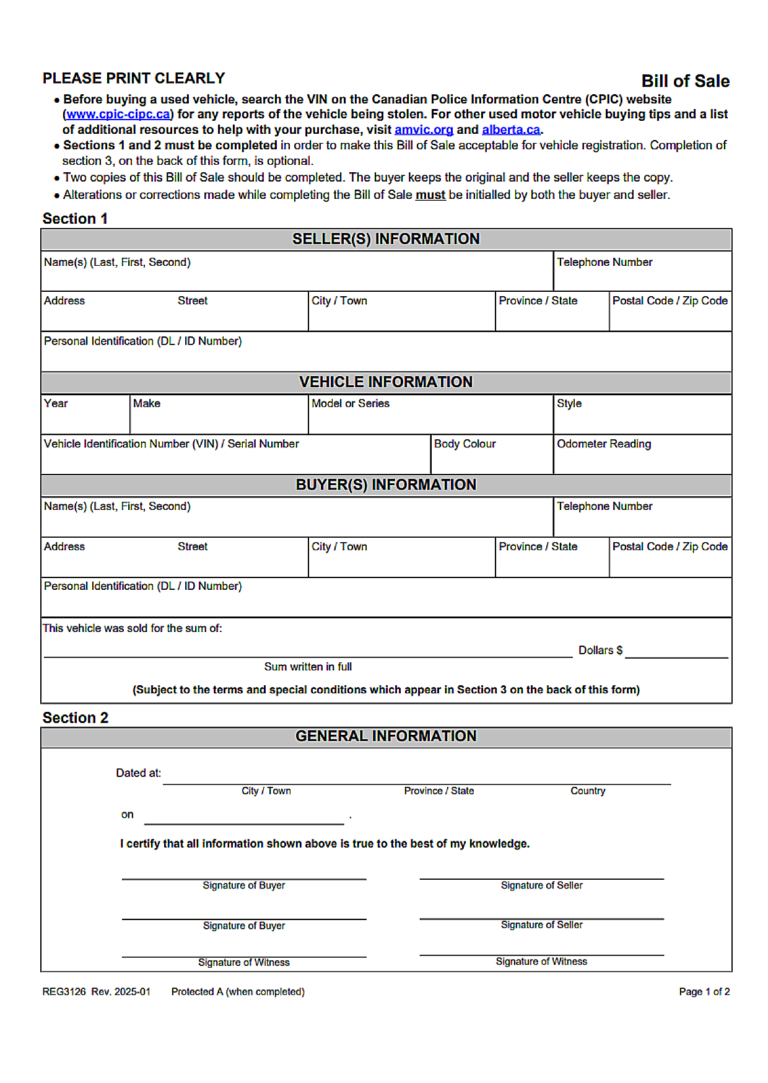
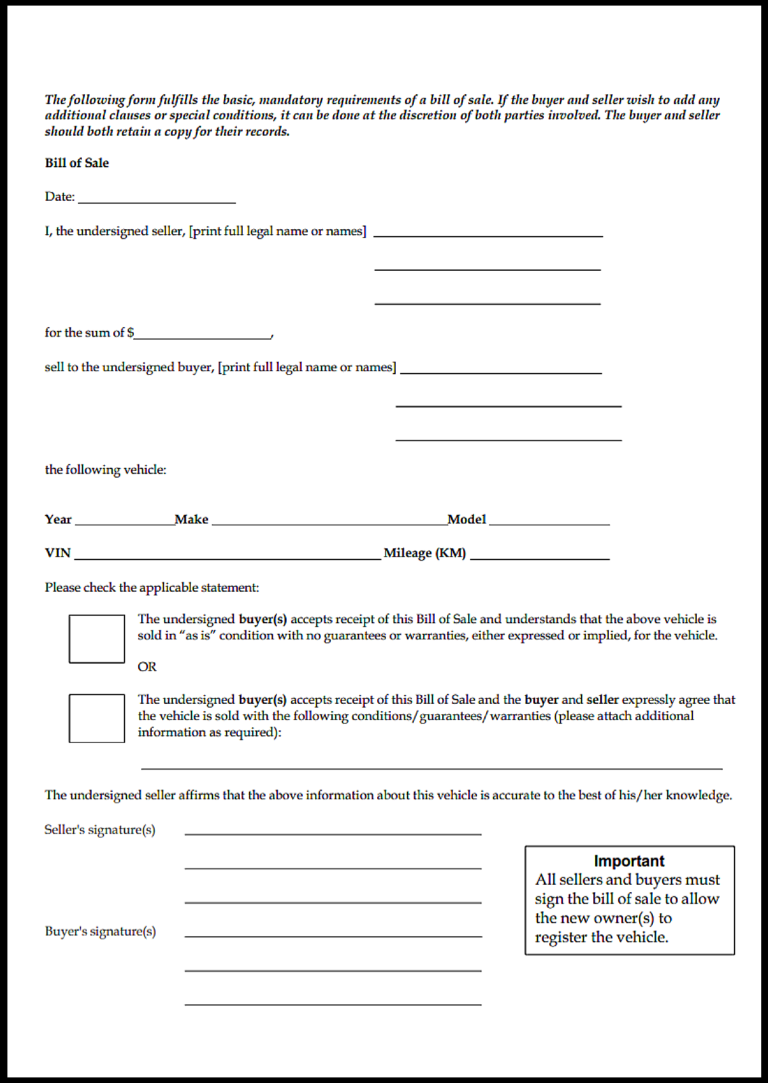
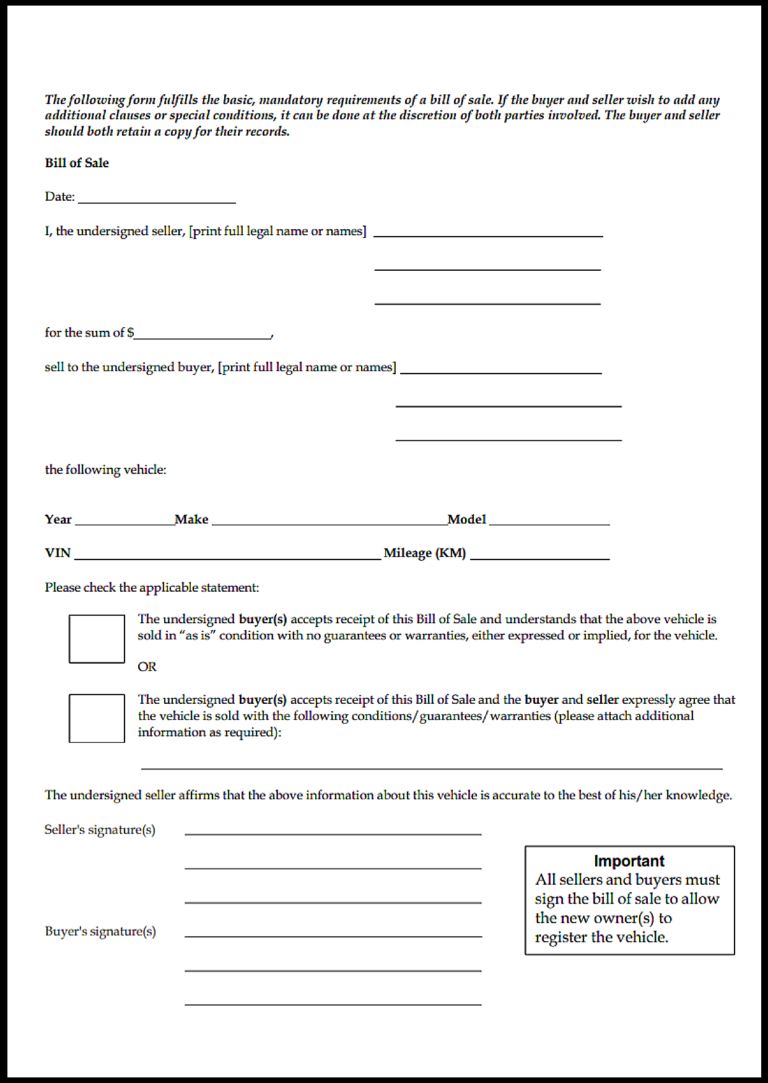
Free Ontario Motorcycle Bill of Sale Template
You can copy and use this template for your transaction. Keep it simple and accurate.
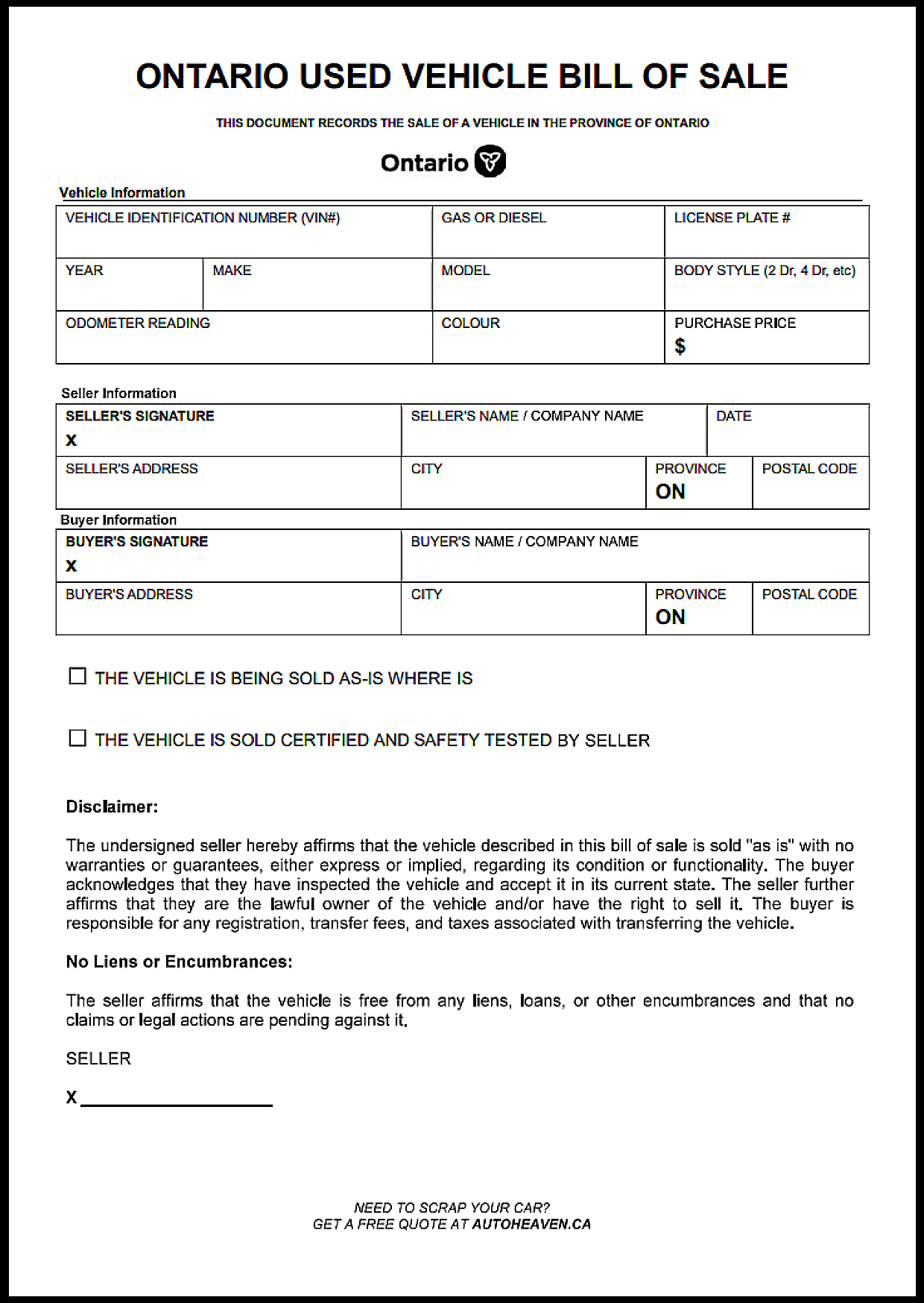
Tip: Always keep at least two signed copies—one for the buyer and one for the seller.
Ontario Motorcycle Bill of Sale Laws and Registration Rules (2026 Update)
| Topic / Issue | Ontario Legal Rule | Governing Statute |
|---|---|---|
| Governing legislation | Private motorcycle sales in Ontario are primarily governed by Ontario vehicle and tax rules, although federal laws can also apply to issues such as fraud or odometer alteration. | Highway Traffic Act, R.S.O. 1990, c. H.8 |
| Retail sales tax rules | A private purchaser generally pays 13% Ontario Retail Sales Tax (RST) when registering a qualifying motorcycle purchased from a private seller. | Retail Sales Tax Act, R.S.O. 1990, c. R.31 |
| Vehicle regulations | Motorcycle transfer and vehicle compliance rules are regulated under Ontario vehicle regulations. | O. Reg. 628: Vehicles |
| Legal signatories | The person named on the vehicle permit and the new owner must complete and sign the vehicle-permit transfer application as required by Ontario’s vehicle-permit rules. | Highway Traffic Act, s. 11 |
| Witness requirement | Ontario’s vehicle-transfer rules do not generally require a witness for a private motorcycle bill of sale, although the vehicle-permit transfer has its own signing requirements. | N/A |
| Notarization | Ontario’s vehicle-transfer rules do not generally require notarization for a private motorcycle transfer. The buyer and seller must instead complete the required vehicle-permit transfer documentation and registration steps. | Highway Traffic Act; O. Reg. 628 |
| Age and legal capacity | The vehicle-permit and insurance requirements can depend on the person’s circumstances. Do not assume that a general 16-year minimum stated here determines every issue of contractual capacity, registration or insurance. | Highway Traffic Act; applicable Ontario vehicle and insurance rules |
| Registration deadline | The buyer must apply for a new vehicle permit within six days after becoming the owner. | Highway Traffic Act, s. 11(2) |
| “As Is” sale language | An “as-is” clause can be used to record the parties’ agreement about the condition of the motorcycle, but Ontario’s private-sale vehicle-transfer rules do not make that wording a general requirement. | Ontario private-sale rules |
| UVIP requirement | For a private sale of a used motorcycle in Ontario, the seller must provide the buyer with a valid Used Vehicle Information Package (UVIP), subject to applicable exceptions. | Highway Traffic Act, s. 11.1 |
| Filing and registration | The buyer must provide the required vehicle-transfer documents, including the UVIP and bill of sale, when registering the motorcycle at ServiceOntario. | Highway Traffic Act; Ontario registration guidance |
| Invalid document issue | Missing or inconsistent information can delay or complicate the registration process, so the bill of sale, UVIP and vehicle documents should be checked carefully before the transfer. | Ontario registration guidance |
| VIN mismatch | The VIN should be checked carefully against the motorcycle and vehicle documents because an incorrect VIN can cause problems with registration or the transfer. | Highway Traffic Act |
| Purchase price requirement | The purchase price should be recorded accurately because it is relevant to the motorcycle’s RST calculation and registration documentation. | Retail Sales Tax Act; Ontario registration guidance |
| Ontario-specific rule | Ontario sellers are legally required to provide a UVIP during a private sale of a used motor vehicle, subject to applicable exceptions. | Highway Traffic Act, s. 11.1 |
| Tax valuation rule | For a privately purchased motorcycle, Ontario generally calculates RST at 13% of the motorcycle’s fair market value. For motorcycles, the Ontario Ministry of Finance states that fair market value generally means the purchase price; the special 20-year antique-vehicle rule described for certain automobiles, vans and trucks does not generally apply to motorcycles. | Retail Sales Tax Act; Ontario Ministry of Finance |
Ontario has several specific requirements for a private motorcycle transfer. The seller must provide the buyer with a valid UVIP, the seller must complete the vehicle-permit transfer paperwork, and the buyer must apply for a new permit within six days after becoming the owner. The bill of sale should also be accurate and consistent with the other transaction documents.
The tax rules also matter in real life. For a privately purchased motorcycle, Ontario’s Ministry of Finance generally treats the purchase price as the fair market value for RST purposes. The special 20-year appraisal rule described for certain automobiles, vans and trucks does not generally apply to motorcycles. Incorrect VIN details or missing information can also create registration problems.
Using a written bill of sale can make the transaction easier to document. Before signing, check the VIN, purchase price, sale date and names against the motorcycle’s registration documents and keep a signed copy for your records.
Understanding the Bill of Sale and Legal Requirements in Ontario
What Is a Motorcycle Bill of Sale in Ontario?
A motorcycle bill of sale is a written record of a sale between two people.
- It is not issued by the government
- It records the terms of the private transaction
- It can show:
- Who bought the motorcycle
- Who sold it
- How much was paid
In simple terms, it gives both parties a written record that the transaction took place.
A motorcycle bill of sale helps document the transaction between private parties. For a complete understanding of how this document works, see the main bill of sale guide and similar formats like the vehicle sale document.
Is a Bill of Sale Required in Ontario?
For a private used-vehicle registration, Ontario’s current guidance lists the bill of sale among the documents the buyer should bring to ServiceOntario.
You will use it to help document:
- The sale
- The agreed purchase price
- The transaction date
- The parties to the transaction
Ontario’s registration guidance lists the bill of sale among the documents needed when registering a used vehicle.
Also, the details should be consistent with the Used Vehicle Information Package (UVIP).
How Motorcycle Ownership Transfer Works in Ontario
The important point is that the bill of sale is only one part of the Ontario transfer process. The vehicle permit and registration requirements also need to be completed.
Step 1 – Get the Used Vehicle Information Package (UVIP)
- For a private sale of a used motorcycle, the seller must obtain and provide the buyer with a valid Used Vehicle Information Package (UVIP). The UVIP contains Ontario vehicle information, including registration history and lien information. If the motorcycle has previously been registered outside Ontario, the buyer may wish to investigate its prior registration and lien history in the other jurisdiction as an additional precaution.
- Highway Traffic Act, R.S.O. 1990, c. H.8, s. 11.1; Personal Property Security Act, R.S.O. 1990, c. P.10
Step 2 – Complete the Bill of Sale
The buyer and seller should complete the bill of sale accurately, and Ontario’s current registration guidance says it should be signed and dated by both parties.
Make sure:
- VIN is accurate
- Sale price is honest
- Names and identifying information are recorded accurately and consistently with the vehicle and registration documents
Check the VIN and the vehicle-permit information before signing. An error can create a registration problem that is much harder to fix after the sale.
Step 3 – Visit ServiceOntario
The buyer must register the motorcycle through a ServiceOntario centre.
They will:
- Complete the vehicle-permit transfer and registration process
- Apply for a new vehicle permit
Bring:
- Bill of Sale
- UVIP
- Proof of insurance
- Ontario driver’s licence
- Vehicle permit with the completed transfer application
- Safety Standards Certificate, if applicable
- Odometer information
Step 4 – Pay Retail Sales Tax (RST)
The buyer must pay RST during registration.
Important rule:
- For a privately purchased motorcycle, RST is generally calculated at 13% of the purchase price, subject to Ontario’s statutory fair-market-value rules and exceptions.
The purchase price should be recorded accurately. Providing false information can create tax and legal problems.
What Information Must Be Included?
To avoid problems, your bill of sale should include the following:
Buyer and Seller Details
- Full legal names
- Complete addresses
Motorcycle Description
- Make, model, year
- VIN (very important)
Sale Details
- Price
- Date of sale
- Payment method
Signatures
- Both buyer and seller should sign and date the document
- Both signatures help document the parties’ agreement and the terms of the sale
Depending on the transaction, you may also need variations such as the as-is sale agreement. For accuracy, it’s recommended to review how to properly draft this document.
Common Mistakes That Can Cause Problems
These are some practical issues buyers and sellers should watch for:
- Wrong or missing VIN
- Understating the purchase price or providing inaccurate transaction information. The purchase price should be recorded truthfully and consistently across the transaction documents.
- Details not matching the UVIP
- Missing signatures
- Buying a motorcycle with unpaid liens
Pro tip: Always double-check the VIN and lien status before paying.
“As-Is” Sales – What Buyers Should Know
- The parties can use the bill of sale to record the motorcycle’s condition and any warranties or representations they have agreed to. The legal effect of those terms depends on the wording and circumstances of the transaction.
- For a used vehicle transfer, a Safety Standards Certificate is generally required to obtain a permit with fit status unless an applicable exemption applies. You can buy and register a vehicle without a Safety Standards Certificate, but you cannot put your own plates on the vehicle without one. To obtain a permit with fit status where an SSC is required, the buyer must obtain a valid Safety Standards Certificate and meet the applicable registration requirements.
- Highway Traffic Act, R.S.O. 1990, c. H.8; O. Reg. 628
Do You Need a Notary for This Document?
No, notarization is not generally required for an ordinary private motorcycle transfer in Ontario.
- A properly completed and signed bill of sale is used to document the transaction
- Notarization is optional unless a particular organization or transaction specifically requires it
- The buyer and seller still need to complete the required vehicle-permit and registration steps
Bill of Sale vs UVIP – What’s the Difference?
The UVIP and bill of sale serve different purposes: the UVIP provides vehicle and Ontario registration-history information, while the bill of sale records the terms of the transaction.
| Feature | Bill of Sale | UVIP |
| Created by | Buyer & Seller |
Ontario Government
|
| Purpose | Records the terms of the sale |
Provides vehicle description, Ontario registration history and lien information
|
| Required? | Used as part of the registration documentation |
Legally required for used motor vehicles, subject to statutory/regulatory exceptions
|
Both documents are important. The UVIP is a statutory requirement for applicable private used-vehicle sales, while the bill of sale provides a written record of the transaction.
When You Might Need This Document
A motorcycle bill of sale is especially useful when the transaction is private because it gives both parties a written record of the motorcycle, price, date and agreed terms. It can also help support the registration paperwork if questions arise later.
Real-Life Example (Simple Scenario)
Let’s say Rahul sells his used motorcycle to Aman.
- Rahul provides the required UVIP
- Rahul completes the vehicle-permit transfer paperwork
- They both sign and date the bill of sale
- Aman takes the required documents to ServiceOntario
- Aman pays the applicable RST
- Aman applies for a new vehicle permit within six days after becoming the owner
The completed permit-transfer paperwork and registration process are what formally document the change in the vehicle records.
Frequently Asked Questions
Can I write a Bill of Sale by hand?
A handwritten bill of sale can be used to record a private sale, provided it accurately records the transaction and contains the information needed for the registration and the parties’ agreement.
What if I lose the Bill of Sale?
If you lose the bill of sale, contact the other party to see whether a signed copy is available. Because the bill of sale and UVIP serve different purposes, do not assume that the UVIP is a substitute for the bill of sale.
Can I register a motorcycle without it?
The buyer should bring the bill of sale when registering the motorcycle because Ontario’s current registration guidance lists it among the required documents. If the required documentation is incomplete, the registration process may be delayed or additional information may be required.
Who keeps the original copy?
Both the buyer and seller should keep signed copies of the Bill of Sale. This helps protect both parties in case of any future issues.