Bill of Sale VS Ownership Manitoba (Free Easy Guide)
Manitoba Bill of Sale VS Ownership is a common topic that confuses many vehicle buyers and sellers in Manitoba. A lot of people believe that once they sign a Bill of Sale, they automatically become the legal owner of the vehicle. Under Manitoba law, that is not completely true.
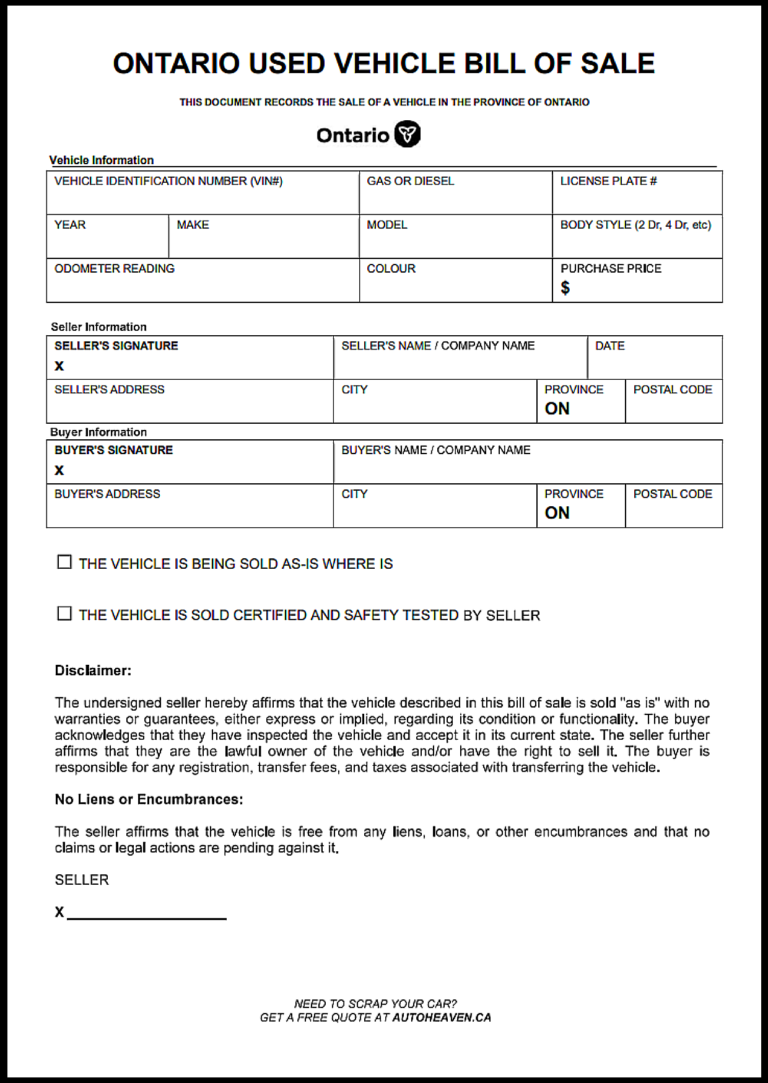
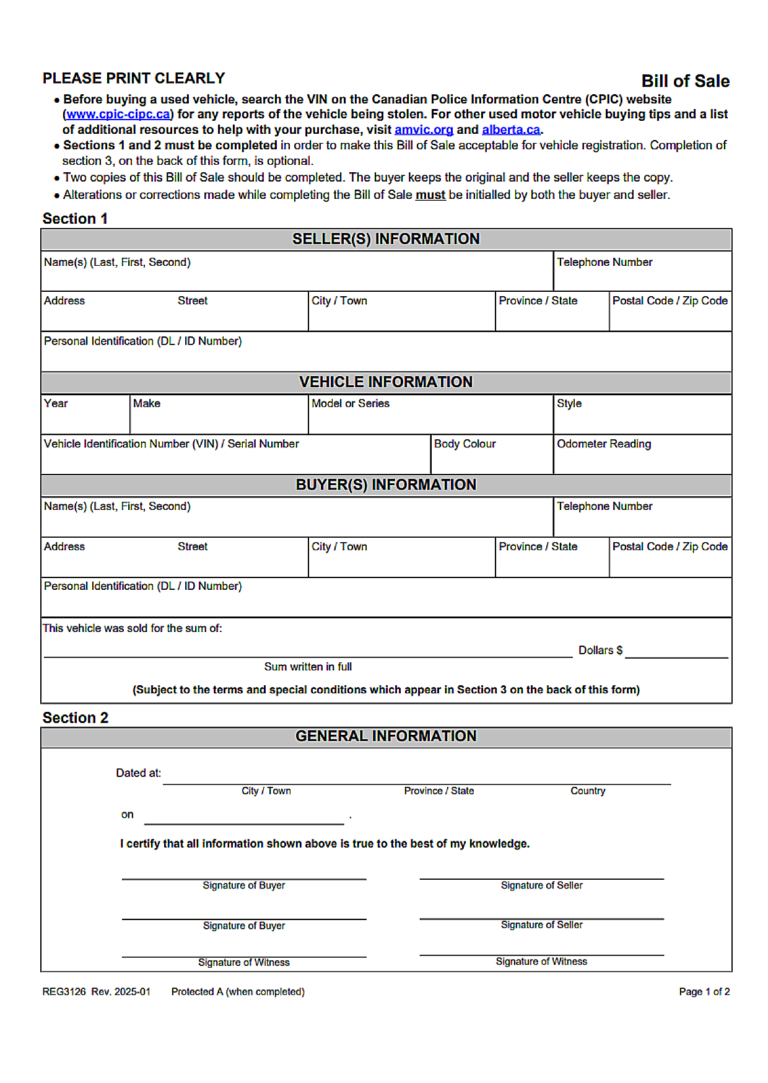
A Bill of Sale is mainly proof that a vehicle sale happened between two parties. The Transfer of Ownership Document (TOD) is what officially updates the ownership records with Manitoba Public Insurance (MPI).
In most private vehicle sales, both documents are important. If one document is missing, the buyer may face problems with registration, insurance, taxes, or proving ownership later.
MPI handles vehicle registration and ownership transfers in Manitoba. That is why buyers and sellers must follow MPI rules carefully during private sales.

Manitoba Bill of Sale vs Ownership Rules Most Buyers Miss
| Topic / Issue | MANITOBA Legal Rule | Governing Statute |
|---|---|---|
| Vehicle sale agreement | A Bill of Sale works as proof of the private sale agreement between buyer and seller. | The Sale of Goods Act, CCSM c. S10 |
| Official ownership transfer | Vehicle ownership is officially updated through the signed Transfer of Ownership Document (TOD) processed by MPI. | The Drivers and Vehicles Act, CCSM c. D104 |
| Legal validity of Bill of Sale | A Bill of Sale is legally recognized as a valid contract between buyer and seller. | The Sale of Goods Act |
| Registration transfer requirement | A Bill of Sale alone does not complete vehicle registration transfer in Manitoba. | The Drivers and Vehicles Act |
| Who can legally sign | Only the lawful owner or authorized agent may legally sign the sale documents. | The Sale of Goods Act, s. 23(1); The Drivers and Vehicles Act, s. 57(1) |
| Multiple owners | All registered owners listed on the TOD must sign for a valid transfer. | The Drivers and Vehicles Act, s. 57(1) |
| Witness requirement | Manitoba law does not require a witness for a Bill of Sale to be valid. | No statutory requirement — governed by common law principles |
| Notarization requirement | Notarization is not normally required for private Bills of Sale or TODs. | No statutory requirement — governed by common law principles |
| Minor registration rules | Buyers under 18 generally require parental consent for vehicle registration. | The Sale of Goods Act, s. 4(1) & 4(2); The Drivers and Vehicles Act, s. 51(1) |
| 7-day registration rule | Buyers may only use existing plates temporarily before completing registration. | The Drivers and Vehicles Act, s. 60(1) |
| Mandatory Bill of Sale information | The document should include VIN, purchase price, buyer/seller details, signatures, mileage, and sale date. | Manitoba Public Insurance administrative directives under The Drivers and Vehicles Act, s. 57 |
| Certificate of Inspection requirement | Some vehicle transfers require a valid Manitoba Certificate of Inspection (COI). | The Drivers and Vehicles Act |
| Lien registration | Security interests may need registration with the Manitoba Personal Property Registry. | The Personal Property Security Act, CCSM c. P35 |
| Incorrect or missing VIN | VIN mistakes can delay or invalidate registration transfers. | The Sale of Goods Act, s. 6 |
| Missing TOD | A handwritten Bill of Sale alone cannot legally transfer vehicle registration ownership. | The Drivers and Vehicles Act, s. 57(1) |
| Incorrect sale price reporting | False sale price reporting may lead to penalties or audits. | Manitoba registration and tax enforcement rules |
| “As-Is” vehicle sales | Sellers often use written “As-Is” clauses to reduce future disputes. | The Sale of Goods Act |
| Vehicle liens | Buyers may unknowingly purchase vehicles with unpaid loans attached. | The Personal Property Security Act |
| Dealer GST obligations | Registered dealers may need to collect GST on vehicle sales. | Federal: Excise Tax Act |
| Manitoba TOD system | Manitoba uses a separate TOD system instead of simply signing the back of registration papers. | The Drivers and Vehicles Act |
Many Manitoba buyers are surprised to learn that a Bill of Sale alone does not officially transfer vehicle ownership. A buyer may fully pay for a car, but until the Transfer of Ownership Document is completed through MPI, the registration records still show the previous owner. This becomes a serious problem if the buyer later faces insurance issues, registration refusal, or ownership disputes. Another important rule involves liens.
Since unpaid loans stay attached to the vehicle itself, buyers who skip a PPSA lien search could unknowingly purchase a financed vehicle and face financial loss later. Manitoba also has strict VIN verification rules, and even one incorrect digit may delay registration or trigger fraud concerns. These rules matter because private vehicle sales often happen quickly, and many people incorrectly assume handwritten agreements alone are enough. Understanding the difference between proof of sale and legal ownership can help buyers avoid expensive legal and registration problems later. Download the free Manitoba Bill of Sale template to help complete your vehicle sale correctly.
Bill of Sale vs Ownership in Manitoba Explained
A Bill of Sale and a Transfer of Ownership Document have different legal purposes in Manitoba.
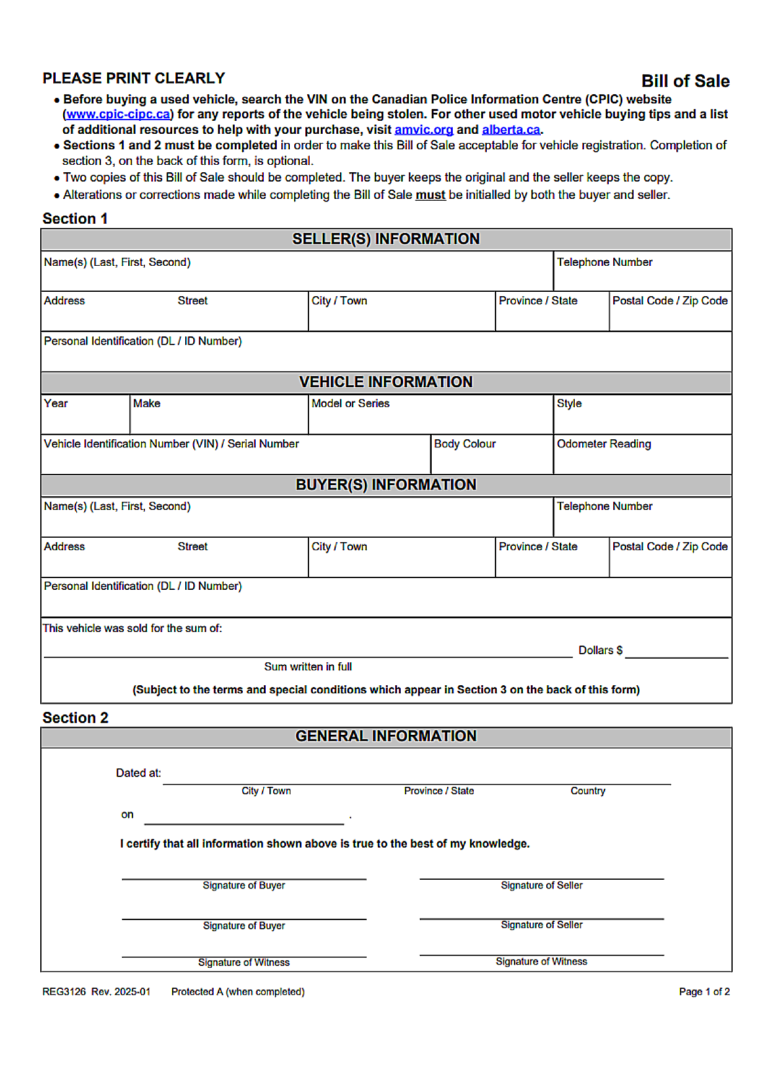
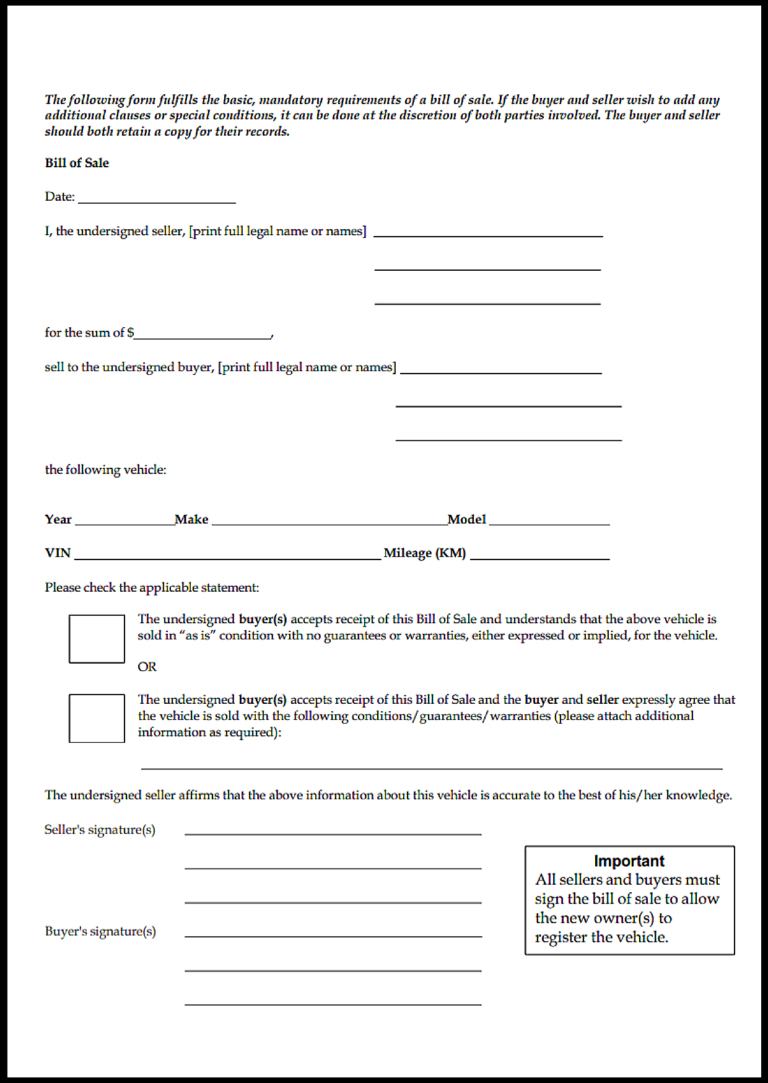
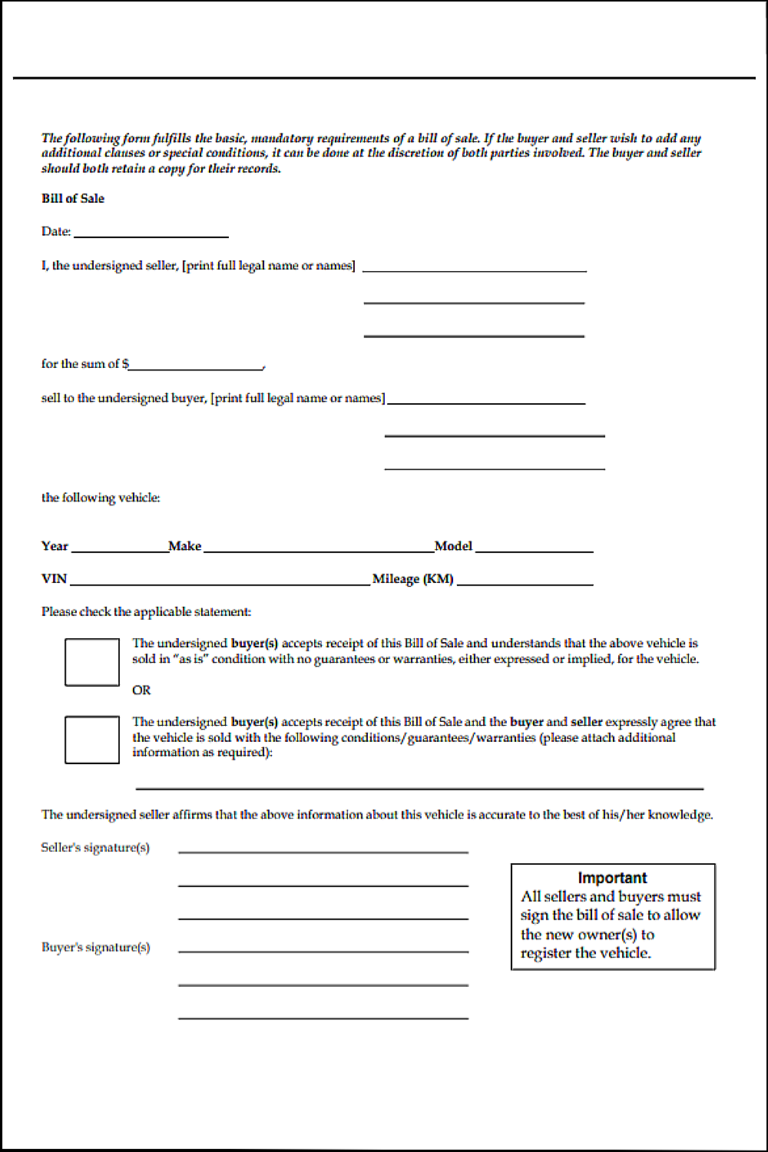
The Bill of Sale is a private agreement between the buyer and seller. It records the sale details, including the purchase price, vehicle information, and date of sale.
The Transfer of Ownership Document is used to officially change the registered ownership through MPI.
For example, a buyer may pay cash for a used car and receive a signed car bill of sale for a private sale in Manitoba. Even though the buyer now has proof of purchase, the ownership records will not change until MPI processes the signed TOD.
This is why both documents should always be collected together during a private vehicle sale.
| Document | Purpose | Main Use |
| Bill of Sale | Proof of purchase | Buyer and seller records |
| Transfer of Ownership (TOD) | Official registration transfer | MPI ownership update |
What a Bill of Sale Proves
A Manitoba Bill of Sale helps prove several important facts about the transaction.
It confirms:
- The buyer and seller agreed to the sale
- The vehicle was sold on a certain date
- The agreed purchase price
- Basic vehicle details
- Evidence for tax or legal disputes
Under Manitoba contract law, the Bill of Sale acts as written evidence of the agreement between both parties.
What the Transfer of Ownership Document Proves
The TOD proves that the ownership records were officially transferred through MPI.
It also allows the buyer to:
- Register the vehicle
- Get insurance coverage
- Obtain licence plates
- Become the registered owner in provincial records
Without a signed TOD, the buyer usually cannot complete the registration process.
A bill of sale is commonly used to record transaction details, while ownership documents are often required for registration and legal proof of title. Vehicle transfers may involve a vehicle bill of sale template, while personal automobile purchases frequently rely on a car ownership transfer document during the sale process.
Is a Bill of Sale Legally Valid in Manitoba?
Yes. Under Manitoba law, a Bill of Sale is legally recognized as a valid contract between the buyer and seller. The Sale of Goods Act governs many private sales involving vehicles and personal property in Manitoba. Understanding how a Manitoba bill of sale works in a private vehicle sale can help settle disputes involving payment, ownership, or vehicle condition.
However, a Bill of Sale alone does not complete the legal registration transfer of a motor vehicle.
The registration process must still be completed through MPI under The Drivers and Vehicles Act.
Summary of Applicable Laws
| Topic | Rule |
Governing Statute
|
| Vehicle sale agreement | Governs private sales contracts |
Manitoba: The Sale of Goods Act
|
| Ownership transfer | Governs TOD and registration |
Manitoba: The Drivers and Vehicles Act
|
| Safety requirements | Governs inspections and compliance |
Manitoba: The Highway Traffic Act
|
| Vehicle liens | Governs loans and security interests |
Manitoba: The Personal Property Security Act
|
| GST collection | Applies mainly to dealers |
Federal: Excise Tax Act
|
Why Manitoba Requires Both Documents
Manitoba separates the private sale agreement from the government registration process.
The Bill of Sale works as the private contract between the buyer and seller. The TOD updates the official ownership records maintained by MPI.
This system helps reduce fraud and improves tax enforcement. It also helps confirm who legally owns the vehicle.
MPI may reject ownership transfers if the documents contain errors or missing information.
When a Bill of Sale Is Not Enough
There are many situations where a Bill of Sale alone will not complete the transfer.
Common problems include:
- Unsigned TOD
- Incorrect VIN
- Missing signatures
- Seller not listed as the legal owner
- Altered registration documents
Many buyers only discover these issues after visiting an MPI office.
What Happens if the Buyer Never Registers the Vehicle
Failing to register the vehicle can create several legal and insurance problems.
The buyer may face:
- Registration delays
- Insurance issues
- Difficulty proving ownership
- Problems using licence plates
- Possible penalties
Under Manitoba rules, buyers normally have 7 days to transfer registration if they continue using existing plates.
Before preparing transfer paperwork, sellers may also want to review the step-by-step Manitoba bill of sale writing guide together with the provincial bill of sale requirements to ensure all important ownership details are properly documented.
Required Information on a Manitoba Bill of Sale
Mandatory Vehicle Details
Knowing the Manitoba vehicle bill of sale requirements for private sellers helps avoid registration delays at MPI.
- Full 17-digit VIN
- Vehicle year
- Make
- Model
- Sale date
- Purchase price
Even one incorrect VIN digit can delay or block registration.
Required Buyer and Seller Information
Both parties should provide clear personal information, including:
- Full legal names
- Addresses
- Signatures
Phone numbers are also helpful in case either party needs to be contacted later.
The Importance of the “As-Is” Clause
Many private sellers use a Manitoba as-is bill of sale to limit seller liability and reduce future disputes.
Under Manitoba law, implied warranties may apply unless they are clearly excluded in writing.
A common wording used in private sales is:
“The vehicle is sold in ‘as is’ condition without any registered or implied warranties.”
This clause helps show that the buyer accepted the vehicle in its current condition.
Odometer and Condition Details
Accurate mileage information is very important during vehicle sales.
Sellers should avoid estimating mileage if they are unsure.
It is also smart to document:
- Visible damage
- Mechanical issues
- Warning lights
- Known accident history
Simple written notes can help prevent future disagreements.
Transfer of Ownership Process Through MPI
Steps Buyers Must Complete
In most Manitoba private vehicle sales, buyers should:
- Obtain the signed TOD
- Collect the signed Bill of Sale
- Get a Certificate of Inspection (COI) if required
- Visit an MPI Autopac agent
- Pay Retail Sales Tax (RST)
- Complete registration and insurance
Buyers should carefully review all documents before leaving the seller.
The 7-Day Registration Rule
Under Manitoba law, buyers generally have 7 days to register the vehicle if they plan to use existing plates.
Missing this deadline may create registration or insurance problems.
What MPI Checks During Registration
MPI usually checks:
- VIN accuracy
- Ownership records
- Outstanding liens
- Vehicle inspection status
- TOD completion
If information does not match provincial records, registration may be delayed or refused.
Legal Owner vs Registered Owner in Manitoba
This is one of the most misunderstood legal issues in Manitoba vehicle sales.
The legal owner is the person or lender who has the legal right to the vehicle.
The registered owner is the person listed on the registration documents.
Sometimes they are the same person. In financed vehicle situations, they may be different.
For example, if a vehicle loan still exists, the lender may remain the legal owner until the loan is fully paid.
Under Manitoba law, only the legal owner can legally sell the vehicle.
Common Ownership Disputes
Ownership disputes often happen in situations involving:
- Financed vehicles
- Family disagreements
- Co-owned vehicles
- Someone selling a vehicle for another person
Buyers should always verify ownership carefully before paying.
Risks of Buying From the Wrong Person
Buying from someone who is not the legal owner can create major problems.
Possible risks include:
- Invalid sale
- Vehicle repossession
- Registration refusal
- Financial loss
This is why checking registration documents carefully is extremely important.
Vehicle Liens and Unpaid Loans
A lien is a legal claim placed on a vehicle because of unpaid debt.
In Manitoba, liens are common on financed vehicles.
The lien stays attached to the vehicle itself, not the owner.
This means a buyer could unknowingly purchase a vehicle with outstanding debt attached to it.
How to Check the Manitoba Personal Property Registry
Buyers should strongly consider performing a PPSA lien search before paying for a vehicle.
The Manitoba Personal Property Registry may show:
- Bank loans
- Financing agreements
- Security interests from lenders
A lien search can help buyers avoid expensive legal problems later.
Warning Signs of a Problem Vehicle Sale
Buyers should be cautious if:
- The seller refuses to share the VIN
- The sale price seems unusually low
- Registration documents are missing
- The seller demands cash-only payment
- The TOD is incomplete
These situations may indicate fraud or ownership issues.
Common Mistakes Buyers and Sellers Make
Incorrect Sale Price Reporting
Some buyers and sellers report a lower sale price to reduce taxes.
Under Manitoba law, providing false sale information can lead to audits, penalties, or fines.
Both parties may face legal consequences.
VIN Errors and Registration Problems
Common VIN problems include:
- Missing numbers
- Incorrect digits
- Altered VIN plates
- Mismatched documents
Vehicles with altered VINs may be rejected for registration and could trigger police investigation.
Forgetting Signatures
Missing signatures are one of the most common reasons ownership transfers fail.
Problems often include:
- Missing buyer signature
- Missing seller signature
- Unsigned TOD
- Incomplete paperwork
Both parties should review every document carefully before completing the sale.
Skipping the Certificate of Inspection
Some Manitoba vehicle transfers require a valid Certificate of Inspection (COI).
Without it, MPI may refuse registration.
Buyers should confirm inspection requirements before purchasing the vehicle.
Special Rules for Dealers vs Private Sellers
Dealer Disclosure Requirements
Vehicle dealers in Manitoba have stricter disclosure obligations than private sellers.
Dealers may need to disclose if a vehicle was previously:
- A taxi
- A police vehicle
- Seriously damaged
Damage disclosures are especially important when repairs exceed certain limits.
GST and Tax Differences
Private sales and dealership sales are taxed differently.
In most private sales, Retail Sales Tax is paid during MPI registration.
Registered dealers may also need to collect GST under federal tax rules.
Frequently Asked Questions
Can I register a vehicle in Manitoba with only a Bill of Sale?
Usually no. MPI normally requires both the signed TOD and the Bill of Sale.
Is notarization required for a Manitoba Bill of Sale?
No. Manitoba law does not usually require notarization for private vehicle sales.
What if the seller lost the TOD?
The seller may need to request replacement registration documents from MPI before the transfer can be completed.
Does MPI provide a Bill of Sale form?
MPI mainly handles registration documents. Many buyers and sellers create their own Bill of Sale.
Can a handwritten Bill of Sale be valid?
Yes. A handwritten Bill of Sale can still be legally valid if it contains the required information and signatures.
How do I know if a vehicle has a lien?
You should perform a PPSA lien search through the Manitoba Personal Property Registry.
Can someone under 18 register a vehicle in Manitoba?
Minors under 18 generally require written parental or guardian consent to register a vehicle.
What happens if the VIN does not match the registration?
MPI may reject the ownership transfer. VIN mismatches can also indicate fraud or stolen vehicle issues.
If you are selling or purchasing a different type of vehicle, the document requirements may differ slightly. Sellers of two-wheeled vehicles should review the Manitoba motorcycle bill of sale requirements before completing the transfer, as MPI may apply different inspection and registration rules depending on the vehicle category.
Similarly, those transferring a utility or recreational trailer should understand how to complete a Manitoba trailer bill of sale correctly to ensure MPI registration goes through without issues.