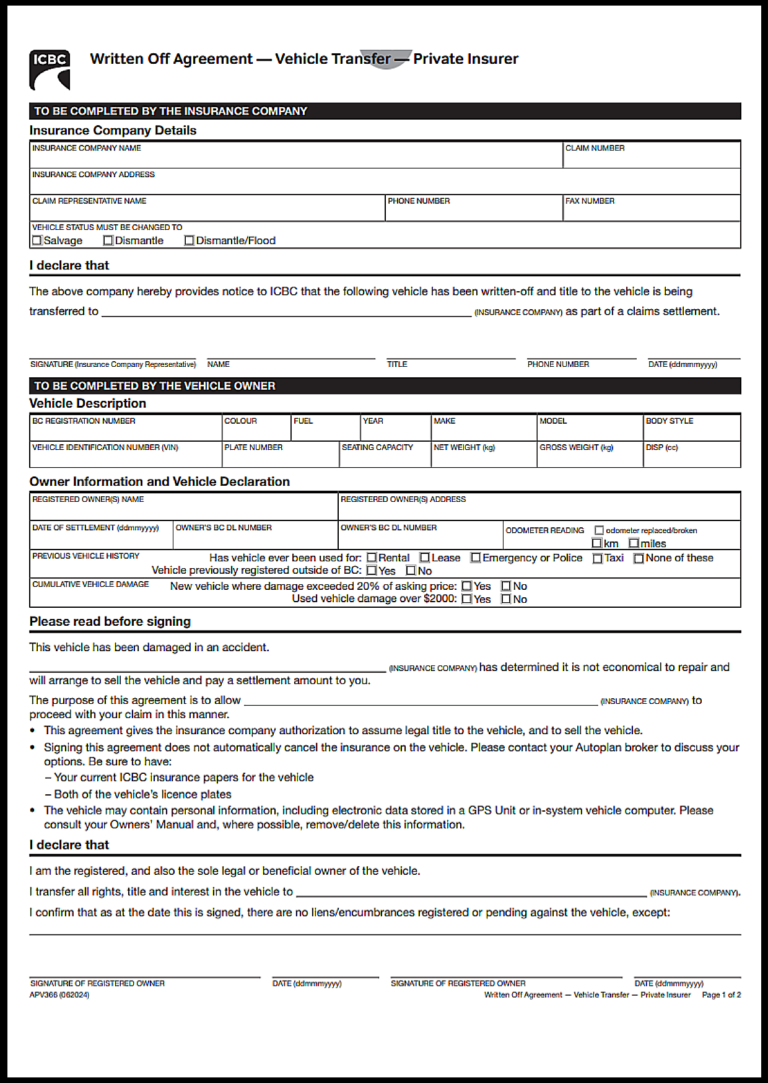
Manitoba As-Is Bill of Sale (Free PDF Template)
Manitoba As-Is Bill of Sale documents are commonly used in private sales where a buyer agrees to purchase property in its current condition without guarantees from the seller. In Manitoba, these agreements are often used for vehicles, trailers, motorcycles, farm equipment, tools, electronics, furniture, and other personal property.
The phrase “as-is, where-is” means the buyer accepts the item exactly as it exists at the time of sale. In most private sale situations, the seller is not responsible for repairs or future problems after the transaction is complete.
A properly prepared Manitoba bill of sale helps protect both the buyer and seller by clearly recording important details about the transaction. It usually includes a description of the property being sold, the agreed purchase price, the condition of the item at the time of sale, the transaction date, and the terms both parties agreed to.
Under Manitoba law, private “as-is” sales are generally enforceable if the seller does not commit fraud or intentionally hide serious defects. Vehicle sales also involve Manitoba Public Insurance (MPI) registration and tax requirements.
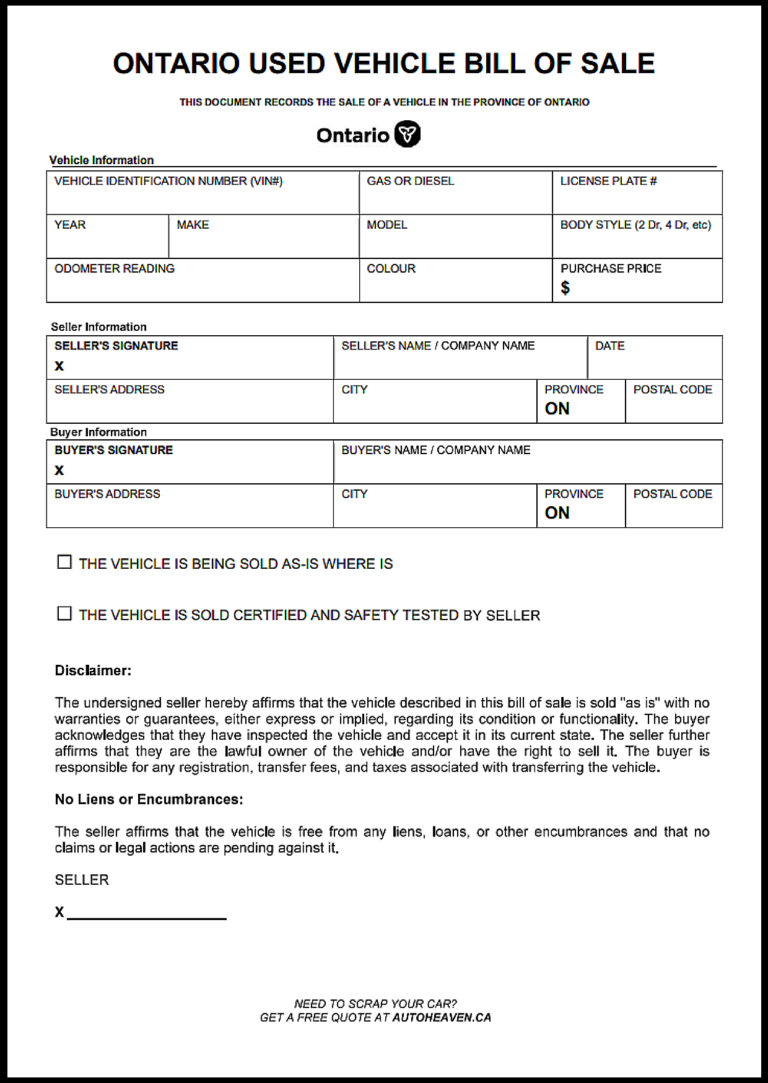
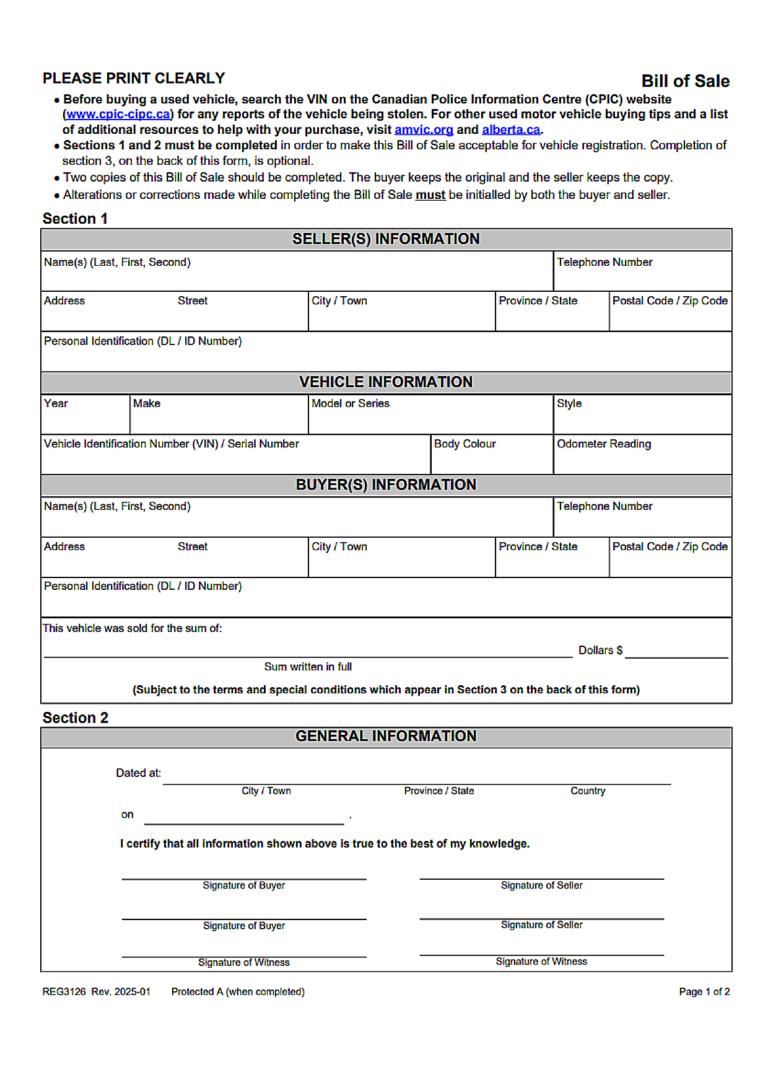
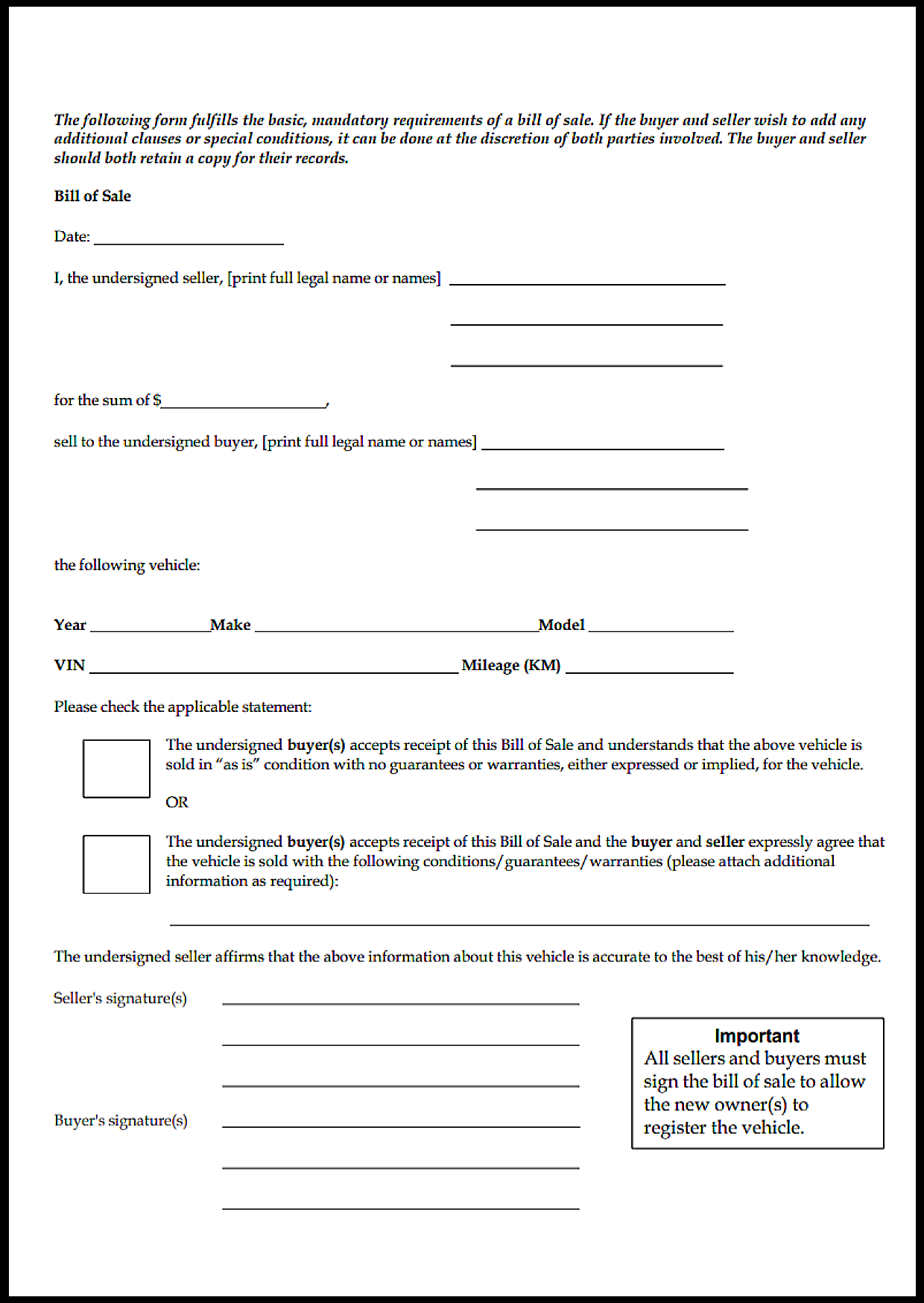
Free Manitoba As-Is Bill of Sale Template
You can use the following template for many types of private sales in Manitoba. Always customize the document based on the property being sold.
Manitoba As-Is Bill of Sale Laws, Warranty Disclaimers & Buyer Risk Rules
| Topic / Issue | Manitoba Legal Rule | Governing Statute |
|---|---|---|
| Implied warranty exclusion | Manitoba law allows parties to exclude implied warranties and conditions through clear agreement language. | The Sale of Goods Act, C.C.S.M. c. S10, s. 56 |
| Fitness and merchantable quality protections | The Sale of Goods Act normally implies protections regarding quality and fitness unless properly excluded. | The Sale of Goods Act, C.C.S.M. c. S10, s. 16 |
| Commercial dealer restriction | Commercial dealers cannot legally contract out of implied consumer protections using an “as-is” clause. | The Consumer Protection Act, C.C.S.M. c. C200, s. 58(1) |
| Buyer inspection burden | If a buyer inspects property before purchase, there may be no implied protection for defects a reasonable inspection should have revealed. | The Sale of Goods Act, C.C.S.M. c. S10, s. 16(b) |
| Odometer or hour meter fraud | Odometer tampering is a provincial offense under Section 46(3) of Manitoba’s The Highway Traffic Act, C.C.S.M. c. H60. An ‘as-is’ clause provides zero protection to any private seller who alters, disconnects, or misrepresents a vehicle’s mileage tracking system. | The Consumer Protection Act, C.C.S.M. c. C200, s. 91 & 94 |
| Ownership and liens | Even in an “as-is” sale, sellers still impliedly guarantee they have the legal right to sell the property unless clearly stated otherwise. | The Sale of Goods Act, C.C.S.M. c. S10, s. 14 |
| Federal ownership transfer | Transport Canada may require the bill of sale as proof of ownership transfer for licensed vessels. | Canada Shipping Act, 2001 |
| MPI trailer tax assessment | According to Manitoba Taxation Bulletin No. 054, the 7% Retail Sales Tax (RST) on privately purchased utility or cargo trailers is calculated strictly on the true purchase price. Unlike passenger vehicles, trailers are exempt from automated Canadian Black Book book-value adjustments. | Manitoba Public Insurance administrative process |
| Fraudulent concealment | An “as-is” clause does not protect sellers who intentionally hide dangerous or serious hidden defects. | Manitoba common law principles |
| Sale by description | Property sold must still match the basic description provided in the agreement. | The Sale of Goods Act, C.C.S.M. c. S10, s. 15 |
| Weak disclaimer wording risk | Simple wording like “No Warranty” may fail to exclude statutory conditions properly under Manitoba law. | The Sale of Goods Act, C.C.S.M. c. S10, s. 56 |
| Manitoba court interpretation | Manitoba courts may review private “as-is” clauses more narrowly where buyers suffer immediate catastrophic failures. | Manitoba common law principles |
| Boat and trailer value separation | Manitoba may require separate itemized values for boats and trailers during registration and tax review. | Manitoba Public Insurance administrative process |
One of the most important Manitoba rules is that simply writing “as-is” on a bill of sale does not automatically protect a seller from legal problems. Manitoba law still allows courts to review cases involving fraud, hidden defects, misleading descriptions, or dishonest conduct. That surprises many private sellers who assume the phrase completely removes all responsibility after payment. The ownership and lien rules are also critical because an “as-is” sale does not erase existing financing claims or prove the seller legally owns the property.
The inspection rule matters in real life because buyers who inspect property before purchase may lose protection for defects they reasonably should have noticed themselves. At the same time, sellers who intentionally hide dangerous damage can still face lawsuits even if the agreement says “as-is, where-is.” Manitoba’s MPI tax review process can also create unexpected problems when vehicles, trailers, or recreational property appear undervalued on registration documents. Incorrect pricing, missing descriptions, or weak disclaimer wording may lead to registration delays, tax reassessments, or expensive disputes later. Download the free Manitoba As-Is Bill of Sale template below to help document your sale properly.
An as-is bill of sale is commonly used when property is transferred without guarantees about its condition after the sale. To understand how these agreements fit within broader ownership transfer procedures, you can review the main Canadian bill of sale guide together with the bill of sale requirements in Manitoba before completing the transaction.
What “As-Is” Means in a Manitoba Private Sale
In a Manitoba private sale, “as-is” means the buyer accepts the property in its present condition at the time of purchase.
The seller is generally not responsible for future repairs once the transaction is complete. This is common in older vehicle sales and used equipment transactions.
For example:
- A used car may have transmission issues later
- A trailer may have cosmetic rust or dents
- Farm equipment may require future maintenance
- Electronics may have limited remaining lifespan
In these situations, the buyer accepts the risk of normal wear and tear.
However, “as-is” does not protect dishonest conduct.
Under Manitoba law, sellers still cannot:
- Hide serious known defects
- Lie about mileage
- Misrepresent ownership
- Conceal unsafe damage intentionally
There is an important legal difference between normal wear and fraudulent concealment.
| Situation | Usually Allowed in As-Is Sale |
Potential Legal Problem
|
| Scratches or cosmetic wear | Yes | No |
| Older engine with expected wear | Yes | No |
| Seller unaware of hidden issue | Usually yes |
Depends on facts
|
| Seller hides major frame damage | No | Possible fraud |
| Odometer rollback | No |
Illegal misrepresentation
|
| Selling stolen property | No |
Sale may be void
|
In real-world private sales, disputes often happen because buyers assume “as-is” means they have no rights at all. That is not always true. Courts may still review fraud, deception, or unfair conduct.
This type of agreement is frequently used in private vehicle transactions where buyers accept the asset in its current condition. Sellers may also use a vehicle ownership transfer document, while personal automobile sales commonly involve a car bill of sale template for registration and proof of purchase purposes.
When You Should Use an As-Is Bill of Sale
Private Vehicle Sales
An as-is bill of sale is commonly used for:
- Cars
- Trucks
- SUVs
- Motorcycles
Motorcycle transactions in particular carry their own MPI registration steps and VIN compliance requirements — sellers and buyers should review the Manitoba Motorcycle Bill of Sale process before completing that type of private transfer.
Older vehicles are often sold this way because the seller does not want responsibility for future repairs.
Since trailer sales may also involve separate MPI tax assessments based on itemized values, using a dedicated Manitoba Trailer Bill of Sale helps ensure the transaction is documented in the format MPI expects.
Trailers and Recreational Vehicles
Many private sellers also use as-is agreements for:
- Utility trailers
- Campers
- Snowmobiles
- ATVs
These items may have hidden wear from outdoor use, storage damage, or age.
Personal Property Sales
A Manitoba As-Is Bill of Sale can also help document the sale of:
- Furniture
- Electronics
- Farm equipment
- Power tools
Even when registration is not required, written records help avoid future disagreements.
High-Risk Used Property Transactions
An as-is agreement is especially important for:
- Salvage vehicles
- High-mileage cars
- Property sold without inspection
- Older equipment with uncertain repair history
In these situations, buyers should inspect the property carefully before paying.
Before finalizing the transfer, buyers and sellers may also want to review the difference between ownership documents and a bill of sale in Manitoba together with the step-by-step guide for writing a bill of sale in Manitoba to ensure all important transaction details are properly documented.
Manitoba Laws That Apply to As-Is Bills of Sale
Summary of Applicable Laws
Several Manitoba and federal laws affect private sales and as-is transactions.
| Law | Main Purpose |
The Sale of Goods Act, C.C.S.M. c. S10 |
Governs private sales and implied warranties
|
| The Retail Sales Tax Act, C.C.S.M. c. R130 | Controls RST collection and sale price reporting |
| The Personal Property Security Act, C.C.S.M. c. P35 | Governs liens and security interests |
| Criminal Code of Canada | Covers fraud and deceptive conduct |
| The Drivers and Vehicles Act | Governs vehicle registration requirements |
Why the “As-Is” Clause Matters
Under Section 56 of The Sale of Goods Act, parties can exclude implied warranties using clear wording.
That is why the phrase:
“as-is, where-is”
is commonly included in Manitoba bills of sale.
Vague wording may not provide proper legal protection. Sellers should clearly state that no warranties or guarantees are being provided.
Seller’s Legal Duty to Own the Property
Under Manitoba law, sellers are legally expected to have the right to sell the property.
A bill of sale does not automatically make an illegal sale valid.
Problems may happen when:
- The property is stolen
- The seller still owes money under a lease-to-own contract
- Another person has ownership rights
- A finance company still holds a lien
If ownership rights are missing, the buyer could lose both the property and the money paid.
Fraud and Misrepresentation Risks
An as-is clause cannot protect intentional fraud.
Sellers cannot legally:
- Roll back odometers
- Hide known dangerous defects
- Lie about ownership status
- Provide false accident history
In Manitoba, buyers may still sue for losses if serious misrepresentation occurred during the sale.
Required Information for Vehicle Sales in Manitoba
MPI requires specific information before vehicle ownership can be transferred properly.
Buyer and Seller Information
The bill of sale should include:
- Full legal names
- Residential addresses
- Contact information
The information should match government identification where possible.
Vehicle Description
Accurate vehicle details are critical.
Include:
- Year
- Make
- Model
- VIN
- Odometer reading
Even small VIN mistakes can delay registration.
Sale Information
The document should clearly show:
- Purchase price
- Date of sale
- Payment method
Under Manitoba tax rules, intentionally reporting a false lower price may lead to penalties.
Transfer of Ownership Document (TOD)
In Manitoba vehicle sales, the seller usually provides the Transfer of Ownership Document (TOD) from the current registration paperwork.
The buyer commonly needs both:
- The Bill of Sale
- The TOD
when visiting an MPI Autopac agent for registration.
Manitoba Vehicle Registration and Tax Rules
MPI Registration Process
After buying a vehicle privately, the buyer must register it through an MPI Autopac agent.
The buyer normally needs:
- Bill of Sale
- Transfer of Ownership Document
- Valid identification
- Proof of insurance
- Certificate of Inspection (when required)
In most cases, a buyer cannot complete registration without a valid Certificate of Inspection.
Retail Sales Tax (RST) Rules
Manitoba collects 7% Retail Sales Tax (RST) on vehicle registrations.
MPI collects the tax on behalf of the Manitoba Taxation Division.
In some situations, tax may be based on:
- Purchase price
- Estimated fair market value
- Book value
If the reported price appears artificially low, MPI may calculate tax using the higher value instead.
Why Under-Reporting the Price Is Risky
Some private parties try to reduce taxes by reporting a lower sale price. This creates serious legal risks.
Possible consequences include:
- Tax reassessment
- Fines and penalties
- Delayed registration
- Fraud investigations
Under Manitoba law, both parties can face problems if false information is provided intentionally.
Checking for Liens Before Buying
An As-Is Bill of Sale does not automatically remove existing liens from property.
Manitoba Personal Property Registry (PPR)
Before buying expensive property, buyers should search the Manitoba Personal Property Registry (PPR).
Searches may reveal:
- Vehicle liens
- Security interests
- Unpaid financing
- Registered creditors
This step is especially important for vehicles, trailers, and equipment.
Common Lien Problems in Private Sales
Common issues include:
- Seller still owes money on the vehicle loan
- Finance company retains repossession rights
- Shared ownership disputes
- Incorrect ownership claims
A buyer can lose the property if a valid lien still exists after the sale.
Best Practices Before Payment
Before paying, buyers should:
- Request lien release documents
- Verify the VIN carefully
- Compare seller ID with registration records
- Review ownership documents fully
- Inspect the property in person
These steps can prevent expensive legal disputes later.
Common Mistakes Buyers and Sellers Make
Mistakes Sellers Often Make
Many sellers create legal problems by:
- Using unclear as-is wording
- Hiding known defects
- Forgetting VIN details
- Reporting the wrong sale price
Even honest mistakes can delay MPI registration.
Mistakes Buyers Often Make
Buyers commonly make these errors:
- Skipping inspections
- Not checking for liens
- Paying before reviewing paperwork
- Assuming “as-is” means no legal rights exist
A careful review before payment is always safer than trying to fix problems later.
How to Properly Fill Out a Manitoba As-Is Bill of Sale
Step 1 – Describe the Property Clearly
List all identifying details accurately.
For vehicles, include the full VIN exactly as shown on registration records.
Step 2 – Add Accurate Purchase Details
Record the real sale price and payment method honestly.
Never under-report the price to reduce taxes.
Step 3 – Include the Full As-Is Clause
Use complete wording that clearly states the buyer accepts the property in its current condition.
Short or vague wording may not provide strong legal protection.
Step 4 – Review VIN and Serial Numbers
Double-check all serial numbers before signing.
Small mistakes can create ownership and registration problems.
Step 5 – Keep Signed Copies for Records
Both parties should keep signed copies of the final document.
Electronic copies and photos are also helpful for backup records.
Is a Manitoba As-Is Bill of Sale Legally Valid?
Yes. In most private sale situations, a signed Manitoba As-Is Bill of Sale is legally valid without notarization.
Manitoba law generally recognizes written contracts when:
- Both parties agree voluntarily
- The property is described properly
- Payment terms are clear
- The agreement is lawful
Most private sales do not require a witness or notary.
However, courts may still review disputes involving:
- Fraud
- Misrepresentation
- Missing ownership rights
- Hidden dangerous defects
- Unfair conduct
An as-is clause improves protection, but it does not override all legal responsibilities.
Frequently Asked Questions
Can I sell a car as-is in Manitoba?
Yes. Private vehicle sales in Manitoba are commonly sold “as-is, where-is.” The buyer accepts the vehicle in its current condition unless the seller commits fraud or hides major known defects.
Does an as-is sale protect the seller completely?
No. An as-is clause does not protect sellers who lie about ownership, hide dangerous defects, or intentionally misrepresent the property.
Do I need a witness or notary?
Usually no. Manitoba does not normally require notarization for standard private bills of sale.
Can MPI reject a Bill of Sale?
Yes. MPI may reject incomplete or inaccurate documents, especially if important details such as the VIN, sale price, or ownership information are missing.
What happens if the vehicle has a lien?
The lien may remain attached to the vehicle even after the sale. Buyers should search the Manitoba Personal Property Registry before purchasing.
Can I use one Bill of Sale for non-vehicle property?
Yes. The same general template can be adapted for equipment, trailers, furniture, electronics, and other personal property.
Is a Certificate of Inspection required in Manitoba?
In most vehicle registration situations, yes. Buyers usually need a valid Certificate of Inspection before registration can be completed through MPI.
What if the buyer and seller disagree later?
Courts may review the signed agreement, payment records, messages, inspection evidence, and any alleged fraud or misrepresentation.