Manitoba Consulting Agreement (Free Fillable PDF Template)
A consulting relationship in Manitoba often starts with a few emails, a phone call, and someone saying, “We’ll sort out the paperwork later.” That’s usually where the trouble begins. I’ve sat across from an independent IT consultant in Winnipeg who delivered months of work before anyone had written down who actually owned the software they created. It wasn’t an unusual situation, just an expensive one.
A Manitoba Consulting Agreement is commonly used by independent consultants, small businesses, corporations, and professionals hiring outside expertise for short or ongoing projects across the province. In Manitoba, the Court of King’s Bench Act and the King’s Bench Rules govern how contractual disputes are handled if they end up before the courts, so the wording in your agreement can matter far more than people expect. It’s one of those documents people think can wait. Then it doesn’t.
A payment claim that can’t be backed up with clear contract terms is often where things fall apart. Maybe you’ve already started the project because the client wanted everything moving fast, or maybe they’re asking you to “just send an invoice” while the details stay unwritten.
I’ve dealt with a management consultant who lost several thousand dollars because the agreement never explained when milestone payments became due, and the client successfully argued the work wasn’t complete enough to trigger payment. That wasn’t fixed afterward. It was over. Put the expectations, payment terms, ownership of work, confidentiality, and termination rights into writing before the consulting work continues, then have both parties sign the agreement.
Last Updated: November 2026
Free Manitoba Consulting Agreement Template
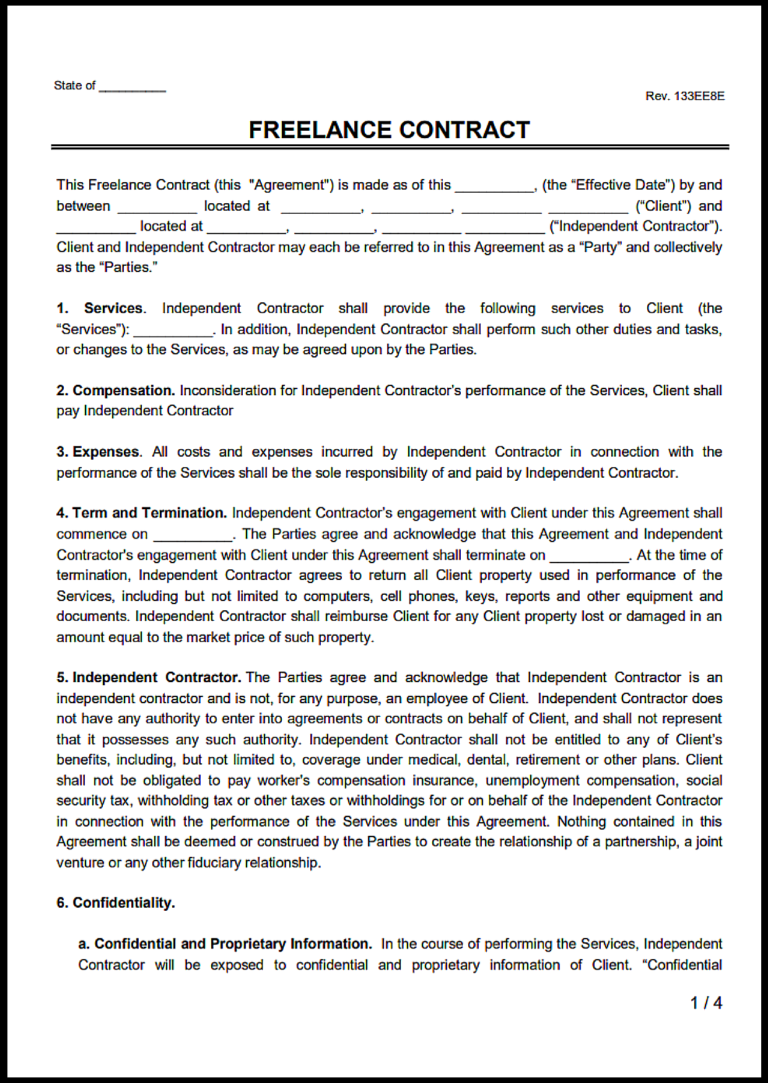
This free template can be customized for Manitoba businesses, freelancers, and independent consultants. It works for many service-based business arrangements.

Manitoba Consulting Agreement Laws, Contractor Risks & IP Ownership Rules
| Topic / Issue | Manitoba Legal Rule | Governing Statute |
|---|---|---|
| Governing legislation | Consulting agreements are generally governed by contract law principles, with additional requirements potentially arising under Manitoba legislation and applicable federal laws. | The Electronic Commerce and Information Act, C.C.S.M. c. E55; Income Tax Act, R.S.C. 1985, c. 1 (5th Supp.) |
| Electronic contract execution | Part 3 of Manitoba’s Electronic Commerce and Information Act addresses the formation and operation of contracts by electronic means. The Act does not make every electronic signature or execution process automatically valid for every type of document. | The Electronic Commerce and Information Act, C.C.S.M. c. E55, Part 3 |
| Business name compliance | Consultants operating under a business name other than their own legal name may have registration obligations, depending on the business structure and applicable exemptions. | The Business Names Registration Act, C.C.S.M. c. B110 |
| Workers compensation obligations | A business hiring a contractor who is not in good standing with the Workers Compensation Board may face assessable payroll and reporting obligations, depending on the circumstances. | The Workers Compensation Act, C.C.S.M. c. W200 |
| Intellectual property ownership | Under section 13(1) of the federal Copyright Act, the author is generally the first owner of copyright, subject to exceptions such as works created in the course of employment. An assignment must meet section 13(4), including the requirement for a written instrument signed by the owner or an authorized agent. | Copyright Act, R.S.C. 1985, c. C-42, ss. 13(1), 13(3), 13(4) |
| Moral rights waiver | Moral rights cannot be assigned but may be waived in whole or in part. A written waiver can help document the parties’ intentions, although the statute does not state that every waiver must be in writing. | Copyright Act, R.S.C. 1985, c. C-42, s. 14.1 |
| Who can legally sign | The person signing should have authority to bind the relevant individual, partnership, or corporation. For a Manitoba corporation, section 23 addresses agreements executed by a director, officer, or agent and confirms that the absence of a corporate seal does not, by itself, invalidate the instrument. | The Corporations Act, C.C.S.M. c. C225, s. 23; The Partnership Act, C.C.S.M. c. P30, ss. 7–8 |
| Witness requirements | An ordinary private consulting agreement does not generally require a witness solely because it is a consulting agreement. Separate formalities may apply to particular documents or transactions. | No general statutory witness requirement identified for an ordinary consulting agreement |
| Notarization requirements | An ordinary private consulting agreement does not generally need notarization solely because it is a consulting agreement. Other legal or transaction-specific requirements may apply. | No general statutory notarization requirement identified for an ordinary consulting agreement |
| Age requirements | Manitoba’s age of majority is 18. However, the legal capacity and enforceability of an agreement involving a person under 18 may depend on the circumstances and applicable legal principles. | The Age of Majority Act, C.C.S.M. c. A7, s. 1 |
| Mental capacity | A person entering an agreement must have the legal capacity to understand and make the relevant decision. Capacity questions depend on the circumstances and applicable legal principles. | General contract law principles |
| Limitation period | Most civil claims in Manitoba are subject to a basic two-year limitation period under section 6. The discovery rules in section 7 determine when the period begins, and section 10 establishes a 15-year ultimate limitation period, subject to statutory exceptions. | The Limitations Act, C.C.S.M. c. L150, ss. 6, 7, 10 |
| Mandatory clauses | There is no general set of mandatory boilerplate clauses for every ordinary consulting agreement. The terms needed depend on the services, parties, industry, and applicable legislation. | Manitoba contract law principles and applicable legislation |
| WCB clearance risks | A Manitoba business that hires a contractor who is not in good standing with WCB may have to include the contractor’s labour costs in its assessable payroll and report workplace injuries. Checking clearance status helps identify this risk. | The Workers Compensation Act, C.C.S.M. c. W200 |
| Worker misclassification risk | A person described as an independent contractor may still be treated as an employee if the actual working relationship supports that conclusion. Employment standards and federal tax assessments involve separate legal tests. | The Employment Standards Code, C.C.S.M. c. E110; Income Tax Act, R.S.C. 1985, c. 1 (5th Supp.) |
| Overbroad non-compete clauses | Restrictive covenants are assessed according to their wording, context, and applicable common-law principles. Enforceability should not be assumed simply because a restriction appears in a signed agreement. | Manitoba common law principles |
| Dissolved business entity risk | Before signing, confirm that a corporation or registered business name is active and that the person signing has authority. The legal effect of a dissolved entity or cancelled registration depends on the entity’s status, applicable legislation, and circumstances. | The Corporations Act, C.C.S.M. c. C225; The Business Names Registration Act, C.C.S.M. c. B110 |
| Manitoba limitation rule | Manitoba has a general two-year basic limitation period from discovery and a 15-year ultimate limitation period, subject to statutory exceptions and other legislation. | The Limitations Act, C.C.S.M. c. L150, ss. 6, 7, 10 |
| Manitoba electronic contracts | Section 19 of Manitoba’s Electronic Commerce and Information Act addresses the formation and operation of contracts by electronic means. Its effect is subject to the Act’s scope and limitations. | The Electronic Commerce and Information Act, C.C.S.M. c. E55, s. 19 |
One of the most important Manitoba consulting issues involves intellectual property ownership. Many businesses assume they automatically own reports, software code, marketing materials, or designs created by a consultant. That is not always the case. Under the federal Copyright Act, the author is generally the first copyright owner, subject to exceptions such as work created in the course of employment. A business that wants ownership transferred should include a proper written assignment.
Worker classification is another issue worth taking seriously. A business cannot avoid employment obligations simply by calling someone a consultant. The actual working relationship matters. Control over duties and schedules, payment arrangements, and the consultant’s ability to operate an independent business can all be relevant.
These issues can surface months after a project ends. A client might dispute an invoice, question who owns a design, or face a worker-classification review. Manitoba’s general two-year basic limitation period can also affect the time available to bring a civil claim. However, the discovery rules and the 15-year ultimate limitation period matter too. Download the free Manitoba Consulting Agreement template below as a starting point for documenting the arrangement.
When Businesses in Manitoba Use a Consulting Agreement
In Manitoba, a written consulting agreement is useful when a business hires outside expertise for a defined project or ongoing service. It gives both sides a record of the work, payment terms, deadlines, and responsibilities.
Freelance and Professional Services
Many Manitoba businesses hire consultants for:
- Marketing consulting
- IT consulting
- HR consulting
- Business advisory work
- Financial consulting
- Operational improvement projects
These arrangements can involve a single assignment or continuing professional services. The agreement should identify the services, expected results, fees, expenses, and reporting arrangements. It should also explain whether the consultant can take on other clients and how confidential business information will be handled.
Short-Term Project Work
Businesses often use consulting agreements for temporary projects such as business financing initiatives:
- Website development
- Software implementation
- Business restructuring
- Staff training
- Process improvement
- Strategic planning
A written agreement helps both sides understand project timelines, payment schedules, and expected deliverables. For milestone-based work, describe what must be completed before each payment becomes due. That small detail can prevent arguments about whether a project stage is finished.
Remote and Cross-Province Consulting
Some Manitoba companies hire consultants located in other provinces. In those situations, governing law clauses become important.
A Manitoba governing law clause can state that the agreement is to be interpreted under Manitoba law. However, it does not automatically settle every question about which court has jurisdiction or which mandatory laws apply. The consultant’s location, where the work is performed, and the nature of the dispute may also matter.
Why a Written Consulting Agreement Matters in Manitoba
A consulting agreement gives both sides a record of what was promised. An agreement may sometimes be formed through conversations, emails, or conduct, but proving the exact terms can be difficult when the parties have not documented them.
For a Manitoba business, putting the scope, fee, deadlines, ownership terms, and responsibilities into one agreement makes it easier to resolve misunderstandings.
Prevents Payment Disputes
A consulting agreement should clearly explain:
- Invoice deadlines
- Hourly billing rates
- Fixed project fees
- Late payment terms
- Expense reimbursement rules
- Deposit requirements
Many payment disputes begin with missing details. For example, a client may believe a milestone payment is due only after final approval, while the consultant expects payment when a draft is delivered. State the payment trigger in the agreement rather than leaving it open to interpretation.
Helps Protect Confidential Business Information
Consultants often receive access to sensitive information such as:
- Customer lists
- Internal systems
- Pricing strategies
- Marketing plans
- Financial data
- Trade secrets
A confidentiality clause should explain what information is protected, how the consultant may use it, and when disclosure is permitted. It should also deal with the return or deletion of confidential materials when the engagement ends.
Reduces Worker Classification Problems
Under Manitoba law, a contract cannot settle worker status simply by labelling someone an “independent contractor”.
If the actual relationship resembles employment, employment standards laws may apply regardless of the contract wording.
Common factors that may need review include:
- Fixed daily work schedules
- Mandatory office attendance
- Direct supervision
- Company-provided equipment
- Long-term exclusive work relationships
No single factor necessarily decides the issue. Manitoba Employment Standards considers the circumstances of the relationship, including control over duties and schedules, the ability to negotiate payment, and the method of payment.
Key Clauses Every Manitoba Consulting Agreement Should Include
A well-written Manitoba consulting agreement should explain what each party is expected to do and what happens if the arrangement changes or ends. The following clauses provide a practical starting point.
Scope of Services
The agreement should describe:
- Services being provided
- Project deliverables
- Completion deadlines
- Revision limits
- Reporting requirements
Vague descriptions often create disputes later. For example, saying “marketing support” leaves too much open to interpretation. It is better to specify services such as:
- Social media management
- Monthly reporting
- Advertising strategy
- Content creation
Where possible, identify what is outside the scope as well. This helps both parties understand when extra work requires a new fee or written approval.
Payment Terms and Expenses
Payment clauses should explain:
| Payment Issue |
What Should Be Included
|
| Hourly work | Hourly rate and billing cycle |
| Fixed-fee projects |
Total fee and milestone payment schedule
|
| Expenses |
Which costs are reimbursable and whether approval is needed
|
| Deposits |
Upfront payment requirements and refund terms
|
| Late invoices |
Due dates and any agreed interest or late-payment charges
|
Clear billing terms help reduce collection disputes. If the parties agree to interest or late fees, state the rate and how it will be calculated. Do not assume a vague reference to a “late fee” will answer every question about the amount owed.
Independent Contractor Clause
Most Manitoba consulting agreements should include wording similar to:
“The Consultant is an independent contractor and nothing in this Agreement shall be construed to create a partnership, joint venture, or employer-employee relationship.”
This clause records what the parties intend. However, it does not decide the worker’s legal status on its own. Under Manitoba employment standards and federal tax rules, the actual working relationship matters more than the label in the contract.
Tax Responsibility Clause
The agreement should clearly state how the parties intend to handle:
- GST/HST obligations, where applicable
- Income tax obligations
- CPP contributions
- EI obligations, where applicable
The consultant may have their own tax and registration responsibilities, but a contract cannot transfer away a business’s legal obligations if the relationship is ultimately classified differently. CRA assesses worker status under the applicable federal tax rules.
Confidentiality and Non-Disclosure Terms
Confidentiality clauses should explain:
- What information is confidential
- How information can be used
- How long confidentiality obligations continue
- Exceptions for information already public or independently obtained
In many consulting arrangements, confidentiality obligations continue even after the contract ends. The agreement should also say what happens to documents, passwords, records, and other business information when the engagement finishes.
Intellectual Property Ownership
This clause explains who owns work created during the project.
Depending on the agreement, ownership may include:
- Reports
- Branding materials
- Software code
- Marketing strategies
- Training materials
- Research documents
Do not assume that paying for a project automatically transfers copyright. Under the federal Copyright Act, the author is generally the first owner, subject to statutory exceptions. If the client is meant to own copyright, include an appropriate written assignment signed by the copyright owner or authorized agent.
The parties should also address pre-existing materials, third-party content, licences, and any moral-rights waiver they intend to obtain.
Termination Rights
The agreement should explain:
- Notice periods
- Immediate termination rights
- Breach of contract procedures
- Final invoice procedures
- Return of confidential information
Many agreements allow termination with written notice from either party. The clause should state how much notice is required, whether a party can terminate immediately for a serious breach, and how completed work and outstanding expenses will be paid.
Dispute Resolution and Governing Law
Most Manitoba consulting agreements include clauses covering:
- Manitoba governing law
- Court jurisdiction
- Mediation requirements
- Arbitration options
Commercial disputes in Manitoba may be heard by the Court of King’s Bench, depending on the nature and value of the claim and the court’s jurisdiction. A dispute-resolution clause should explain the process the parties intend to follow before starting court proceedings.
Manitoba Laws That Affect Consulting Agreements
Several Manitoba and federal laws can affect consulting relationships. The law that applies depends on the subject. For example, Manitoba legislation governs provincial employment standards, while federal legislation governs copyright and federal tax matters.
Summary of Applicable Laws
| Topic | Rule |
Governing Statute
|
| Worker classification | Employment standards may apply if the person is legally an employee rather than an independent contractor. |
The Employment Standards Code, C.C.S.M. c. E110
|
| Workers compensation | WCB coverage, assessment, and clearance obligations depend on the business and contractor circumstances. |
The Workers Compensation Act, C.C.S.M. c. W200
|
| Business name registration | Consultants using business names may have registration obligations. |
The Business Names Registration Act, C.C.S.M. c. B110
|
| Partnerships | Partnership law may apply where people carry on business together in partnership. |
The Partnership Act, C.C.S.M. c. P30
|
| Tax obligations | CRA determines whether a worker is an employee or self-employed for federal tax purposes. |
Income Tax Act, R.S.C. 1985, c. 1 (5th Supp.)
|
| CPP and EI | Contribution and insurability rules may apply depending on the worker’s status and circumstances. |
Canada Pension Plan; Employment Insurance Act
|
| Legal contract age | Manitoba’s age of majority is 18, although capacity and enforceability can require a broader assessment. |
The Age of Majority Act, C.C.S.M. c. A7
|
Worker Classification Rules in Manitoba
One of the biggest legal risks in consulting agreements is worker misclassification.
A company cannot avoid employment laws simply by calling someone a contractor. The actual working arrangement must be considered.
Factors that may help assess the relationship include:
- Who controls the work
- Who provides tools or equipment
- Whether the consultant can work for other clients
- Whether the consultant carries business risk
- How payments are structured
For example, a person who works to a fixed schedule, follows detailed instructions, and reports directly to company managers may have a relationship that looks more like employment. That example does not decide the issue by itself. The full arrangement must be considered.
Manitoba Employment Standards provides guidance on independent contractors and explains that a worker may be incorrectly classified. CRA also applies its own federal tax assessment. A business should not assume that one classification decision automatically settles every employment, tax, CPP, or EI question.
Business Name Registration Requirements
If a consultant operates under a business name instead of their legal personal name, Manitoba registration rules may apply.
For example:
- “Sarah Lee” may not require a separate business-name registration when she operates under her own legal name.
- “Prairie Edge Consulting” may require registration if it is used as a business name under the applicable rules.
The exact requirement depends on the business structure and the name being used. Registration is generally handled through the Manitoba Companies Office. Check the applicable registration requirements before using a business name in contracts, invoices, or marketing materials.
Workers Compensation Requirements
Some businesses in Manitoba face particular WCB considerations when hiring contractors, including businesses involved in:
- Construction
- Trucking
- Industrial contracting
A hiring business may request a WCB Clearance Certificate to check whether a contractor is in good standing. This is a practical step before work begins and can help identify potential liability for unpaid assessments.
A business that hires a contractor who is not in good standing may have to include the contractor’s labour costs in its assessable payroll. Workplace injury reporting obligations may also arise. The exact result depends on the applicable WCB rules and the circumstances of the work.
Non-Compete and Non-Solicitation Clauses in Manitoba
Restrictive covenant clauses can limit what a consultant may do during or after a business relationship. They need careful drafting because an overly broad restriction may be challenged.
Why Manitoba Courts Scrutinize Non-Competes
The enforceability of a non-compete clause depends on its wording and context. Courts may consider:
- Geographic limits
- Time duration
- Scope of restricted activities
- The legitimate interest the clause is intended to protect
- Whether the restriction goes further than reasonably necessary
A clause that blocks someone from working “anywhere in Canada for 10 years” would face serious enforceability concerns. However, it is not possible to determine the outcome of a particular dispute from the wording alone.
The legal treatment of restrictive covenants can also differ between employment relationships and commercial agreements, such as the sale of a business. Do not assume that a rule applied in one setting automatically applies to every consulting arrangement.
Better Alternatives to Broad Non-Compete Clauses
Businesses often consider narrower protections instead of broad restrictions.
Examples include:
- Non-solicitation clauses
- Confidentiality agreements
- Client non-contact restrictions
- Limited restrictions tied to specific business information
These alternatives may be more proportionate when they protect a defined business interest. They are not automatically enforceable, though. Their wording, purpose, duration, and surrounding circumstances still matter.
Common Consulting Agreement Mistakes Businesses Make
Many consulting disputes happen because contracts are rushed or copied from generic online templates. A few checks before signing can help prevent problems later.
Using Employee Language in Contractor Agreements
Businesses sometimes create contractor agreements that describe an employee-like working arrangement.
Warning signs include:
- Mandatory office attendance
- Fixed daily schedules
- Direct supervision
- Exclusive service requirements
Before signing, compare the written contractor terms with the way the work will actually be performed. A contract calling someone an independent contractor will not settle the issue if the business controls their schedule and duties or the person otherwise functions as an employee. Manitoba Employment Standards assesses the real relationship, not just the label.
Leaving Payment Terms Too Vague
Poorly written payment clauses often create disputes.
Common problems include:
- Missing invoice deadlines
- No late-payment terms
- Undefined project scope
- Unclear expense rules
Specific payment language usually prevents misunderstandings. State when invoices must be sent, when payment is due, what happens if a milestone is disputed, and whether the client must approve expenses before they are incurred.
Ignoring Intellectual Property Ownership
Ownership disputes can arise in consulting work involving:
- Branding
- Graphic design
- Software development
- Research reports
- Marketing campaigns
Without clear ownership terms, the client and consultant may disagree about who can use, modify, licence, or distribute the work. Identify any copyright assignment, licence, pre-existing material, and third-party content in the agreement. If ownership is being transferred, make sure the assignment meets the federal Copyright Act’s requirements.
Using Overly Broad Liability Clauses
Some online templates contain liability waivers that are too broad to enforce properly.
If services involve consumers instead of businesses, parts of Manitoba consumer protection legislation may also apply, depending on the transaction. A clause should not be treated as automatically valid just because both parties signed it.
Set out the types of loss covered, any agreed liability cap, and any exclusions. Have the wording reviewed where the services involve significant financial exposure, personal information, or regulated activities.
How to Fill Out a Manitoba Consulting Agreement
Complete the agreement before the consultant starts work. Confirm the legal names of the parties, the authority of anyone signing for a business, and the terms that will govern the project.
Step 1 — Identify the Parties Properly
Include:
- Full legal names
- Registered business names, where applicable
- Business addresses
- Contact information
If a corporation is signing, identify the corporation as the contracting party rather than naming only the individual representative. Confirm that the person signing has authority to act on its behalf.
Step 2 — Describe the Services Clearly
Avoid vague descriptions like “business help.”
Instead, explain:
- Exact services
- Deliverables
- Deadlines
- Revision limits
- Reporting expectations
Detailed scopes reduce confusion. If the work may change during the project, include a written change-approval process so that extra services and fees are documented.
Step 3 — Add Payment and Tax Terms
The agreement should explain:
- GST/HST handling, where applicable
- Payment schedules
- Deposit requirements
- Reimbursement rules
- Late-payment terms
State whether the fee is hourly, fixed, or milestone-based. The parties should also clarify who is responsible for approved expenses and how taxes will be shown on invoices. Remember that contract wording does not determine worker status for CRA or employment standards purposes.
Step 4 — Review Termination and Liability Clauses
Check:
- Notice periods
- Termination rights
- Liability limitations
- Confidentiality obligations
- Final payment procedures
These clauses become especially important when business relationships break down. Make sure the agreement explains what happens to unfinished work, outstanding invoices, confidential information, and project materials after termination.
Step 5 — Sign and Store the Agreement
Both parties should keep a complete copy of the signed agreement and any later written amendments.
Electronic recordkeeping is common in commercial transactions. Keep the final signed version, supporting emails, invoices, approvals, and project records together so the parties can refer to the same terms if a disagreement arises.
Can a Manitoba Consulting Agreement Be Signed Electronically?
Yes. In many ordinary commercial situations, Manitoba consulting agreements can be formed electronically. Part 3 of Manitoba’s Electronic Commerce and Information Act addresses contracts formed by electronic means.
Businesses commonly use:
- PDF signatures
- Digital signing platforms
- Electronic acceptance systems
For an ordinary consulting agreement, electronic communication can be a practical way to record the parties’ agreement. Keep a copy of the final document and the electronic record showing each party’s acceptance.
However, do not assume that the Act removes every formality for every document or transaction. Check separately for any statutory exception or additional requirement that applies to the particular agreement.
Frequently Asked Questions
Is a consulting agreement legally binding in Manitoba?
A consulting agreement can be legally binding when the parties have reached an enforceable agreement. The terms should be clear, and the usual contract requirements, including consideration, must be satisfied. A signed document is useful evidence of what the parties agreed to, but the legal effect depends on the circumstances.
Does a consultant need a registered business name?
A consultant may have to register a business name if they operate under a name other than their legal personal name. The requirement depends on the business structure and the applicable Manitoba registration rules. Check with the Manitoba Companies Office before using a trade name.
Can a consultant be treated as an employee?
Yes. A person described as a consultant may still be treated as an employee if the actual working relationship supports that classification. Manitoba Employment Standards and CRA apply their respective legal tests. The title in the agreement is not conclusive.
Are non-compete clauses enforceable in Manitoba?
It depends on the wording and context. Courts may consider the duration, geographic scope, restricted activities, and legitimate business interest being protected. Employment-related restrictions may be treated differently from restrictions in commercial agreements. A broad clause should receive legal review before either party relies on it.
Does a Manitoba consulting agreement need witnesses?
An ordinary private consulting agreement does not generally require a witness solely because it is a consulting agreement. A separate legal requirement may apply to a particular document or transaction, so check the applicable rules if the agreement includes additional formalities.
Who pays taxes under a consulting agreement?
The agreement can state how the parties intend to handle income tax, GST/HST, CPP, and EI obligations. A self-employed consultant may have their own tax and contribution responsibilities. However, the parties cannot decide worker status simply by assigning tax responsibility in the contract. CRA determines status under the applicable federal rules, and employment standards questions must be assessed separately.