Manitoba Partnership Agreement (Free PDF Template)
A partnership usually doesn’t fall apart over the big decisions people expect. More often, it’s the smaller things that pile up. One partner keeps using the business account for personal expenses. Someone assumes profits can wait until year-end. Then a disagreement lands on the table because none of it was written down.
I remember helping two brothers who had started a small excavation business near Brandon with nothing more than a handshake and a spreadsheet. They genuinely believed they’d never need anything else. A Manitoba Partnership Agreement is commonly used by business partners, family-run operations, professional firms, and friends starting a venture together in Manitoba. Under The Partnership Act (Manitoba), many default rights and obligations apply if partners have not agreed otherwise, and those statutory rules may not reflect how you actually expect your business to operate.
A profit dispute that reaches court without a clear written agreement can end with the judge relying on the default provisions in The Partnership Act, not on what the partners say they intended years earlier. That’s where things get expensive, fast. Maybe you’re putting money into the business while someone else is bringing clients, or you’re trying to sort out what happens if one partner wants out before the work is finished.
I’ve seen a client lose tens of thousands of dollars because there was no written formula for valuing a departing partner’s share, and the disagreement dragged on until the business itself folded. Fill in this template with the terms you actually want before you start operating together.
Free Manitoba Partnership Agreement Template
This template is designed for Manitoba general partnerships and can also be adapted for LLP or more complex business structures where appropriate. Under Manitoba law, written agreements are one of the best ways to override many default statutory rules.
Manitoba Partnership Agreement Laws, Liability Rules & Registration Requirements
| Topic / Issue | Manitoba Legal Rule | Governing Statute |
|---|---|---|
| Governing partnership law | Manitoba partnerships are governed provincially under partnership and common law principles. | The Partnership Act, C.C.S.M. c. P30 |
| Legal signing authority | Any person with legal capacity, including individuals, corporations, sole proprietorships, or partnerships, may enter a partnership agreement. | The Partnership Act, C.C.S.M. c. P30, s. 1(1) & s. 7 |
| Witness requirements | Manitoba law generally does not require witnesses for partnership agreements. | No statutory requirement — governed by common law principles |
| Notarization requirements | Manitoba law generally does not require notarization for partnership agreements. | No statutory requirement — governed by common law principles |
| Age requirement | Individuals cease to be minors and attain the age of majority at 18 years under Section 1 of The Age of Majority Act, C.C.S.M. c. A7, granting full capacity to execute binding partnership agreements and commercial contracts. | The Age of Majority Act, C.C.S.M. c. A7 |
| Mental capacity requirement | Individuals must understand the nature and effect of the agreement when signing. | Manitoba common law contract principles |
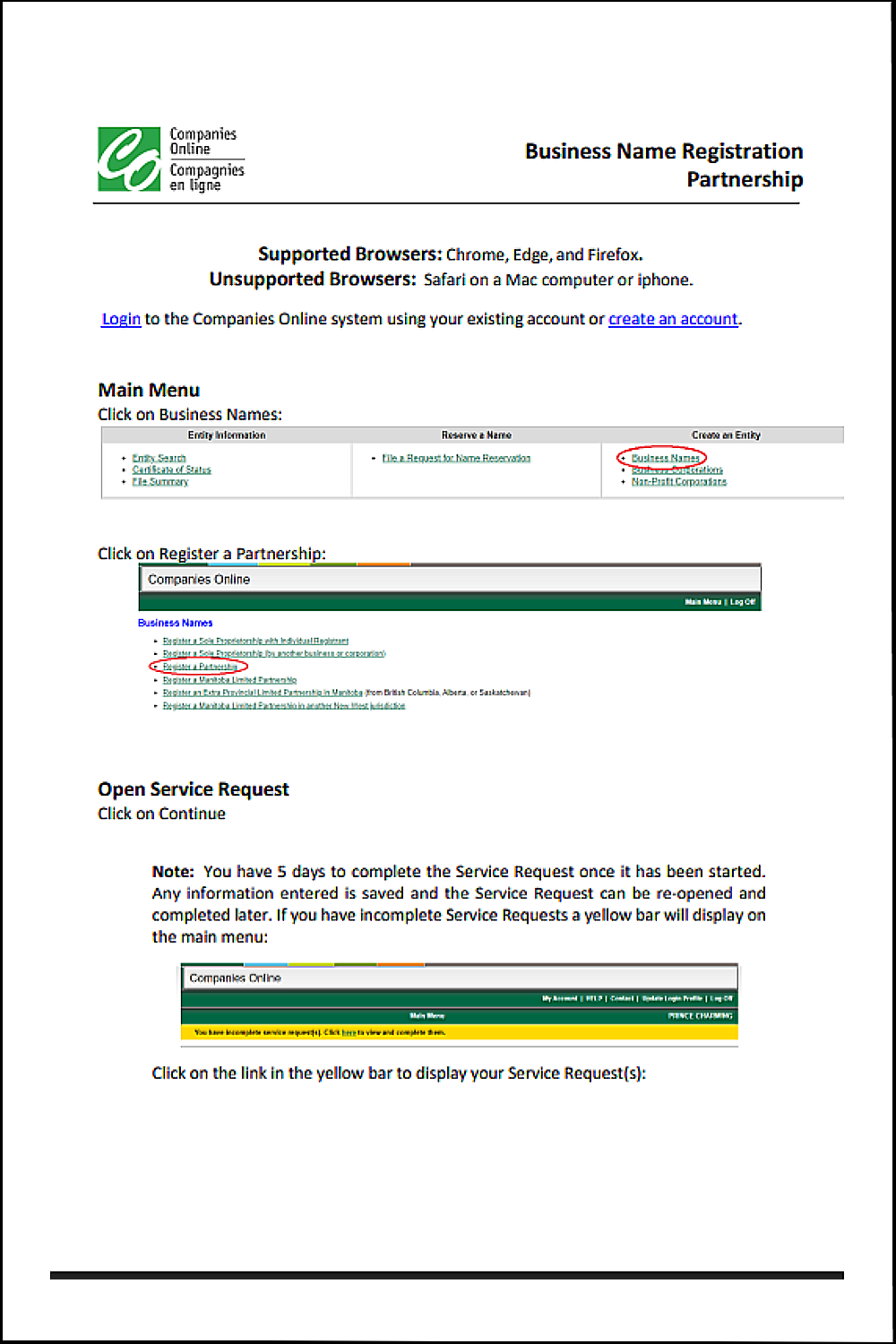
| Partnership registration deadline | Under Section 3(2) of The Business Names Registration Act, C.C.S.M. c. B110, a partnership declaration must be filed with the Companies Office within one month next after the formation of the firm or commencement of operations. | The Business Names Registration Act, C.C.S.M. c. B110, s. 4(1) & s. 7 |
| Mandatory LLP and LP naming | Limited Partnerships and LLPs must use legally required business designations such as “LP” or “LLP.” | The Partnership Act, C.C.S.M. c. P30, s. 58(2) & s. 77 |
| Private contract status | Partnership agreements themselves are private contracts and are not filed publicly with the government. | Manitoba common law partnership principles |
| Business name registration | Partnerships operating under a firm name must register publicly with the Companies Office. | The Business Names Registration Act, C.C.S.M. c. B110 |
| Registration renewal period | Under Section 5(1) of The Business Names Registration Act, C.C.S.M. c. B110, every business name registration and subsequent renewal automatically expires exactly three years from the date of filing unless a renewal is submitted. | The Business Names Registration Act, C.C.S.M. c. B110, s. 11(1) |
| Profit requirement for partnership status | A valid partnership must involve carrying on business with a view to profit. | The Partnership Act, C.C.S.M. c. P30, s. 3 |
| Restricted or deceptive business names | Deceptive, obscene, or misleading business names may be refused registration. | The Business Names Registration Act, C.C.S.M. c. B110, s. 26 |
| Illegal business purpose | Partnerships operating for illegal purposes may automatically dissolve by law. | The Partnership Act, C.C.S.M. c. P30, s. 37 |
| Joint and several liability | Manitoba general partners are jointly and severally liable for partnership debts and obligations. | The Partnership Act, C.C.S.M. c. P30, s. 12 |
| Manitoba liability difference | A Manitoba creditor may pursue one partner alone for the full partnership debt. | The Partnership Act, C.C.S.M. c. P30, s. 12 |
One of the most important Manitoba partnership rules is that people can accidentally create a legal partnership without signing formal paperwork. If two or more people carry on business together with a view to profit, Manitoba law may already treat them as partners. That surprises many family businesses, startup founders, and side-business owners who assume they are simply “working together informally.” The liability rules are also extremely important because Manitoba general partners are jointly and severally liable for partnership debts. This means one partner can potentially be sued alone for the entire business obligation, even if another partner caused the problem.
The registration rules matter in real life because partnership business names expire every three years and must be renewed properly. Missing the registration deadline or using a misleading business name can create compliance issues and operational delays. Manitoba also requires partnerships to genuinely operate for profit, meaning informal community groups or hobby projects may not qualify as legal partnerships at all.
Poorly drafted agreements, missing authority clauses, or unclear ownership terms can quickly lead to expensive disputes and personal financial exposure. Download the free Manitoba Partnership Agreement template below to help structure your partnership properly.
Why a Written Partnership Agreement Matters in Manitoba
Under Manitoba law, a partnership can exist even without paperwork. If people work together for profit, share income, and act like co-owners, courts may treat them as partners.
That creates major risks.
Without a written agreement:
- Profit may default to equal sharing, even if one partner invested more
- Authority may be unclear
- Expulsion may be impossible without express terms
- Liability may extend personally to all general partners
Oral agreements often fail because memories differ, expectations change, and business stress can quickly expose vague arrangements.
Common “Accidental Partnership” Situations
- Friends splitting project profits
- Family members opening a side business
- Consultants jointly serving clients
- Informal online businesses
Consultants serving clients together may instead formalize the engagement with a service agreement.
Many Manitoba businesses do not realize they may already be operating under partnership law until a dispute begins.
Choosing the Right Partnership Structure
Not every partnership should operate the same way.
General Partnership
This is the most common structure. Partners usually share profits, management, and liability. It is simple, but personal exposure can be significant.
Limited Liability Partnership (LLP)
Often used by professionals, LLPs may offer some liability protection, but Manitoba naming and compliance rules are stricter.
Limited Partnership
This structure can separate active managers from passive investors, but it comes with different legal requirements.
Why Structure Choice Matters
Choosing the wrong structure can affect:
- Personal liability
- Tax reporting
- Business control
- Investor flexibility
Structure decisions should happen early because fixing mistakes later can be expensive.
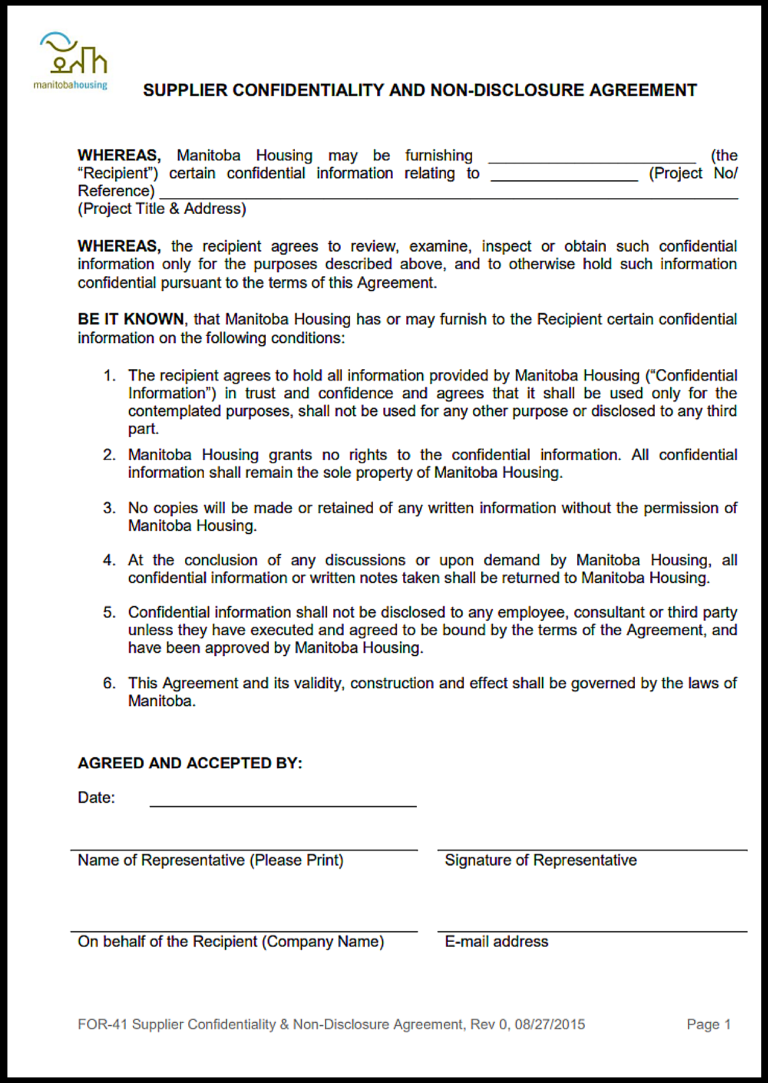
Before sharing financial or operational information with third parties, partners may also use a non-disclosure agreement to protect confidential business records.
Key Clauses Every Manitoba Partnership Agreement Should Include
A strong Manitoba business partnership contract should cover more than ownership names.
Ownership Shares
Clearly define percentages and voting rights.
Profit and Loss Allocation
Do not assume ownership and profits automatically match.
Decision-Making Authority
Define who can:
- Sign contracts
- Borrow money
- Hire staff
- Make major purchases
If partners bring on outside help rather than staff, a Manitoba independent contractor agreement can clarify that relationship
Capital Contributions
List money, equipment, property, or services contributed by each partner.
New Partner Admission
Growth can create tension without clear entry rules.
Withdrawal, Death, or Retirement
Life changes can disrupt businesses quickly. Partners should also coordinate succession with a last will and testament.
Expulsion Powers
Under Manitoba law, a partner usually cannot simply be expelled unless the agreement expressly allows it.
Profit Sharing and Tax Responsibilities
Partnership taxation is often misunderstood.
Under federal tax law, partnerships are generally flow-through structures. This means profits often pass through to partners personally rather than being taxed like a corporation.
Both parties should always define:
- CRA Business Number obligations
- GST/HST thresholds
- Recordkeeping duties
- Draw policies
- Tax filing responsibilities
Common Tax Mistakes
- No CRA registration
- Poor bookkeeping
- Unclear allocations
- Missing GST obligations
Bad records can trigger disputes internally and externally.
Registration Rules and Manitoba Compliance
A private partnership agreement itself does not usually need filing, but business registration may still be legally required.
Manitoba Compliance Basics
| Requirement | Rule | Risk if Ignored |
| Business Name Registration | Often required within one month |
Compliance penalties
|
| Name Restrictions | Cannot improperly imply corporation |
Rejection or legal issues
|
| Renewal | Every 3 years | Loss of standing |
| Public Disclosure | Partner names may be public |
Transparency obligations
|
Businesses should also remember that naming matters. Improperly using “Ltd.” or “Inc.” can violate Manitoba business naming laws.
Fiduciary Duties and Legal Boundaries Between Partners
Partnerships involve more than profit sharing. Under Manitoba law, partners generally owe each other duties of honesty and loyalty.
This includes:
- No secret profits
- No hidden side deals
- No competing unfairly
- Full disclosure of relevant business matters
A partner who secretly benefits at the expense of the partnership may face legal action.
Trust is important, but written obligations are safer.
Common Legal Mistakes That Destroy Partnerships
Many business disputes come from preventable drafting failures.
Common mistakes include:
- No written agreement
- Equal profit splits despite unequal work
- No expulsion clause
- Undefined spending authority
- No dispute process
- Failure to register properly
In many cases, businesses do not fail because the idea was bad—they fail because expectations were unclear.
Dispute Resolution, Exit Strategy, and Dissolution
Strong partnerships plan for conflict before it happens.
Useful legal protections include:
- Mediation
- Arbitration
- Buyout formulas
- Retirement planning
- Death or disability provisions
- Misconduct clauses
Without these protections, disputes often become more personal, more expensive, and more destructive.
Real-Life Manitoba Partnership Disputes
Common examples include:
- One partner overspending company funds
- Family business profit disputes
- Silent partner disagreements
- Hidden competition
- No buyout process after departure
These situations are common because informal businesses often skip legal planning early.
Notarization Myths vs Legal Reality
Under Manitoba law, notarization or witnessing is generally not required for a standard partnership agreement.
Still, businesses should always use:
- Written contracts
- Clear signatures
- Dated copies
- Detailed clauses
Formal clarity often matters more than legal ceremony.
Step-by-Step: How to Complete a Manitoba Partnership Agreement Properly
- Choose the right structure
- Confirm legal business name
- Define ownership percentages
- Set profit and loss rules
- Clarify authority limits
- Add dispute and exit clauses
- Register where required
- Keep signed records securely
FAQ
Do I need a written partnership agreement in Manitoba?
No, but without one, Manitoba’s default partnership rules may control key parts of your business.
Are partners personally liable?
In most general partnerships, yes. Partners may be personally liable for debts and obligations.
Do partnerships need registration?
Often yes, especially when operating under a business name.
Can a partner be expelled?
Usually only if your agreement specifically includes expulsion powers.
What is the difference between GP and LLP?
A GP generally involves broader personal liability, while LLPs may offer liability protections depending on legal structure and compliance.