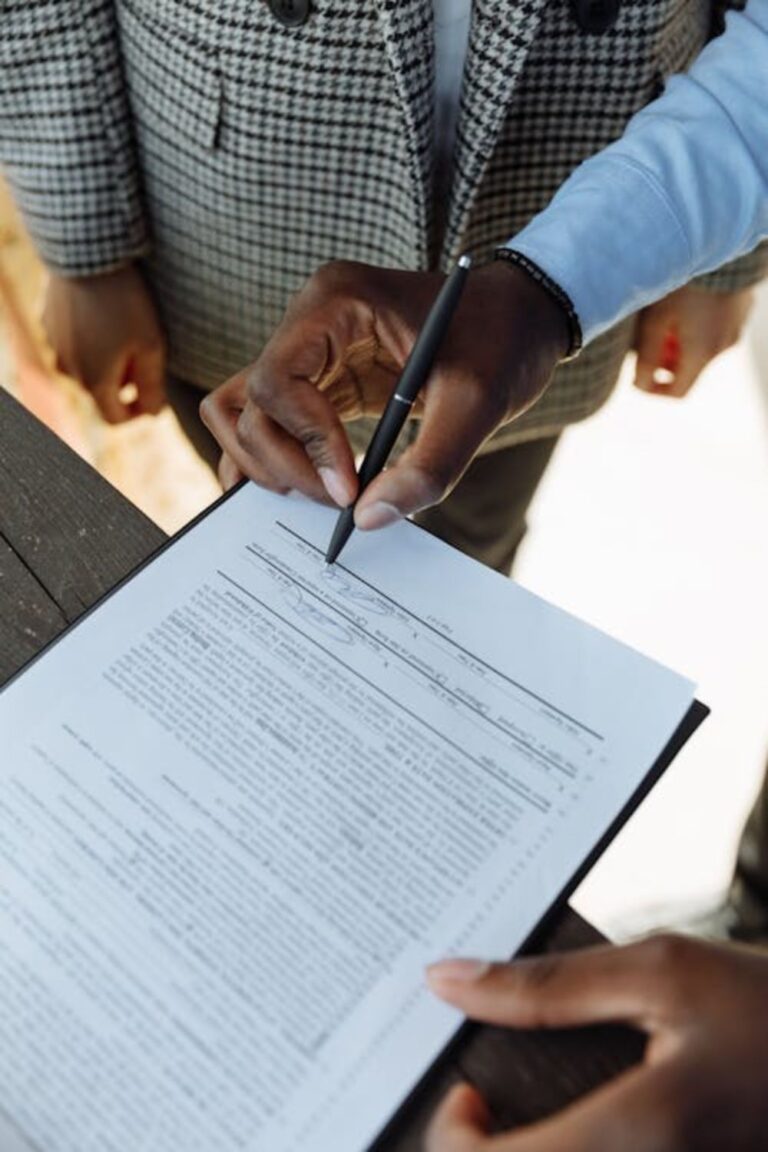
What is Lease Agreement British Columbia? (Free Guide)
What is Lease Agreement British Columbia? It is a legal agreement between a landlord and a tenant that explains rent, rules, and responsibilities for a rental property. In simple words, it helps both sides understand what they must do and what they can expect.
A lease agreement is very important in British Columbia because it protects both landlord and tenant. It clearly defines rent amount, payment dates, deposits, and property rules like pets or smoking. Without a clear agreement, small issues can turn into legal disputes.
I’ve seen many tenants and landlords in British Columbia run into serious problems because they relied on verbal promises or incomplete lease terms that later could not be enforced under the Residential Tenancy Act. When people are renting for the first time, even a small mistake in the agreement can quickly turn into disputes over deposits, notice periods, or rent increases.
Under British Columbia law, lease agreements follow the Residential Tenancy Act (RTA). This law ensures fair treatment, proper notice rules, and limits on deposits and rent increases.
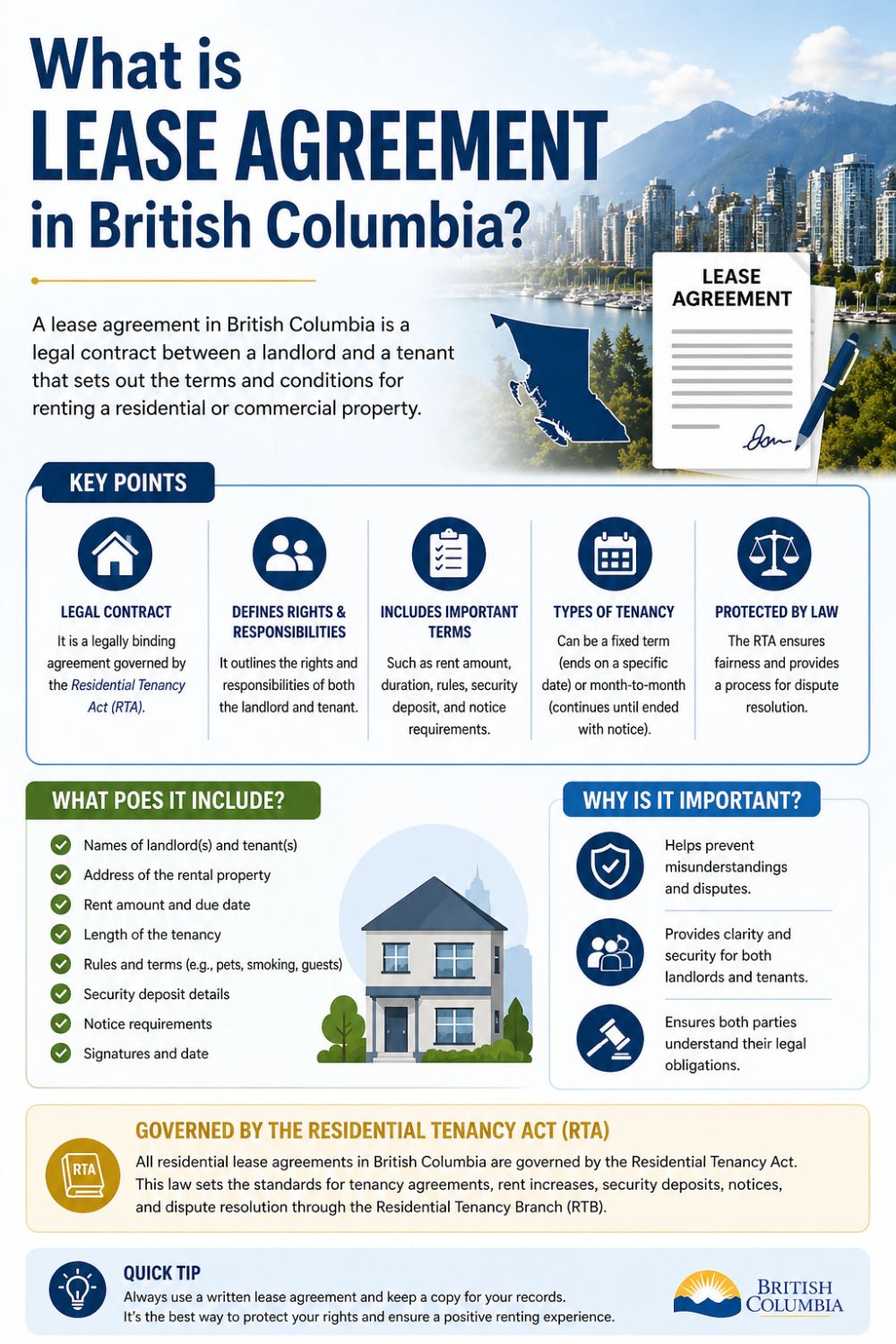
What Is a Lease Agreement in British Columbia?
A lease agreement in British Columbia is a written contract that explains how a rental property will be used. It includes details like rent, rules, and responsibilities. Compared to a casual rental setup, a proper lease agreement gives strong legal protection and reduces confusion.
In most rental situations, written agreements are strongly recommended. Verbal agreements are legally valid in BC, but they are risky because there is no clear proof if a dispute happens.
There are two main types of leases. A fixed-term lease has a start and end date, while a month-to-month tenancy continues until one party gives proper notice. Many tenants prefer flexibility, while landlords often prefer stability.
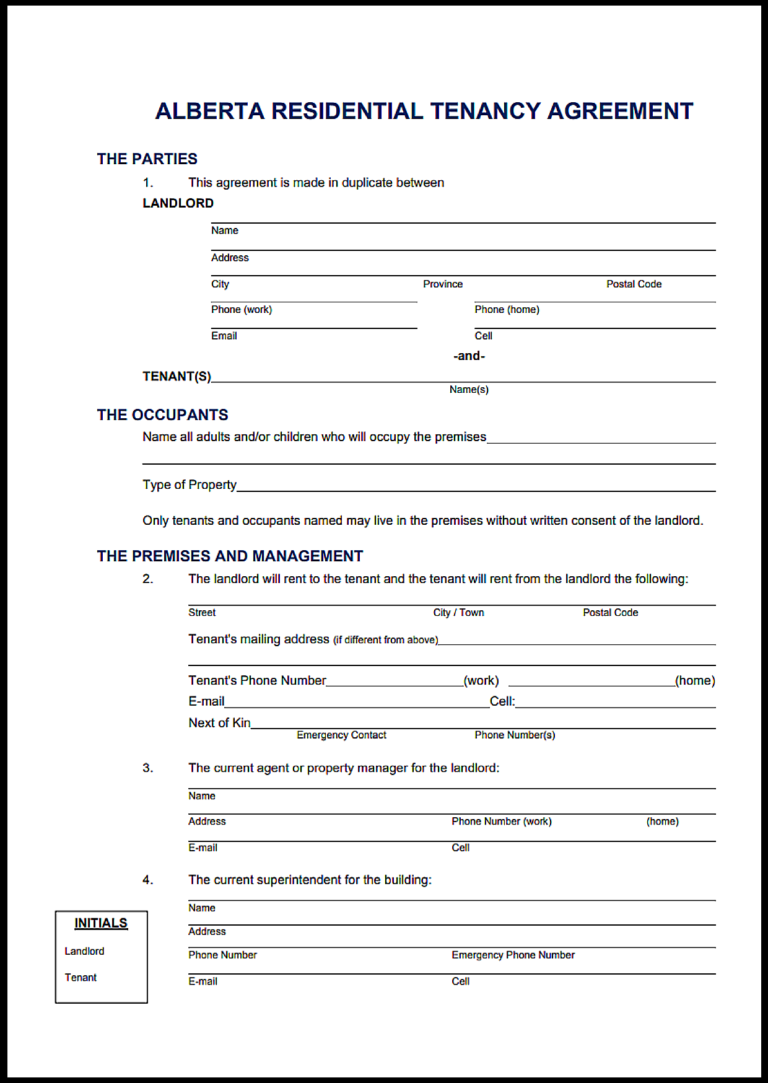
A lease agreement is a legal arrangement that explains the responsibilities shared between a landlord and tenant during a rental period. Anyone preparing to rent residential property can also review the complete British Columbia lease agreement template to see how these terms are normally organized in a real tenancy document.
When Do You Need a Lease Agreement in BC?
You need a lease agreement in almost every rental situation in British Columbia. It is useful when renting a house, apartment, basement suite, or even a single room. It is especially important for first-time rentals or when renewing an existing tenancy.
Even if you are renting to friends or family, having a written agreement is still recommended. It avoids misunderstandings later.
For example, a landlord rents out a basement without any agreement. After a few months, the landlord wants to increase rent, but the tenant refuses. Since there is no written agreement, both sides disagree on what was originally decided. This leads to stress and possible legal action.
These agreements usually cover important details such as rent amounts, security deposits, maintenance obligations, and occupancy rules before a tenant moves into the property. Landlords often begin the process with a tenant information and screening form and later maintain payment records using a monthly rent receipt document throughout the tenancy.
Key Parts of a BC Lease Agreement
A strong lease agreement should cover all important details clearly so both parties understand their rights and duties.
Basic Information
This includes names of landlord and tenant, rental property address, and contact details. Without this, the agreement is incomplete.
Rent Details
The lease must clearly mention the rent amount, due date, and payment method. This avoids confusion about late payments.
Deposit Rules
Under British Columbia law, the security deposit cannot be more than half of one month’s rent. If pets are allowed, a separate pet deposit (also up to half month’s rent) can be charged.
Lease Term
The agreement should clearly state whether it is fixed-term or month-to-month. This affects how and when the lease can end.
Rules and Restrictions
Rules like pets, smoking, noise, and guests should be clearly written. This helps avoid conflicts during tenancy.
Repairs and Maintenance
In most cases, landlords handle major repairs while tenants are responsible for keeping the unit clean and reporting issues.
Ending the Lease
Notice periods and conditions for ending the lease must be included. This is one of the most important parts of any agreement.
Rental arrangements can also change over time depending on the needs of both parties. Some tenancies continue under a more flexible month-to-month structure, while others require a formal renewal agreement to extend the original rental term.
Is a Lease Agreement Legally Valid in British Columbia?
Yes, a lease agreement is legally valid if it follows the Residential Tenancy Act. In most cases, written agreements are preferred because they provide clear evidence.
Verbal agreements are also valid, but they are harder to prove. This is why landlords and tenants are strongly encouraged to use written agreements.
The government of British Columbia provides a standard lease form that meets legal requirements. Using this form reduces mistakes and ensures compliance.
Fixed-Term vs Month-to-Month Lease
Understanding the difference between these two types of leases helps you choose the right option.
| Feature | Fixed-Term Lease | Month-to-Month |
| End Date | Yes | No |
| Flexibility | Low | High |
| Stability | High | Medium |
| Notice Rules | Strict | Easier |
A fixed-term lease offers more stability because it has a set end date. A month-to-month lease gives more flexibility and can be ended more easily with proper notice.
Legal Rules You Must Follow in BC
There are important legal rules that both landlords and tenants must follow in British Columbia.
- Security deposit cannot exceed half month’s rent
- Rent can only be increased once per year
- Proper notice must be given for ending tenancy
- Landlords cannot include unfair or illegal clauses
For example, landlords are not allowed to enter the property without proper notice except in emergencies. They also cannot charge extra fees that are not allowed under the law.
Common Mistakes to Avoid in Lease Agreements
Many problems happen because of simple mistakes that can be easily avoided.
- Not using a written agreement
- Missing important clauses
- Charging illegal deposits
- Not understanding notice rules
- Using templates from other provinces
British Columbia has its own rental laws, so copying agreements from other provinces can lead to legal issues.
Real-Life Example
A tenant signs a lease that does not clearly explain rent increase rules. After a few months, the landlord increases the rent without proper notice. The tenant refuses to pay.
This creates a dispute that could have been avoided with a clear and legally correct lease agreement. A proper agreement protects both sides and prevents confusion.
How to Fill Out a Lease Agreement Step-by-Step
Filling out a lease agreement correctly is important to avoid future problems.
First, gather all necessary details like tenant names and property address. Then decide rent amount and deposit based on legal limits. Add clear rules about pets, smoking, and maintenance responsibilities.
Carefully review British Columbia legal requirements before finalizing the agreement. Both landlord and tenant should sign the document and keep a copy for records.
| Step | What to Do | Why It Matters |
| 1 | Collect tenant & property details |
Ensures correct identification
|
| 2 | Set rent & deposit legally |
Avoids legal violations
|
| 3 | Add clear rules |
Prevents disputes
|
| 4 | Review BC laws |
Ensures compliance
|
| 5 | Sign & keep copies |
Creates legal proof
|
FAQs
Is a lease agreement mandatory in BC?
A written lease is not strictly mandatory, but it is highly recommended. It protects both landlord and tenant.
Can I create my own lease agreement?
Yes, you can create your own agreement, but it must follow British Columbia laws. Using a standard form is safer.
What happens if there is no written lease?
The tenancy is still valid, but disputes become harder to resolve due to lack of proof.
Can a landlord change terms anytime?
No, landlords must follow legal rules and cannot change terms without proper notice and agreement.
Is a verbal lease valid in BC?
Yes, verbal leases are valid, but they are risky and not recommended.