Alberta Sublease Agreement (Free Template PDF)
Alberta Sublease Agreement is a simple legal document that lets a tenant rent out their place to someone else for a short time. If you’re planning to move out temporarily but don’t want to break your lease, this guide will help you do it the right way.
Maybe you got a short-term job in another city, or you’re going home for summer break. Instead of paying rent for an empty place, you can sublease it. I’ve seen Alberta tenants get into serious disputes because they subleased without proper written consent from the landlord or failed to clearly set out who was responsible for rent and damages. When people are already stressed about moving or covering costs, missing those small legal details can quickly turn into eviction notices or unpaid rent problems.
In this article, you’ll get a free Alberta sublease agreement template plus clear legal rules so you don’t make costly mistakes.
Last Updated: November 2026
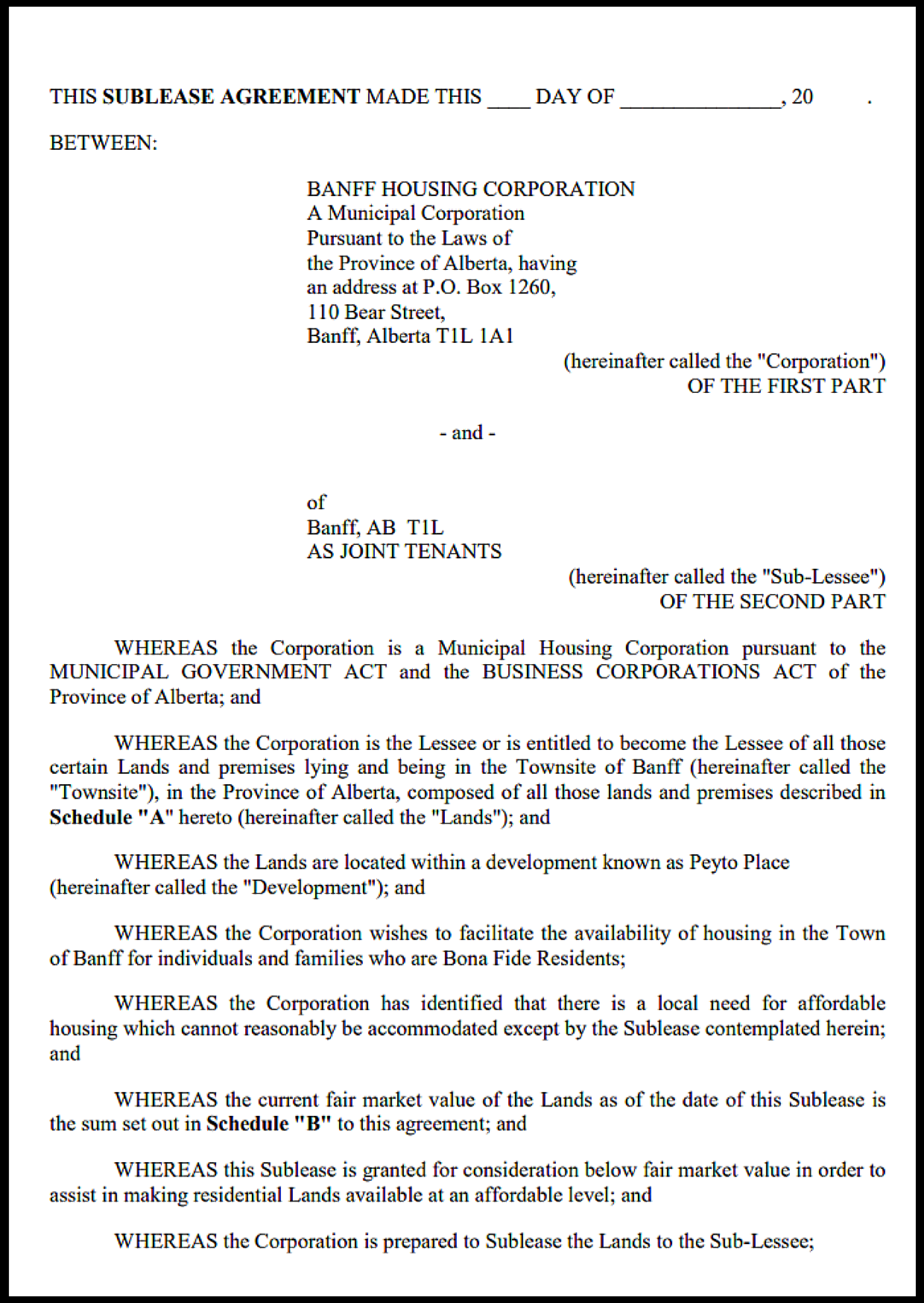
Free Alberta Sublease Agreement Template
Below is a simple and usable template made for Alberta tenants. You can copy and edit it based on your situation. Make sure you match it with your original lease terms.
Alberta Sublease Agreement Laws and Landlord Consent Rules
| Topic / Issue | Alberta Legal Rule | Governing Statute |
|---|---|---|
| Governing legislation | Alberta residential subleases are governed by provincial tenancy law, subject to the scope and exclusions of the legislation. | Residential Tenancies Act, SA 2004, c R-17.1 |
| Federal law | Residential tenancy regulation generally falls under provincial jurisdiction involving property and civil rights. Federal laws may still apply to specific issues. | Constitution Act, 1867, s. 92 |
| RTDRS filing fees | RTDRS charges $75 for claims of $7,500 or less and $150 for claims over $7,500. A separate $100 fee applies to certain counterapplications over $7,500. Check the current fee schedule before filing. | RTDRS Application Filing Fee |
| Who can sign | The original tenant (sublessor) and the subtenant (sublessee) enter into the sublease agreement. The landlord’s written consent is a separate legal requirement. | RTA, s. 22 |
| Witness requirements | The sources reviewed do not establish a special witness requirement for an ordinary residential sublease agreement. | No specific witness requirement identified |
| Notarization | Alberta’s published residential tenancy guidance does not require an ordinary residential sublease agreement to be notarized. | Alberta tenancy guidance |
| Capacity requirement | The age of majority in Alberta is 18. Contractual capacity and the enforceability of an agreement involving a minor may depend on the circumstances and applicable law. | Age of Majority Act, RSA 2000, c A-6 |
| Landlord consent deadline | If a landlord refuses a sublease request, the landlord must provide written reasons within 14 days after receiving the request. If there is no response within 14 days, the tenant may assume consent. | RTA, s. 22 |
| Recommended witness practice | Although a special witness requirement has not been identified for an ordinary residential sublease, keeping signed copies and written records can help prevent disputes about the agreement. | Practical record-keeping guidance |
| Mandatory statutory statement | A written residential tenancy agreement must include the statement required by the RTA in print larger than the other print in the agreement. | RTA, s. 3(2) |
| Condominium compliance | If the rental property is a condominium, review the condominium corporation’s bylaws and rules before entering into a sublease. | Condominium Property Act and applicable bylaws |
| Filing requirement | An ordinary residential sublease is generally a private agreement and does not normally require registration. | Applicable land titles requirements |
| Registration exception | A lease for a term exceeding three years may be registrable under Alberta land titles requirements. Whether a particular sublease can be registered depends on the underlying leasehold interest and registration rules. | Land Titles Act, RSA 2000, c L-4 |
| Written landlord consent requirement | A tenant must obtain the landlord’s written consent before subleasing the residential premises. A landlord may not refuse consent without reasonable grounds. | RTA, s. 22 |
| Unauthorized sublease consequences | An unauthorized sublease may put the original tenant in breach of the RTA. The landlord must follow the applicable statutory process before recovering possession. | RTA |
| Waiving tenant rights | A residential tenancy agreement cannot remove rights or protections provided by the RTA. | RTA, s. 3 |
| Security deposit limit | Alberta’s RTA limits a landlord’s security deposit to one month’s rent. The application of this limit to a deposit collected by an original tenant from a subtenant should be checked in the context of the sublease. | RTA, s. 43(1) |
| Deemed consent rule | If the landlord does not respond within 14 days after receiving the tenant’s request, the tenant may assume consent to the sublease. | RTA, s. 22 |
| Consent fee restriction | A landlord may not charge a fee for giving consent to a sublease or assignment. | RTA, s. 22 |
| RTDRS dispute process | Alberta’s Residential Tenancy Dispute Resolution Service provides an alternative to court for eligible residential tenancy disputes. | RTDRS jurisdiction rules |
One of the most important Alberta rules is the 14-day deemed consent rule. If a tenant requests permission to sublease and the landlord does not respond within 14 days after receiving the request, the tenant may assume consent. If the landlord refuses, written reasons must be provided within that period. This is an important protection for tenants, but it does not remove the need to make a proper request and keep a record of it.
Another important rule involves written landlord consent. A tenant must obtain the landlord’s written consent before subleasing the residential premises. A verbal conversation is not a substitute for the written consent required by Alberta law. A landlord may not refuse consent without reasonable grounds. If the landlord does not respond within 14 days, the tenant may assume consent under the RTA.
Security deposits also need careful attention. Alberta’s Residential Tenancies Act limits a landlord’s security deposit to one month’s rent. However, when an original tenant collects a deposit from a subtenant, the application of that limit should be considered in the context of the sublease. Avoid assuming that the original lease rent automatically determines the permitted deposit amount.
Download the free Alberta Sublease Agreement template to create a clear written record of the arrangement. Before signing, check the original tenancy agreement and obtain the landlord’s written consent or keep evidence of the request and the landlord’s response.
Understanding Subleasing in Alberta (Rules + Basics)
What Is a Sublease Agreement?
A sublease is when you, as a tenant, allow another person to live in your rented property temporarily while your original lease is still active. The key point under Alberta law is that your agreement with the landlord does not end simply because you have arranged a sublease.
A sublease involves the landlord, the original tenant, and the subtenant. You remain the tenant under your original Alberta tenancy agreement, while the subtenant rents from you for a temporary period. The landlord’s written consent is required under Alberta’s Residential Tenancies Act. You may also remain responsible for obligations under the original agreement, even while the subtenant occupies the property.
When Should You Use a Sublease Agreement?
In Alberta, a sublease can be useful when you need to leave your rental temporarily but intend to return before your original tenancy ends. It can help you avoid ending your tenancy simply because you need to be away for a limited period.
You can use it when:
- You are moving temporarily for work or studies
- You are travelling for a few months
- You want help with rent payments while you are away
- You are leaving during a fixed period, such as summer break
For example, a student in Edmonton may go home for the summer. Instead of leaving the apartment empty, the student may arrange a temporary sublease with another student. The original tenancy remains in place, and the student intends to return when the sublease ends. The landlord’s consent must still be addressed before the subtenant moves in.
Is Subleasing Legal in Alberta?
Yes, subleasing is legal in Alberta, but tenants must follow the Residential Tenancies Act.
Under Alberta law:
- You must obtain your landlord’s written consent before subleasing.
- The landlord may not refuse consent without reasonable grounds.
- If the landlord refuses, the landlord must provide written reasons within 14 days after receiving your request.
- If the landlord does not respond within 14 days, you may assume consent.
- A written sublease agreement is recommended to record the terms and responsibilities.
If you sublease without the landlord’s written consent, you may breach Alberta’s Residential Tenancies Act. The landlord may pursue the remedies available under the Act, but must follow the applicable legal process. You may also remain responsible for obligations under your original tenancy agreement if the subtenant fails to pay rent or causes damage.
A sublease agreement allows an existing tenant to rent out the property to another party temporarily while maintaining the original tenancy. The arrangement should be consistent with the primary lease contract.
Key Elements of a Valid Alberta Sublease Agreement
A strong sublease agreement should clearly explain all important details so there is less confusion later. It should also be consistent with the original tenancy agreement and the landlord’s consent.
Parties Involved
Include the full legal names and contact addresses of both the original tenant and the subtenant. Clearly identify who is the sublessor and who is the sublessee. This makes it easier to understand who is responsible for each obligation and who should receive notices about the sublease.
Property Details
The agreement should clearly mention the full address of the rental property. Include the unit number and any additional areas that are part of the arrangement, such as a parking space, storage area, or furnished room.
If furniture or appliances are included, list them in an inventory. This can help avoid disagreements about missing or damaged items when the sublease ends.
Rent and Payment Terms
Write the rent amount, due date, payment method, and any agreed payment arrangements clearly. Explain whether utilities, internet, parking, or other costs are included or paid separately.
If the sublease includes late-payment charges, make sure the amount and circumstances are clearly stated. Do not assume that every late fee is automatically enforceable; its validity may depend on the agreement and applicable law.
Duration of Sublease
The start and end dates must be clearly defined. A sublease is temporary and cannot extend beyond the original tenant’s leasehold interest. The original tenant generally intends to return to the premises when the sublease ends.
Check the end date against your original tenancy agreement. Do not promise the subtenant a period longer than the tenancy rights you actually hold.
Security Deposit Rules
Alberta’s Residential Tenancies Act limits a landlord’s security deposit to one month’s rent. When an original tenant collects a deposit from a subtenant, the application of the statutory limit should be checked in the context of the sublease and the rent payable under that agreement.
If a deposit is collected, clearly state the amount, the purpose of the deposit, the conditions for deductions, and how it will be returned. Keep a written record of the payment and the property’s condition at the beginning and end of the sublease.
Landlord Consent Clause
This is one of the most important parts. A tenant must obtain the landlord’s written consent before subleasing the residential premises. Keep a copy of the consent with the signed sublease agreement.
If the landlord does not respond within 14 days after receiving the request, Alberta law allows the tenant to assume consent. Keep evidence showing when the request was delivered and what was sent.
Responsibilities & Restrictions
The subtenant should agree to follow the applicable terms of the original lease and any properly provided property rules. These may include respecting neighbours, keeping the premises reasonably clean, avoiding illegal activity, and following parking or building rules.
Explain who is responsible for utilities, routine maintenance, reporting repairs, and damage caused during the sublease. Make sure these responsibilities do not conflict with the original tenancy agreement.
A sublease is often used in shared housing setups along with a roommate agreement. Payment tracking can still be managed using a rent receipt template.
How to Fill Out the Alberta Sublease Agreement (Step-by-Step)
Start by sending your landlord a written request for consent. Keep a copy and record when it was received, because Alberta’s 14-day response rule runs from receipt of the request. If the landlord refuses, the written reasons should be provided within that period. If there is no response within 14 days, you may assume consent under the RTA.
Once consent is obtained or may legally be assumed, review your original lease and identify the terms the subtenant must follow. Check for restrictions about occupants, pets, parking, utilities, and use of shared spaces. Do not include terms that conflict with the original agreement or Alberta law.
Next, set out the sublease dates, rent, payment method, deposit, utilities, maintenance duties, and responsibility for damage. Make sure the sublease ends within the term of your original tenancy. Include an inventory or condition report if furniture or appliances are being provided.
Finally, both you and the subtenant should sign the agreement and keep a copy. Keep the landlord’s written consent or records of the request and response with your documents. These records can help if a dispute arises later.
Sublease vs Assignment (Don’t Confuse These)
Many tenants think a sublease and an assignment are the same, but they are different arrangements.
| Feature | Sublease | Assignment |
| Tenancy arrangement | Original tenant remains the tenant under the original agreement. |
Tenancy interest is transferred to another person.
|
| Original tenant’s intention | Usually intends to return to the premises. |
Usually intends to leave permanently.
|
| Duration | Temporary arrangement within the original tenancy. |
New tenant takes over the tenancy interest.
|
| Original tenant’s involvement | Remains connected to the original tenancy. |
Steps away from the premises, subject to any continuing legal obligations.
|
| Landlord consent | Written consent is required under the RTA. |
Written consent is required under the RTA.
|
In a sublease, you intend to return to the rental premises and remain the tenant under the original agreement. In an assignment, you transfer your tenancy interest to another person rather than temporarily renting the premises while you are away. Do not assume an assignment automatically releases you from every possible obligation. The agreement and circumstances matter.
Common Mistakes to Avoid
Before the subtenant moves in, check that you have dealt with the landlord-consent requirement under section 22 of Alberta’s Residential Tenancies Act. Keep the written consent or your records of the request and the landlord’s response. Also check the original lease, agree on the sublease dates and rent, and document the condition of the premises. These steps make it easier to deal with disputes about payment, damage, or the end of the sublease.
Other common mistakes include:
- Not using a written agreement
- Taking a deposit without checking the applicable legal limit
- Not checking the subtenant’s references or suitability
- Ignoring original lease rules
- Failing to record the property’s condition
- Leaving utilities and other expenses unclear
Even a simple mistake like unclear rent terms can cause disputes later.
Legal Risks of Subleasing Without Permission
Subleasing without the landlord’s written consent can put you in breach of Alberta’s Residential Tenancies Act. The landlord may pursue the remedies available under the Act, but must follow the applicable legal process. The original tenant may also remain responsible for obligations under the original tenancy agreement. The outcome depends on the circumstances, the agreements, and the steps taken by the landlord.
Here are some possible risks:
| Risk Type |
What Can Happen
|
| Breach of tenancy agreement |
The landlord may take action under the RTA if the sublease was arranged without required consent.
|
| Possession proceedings |
The landlord may seek possession through the applicable legal process if the statutory requirements are met.
|
| Financial loss |
The original tenant may remain responsible for rent and other obligations under the original tenancy agreement.
|
| Property damage |
The original tenant may face a claim under the original tenancy agreement for damage caused during the sublease, depending on the circumstances.
|
If the subtenant stops paying rent or damages the property, the original tenant may still have obligations to the landlord under the original tenancy agreement. The sublease should clearly explain the subtenant’s responsibilities and how disputes will be handled.
Real-Life Example
Imagine a tenant living in Calgary who gets a three-month work opportunity in another city. Instead of ending the lease, they decide to sublease the apartment.
In a safer arrangement, the tenant sends a written request to the landlord and keeps proof of when it was received. The landlord provides written consent, and the tenant signs a sublease that ends before the original tenancy does. The agreement records the rent, deposit, utilities, and property condition. The tenant keeps copies of the agreement and consent before leaving.
In a more difficult situation, the tenant lets someone move in without obtaining the required consent and has no written record of the arrangement. That can create a dispute about unauthorized occupancy, rent, damage, and the tenant’s continuing obligations. This is why it is important to follow the consent process and keep clear records.
FAQs About Alberta Sublease Agreement
Do I need landlord permission to sublease in Alberta?
Yes. Alberta’s Residential Tenancies Act requires the tenant to obtain the landlord’s written consent before subleasing. A landlord may not refuse consent without reasonable grounds. If the landlord refuses, written reasons must be provided within 14 days after receiving the request. If there is no response within 14 days, the tenant may assume consent.
Can I charge higher rent to a subtenant?
The sublease rent should be clearly stated in the agreement. Do not assume that charging more than your own rent is automatically permitted or prohibited in every situation. Consider the original tenancy agreement, the terms of the sublease, and applicable law. If you are unsure, obtain Alberta legal advice before setting the amount.
Who is responsible for damages?
The original tenant may remain responsible to the landlord under the original tenancy agreement, even if the subtenant caused the damage. The subtenant may also have responsibilities to the original tenant under the sublease. The result depends on the agreements and the circumstances, so document the property’s condition before and after the sublease.
Can a landlord refuse subleasing?
A landlord may refuse consent only on reasonable grounds. If the landlord refuses, the landlord must provide written reasons within 14 days after receiving the tenant’s request. If the landlord does not respond within 14 days, the tenant may assume consent under Alberta’s Residential Tenancies Act.
Is a verbal sublease agreement valid?
A verbal agreement may create contractual obligations in some circumstances, but it is risky because it can be difficult to prove the agreed terms. A written sublease is strongly recommended. It should record the rent, dates, deposit, responsibilities, and property rules. Remember that the landlord’s written consent is a separate requirement under Alberta’s Residential Tenancies Act.