British Columbia Lease Agreement Laws Free Guide
British Columbia Lease Agreement Laws explain how renting works in BC and what both landlords and tenants must follow under the law. If you’re renting or leasing in BC, this guide will help you stay safe and legal.
In simple terms, these laws protect both sides. I’ve seen rental disputes in British Columbia turn serious very quickly because the lease left out important terms or didn’t follow the Residential Tenancy Act properly. Many first-time landlords and tenants assume a verbal agreement is enough, but in real cases, that mistake often leads to deposit fights, unpaid rent issues, or eviction problems later.
Tenants get safe housing and fair treatment, while landlords get clear rules for rent, deposits, and property use. In this guide, you’ll learn the key rules, your rights, required clauses, and common mistakes to avoid.
Last Updated: August 2026
British Columbia Lease Agreement Rules Every Landlord and Tenant Should Know
| Topic / Issue | British Columbia Legal Rule | Governing Statute |
|---|---|---|
| Governing legislation | Residential lease agreements in BC are governed by the Residential Tenancy Act and Residential Tenancy Regulation when the tenancy is covered by those laws. | Residential Tenancy Act [SBC 2002] c. 78; Residential Tenancy Regulation |
| Federal law | Residential tenancy regulation is primarily a provincial matter in British Columbia, although federal laws can apply to particular issues. | Constitution Act, 1867 |
| 2024 amendments | BC’s 2024 tenancy-law changes changed certain landlord-use termination rules, introduced generated notices for specified notices, and affected when a fixed-term agreement may require a tenant to vacate at the end of the term. | Residential Tenancy Act amendments |
| Who can legally sign | The landlord and tenant, or their properly authorized representatives, may enter into and sign the tenancy agreement. | Residential Tenancy Act |
| Witness requirements | The Residential Tenancy Act does not prescribe a witness-signature requirement for an ordinary written residential tenancy agreement. | Residential Tenancy Act |
| Notarization | The Residential Tenancy Act does not require an ordinary residential tenancy agreement to be notarized. | Residential Tenancy Act |
| Age requirement | A person who has not reached 19 years of age may enter into a tenancy agreement, and the agreement and the Residential Tenancy Act and regulations are enforceable by and against that person. | Residential Tenancy Act, s. 3 |
| Mental capacity | The parties should have the legal capacity required to enter into the tenancy agreement. | General contract law |
| Signed copy deadline | Within 21 days after entering into a tenancy agreement, the landlord must give the tenant a copy of the agreement. | Residential Tenancy Act, s. 13(3) |
| Standard terms requirement | BC tenancy agreements are subject to the standard terms prescribed by the Residential Tenancy Regulation, and the landlord must ensure the tenancy agreement contains those standard terms. | Residential Tenancy Act, ss. 12–13; Residential Tenancy Regulation |
| Deposit clauses | A written tenancy agreement must state the amount of any security deposit or pet damage deposit and the date it was or must be paid. | Residential Tenancy Act, s. 13 |
| Rent increase clauses | The tenancy agreement must set out the applicable rent terms, while any rent increase must comply separately with Part 3 of the Residential Tenancy Act. | Residential Tenancy Act, ss. 41–43 |
| Assignment and subletting terms | The tenancy agreement must set out the applicable agreed terms concerning assignment or subletting, subject to the Residential Tenancy Act. | Residential Tenancy Act |
| Required lease information | A written tenancy agreement must include the correct legal names of the landlord and tenant, the rental-unit address, the date the agreement is entered into, the tenancy start date, and the landlord’s address for service and telephone number, along with other particulars required by the Act. | Residential Tenancy Act, s. 13 |
| Mandatory landlord-use forms | Certain landlord-use notices must be generated using the provincial system and the applicable prescribed form or process; the requirement depends on the statutory ground. | Residential Tenancy Act; Residential Tenancy Regulation |
| Filing requirement | Ordinary residential tenancy agreements do not require government registration merely because the tenancy is created. | Residential tenancy framework |
| RTB dispute evidence | A tenancy agreement may be submitted as evidence in a Residential Tenancy Branch dispute when it is relevant to the issues being decided. | Residential Tenancy Branch procedures |
| Illegal waiver clauses | A tenancy term cannot be used to avoid or contract out of the Residential Tenancy Act or regulations. | Residential Tenancy Act, s. 5 |
| Unconscionable terms | A term of a tenancy agreement may be unenforceable if it is unconscionable under the Residential Tenancy Act and Residential Tenancy Regulation. | Residential Tenancy Act, s. 6; Residential Tenancy Regulation, s. 3 |
| Invalid vacate clauses | A fixed-term tenancy agreement may require the tenant to vacate at the end of the term only in circumstances permitted by the Residential Tenancy Act and regulations. | Residential Tenancy Act, s. 44; Residential Tenancy Regulation, s. 13.1 |
| Minor tenancy contracts | BC expressly allows a person under 19 to enter into a tenancy agreement, and the agreement and applicable tenancy legislation are enforceable by and against that person. | Residential Tenancy Act, s. 3 |
| Pet damage deposits | A landlord may require a pet damage deposit only where permitted by the Residential Tenancy Act, and the amount cannot exceed one-half of one month’s rent. | Residential Tenancy Act, s. 18 |
| RTB administrative oversight | BC uses a formal RTB dispute and direct request process for many tenancy matters. | Residential Tenancy Branch system |
British Columbia’s general age of majority is 19, but that does not mean a person must be 19 to enter a tenancy agreement. Section 3 of the Residential Tenancy Act expressly permits a person under 19 to enter into a tenancy agreement and makes the agreement and applicable tenancy legislation enforceable by and against that person.
Another important rule is that BC tenancy agreements are subject to prescribed standard terms. Section 13 of the Residential Tenancy Act and section 13 of the Residential Tenancy Regulation require landlords to ensure the standard terms are included. A customized or incomplete form does not allow a landlord to contract out of the Act.
The rules around landlord-use notices also require care after the 2024 changes. Certain landlord-use notices must be generated through the provincial system, and the applicable notice period depends on the statutory ground. For example, the Residential Tenancy Regulation prescribes a three-month period for notices under sections 49(3), (4), and (5), while section 49 provides a four-month default in other circumstances.
Mistakes such as prohibited move-out clauses, unconscionable terms, or rent increases that do not follow the statutory rules can lead to disputes. The free British Columbia Lease Agreement template can help record the agreed terms, but the completed agreement should be checked against the current Residential Tenancy Act and regulations.
Understanding provincial tenancy rules can help both landlords and tenants avoid disputes related to rent payments, occupancy rights, deposits, and notice requirements. Anyone preparing housing documents should also review the British Columbia lease agreement template guide to see how these legal requirements are commonly applied in real rental contracts.
What Are Lease Agreement Laws in British Columbia?
Under British Columbia law, covered residential tenancy agreements are governed by the Residential Tenancy Act and the Residential Tenancy Regulation. The Act applies to most ordinary residential rental arrangements, subject to its statutory exclusions.
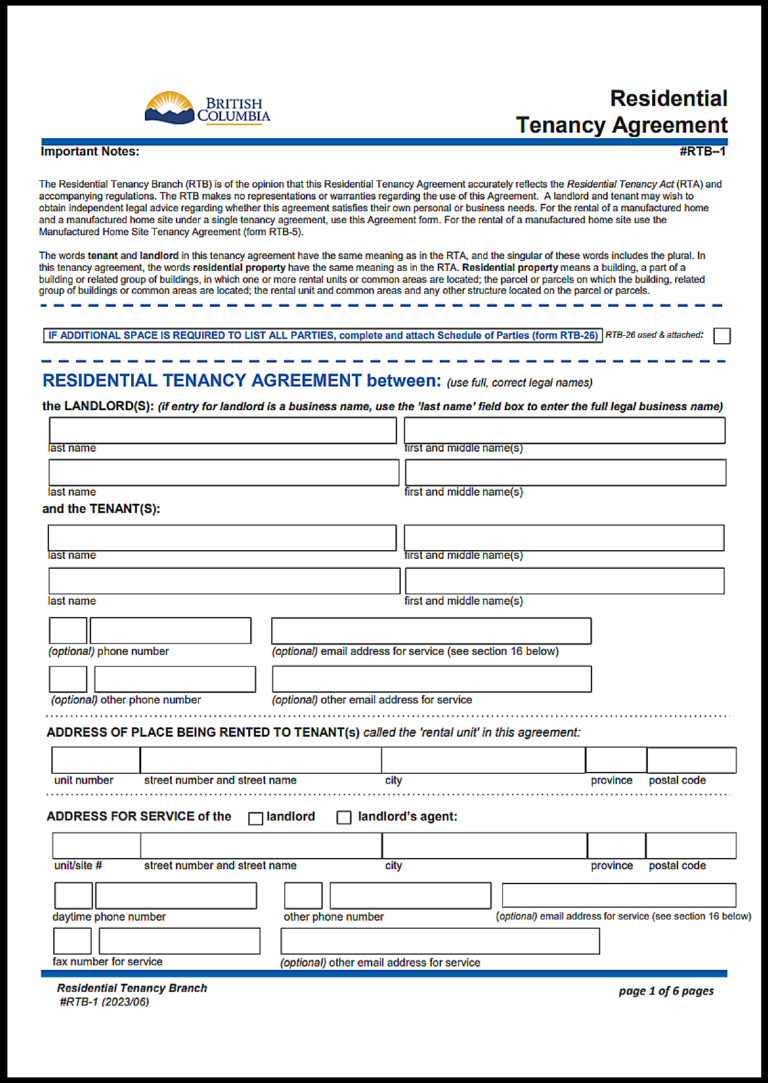
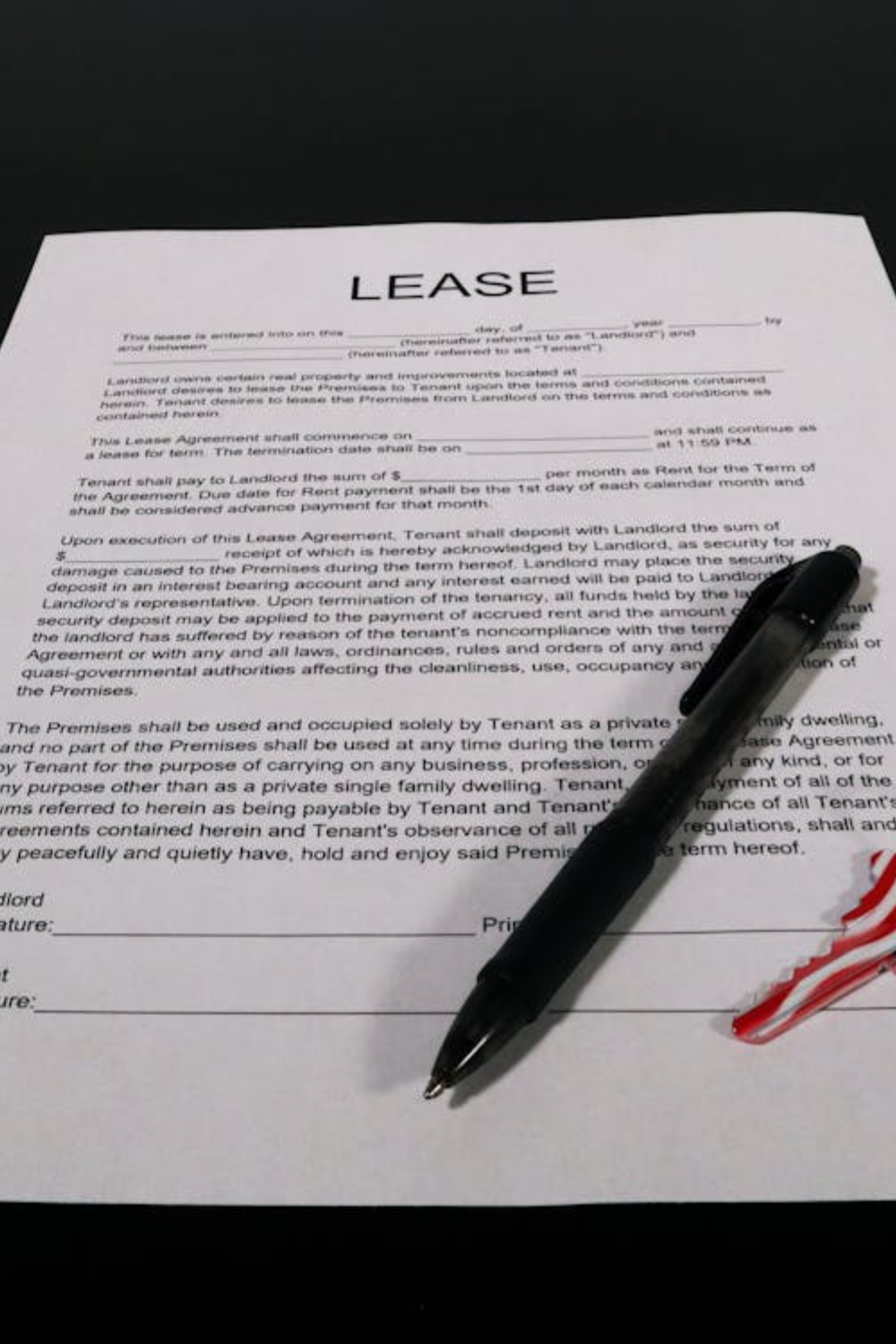
A tenancy agreement sets out the contractual terms between a landlord and tenant, including rent, payment dates, services and facilities, and other agreed conditions. The Residential Tenancy Act requires landlords to prepare tenancy agreements in writing, and section 13 sets out the information that must be included.
Some key points to understand:
- Written agreements provide clear proof
- Verbal agreements can lead to disputes
- The Act can apply where a tenancy falls within its scope
If you are new to renting, you can also see our month-to-month rental British Columbia guide for simpler agreements.
These laws affect many stages of the tenancy process, including tenant screening, rent collection, and lease renewals. Property owners often rely on documents such as a tenant application form before approving occupants and later maintain records using a formal payment receipt document throughout the tenancy.
When These Laws Apply (And When They Don’t)
These laws apply to most ordinary residential rental situations. If you rent a house, apartment, or qualifying basement suite, the Residential Tenancy Act generally applies unless a statutory exclusion applies.
Covered situations include residential rentals, fixed-term leases, and month-to-month agreements. These are the most common types of rentals in British Columbia.
There are statutory exclusions. For example, the Residential Tenancy Act does not apply to certain accommodation arrangements, including living accommodation where the tenant shares bathroom or kitchen facilities with the owner.
For example, a separate basement suite may be covered by the Act if it otherwise meets the definition of a tenancy. By contrast, where the tenant shares bathroom or kitchen facilities with the owner, section 4(c) excludes that accommodation from the Act.
Key Rules Every Lease Must Follow in BC
British Columbia has statutory rules governing covered residential tenancy agreements. These rules set requirements for rent, deposits, entry, repairs, ending tenancies, and other landlord and tenant obligations.
Rent Rules
Rent increases are regulated under Part 3 of the Residential Tenancy Act. A landlord cannot increase rent whenever they choose; the timing, notice, form, and amount must comply with the Act.
- A rent increase generally cannot take effect until at least 12 months have passed since the rent was first payable or the last lawful increase
- The landlord must give at least 3 months’ notice using the approved form
- The amount must comply with the permitted increase rules
Security Deposit Laws
Security deposits are strictly regulated. A landlord must not require or accept a security deposit greater than one-half of one month’s rent.
- Maximum deposit = one-half of one month’s rent
- The statutory 15-day period generally runs from the later of the tenancy ending and the landlord receiving the tenant’s forwarding address in writing
- Deductions and claims against a deposit are subject to the Residential Tenancy Act
Lease Duration Rules
Lease duration depends on the type of tenancy. A fixed-term tenancy has a stated end date, while a periodic tenancy continues until it is ended in accordance with the Residential Tenancy Act.
- Fixed-term tenancies have a stated term
- A fixed-term tenancy can become month-to-month under the conditions in section 44(3)
- Proper statutory notice is required where notice is required to end the tenancy
Required Terms in a Lease
Section 13 of the Residential Tenancy Act requires written tenancy agreements to include specific information and standard terms. Missing required particulars can create compliance and proof issues.
- Names of landlord and tenant
- Rent amount and due date
- Property details
- Required tenancy terms and conditions
Provincial regulations also control how landlords handle tenancy changes and disputes after occupancy begins. Depending on the situation, parties may need documents like a notice for rental price adjustments or a formal eviction notice that follows legal notice requirements.
Tenant Rights Under BC Lease Laws
Tenants in British Columbia have statutory rights under the Residential Tenancy Act, including rights relating to quiet enjoyment, reasonable privacy, repairs and maintenance, and lawful termination.
Tenants are entitled to quiet enjoyment, including reasonable privacy, freedom from unreasonable disturbance, and exclusive possession subject to the landlord’s lawful right of entry. Landlords must also comply with the statutory requirements for repairs, maintenance, and ending a tenancy.
Some important rights include:
- At least 24 hours and not more than 30 days’ written notice for most landlord entries, with a reasonable purpose and entry time between 8 a.m. and 9 p.m.
- A rental unit maintained according to the landlord’s statutory obligations
- Protection from termination except where the Act provides a lawful ground and procedure
Except where an exception applies, a landlord must give the required written notice before entering a rental unit. Section 29 also sets the required purpose and entry-time rules.
Landlord Rights and Responsibilities
Landlords have rights under the Residential Tenancy Act, including the right to collect rent and enter a rental unit in circumstances permitted by law. Those rights must be exercised in accordance with the Act and the tenancy agreement.
Landlords have statutory obligations concerning repairs and maintenance and must follow the applicable process when ending a tenancy. A landlord cannot simply require a tenant to leave without relying on a lawful ground and following the required procedure.
- Can collect rent as agreed
- Must maintain the property
- Must follow legal eviction process
- Cannot remove tenants without relying on a lawful ground and following the required procedure
You can also check our British Columbia eviction notice guide for more details.
Mandatory Clauses in a BC Lease Agreement
A proper lease agreement must include certain information and applicable standard terms. These terms help avoid confusion and document the tenancy properly.
Rent & Payment Terms
This section explains how much rent is paid, when it is due, and how it should be paid.
Deposit Conditions
This explains how the security deposit is handled and when it will be returned.
Property Use Rules
This includes rules about pets, smoking, and guests, subject to the Residential Tenancy Act.
Repair & Maintenance Terms
This defines the responsibilities of the landlord and tenant for repairs and maintenance, subject to the Act and tenancy agreement.
Termination Conditions
This explains how the tenancy can end and what notice and statutory requirements apply.
How to Write a Legal Lease Agreement in BC
Writing a residential tenancy agreement starts with the information required by section 13 of the Residential Tenancy Act and the standard terms prescribed by the Residential Tenancy Regulation.
Start with the correct legal names, rental-unit address, landlord contact information, tenancy start date, rent, due date, included services and facilities, deposit details, and other information required by section 13. Then review the standard terms and any additional terms for compliance with BC law.
Before signing, review everything carefully to avoid mistakes. Once signed, both parties should keep a copy for future reference.
Steps to follow:
- Add accurate names and contact details
- Define rent and payment method clearly
- Include all required clauses
- Review before signing
- Keep signed copies
You can also compare with our British Columbia roommate agreement guide for shared rentals.
Common Mistakes That Can Make a Lease Invalid
Some drafting mistakes can create compliance problems or make particular terms unenforceable. It is worth checking the agreement carefully before signing.
Common mistakes include charging more than the permitted deposit, omitting required tenancy information, using an invalid term that contracts out of the Act, or imposing a rent increase without following Part 3 of the Residential Tenancy Act.
- Charging more than allowed deposit
- Missing important terms
- Illegal clauses in agreement
- Ignoring rent increase rules
For example, if a landlord requires a security deposit greater than one-half of one month’s rent, the tenant can challenge the amount under the Residential Tenancy Act.
Legal Risks If You Don’t Follow BC Lease Laws
Failing to follow the Residential Tenancy Act can lead to disputes, applications to the Residential Tenancy Branch, monetary orders, or other legal consequences depending on the issue.
Possible consequences include landlord-tenant disputes, monetary orders, cancelled or ineffective notices, and terms that are unenforceable because they conflict with the Act or are otherwise unlawful.
- Disputes between landlord and tenant
- Monetary orders or other remedies where authorized by law
- Invalid or unenforceable tenancy terms
- Applications or complaints through the appropriate legal or administrative process
Following the current Act and regulations helps both parties understand their rights and reduces avoidable disputes.
Fixed-Term vs Month-to-Month Lease (Quick Comparison)
| Feature | Fixed-Term Lease |
Month-to-Month Lease
|
| Duration | Fixed period | Ongoing |
| Flexibility | Lower | Higher |
| Rent Stability | Defined term, subject to statutory rules |
Subject to statutory rules
|
| Ending Lease | Governed by fixed-term and statutory rules |
Governed by periodic-tenancy notice rules
|
Real-Life Example of BC Lease Laws in Action
Consider a situation where a landlord attempts to increase rent without complying with the required timing and notice rules. The tenant disputes the increase.
Under BC law, a landlord must generally wait at least 12 months between rent increases and give at least 3 months’ notice using the approved form. A non-compliant notice does not take effect until the earliest date that complies with the statutory rules.
The tenant can dispute the increase through the appropriate Residential Tenancy Branch process, and the effective date or amount may have to be adjusted to comply with the Act.
FAQs About British Columbia Lease Agreement Laws
Is a written lease required in BC?
The Residential Tenancy Act requires landlords to prepare covered tenancy agreements in writing, and section 13 sets out the information that must be included. A written agreement also gives both parties a clear record of the tenancy terms.
Can a landlord increase rent anytime?
No. A landlord generally must wait at least 12 months between increases and give at least 3 months’ notice using the approved form. The amount must also comply with the applicable BC rules. For 2026, the standard annual rent increase limit is 2.3%.
What happens if there is no lease?
The Residential Tenancy Act can apply where a tenancy falls within the Act, and the Act requires landlords to prepare covered tenancy agreements in writing. A dispute about whether an arrangement is a tenancy can depend on the actual circumstances.
Can a tenant break a lease early?
Sometimes. A tenant’s ability to end a tenancy early depends on the type of tenancy, the agreement, and any applicable statutory right. Ending a fixed-term tenancy early can result in compensation unless a lawful exception or agreement applies.
How much deposit can be charged?
A landlord must not require or accept a security deposit greater than one-half of one month’s rent.