How to Write Lease Agreement British Columbia? Free Guide
How to Write Lease Agreement British Columbia is an important step when renting a property. A lease agreement is a legal contract between a landlord and a tenant. It explains rent, rules, and responsibilities in a clear way.
If you write it wrong, it can cause legal problems or disputes. I’ve seen landlords in British Columbia run into expensive disputes because they copied lease terms from other provinces or added rules that are not enforceable under the Residential Tenancy Act. When someone is renting out a property for the first time, even a small mistake in the lease can create problems with deposits, notice periods, or tenant rights later on
Under British Columbia law, some clauses are not allowed, and adding them can make your agreement invalid. That’s why it is important to follow the correct format.
In this article, you will get a simple step-by-step explanation, a free template, and practical tips so you can write your lease easily and safely.
British Columbia Lease Agreement Rules, Mandatory Clauses, and Invalid Terms
| Topic / Issue | British Columbia Legal Rule | Governing Statute |
|---|---|---|
| Primary governing law | Residential lease agreements in BC are governed under provincial tenancy law. | Residential Tenancy Act [SBC 2002] c. 78 |
| Regulation authority | Residential tenancy rules and mandatory lease terms are further governed by provincial regulations. | Residential Tenancy Regulation |
| Federal law involvement | Residential tenancy agreements are strictly provincial matters in British Columbia. | Constitution Act, 1867 jurisdiction principles |
| Recent amendments | BC updated tenancy regulations in 2024, 2025, and April 7, 2026 regarding affordable housing eligibility and supportive housing safety rules. | Residential Tenancy Regulation amendments |
| Who can sign | The landlord or agent and every tenant living in the rental unit must sign the lease. | RTA, s. 13(2)(g) |
| Witness requirements | BC law does not require lease witnesses. | Common law principles |
| Notarization requirement | Notarization is not legally required for residential leases. | Common law principles |
| Minor tenants | A person under 19 years old can legally sign a residential tenancy agreement in BC. | RTA, s. 3 |
| Deadline for landlord copy | The landlord must provide the tenant with a signed copy within 21 days. | RTA, s. 13(3) |
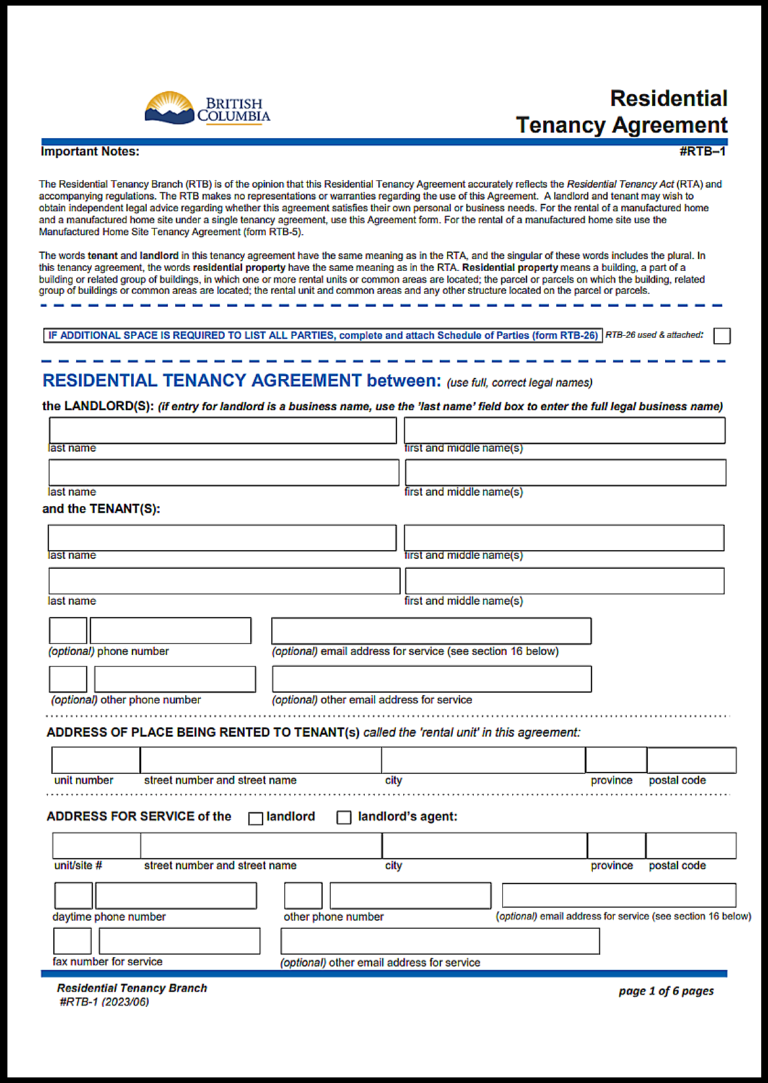
| Mandatory standard terms | Every tenancy agreement must include the legally required Schedule of Standard Terms. | RTA, s. 12 & s. 13; Residential Tenancy Regulation Part 2 |
| Required landlord and tenant names | The agreement must include the legal names of both landlord and tenant. | RTA, s. 13 |
| Rental unit address requirement | The lease must contain the full address of the rental property. | RTA, s. 13 |
| Landlord contact requirement | The agreement must include the landlord or agent’s address and phone number for service. | RTA, s. 13 |
| Tenancy term requirement | The lease must state the tenancy start date and whether it is fixed-term or monthly. | RTA, s. 13 |
| Rent details requirement | The agreement must clearly state the rent amount and due date. | RTA, s. 13 |
| Services and facilities requirement | Included services such as heat, water, or parking must be listed in the lease. | RTA, s. 13 |
| Deposit disclosure requirement | The agreement must state the amount and payment date of security or pet deposits. | RTA, s. 13 |
| Filing requirement | Standard residential leases do not need to be filed or registered with the government. | BC residential tenancy rules |
| Commercial/long-term lease exception | Commercial leases or residential leases over 20 years may require Land Title Office registration. | Land Title Office BC rules |
| Illegal fixed-term vacate clauses | Clauses automatically forcing tenants to move out after a fixed term are generally void unless specific occupancy exceptions apply. | RTA, s. 44; Regulation, s. 13.1 |
| Excessive security deposits | Security deposits greater than one-half of one month’s rent are unenforceable for the excess amount. | RTA, s. 19 |
| Contracting out prohibition | Any lease clause that removes or avoids tenant rights under the Act is legally void. | RTA, s. 5 |
| BC rule for minor tenants | Unlike many provinces, BC tenancy agreements are legally binding on minors. | RTA, s. 3 |
| Pet damage deposits | BC landlords may legally charge a separate pet damage deposit up to one-half month’s rent. | RTA, s. 18 |
| Rent increase notice rule | BC landlords must provide 3 full months’ notice using an approved RTB form for rent increases. | RTA, s. 42 |
One of the most surprising British Columbia rules is that even minors can legally sign a tenancy agreement. Under BC law, a 17- or 18-year-old tenant is still legally bound by the lease terms, which is very different from many other provinces where contracts involving minors can be challenged more easily.
Another major rule involves illegal lease clauses. Many landlords incorrectly add automatic “move-out” terms at the end of fixed leases, but BC law makes many of these clauses void unless very specific family occupancy exceptions apply. The law also prevents landlords from removing tenant rights through custom lease wording. Even if both sides sign the agreement, clauses that violate the Residential Tenancy Act are not enforceable.
Deposit rules are also strict in BC. Charging more than half of one month’s rent as a security deposit can create legal problems and repayment disputes. These rules matter in real life because an invalid lease clause can lead to Residential Tenancy Branch disputes, financial penalties, delayed evictions, or unenforceable agreements. Download the free BC lease agreement template below to create a rental agreement that follows British Columbia legal requirements properly.
Writing a clear rental contract starts with outlining important tenancy details such as rent amounts, lease duration, utility responsibilities, and occupancy rules. Property owners who need a working example can review the British Columbia residential lease template to better understand how these sections are commonly formatted.
What Is a Lease Agreement in British Columbia?
A lease agreement is a written contract between landlord and tenant. It covers rent, rules, and rights of both sides. In most rental situations, it applies to apartments, houses, and even basement rentals.
Under Residential Tenancy Act, every lease must follow certain rules. Even if something is written in the lease, it cannot go against the law. This is why writing it correctly is very important.
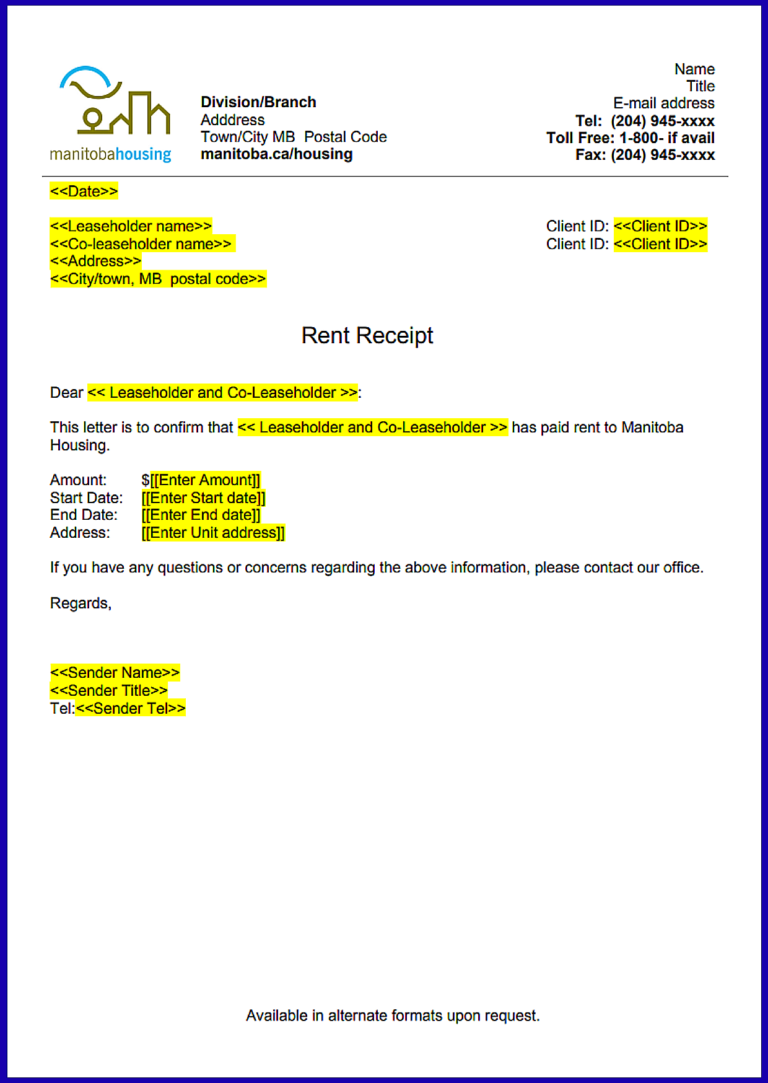
Before finalizing the agreement, many landlords collect background details through a tenant screening and application form to verify employment history and previous rental references. Once the tenancy begins, documents like a written payment confirmation record can help maintain organized rental records for both parties.
When Do You Need to Write a Lease Agreement?
You need to write a lease agreement in many common situations. It is not only for new rentals but also for updates or changes.
- Renting a new property to a tenant
- Adding a new tenant to an existing lease
- Renewing or changing lease terms
- Renting a basement or shared space
In real life, many disputes happen because people skip writing a proper agreement. Even a simple written lease can prevent future problems.
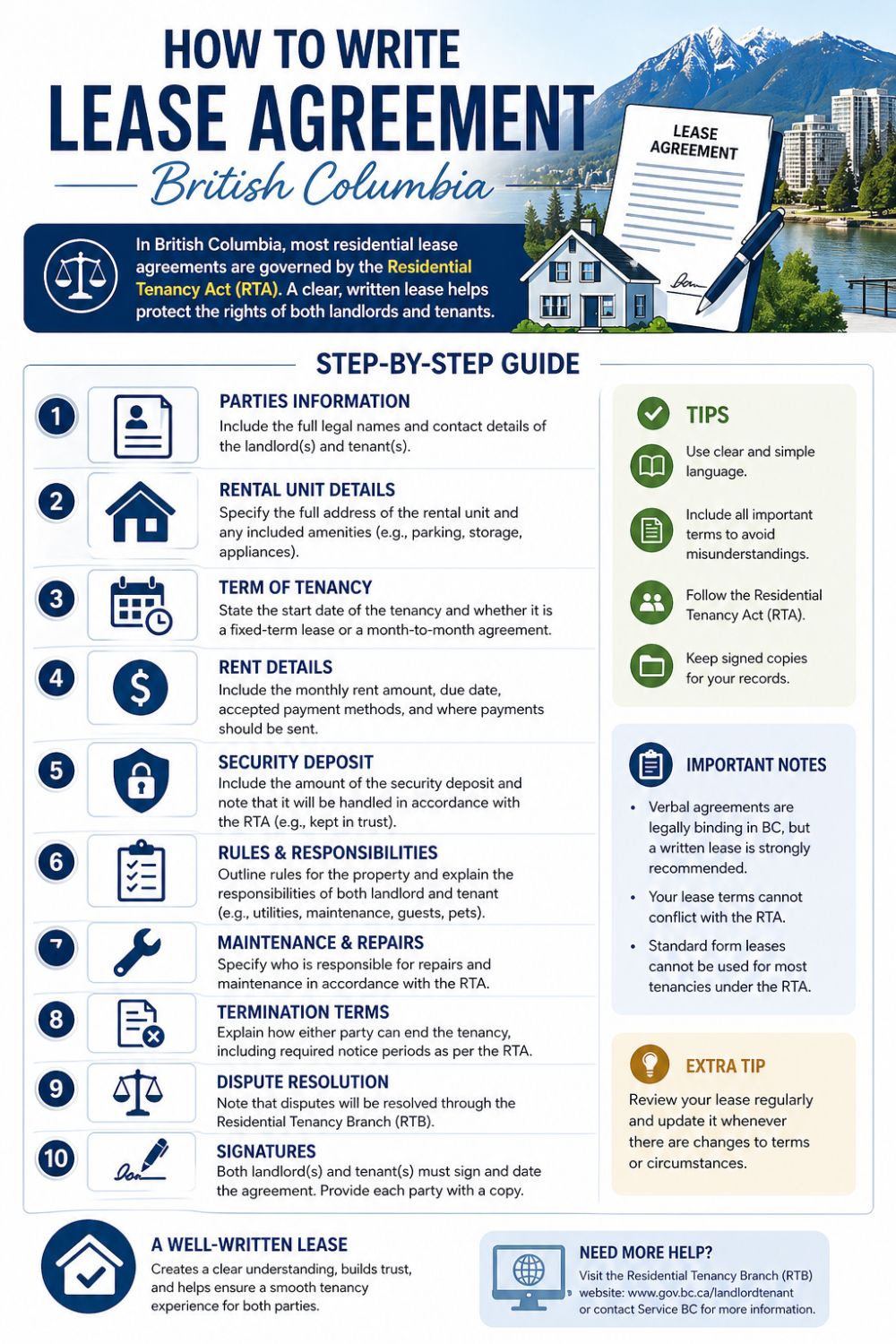
Key Sections You Must Include (Step-by-Step Writing Guide)
Landlord and Tenant Information
Start by writing full legal names of both landlord and tenant. Do not use nicknames or short names because they can create confusion later. Correct identification helps in legal matters if any dispute happens.
Property Description
Clearly mention the full address of the rental unit. Add details like unit number, basement, or shared space. If parking or storage is included, write that as well. This avoids misunderstandings later.
Lease Term (Fixed vs Month-to-Month)
There are two types of lease terms. A fixed-term lease has a start and end date, while a month-to-month lease continues until notice is given.
Fixed-term leases give more stability, while month-to-month leases offer flexibility. Choose based on your situation.
Rent and Payment Rules
Write the rent amount clearly along with the due date. Mention how the payment will be made, such as cash, bank transfer, or e-transfer.
- Always keep rent terms simple and clear
- Avoid unclear late fee rules
- Make sure everything is agreed before signing
Security Deposit Rules
In British Columbia, the law is strict about deposits. The maximum allowed is half of one month’s rent. The landlord must also return it within the legal timeline after tenancy ends.
Never charge more than allowed because it can make the lease illegal.
Utilities and Services
Clearly state which utilities are included in rent and which are not. This includes electricity, water, gas, and internet. Many disputes happen because this section is not clear.
House Rules and Restrictions
You can include rules for pets, smoking, noise, and guests. However, rules must be reasonable.
Landlords are not allowed to completely ban guests. That type of clause is not valid under BC law.
Repairs and Maintenance
Explain who is responsible for repairs. Usually, landlords handle major repairs, while tenants take care of basic cleanliness and minor maintenance.
Emergency repairs should always be handled quickly by the landlord.
Ending the Lease
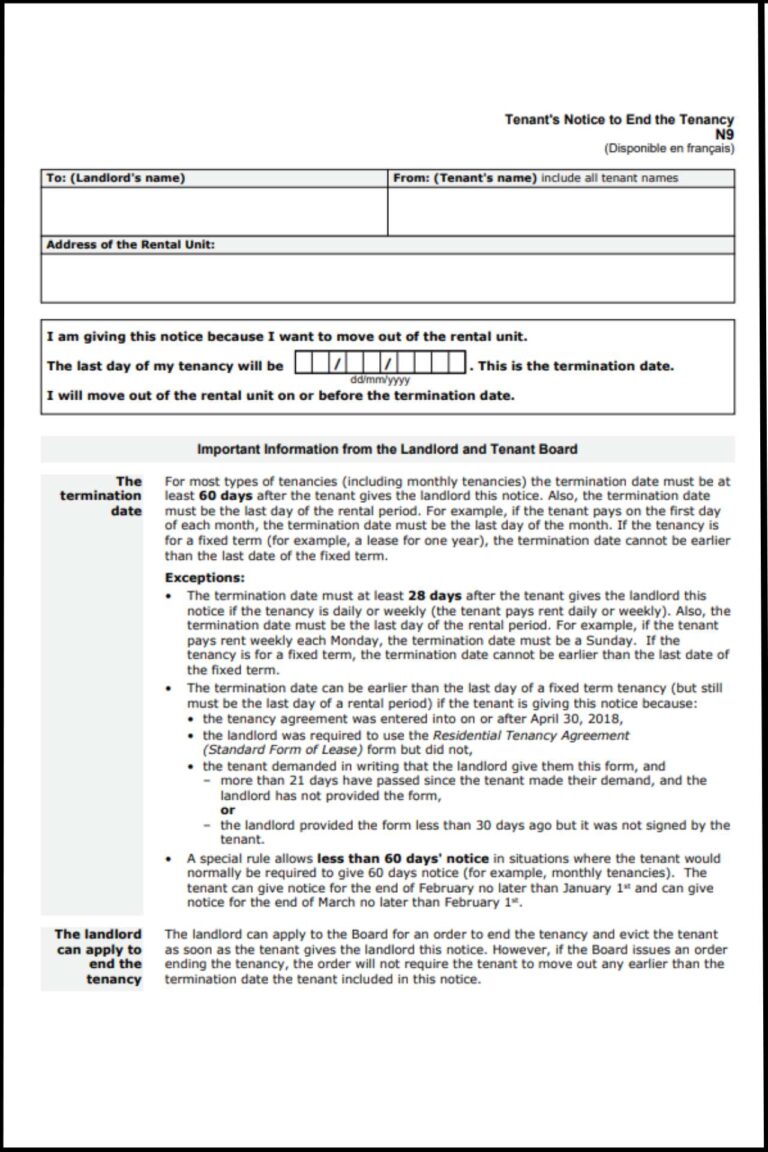
Write clear notice rules for ending the lease. In most cases, tenants must give proper notice before leaving. Evictions must follow legal procedures.
Lease terms sometimes need updating after the original contract period ends or tenancy conditions change. In these situations, landlords may either create a renewed rental agreement or continue the tenancy under a flexible monthly arrangement depending on the circumstances.
Legal Rules You Must Follow in British Columbia
When writing a lease, you must follow important legal rules. These rules protect both landlord and tenant.
- Lease must follow the Residential Tenancy Act
- Tenant rights cannot be removed
- Deposit cannot exceed half-month rent
- Rent increases are controlled by law
- Illegal clauses are not valid
Even if both parties sign, illegal terms will not be enforced.
Common Mistakes to Avoid When Writing a Lease
Many people make simple mistakes that later cause big problems. It is better to avoid them from the beginning.
- Missing important clauses like deposit or utilities
- Writing unclear rent terms
- Not following BC laws
- Using verbal agreements only
- Copying templates from other provinces
A proper written lease helps avoid confusion and legal trouble.
Real-Life Example (Simple Scenario)
Imagine a landlord renting out a basement unit.
In one case, the landlord writes everything clearly. Rent, utilities, and rules are all mentioned. The tenant understands everything, and there are no issues.
In another case, there is no clear agreement. The tenant assumes utilities are included, but the landlord expects extra payment. This leads to conflict and possible legal action.
This shows how a simple lease agreement can prevent disputes.
Fixed-Term vs Month-to-Month Lease
| Feature | Fixed-Term Lease | Month-to-Month |
| Duration | Set period | Ongoing |
| Flexibility | Low | High |
| Stability | High | Medium |
| Notice Rules | Strict | Easier |
Both options are valid. Choose based on your needs and situation.
How to Fill and Use the Lease Agreement Properly
After writing the lease, you must use it correctly. Many people make mistakes at this stage.
Fill all sections clearly and double-check details before signing. Both landlord and tenant must sign the agreement. Each party should keep a copy for record.
You can use either a printed document or a digital format, but make sure it is properly stored.
What Makes a Lease Agreement Invalid in BC?
Some conditions can make your lease invalid or unenforceable under law.
- Including illegal clauses
- Missing signatures
- Violating tenant rights
- Charging wrong deposit amount
- Not following provincial laws
Even if signed, such agreements may not be accepted legally.
FAQs
Is a written lease required in British Columbia?
A written lease is not always required, but it is strongly recommended. It helps avoid disputes and provides clear proof of terms.
Can a landlord write their own lease?
Yes, a landlord can write their own lease. However, it must follow BC laws and include all required sections.
What happens if there is no lease agreement?
If there is no written lease, the tenancy is still covered by law. But it can create confusion and disputes because terms are not clearly defined.
Can rent be increased anytime?
No, rent increases are controlled under BC law. Landlords must follow legal limits and proper notice periods.
Is a verbal lease valid in BC?
Yes, a verbal lease can be valid, but it is risky. It is always better to have a written agreement for clarity and legal protection.