Free British Columbia Lease Renewal Agreement Template
British Columbia Lease Renewal Agreement is a simple document used when a landlord and tenant decide to continue their rental after the original lease ends. Instead of creating a completely new lease, both parties just extend the existing one with a few updates if needed.
I’ve seen British Columbia landlords run into disputes later because they relied on verbal renewal agreements or never updated important terms in writing. When rent amounts, renewal dates, or tenancy conditions are not clearly documented, it can quickly turn into a stressful Residential Tenancy Branch issue for both sides.
In most rental situations, people choose a renewal because it saves time and keeps things clear. You don’t have to rewrite everything again, and it helps avoid confusion or disputes later. It’s especially useful when both landlord and tenant are happy with the current setup and only small changes (like rent or dates) are needed.
Last Updated: August 2026
Free British Columbia Lease Renewal Agreement Template
You can copy and use this template. It’s simple, clean, and follows common rental practices in British Columbia.
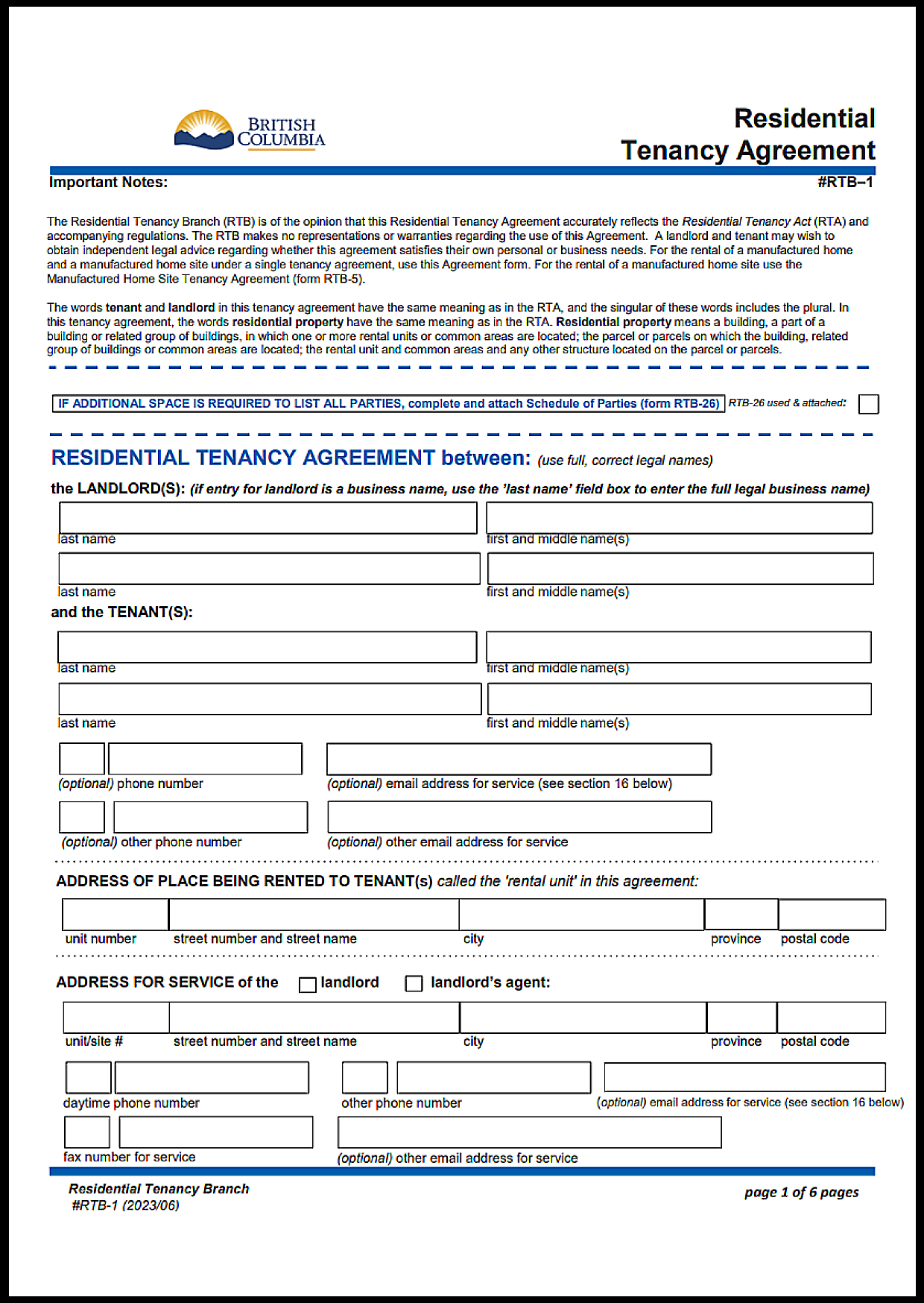
British Columbia Lease Renewal Rules and Legal Requirements
| Topic / Issue | British Columbia Legal Rule | Governing Statute |
|---|---|---|
| Governing legislation | Lease renewal agreements in BC are governed by the Residential Tenancy Act and Residential Tenancy Regulation when the tenancy is covered by those laws. | Residential Tenancy Act [SBC 2002] c. 78; Residential Tenancy Regulation |
| Federal law | Residential tenancy regulation is primarily a provincial matter in British Columbia, although federal laws can apply to particular issues. | Constitution Act, 1867 |
| 2024 amendments | BC’s 2024 tenancy-law changes changed certain ending-tenancy rules and introduced generated notices for specified landlord-use terminations. The applicable rules depend on the statutory ground. | Residential Tenancy Act amendments effective in 2024 |
| Who can legally sign | The landlord and tenant, or their properly authorized representatives, should sign the renewal agreement. | Residential Tenancy Act |
| Witness requirements | The Residential Tenancy Act does not prescribe a witness-signature requirement for an ordinary written tenancy agreement. | Residential Tenancy Act |
| Notarization | The Residential Tenancy Act does not require an ordinary residential tenancy agreement to be notarized. | Residential Tenancy Act |
| Age requirement | A person who has not reached 19 years of age may enter into a tenancy agreement, and the agreement and the Residential Tenancy Act and regulations are enforceable by and against that person. | Residential Tenancy Act, s. 3 |
| Mental capacity | The parties should have the legal capacity required to enter into the tenancy agreement. | General contract law |
| Copy deadline | Within 21 days after entering into a tenancy agreement, the landlord must give the tenant a copy of the agreement. | Residential Tenancy Act, s. 13(3) |
| Standard terms requirement | BC tenancy agreements are subject to the standard terms prescribed by the Residential Tenancy Regulation, and the landlord must ensure the written agreement contains those terms. | Residential Tenancy Act, ss. 12–13; Residential Tenancy Regulation |
| Rent increase compliance | A rent increase in connection with a renewal must still comply with the Residential Tenancy Act, including the 12-month rule, notice requirements, and permitted increase amount. | Residential Tenancy Act, ss. 41–43 |
| Vacate clause restrictions | A fixed-term tenancy agreement may require the tenant to vacate at the end of the term only in circumstances permitted by the Residential Tenancy Act and regulations. | Residential Tenancy Act, ss. 13.1 and 44; Residential Tenancy Regulation |
| Filing requirement | Ordinary residential lease renewals do not require government registration merely because the parties renew the tenancy. | Residential Tenancy Act |
| RTB evidence use | A renewal agreement can be submitted as evidence in a Residential Tenancy Branch dispute when it is relevant to the issues being decided. | Residential Tenancy Branch procedures |
| Illegal rent increases | A landlord cannot impose a rent increase that does not comply with Part 3 of the Residential Tenancy Act unless another lawful authorization applies. | Residential Tenancy Act, ss. 41–43 |
| Unconscionable terms | A term of a tenancy agreement may be unenforceable if it is unconscionable under the Residential Tenancy Act and regulations. | Residential Tenancy Act, s. 6; Residential Tenancy Regulation, s. 3 |
| Forced vacate clauses | A fixed-term tenancy agreement can include a requirement to vacate at the end of the term only in circumstances permitted by the Act and regulations. | Residential Tenancy Act, s. 44; Residential Tenancy Regulation, s. 13.1 |
| Automatic month-to-month conversion | If a fixed-term agreement does not require the tenant to vacate at the end of the term and the parties have not entered into a new agreement, the tenancy is deemed renewed month-to-month on the same terms. | Residential Tenancy Act, s. 44(3) |
| Minors and tenancy contracts | BC specifically allows a person under 19 to enter a tenancy agreement, and the agreement and tenancy legislation are enforceable by and against that person. | Residential Tenancy Act, s. 3 |
| Mandatory standard protections | Standard terms prescribed by the Residential Tenancy Regulation apply to covered tenancy agreements and cannot be contracted out of contrary to the Act. | Residential Tenancy Act, ss. 5, 12–13; Residential Tenancy Regulation |
BC tenancy agreements are subject to prescribed standard terms, and landlords and tenants cannot contract out of the Residential Tenancy Act. For example, a private term cannot remove statutory protections simply because both parties signed the renewal.
Rent increases have separate statutory requirements. At least 12 months must have passed since the rent was first payable or the last lawful increase, and the landlord must give at least three months’ notice. A renewal agreement does not by itself remove those requirements.
Landlord-use terminations also require particular attention because the applicable notice period depends on the statutory purpose. Section 49 provides a four-month default period unless a shorter period is prescribed for the particular purpose. The Regulation currently prescribes a three-month period for specified section 49 purposes.
Problems can arise when a landlord uses an invalid rent increase, includes a prohibited vacate clause, or relies on outdated tenancy rules. The free British Columbia Lease Renewal Agreement template can help organize the renewed terms, but the completed agreement should still be checked against the current Residential Tenancy Act and regulations.
This document is commonly used when landlords and tenants decide to continue the rental relationship after the original lease period expires. Before extending occupancy terms, many property owners revisit the main residential lease guide for British Columbia to ensure the updated arrangement still reflects current tenancy requirements.
What Is a Lease Renewal Agreement in British Columbia?
A lease renewal agreement is a written document used when a landlord and tenant want to continue their existing tenancy for another period. It can keep the original terms while recording agreed changes such as a new fixed term, updated rent, or revised conditions.
If a fixed-term tenancy ends and the agreement does not require the tenant to vacate at the end of the term, and the parties have not entered into a new agreement, section 44(3) deems the tenancy renewed as a month-to-month tenancy on the same terms.
Here’s the key difference in simple terms:
- Renewal = fixed period again (for example, another 1 year)
- Month-to-month = no fixed end date
For example, imagine a tenant finishes a 1-year lease. The landlord wants to continue the tenancy but increase rent slightly. Instead of starting over, they can document the new fixed term and other agreed changes in a renewal agreement. Any rent increase still has to comply with the Residential Tenancy Act.
Renewals are often prepared after a successful fixed-term tenancy where both parties want to continue the relationship. During this process, landlords may also adjust pricing through a formal rent increase notice or continue maintaining payment records with a written rent receipt template.
When Should You Use a Lease Renewal Instead of a New Lease?
In most cases, a renewal makes sense when things are mostly staying the same. It can save time and avoid unnecessary paperwork.
Use a lease renewal when:
- The same tenant is staying in the property
- Only small changes are needed (like rent or dates)
- Both parties agree to continue under similar terms
However, there are situations where a new lease is better.
- Major changes in rules or conditions
- Adding or removing tenants
- Changing property use (like residential to commercial)
For example, if you are simply extending the existing tenancy and documenting agreed changes, a renewal may be suitable. But if the parties are making substantial changes to the tenancy or adding and removing tenants, a new agreement may be clearer.
Key Clauses to Include in a BC Lease Renewal Agreement
Renewal Term
Clearly mention the new start and end date. This creates a new fixed-term period if the parties are entering into another fixed-term tenancy.
Updated Rent Amount
Under British Columbia law, rent increases must follow the legal limits and proper notice rules. A renewal agreement does not allow a landlord to bypass the statutory rent-increase requirements.
Reference to Original Lease
Always mention the original lease. This helps identify which existing terms continue unless specifically changed by the renewal.
Changes (If Any)
Write changes clearly. Even small updates should be mentioned to avoid disputes later.
Signatures and Dates
Both landlord and tenant should sign the renewal agreement and keep copies. A signed written record makes it easier to establish what terms the parties agreed to.
Not every tenancy is renewed for another fixed term. Some rental arrangements instead move into a flexible monthly tenancy structure, especially when landlords or tenants want the tenancy to continue without a new fixed end date.
British Columbia Laws You Must Follow
Under British Columbia law (Residential Tenancy Act), lease renewals must follow the rules that apply to the underlying tenancy.
- Rent increases are limited and must follow government guidelines
- Proper notice is required before increasing rent
- Fixed-term leases cannot require tenants to leave unless legal conditions are met
- Written agreements are useful for recording the agreed renewal terms
Landlords are not allowed to bypass rent rules just by signing a renewal. The same legal limits still apply.
If you’re unsure about rent changes, see our British Columbia rent receipt guide and British Columbia eviction notice rules to understand your responsibilities better.
Lease Renewal vs Month-to-Month Tenancy
| Feature | Lease Renewal | Month-to-Month |
|---|---|---|
| Term Length | Fixed | No fixed end |
| Rent Changes | Subject to statutory rules | Subject to statutory rules |
| Stability | High | Medium |
| Flexibility | Low | High |
A fixed-term renewal may provide greater certainty about the agreed term, while a month-to-month tenancy has no fixed end date and is governed by the periodic-tenancy rules in the Residential Tenancy Act.
How to Fill Out the Lease Renewal Agreement (Step-by-Step)
Filling out the agreement is simple if you follow a clear process.
Start by entering the original lease details. This connects the renewal to the existing agreement. Then add the new term dates so both parties know how long the renewal lasts.
Next, update the rent if needed. Make sure the increase follows BC rules. After that, clearly mention any changes. Even small details should be written to avoid misunderstandings.
Finally, both landlord and tenant should sign the document and keep copies. This creates a clear record of the renewed terms.
Common Mistakes to Avoid
Many disputes happen because of small mistakes. Avoid these common issues:
- Not referencing the original lease
- Increasing rent illegally
- Missing signatures
- Writing unclear or vague changes
- Relying only on verbal agreements
In most rental situations, written agreements give both sides a clearer record of what was agreed. Verbal promises can also lead to disagreements when the parties later remember the arrangement differently.
Legal Risks of Not Using a Renewal Agreement
If you don’t use a lease renewal agreement, several issues can arise.
If a fixed-term tenancy does not require the tenant to vacate and no new agreement is entered into, section 44(3) generally deems the tenancy renewed as a month-to-month tenancy on the same terms.
There can also be confusion about rent, rules, or responsibilities if the parties agree to changes without documenting them.
For example, a landlord may think new rent applies, but the tenant may disagree because the required rent-increase rules were not followed. This can lead to disputes or legal proceedings.
Without a clear written record, establishing the exact terms of an agreed renewal can become more difficult.
Real-Life Example (Simple Scenario)
A tenant completes a 1-year lease in Vancouver. The landlord wants to continue the tenancy and make a lawful rent increase.
Instead of creating an entirely different document, both parties sign a lease renewal agreement recording the new term and the agreed changes. The rent increase is handled separately in accordance with BC rent-increase rules, and all other terms stay the same unless specifically changed.
This gives both parties a clearer written record of the renewed arrangement.
FAQs
Is a lease renewal agreement legally required in BC?
No. A separate renewal document is not always required. However, a written agreement can clearly record a new fixed term or any agreed changes to the tenancy.
Can rent be increased during renewal?
Yes, but only if the increase follows British Columbia rent-increase rules, including the applicable 12-month timing rule, notice requirements, and permitted amount.
What happens if no renewal is signed?
If a fixed-term tenancy agreement does not require the tenant to vacate at the end of the term and the parties have not entered into a new tenancy agreement, section 44(3) deems the tenancy renewed as a month-to-month tenancy on the same terms.
Can tenants refuse a lease renewal?
Yes, tenants can refuse to enter into a new fixed-term renewal. The legal result depends on the terms of the existing tenancy and whether the tenancy continues under section 44 of the Residential Tenancy Act.
Do I need a new agreement every year?
No, not always. The tenancy may continue as a month-to-month tenancy under the Residential Tenancy Act, or the parties may enter into a new fixed-term agreement or renewal if they both agree.