Is Bill of Sale Required Alberta? Free Template
Is Bill of Sale Required Alberta? This is a common question when people buy or sell items in a private sale. Many people are confused about whether it is legally required or just recommended.
In Alberta, a bill of sale is not always required by law, but in many situations, it becomes very important. It helps prove ownership and protects both the buyer and seller. I have seen many Alberta buyers run into registration or ownership disputes later because they trusted a handshake deal without proper paperwork.
In my experience, first-time sellers are often surprised to learn that a simple bill of sale can become one of the most important pieces of evidence if a disagreement happens afterward. This is especially useful for cars, trailers, and other high-value items.
In this article, you will learn when it is required, when it is optional, and how to use it properly. You will also get a simple template you can copy.
Last Updated: August 2026
Is Bill of Sale Required Alberta? Free Template
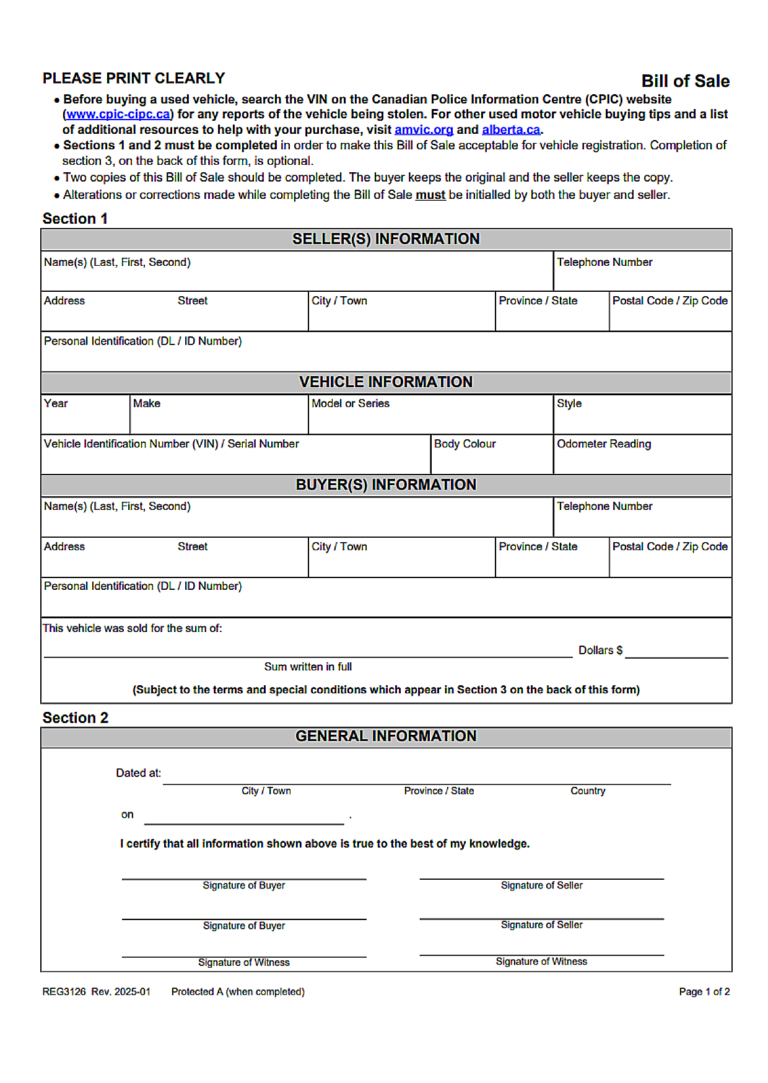
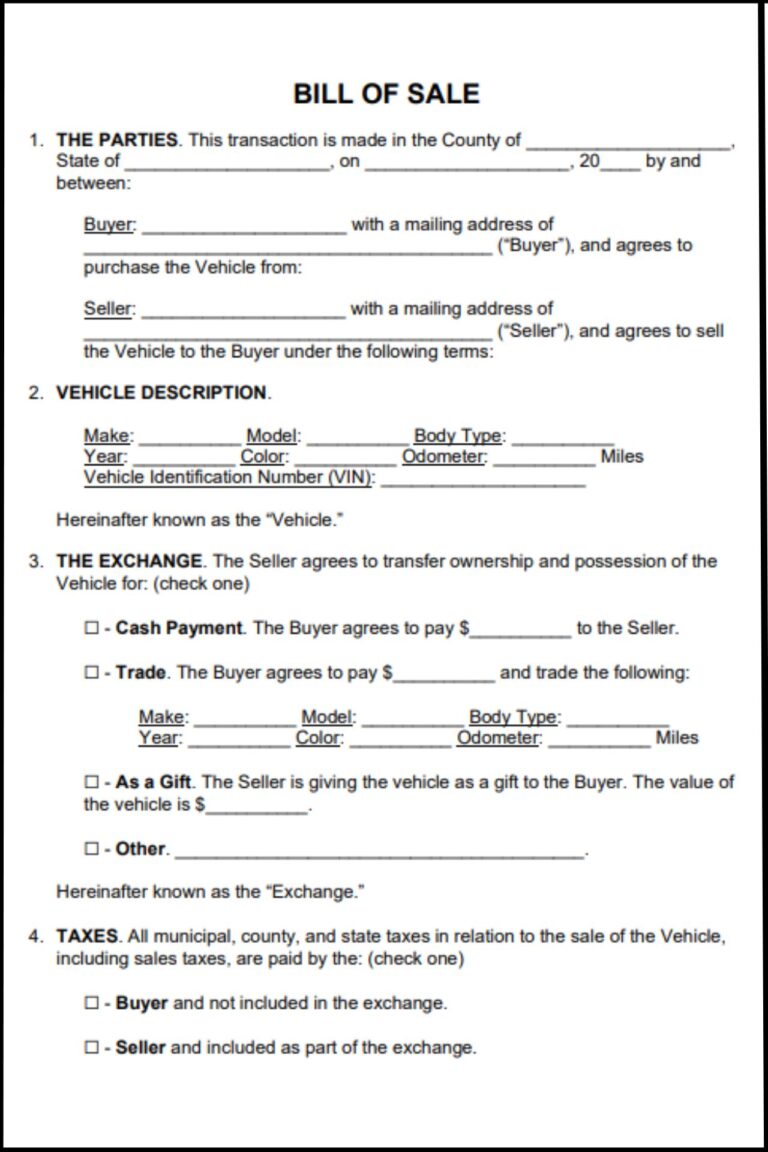
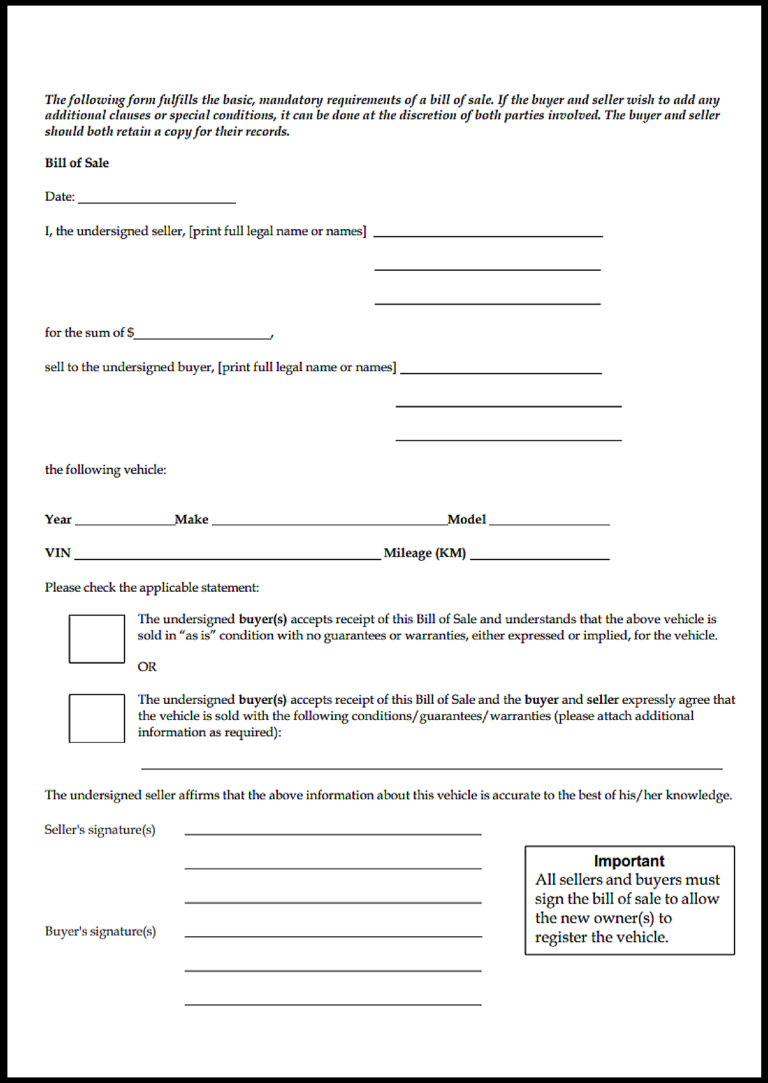
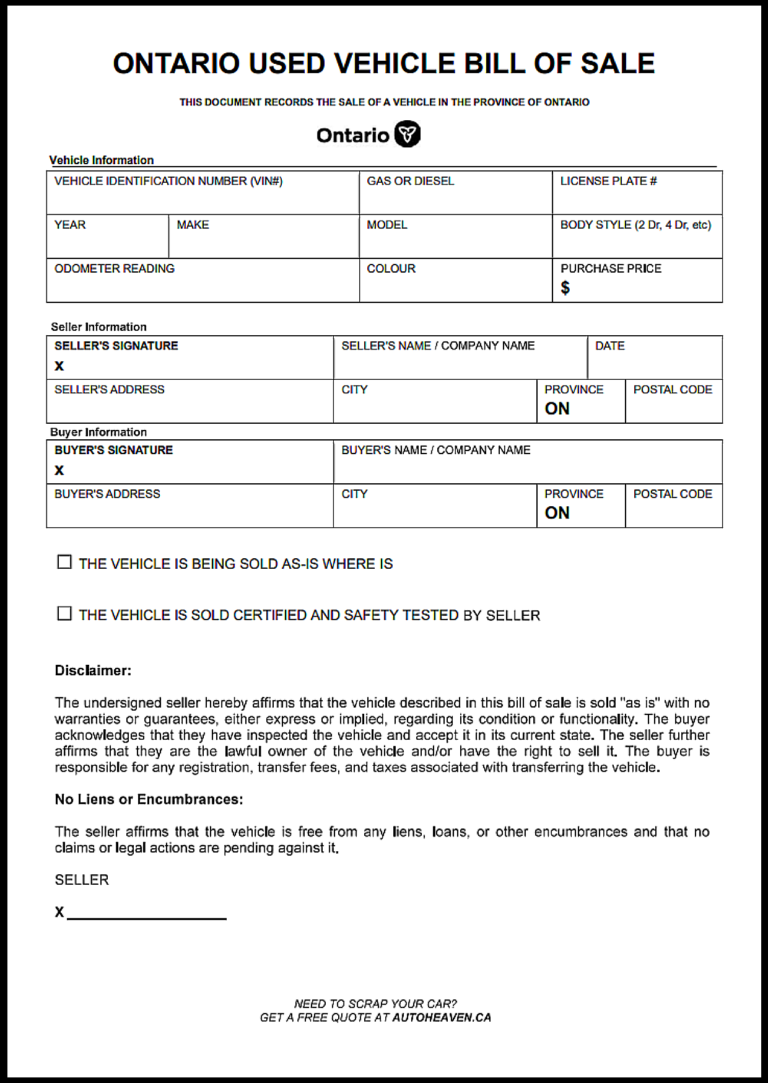
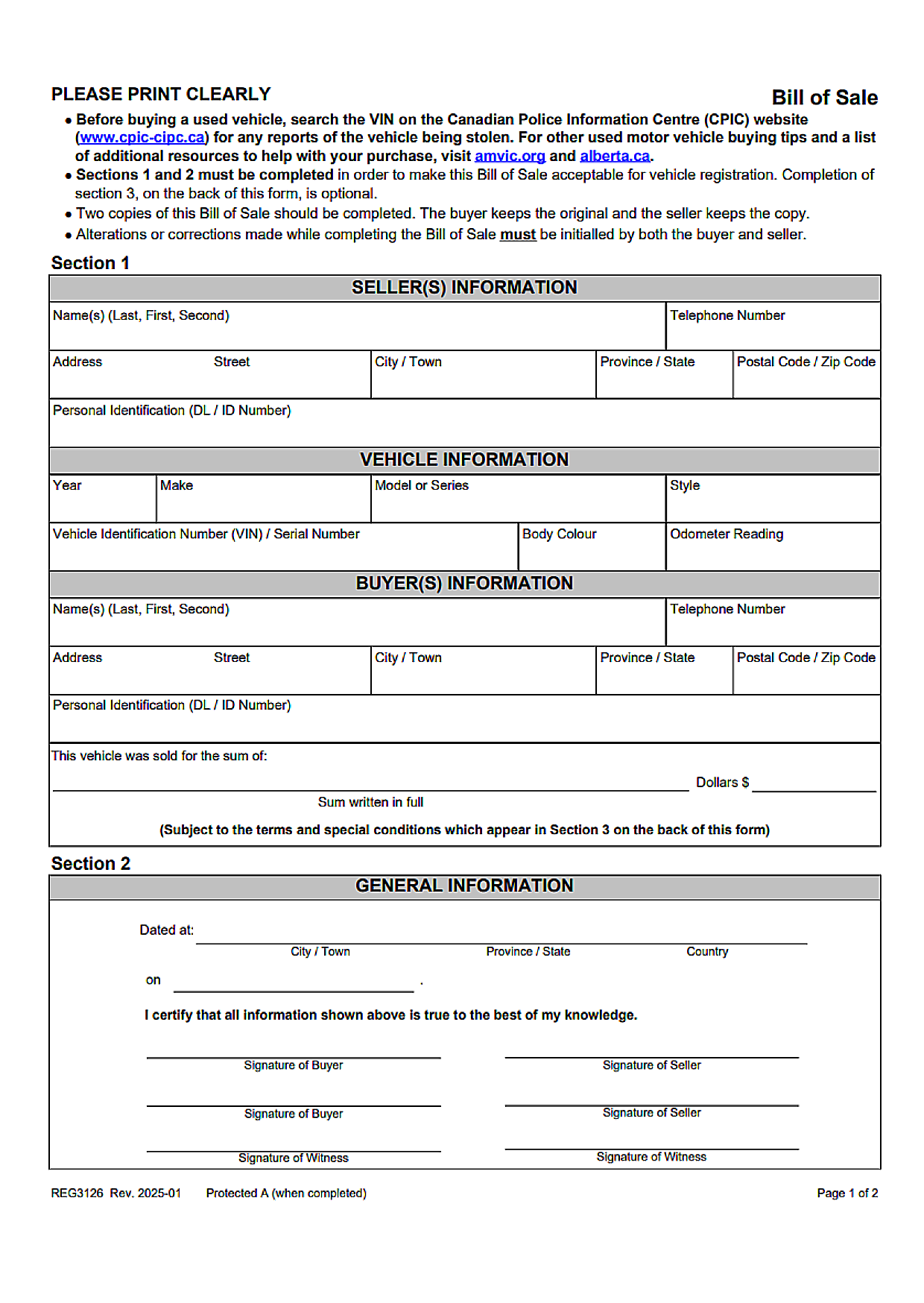
You can use this simple and beginner-friendly template for most private sales:
Alberta Bill of Sale Rules That Affect Legal Ownership
| Topic / Issue | Alberta Legal Rule | Governing Statute |
|---|---|---|
| Main provincial law | Alberta bills of sale for personal property are mainly governed by provincial sale laws. | Sale of Goods Act, RSA 2000, c S-2 |
| Federal negotiable instrument rule | Federal law may apply if the bill of sale includes a promissory note or negotiable instrument. | Bills of Exchange Act, RSC 1985, c B-4 |
| Jurisdiction | Alberta bill of sale rules are primarily provincial for property transfers. | Alberta provincial jurisdiction |
| Recent amendments | No major recent amendments have changed Alberta’s standard bill of sale requirements. | Sale of Goods Act legislative status |
| Who can sign | The seller and buyer should both sign the document. | Sale of Goods Act, s. 4 |
| Witness requirement | Witnesses are not legally required for standard private sales. | Common law principles |
| Witness recommendation | Witnesses are strongly recommended to help prevent future signature disputes. | Alberta evidentiary common law principles |
| Notarization requirement | Notarization is not legally required for most Alberta bills of sale. | Common law principles |
| Age and mental capacity | Parties should be at least 18 years old and mentally capable of contracting. | Age of Majority Act, s. 1 |
| Vehicle registration deadline | Existing Alberta licence plates and registration can be transferred to the newly purchased vehicle within 14 days of the sale date. | Traffic Safety Act |
| Required vehicle details | Vehicle bills of sale must include buyer and seller names, VIN, make, model, year, sale date, and purchase price. | Traffic Safety Act registration requirements |
| General goods wording | Alberta law does not require special wording for non-vehicle bills of sale. | Sale of Goods Act |
| Private contract status | Bills of sale for general goods remain private agreements between parties. | Alberta contract law principles |
| Vehicle registry requirement | Vehicle bills of sale must be presented to a Registry Agent to update ownership records. | Service Alberta / Traffic Safety Act framework |
| PPSA registration | Bills of sale connected to secured loans should be registered in the Personal Property Registry (PPR). | Personal Property Security Act (PPSA) |
| Missing VIN problem | Vehicle bills of sale without a correct 17-digit VIN are ineffective for title transfer. | Traffic Safety Act |
| No consideration issue | A bill of sale without a stated price or value may fail as a sale contract and instead require gift formalities. | Sale of Goods Act, s. 3 |
| Ambiguous property description | If the property cannot be clearly identified, the contract may be void for uncertainty. | Sale of Goods Act, s. 19 Rule 1 |
| Alberta inspection difference | Alberta allows private vehicle sales without mandatory safety inspection certificates for in-province vehicles. | Alberta Traffic Safety Act system |
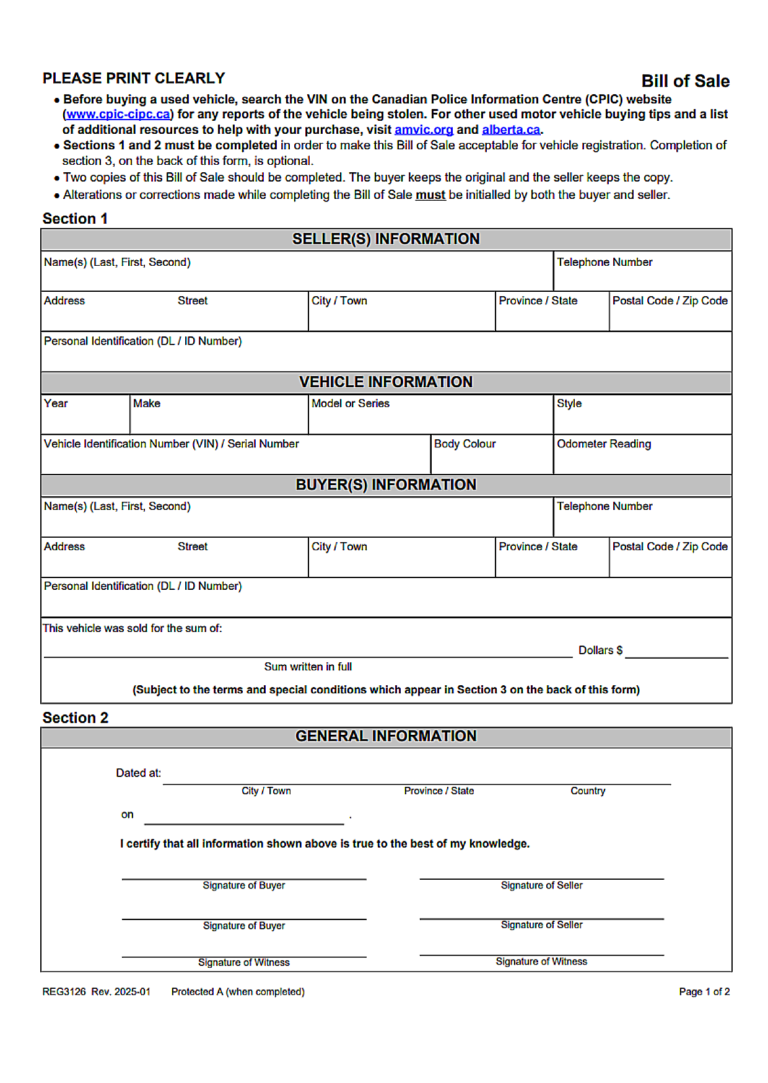
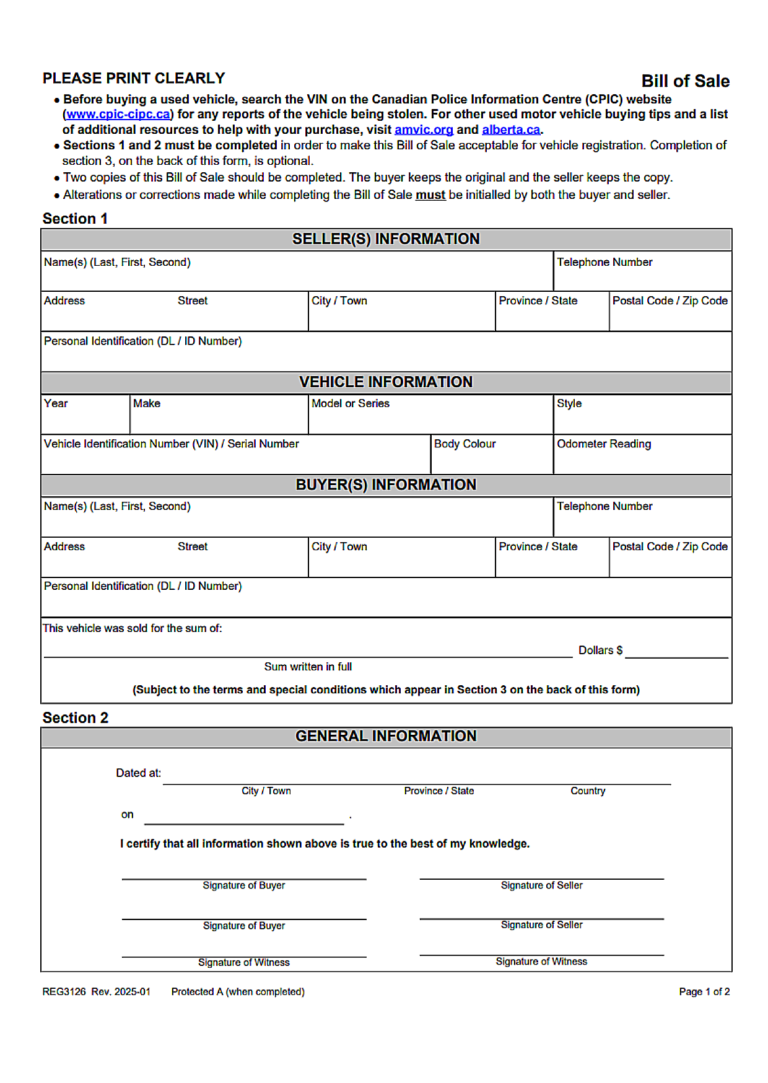
| Standardized Alberta template | Service Alberta provides a standard bill of sale format (Form REG3126) that Registry Agents provide and expect. | Service Alberta administrative policy |
One Alberta rule that surprises many people is that a bill of sale is not always legally required, but it quickly becomes essential in real-life situations. Vehicle transfers are the best example because Registry Agents usually expect a complete bill of sale with the correct VIN, purchase price, and signatures before ownership can be updated.
Another important point is Alberta’s rule about “consideration.” If no sale price or value is listed, the agreement may not work properly as a sale contract. This creates confusion about whether the transfer was actually a gift instead of a purchase.
The VIN requirement is also very strict. A missing or incorrect VIN can make the document practically useless for vehicle registration. Even a small mistake may delay ownership transfer or create legal disputes later.
These rules matter because bills of sale are often the main proof of ownership, payment, and agreement terms. Getting the details wrong can lead to registration rejection, disputes over payment, or problems proving who legally owns the property.
Download the free Alberta Bill of Sale template to create a clear and legally stronger record of your transaction.
Is a Bill of Sale Legally Required in Alberta?
Under Alberta law, a bill of sale is not required for every type of sale, but it becomes necessary in certain situations.
There is a clear difference between a legal requirement and a practical need. A legal requirement means the law demands it, while a practical need means you should use it to avoid problems.
In most private sale situations:
- You can complete the sale without a bill of sale
- But it is strongly recommended to have one
It acts as proof of ownership and helps if any dispute happens later.
Many people ask whether they need a bill of sale, and this question is closely tied to the rules explained in the Alberta bill of sale guide. For specific cases, documents like the vehicle sale form and trailer bill of sale are commonly required.
When You MUST Have a Bill of Sale in Alberta
Vehicle Purchases (Cars, Trucks, Motorcycles)
For vehicle sales in Alberta, a bill of sale is very important. It is required when registering the vehicle. Without it, ownership transfer may not be accepted.
It should include details like VIN, sale price, and signatures. These details help confirm that the transaction is real and complete.
Trailers and Off-Road Vehicles
For trailers and off-road vehicles, a bill of sale is often needed as proof of ownership. Even if it is not strictly required, it is very useful for future resale.
- Helps prove ownership
- Avoids disputes
- Useful during resale
High-Value Private Sales
When selling expensive items, a bill of sale becomes very important. It protects both buyer and seller and clearly records the agreement.
For example:
- Buyer may claim they paid less
- Seller may deny condition issues
A written document helps avoid such problems.
When a Bill of Sale May Not Be Mandatory
In some situations, a bill of sale may not be required. This includes small personal item sales, gifts between family members, or retail purchases where a receipt is given.
However, even in these cases, it is still a good idea to use one. It creates a record and avoids confusion in the future. A simple document can save you from bigger problems later.
Why a Bill of Sale Is Still Important (Even If Not Required)
A bill of sale is important because it provides proof and protection. It clearly shows what was agreed between buyer and seller.
It helps in many ways:
- Confirms ownership
- Protects in legal disputes
- Helps with tax and value proof
- Prevents fraud
For example, if a buyer later says they paid less or the seller says the item was sold “as-is,” the bill of sale becomes strong evidence.
To better understand compliance, review the legal requirements checklist. You can also explore the difference between ownership and bill of sale.
Key Information That Must Be Included
Buyer and Seller Details
The document should include full names and addresses of both parties. This helps identify who was involved in the transaction.
Description of Item
The item description should be clear and detailed. For vehicles, include VIN. For other items, include serial numbers if available.
Sale Price and Payment Terms
Always write the exact amount paid and mention the payment method. This avoids confusion later.
Condition of the Item
Mention whether the item is sold “as-is.” This means no warranty is given. It protects the seller from future claims.
Signatures and Date
Both parties should sign the document. The date is also important because it shows when the sale happened.
Alberta Government Rules You Should Know
In Alberta, registry offices require accurate details for vehicle transactions. The sale price must be accurate because registries require a true record of the transaction to verify consideration and prevent fraud, even though Alberta has no provincial sales tax on private vehicle sales.
If incorrect information is provided, it can cause delays or even rejection of registration. It is always better to double-check all details before submitting.
Common Mistakes to Avoid
Many people make simple mistakes that cause problems later. These include:
- Missing VIN or serial number
- Not signing the document
- Writing wrong sale price
- Using unclear descriptions
- Forgetting to mention “as-is” condition
Avoiding these mistakes will make your document strong and reliable.
What Happens If You Don’t Use a Bill of Sale?
Not using a bill of sale can create serious issues. It becomes difficult to prove ownership, and you may face problems during registration.
You may also face disputes with no proper evidence. In some cases, it can even lead to fraud or scams.
Real-Life Example (Easy to Understand)
Imagine a person buys a used car without a bill of sale. After some time, the seller claims the car was not fully paid.
The buyer has no written proof. When they go to the registry office, they are asked for documents. Without a bill of sale, the process becomes difficult.
This situation shows why the document is important in real life.
Bill of Sale vs Receipt
| Feature | Bill of Sale | Receipt |
| Legal strength | Strong | Limited |
| Details | Full transaction |
Basic payment proof
|
| Signatures | Yes | Usually no |
| Use case | Ownership transfer |
Payment confirmation
|
A receipt alone is not enough when ownership transfer is required.