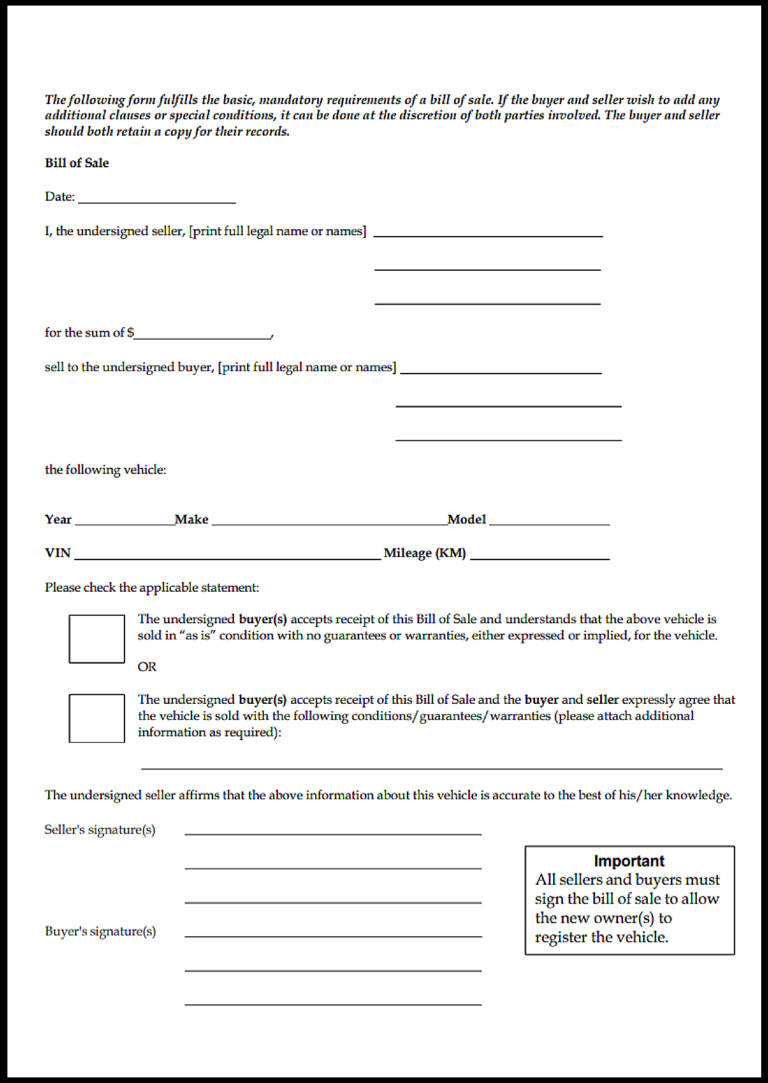
Free Alberta Vehicle Bill of Sale Template
Alberta Vehicle Bill of Sale is a very important document when you buy or sell a vehicle privately. It works as proof that ownership has been transferred from seller to buyer and helps in vehicle registration.
Buying or selling a car in Alberta can feel confusing, especially for first-time buyers. In most private sale situations, this document is your main proof of purchase. Without it, you may face delays, disputes, or even legal problems later. I’ve seen many Alberta private vehicle sales turn into stressful disputes because the parties relied on text messages or verbal promises instead of a proper signed bill of sale. In Alberta, registry agents often look closely at sale details during registration, and even one missing piece of information can create delays or problems for both buyer and seller.
Under Alberta law, a vehicle bill of sale is used to confirm that a transaction has taken place between two parties. It protects both buyer and seller by clearly recording important details like price, condition, and ownership transfer.
Without this document, proving ownership becomes difficult and registry offices may refuse registration. That’s why it is always recommended to create a proper bill of sale, even for small or informal transactions.
Last Updated: August, 2026
Free Alberta Vehicle Bill of Sale Template
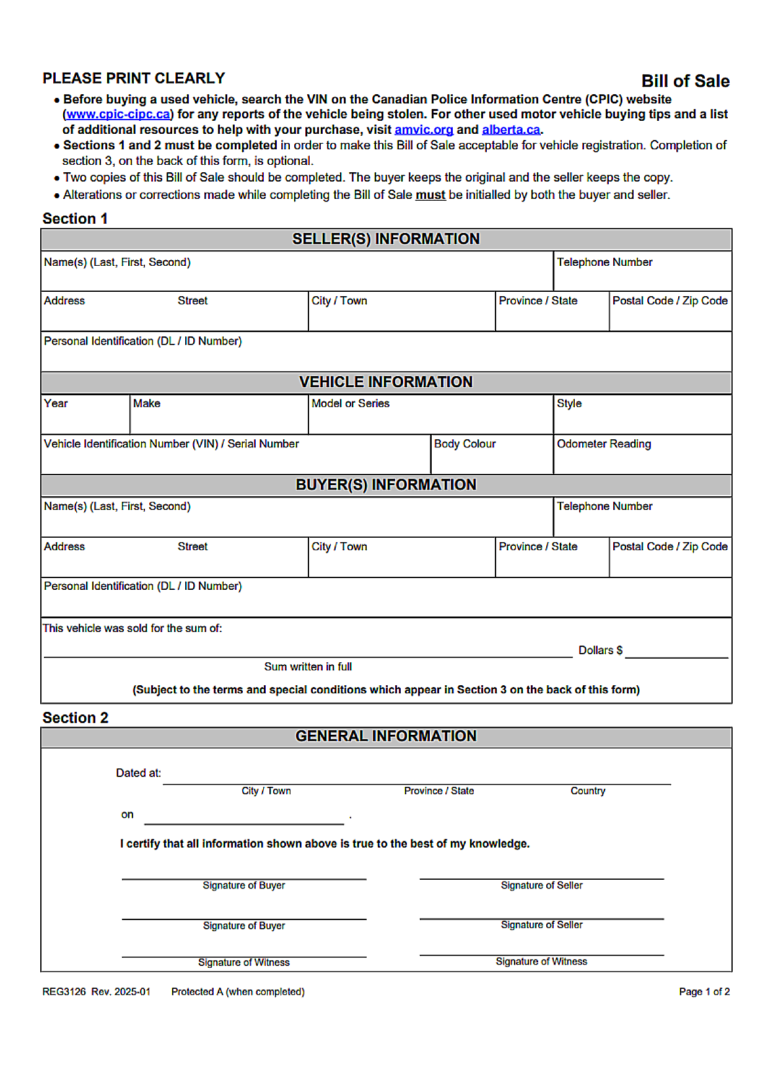
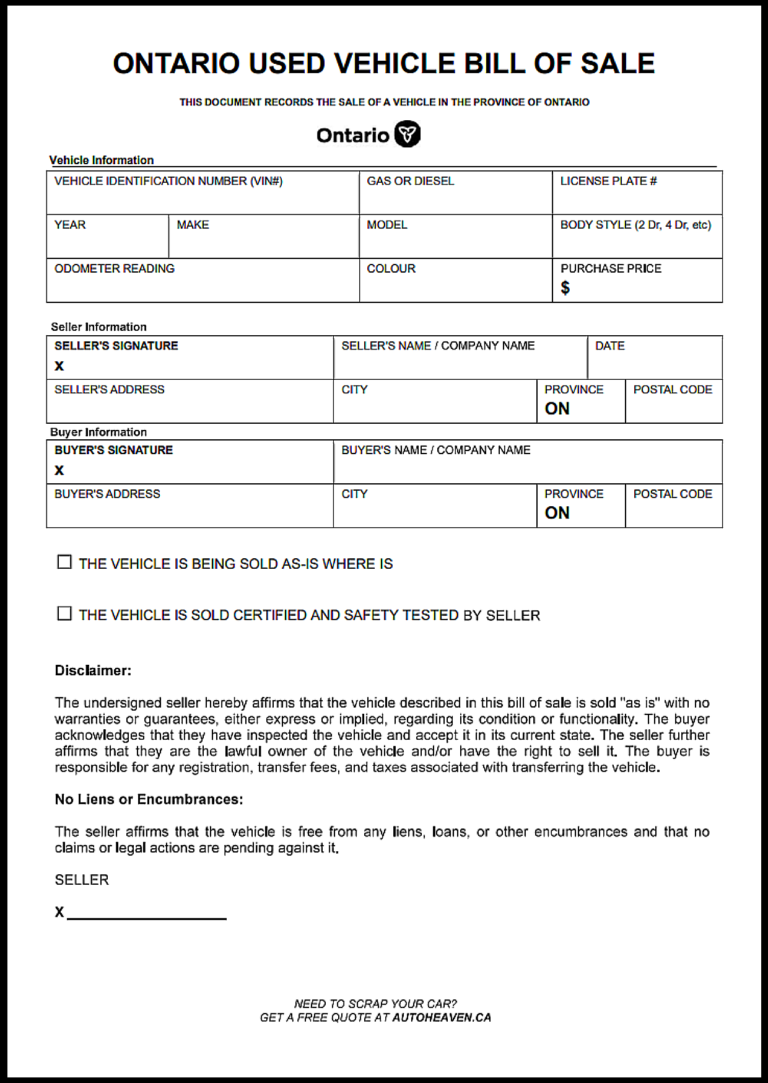
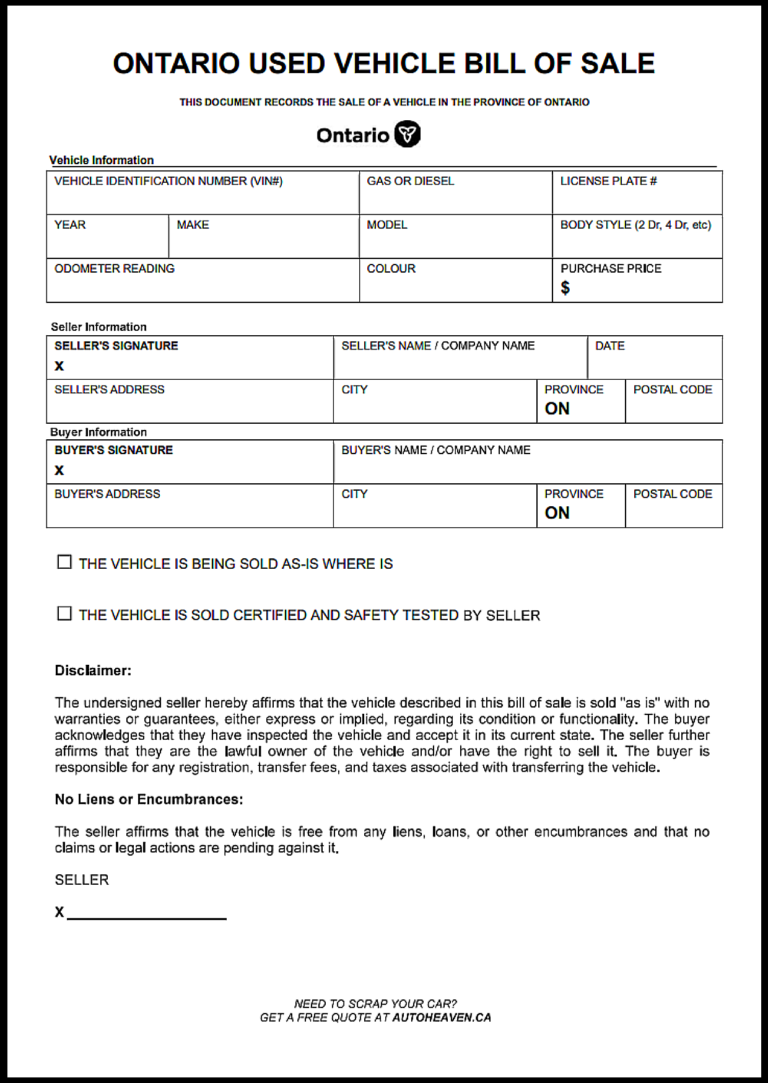
You can use the below template for private vehicle sales in Alberta. It is simple, practical, and includes all key details required for registration.
Alberta Vehicle Bill of Sale Laws and Registration Rules
| Topic / Issue | Alberta Legal Rule | Governing Statute |
|---|---|---|
| Governing legislation | Private vehicle sales and ownership transfers in Alberta are governed by the Sale of Goods Act and common law contract principles, while registration is regulated under the Traffic Safety Act. | Traffic Safety Act, RSA 2000, c T-6; Consumer Protection Act, RSA 2000, c C-26.3 |
| Federal jurisdiction | Private vehicle sales between individuals are governed under Alberta provincial law. | Provincial jurisdiction under Alberta law |
| Recent amendments | Alberta updated consumer disclosure rules during the 2018 Consumer Protection Act enhancements while keeping core bill of sale requirements stable. | Consumer Protection Act updates |
| Who can sign | The registered vehicle owner and buyer must sign the bill of sale. | Traffic Safety Act, RSA 2000, c T-6; Operator Licensing and Vehicle Control Regulation, AR 320/2002 |
| Witness requirements | Witnesses are not legally required for vehicle bill of sale validity. | Governed by common law principles |
| Notarization requirement | Notarization is not required unless an Affidavit of Ownership is needed due to a missing bill of sale. | Governed by common law principles |
| Age and capacity | A person must generally be at least 18 years old to register a vehicle independently. | Operator Licensing and Vehicle Control Regulation, AR 320/2002 |
| 14-day plate transfer rule | Buyers may use an existing valid Alberta licence plate on a newly acquired vehicle for up to 14 days from the date of purchase. | Operator Licensing and Vehicle Control Regulation, Alta Reg 320/2002, s. 79 |
| Required buyer and seller information | Full legal names and addresses of both parties must appear on the document. | Traffic Safety Act framework |
| Required vehicle information | The bill of sale must include VIN, make, model, and year of the vehicle. | Traffic Safety Act framework |
| Required transaction details | The total purchase price and sale date must be included. | Traffic Safety Act framework |
| Signature requirement | Both buyer and seller signatures are required. | Traffic Safety Act framework |
| Dealer disclosure rules | Dealer bills of sale must disclose specific vehicle history issues such as prior taxi or police use and major damage history. | Automotive Business Regulation, AR 192/99, s. 31.2 |
| Filing and registration requirement | The original bill of sale must be presented to an authorized Registry Agent to complete vehicle registration transfer. | Service Alberta and Red Tape Reduction / Service Alberta and Red Tape Reduction Registry Policy |
| Registry document retention | Registry Agents use the bill of sale to issue registration but do not permanently keep the document. | Alberta registration procedures |
| VIN discrepancy issues | Registry Agents may reject bills of sale with VIN information that does not match official records or the physical vehicle. | Traffic Safety Act, s. 9 |
| Missing owner signatures | If multiple registered owners exist, all owners must sign the bill of sale. | Traffic Safety Act, s. 9 |
| Uninitialed alterations | Changes to VIN or purchase price must be initialed by both parties or the document may be rejected. | Service Alberta Registration Policy |
| Alberta plate grace period difference | Alberta allows a more flexible 14-day licence plate transfer period than many other provinces. | Traffic Safety Act, s. 7 |
| Inspection requirement difference | Alberta generally does not require a mandatory safety inspection for private in-province vehicle sales. | Alberta vehicle registration rules |
One of the most important Alberta vehicle bill of sale rules is the VIN accuracy requirement. Even a small VIN mistake can cause the Registry Agent to reject the transfer completely. Buyers often do not realize this until they try registering the vehicle and face delays or ownership problems.
Another important rule involves multiple registered owners. If two people are listed as owners on the registration, both signatures are required on the bill of sale. Missing even one signature can make the transfer incomplete and create legal complications later.
Alberta’s 14-day licence plate grace period is also different from many other provinces. Buyers can temporarily use their old plate on the newly purchased vehicle, but only if they carry the bill of sale and valid insurance documents. If stopped by police without proper paperwork, the buyer may face fines or registration issues.
Using a properly completed vehicle bill of sale helps protect both parties from future disputes, so download the free Alberta Vehicle Bill of Sale template before completing your private sale.
What Is an Alberta Vehicle Bill of Sale (And Why It Matters)
A vehicle bill of sale is a legal record that shows a vehicle has been sold from one person to another. In Alberta, it plays an important role during registration and helps avoid confusion between buyer and seller.
It is mainly used to:
- confirm ownership transfer
- provide proof of payment
- record vehicle details
- protect both parties legally
Without this document, you may face issues like ownership disputes or problems at the registry office. In simple terms, it is your safety proof in the transaction.
When transferring a vehicle, it’s important to follow a structured format outlined in the main Alberta bill of sale guide, which explains how ownership records are legally documented. For similar transactions, you can also review the car-specific bill of sale format or explore when a document is mandatory in the legal requirement guide.
When Do You Need a Vehicle Bill of Sale in Alberta?
You need a bill of sale in most private vehicle transactions. It is especially important when dealing directly with another individual instead of a dealership.
Common situations include:
- buying or selling a used car privately
- transferring ownership between individuals
- gifting a vehicle to someone
- selling motorcycles, trucks, or SUVs
Dealerships usually provide their own paperwork, but private sales always require a proper bill of sale to avoid legal risks.
Mandatory Information Required in Alberta
To make your bill of sale valid and useful, you must include complete and accurate details. Missing information can cause delays or rejection during registration.
Seller and Buyer Details
Both parties must provide correct identification details. This ensures that the transaction is legally clear and traceable.
- full legal names
- complete addresses
- contact information
Complete Vehicle Information
Vehicle details must match official registration records exactly. Even a small mistake can create problems.
- make, model, and year
- VIN (Vehicle Identification Number)
- color of vehicle
- odometer reading
Sale and Payment Details
This section records the financial part of the transaction clearly.
- exact sale price
- date of sale
- payment method
Condition Disclosure
This part protects the seller and informs the buyer about the vehicle condition. Most private sales in Alberta use an “as-is” clause, which means no guarantees are given after sale.
Vehicle transactions often involve variations depending on the asset type. For example, sellers may also use the motorcycle bill of sale template or the trailer sale document when dealing with related vehicles. Understanding the required legal elements in Alberta ensures your document is valid.
Alberta-Specific Rules You Must Follow
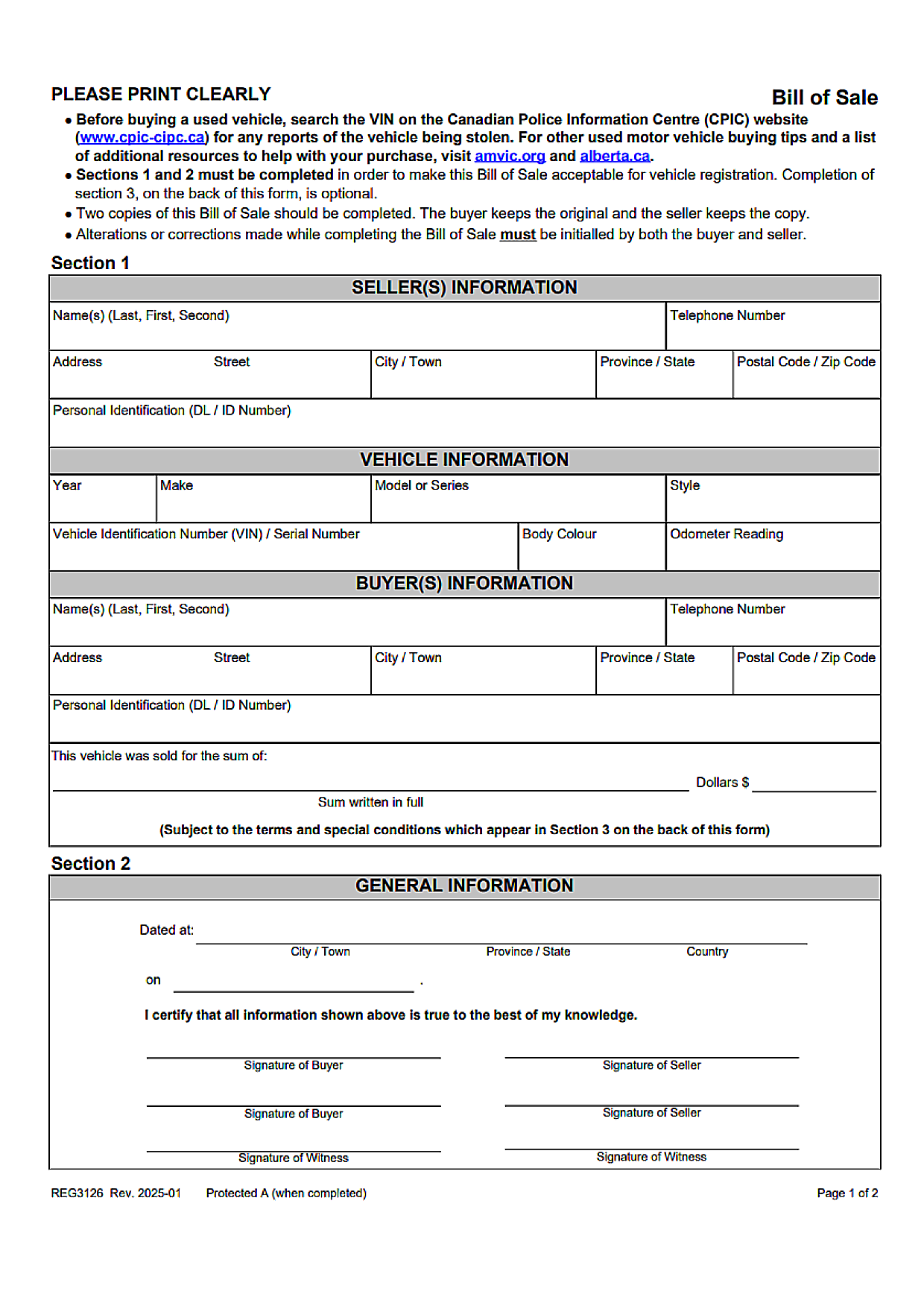
In Alberta, you are not strictly required to use the government’s standard form (Form REG3126), but any bill of sale you create must contain all the mandatory data points found on the standard form to be accepted at a registry office.
Here is a simple overview:
| Rule | Explanation |
| Bill of sale required |
Needed for registration
|
| VIN accuracy |
Must match official records
|
| Odometer disclosure |
Strongly recommended
|
| Registration responsibility |
Buyer must register vehicle
|
The buyer is responsible for completing registration after purchase, but the seller must provide correct and complete information. If details are wrong, both parties may face issues.
How to Fill Out the Vehicle Bill of Sale (Step-by-Step)
Filling the form correctly is very important. Even small mistakes can cause delays.
Step 1: Enter Accurate Personal Details
Use names exactly as shown on official ID. Avoid nicknames or spelling errors, as this may create legal confusion later.
Step 2: Add Vehicle Information Carefully
Check VIN and mileage carefully before writing. These are the most sensitive details in the document.
Step 3: Record Sale Price Clearly
Always write the full amount clearly. Do not use unclear words like “paid” or “approximate”.
Step 4: Mention Vehicle Condition
Most sellers use “as-is” to protect themselves from future claims. This means the buyer accepts the vehicle in its current condition.
Step 5: Sign and Date the Document
Both buyer and seller must sign the document. Without signatures, the bill of sale is not complete.
You can also add a witness signature for extra safety, especially for high-value vehicles.
Common Mistakes to Avoid
Many people make simple mistakes that later create big problems. Being careful while filling the form can save time and stress.
Some common mistakes include:
- missing or incorrect VIN
- not signing the document
- using nicknames instead of legal names
- not keeping a copy
- forgetting to include sale price
Even a small mistake can delay your vehicle registration or create legal confusion.
Legal Risks Without a Proper Bill of Sale
Not having a proper bill of sale can lead to serious legal issues. It is not just a formality—it protects both parties.
Possible risks include:
- ownership disputes
- liability for accidents or fines
- registration problems
- fraud or scams
For example, if the buyer does not register the vehicle, the seller may still be linked to it. This can create unexpected legal trouble.
Real-Life Example (Simple Scenario)
Rahul sells his used car to Aman for $6,000. They create and sign a bill of sale with all details including VIN, price, and “as-is” condition.
After a few days, Aman notices a small issue in the car. Since the bill of sale clearly mentions “as-is,” he cannot claim any compensation from Rahul.
This example shows how a simple document can protect the seller from future disputes and make the transaction clear.
Does Alberta Require a Notarized Bill of Sale?
In Alberta, notarization is not required in most cases. A properly filled and signed bill of sale is usually enough for legal and registration purposes.
However, notarization can be used for extra security, especially in high-value transactions or when parties want additional proof.
Vehicle Bill of Sale vs Transfer of Ownership
These two documents are different but both are necessary in the process.
| Feature | Bill of Sale |
Registration Transfer
|
| Purpose | Proof of sale |
Legal ownership update
|
| Required | Yes | Yes |
| Completed by | Buyer & Seller | Buyer |
| Used at registry | Yes | Yes |
The bill of sale proves that a transaction happened, while registration transfer officially updates ownership in government records.