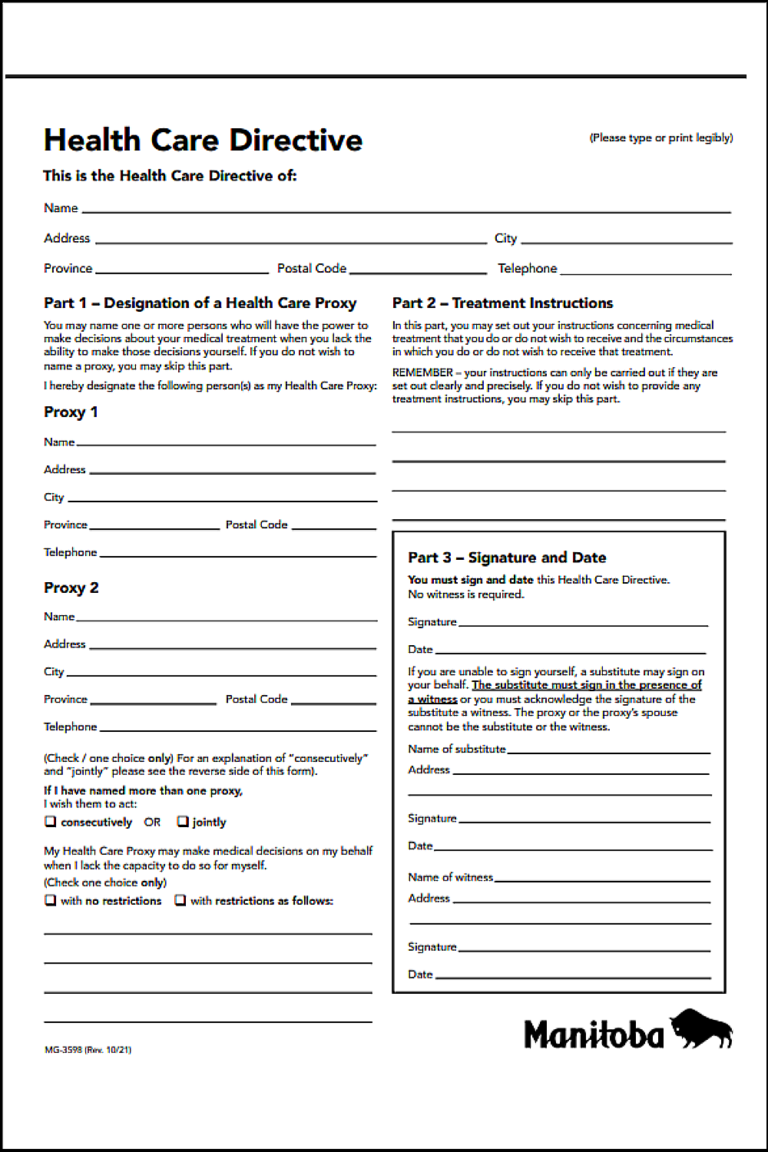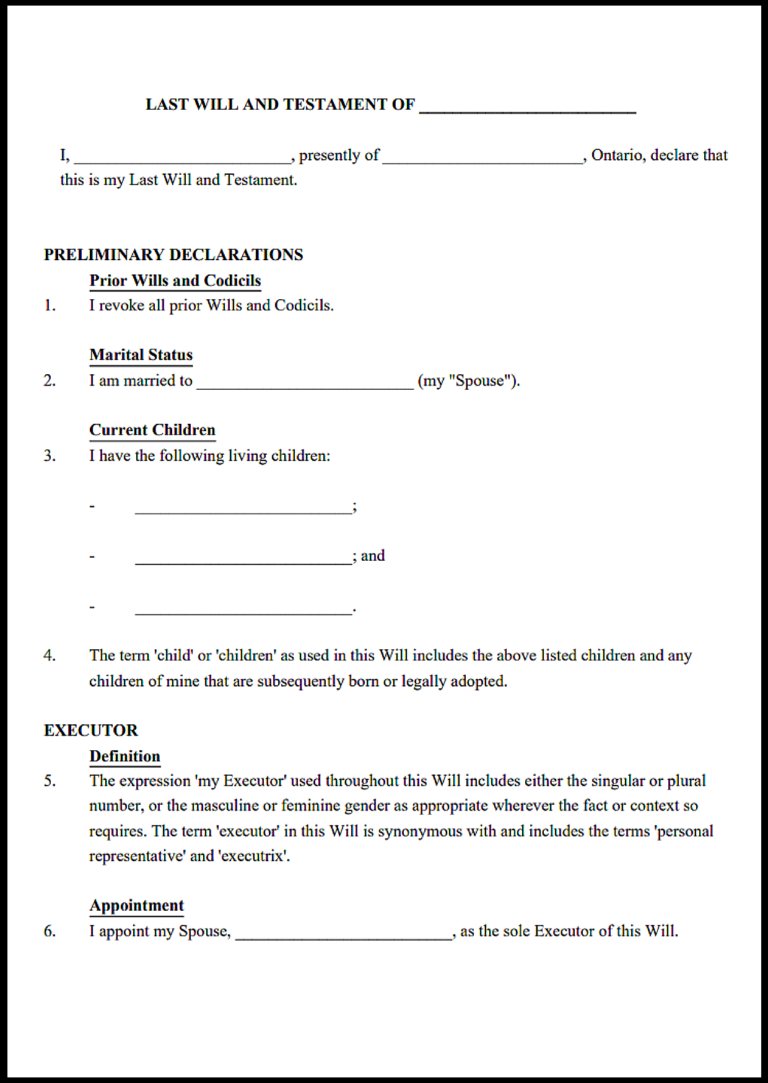
Ontario Personal Directive (Free PDF Template & Legal Guide)
Ontario Personal Directive is a common term people use when they want to plan their future healthcare decisions. In Ontario, this is officially called a Power of Attorney for Personal Care (POAPC).
Many people search for a “personal directive” because they want control over medical and personal care decisions if something happens to them. Under Ontario law, this is exactly what a POAPC does.
In simple terms, it lets you choose someone you trust to make decisions for you if you become unable to decide for yourself. I have seen families in Ontario end up in painful disputes because a loved one never signed a proper Power of Attorney for Personal Care, leaving doctors and relatives unsure who legally had authority to make decisions. When people come to my office for this document, it is usually after a health scare or while caring for an aging parent, and many are surprised to learn that verbal wishes alone often create confusion instead of legal protection.
In Ontario, the term “Personal Directive” is not legally used, but the idea is fully recognized through a Power of Attorney for Personal Care.
Under the Substitute Decisions Act, 1992, you can appoint a person (called an attorney) to make decisions about:
- Medical treatment
- Living arrangements
- Daily care (food, hygiene, safety)
Who needs this?
- Elderly individuals
- People with health risks
- Anyone planning long-term care
- Even young adults (accidents can happen anytime)
In most estate planning situations, having this document gives your family clear guidance, works alongside an Ontario will template, and helps avoid confusion.
Free Ontario Personal Directive Template
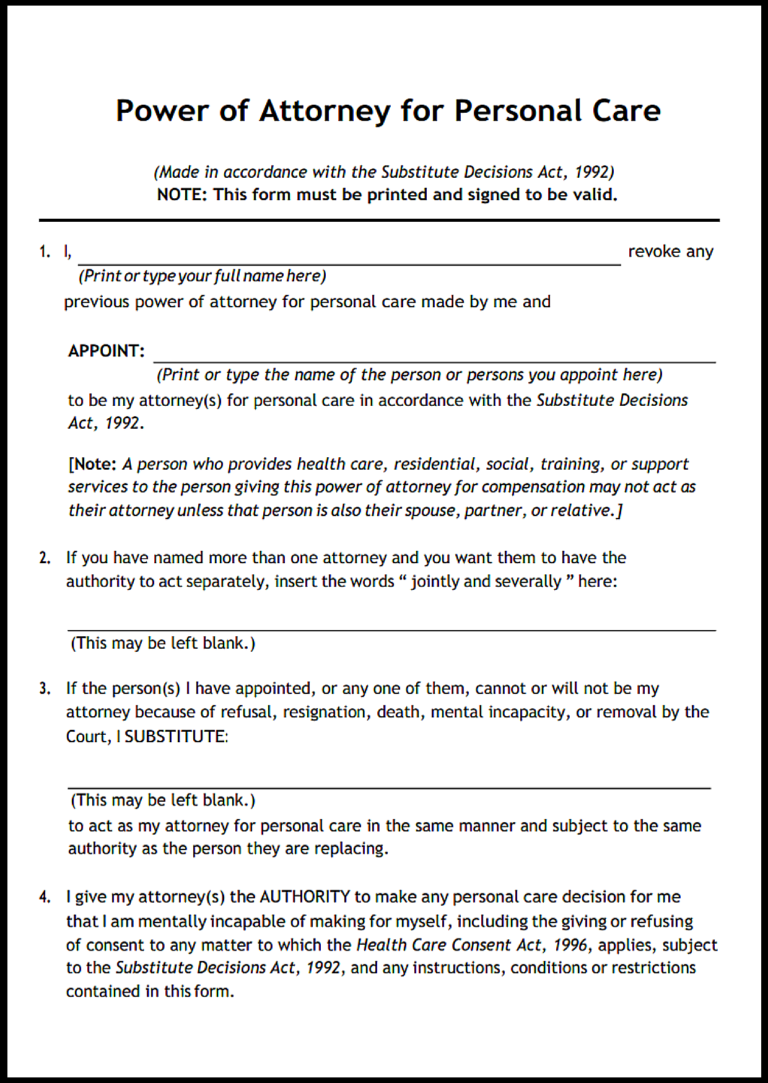
Below is a simple, Ontario-compliant structure you can use. This works as a Power of Attorney for Personal Care.
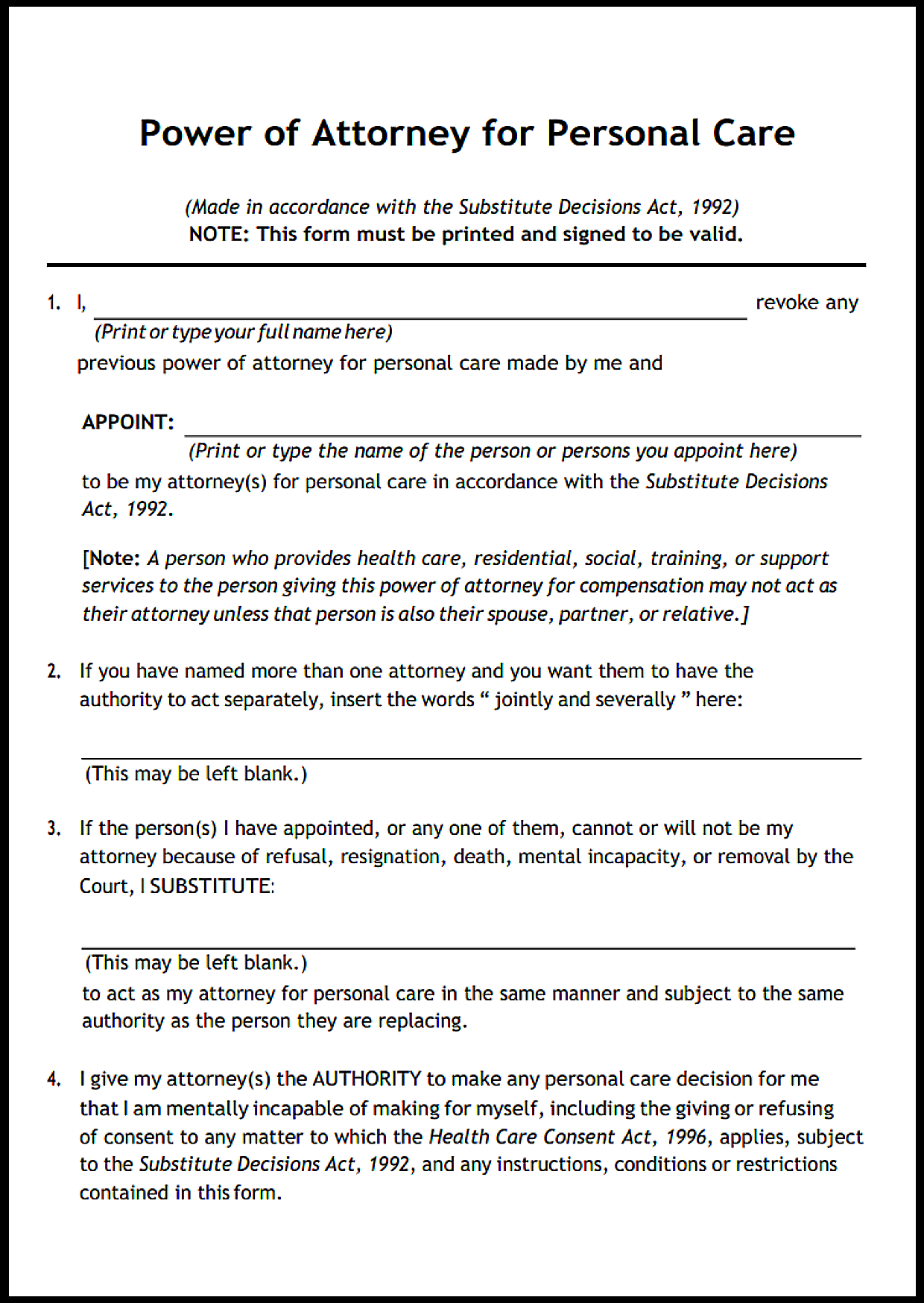
In Ontario, there is no official “Personal Directive” form. Instead, individuals use a Power of Attorney for Personal Care and an Advance Care Directive to record their healthcare wishes.
Ontario Personal Directive Laws and Validity Requirements
| Topic / Issue | Ontario Legal Rule | Governing Statute |
|---|---|---|
| Primary governing legislation | Personal care directives in Ontario are governed through Powers of Attorney for Personal Care and healthcare consent laws. | Substitute Decisions Act, 1992 and Health Care Consent Act, 1996 |
| Federal law involvement | There is no federal legislation governing Ontario personal directives or personal care powers of attorney. | Provincial jurisdiction only |
| Recent amendments | Virtual witnessing was made permanent via the Accelerating Access to Justice Act, 2021, which added section 48.1 to the Substitute Decisions Act. It requires real-time audio-visual communication, and at least one witness must be a licensed Ontario lawyer or paralegal | Justice Act, 2021 |
| Who can sign | The grantor (the person creating the document) must sign the document. | SDA, s. 48 |
| Witness requirements | Two witnesses are required and must sign in the presence of the grantor and each other. | SDA, s. 10 & 48 |
| Disqualified witnesses | Witness exclusions for a personal care power of attorney are governed strictly by section 48(3) of the Substitute Decisions Act. Disqualified witnesses include the named attorney, the attorney’s spouse or partner, the grantor’s spouse, partner, child, or anyone under 18. | Section 48(3) of the Substitute Decisions Act |
| Notarization requirement | Notarization is optional and not legally required in Ontario. | Common law principles |
| Minimum age requirement | The grantor must be at least 16 years old. | SDA, s. 47(1) |
| Mental capacity requirement | The grantor must understand that the attorney has genuine concern for their welfare and may need to make decisions for them. | SDA, s. 47(1) |
| Expiry and deadlines | The document remains valid until revoked, the grantor dies, or the attorney dies or resigns without replacement. | SDA, s. 12 |
| Mandatory wording rules | No specific “magic words” are legally required if the document clearly shows intent. | SDA requirements |
| Virtual witnessing clause | Documents signed virtually must include wording confirming signing and witnessing through electronic means. | SDA virtual witnessing rules |
| Attorney appointment requirement | The document must clearly appoint an attorney and grant authority over personal care matters. | SDA, s. 46(1) |
| Filing and registration | Ontario does not require registration or government filing for personal directives or POAPCs. | Ontario private document rules |
| Storage recommendations | Copies should be shared with attorneys, family members, and healthcare providers. | Ontario practice guidance |
| Improper witnessing invalidity | The document becomes void if only one witness signs or if a prohibited person acts as witness. | SDA, s. 10 |
| Lack of capacity invalidity | A document is invalid if the grantor lacked legal mental capacity at signing. | SDA, s. 47 |
| Paid provider restriction | A paid healthcare or support provider generally cannot be appointed as attorney unless they are also a relative. | SDA, s. 46(3) |
| Ontario age difference | Ontario allows POAPCs at age 16, unlike many provinces requiring age 18 or 19. | SDA, s. 47 |
| Statutory decision-maker hierarchy | The automatic default hierarchy of family members who can make medical decisions if no power of attorney exists is set out in section 20 of the Health Care Consent Act. Section 21 instead dictates the rules and prior wishes they must follow | HCCA, s. 21 |
| Ontario terminology difference | Ontario uses the term “Power of Attorney” for personal care instead of “Personal Directive” or similar terms used elsewhere. | Ontario legislative terminology |
One of the most important Ontario rules is that a Personal Directive only works properly when it clearly appoints an attorney for personal care. Many people believe writing general healthcare wishes is enough, but under Ontario law, authority usually comes from a valid Power of Attorney for Personal Care. This matters in real life because doctors and hospitals often need a legally recognized decision-maker during emergencies.
The witness rules are also stricter than many people expect. If the wrong person signs as a witness — such as your child or the attorney you appointed — the entire document can become invalid. That can create serious delays in medical treatment decisions or force family members into stressful legal disputes during a health crisis.
Another surprising Ontario rule is that people as young as 16 can legally create this document, which is younger than in many other provinces. Planning early helps families avoid confusion, protects medical wishes, and ensures someone trusted can act quickly when needed. Download the free Ontario Personal Directive template below to create a legally compliant document with confidence.
Is “Personal Directive” Legal in Ontario?
In Ontario, the term “Personal Directive” is not officially used in legislation. The correct legal document is a Power of Attorney for Personal Care, which is governed by the Substitute Decisions Act, 1992.
Even if you title your document as a “Personal Directive,” it can still be valid if the content clearly appoints an attorney and follows all legal requirements like proper signing and witnessing. In most estate planning situations, the law focuses on the substance of the document rather than its title.
A personal directive is a key document used to outline healthcare wishes when you are unable to communicate them. To understand how it fits within the broader estate planning framework, you can review the complete living will template guide in Ontario, which explains related legal documents and their purpose.
When Should You Make a Personal Directive?
Many people delay making this document, but it is better to prepare it early. A personal directive becomes very important in real-life situations where quick decisions are needed.
Common situations include serious illness, planned surgeries, aging parents, or unexpected accidents. If someone becomes incapable without this document, doctors may face delays in treatment because no one has clear authority to decide.
Planning early ensures that your wishes are respected and your family does not face confusion or conflict during stressful times.
What Decisions Can Your Attorney Make?
A Power of Attorney allows your chosen person to make important personal care decisions when you are not capable. These decisions cover many areas of daily life and healthcare.
Note: Personal care is separate from financial authority, which is handled by an Ontario financial power of attorney.
Healthcare Decisions
Your attorney can approve or refuse medical treatment, choose doctors, and make decisions about surgeries or medications. They can also decide about life-support treatment based on your wishes. These healthcare powers are also covered in detail in an Ontario medical power of attorney.
Living Arrangements
They can decide whether you stay at home or move to a nursing facility. They also make safety-related decisions to ensure your well-being.
Daily Personal Care
This includes decisions about food, hygiene, clothing, and general care. These may seem simple, but they are essential for your dignity and comfort.
End-of-Life Choices
Your attorney can follow your wishes regarding DNR orders, religious beliefs, and comfort care. This helps avoid confusion during critical moments.
Who Can Be Your Attorney in Ontario?
Choosing the right attorney is one of the most important parts of this document. The person you select must be at least 16 years old and mentally capable.
In most cases, people choose a trusted family member, but a close friend can also be a good choice if they are reliable. The key is trust and responsibility, not just relationship.
Avoid choosing someone who may have conflicts of interest or who cannot handle stressful situations. In real-life emergencies, your attorney must be able to make quick and confident decisions.
This document is commonly used alongside other planning tools, such as an advance directive for medical decisions and resources explaining the role of power of attorney in Ontario. Together, these documents help define both treatment preferences and decision-making authority.
Legal Requirements You Must Follow
To make your document legally valid in Ontario, certain rules must be followed carefully. You must be mentally capable at the time of signing, and the document must be signed voluntarily without any pressure.
You also need two valid witnesses. These witnesses cannot be your spouse, partner, or the person you are appointing as your attorney.
| Requirement | Details |
| Mental capacity |
Must understand the document
|
| Voluntary signing |
No pressure or force
|
| Witnesses | Two required |
| Registration |
Not required in Ontario
|
No registration or government filing is needed, but you should keep the document safe and accessible.
Common Mistakes That Can Make It Invalid
Many people make simple mistakes that can cause serious legal problems later. Using only one witness or choosing the wrong person as an attorney can create issues.
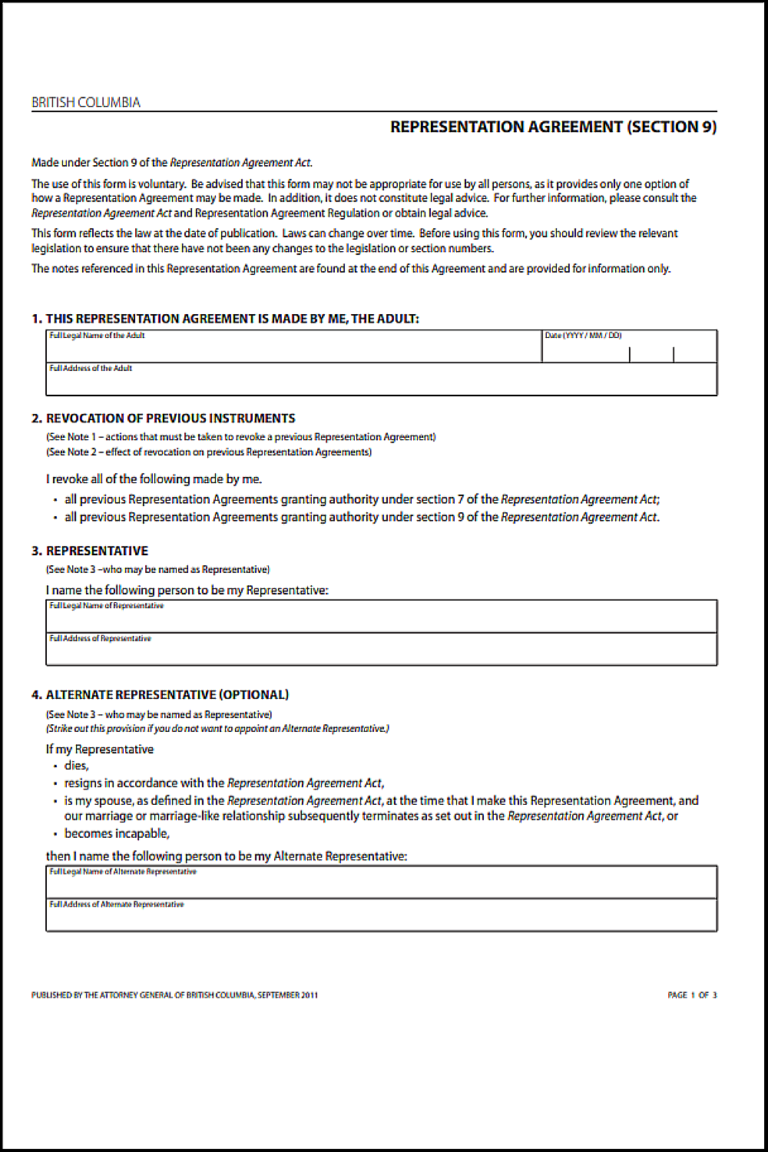
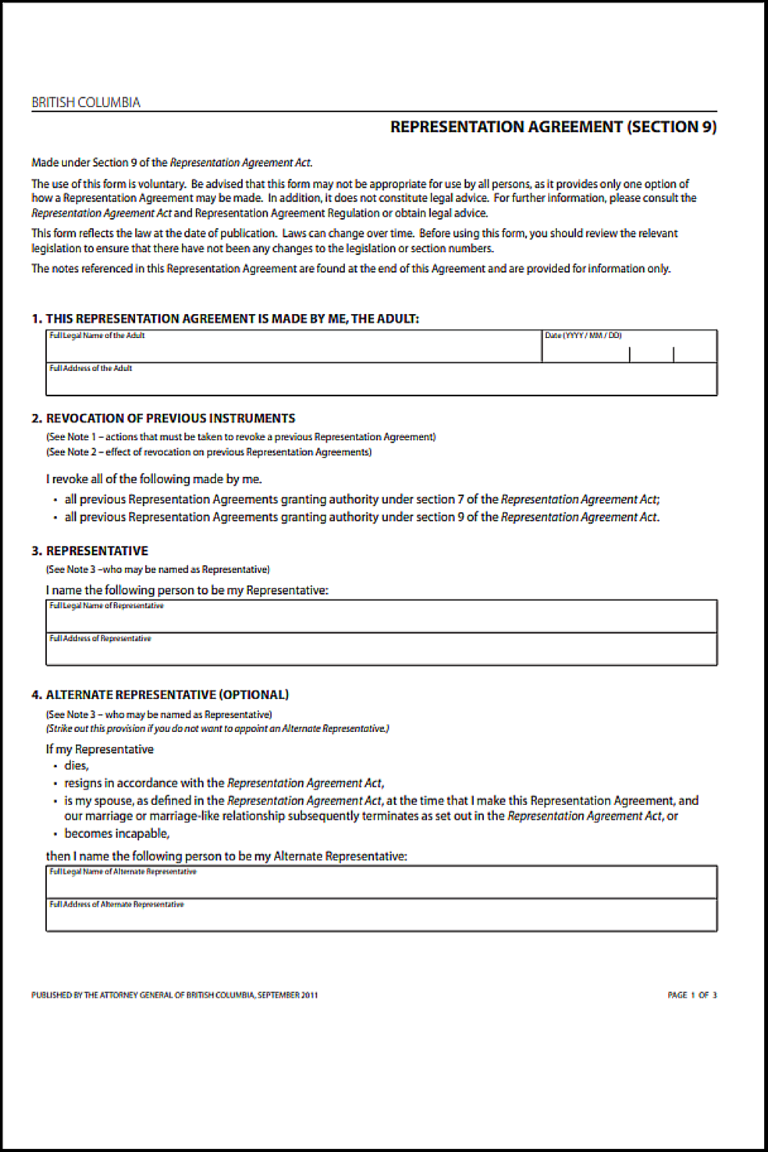
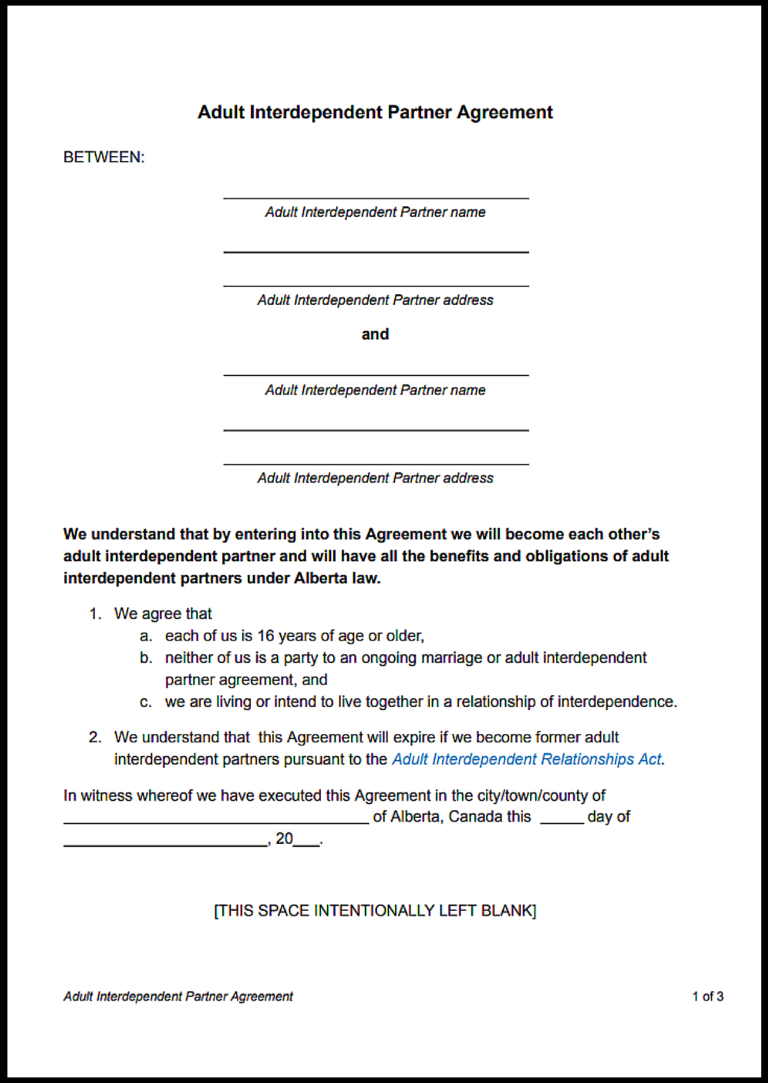
Some people copy templates from the US or other provinces like Alberta, but those may not follow Ontario law. Others forget to update the document after major life changes, such as marriage or illness.
It is always better to review your document regularly and make sure it still reflects your current wishes.
Personal Directive vs Living Will (Ontario Confusion)
There is often confusion between a personal directive and a living will. While both deal with healthcare decisions, they are not the same.
| Feature | Personal Directive (POAPC) | Living Will |
| Legal status | Fully recognized in Ontario |
Informal document
|
| Decision maker | Yes (appointed attorney) | No |
| Binding nature | Legally enforceable |
Not always binding
|
A living will only provides instructions, while a POAPC gives someone the authority to act. In many cases, both documents are used together for better clarity.
How to Fill and Use This Template (Step-by-Step)
- Filling out the template is simple if you follow the correct steps. Start by writing your personal details clearly and accurately. Then choose your attorney carefully, making sure they understand your wishes; for a full walkthrough, see [how to get a power of attorney in Ontario].
- Add any specific instructions about your medical care or personal preferences. After that, sign the document in front of two valid witnesses.
- Once completed, share copies with your attorney, family members, and even your doctor if possible. Store the original document in a safe place where it can be accessed when needed.
What Happens If You Don’t Have One?
If you do not have a personal directive, serious problems can arise. Family members may disagree about your care, and doctors may not know whose instructions to follow.
In some cases, the court may need to appoint a guardian, which takes time and removes your personal control. This can delay treatment and create unnecessary stress for your loved ones.
Having a directive ensures your voice is heard even when you cannot speak for yourself.
Real-Life Example (Simple Scenario)
- Imagine a person who gets into a serious accident and becomes unconscious. Without a directive, family members may argue about treatment decisions, causing delays and confusion.
- With a directive in place, the appointed attorney can immediately make decisions based on the person’s wishes. Doctors can act quickly, and the situation becomes much more manageable.
This shows how important it is to plan ahead.
FAQs
Is a personal directive the same as POA in Ontario?
Yes, in Ontario a personal directive generally refers to a Power of Attorney for Personal Care. It allows someone to make personal and health decisions for you.
Can I write it myself?
Yes, you can create it yourself using a proper template. Just make sure it meets all legal requirements and is clearly written.
Does Ontario Personal Directive need notarization?
No, notarization is not required under Ontario law. Proper signing and witnessing are usually enough.
Can I change or cancel it later?
Yes, you can update or cancel it at any time as long as you are mentally capable. Changes should be made clearly in writing.
Can I have more than one attorney?
Yes, you can appoint multiple or alternate attorneys. It is important to clearly state how they will act to avoid confusion later.