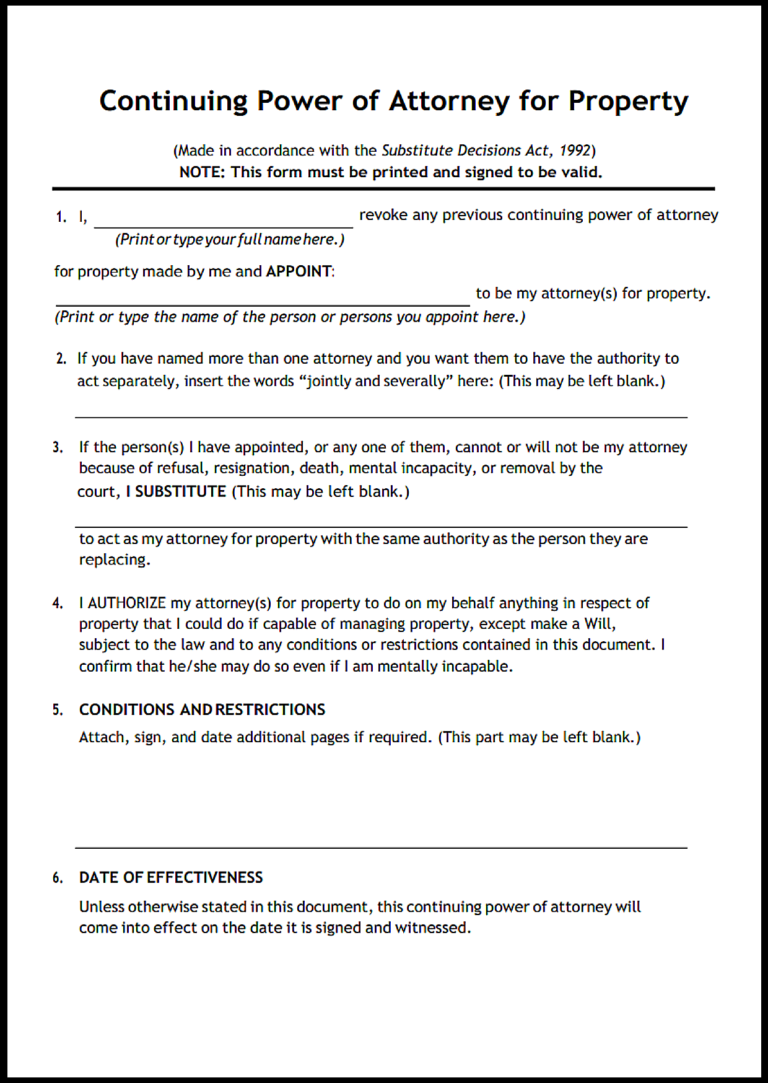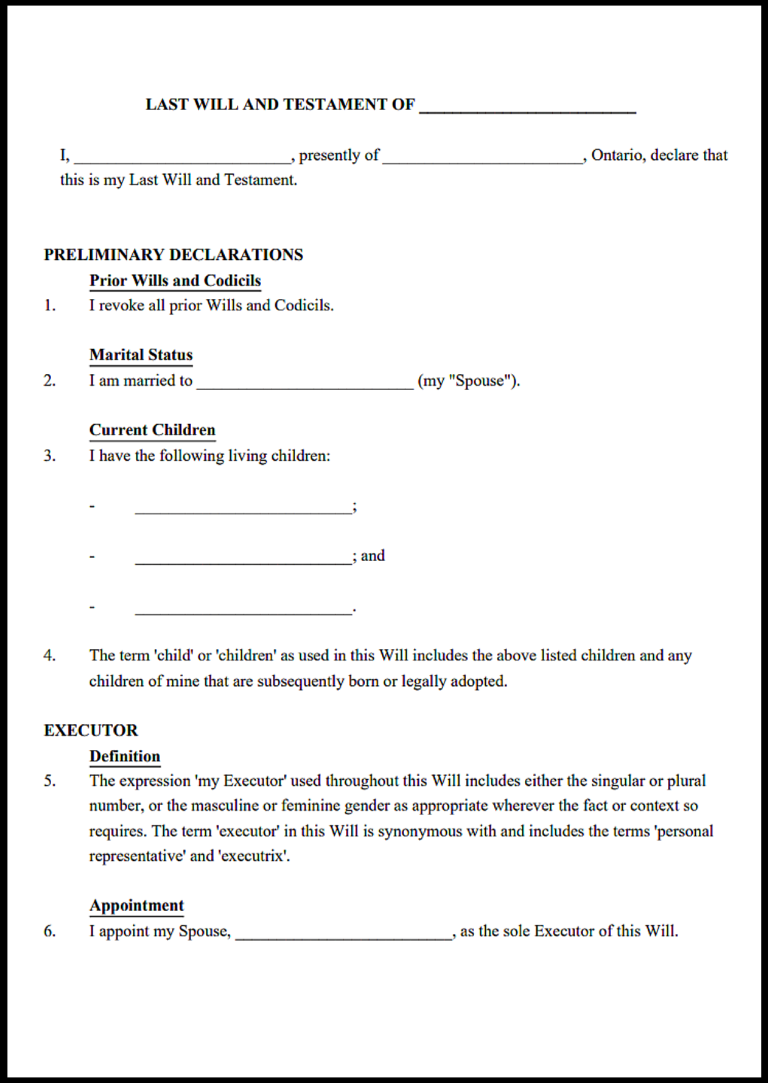
Advance Care Directive Ontario (Free PDF Template & Guide)
Advance Care Directive Ontario planning is about making sure your healthcare wishes are respected if you cannot speak for yourself.
Imagine this: you’re in the hospital after a sudden illness, and your family must decide on life support—but no one knows what you would have wanted. This situation is more common than people think.
I’ve seen Ontario families end up in painful disputes because a loved one’s healthcare wishes were never clearly written down or shared properly. In Ontario, the wrong document or unclear instructions can leave substitute decision-makers struggling to make urgent medical choices during already emotional situations.
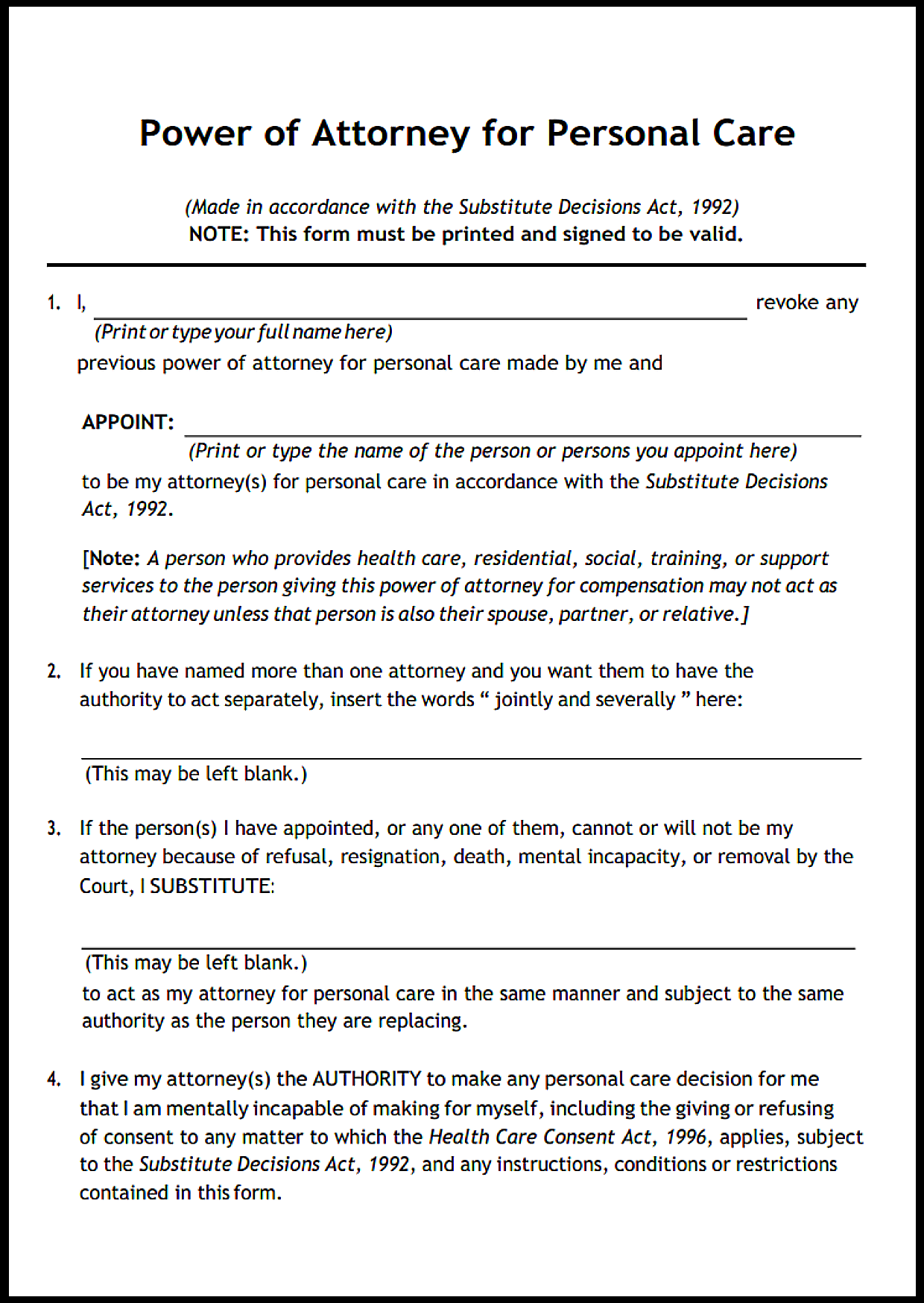
Free Advance Care Directive Template (Ontario)
You can copy and use this template right away. It is simple and practical.
Ontario Advance Care Directive Legal Rules and Validity Requirements
| Topic / Issue | Ontario Legal Rule | Governing Statute |
|---|---|---|
| Governing legislation | Advance care directives and personal care decision-making are governed under Ontario substitute decision and healthcare consent laws. | Substitute Decisions Act, 1992 and Health Care Consent Act, 1996 |
| Federal law involvement | No federal law governs advance care directives in Ontario. | Provincial jurisdiction only |
| Legal status | Ontario laws governing advance care planning are fully active and enforceable. | SDA and HCCA |
| Remote witnessing amendments | Ontario permanently allows remote witnessing of Powers of Attorney through audio-visual communication technology. | Accelerating Access to Justice Act, 2021 |
| Who can sign | The grantor or another person signing in the grantor’s presence and at their direction may sign the directive. | SDA, s. 48(1) |
| Witness requirements | Standalone health wishes have zero statutory execution or witness requirements under The Health Care Consent Act. However, if these advance care directives are embedded directly within a formal Power of Attorney for Personal Care, The Substitute Decisions Act (s. 48) mandates two qualified witnesses. | SDA, s. 48(1) |
| Disqualified witnesses | The attorney, their spouse or partner, the grantor’s spouse or partner, the grantor’s child, anyone under 18, or anyone under guardianship cannot witness the document. | SDA, s. 48(3) |
| Notarization requirement | Notarization is optional and not legally required for validity. | Common law principles |
| Minimum age requirement | A person must be at least 16 years old to create valid personal care and healthcare wishes. | SDA, s. 47(1) |
| Mental capacity requirement | The grantor must understand that the attorney has genuine concern for their welfare and may need to make decisions for them. | SDA, s. 47(1) |
| Expiry rules | A standalone statement of medical wishes remains valid indefinitely unless superseded by later capable wishes. If integrated into a formal Power of Attorney for Personal Care, the governing instrument only terminates under s. 53 of the Substitute Decisions Act upon the grantor’s death, formal revocation, or the attorney’s unreplaced departure | SDA, s. 53 |
| Mandatory wording | No mandatory statutory wording is required for healthcare wishes. | SDA and HCCA |
| Attorney appointment wording | If included inside a POAPC, the document must clearly appoint the attorney. | SDA, s. 46(1) |
| Healthcare wishes rule | Under s. 21(1) of the Health Care Consent Act, a substitute decision-maker is legally compelled to follow any prior applicable wishes expressed by the patient while capable and after reaching 16 years of age | HCCA |
| Filing requirement | Ontario does not require filing or government registration for advance care directives. | Ontario practice rules |
| Storage recommendation | Copies should be shared with the attorney, family doctor, and hospitals. | Ontario healthcare practice |
| Improper witnessing invalidity | The document becomes void if only one witness signs or if a prohibited person acts as witness. | SDA, s. 48(1) |
| Capacity invalidity | The directive is invalid if the grantor lacked required mental capacity when signing. | SDA, s. 47(1) |
| Paid caregiver restriction | A paid healthcare or support provider generally cannot act as attorney unless they are also a spouse, partner, or relative. | SDA, s. 46(3) |
| Ontario “wishes” system | In Ontario, healthcare directives are treated as legally recognized “wishes” rather than direct medical consent. | HCCA |
| SDM consent requirement | Doctors must obtain consent from a human Substitute Decision-Maker who is legally required to follow the grantor’s wishes. | HCCA |
| Ontario age difference | Ontario allows healthcare wishes and personal care directives at age 16, which is lower than many provinces. | SDA, s. 47 |
| SDM hierarchy rule | Ontario law automatically creates a family hierarchy of Substitute Decision-Makers if no document exists. | HCCA |
One of the most important Ontario rules is that an advance care directive does not directly authorize doctors to act on the document alone. Instead, Ontario law treats the document as a record of your “wishes,” and your Substitute Decision-Maker must communicate those wishes to healthcare providers. This surprises many people because they assume the document itself automatically controls treatment decisions.
The witness rules are also very strict. If only one witness signs, or if a prohibited person such as your child or appointed attorney acts as witness, the directive can become legally invalid. In real-life emergencies, this can create delays, disagreements, and confusion during critical medical decisions.
Ontario’s lower age requirement is another major difference. Someone can legally create healthcare wishes and appoint a personal care attorney at just 16 years old, which is younger than in many other provinces. Download the free Ontario Advance Care Directive template below to create a clear and legally compliant healthcare planning document.
What Is an Advance Care Directive in Ontario?
An advance care directive is simply a written record of your healthcare wishes. It tells others what kind of treatment you want or do not want if you become incapable.
Under Ontario law, this is not a strict legal form but a way to guide decisions. Your instructions help your Substitute Decision Maker (SDM) and doctors understand your preferences.
Key Understanding
- It is a guidance document, not a legal authority
- The SDM is the person who actually makes decisions
- Your wishes must be followed if they were made while you were capable
An advance care directive allows individuals to document specific medical instructions in advance. For a complete overview of how these instructions are structured, refer to the Ontario living will template guide, which explains how these documents are legally recognized.
Quick Comparison
| Feature | Advance Care Wishes |
Power of Attorney
|
| Role | Gives instructions |
Gives legal authority
|
| Binding nature | Followed if valid |
Legally enforceable
|
| Format | Flexible |
Formal document
|
| Purpose | Guides decisions |
Makes decisions
|
In most estate planning situations, using both together gives stronger protection.
How Ontario Law Handles Advance Care Planning?
Under Ontario law, advance care planning is mainly based on the Substitute Decisions Act, 1992. This law explains how decisions are made when someone becomes mentally incapable.
Your wishes can be written or even spoken, but they must be clear and made when you were capable. If such wishes exist, your SDM must follow them.
The Consent and Capacity Board may step in if there is disagreement or confusion. It ensures that decisions follow your known wishes and legal rules.
Some key legal points to remember:
- You must be mentally capable when making the directive
- Earlier capable wishes take priority
- SDMs must follow your instructions, not their own opinions
- If no wishes exist, decisions are based on your best interests
This directive is often prepared alongside a personal directive for appointing healthcare decision-makers. It is also helpful to understand how authority is assigned through documents like the comparison between living wills and power of attorney, especially when managing complex medical situations.
When You Should Create One (Real-Life Situations)
It is always better to create your directive early rather than waiting for a crisis. Many people only realize its importance during emergencies.
You should consider making one in situations like preparing for surgery, dealing with a chronic illness, or planning for old age. It is also useful when updating other estate planning documents.
A common real-life example shows the difference clearly. Without a directive, families often disagree on treatment decisions, causing delays and stress. But when clear instructions are written, the SDM can act confidently, and doctors can proceed without confusion.
Key Sections You Must Include
Personal Identification
This section ensures that your identity is clear. Incorrect details can create confusion or delay decisions.
Substitute Decision Maker (SDM)
Your SDM is the person who will make decisions for you if you cannot. Choose someone responsible and trustworthy. It is also important to name a backup SDM in case the first person is unavailable.
Treatment Preferences
You should clearly state your choices about life support, CPR, feeding tubes, and pain management. Avoid unclear language because doctors and SDMs rely on exact instructions.
End-of-Life Instructions
Explain whether you prefer comfort care or aggressive treatment. You can also mention where you want care, such as at home or in a hospital.
Organ Donation Choices
This is optional but helpful. It makes your intentions clear and avoids confusion later.
How to Make It Legally Valid in Ontario
Ontario does not require a strict format for advance care wishes, but certain conditions must be met for them to be followed.
Your directive must be made while you are mentally capable, and the instructions should be clear and applicable to the situation. While a witness is not legally required, it is strongly recommended to avoid disputes.
To strengthen your document:
- Sign and date it
- Use a witness
- Share it with your SDM and doctor
Combining this with a Power of Attorney gives better legal protection.
Advance Directive vs Power of Attorney (Ontario)
Many people confuse these two, but they serve different purposes.
Key Differences
| Aspect | Advance Directive |
Power of Attorney
|
| Meaning | Your instructions |
Your decision-maker
|
| Legal power | Indirect | Direct authority |
| Function | Guides care |
Makes decisions
|
Why You Often Need Both
An advance directive tells others what you want, while a Power of Attorney ensures someone has the legal authority to carry out those wishes. Together, they provide complete protection and reduce confusion during critical situations.
Common Mistakes That Can Make It Useless
Even a written directive can fail if it is not properly prepared. Many people make simple mistakes that create big problems later.
Some of the most common issues include writing vague instructions, not updating the document after major life changes, or failing to inform family members. Another major mistake is keeping the document somewhere inaccessible.
To avoid problems, always keep your instructions clear, updated, and shared with the right people.
What Happens If You Don’t Have One
If you do not have an advance care directive, Ontario law decides who will make decisions for you. This follows a set hierarchy, usually starting with your spouse, then children, parents, and other relatives.
Without clear instructions, families may disagree, which can delay treatment and create emotional stress. In some cases, doctors may have to make decisions based on what they believe is in your best interest.
How to Use and Share Your Directive
Creating the document is only the first step. It is equally important to make sure the right people have access to it.
You should give copies to your SDM and close family members. It is also helpful to share it with your family doctor so it can be used when needed.
To keep it effective:
- Store it in an accessible place
- Review it every few years
- Update it after major life changes
Real-Life Example (Simple Scenario)
Consider a situation where a person becomes unconscious after an accident. Without any written wishes, the family may disagree about treatment, leading to delays and stress.
In contrast, if the person had already written their healthcare preferences, the SDM could follow those instructions easily. Doctors would act quickly, and the family would feel more confident about the decisions being made.
Frequently Asked Questions
Is an advance care directive legally binding in Ontario?
It is not a formal legal document, but under Ontario law, your wishes must be followed if they were made while you were capable and apply to the situation.
Do I need a lawyer to create one?
No, you can create it yourself. However, legal advice can help when combining it with a Power of Attorney.
Can I change it later?
Yes, you can update or cancel your directive anytime as long as you are mentally capable.
Who decides if I don’t have one?
Your Substitute Decision Maker is chosen based on Ontario’s legal hierarchy.
Is it the same as a living will?
It is similar, but in Ontario, the term “living will” is informal and not a specific legal document.