Free Customizable Manitoba Basement Rental Agreement (Forms)
A Manitoba Basement Rental Agreement helps set out the terms of a basement tenancy before disagreements arise over rent, utilities, parking, or the use of shared areas within the property. In Manitoba, residential tenancies are governed by the Residential Tenancies Act, and arrangements that seem straightforward at the start can become difficult to resolve when important terms were never written down.
One situation that frequently surfaces before the Residential Tenancies Branch involves a homeowner and tenant who disagree about whether utility costs or access to common spaces were included in the monthly rent because the arrangement was largely verbal. That’s one reason generic rental templates often fall short—they may not address the practical issues that commonly arise in basement suite rentals within the province.
This page explains the key terms commonly included in a Manitoba basement rental agreement, how the document is used, and what landlords and tenants should review before signing.
Last Updated: August 2026
Free Basement Rental Agreement Template (Manitoba)
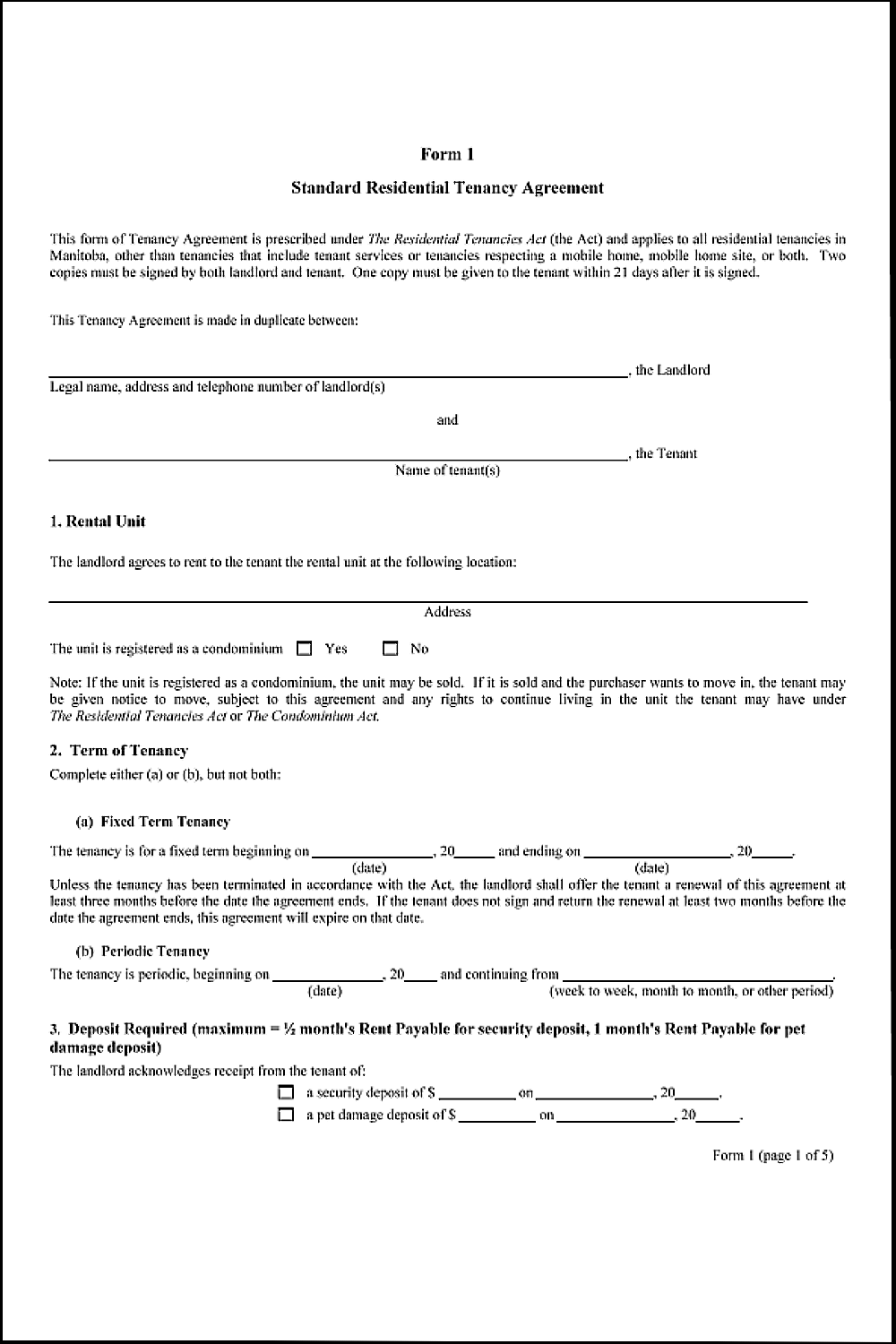
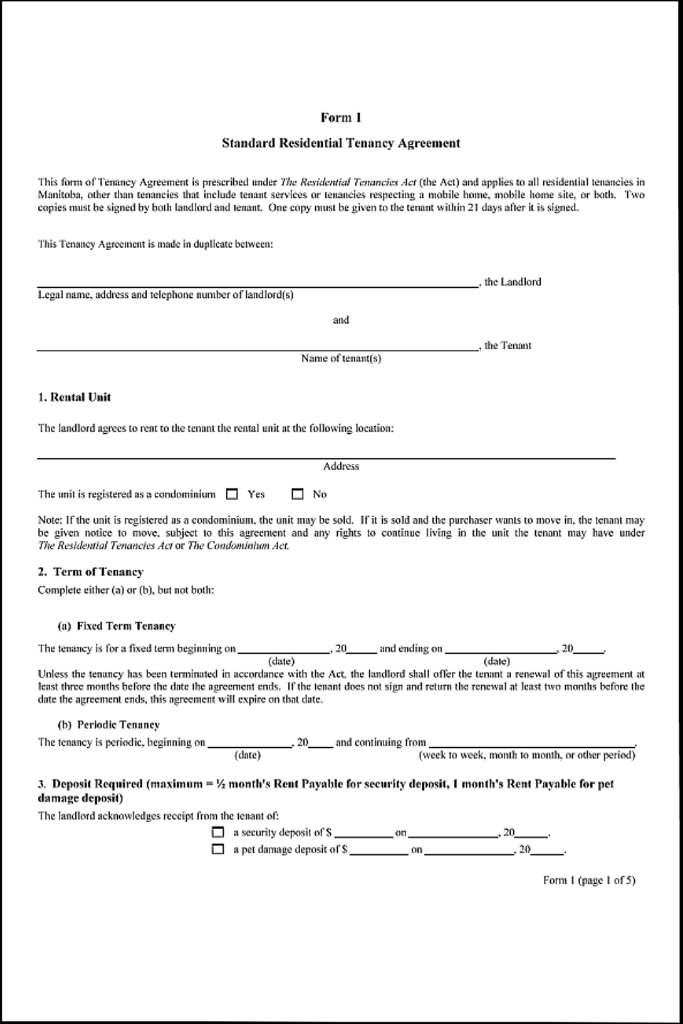
This template follows Manitoba Standard Residential Tenancy Agreement principles while addressing basement-specific concerns like utilities, shared areas, and secondary suite details.
A Manitoba Basement Rental Agreement helps set out the terms of a basement tenancy before disagreements arise over rent, utilities, parking, or the use of shared areas within the property. In Manitoba, covered residential tenancies are governed primarily by The Residential Tenancies Act and applicable regulations, while clearly recording these practical terms can help reduce disputes.
A common basement-rental dispute involves a homeowner and tenant disagreeing about whether utility costs or access to common spaces were included in the monthly rent because the arrangement was largely verbal. That’s one reason generic rental templates often fall short—they may not address the practical issues that commonly arise in basement suite rentals within the province.
This page explains the key terms commonly included in a Manitoba basement rental agreement, how the document is used, and what landlords and tenants should review before signing.
Last Updated: August 2026
Free Basement Rental Agreement Template (Manitoba)
Free Manitoba Basement Rental Agreement Template (image)
This template follows Manitoba Standard Residential Tenancy Agreement principles while addressing basement-specific concerns like utilities, shared areas, and secondary suite details.
Manitoba Basement Rental Agreement Rules Most Landlords Miss
| Topic / Issue | Manitoba Legal Rule | Governing Statute |
|---|---|---|
| Governing Legislation | Residential basement rental agreements covered by the Act are governed primarily by Manitoba’s Residential Tenancies Act and applicable regulations. | The Residential Tenancies Act, C.C.S.M. c. R119; Residential Tenancies Regulation, Man. Reg. 71/2010 |
| Federal Jurisdiction | Residential landlord-tenant matters are primarily governed by provincial law in Manitoba, including The Residential Tenancies Act and its regulations. | Constitution Act, 1867, s. 92(13) |
| Who Can Legally Sign | A written tenancy agreement must be signed by the landlord and tenant or their agents. | The Residential Tenancies Act, s. 1(1) |
| Witness Requirements | The Residential Tenancies Act requires the landlord and tenant or their agents to sign a written tenancy agreement; it does not impose a separate witness-signature requirement for an ordinary tenancy agreement. | The Residential Tenancies Act |
| Notarization Requirement | An ordinary Manitoba residential tenancy agreement does not require notarization or commissioning under The Residential Tenancies Act. | The Residential Tenancies Act |
| Age & Mental Capacity | Manitoba’s age of majority is 18. The legal effect of a tenancy agreement involving a minor should not be stated as an automatic rule without considering the circumstances. | The Age of Majority Act, s. 1 |
| Deadline for Tenant Copy | Within 21 days after the tenant signs a written tenancy agreement and gives it to the landlord, the landlord must give the tenant a copy signed by both the landlord and tenant. | The Residential Tenancies Act, s. 8 |
| Mandatory Lease Form | A written residential tenancy agreement must use the prescribed form or a landlord’s own form containing all prescribed information. | The Residential Tenancies Act, s. 7(1) |
| Security Deposit Limit | A security deposit must not exceed one-half of the first month’s rent payable under the tenancy agreement. | The Residential Tenancies Act, s. 29(1) |
| Pet Damage Deposit Limit | A pet damage deposit cannot exceed one month’s rent, and a landlord cannot require one for a dog guide or other animal assistant protected under The Human Rights Code. | The Residential Tenancies Act, s. 29.1 |
| Required Standard Clauses | The prescribed tenancy agreement contains required terms, and additional provisions must not be inconsistent with the prescribed form or The Residential Tenancies Act. | The Residential Tenancies Act |
| Private Contract Status | A residential tenancy agreement is a contract governed by The Residential Tenancies Act; ordinary residential tenancy agreements are not generally filed with a land registry merely because the tenancy exists. | The Residential Tenancies Act |
| Form 2 Requirement | For rent-regulated tenancies, landlords must provide the prescribed Notice to New Tenant, which is Form 2 under the Residential Rent Regulation. | Manitoba Residential Rent Regulation |
| RTB Submission Requirement | For rent-regulated tenancies, the landlord must provide the prescribed Notice to New Tenant and send a copy to the Residential Tenancies Branch. | Manitoba Residential Rent Regulation |
| Illegal Deposit Clauses | A tenancy term requiring a deposit above the statutory limit is unenforceable to the extent that it conflicts with The Residential Tenancies Act. | The Residential Tenancies Act, s. 29(1) |
| Post-Dated Cheque Requirement | Landlords cannot require a tenant to provide a post-dated cheque, negotiable instrument or order to pay for rent or a tenant services charge, although the tenant may provide one voluntarily. | The Residential Tenancies Act, s. 16 |
| Invalid Custom Clauses | Additional tenancy terms must not be inconsistent with the prescribed form or The Residential Tenancies Act, and any tenant obligation must be reasonable in the circumstances. | The Residential Tenancies Act, s. 11 |
| Condominium Disclosure Requirement | Before a prospective tenant enters into a tenancy agreement for a condominium unit, the landlord must give the tenant written notice that the rental unit is governed by The Condominium Act. | The Residential Tenancies Act, s. 56.1 |
| Manitoba Deposit Difference | Manitoba limits security deposits to one-half month’s rent, unlike some provinces that commonly collect a full month. | The Residential Tenancies Act, s. 29(1) |
| Mandatory Form Structure | Manitoba requires written residential tenancy agreements to contain the prescribed information; landlords may use the provincial form or their own form containing all prescribed information. | The Residential Tenancies Act, s. 7(1) |
| Minors Bound by Lease | A person becomes an adult in Manitoba at age 18. The legal effect of a tenancy agreement involving a minor should be considered based on the circumstances. | The Age of Majority Act |
The security-deposit limit is an important Manitoba rule for basement landlords. A security deposit cannot exceed one-half of the first month’s rent, so a landlord should not simply copy a full-month deposit rule from another province. Manitoba also regulates the form of written tenancy agreements. The Residential Tenancies Act requires a written agreement to be in the prescribed form, although the RTB states that a landlord may use its own form if it contains all prescribed information.
The rule about minors also requires care. Manitoba’s age of majority is 18, and the legal effect of a tenancy agreement involving a minor should not be reduced to a blanket statement about housing being a “necessary of life.” These rules matter in basement rentals because the agreement may need to address utilities, shared entrances, parking, laundry and other issues that are less common in a standard apartment. The free Manitoba Basement Rental Agreement template below can help organize the main tenancy terms, but the completed agreement should still be checked against current Manitoba requirements.
A basement rental agreement helps landlords document occupancy terms for separate living spaces within a residential property. To understand how these rental arrangements fit into broader tenancy rules, you can review the Canadian lease agreement guide along with the Manitoba lease law resource.
Is Your Basement Suite Even Legal in Manitoba? (Critical First Step)
A tenancy agreement does not replace the municipal approvals or building and safety requirements that may apply to a basement suite.
A tenancy agreement does not legalize an illegal basement unit.
Before renting, landlords should consider official legal compliance requirements, including zoning, permits, and property standards through the City of Winnipeg’s secondary suites information page: Municipal zoning
- Secondary suite permits
- Fire safety compliance
- Building code standards
In Winnipeg, secondary suites require development and building permits before a secondary suite is built; requirements can differ by municipality elsewhere in Manitoba.
Fire Code Basics Matter
A basement suite must meet applicable building, fire, electrical and plumbing requirements. Depending on the layout and municipality, this can include compliant bedroom egress, fire separation, exits and safe electrical and plumbing systems.
A basement rental may require:
- Legal egress windows for bedrooms
- Proper smoke separation
- Emergency exits
- Safe electrical and plumbing systems
Warning Signs of an Illegal Basement Rental
- No proper bedroom escape window
- No separate or safe emergency exit
- Unsafe wiring or plumbing
- No permit where required
Landlords are not allowed to ignore safety obligations simply because the tenant agrees.
Required Legal Documents Beyond the Lease
A Manitoba basement rental often needs more than one signed contract.
Important documents include:
- Standard Residential Tenancy Agreement (Form 1)
- Notice to New Tenant
- Rental Unit Condition Report (Form 5)
- Utility-sharing terms
- Secondary suite permit compliance
“Magic Words” for Shared Utilities
Shared utility clauses should never be vague.
Instead of saying “tenant pays utilities,” clearly state:
- Hydro split percentage
- Water allocation
- Gas allocation
Example:
“Tenant pays 40% of hydro and gas monthly.”
This reduces disputes significantly.
This agreement is often connected with a tenant rental application form used during the screening process, while long-term renters may eventually require a lease renewal agreement to extend occupancy.
Security Deposits, Rent Rules, and Basement-Specific Costs
Security Deposit Limits
Under Manitoba law:
- Maximum = half of one month’s rent
- Interest on security deposits is governed by Manitoba’s statutory deposit-interest rules.
Pet Deposits
If pets are allowed:
- Separate pet damage deposit may apply
- Up to one full month’s rent may be allowed
Late Fees
Manitoba law is strict. Lease terms cannot exceed legal caps.
Rent Increase Rules
For 2026:
- Annual guideline = 1.8%
- Some units are exempt from the guideline, and an increase above the permitted amount may require an application to the Residential Tenancies Branch.
In shared homes, property owners may also use a roommate agreement template to outline shared utility costs and household responsibilities.
Key Clauses Every Manitoba Basement Lease Should Include
Basement rentals often involve issues standard apartments do not.
Utility Sharing Terms
Clearly define:
- Who pays
- Percentage split
- Billing schedule
Noise and Shared Space Boundaries
Especially important in owner-occupied homes.
Examples:
- Quiet hours
- Shared hallways
- Guest limits
Laundry / Parking Access
State:
- Times
- Limits
- Assigned spots
Entry and Privacy Rules
Under Manitoba law, a landlord generally must give at least 24 hours and not more than 2 weeks’ written notice before entry, stating the purpose and reasonable time of entry, unless an exception under the Act applies.
Maintenance Responsibility
Clarify:
- Snow removal
- Shared entrances
- Appliance maintenance
Common Legal Mistakes Basement Landlords Make
Many basement landlords unintentionally create legal risk.
Common mistakes:
- Renting illegal suites
- Overcharging deposits
- Missing Notice to New Tenant
- No condition report
- Invalid utility clauses
- Requiring post-dated cheques
For example, landlords are not allowed to require post-dated cheques as a lease condition.
Tenant Rights in Basement Rentals
Where a basement tenancy is covered by The Residential Tenancies Act, the tenant receives the statutory rights and protections that apply to other covered residential tenancies.
These include:
- Safe living conditions
- Privacy protections
- Human rights protections
- Deposit protections
- Lawful rent increase protections
A basement suite is not automatically exempt from Manitoba tenancy law; whether the Residential Tenancies Act applies depends on the nature of the accommodation and the statutory exemptions.
Basement Suite vs Standard Apartment Lease
Comparison
| Feature | Basement Suite |
Standard Apartment
|
| Utility complexity | Often shared | Often simpler |
| Safety risks | Higher if illegal conversion |
Usually regulated building-wide
|
| Shared entrances | More common | Less common |
| Municipal compliance | Secondary suite rules often apply |
Standard rental rules
|
| Privacy issues | Often more complex | Usually clearer |
Real-Life Manitoba Basement Rental Disputes
Common disputes include:
- Shared hydro bill disagreements
- Illegal bedroom safety concerns
- Deposit deductions without condition reports
- Parking conflicts
- Laundry access disputes
- Noise issues in owner-occupied homes
Recording utility allocations, parking arrangements, shared-area access and other basement-specific terms before the tenancy begins can help reduce disputes.
Step-by-Step: How to Complete a Basement Rental Agreement Properly
Practical Compliance Steps
| Step | Action |
| 1 |
Verify legal suite status
|
| 2 |
Use Manitoba Form 1
|
| 3 |
Add basement-specific clauses
|
| 4 |
Complete Notice to New Tenant
|
| 5 |
Conduct condition inspection
|
| 6 |
Keep signed copies
|
Keeping the completed agreement, Notice to New Tenant where applicable, and condition report together also gives both parties a clearer record of the tenancy.
FAQ
Is it legal to rent out my basement in Manitoba?
The suite should comply with applicable municipal zoning, permitting, building and safety requirements, and the tenancy itself must comply with Manitoba tenancy law if the Residential Tenancies Act applies.
Do basement bedrooms need egress windows?
Bedrooms and other habitable areas must meet applicable building and safety requirements, including required emergency egress where applicable.
Can landlords split utilities?
Yes, but the arrangement should be clearly written.
What deposit can I charge?
Usually up to half a month’s rent for security, plus lawful pet deposit if applicable.
Do I need a secondary suite permit?
Permit requirements depend on the municipality, property type and work being done. In Winnipeg, secondary suites require development and building permits.