Manitoba Bill of Sale Requirements (Free Template, Rules)
Manitoba Bill of sale requirements rules depend on what is being sold. A simple bill of sale for furniture is treated differently from a Manitoba vehicle bill of sale used for a car, truck, motorcycle, or trailer transfer.
In most private sale situations, a bill of sale works as written proof that the buyer paid for the item and the seller transferred ownership. It can help prevent disputes about payment, condition, ownership, or taxes later.
For vehicle sales, Manitoba Public Insurance (MPI) also requires specific information before ownership can be registered properly. Missing details like the VIN or signatures can delay registration or create legal problems.
A Manitoba bill of sale is commonly used for: Cars and trucks, motorcycles, trailers, boats, farm equipment, electronics, furniture, tools, and machinery.
Under Manitoba law, most private bills of sale do not need a witness or notary to be valid. However, written documents are strongly recommended because verbal agreements are difficult to prove if problems happen later.
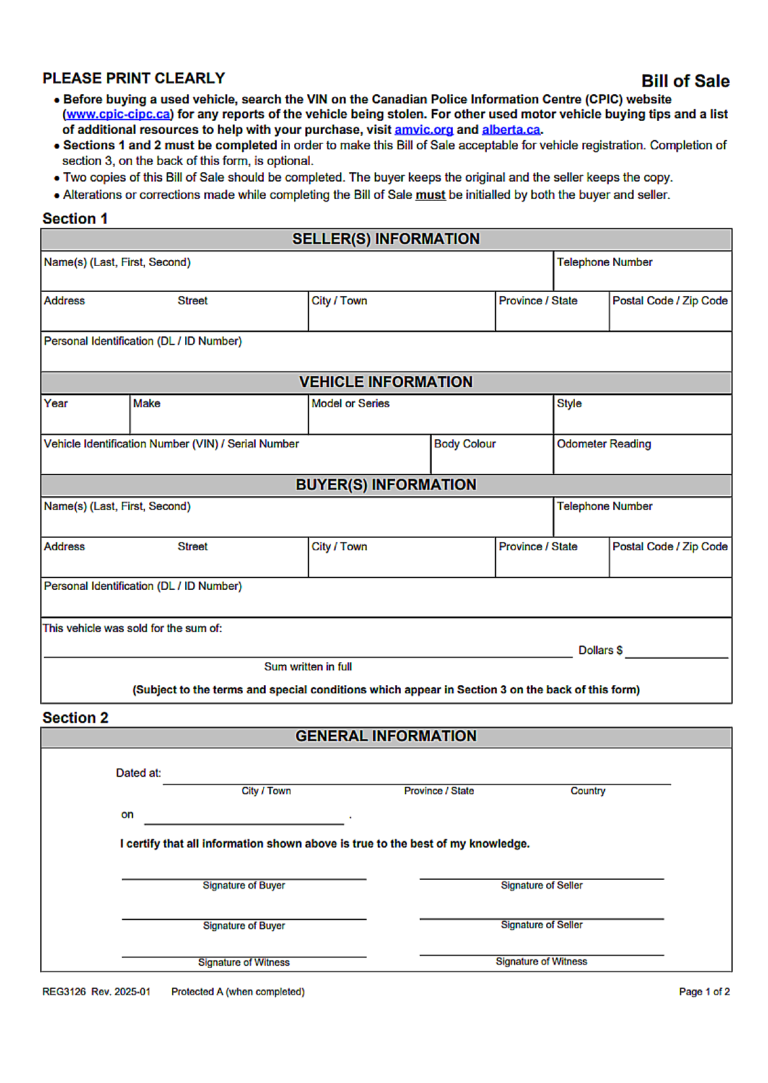
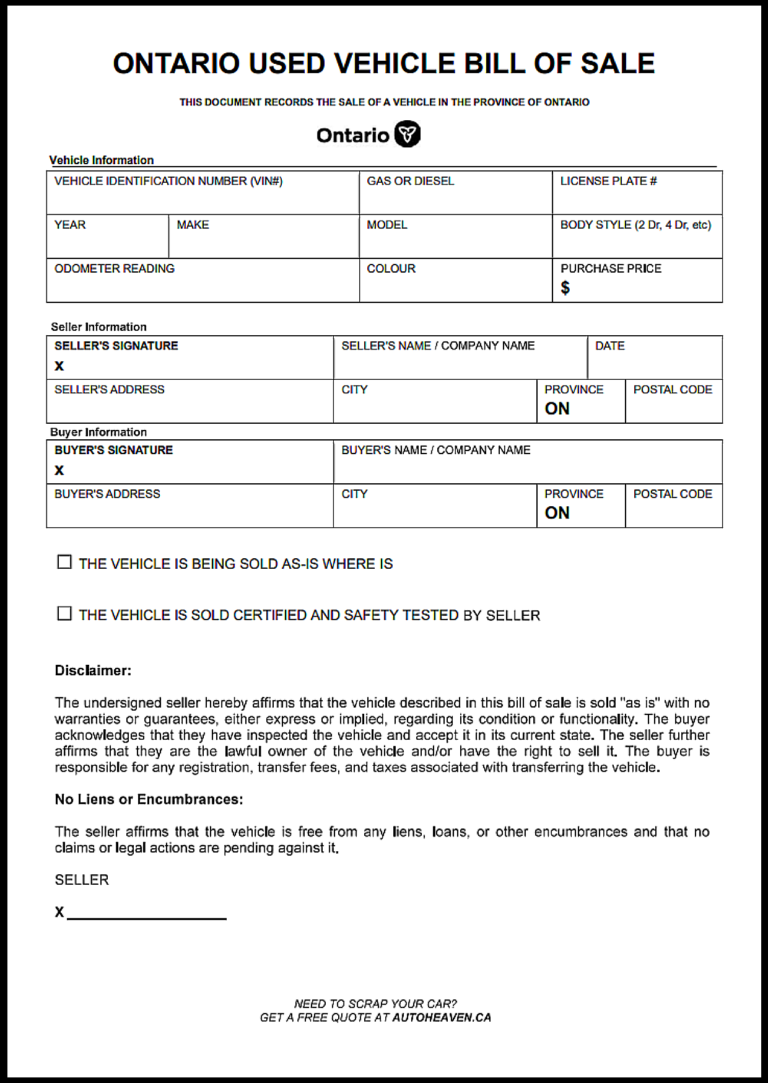
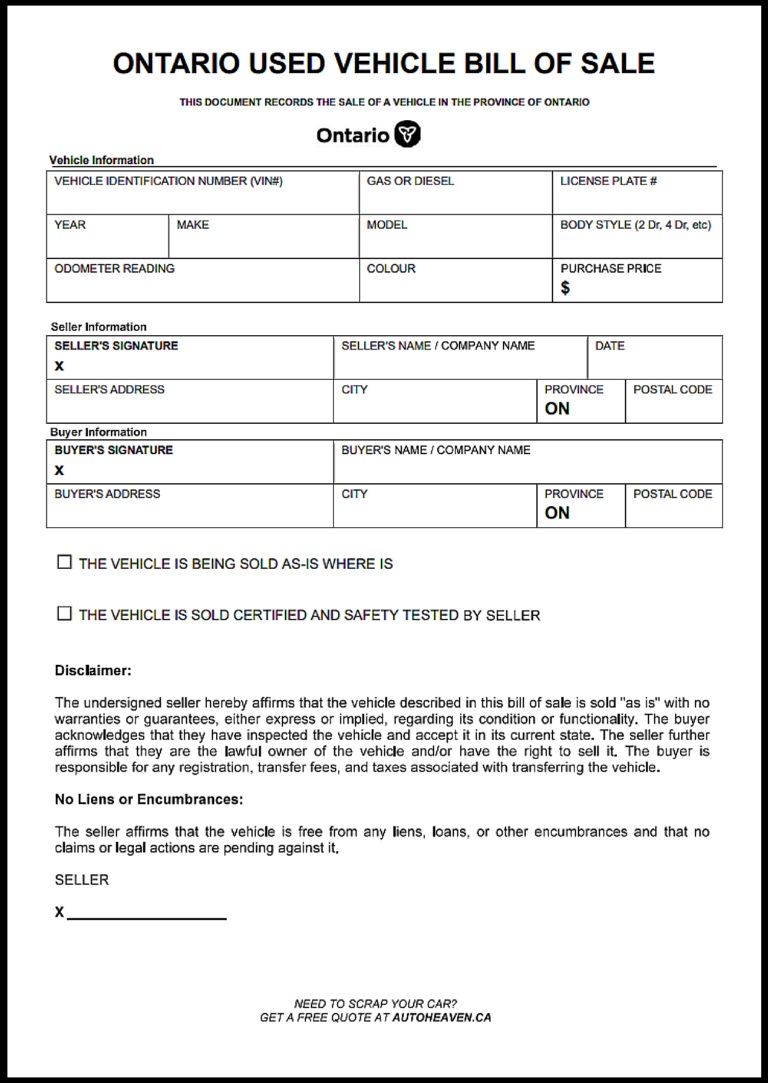
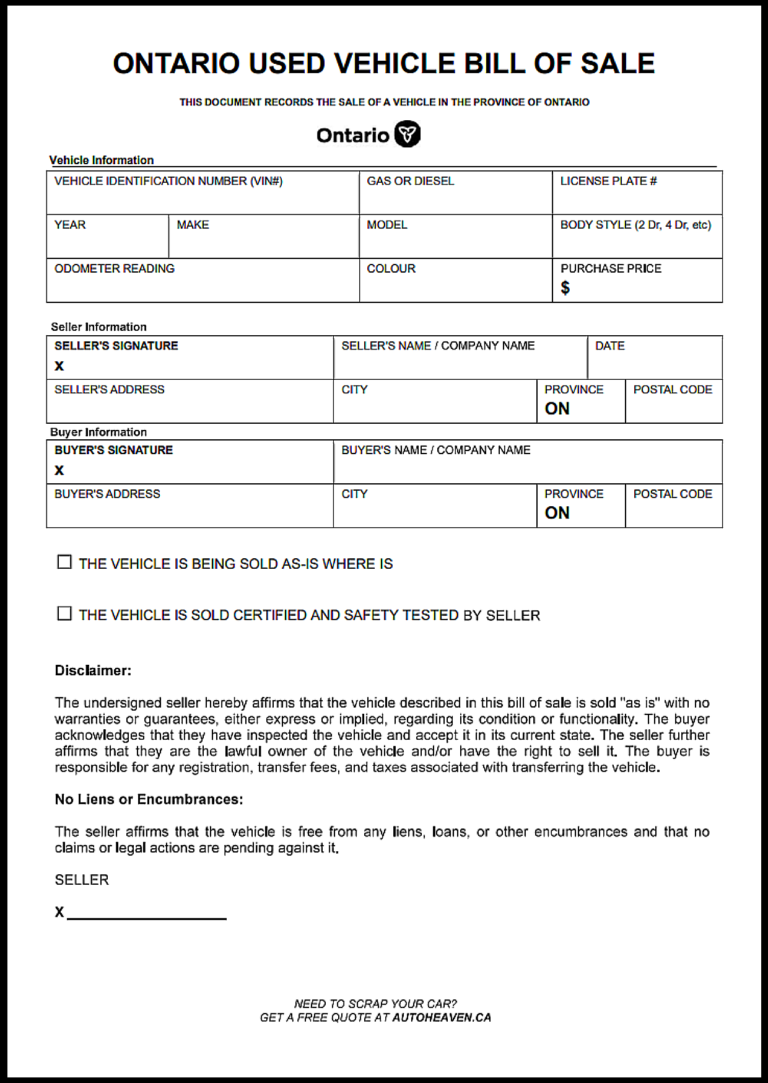
Manitoba Bill of Sale Requirements Template
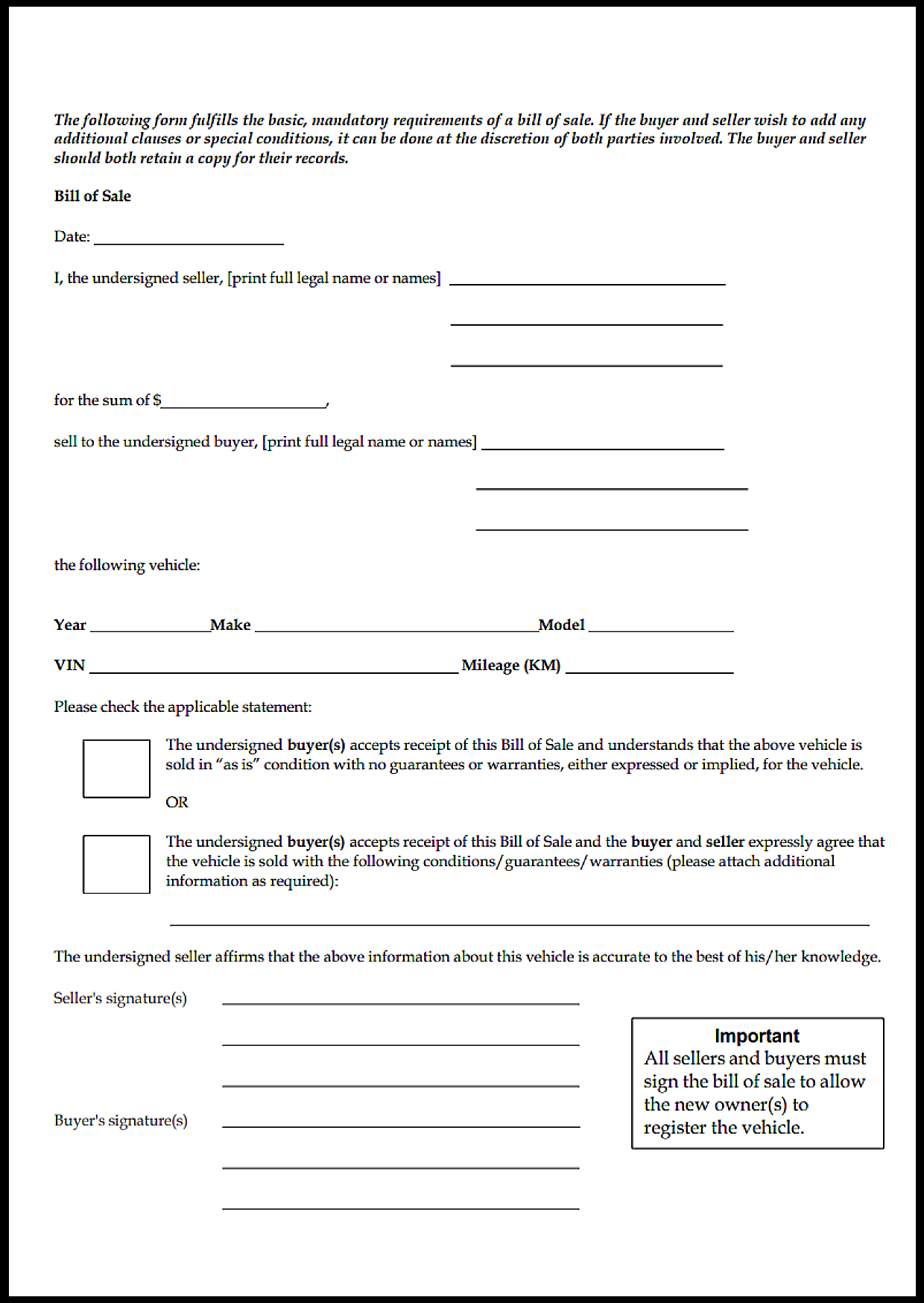
The template below is designed for general private sales in Manitoba. It includes the basic information commonly used in Manitoba private sale requirements and adds important ownership and “As Is” wording.
Manitoba Bill of Sale Legal Requirements, Registration Rules & Ownership Laws
| Topic / Issue | Manitoba Legal Rule | Governing Statute |
|---|---|---|
| Contract of sale rules | The contract of sale and transfer of physical property are governed under Manitoba sale-of-goods law. | The Sale of Goods Act, R.S.M. 1987, c. S10 |
| Vehicle and trailer registration | Bills of sale used for vehicle and trailer registration are governed by Manitoba registration requirements. | The Drivers and Vehicles Act, C.C.S.M. c. D104 |
| Federal boat transfer compliance | Boat ownership documentation must comply with federal vessel licensing requirements. | Canada Shipping Act, 2001, S.C. 2001, c. 26; Small Vessel Regulations (SOR/2010-91) |
| Legal signing authority | Every registered legal owner and all intended buyers should sign the bill of sale. | The Sale of Goods Act, R.S.M. 1987, c. S10, s. 24; MPI Registration Standards |
| Witness requirement | Manitoba generally does not require witnesses for ordinary private bills of sale. | No statutory requirement — governed by common law principles |
| Notarization requirement | Notarization is generally unnecessary unless a Declaration under Oath is later required because no bill of sale exists. | Canada Shipping Act, 2001 / MPI Estate Policies |
| Age and legal capacity | Signing parties must generally be at least 18 years old and capable of entering contracts. | The Age of Majority Act, C.C.S.M. c. A7, s. 1 |
| Vehicle registration deadline | Vehicle and trailer buyers generally must register transfers within 7 days to drive under temporary transfer rules. | The Drivers and Vehicles Act, C.C.S.M. c. D104 |
| Pleasure Craft Licence deadline | Boat ownership updates must generally be submitted within 30 days. | Small Vessel Regulations, s. 113(1) |
| Required sale date | Bills of sale should contain the exact transaction date. | MPI and Transport Canada processing requirements |
| Purchase price disclosure | The exact purchase price or nature of a gift/trade transaction should be stated clearly. | MPI and Transport Canada processing requirements |
| Vehicle information requirements | Vehicle bills of sale should contain year, make, model, VIN, and odometer information. | The Drivers and Vehicles Act, C.C.S.M. c. D104 |
| Boat information requirements | Boat bills of sale should contain HIN and Pleasure Craft Licence information. | Canada Shipping Act, 2001; Small Vessel Regulations |
| Party identification requirements | Bills of sale should include full legal names, addresses, and signatures of buyers and sellers. | MPI and Transport Canada processing requirements |
| Trailer registration requirement | Original bills of sale must be presented to MPI or an Autopac agent to register trailers and towables. | Manitoba Public Insurance registration process |
| Transfer of Ownership Document (TOD) | A bill of sale alone is insufficient for trailer registration without the signed TOD from the seller’s registration card. | The Drivers and Vehicles Act, C.C.S.M. c. D104 |
| Retail Sales Tax collection | Retail Sales Tax is collected by MPI during registration based on the purchase price. | The Retail Sales Tax Act, C.C.S.M. c. R130 |
| VIN or HIN mismatch | Incorrect serial numbers may cause immediate rejection of the ownership transfer. | The Drivers and Vehicles Act, C.C.S.M. c. D104 |
| Missing co-owner signatures | A bill of sale may be invalid if all legal owners do not sign. | The Sale of Goods Act, R.S.M. 1987, c. S10, s. 23(1) |
| Altered documents without initials | Material handwritten changes added after signing may make the document unenforceable unless all parties initial the changes. | Manitoba common law contract principles |
| Manitoba dual-document rule | Manitoba requires both the Bill of Sale and the Transfer of Ownership Document for trailer registration. | The Drivers and Vehicles Act, C.C.S.M. c. D104 |
| MPI valuation review | MPI may challenge unusually low sale prices against Red Book market values during tax assessment. | Manitoba Public Insurance valuation process |
One of the biggest surprises for Manitoba buyers is that a bill of sale alone is often not enough to complete a vehicle or trailer transfer. Manitoba’s dual-document system usually requires both the Bill of Sale and the signed Transfer of Ownership Document from the seller’s registration paperwork. Missing either document can completely stop the registration process at an MPI or Autopac office. The VIN and HIN matching rules are also stricter than many people expect. Even a small typo in a serial number can delay ownership transfer or trigger fraud concerns.
The tax valuation rules matter in real life because MPI may question unusually low sale prices and calculate taxes using higher market values instead. Buyers sometimes discover this only after arriving to register the vehicle or trailer. Missing co-owner signatures, altered paperwork, or incomplete sale details can also make a bill of sale legally ineffective. These requirements help reduce theft, tax evasion, and ownership disputes while protecting both buyers and sellers during private Manitoba sales. Download the free Manitoba Bill of Sale template below to help complete your paperwork correctly.
What Are the Bill of Sale Requirements in Manitoba?
Manitoba does not have one single universal bill of sale law that applies to every item. The rules depend on the type of property involved.
Under Manitoba law, bills of sale generally fall into three categories:
| Type of Sale | Main Legal Concern |
Common Requirements
|
| General personal property | Proof of sale |
Names, item description, price, signatures
|
| Motor vehicles | Registration and taxes |
VIN, odometer, TOD, signatures
|
| Secured transactions | Loans and liens |
PPSA registration may apply
|
For most private sales, Manitoba law does not require:
- Notarization
- Witness signatures
- Government filing
Still, written agreements are strongly recommended. A properly written bill of sale creates clear evidence of what was sold, when it was sold, and how much was paid.
When a Bill of Sale Is Legally Important
A bill of sale becomes especially important in situations involving:
- Vehicle transfers
- Expensive private sales
- Ownership disputes
- Tax documentation
- Trailer or motorcycle sales
- Farm equipment sales
- Boat transfers
Without written proof, buyers and sellers may struggle to prove ownership or payment later.
When a Simple Receipt May Not Be Enough
A basic receipt often leaves out important legal details.
Problems commonly happen when documents are missing:
- VIN numbers
- Serial numbers
- Sale conditions
- Odometer readings
- Full buyer and seller names
This can lead to:
- Registration problems
- Insurance disputes
- Hidden lien issues
- Tax investigations
- Ownership conflicts
Manitoba Laws That Affect Bills of Sale
Several Manitoba laws affect how a bill of sale works, especially for vehicles and secured property.
The Sale of Goods Act and Buyer Protection
Under Manitoba law, sellers are legally expected to own the property they are selling.
The Sale of Goods Act creates an implied warranty of title. This means the seller is assumed to have the legal right to sell the item unless stated otherwise.
For example, if someone sells a stolen ATV using a bill of sale, the document does not make the sale legal. The buyer may still lose the property.
The law also creates certain implied warranties about condition and quality unless they are properly limited.
That is why many Manitoba private sales include wording like:
“Sold As Is, Where Is.”
This language helps limit certain implied warranties about quality or fitness for use.
Highway Traffic Rules for Vehicle Sales
Vehicle sales have stricter rules than ordinary personal property sales.
For registration purposes, MPI expects the bill of sale to include:
- VIN
- Year, make, and model
- Purchase price
- Buyer and seller information
- Signatures
- Odometer reading
The Transfer of Ownership Document (TOD) must also be completed.
Incorrect vehicle information can delay registration or trigger fraud investigations.
PPSA Rules for Liens and Loans
The Personal Property Security Act (PPSA) deals with secured loans and liens.
In simple terms, a lien means someone else may still have a financial claim over the property.
Example:
- A financed truck may still belong partly to the lender until the loan is paid off.
- A financed ATV could be repossessed even after a private sale if the debt remains unpaid.
A bill of sale alone does not automatically remove secured debts.
That is why buyers should consider searching the Manitoba Personal Property Registry before buying expensive items.
Vehicle Bill of Sale Requirements in Manitoba
Vehicle sales have the strictest documentation requirements under Manitoba private sale rules.
Information Required by MPI
A Manitoba vehicle bill of sale should include:
- Buyer’s full name
- Seller’s full name
- Vehicle year
- Make and model
- 17-digit VIN
- Sale date
- Purchase price
- Odometer reading
- Signatures from both parties
If important information is missing, MPI may refuse to process the transfer.
Documents Needed Along With the Bill of Sale
The bill of sale is only one part of the ownership transfer process.
Buyers usually also need:
- Transfer of Ownership Document (TOD)
- Vehicle registration card
- Insurance information
- Safety or inspection paperwork if required
The TOD is normally found on the back of the seller’s registration card.
How Vehicle Registration Works After the Sale
In most Manitoba vehicle sales, the process works like this:
- Complete the bill of sale
- Fill out and sign the TOD
- Visit an Autopac or MPI agent
- Pay taxes and registration fees
- Transfer ownership officially
Buyers should avoid driving the vehicle before registration and insurance are properly completed.
What Happens if the VIN or Odometer Is Wrong?
Incorrect information can create serious problems.
Possible consequences include:
- Registration delays
- Insurance complications
- Buyer disputes
- Fraud investigations
- Criminal penalties for intentional misrepresentation
Odometer fraud is illegal under both federal and provincial rules.
Knowingly providing false mileage information can lead to legal consequences.
“As Is” Sales in Manitoba Explained
“As Is” language is extremely common in Manitoba private sales, especially for used vehicles.
However, simply writing ‘sold as is’ on a receipt is not always enough to fully protect a seller. The wording, placement, and supporting details in the document all affect how enforceable the clause actually is. If you are selling a used vehicle privately, using a properly structured document that includes the right condition disclosures can make a significant difference if a dispute comes up later.
What “Sold As Is, Where Is” Means
This phrase generally means:
- The buyer accepts the item in its current condition
- The seller limits certain implied warranties
- The buyer accepts visible and existing problems
Private vehicle sellers commonly use this wording to reduce future disputes about repairs or condition complaints.
What an As-Is Clause Does NOT Protect
An “As Is” clause does not protect illegal conduct.
A seller still cannot legally:
- Sell stolen property
- Commit odometer fraud
- Lie about ownership
- Hide known serious defects intentionally
- Misrepresent the vehicle knowingly
Under Manitoba law, fraud and dishonest misrepresentation can still create liability even if an “As Is” clause exists.
Best Practices for Buyers Before Signing
Before paying for a vehicle or expensive item, buyers should:
- Inspect the property carefully
- Check VIN history reports
- Search for liens
- Verify seller identification
- Compare the VIN on documents and the vehicle
- Keep copies of all paperwork
These simple steps can prevent major financial problems later.
Liens, Loans, and Ownership Risks
Many buyers incorrectly assume a bill of sale guarantees clean ownership. That is not always true.
Why Buyers Should Check for Existing Liens
A lien allows a lender to claim property if a loan is unpaid.
If buyers purchase property with an active lien:
- The lender may repossess the item
- Ownership disputes may happen
- Buyers could lose both the property and the money paid
This issue is common with:
- Vehicles
- Trailers
- Farm equipment
- Heavy machinery
- Boats
How the Manitoba Personal Property Registry Helps
The Manitoba Personal Property Registry helps buyers search for registered security interests.
The system operates through Teranet Manitoba.
A PPSA search can show whether:
- A lender has a claim against the property
- The item was financed
- Security interests are registered
Searches are especially important for high-value purchases.
Warning Signs of a Problem Sale
Buyers should be cautious if:
- The seller refuses to show identification
- Registration documents are missing
- The price seems unrealistically low
- The VIN does not match paperwork
- The seller pressures immediate cash payment
These are common warning signs in fraudulent sales.
Taxes and Fair Market Value Rules
Taxes are another important part of Manitoba private sale requirements.
Retail Sales Tax (RST) on Private Sales
In Manitoba, buyers often pay Retail Sales Tax during vehicle registration.
For private vehicle sales, tax collection commonly happens through MPI during the ownership transfer process.
Even if the buyer already paid the seller, taxes may still apply separately.
Why Manitoba May Ignore a Very Low Sale Price
Under-reporting the sale price to reduce taxes is risky.
If MPI believes the price is suspiciously low, it may use fair market value instead of the reported amount.
This often involves “Blue Book” style valuation methods.
Example:
- A vehicle worth $20,000 reported as sold for $2,000 may trigger review.
Providing false sale prices can create tax penalties and fraud concerns.
GST Rules for Commercial Sellers
Private sales between individuals usually do not involve GST.
However, GST may apply when:
- A dealership sells the vehicle
- A registered business sells goods commercially
- The seller operates as a commercial dealer
Commercial transactions may involve both GST and provincial taxes.
Common Mistakes That Make a Manitoba Bill of Sale Problematic
Small mistakes can create major legal or registration problems later.
Missing Vehicle Details
Vehicle paperwork problems commonly involve:
- Incorrect VIN numbers
- Missing odometer readings
- Wrong sale dates
- Missing signatures
Even one incorrect digit in the VIN can delay registration.
No As-Is Language
Without clear “As Is” wording, buyers may later argue that the seller promised certain quality standards.
This can increase disputes over repairs and defects.
Forgetting to Sign the Document
Unsigned paperwork creates major proof problems.
Missing signatures may lead to:
- MPI rejection
- Ownership disputes
- Payment disagreements
Using Verbal Agreements Only
Verbal agreements are difficult to prove.
Without written records:
- Buyers may deny payment terms
- Sellers may dispute ownership transfer
- Fraud risks increase significantly
Written documentation protects both sides.
How to Properly Complete a Manitoba Bill of Sale
A clear and complete document helps avoid disputes and delays.
Step-by-Step Instructions
Follow these steps carefully:
- Identify the buyer and seller clearly
- Describe the item accurately
- Add serial numbers or VIN information
- Record the exact purchase price
- Include condition disclosures
- Sign and date the document
- Keep copies for both parties
For vehicle sales, double-check the VIN before signing.
Tips for Private Buyers and Sellers
Practical safety tips include:
- Meet in public places
- Verify identification carefully
- Use traceable payment methods
- Take photos during the sale
- Avoid rushed transactions
- Keep copies of all documents
These small steps can help prevent fraud and disputes later.
Frequently Asked Questions
Is a bill of sale required in Manitoba?
For many private sales, a bill of sale is not legally mandatory. However, it is strongly recommended as proof of ownership and payment. If you’re unsure about how a bill of sale relates to legal title in Manitoba, that distinction matters especially when disputes arise after the sale. Vehicle transfers usually require a bill of sale for MPI registration purposes.
Does a Manitoba bill of sale need to be notarized?
No. Manitoba law does not generally require notarization for ordinary private bills of sale.
Can I write my own bill of sale?
Yes. Handwritten and self-created bills of sale are generally valid if they clearly identify the parties, property, price, and signatures.
What if I lost my bill of sale?
You should contact the other party and request a replacement copy. Missing paperwork can create registration or ownership problems later.
Is a handwritten bill of sale legal in Manitoba?
Yes. A handwritten bill of sale can be legally valid if it contains the required information and signatures.
Can MPI reject a bill of sale?
Yes. MPI may reject incomplete or inaccurate vehicle paperwork, especially when VIN details, signatures, or purchase information are missing.
Do I need a bill of sale for furniture or electronics?
It is not always legally required, but it is highly recommended for expensive items or transactions involving strangers.