Is Bill of Sale Required British Columbia (Free Guide)
Is Bill of Sale Required British Columbia? This is a very common question, especially for people buying or selling items privately. The short answer is: it is not always legally required—but in many situations, it is strongly needed and expected.
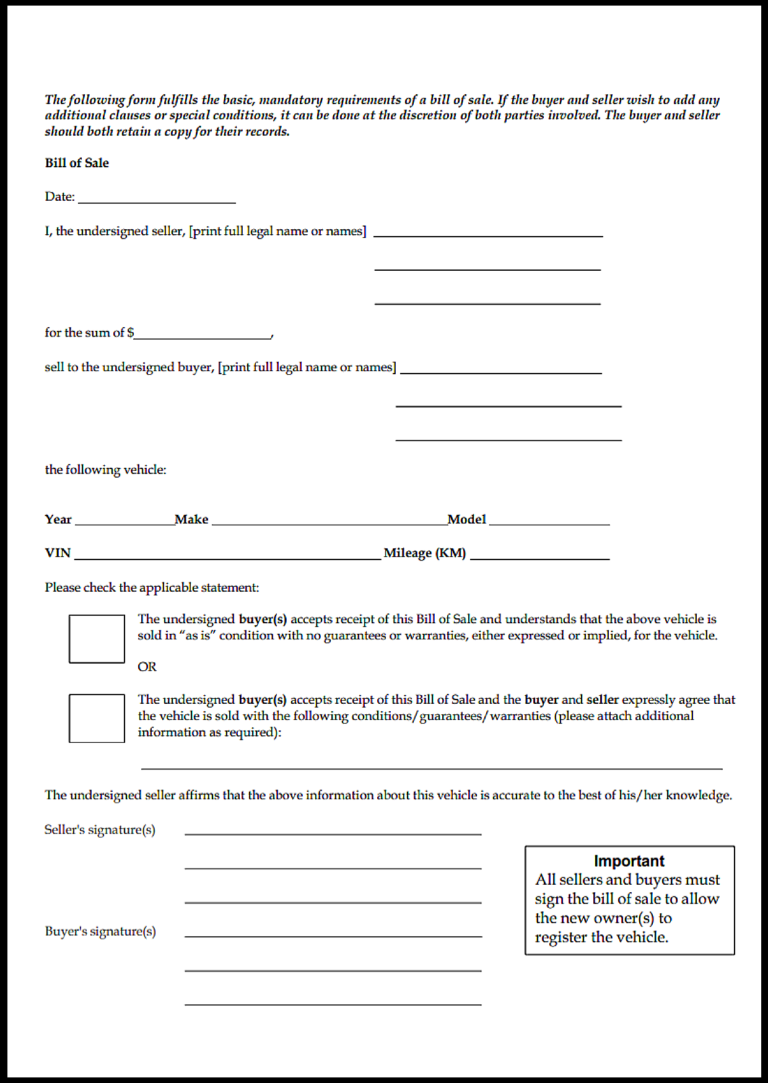
A bill of sale is a simple document that records a transaction between a buyer and a seller. It shows what was sold, for how much, and who was involved.
I have seen many private sales in British Columbia turn into disputes simply because there was no proper written record of the deal. When buyers later try to register a vehicle, prove ownership, or deal with tax questions, missing or incomplete paperwork can quickly become a serious problem.
Last Updated: August 2026
In British Columbia:
- It is not legally required for every sale
- But it is required in practice for certain transactions (especially vehicles)
- And it is highly recommended in all private sales
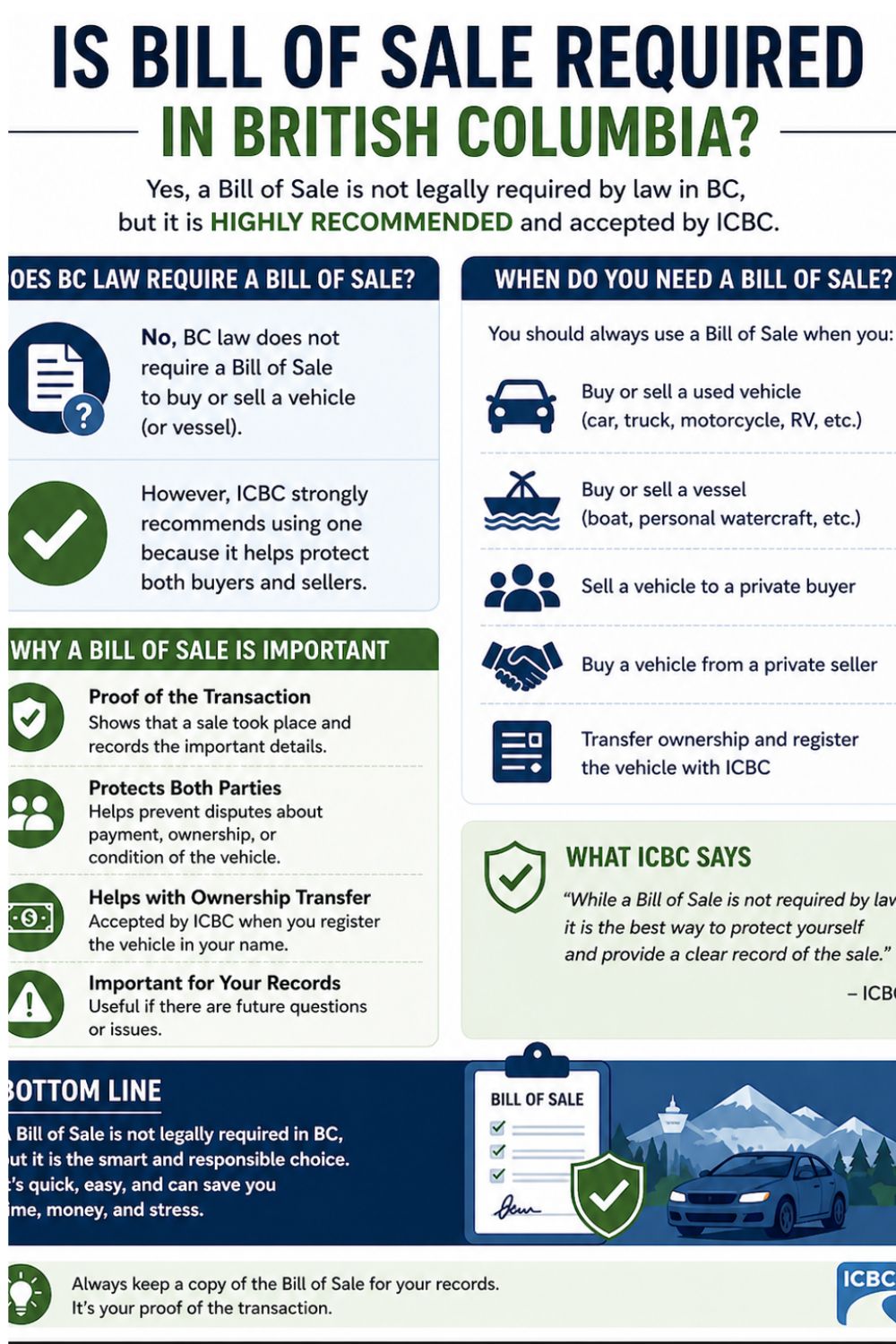
Table of Contents
ToggleBritish Columbia Bill of Sale Legal Requirements You Should Know
| Topic / Issue | British Columbia Legal Rule | Governing Statute |
|---|---|---|
| Main Law for Bills of Sale | General private sales of goods in BC can be governed by provincial law, including the Sale of Goods Act and general contract law. | Sale of Goods Act [RSBC 1996] c. 410 |
| Vehicle Ownership Transfers | Motor vehicle ownership transfers are specifically regulated under BC vehicle laws and the ICBC registration process. | Motor Vehicle Act [RSBC 1996] c. 318 |
| PST Rules on Vehicle Sales | Provincial sales tax rules determine how PST is calculated on qualifying private vehicle purchases. | Provincial Sales Tax Act [SBC 2012] c. 35 |
| Commercial Misrepresentation | Federal competition law can apply to misleading representations made in commercial circumstances. | Competition Act [R.S.C. 1985, c. C-34] |
| 2022 PST Amendments | Since October 1, 2022, BC’s rules for many private vehicle purchases can use the average wholesale value when it exceeds the designated purchase price, subject to statutory rules and exceptions. | Provincial Sales Tax Act, s. 10.01 |
| Who Can Sign | The parties to a Bill of Sale should sign it. For a vehicle transfer, the transferor and transferee must also complete and sign the prescribed ICBC transfer documentation. | Motor Vehicle Act, s. 17 |
| Witness Requirement | Witnesses are not generally required for a standard Bill of Sale in BC. | Applicable contract law |
| Notarization Requirement | An ordinary Bill of Sale is not generally required to be notarized. Specific government procedures may have separate requirements. | Applicable law |
| Age and Legal Capacity | British Columbia’s general age of majority is 19. Contractual capacity is a separate legal issue governed by the applicable law and circumstances. | Age of Majority Act, s. 1 |
| Vehicle Registration Deadline | The transferee must deliver the prescribed transfer notice to ICBC within 10 days from the day of the transfer. | Motor Vehicle Act, s. 17(1) |
| Required Vehicle Information | Vehicle transfer documents should contain accurate identifying information, including the VIN and other information required by the ICBC forms. | Motor Vehicle Act / ICBC requirements |
| General Filing Requirement | Bills of Sale for ordinary personal property generally do not require government filing simply to record the private transaction. | Applicable contract law |
| ICBC Registration Process | Vehicle transfer information must be completed on the APV9T Transfer/Tax Form and submitted through the ICBC process. | ICBC APV9T requirements |
| Security Agreements | Where a secured transaction creates a security interest, registration under the Personal Property Security Act may be relevant. | Personal Property Security Act |
| Lack of Good Title | The Sale of Goods Act provides implied terms concerning the seller’s right to sell, quiet possession, and undisclosed third-party charges or encumbrances, unless the circumstances show a different intention. | Sale of Goods Act, s. 16 |
| Missing Owner Signatures | The required transferor signatures must be provided for a voluntary vehicle transfer. Certain exceptions, including court-authorized transfers, can apply. | Motor Vehicle Act, s. 17 |
| Tax Evasion Risks | Intentionally misrepresenting the transaction for the purpose of avoiding applicable tax can create legal and tax consequences. | Provincial Sales Tax Act / applicable law |
| BC’s 10-Day Registration Rule | The transferee must deliver the prescribed vehicle transfer notice to ICBC within 10 days of the transfer. | Motor Vehicle Act, s. 17 |
| Fair Market Value Tax System | BC’s private-vehicle PST rules use the purchase-price and applicable average-wholesale-value provisions rather than a general “fair market value” test. | Provincial Sales Tax Act, s. 10.01 |
| Mandatory APV9T Form | The APV9T Transfer/Tax Form is part of the required ICBC vehicle-transfer process. A Bill of Sale is supporting evidence and does not replace the APV9T. | ICBC vehicle transfer system |
The 10-day vehicle-transfer deadline is important. The bill of sale itself does not complete a vehicle ownership transfer. The transferee must deliver the prescribed transfer notice to ICBC within 10 days of the transfer. ICBC also states that newly purchased vehicles must be registered in the purchaser’s name within 10 days.
Another important point is PST. For many private vehicle purchases, BC’s tax rules use the average wholesale value when it is greater than the designated purchase price, subject to statutory rules and exceptions. A qualifying appraisal can affect the taxable value in the circumstances set out in the legislation.
The required signatures on vehicle-transfer documents are also important. For a voluntary transfer, the required transferor signatures must be provided. The Motor Vehicle Act also contains exceptions for certain court-authorized transfers.
These rules matter because incomplete or inconsistent paperwork can make a transaction harder to document, delay a vehicle transfer, or create uncertainty about the agreed terms.
Many buyers and sellers ask whether a bill of sale is legally necessary during private ownership transfers in British Columbia. To better understand how these records are commonly used, with the provincial bill of sale requirements guide.
Is a Bill of Sale Legally Required in British Columbia?
Under British Columbia law, a bill of sale is not always legally required for every transaction.
However, there is an important difference:
| Situation | Legal Requirement |
Practical Reality
|
| Small personal items | Not generally required | Optional |
| Vehicles | A separate bill of sale is not the ICBC transfer form |
Strongly recommended as supporting evidence
|
| High-value private sales | Not generally required solely because of the item’s value |
Strongly recommended
|
In simple terms:
- The law does not force you to use a bill of sale in every private sale
- Certain assets, such as registered vehicles, have separate transfer and registration requirements
- A written bill of sale can provide useful evidence of the transaction
A bill of sale can act as:
- Evidence of the transaction
- Evidence of the agreed price and payment
- Supporting evidence in a dispute
Without it, proving the exact terms of the transaction can become more difficult.
The need for a bill of sale often depends on the type of asset involved in the transaction. Private automobile sales may require a car bill of sale template, while broader transportation transfers commonly use a vehicle ownership transfer document.
When You MUST Have a Bill of Sale in BC
Vehicle Sales (Cars, Trucks, Motorcycles)
In most private vehicle sales:
- A bill of sale is strongly recommended as supporting evidence
- The ICBC transfer process requires the prescribed transfer documentation
- A written bill of sale can record:
- VIN (Vehicle Identification Number)
- Sale price
- Buyer and seller details
Without the required ICBC transfer documentation, the buyer may not be able to complete registration.
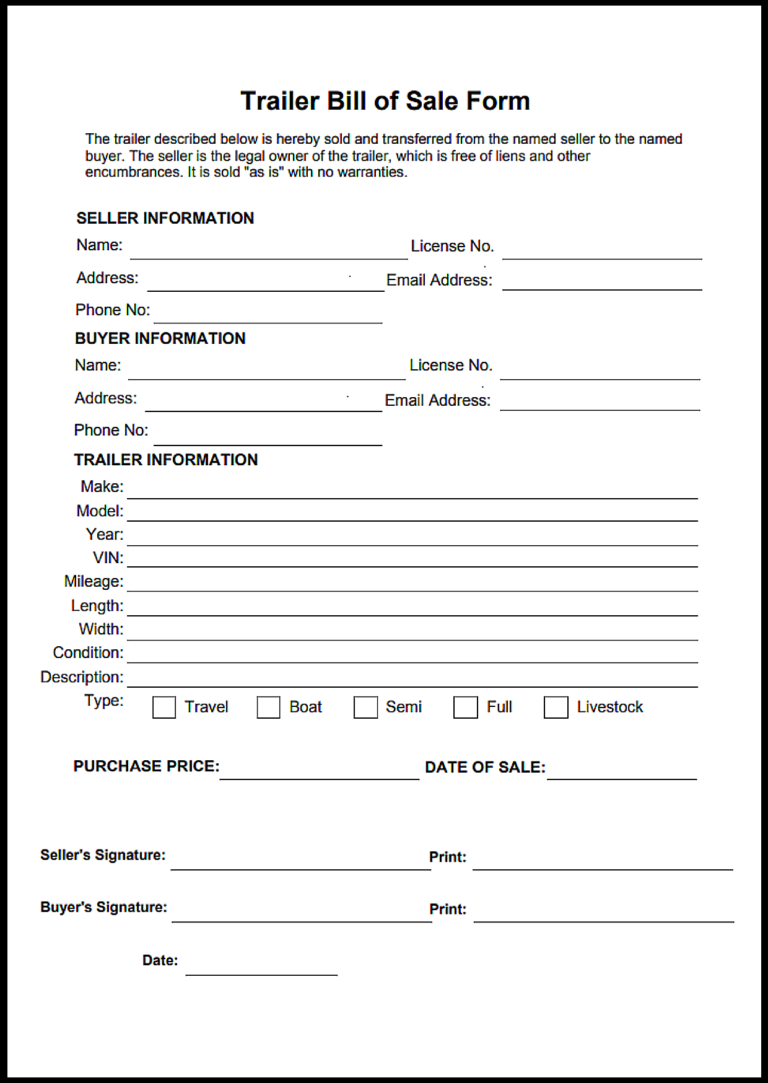
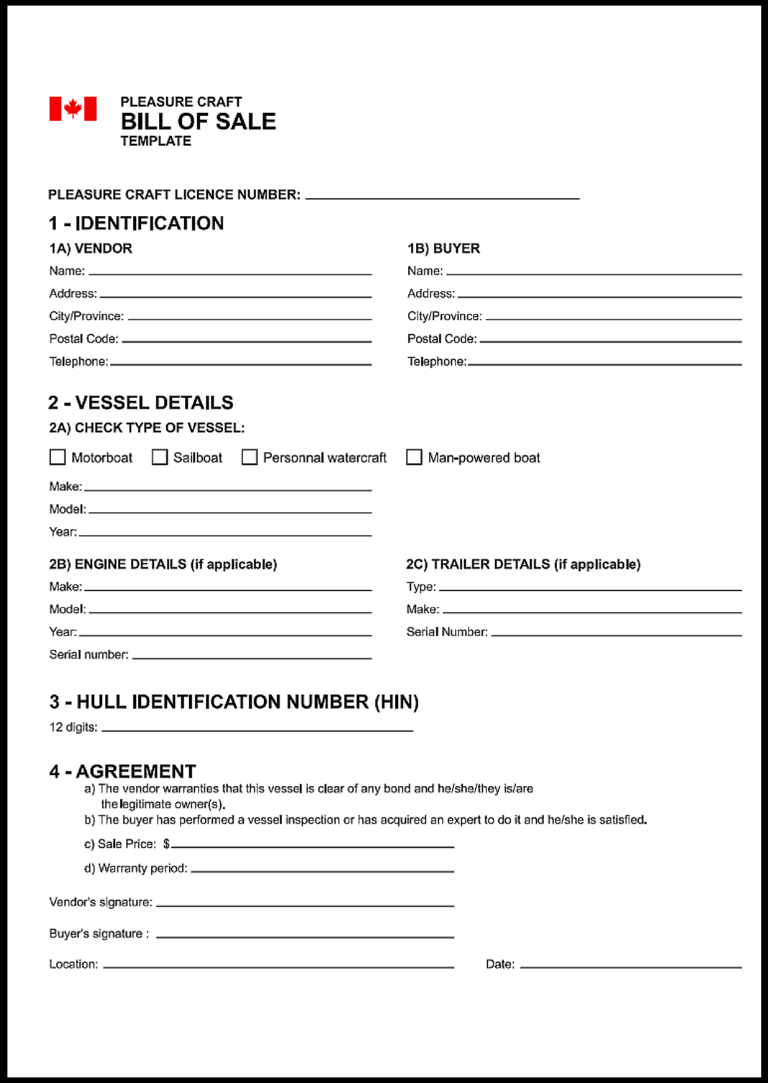
Boats and Trailers
For boats and trailers:
- Proof of ownership may be required for the applicable registration or licensing process
- A bill of sale can provide important evidence of the transaction and ownership
Private High-Value Sales
For items like:
- Machinery
- Electronics
- Expensive furniture
A bill of sale:
- Creates a clear written record
- Helps establish the agreed terms
- Can reduce uncertainty if a dispute arises
When a Bill of Sale May Not Be Required
Some situations are more relaxed:
- Small low-value items (like used books or clothes)
- Gifts between family or friends
- Store purchases where a receipt provides the transaction record
Important: Even if not required, a written bill of sale can still be useful.
People comparing registration paperwork may also benefit from reviewing the difference between ownership and bill of sale documents before completing the transfer process.
Why a Bill of Sale Is Important (Even If Not Required)
In real life, problems often happen when there is no written proof.
A bill of sale helps:
- Prove the transaction happened
- Confirm the agreed price
- Record the item’s condition at the time of sale
Example:
- Buyer says they paid CAD $50,000
- Seller says it was CAD $70,000
Without a bill of sale or other reliable evidence, it becomes a dispute about what the parties actually agreed.
It can also help provide records for:
- PST (Provincial Sales Tax)
- Insurance matters
- Ownership verification
Key Details That Must Be Included (BC-Specific)
Buyer and Seller Information
Include full names and contact details.
This helps identify who entered into the transaction.
Description of Item
Be clear and specific:
- Brand
- Model
- Features
- VIN or serial number where applicable
This reduces uncertainty about what was actually sold.
Sale Price and Date
This is important for:
- Recording the agreed price
- Establishing the transaction date
- Supporting tax records where applicable
VIN or Serial Number (if applicable)
For vehicles or electronics:
- This identifies the exact item
- It helps keep the transaction record consistent with other documents
Signatures
Both parties should sign where they are using the Bill of Sale as the written record of the transaction.
A witness is generally optional for an ordinary Bill of Sale.
ICBC Rules for Vehicle Bill of Sale
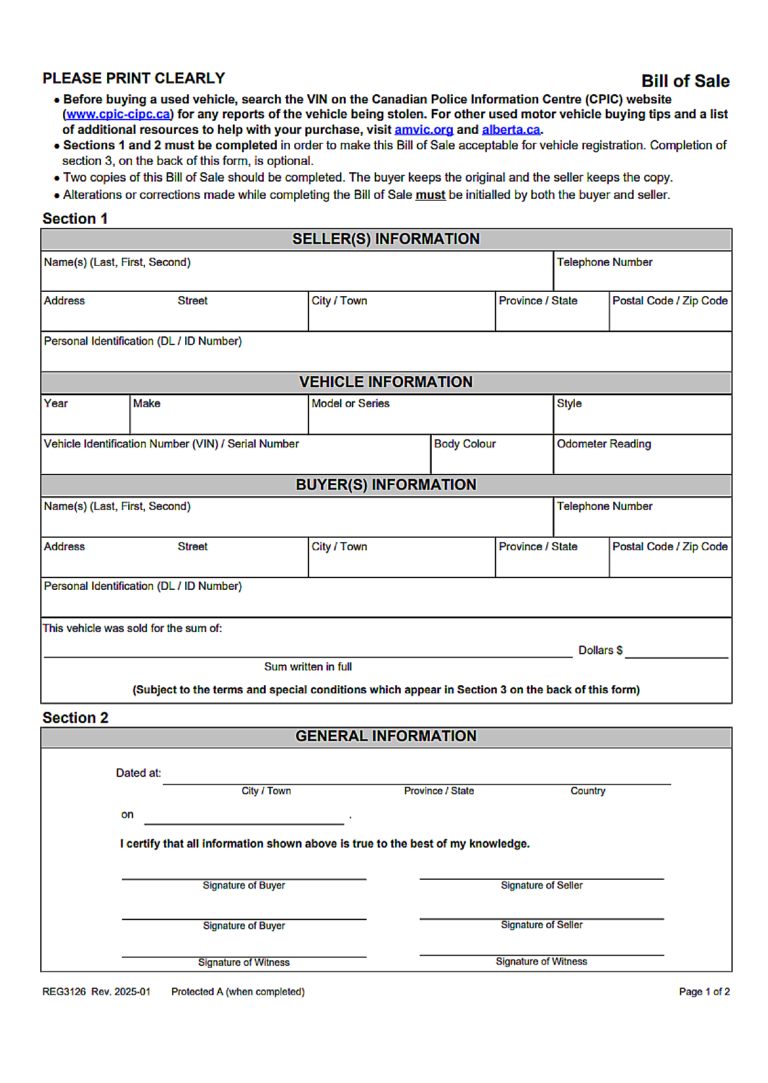
When registering a vehicle in BC, ICBC requires the prescribed transfer and registration documentation.
The bill of sale should:
- Match the vehicle information
- Show the correct transaction price
- Identify the parties accurately
ICBC uses the required transfer documents to:
- Complete the vehicle ownership transfer
- Process applicable registration and tax requirements
Documents Needed Along With Bill of Sale
When registering a vehicle, you also need:
- Transfer/Tax Form (APV9T)
- Vehicle registration
- Valid ID
- Other documents required for the particular transaction
ICBC states that a newly purchased vehicle must be registered in the purchaser’s name within 10 days of purchase.
Tax Implications in British Columbia (PST Rules)
In BC, PST is applied when you buy taxable goods.
For qualifying private vehicle purchases, the PST rules can use:
- The designated purchase price, or
- The average wholesale value where it exceeds the designated purchase price, subject to the statutory rules and exceptions
Example:
If you buy a used car for $8,000, the applicable PST calculation may depend on the statutory vehicle-tax rules rather than simply the amount written on the Bill of Sale.
Important Warning
Underreporting the transaction price to reduce tax is risky.
Authorities can:
- Reassess the applicable taxable amount
- Charge penalties or other amounts where authorized by law
Your bill of sale should always reflect the true transaction terms.
Common Mistakes People Make
Many people make simple but costly mistakes:
- Not writing a bill of sale at all
- Missing VIN or item details
- Writing an incorrect sale price
- Forgetting signatures
- Using vague descriptions
These mistakes can cause:
- Registration delays
- Legal disputes
- Tax issues
What Happens If You Don’t Use a Bill of Sale?
Skipping this document can lead to real problems:
- Ownership disputes
- Trouble proving the transaction
- Issues establishing the agreed price
- Tax complications
- Problems documenting vehicle or other asset transfers
In serious cases, you may not be able to easily prove:
- You bought the item
- You sold the item
- The price and terms that were agreed
Buyer vs Seller Responsibilities in BC
Seller Responsibilities
- Provide accurate details
- Confirm the seller’s authority to sell the item
- Sign the document where a written Bill of Sale is being used
Sellers should not knowingly make false or misleading statements about the property being sold.
Buyer Responsibilities
- Check item condition carefully
- Verify ownership or the seller’s authority before payment
- Keep a copy of the bill of sale
- Complete any applicable registration or licensing requirements
How to Properly Use a Bill of Sale (Step-by-Step)
Follow these steps:
- Fill out all details clearly
- Double-check accuracy
- Both parties sign
- Make copies for both sides
- Store the document safely
Tip: Take a photo or scan for backup.
FAQs
Is a handwritten bill of sale valid in BC?
Yes. A handwritten Bill of Sale can be used as a written record of a transaction if it accurately records the parties, property, price, date, and agreed terms. For vehicles, it does not replace the required ICBC transfer documentation.
Do I need a bill of sale for a used car in BC?
A separate bill of sale is not the document that completes the vehicle transfer. Buyers must complete the required ICBC transfer and registration process. A bill of sale is strongly recommended as supporting evidence of the sale.
Can I register a vehicle without a bill of sale?
A bill of sale is not the prescribed ICBC transfer form. Whether registration can proceed without one depends on the documents and circumstances of the particular transfer. The buyer must still provide the required ICBC transfer documentation.
Does a bill of sale need to be notarized?
No. An ordinary private Bill of Sale does not generally need to be notarized in British Columbia. Specific government procedures may have separate requirements.
What if I lost my bill of sale?
You can:
- Contact the seller for a copy
- Keep other evidence of the transaction, such as payment records and messages
- Create a replacement record signed by both parties where appropriate
A replacement document should accurately reflect the original transaction rather than changing its terms.