How to Get an Affidavit Ontario? Complete Step-by-Step Guide
How to get affidavit Ontario is a common question when you need legal proof of facts. Many people think it’s just a form to download, but under Ontario law, an affidavit must be properly written, sworn, and signed in front of an authorized official.
In real life, an affidavit is a written statement of facts that you swear is true. You use it when the law needs proof from you—like in court, identity verification, or legal processes.
In most affidavit situations, the key rule is simple: You must swear or affirm your statement in front of a legal authority.
I’ve seen people in Ontario have affidavits rejected because they signed them before meeting the commissioner or left out small details that courts and government offices treat very seriously. When someone is already stressed about a legal issue, the last thing they expect is to be told their affidavit is invalid and must be done all over again.
Last Updated: September 2026
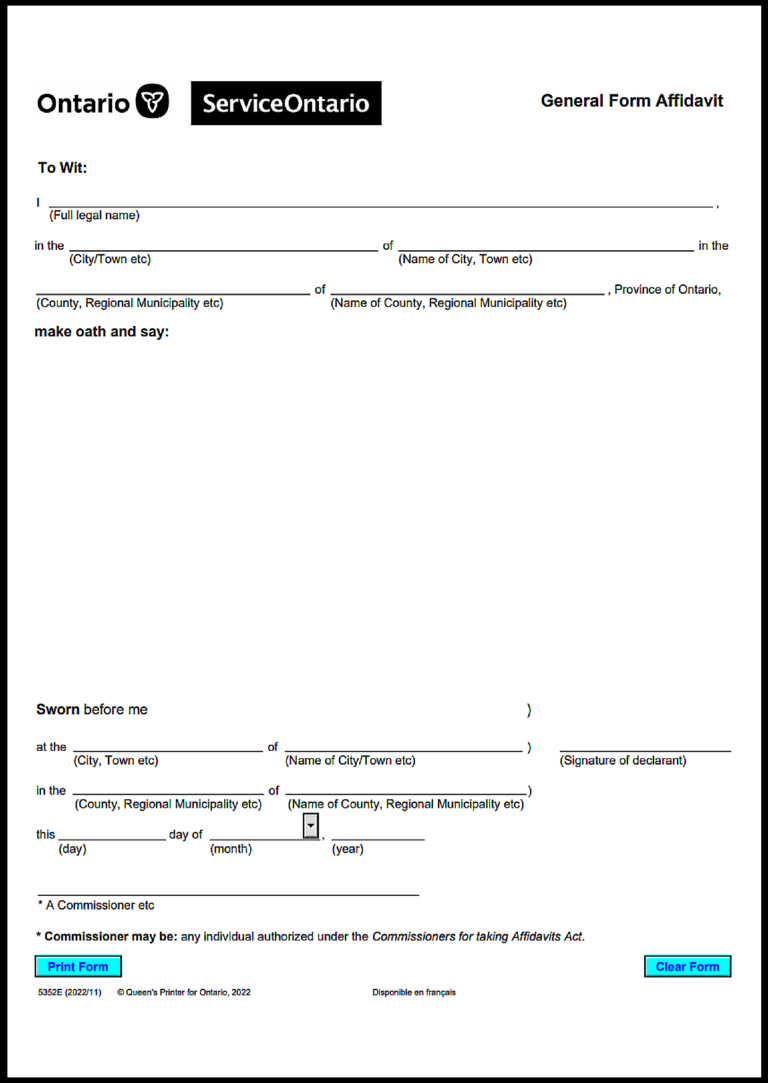
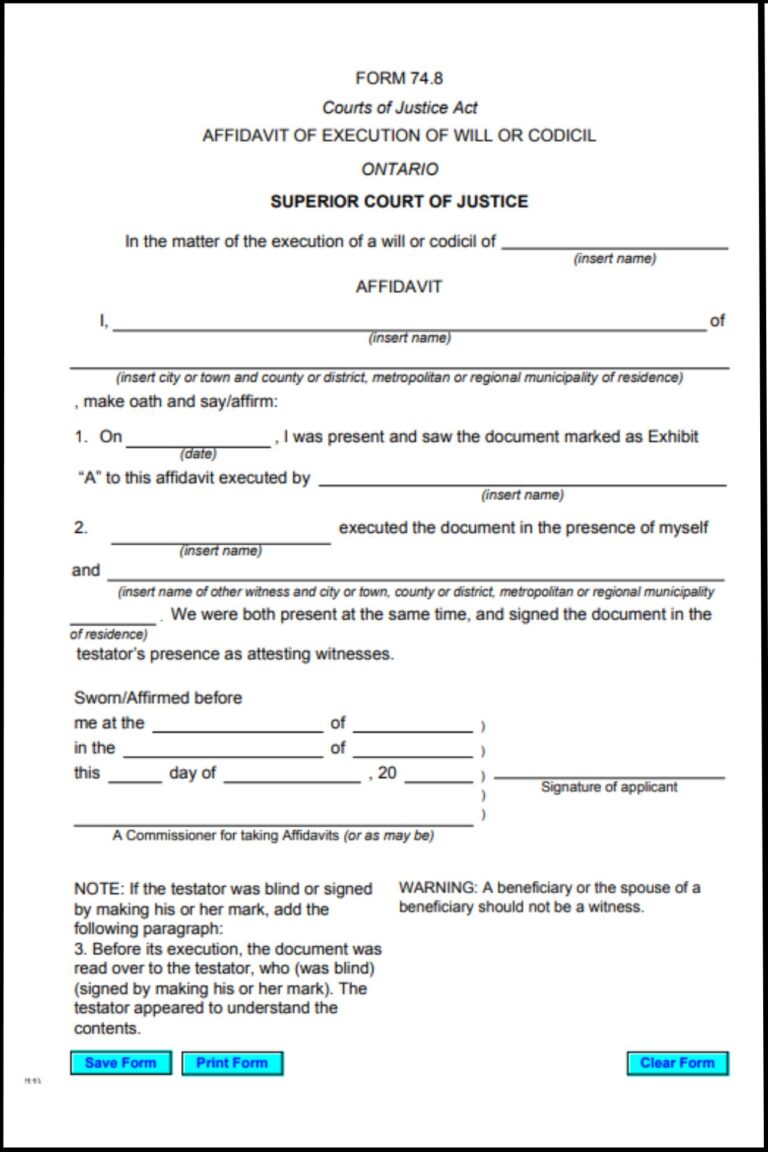
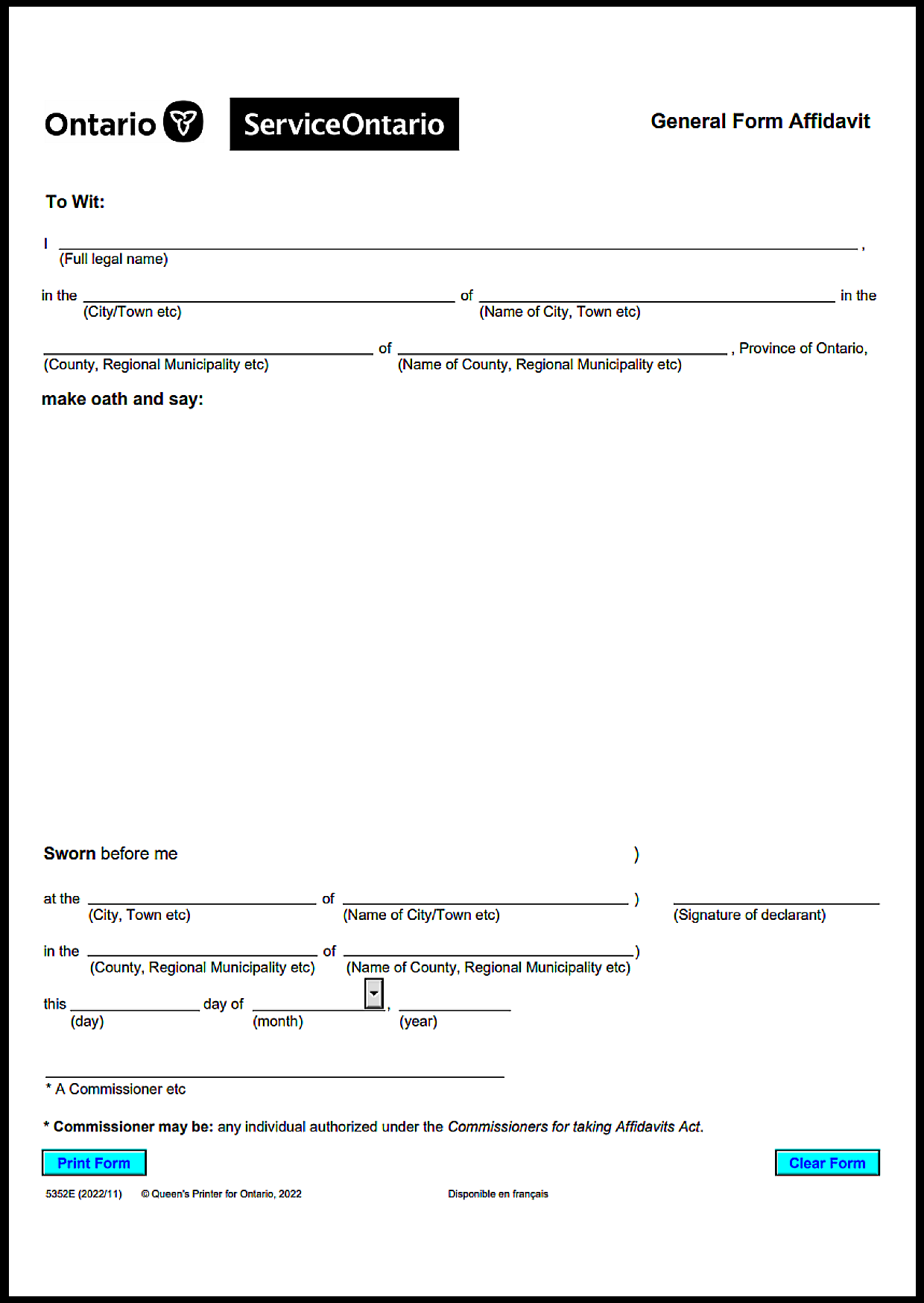
Simple Affidavit Example (Ontario)
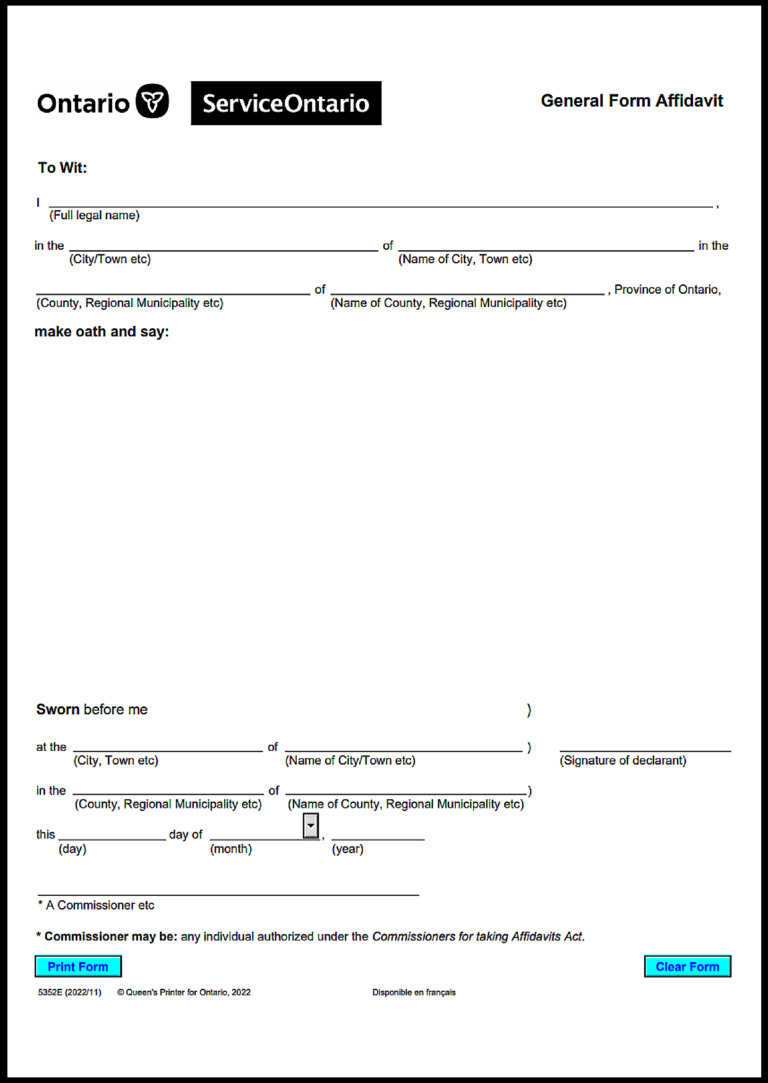
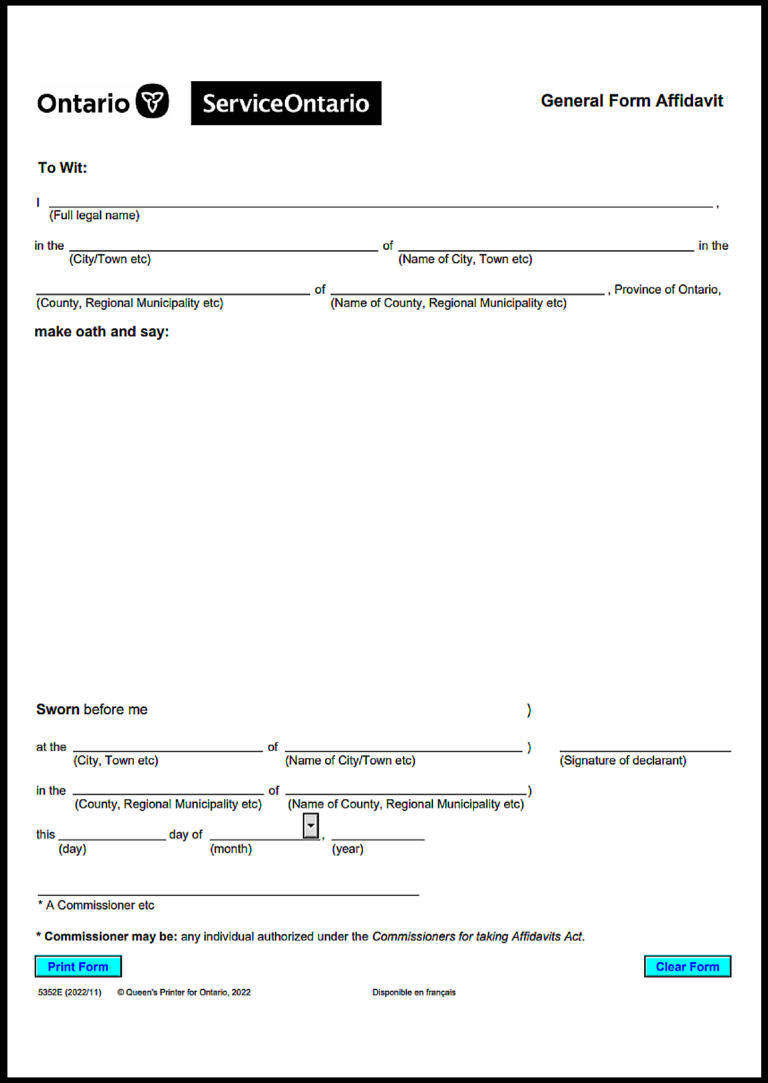
Below is a simple and usable Ontario affidavit template. You can copy and edit it based on your situation.
Ontario Affidavit Process Laws, Commissioner Rules & Filing Requirements
| Topic / Issue | Ontario Legal Rule | Governing Statute |
|---|---|---|
| Primary affidavit law | Ontario affidavits are governed by the Commissioners for Taking Affidavits Act together with the applicable court rules and other legislation. | Commissioners for Taking Affidavits Act, R.S.O. 1990, c. C.17 |
| Evidence rules | Ontario evidence law governs how affidavits may be used as evidence, together with the applicable court rules. | Evidence Act, R.S.O. 1990, c. E.23 |
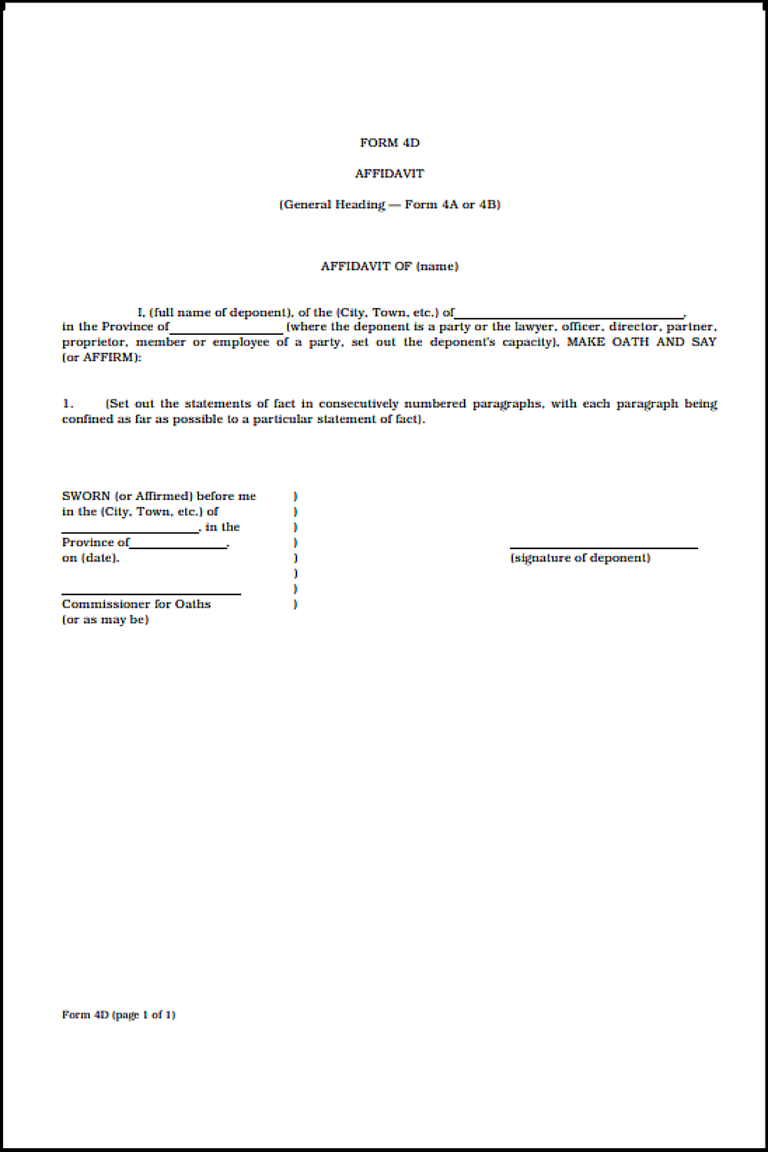
| Court affidavit formatting | An affidavit used in an Ontario proceeding must follow the applicable court rules. Under Rule 4.06, it must generally be in Form 4D, be expressed in the first person, identify the deponent, use consecutively numbered paragraphs, and be sworn or affirmed before an authorized person. | Rules of Civil Procedure, R.R.O. 1990, Reg. 194 |
| Federal affidavit use | Federal evidence law may apply if the affidavit is used in a federal matter or proceeding governed by federal legislation. | Canada Evidence Act, R.S.C. 1985, c. C-5 |
| Remote commissioning | Ontario permits an oath or declaration to be administered remotely when the conditions in O. Reg. 431/20 are satisfied. | O. Reg. 431/20 under the Commissioners for Taking Affidavits Act |
| Who can sign | The person making the affidavit is the deponent. For an affidavit used in an Ontario civil proceeding, Rule 4.06 sets out requirements for the deponent and the affidavit’s format and contents. | Rules of Civil Procedure, Rule 4.06 |
| Witness requirement | The affidavit must be sworn or affirmed before a commissioner, notary public or other person authorized to administer the oath or affirmation. | Commissioners for Taking Affidavits Act, s. 9; Rules of Civil Procedure, Rule 4.06 |
| Authorized commissioner | Persons holding prescribed offices, including Ontario lawyers and paralegals, may be commissioners for taking affidavits by virtue of office. | Commissioners for Taking Affidavits Act; O. Reg. 386/12 |
| Disqualified witness | The person administering the affidavit must have legal authority to do so and comply with the applicable commissioning requirements. The article should not treat every personal or professional relationship as an automatic statutory disqualification. | Commissioners for Taking Affidavits Act |
| Oath requirement | An affidavit may be sworn or affirmed. The oath or affirmation must be administered in accordance with Ontario law, either in physical presence or remotely where O. Reg. 431/20 applies. | Commissioners for Taking Affidavits Act, s. 9; Evidence Act, s. 17; O. Reg. 431/20 |
| Age and capacity | Evidence Act s. 18 provides that a person of any age is presumed to be competent to give evidence. It is not the statutory source for a general rule that the deponent must understand the nature of the oath or affirmation. | Evidence Act, s. 18 |
| Filing deadlines | Court affidavits may have specific service and filing deadlines depending on the proceeding. For example, Rule 39 contains service and filing requirements for affidavits used on motions and applications. | Rules of Civil Procedure, Rule 39 |
| Mandatory jurat | An affidavit must be properly sworn or affirmed before an authorized person, who must comply with the applicable requirements before signing the jurat. | Commissioners for Taking Affidavits Act, s. 9; applicable court rules |
| Remote jurat wording | A remote affidavit must comply with the modified jurat requirements under O. Reg. 431/20, including identifying that the oath or declaration was administered in accordance with the regulation and providing the required location information. | O. Reg. 431/20 |
| Statutory declaration wording | Where a statutory declaration is required, the applicable statute or prescribed form determines the required wording. Ontario’s Evidence Act contains a prescribed form for solemn declarations under s. 43. | Evidence Act, s. 43 |
| Court filing requirement | Court affidavits must be served and filed according to the rules and procedures governing the particular proceeding. | Ontario court rules and applicable court procedures |
| Land registry affidavits | Certain affidavits may be required in land-registration matters, but whether and how an affidavit is filed depends on the particular transaction and applicable land-registration requirements. | Applicable Ontario land-registration legislation and procedures |
| Private affidavit status | Affidavits used for private matters are not automatically registered with the government. Their use depends on the purpose and the requirements of the person or organization receiving them. | Applicable law and receiving-authority requirements |
| Failure to appear before commissioner | The oath or affirmation must be properly administered before the affidavit is completed. Ontario law also makes it an offence to knowingly use an affidavit that was not taken, sworn to or made in conformity with the applicable requirements. | Commissioners for Taking Affidavits Act, ss. 9 and 11 |
| Legal argument restriction | An affidavit used in an Ontario civil proceeding is subject to the applicable rules governing its contents. Rule 4.06 generally limits it to facts within the deponent’s personal knowledge or other evidence the deponent could give as a witness, subject to the rules’ exceptions. | Rules of Civil Procedure, Rule 4.06 |
| Information and belief rule | Statements based on information and belief may be permitted where the applicable rule allows them, but the affidavit should identify the source of the information and the fact of the belief where required. | Rules of Civil Procedure, Rule 39 |
| Ontario paralegal authority | Ontario paralegals may act as commissioners for taking affidavits by virtue of office under the applicable Ontario regulation. | Commissioners for Taking Affidavits Act; O. Reg. 386/12 |
| Ontario remote commissioning rule | Ontario permits remote commissioning where the conditions in O. Reg. 431/20 are satisfied, and the affidavit must contain the required modified jurat information. | O. Reg. 431/20 |
One of the most important Ontario affidavit rules is that the oath or affirmation must be properly administered before the affidavit is completed. Many people mistakenly sign their affidavit at home before meeting the commissioner. Ontario law requires the affidavit to be properly sworn or affirmed before the authorized person, subject to the remote-commissioning rules. Ontario also permits remote commissioning when the requirements of O. Reg. 431/20 are met. Missing a required commissioning step can create problems with the document and may affect whether it can be used for its intended purpose.
Another important rule involves “information and belief” statements. If an affidavit used in an Ontario proceeding contains information that is not based on the deponent’s personal knowledge, the applicable court rules determine when that information may be included and what source information must be provided. This matters in real legal disputes because affidavits are often used as evidence in court proceedings. Technical mistakes can cause procedural problems, delay hearings, or affect how the affidavit can be used. Use the free Ontario affidavit template below as a starting point, but always check the requirements of the court or authority receiving the document.
What Does “Getting an Affidavit” Mean in Ontario?
Many beginners think they can download a form, sign it, and finish. But that is not how it works.
In Ontario, getting an affidavit means completing a legal process. First, you write your statement. Then you go to an authorized person. After that, you swear or affirm that your statement is true and complete the signing process in accordance with the applicable requirements.
Only after the affidavit has been properly sworn or affirmed and completed can it be used for its intended legal or administrative purpose.
If you need to create a legally valid sworn statement, this guide explains the full process under Ontario law. You can start by reviewing the Ontario affidavit template hub, which provides examples and structure for different affidavit types.
Step-by-Step: How to Get an Affidavit in Ontario
Step 1 – Write Your Affidavit
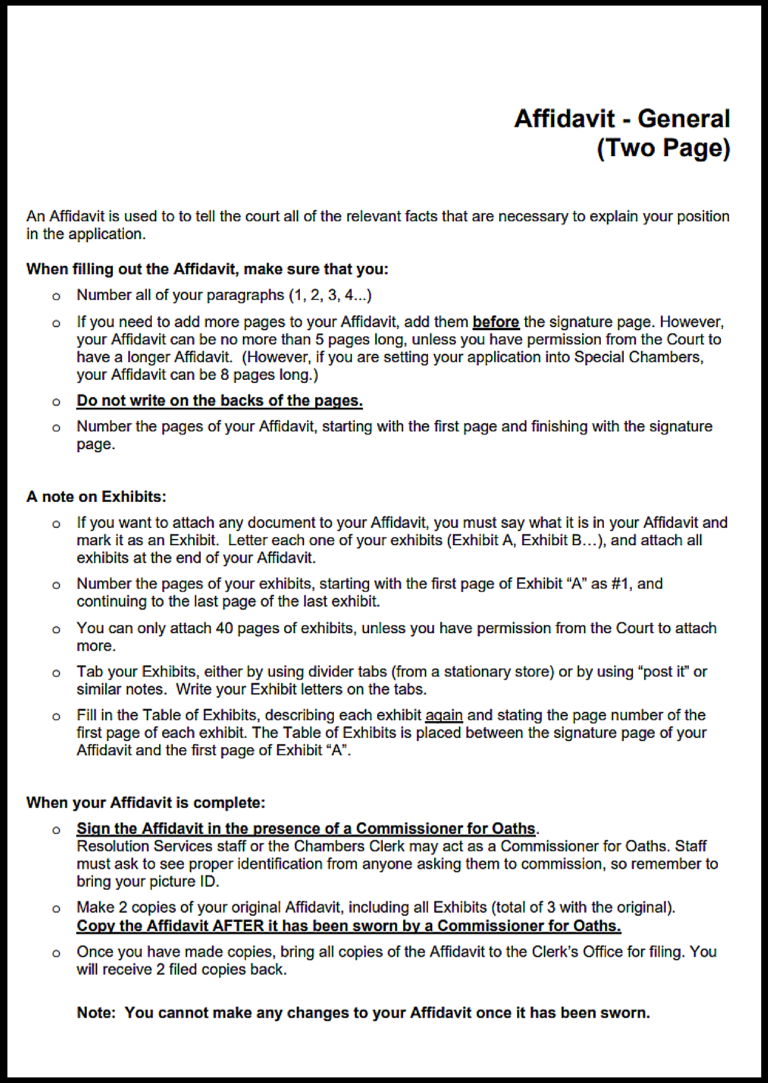
Start by writing your statement in simple English. Keep everything factual.
- Use short and clear sentences
- Write in numbered points
- Avoid opinions or guessing
For an affidavit used in an Ontario civil proceeding, Rule 4.06 generally requires the affidavit to be in Form 4D, expressed in the first person, identify the deponent, and use consecutively numbered paragraphs. The contents should generally be limited to facts within the deponent’s personal knowledge or other evidence the deponent could give as a witness, subject to the applicable exceptions.
For example, instead of saying “I think my document was lost”, write “My document was lost on 10 March 2026.”
Step 2 – Gather Supporting Documents
Before going to the commissioner, keep your documents ready.
You may need:
- Government ID (passport or driver’s licence)
- Proof related to your statement
The person administering the affidavit must satisfy themselves of the genuineness of your signature. Having identification and relevant supporting documents ready can make the appointment easier, although the exact requirements can vary depending on the person administering the affidavit and the purpose of the document.
Step 3 – Find a Commissioner or Notary
Now you need to find an authorized person.
Common options in Ontario include:
Municipal Clerk Offices: Certain municipal clerks and other prescribed municipal officials may act as commissioners for taking affidavits within the geographic and purpose-based limits established by law.
- Licensed Law Practices: Ontario lawyers and licensed paralegals are commissioners for taking affidavits by virtue of office.
- Ontario Superior Court registries: Certain court officials may have authority to administer oaths or take affidavits for documents connected with court proceedings, subject to the applicable requirements.
Operational Note: Not every government counter or public-service office provides general affidavit commissioning. Before visiting a particular location, confirm that the person is authorized to administer the affidavit you need and ask whether an appointment or fee applies.
Sometimes appointments are required, so it is better to check before going.
Step 4 – Swear or Affirm the Affidavit
This is the legal step where your statement is formally confirmed.
You will either:
- Take an oath, or
- Make an affirmation
An affirmation can be used instead of an oath and has the same force and effect as an oath under Ontario’s Evidence Act.
A commissioner for taking affidavits, notary public or other authorized person must properly administer the oath or affirmation.
Step 5 – Sign and Get It Commissioned
Finally, you sign the affidavit as part of the commissioning process in accordance with the instructions of the authorized person. The person administering the affidavit then completes the required jurat or other certification.
After the affidavit has been properly sworn or affirmed and completed, it can be used for its intended purpose, subject to any additional filing, service or receiving-authority requirements.
Where Can You Get an Affidavit in Ontario?
There is no single “affidavit office.” Instead, you complete it at a place where a person authorized to administer oaths or affirmations is available.
Authorized local options can include:
- Municipal Clerks: Certain municipal clerks and other prescribed municipal officials may administer oaths or take affidavits within the limits of their authority.
- Lawyers, Notaries, & Licensed Paralegals: Ontario lawyers and paralegals are commissioners for taking affidavits by virtue of office. A notary public may also administer affidavits within their legal authority.
- Court Registrars: Certain court officials may administer affidavits for documents connected with court proceedings, subject to the applicable authority and procedures.
Critical Trap: Do not assume that every ServiceOntario counter provides general affidavit commissioning. Before visiting a government office, confirm that the location or official provides the commissioning service you need.
During the process, you may need specific templates such as an Ontario sworn affidavit or a purpose-based document like an affidavit of residence. The final step often involves verification, which is explained in notarizing an affidavit in Ontario.
Who Can Commission an Affidavit in Ontario?
Only certain people are authorized to administer an affidavit under Ontario law.
These include:
- Commissioner of Oaths
- Notary Public
- Lawyer
Ontario paralegals can also act as commissioners for taking affidavits by virtue of office.
Here is a simple comparison:
| Role | Use Case |
| Commissioner of Oaths |
Affidavits and declarations within the person’s legal authority
|
| Notary Public |
Affidavits, declarations and notarial services within the person’s authority
|
| Lawyer |
Affidavit commissioning and legal services where provided
|
| Licensed Paralegal |
Affidavit commissioning and legal services within the paralegal’s authority
|
When Do You Need an Affidavit?
Affidavits are used in many real-life situations. You may need one when dealing with legal or official matters and the applicable law, court rule, form or authority requires or permits an affidavit.
Common uses include:
- Court evidence or statements
- Identity verification where an affidavit is specifically requested
- Lost documents or name change where the relevant authority requests an affidavit
- Immigration or travel matters where the application instructions require one
- Business or other official matters where an affidavit is specifically required
Legal Rules for Affidavits in Ontario
Under Ontario law, an affidavit must follow the rules that apply to its particular use. If you miss an important step, it may not satisfy the requirements of the court or other receiving authority.
Key rules:
- Must be sworn or affirmed
- Must be completed before an authorized person
- Must follow the correct format when a prescribed form or court rule applies
- Must contain information that is truthful and appropriate for the purpose of the affidavit
Giving a knowingly false statement can have criminal consequences. The applicable offence depends on the circumstances. For example, the Criminal Code addresses perjury and certain other false statements made by affidavit, solemn declaration or deposition.
Common Mistakes That Make an Affidavit Invalid
Many people make small mistakes that cause problems.
Avoid these errors:
- Signing before meeting the commissioner
- Writing opinions instead of facts
- Missing date or signature information required by the applicable form
- Using wrong format
- Not including required identity or proceeding details
- Failing to follow a prescribed court form
- Including information and belief without following the applicable court-rule requirements
Even a small mistake can lead to rejection, correction requirements or other procedural problems.
Affidavit vs Statutory Declaration
People often confuse these two documents, but they are slightly different.
| Feature | Affidavit |
Statutory Declaration
|
| Legal form | Written statement confirmed by oath or affirmation |
Formal solemn declaration made in the form required by the applicable law or authority
|
| Oath required | Oath or affirmation |
Solemn declaration rather than an oath
|
| Common use | Often used as evidence in court or other legal proceedings where the applicable rules require or permit it |
Often used for government, institutional, administrative or other official purposes where a declaration is requested
|
Tips to Make Your Affidavit Strong and Accepted
If you want your affidavit to be accepted without issues, follow these simple tips.
Write clearly and keep your sentences short. Always stick to facts and avoid extra explanations. Use a clean structure with numbered points when the applicable court rules or form require them.
Before signing, double-check everything carefully. Also, carry valid ID when visiting the commissioner. Most importantly, never sign the affidavit before the authorized person administers the oath or affirmation.
FAQs About Getting an Affidavit in Ontario
Can I write my own affidavit?
Yes, you can write your own affidavit. However, if it is being used in an Ontario court proceeding, it must follow the applicable court rules and be sworn or affirmed before a person authorized to administer oaths or affirmations.
Is affidavit free in Ontario?
Not necessarily. The cost depends on who administers the affidavit and whether a fee applies. Some public offices may provide commissioning services under specific conditions, while lawyers, notaries and other providers may charge fees. Check with the location before attending.
Can I sign affidavit at home?
You should not sign the affidavit in advance and then take it to a commissioner. The oath or affirmation must be properly administered in accordance with Ontario law. Ontario also permits remote commissioning when the requirements of O. Reg. 431/20 are satisfied.
How long does it take?
The actual commissioning appointment can be relatively quick when your affidavit is already prepared correctly. However, the total time depends on finding an authorized person, obtaining an appointment if necessary, and meeting any applicable court or filing deadline.
Is affidavit legally binding?
An affidavit is a formal written statement confirmed by oath or affirmation. Once properly sworn or affirmed, it can be used for the legal or administrative purpose for which it was prepared, subject to the applicable rules and requirements.