Manitoba Rent Receipt Template – Free & Legal Guide
A Manitoba Rent Receipt is often treated as a simple record of payment, but it can become one of the most important documents in a tenancy when questions arise about rent owing, payment history, or proof of occupancy. Under Manitoba’s residential tenancy framework, maintaining clear payment records helps avoid disputes and gives both landlords and tenants a reliable reference point when issues develop.
In practice, I’ve seen matters reach the Residential Tenancies Branch where cash rent payments were made regularly, yet missing or incomplete receipts left the parties arguing over what had actually been paid. That’s a situation that can usually be avoided with consistent documentation from the start. This page explains what information a Manitoba rent receipt should contain, when it should be issued, and how it can help support accurate tenancy records.
Last Updated: September 2026
Table of Contents
ToggleFree Manitoba Rent Receipt Template
Below is a clean and ready-to-use template. You can copy, print, or save it digitally.
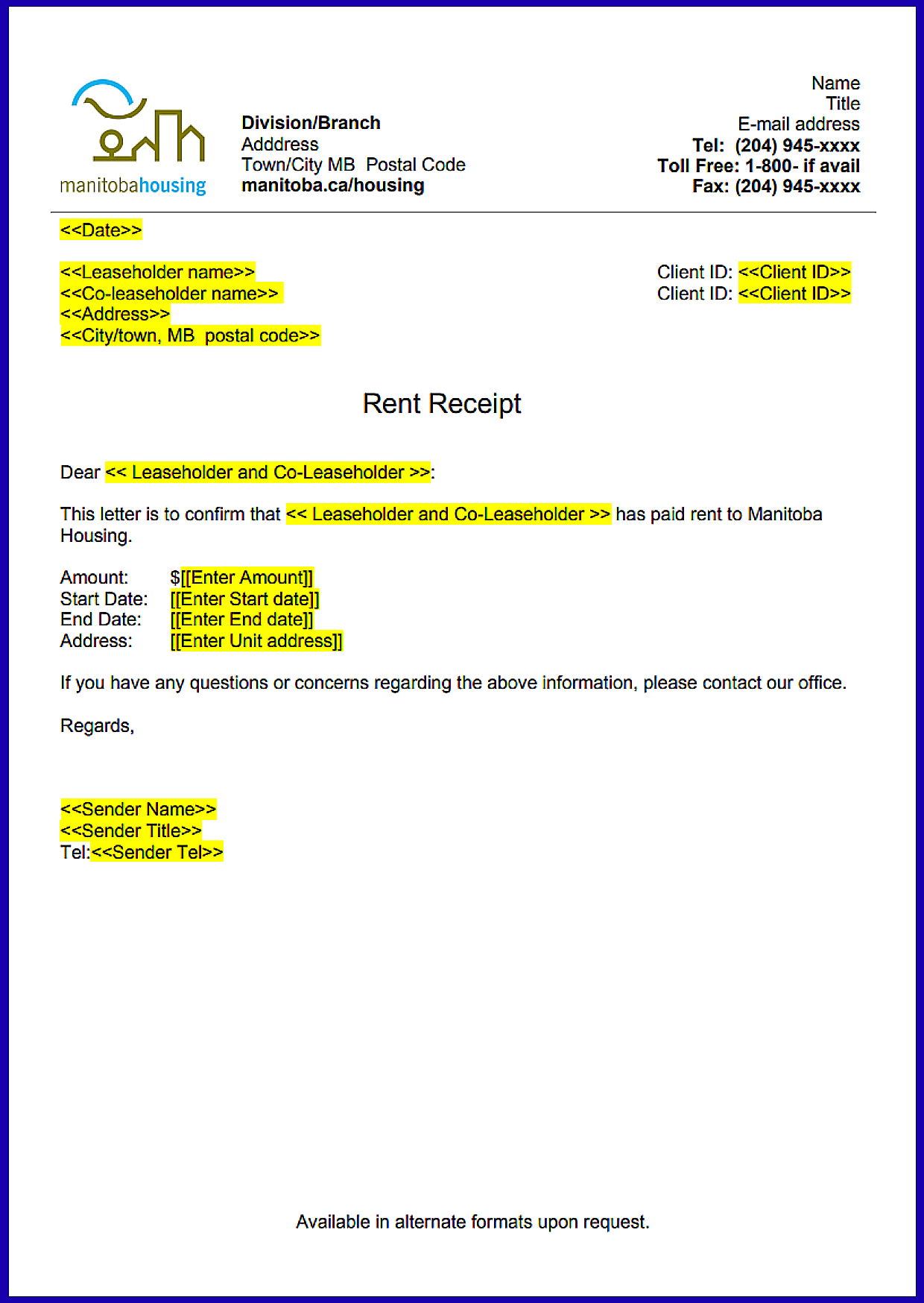
This template works for monthly, weekly, or partial payments. Keep one copy for yourself and give one to the tenant.
Manitoba Rent Receipt Legal Rules Most Landlords Miss
| Topic / Issue | Manitoba Legal Rule | Governing Statute |
|---|---|---|
| Primary governing law | Residential rent receipts are governed primarily by Manitoba tenancy legislation and regulations. | The Residential Tenancies Act, C.C.S.M. c. R119; Residential Tenancies Regulation, Man. Reg. 71/2010 |
| Federal jurisdiction | Residential landlord-tenant rules are generally provincial rather than governed by a single federal residential tenancy statute. | Constitution Act, 1867 |
| 2026 rent increase guideline | Manitoba’s 2026 rent increase guideline is 1.8%, subject to the applicable rules and exemptions. | Manitoba Residential Tenancies Branch |
| Who can issue a receipt | A landlord or a person acting for the landlord can provide the payment acknowledgement. | The Residential Tenancies Act |
| Witness requirement | A witness is not generally required for a rent receipt. | The Residential Tenancies Act |
| Notarization requirement | A rent receipt does not generally need to be notarized or commissioned. | The Residential Tenancies Act |
| Cash payment receipts | When rent or a tenant services charge is paid in cash, the landlord must provide a written acknowledgement containing the required information. | The Residential Tenancies Act, s. 57 |
| Non-cash payments | Keep clear records for cheques, e-transfers, automatic payments, and other non-cash transactions. The specific statutory receipt rule in s. 57 addresses cash payments. | The Residential Tenancies Act, s. 57 |
| Information for cash acknowledgement | The written acknowledgement must state the amount received, the day it was received, and the address of the rental unit and residential complex. | The Residential Tenancies Act, s. 57 |
| Security deposit | A security deposit generally cannot exceed one-half of the first month’s rent. | The Residential Tenancies Act |
| Pet damage deposit | A pet damage deposit can be up to one month’s rent, subject to the statutory rules. | The Residential Tenancies Act, s. 29.1 |
| Filing requirement | A rent receipt is normally a private tenancy record and is not routinely filed with the government. | Manitoba tenancy legislation |
| Record retention | Keep payment records for as long as reasonably necessary for tenancy, dispute, and tax purposes. | Practical recordkeeping guidance |
| Incorrect dates | Receipts should accurately state when payment was received. | The Residential Tenancies Act, s. 57 |
| Cash receipt rule | Manitoba specifically requires a written acknowledgement when rent or a tenant services charge is received in cash. | The Residential Tenancies Act, s. 57 |
One of the most important Manitoba rules is that landlords must provide a written acknowledgement when rent or a tenant services charge is received in cash. The acknowledgement must contain the information required by section 57 of The Residential Tenancies Act. Keeping accurate records can help both parties if a payment dispute reaches the Residential Tenancies Branch.
The important point is not to treat every suggested receipt detail as a statutory requirement. A useful receipt can include the payment amount, date, rental period, payment purpose, and property address. However, section 57 specifically sets out the required information for a written acknowledgement of cash payments.
Rent receipts also help landlords and tenants maintain accurate payment records throughout a tenancy. To understand how these records connect with broader rental documentation, you can review the Canadian lease agreement guide and the standard Manitoba lease agreement template.
Are Rent Receipts Required in Manitoba?
Under Manitoba law, the receipt requirement depends on the type of payment.
For cash payments:
- The landlord must provide a written acknowledgement.
- The acknowledgement must state the amount received.
- It must state the day the payment was received.
- It must identify the address of the rental unit and residential complex.
For other payment methods, tenants and landlords should still maintain reliable payment records. An e-transfer confirmation, bank record, cancelled cheque, or similar document can help establish that payment was made.
If a payment dispute arises, clear documentation can become important evidence before the Residential Tenancies Branch (Manitoba).
What Information Must a Manitoba Rent Receipt Include?
A practical Manitoba rent receipt should contain enough information to clearly identify the payment.
Amount Paid
State the exact amount received in Canadian dollars.
For cash payments, the amount is specifically part of the information required under section 57.
For example:
- Amount received: $1,200
- Payment type: Cash
- Purpose: May 2026 rent
Date the Payment Was Received
Use the actual date the payment was received, rather than confusing it with the rental period.
For example:
- Payment received: June 3, 2026
- Rent period: May 2026
Keeping these dates separate makes the payment history easier to understand.
Rental Property Address
Include the address of the rental unit.
For a cash payment acknowledgement, section 57 requires the address of the rental unit and residential complex.
This is especially useful for:
- Apartment buildings
- Basement rentals
- Multi-unit properties
- Properties with several rental units
Rental Period Covered
Although the rental period is useful information, it should not be confused with the date payment was received.
Examples include:
- “Rent for May 2026”
- “June 1–30, 2026”
- “Partial rent for June 2026”
Purpose of the Payment
Clearly identify what the money was for.
Examples include:
- Rent
- Security deposit
- Pet damage deposit
- Late payment charge
- Tenant services charge
Keeping different types of payments clearly identified helps prevent confusion later.
Landlord or Property Manager Identification
A landlord or authorized property manager can identify the payment and provide the receipt or acknowledgement.
A signature can be useful as evidence, but it should not be presented as a specific statutory requirement of section 57 unless the applicable rule requires it.
Landlords handling tenant disputes may also require a formal eviction notice template to document important legal communications related to the tenancy.
Manitoba Rules for Security Deposit Receipts
Security deposits follow specific rules under Manitoba law.
Maximum Security Deposit Allowed
A landlord generally cannot charge more than one-half of the first month’s rent as a security deposit.
For example, if the first month’s rent is $1,200, the maximum security deposit would generally be $600.
The receipt should clearly identify the payment as a security deposit rather than ordinary rent.
Information Required on Deposit Records
A useful security deposit record should clearly show:
- Deposit amount
- Date received
- Rental unit address
- Description of the payment as a security deposit
Keeping the deposit separate from regular rent makes the tenancy records much easier to follow.
Pet Damage Deposit
Manitoba has a separate rule for pet damage deposits.
A landlord may require a pet damage deposit of up to one month’s rent, subject to the statutory requirements.
This should be recorded separately from ordinary rent and the regular security deposit.
Difference Between Rent and Deposit Receipts
Rent and deposits should be recorded separately.
A common mistake is writing one receipt that combines:
- Monthly rent
- Security deposit
- Pet damage deposit
Separate descriptions make the payment history much clearer and can help avoid disputes when the tenancy ends.
Late Fee Receipts and Manitoba Fee Limits
Maximum Late Fees Allowed
Manitoba regulations place limits on late payment charges.
The current structure is:
- $10 for the day the rent is due
- $1 for each additional day
- Maximum $100
The applicable rules should always be checked for the tenancy and date involved.
Why Illegal Late Fees Can Cause Problems
If a landlord charges more than the amount permitted by the applicable Manitoba rules:
- The tenant may challenge the charge.
- The Residential Tenancies Branch may consider the issue in a dispute.
- An improperly charged amount may have to be adjusted or repaid.
Example of a Proper Late Fee Entry
If rent is five days late and the applicable late-fee rule is used:
- First day: $10
- Next four days: $4
- Total: $14
The late charge should be clearly identified rather than combined with the basic rent amount.
How Rent Receipts Help With Manitoba Tax Credits
Manitoba Renters Affordability Tax Credit
Manitoba tenants may use rental information when claiming applicable provincial tax credits.
For the 2026 tax year, the maximum Manitoba Renters Affordability Tax Credit is $625, subject to the eligibility requirements and income rules that apply.
For this reason, tenants should keep reliable records showing:
- Rent paid
- Rental period
- Property address
- Payment records
A rent receipt is useful evidence, but tenants should also keep other supporting documents where appropriate.
Records Tenants Should Keep
Tenants should consider keeping:
- Printed rent receipts
- E-transfer confirmations
- Lease agreements
- Bank statements
- Other payment records
Keeping several forms of evidence can be especially helpful if a payment is later disputed.
Common Tax Filing Problems
Recordkeeping problems can include:
- Missing rental periods
- Incorrect property information
- Mixing rent with unrelated charges
- Missing payment records
Clear records make it easier to determine what was actually paid.
Digital vs Paper Rent Receipts in Manitoba
Are Electronic Receipts Legal?
Electronic records can be useful for documenting rental payments.
Examples include:
- Email receipts
- PDF documents
- Accounting software records
- E-transfer confirmations
For cash payments, however, the landlord should ensure the written acknowledgement contains the information required by section 57.
Best Practices for Landlords
To stay organized:
- Use a consistent receipt numbering system
- Keep backup copies
- Record the actual payment date
- Clearly identify what each payment represents
- Store records securely for future disputes
When Paper Receipts Are Useful
Paper receipts can still be practical for:
- Cash payments
- Tenants who prefer physical records
- Shared housing situations
- Situations where both parties want a signed copy
The important issue is accurate documentation, not whether the record is printed or electronic.
Common Mistakes Landlords Make With Rent Receipts
Not Giving Receipts for Cash Payments
This can create problems because Manitoba specifically requires a written acknowledgement when rent or a tenant services charge is received in cash.
The safest approach is to provide the required acknowledgement when the cash payment is received.
Mixing Deposits and Rent Together
This can create confusion during:
- Move-out inspections
- Deposit accounting
- Payment disputes
- Deposit refunds
Each payment should be clearly identified.
Charging Illegal Fees
Landlords must follow Manitoba’s rules concerning:
- Security deposits
- Pet damage deposits
- Late payment charges
- Other tenancy-related charges
A receipt should accurately identify each charge rather than disguising an unauthorized amount as rent.
Including Illegal Waiver Language
A receipt should not contain language that attempts to remove rights or obligations created by Manitoba tenancy legislation.
For example, a landlord should not use a receipt to state that a tenant has waived statutory maintenance or other protected rights.
Real-Life Manitoba Rent Receipt Examples
Example for Monthly Rent Payment
A tenant pays $1,200 on May 1.
The record can show:
- Amount: $1,200
- Payment date: May 1, 2026
- Period: May 2026
- Purpose: Rent
- Property address
Example for a Security Deposit
A tenant pays a $600 security deposit for a unit with first-month rent of $1,200.
The record can show:
- Amount: $600
- Purpose: Security deposit
- Date received
- Property address
The deposit should be identified separately from monthly rent.
Example for a Partial Payment
A tenant pays $800 toward $1,200 rent.
The record can show:
- Amount paid: $800
- Rent owing before payment: $1,200
- Balance remaining: $400
- Payment date
- Rental period
This makes the remaining balance easier to verify.
How Long Should Landlords Keep Rent Receipts?
Keeping rental records is important for both landlords and tenants.
The Residential Tenancies Branch may consider documentary evidence in tenancy disputes, so payment records should not be discarded immediately.
Rather than relying on a universal Manitoba rule requiring every rent receipt to be kept for a specific number of years, landlords should retain records for as long as reasonably necessary for:
- Tenancy administration
- Potential RTB disputes
- Accounting purposes
- Tax-related requirements
- Responding to payment questions
Tenants should also keep their rent receipts and other payment records for as long as they may be needed for tax, tenancy, or dispute purposes.
Manitoba Rent Receipt FAQs
Can a tenant request a rent receipt in Manitoba?
For cash payments, Manitoba law specifically requires the landlord to provide a written acknowledgement containing the information required by section 57. For other payment methods, tenants should keep their own payment records and can ask the landlord for documentation when needed.
Do landlords have to give receipts for e-transfer payments?
The specific statutory acknowledgement requirement in section 57 applies to rent or tenant services charges received in cash. For e-transfers and other electronic payments, the transaction record can serve as useful evidence of payment.
Can rent receipts be handwritten?
Yes. A receipt or written acknowledgement can be handwritten as long as it accurately records the required information. For cash payments, make sure the acknowledgement contains the amount received, date received, and required property information.
What happens if a landlord refuses to provide receipts?
If a landlord does not provide the required acknowledgement for a cash payment, the tenant can raise the issue with the Residential Tenancies Branch. Tenants should also preserve independent evidence of payment, such as bank records or other transaction records.
Can rent receipts be used in RTB hearings?
Yes. Rent receipts and other payment records can be relevant evidence in a dispute about whether rent was paid, when it was paid, or how much was paid. Their usefulness depends on the circumstances and the reliability of the records.
Is a security deposit receipt different from a rent receipt?
Yes. A security deposit is different from ordinary rent and should be identified separately. Manitoba also has specific rules governing the amount of a security deposit and how deposits are handled.
Does a Manitoba rent receipt need to be notarized?
No general notarization requirement applies to an ordinary Manitoba rent receipt. A receipt is normally a payment record rather than a document that must be commissioned or notarized.
Does a landlord have to sign every rent receipt?
A landlord’s signature can provide useful confirmation, but it should not be described as a universal statutory requirement for every Manitoba rent receipt. For cash payments, the key statutory requirement is the written acknowledgement containing the information specified in section 57.
What should a tenant do if a payment is disputed?
Keep all available evidence, including rent receipts, e-transfer confirmations, bank statements, cancelled cheques, emails, text messages, and the tenancy agreement. These records can help establish the payment history if the matter goes to the Residential Tenancies Branch.