Manitoba Rental Agreement Template | Download Free PDF
A Manitoba Rental Agreement does more than record the monthly rent and move-in date—it sets the foundation for how a tenancy will operate under Manitoba’s residential tenancy framework. One issue I see repeatedly is landlords relying on generic lease forms they found online, only to discover later that certain terms don’t hold up because Manitoba requires tenancy agreements to follow prescribed standards and include specific information.
When disputes reach the Residential Tenancies Branch, questions about deposits, pets, occupancy terms, or house rules often turn on whether the agreement was prepared and delivered properly in the first place. Tenants run into problems too, especially when they sign documents that don’t clearly reflect what was promised before move-in.
Below you’ll find the Manitoba rental agreement requirements, the official forms commonly used, key clauses to include, and practical information for landlords and tenants entering a residential tenancy.
Free Manitoba Rental Agreement Template
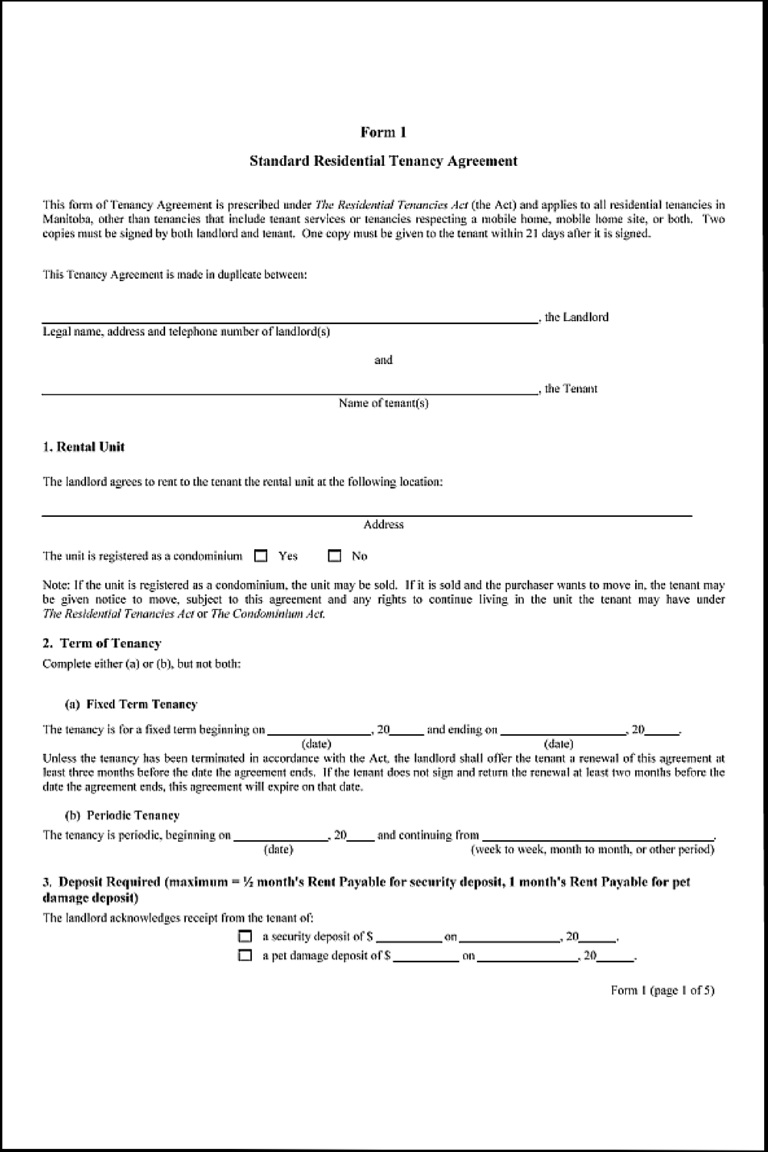
Below is a simple and practical template you can copy, edit, and use for most rental situations in Manitoba:
Manitoba Rental Agreement Compliance Rules and Legal Requirements
| Topic / Issue | Manitoba Legal Rule | Governing Statute |
|---|---|---|
| Primary governing legislation | Residential tenancy agreements in Manitoba are governed by provincial tenancy laws and regulations. | The Residential Tenancies Act (R.S.M. 1993, c. R119), Residential Tenancies Regulation (Man. Reg. 272/93), and Residential Rent Regulation (Man. Reg. 242/93) |
| Federal jurisdiction | Residential landlord-tenant matters are not governed federally. | Provincial jurisdiction only |
| Annual rent increase framework | Manitoba issues annual Rent Increase Guidelines that set binding limits on rent increases. | Residential Rent Regulation (Man. Reg. 242/93) |
| Who can legally sign | Property owners, corporate representatives, property managers, agents, and tenants occupying the property may sign the agreement. | The Residential Tenancies Act, s. 1(1) |
| Witness requirements | Witnesses are not legally required to validate a rental agreement. | Common law principles |
| Notarization requirement | Residential tenancy agreements do not require notarization or commissioning. | Common law principles |
| Minor tenants | Minors under 18 may legally enter into a binding tenancy agreement because housing is considered a necessary of life. | The Residential Tenancies Act, Policy Guide (Section 2: Tenancy Agreements) |
| Mental capacity | Individuals with mental disabilities may still enter a binding tenancy agreement for necessary housing. | The Residential Tenancies Act, Policy Guide (Section 2: Tenancy Agreements) |
| Deadline for signed lease copy | Landlords must provide tenants with an exact signed duplicate copy within 21 days after execution. | The Residential Tenancies Act, s. 19(1) |
| Mandatory lease forms | Written tenancy agreements must use Form 1 or Form 1.1 prescribed forms. | The Residential Tenancies Act, s. 18(1) |
| Required information in custom leases | Custom agreements must contain all prescribed information from the official forms. | The Residential Tenancies Act, s. 18(2) |
| Required landlord disclosure information | Lease agreements must include the landlord’s legal name, physical address, and telephone number. | The Residential Tenancies Act, s. 18(2) |
| Security deposit limit | Security deposits cannot exceed one-half of one month’s rent. | The Residential Tenancies Act, s. 29(1) |
| Pet damage deposit limit | Pet damage deposits cannot exceed one-half of one month’s rent. | The Residential Tenancies Act, s. 29.1(1) |
| Fixed-term lease renewal requirement | Landlords must offer renewal agreements at least three months before the fixed-term lease ends. | The Residential Tenancies Act, s. 20(1) |
| Filing requirement | Standard rental agreements do not need government registration or filing to become legally valid. | Private contract status |
| Notice to New Tenant filing rule | Landlords must provide Form 2 to new tenants and submit a copy to the Residential Tenancies Branch. | The Residential Tenancies Act, s. 116(1) |
| Invalid missing statutory content | Lease terms missing mandatory disclosures or prescribed information may be void. | The Residential Tenancies Act, s. 18(2) |
| Illegal waiver clauses | Clauses removing tenant rights or landlord duties are automatically void. | The Residential Tenancies Act, s. 3 |
| Illegal financial terms | Clauses demanding excessive deposits, non-refundable fees, or holding fees are invalid. | The Residential Tenancies Act, s. 29(1) & s. 11(1) |
| Manitoba lease renewal difference | Manitoba requires landlords to actively offer lease renewals for fixed-term agreements. | The Residential Tenancies Act, s. 20(1) |
| Manitoba minor tenant rule | Manitoba specifically recognizes that minors can sign binding leases for housing necessities. | The Residential Tenancies Act, Policy Guide (Section 2: Tenancy Agreements) |
| Manitoba Form 2 rent tracking system | Manitoba requires landlords to file Form 2 to track previous rent amounts between tenancies. | The Residential Tenancies Act, s. 116(1) |
One of the most surprising Manitoba rental rules is that minors can legally sign a binding lease agreement because housing is treated as a necessary of life. Many landlords assume every tenant must be at least 18, but Manitoba tenancy policy works differently. Another major rule is the province’s mandatory Form 1 system. Landlords cannot simply download a random lease template online and expect it to comply with Manitoba law. Missing required disclosures or changing protected tenant rights can make parts of the agreement legally void.
The Form 2 filing requirement is also unique because landlords must report previous rent information to the Residential Tenancies Branch. Manitoba uses this system to help monitor illegal rent increases between tenants.
These rules matter in real rental situations because small drafting mistakes can create expensive RTB disputes, rejected claims, or unenforceable lease clauses. Even failing to provide a signed lease copy within 21 days may weaken a landlord’s position during a dispute.
A rental agreement helps landlords and tenants document important tenancy terms, payment obligations, and occupancy rules before moving into a property. To better understand how these contracts fit within provincial housing regulations, you can review the complete lease agreement guide in Manitoba along with the Manitoba lease agreement laws guide.
What Makes a Manitoba Rental Agreement Legally Valid?
Manitoba’s Mandatory Standard Lease Requirement
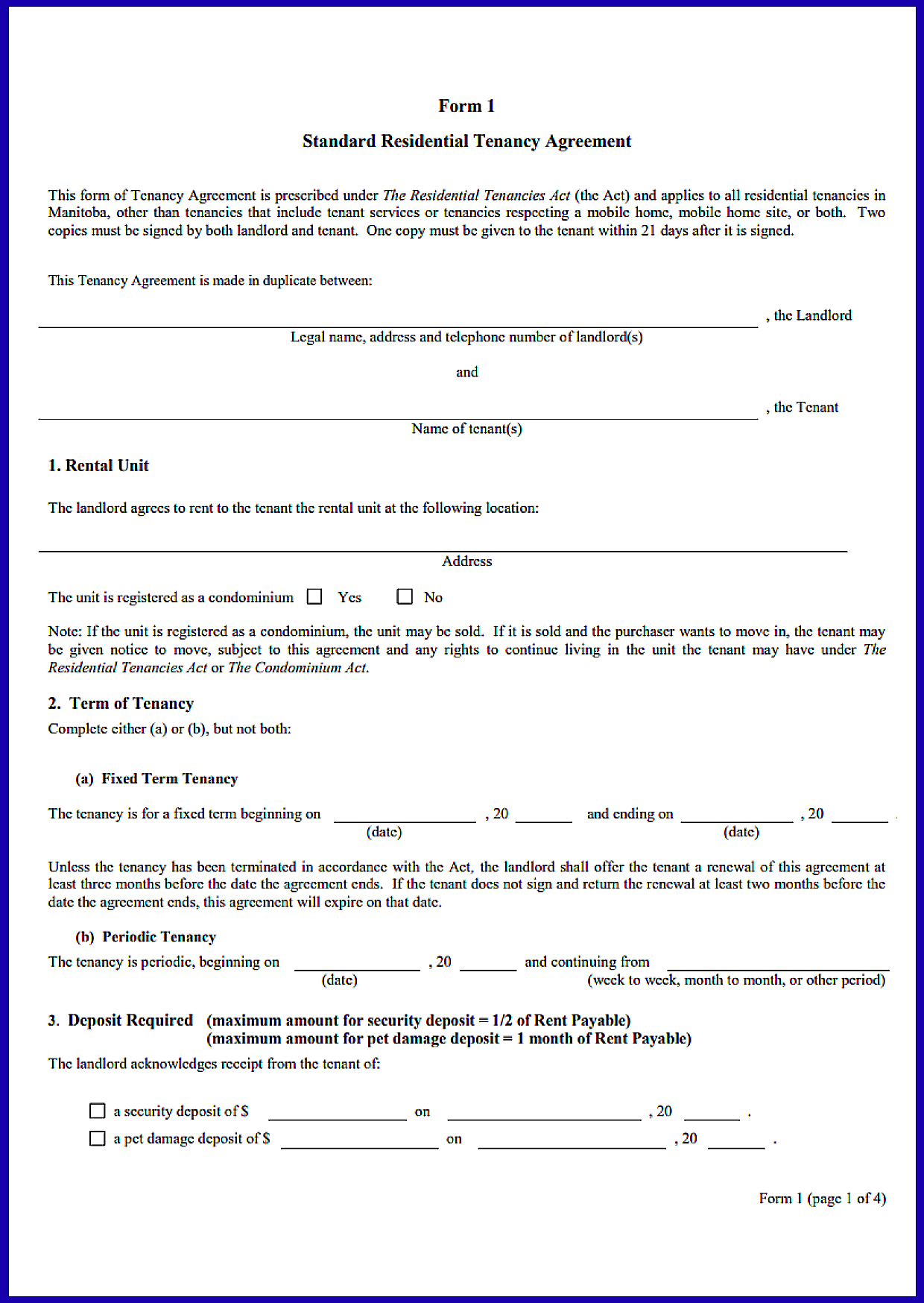
Under Manitoba law, landlords must use the official standard lease (Form 1). You cannot create a completely custom agreement from scratch.
If a lease includes terms that conflict with the law, those parts may become unenforceable, even if the tenant signed them.
For example:
- Charging illegal fees
- Banning all guests
- Adding unlimited penalties
These clauses will not hold up legally.
Who Can Sign a Manitoba Lease?
The age of majority in Manitoba is 18 years old.
However, minors can still enter a rental agreement for necessary housing under common law.
In many cases:
- A parent or guarantor may co-sign
- Landlords may request a co-signer for financial security
Does a Manitoba Rental Agreement Need Witnesses?
No, witnesses are not legally required.
But landlords must:
- Sign the agreement
- Provide a copy to the tenant within 21 days
Keeping proper records is very important if disputes arise later.
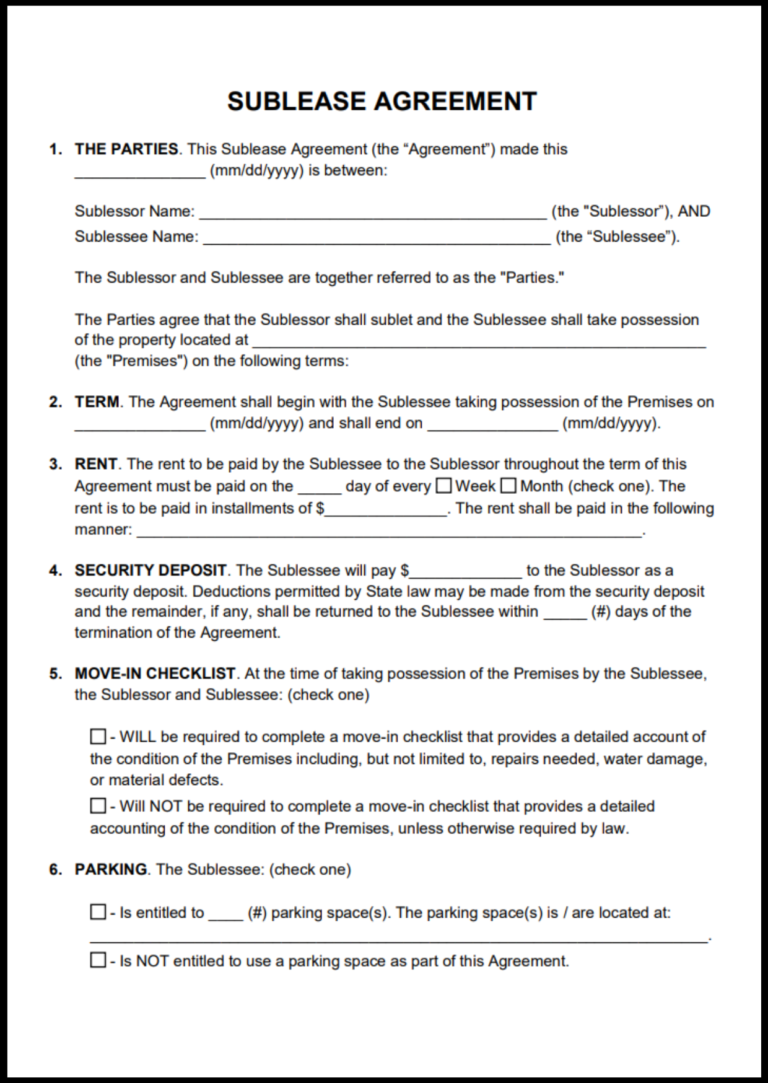
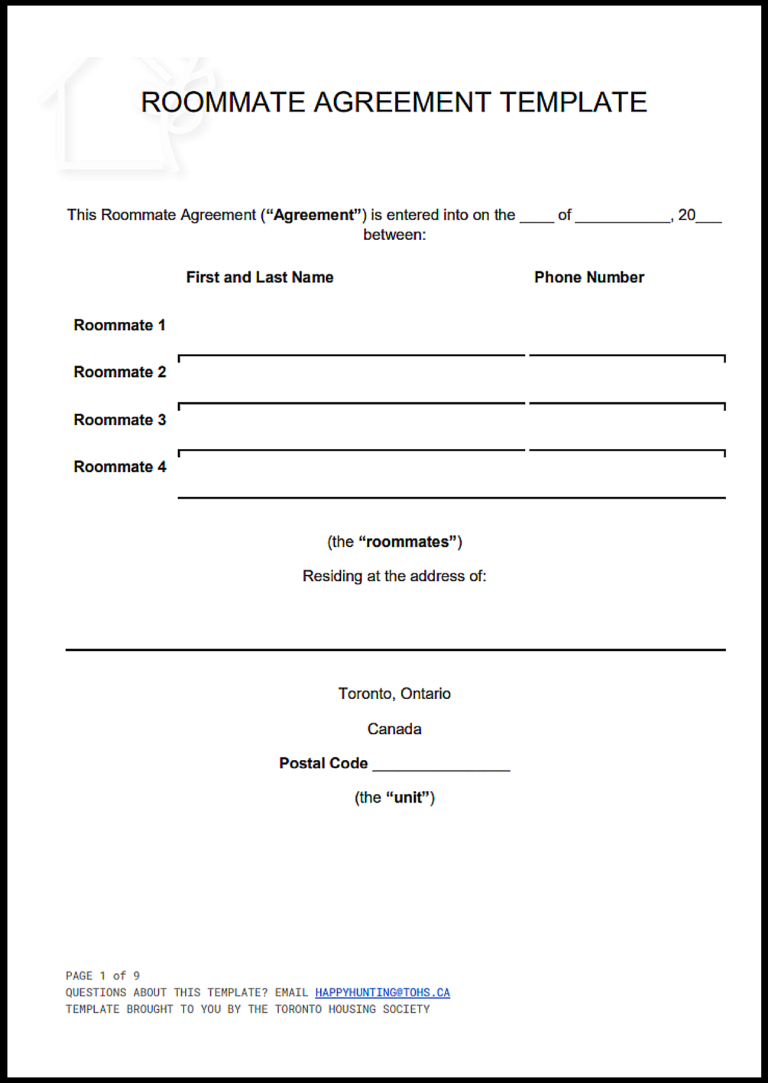
In shared housing situations, tenants sometimes use a roommate agreement template to outline shared financial responsibilities, while temporary occupancy changes may involve a Manitoba sublease agreement.
Important Clauses Every Manitoba Rental Agreement Should Include
Rent Amount and Due Dates
The agreement must clearly state:
- Monthly rent
- Due date (usually the 1st)
- Payment method (e-transfer, cheque, etc.)
Under Manitoba law, rent is considered late after the due date.
Security Deposit Rules in Manitoba
Landlords are not allowed to charge unlimited deposits.
The rule is:
- Maximum = ½ of one month’s rent
Example:
If rent is $1,000 → deposit cannot exceed $500
Always document:
- Payment date
- Condition of the unit at move-in
Pet Deposit Rules
Pet deposits are separate.
The rule:
- Maximum = 1 full month’s rent
This is in addition to the security deposit.
Utilities and Services Included
The agreement should clearly list:
- Heat
- Water
- Electricity
- Internet
- Parking
- Snow removal
Clear terms prevent future arguments.
Occupancy and Guest Rules
Landlords can set reasonable limits.
But they cannot:
- Ban overnight guests completely
- Create unfair restrictions
Such rules are considered invalid.
Maintenance and Repair Responsibilities
In most rental situations:
- Landlords must handle major repairs
- Tenants must keep the unit clean
Emergency repairs should be addressed quickly to avoid safety risks.
Rules for Smoking, Cannabis, and Noise
These rules must be written clearly.
Common issues include:
- Smoking inside units
- Noise complaints
- Shared building rules
Clear policies reduce disputes later.
Manitoba Rules Landlords Cannot Ignore
Illegal Fees That Cannot Be Charged
Landlords are strictly prohibited from charging:
- Application fees
- Admin fees
- Key deposits
Only allowed:
- Security deposit
- Pet deposit
Late Fee Limits Under Manitoba Law
Late fees are capped.
- $10 for the first day
- $2 per additional day
- Maximum total = $100
Any higher charge is not allowed.
Post-Dated Cheques Cannot Be Required
A landlord cannot force a tenant to give post-dated cheques.
However:
- A tenant can offer them voluntarily
Human Rights Protections for Tenants
Under Manitoba law, landlords cannot discriminate based on:
- Family status
- Disability
- Race
- Source of income
Refusing a tenant for these reasons is illegal.
Fixed-Term vs Month-to-Month Rental Agreements in Manitoba
Fixed-Term Lease Agreements
Best for stability.
Features:
- Set start and end date
- Predictable income for landlords
- Less flexibility for tenants
Breaking early may lead to penalties.
Month-to-Month Agreements
More flexible.
Features:
- No fixed end date
- Easier to end with notice
- Common for short-term or uncertain situations
Which Option Is Better?
| Factor | Fixed-Term | Month-to-Month |
| Stability | High | Low |
| Flexibility | Low | High |
| Rent Planning | Predictable | Variable |
| Risk Level | Lower for landlords | Higher |
Special Rules for Condominium Rentals in Manitoba
Mandatory Condominium Disclosure Language
If the unit is a condo, the agreement must include a notice that:
- The unit may be sold
- A new owner may move in
This is required under the standard lease.
Condo Bylaws and Tenant Responsibilities
Tenants must follow condo rules such as:
- Parking restrictions
- Noise limits
- Use of common areas
- Move-in procedures
Ignoring these rules can lead to issues.
Common Mistakes That Can Make Lease Terms Unenforceable
Using a Lease That Conflicts With Manitoba Law
Invalid clauses include:
- “No guests ever”
- Unlimited late fees
- Non-refundable deposits
These will not be enforced.
Failing to Provide Signed Copies
Landlords must give tenants a signed copy within 21 days.
Failing to do this can create legal problems.
Adding Unreasonable House Rules
Even if signed, illegal rules are not valid.
Not Documenting Move-In Condition Properly
Always:
- Take photos
- Use inspection reports
This protects both landlord and tenant during move-out.
How to Fill Out a Manitoba Rental Agreement Step by Step
Step 1 — Add Landlord and Tenant Information
Use full legal names and correct contact details.
Step 2 — Describe the Rental Unit Clearly
Include:
- Full address
- Unit number
- Parking or storage details
Step 3 — Enter Rent and Deposit Details
Make sure amounts follow legal limits.
Step 4 — Add Utility and Pet Terms
Clearly state what is included and what is not.
Step 5 — Review Manitoba Legal Limits
Double-check:
- Deposit caps
- Late fee limits
- Allowed clauses
Step 6 — Sign and Deliver Copies Properly
Both parties sign, and the tenant receives a copy within 21 days.
What Happens After the Lease Is Signed?
Tenant Move-In Process
Typical steps:
- Receive keys
- Complete inspection report
- Set up utilities
Rent Increase Rules in Manitoba
For 2026:
- Guideline increase = 1.8%
If a landlord wants more:
- They must apply to the Residential Tenancies Branch
Resolving Landlord-Tenant Disputes
Disputes are handled by the Residential Tenancies Branch (RTB).
Common issues:
- Deposit returns
- Repairs
- Unpaid rent
If an order is issued and not paid, it can be enforced through court.
Frequently Asked Questions
Is a verbal rental agreement legal in Manitoba?
Yes, but it is risky. Written agreements are strongly recommended for clarity and protection.
Can a landlord charge an application fee in Manitoba?
No. Application fees are illegal.
How much security deposit can a landlord collect?
Maximum is half of one month’s rent.
Can a landlord refuse pets?
Yes, before signing the lease. But rules cannot be changed unfairly later.
Does a Manitoba rental agreement need to be notarized?
No. Notarization is not required.
What happens if a tenant breaks a fixed-term lease early?
They may be responsible for rent until a new tenant is found or the lease ends.
Can landlords increase rent whenever they want?
No. They must follow annual guidelines or get approval for higher increases.