What Is Lease Agreement Ontario? Rules, Requirements & Legal Guide
What Is Lease Agreement Ontario—if you’re renting in Ontario, this is one of the most important documents you’ll deal with. It’s not just paperwork. It’s a legal contract that protects both tenants and landlords.
If you’re renting in Ontario, this article is for you. I’ll walk you through a simple lease template, explain the rules under Ontario law, and show you how to avoid common mistakes.
A lease agreement in Ontario is a written contract between a landlord and a tenant. It clearly explains rent, rules, and responsibilities.
In most rental situations, having a proper lease prevents disputes. Without it, small misunderstandings can turn into big legal problems. I’ve seen a lot of Ontario rental disputes start because the lease was vague, incomplete, or based on an old template that didn’t follow the Residential Tenancies Act. When people are signing their first lease, they often don’t realize that one missing clause or misunderstanding about rent rules can create serious problems later.
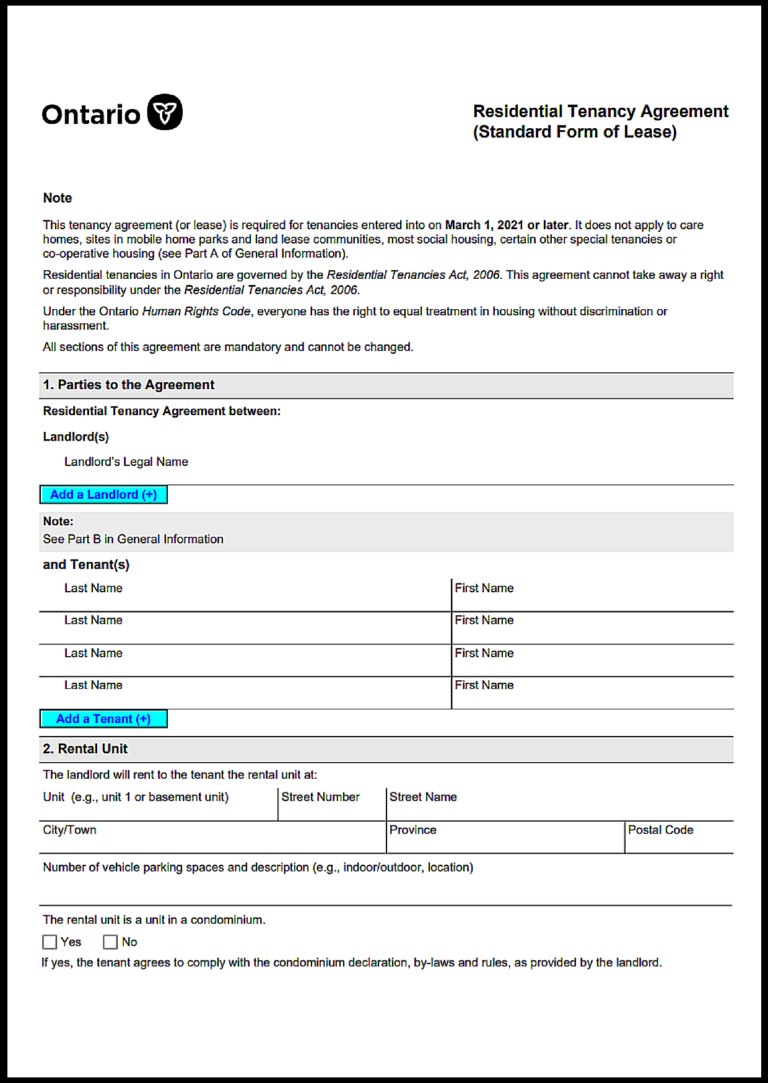
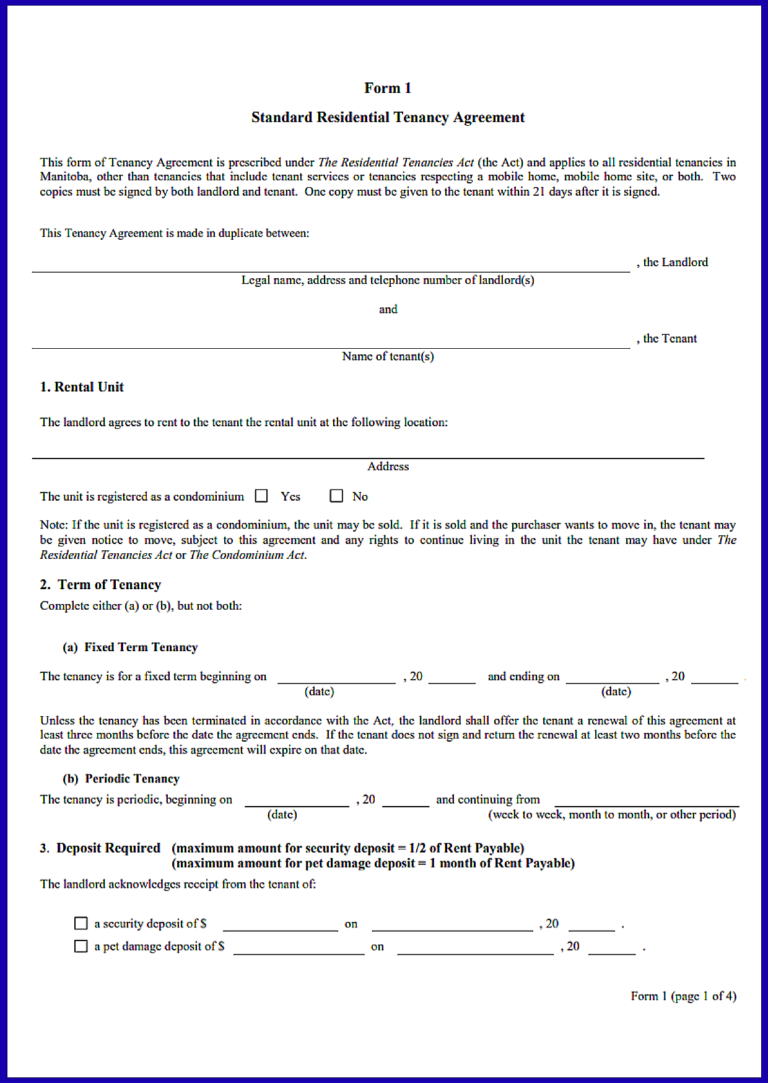
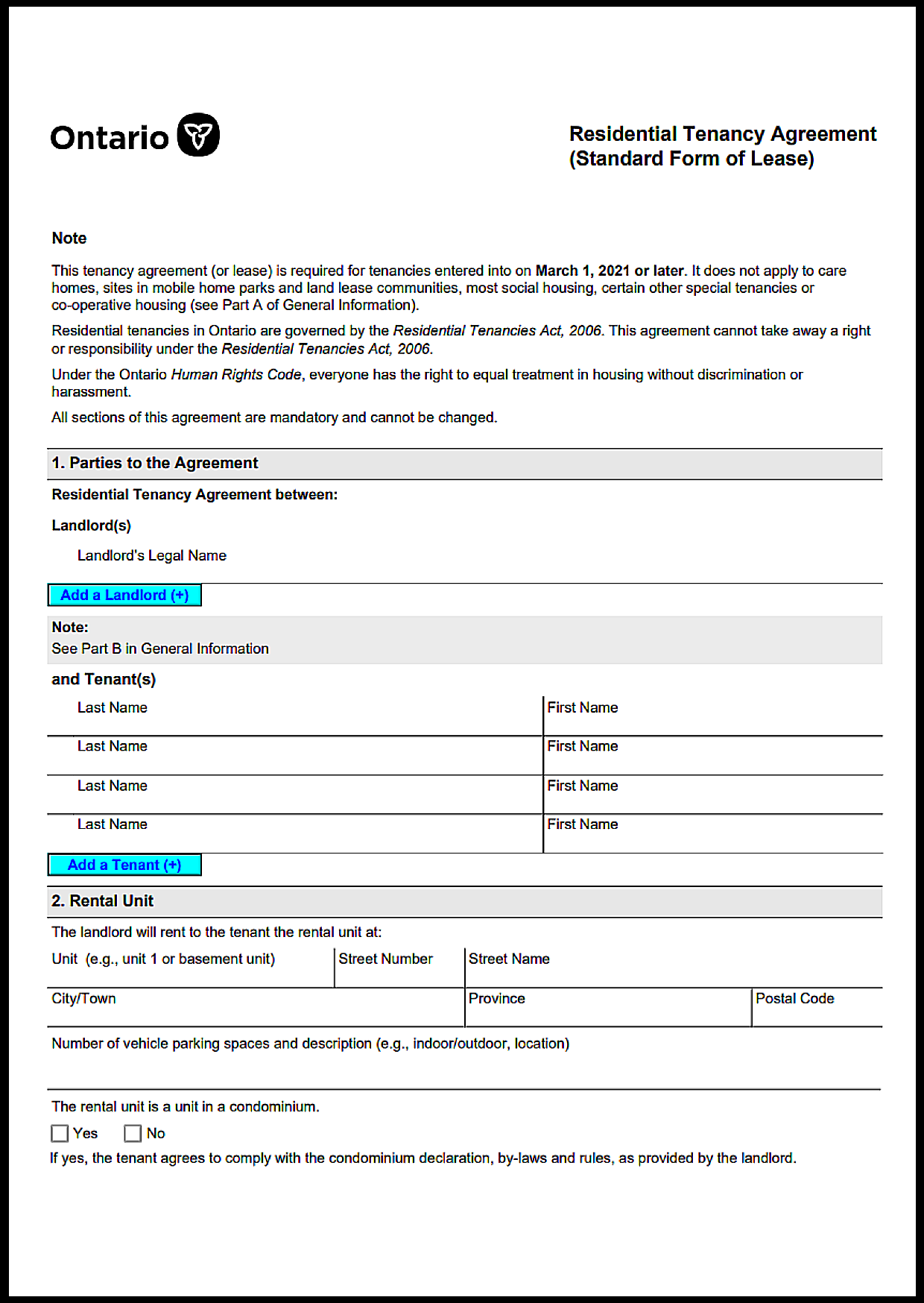
Free Lease Agreement Template (Ontario)
Below is a simple, clean Ontario residential lease template. You can copy and use it.
What Is a Lease Agreement in Ontario?
A lease agreement is a legal contract between a landlord and a tenant.
It covers:
- Rent amount and due date
- Length of tenancy
- Rules (pets, smoking, etc.)
- Maintenance responsibilities
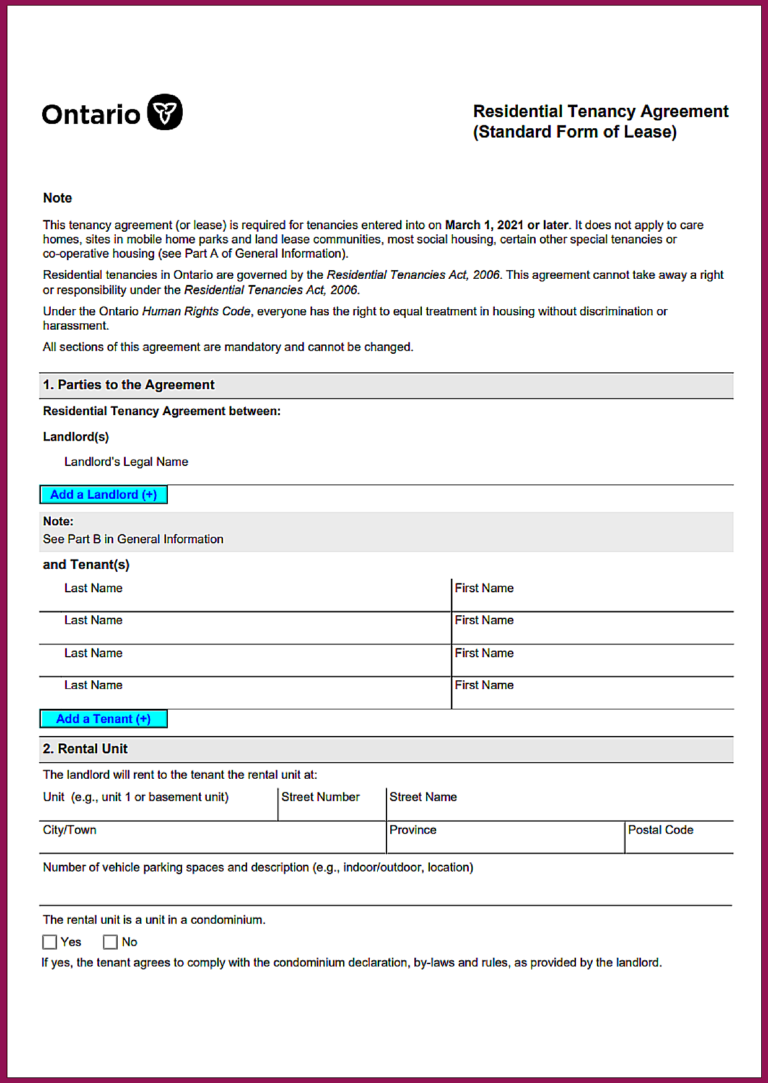
In Ontario, most residential rentals must follow the standard lease format set by the government.
This applies to:
- Apartments
- Houses
- Basement units
- Condos
To understand rental contracts, this article on what a lease agreement is in Ontario should be read alongside the standard lease template. You should also review how to draft a lease agreement and understand Ontario lease laws. Related documents like a rental agreement and rental application form are also essential.
Is a Lease Agreement Legally Required in Ontario?
Yes. Under Ontario law, landlords must provide a written standard lease.
This rule comes from the Residential Tenancies Act (RTA).
What if the landlord doesn’t provide it?
Tenants have strong rights:
• The tenant must issue a formal written demand for the Standard Form of Lease.
• If the landlord fails to provide it within 21 calendar days, the tenant may withhold up to one month’s rent under s. 12.1(2) of the RTA.
• If the landlord fails to provide the standard lease within 30 calendar days from the date the tenant began withholding, the tenant is legally entitled to keep that withheld month of rent under s. 12.1(4).
Note: If the landlord provides the lease within this 30-day window, the tenant must immediately repay the withheld amount to avoid eviction for non-payment.
This is a powerful protection. Many tenants don’t know this.
Key Parts of an Ontario Lease Agreement
Names of Landlord and Tenant
Must be complete and correct.
If names are wrong, it can create legal issues later.
Rental Property Details
Include:
- Full address
- Unit number
- Type (apartment, basement, etc.)
Lease Term
Two main types:
- Fixed-term (e.g., 1 year)
- Month-to-month
Rent Amount and Payment Terms
Must clearly state:
- Monthly rent
- Due date
- Payment method (bank transfer, cash, etc.)
Deposits Allowed
Under Ontario law:
- Only last month’s rent deposit is allowed
Landlords are NOT allowed to charge:
- Security deposits
- Damage deposits
- Cleaning fees
Rules and Restrictions
Common rules include:
- Pets
- Smoking
- Noise
Important: Some rules (like banning pets) may not be enforceable under Ontario law.
Maintenance and Repairs
- Landlord must maintain the property
- Tenant must keep it clean and report issues
Fixed-Term vs Month-to-Month Lease (Ontario)
Here’s a simple comparison:
| Feature | Fixed-Term Lease |
Month-to-Month Lease
|
| Duration | Set period (e.g., 12 months) | Ongoing |
| Stability | High | Flexible |
| Ending Lease | Harder |
Easier with notice
|
| Rent Changes | Limited during term |
Can change with notice
|
When to use each?
Fixed-term:
- Good for long-term stability
- Common for first leases
Month-to-month:
- Good for flexibility
- Often starts after fixed term ends
Rules for Rent and Deposits in Ontario
Under Ontario law:
Deposits
- Only last month’s rent deposit is allowed
- Must be used for the final month
Rent Increases & Guideline Exemptions:
Rent can only be increased once every 12 months, requiring 90 days’ formal written notice using Form N1 or N2. However, pursuant to s. 6.1 of the RTA, rental units first occupied for residential purposes after November 15, 2018, are exempt from the provincial rent control guideline cap. Landlords of these units may increase rent to any market rate, while units occupied prior to that date are strictly capped at the annual guideline rate set by the Ministry of Municipal Affairs and Housing.
Illegal Charges
Landlords cannot ask for:
- Key deposits above replacement cost
- Security or damage deposits
- Extra hidden fees
If you see these, it’s a red flag.
How to Fill Out an Ontario Lease Agreement (Step-by-Step)
Step 1: Enter correct personal details
Use full legal names. Avoid nicknames.
Step 2: Add accurate property info
Double-check address and unit details.
Step 3: Clearly define rent and dates
Write exact rent amount and due date.
Step 4: Review rules carefully
Make sure rules follow Ontario law.
Step 5: Sign and keep copies
Both landlord and tenant must sign.
Tip: Always double-check everything before signing.
Common Mistakes to Avoid
Many people make these errors:
- Not using the Ontario standard lease
- Missing important details
- Agreeing to illegal charges
- Not reading terms carefully
- Relying on verbal agreements
Always get everything in writing.
What Makes a Lease Agreement Invalid in Ontario?
A lease may be invalid or partly unenforceable if it includes:
- Illegal clauses (e.g., unfair guest restrictions)
- Prohibited deposits
- Terms that break RTA rules
- Missing or misleading information
Even if signed, illegal terms usually cannot be enforced.
Real-Life Example (Simple Scenario)
Imagine a student renting an apartment in Toronto.
The lease includes:
- Monthly rent: $1,200
- Last month’s deposit
- No smoking rule
Now imagine there is no written lease.
Problems can happen:
- Disputes about rent
- Confusion about rules
- No clear responsibilities
A proper lease prevents these issues.
Tenant Rights and Landlord Responsibilities
Tenant Rights
- Right to a safe and livable home
- Right to privacy
- Right to notice before landlord enters
Landlord Responsibilities
- Maintain the property
- Follow rent increase rules
- Provide standard lease
Tenant Responsibilities
- Pay rent on time
- Keep property clean
- Follow legal rules
When Should You Use a Lease Agreement?
You should always use a lease when:
- Renting a house or apartment
- Renting a basement unit
- Renting a room
Even for short-term rentals, a written agreement is strongly recommended.
FAQs
Can a lease be verbal in Ontario?
Yes, a lease can be verbal in Ontario, but it is risky. A written lease gives clear proof of terms and helps avoid disputes. In most cases, landlords are expected to provide a written agreement.
Can a landlord change terms after signing?
No, a landlord cannot change the lease terms after signing without your consent. Any changes must be agreed upon by both the tenant and landlord. This protects both parties from unfair modifications.
What if I don’t get a written lease?
You can request a written lease from your landlord at any time. If they still don’t provide it, you are still protected under Ontario rental laws. Your rights as a tenant remain valid even without a written document.
Can I break a lease early?
A tenant can terminate a fixed-term tenancy early by executing a mutual Agreement to End the Tenancy (Form N11), or by requesting general permission in writing to assign the rental unit under RTA s. 95. If the landlord refuses or fails to respond to an assignment request within 7 calendar days, the tenant may serve a 30-day Tenant’s Notice to End the Tenancy (Form N9). Charging lease break fees or penalties is strictly illegal under Ontario law.
Is the Ontario standard lease mandatory?
Yes, the Ontario standard lease is mandatory for most residential rentals. Landlords must use this format when renting out their property. It ensures clear and fair terms for both tenants and landlords.