Free British Columbia Sublease Agreement Template
Free British Columbia Sublease Agreement Template
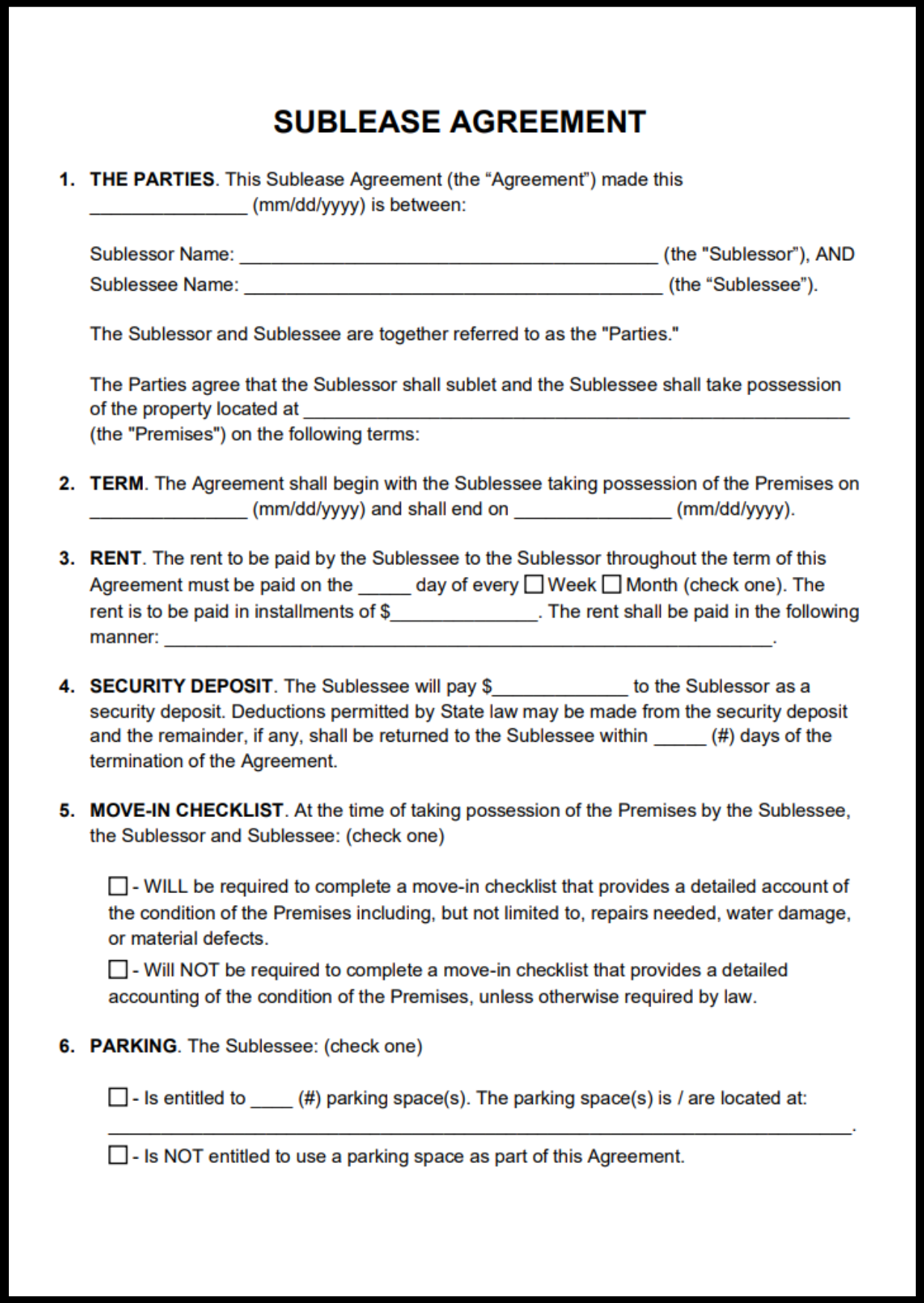
Use this simple and practical template to create your sublease agreement. Make sure all details are filled clearly.
British Columbia Sublease Rules and Rent Increase Laws Explained
| Topic / Issue | British Columbia Legal Rule | Governing Statute |
|---|---|---|
| Governing legislation | Residential sublease matters are governed by the Residential Tenancy Act and Residential Tenancy Regulation. | Residential Tenancy Act [SBC 2002] c. 78; Residential Tenancy Regulation |
| Federal law | Residential tenancy relationships in British Columbia are primarily governed by provincial law, including the Residential Tenancy Act and Residential Tenancy Regulation. | Residential Tenancy Act |
| Written landlord consent | A tenant must obtain the landlord’s written consent before subletting unless the tenancy agreement or an RTB order provides otherwise. | Residential Tenancy Act, s. 34 |
| Fixed-term tenancy protection | If 6 months or more remain on a fixed-term tenancy, the landlord must not unreasonably withhold consent to the sublease. | Residential Tenancy Act, s. 34(2) |
| Witness requirement | Section 34 does not require a witness signature for the landlord’s written consent to a sublease. | Residential Tenancy Act, s. 34 |
| Notarization | Section 34 does not require the landlord’s written consent to a sublease to be notarized. | Residential Tenancy Act, s. 34 |
| Capacity requirement | The Residential Tenancy Act does not impose a general age-19 requirement for entering a tenancy agreement. | Residential Tenancy Act, s. 3 |
| Rent increase limit | For covered residential tenancies, the maximum annual rent increase for 2026 is 2.3%; this rule is separate from the legal requirements for creating a sublease. | Residential Tenancy Regulation |
| Rent increase frequency | The 12-month rent-increase rule applies to rent increases and is separate from the rules governing subleases. | Residential Tenancy Act, s. 42 |
| Approved form requirement | There is no general RTB-7 form for creating a standard residential sublease; the tenant must obtain the landlord’s written consent and enter into a sublease agreement with the subtenant. | Residential Tenancy Act, s. 34 |
| Filing requirement | A standard sublease does not require registration with the Residential Tenancy Branch merely because the tenant is entering into a sublease. | Residential tenancy framework |
| Additional rent increases | Rent-increase approval under section 43 is separate from the landlord-consent requirements that apply to subleasing under section 34. | Residential Tenancy Act, s. 43 |
| Incorrect notice period | The three-full-month rule applies to statutory rent increases, not to requests to sublet a rental unit. | Residential Tenancy Act, s. 42 |
| Unauthorized sublease | Subletting without the landlord’s written consent can place the original tenancy at risk, and the Residential Tenancy Act allows a landlord to give notice to end a tenancy in specified circumstances involving unauthorized subletting. | Residential Tenancy Act, s. 47 |
| Timing violations | A tenant must obtain the required written consent before subletting. A sublease is generally for a period shorter than the original tenant’s tenancy term. | Residential Tenancy Act, s. 34 |
| Sublease duration | A statutory sublease is for a period shorter than the original tenant’s tenancy term, and the subtenant must vacate at the end of the sublease. | Residential Tenancy Act |
| Rent terms | The sublease should clearly state the rent payable by the subtenant and any included services or utilities. Do not assume that general rent-increase rules automatically govern the amount charged under every sublease arrangement. | Residential Tenancy Act |
| Rent control coverage | Rent-increase rules apply to covered residential tenancies, but those rules are separate from the statutory requirements for subletting. | Residential Tenancy Act and Residential Tenancy Regulation |
One of the most important rules for a BC sublease is that the original tenant must obtain the landlord’s written consent before subletting. If the tenancy is fixed-term with 6 months or more remaining, the landlord must not unreasonably withhold consent.
Written consent should be obtained before the sublease begins. The tenant should also keep a copy of the consent and the signed sublease so there is a clear record of the arrangement.
A sublease does not replace the original tenancy agreement. The original tenant remains responsible for complying with the original tenancy, even while the subtenant occupies the rental unit.
Understanding the consent and responsibility rules makes the sublease easier to document. Use the free British Columbia Sublease Agreement template as a starting point, then make sure its terms match the original tenancy and the landlord’s written consent.
This document is commonly used when an existing tenant temporarily allows another person to occupy all or part of the rental property while remaining responsible under the original tenancy terms. Anyone considering this arrangement should first review the main British Columbia lease agreement guide to understand how primary tenant obligations continue during the sublease period.
What Is a Sublease Agreement in British Columbia?
A sublease is a legal arrangement where a tenant rents their unit to another person for a temporary period. The important point is that the original tenant does not leave the lease completely.
In most rental situations:
- The original tenant remains responsible to the landlord
- The subtenant pays rent to the tenant, not the landlord
- The lease terms still apply
Many people confuse sublease with assignment, but they are not the same. A sublease is temporary, while an assignment transfers the lease permanently to a new tenant.
Subleasing situations often arise in shared housing arrangements where occupants divide rent and household responsibilities among multiple residents. In these cases, a written roommate responsibility agreement can help clarify payment expectations, utility sharing, and common area rules between everyone living in the property.
When Can You Sublease in British Columbia?
Subleasing is often used in real-life situations where tenants cannot stay in the unit for a short time but still want to keep it.
For example, tenants may sublease when they move for a temporary job, travel for a few months, or stay with family. It can also help reduce financial pressure by sharing rent.
Situations Where Subleasing Is Allowed
A tenant may sublet with the landlord’s written consent, or where the tenancy agreement or an RTB order provides a lawful basis for the arrangement. If 6 months or more remain on a fixed-term tenancy, the landlord must not unreasonably withhold consent.
Situations Where Subleasing May Be Denied
A landlord may refuse a sublease request where the law permits refusal. The special protection against unreasonable withholding applies when 6 months or more remain in a fixed-term tenancy, so tenants should check the tenancy terms and obtain written consent before subletting.
Temporary occupancy arrangements sometimes continue longer than originally expected, especially in flexible rental situations. Property owners may eventually convert the setup into a more flexible monthly tenancy structure or formalize extended occupancy through a renewal agreement for continuing residents.
Is Subleasing Legal in British Columbia?
Subleasing is permitted under British Columbia’s Residential Tenancy Act, but the tenant must follow the statutory requirements, including obtaining the landlord’s written consent unless another lawful basis applies.
The landlord’s written consent is required, but for a fixed-term tenancy with 6 months or more remaining, the landlord must not unreasonably withhold consent.
It is strongly recommended to:
- Get written consent from the landlord
- Keep copies of all communication
- Avoid relying on verbal agreements
Before subletting, the tenant must obtain the landlord’s written consent unless the tenancy agreement or an RTB order provides otherwise.
Verbal permission should not be relied upon because section 34 requires the landlord’s consent in writing before the tenant sublets.
Key Elements of a Valid Sublease Agreement
A proper sublease agreement must clearly explain all terms. Missing details often lead to misunderstandings or legal problems.
Parties Involved
The agreement must include the full details of both the original tenant and the subtenant. Names should match official identification to avoid disputes.
Property Details
The full address of the rental unit must be mentioned along with any included areas like parking spaces or storage units. This helps define what the subtenant can use.
Sublease Duration
The sublease must have clear start and end dates. A statutory sublease is for a period shorter than the original tenant’s tenancy term, and the subtenant must vacate at the end of the sublease.
Rent & Payment Terms
Rent details should be clearly written, including the amount, due date, and payment method. The sublease should clearly state the rent payable by the subtenant and any included services or utilities.
Security Deposit Rules
The sublease should clearly state whether a deposit is being collected, the amount, who holds it, and when it will be returned. Any deposit arrangement should be consistent with applicable BC tenancy rules.
Responsibilities & Utilities
Clearly define who pays for utilities and who is responsible for maintenance. This includes electricity, internet, and cleaning duties.
Landlord Consent Clause
Written confirmation of the landlord’s consent should be retained because section 34 requires written consent before a tenant sublets.
How to Create a Sublease Agreement (Step-by-Step)
Start by reviewing the original tenancy agreement. Then obtain the landlord’s written consent, confirm the proposed subtenant and dates, and prepare a sublease that stays consistent with the original tenancy.
Next, contact your landlord and request written permission. Once approved, fill out the sublease template carefully with accurate details. Discuss rent, deposit, and responsibilities with the subtenant to avoid confusion.
Before signing, both parties should review the agreement properly. After signing, keep copies for records.
A helpful tip is to take photos of the property before the subtenant moves in. This provides proof of the condition of the unit.
Sublease vs Assignment in British Columbia
Understanding the difference between sublease and assignment is very important for tenants in British Columbia.
| Feature | Sublease | Assignment |
| Responsibility | Original tenant stays responsible |
New tenant takes responsibility for the tenancy
|
| Lease Nature | Temporary arrangement |
Permanent transfer
|
| Approval Needed | Written landlord consent generally required |
Written landlord consent generally required
|
| Risk Level | Higher for original tenant because they remain responsible |
Original tenant generally leaves the tenancy after the assignment
|
This comparison helps avoid confusion and ensures you choose the correct option based on your situation.
Legal Risks and Common Mistakes to Avoid
Subleasing without understanding the rules can create serious legal problems.
Subleasing Without Permission
Subletting without the landlord’s written consent can place the original tenancy at risk, and the Residential Tenancy Act allows a landlord to give notice to end a tenancy in specified circumstances involving unauthorized subletting.
Charging Higher Rent Illegally
The sublease should clearly state the rent payable by the subtenant and any included services or utilities. Do not assume that general rent-increase rules automatically govern the amount charged under every sublease arrangement.
Poorly Written Agreements
An unclear agreement can cause disputes about rent, damages, or responsibilities. Always write terms clearly.
Not Screening Subtenant
The original tenant may want to assess the proposed subtenant’s ability to comply with the sublease, while the landlord may also have legitimate reasons to assess a proposed subtenant when considering consent.
Rights and Responsibilities in a Sublease
Original Tenant Responsibilities
The original tenant remains responsible for complying with the original tenancy agreement, including obligations relating to rent, damage and other tenancy terms.
Subtenant Rights
The subtenant has the rights and obligations set out in the sublease and the applicable original tenancy terms; BC government guidance states that the subtenant has the same rights and obligations outlined in the original tenancy agreement.
Landlord Rights
The landlord’s written consent is required, but the landlord must not unreasonably withhold consent when section 34(2) applies to a fixed-term tenancy with 6 months or more remaining.
Real-Life Example of a Sublease in BC
A tenant in Vancouver temporarily moves to another city for work. Instead of ending the lease, they sublease the apartment to a student for six months.
The landlord gives written approval, and the student pays rent to the tenant. However, if the student fails to pay rent or damages the property, the original tenant is still responsible under the original tenancy agreement.
This example shows why understanding your responsibility is very important before subleasing.
FAQs About BC Sublease Agreements
Do I need landlord permission to sublease in BC?
Yes. A tenant must obtain the landlord’s written consent before subletting unless the tenancy agreement or an RTB order provides another lawful basis.
Can I make a profit from subleasing?
The article should not state a blanket prohibition without a verified statutory basis. The sublease should clearly state the rent and other payment terms agreed between the original tenant and subtenant.
What happens if the subtenant damages the property?
The original tenant remains responsible for complying with the original tenancy agreement, including obligations relating to damage, and may need to address the issue with the landlord.
Can a landlord refuse a sublease?
Yes, but the landlord’s discretion is subject to the Residential Tenancy Act. If 6 months or more remain on a fixed-term tenancy, the landlord must not unreasonably withhold consent.
Is a verbal sublease agreement valid?
Do not rely on a verbal arrangement. Section 34 requires the landlord’s consent in writing before the tenant sublets, and the BC government states that the original tenant and subtenant must sign a sublease agreement.