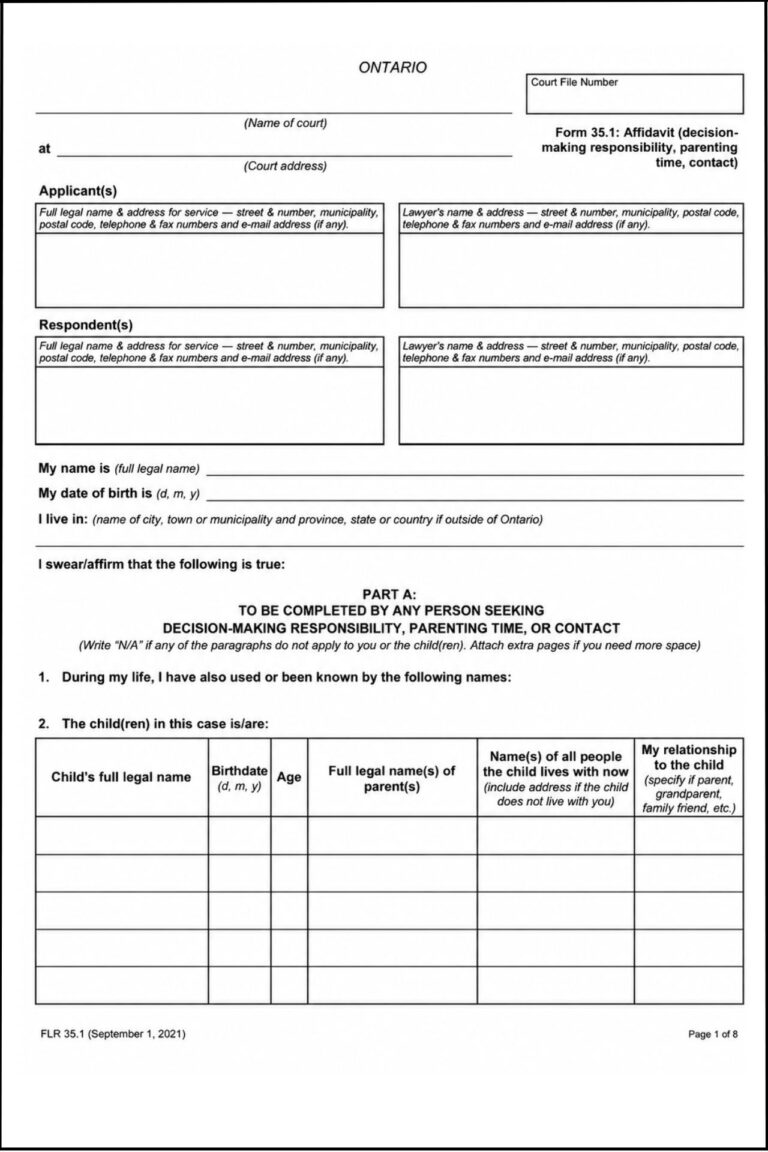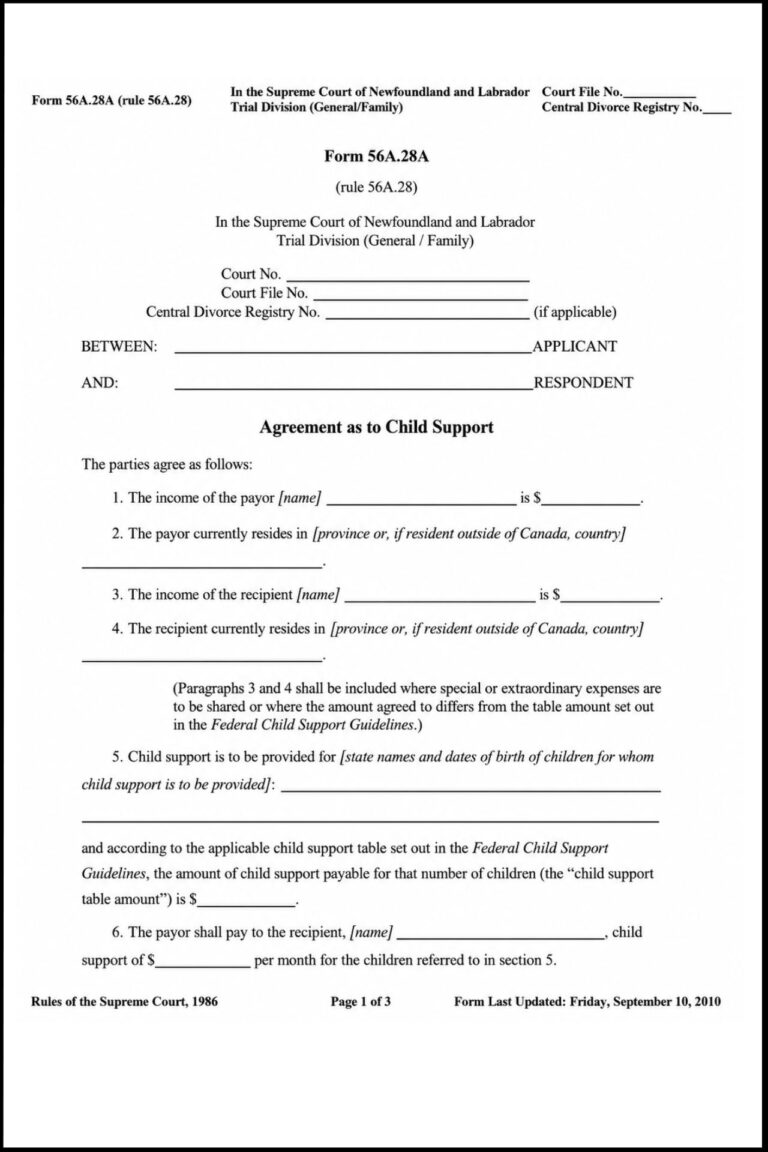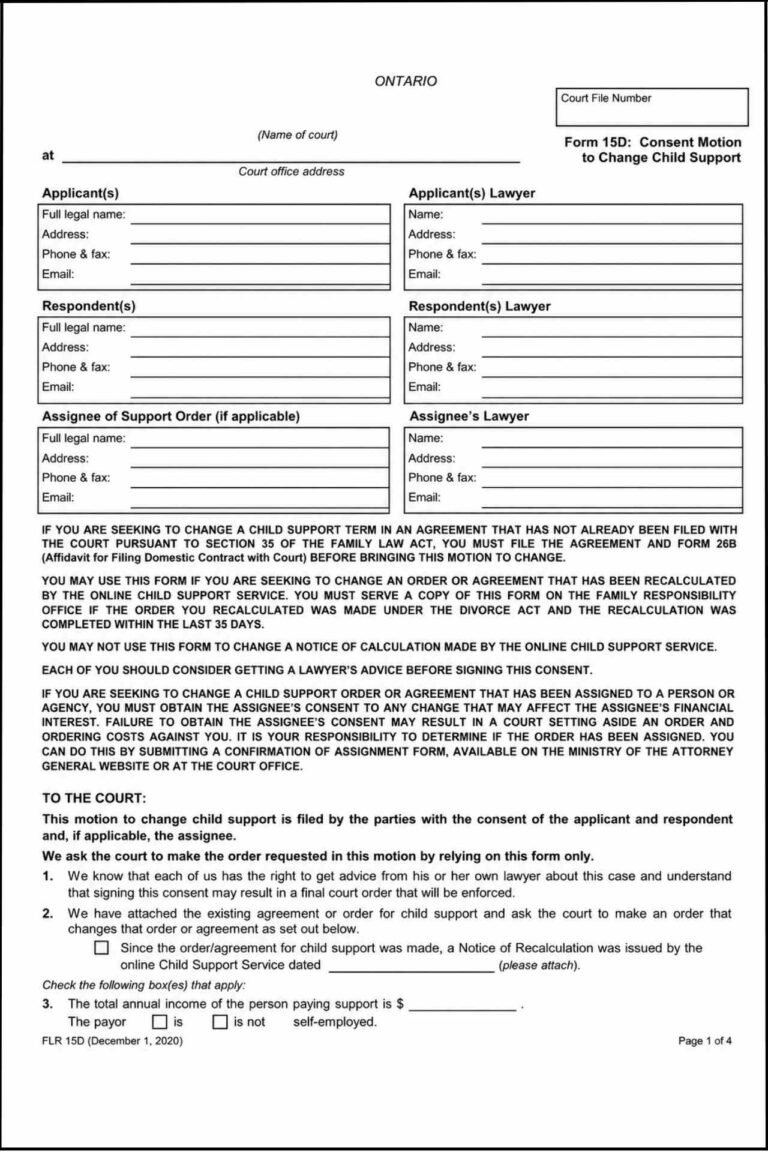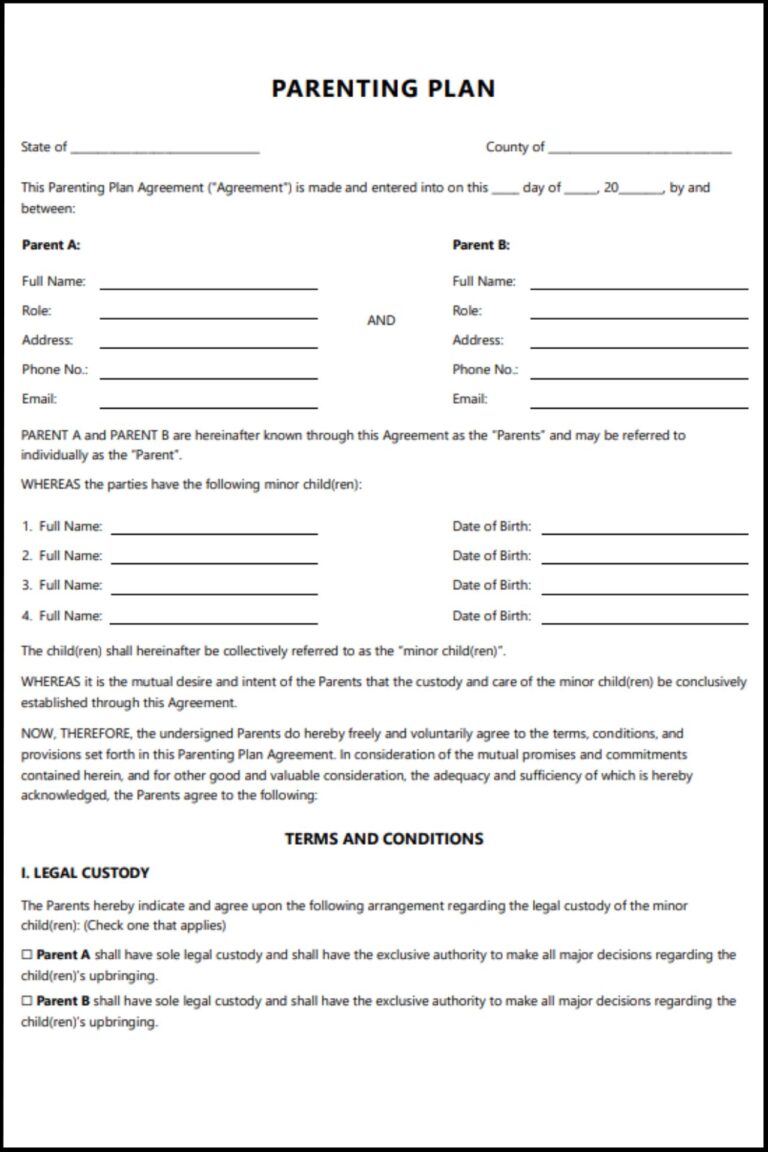
Ontario Parenting Plan Template (Printable PDF & Word)
Ontario parenting plan arrangements often work best when expectations are recorded before misunderstandings begin, particularly after separation when routines for children are changing. Since Ontario now uses the concepts of decision-making responsibility and parenting time, a parenting plan that still relies on outdated custody terminology or leaves schedules unclear may carry far less weight if parenting issues later reach the Ontario Superior Court of Justice.
It’s not unusual to see parents who believed a simple online agreement settled everything discover that important details about holidays, major decisions, or future changes were never addressed. This Ontario Parenting Plan template reflects the province’s current family law framework, explains the practical clauses parents commonly include, and shows how to prepare a document that accurately records their parenting arrangements Ontario parenting plan
Ontario Parenting Agreement Template
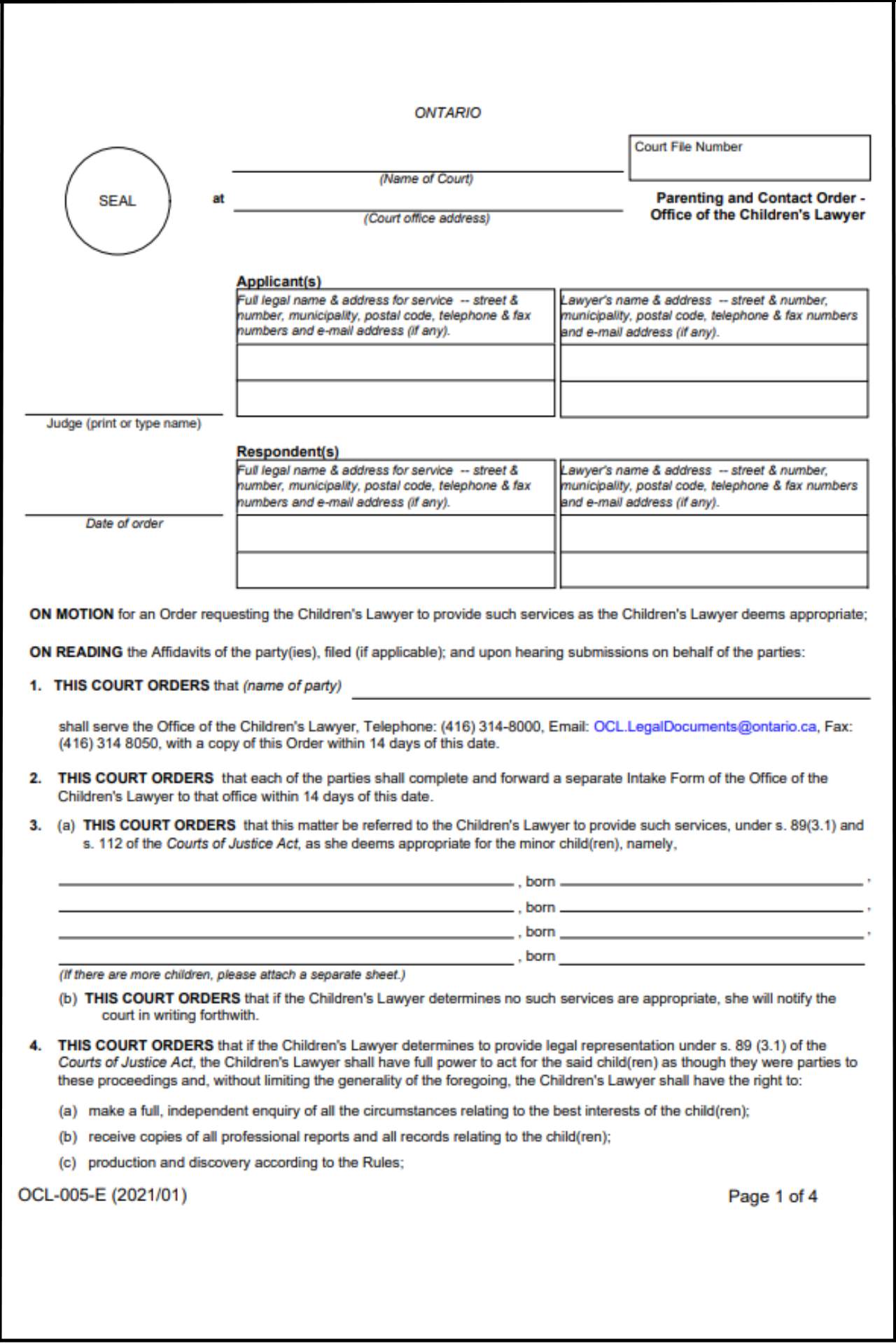
Key Clauses of an Ontario Parenting Plan
Decision-Making Responsibility
A parenting plan should clearly identify which parent will make major decisions affecting the child or whether those decisions will be made jointly. Under Ontario family law, decision-making responsibility covers important matters such as education, health care, religious upbringing, and significant extracurricular activities. Clearly allocating these responsibilities reduces confusion and provides a practical framework for resolving day-to-day parenting issues. If parents intend to share responsibility, they should also explain how disagreements will be discussed and resolved before either parent makes a final decision.
Parenting Time Schedule
A detailed parenting schedule is one of the most important parts of an Ontario parenting plan. The agreement should specify regular weekday and weekend arrangements, school holidays, statutory holidays, birthdays, summer vacations, and other special occasions. It should also include exchange times, pickup and drop-off locations, and transportation responsibilities. A well-defined schedule gives children consistency while reducing the likelihood of future disagreements between parents.
Communication Between Parents
Parents should include practical rules for communicating about the child after separation. The parenting plan may identify acceptable methods of communication, expected response times, and procedures for discussing important decisions. Keeping communication respectful and focused on the child’s needs often prevents minor disagreements from becoming larger disputes. Where direct communication is difficult, parents may agree to use a shared parenting application or written messages.
Child Support Arrangements
Where child support applies, the parenting plan should record how payments will be handled while recognising that child support obligations are governed by applicable legislation and the Federal Child Support Guidelines where appropriate. Parents may also record arrangements for sharing special or extraordinary expenses, reimbursement procedures, and payment deadlines. Including these details promotes transparency and reduces misunderstandings over financial responsibilities.
Relocation and Travel
Parents often overlook future relocation issues when preparing a parenting plan. The agreement should explain how advance notice will be given if either parent intends to move with the child, particularly where the relocation could affect parenting time. It may also include arrangements for travel, vacations, passports, and written consent for trips outside Canada where required.
What Makes an Ontario Parenting Plan Legally Enforceable
An Ontario parenting plan carries the greatest legal value when it clearly records the parents’ intentions, accurately reflects their current circumstances, and is prepared in accordance with Ontario family law principles. The document should be written in plain language, signed and dated by each parent, and each parent should retain a copy. While parents can draft a private parenting plan for daily scheduling, to elevate it into a binding domestic contract under section 54 of the Family Law Act, it must be executed as a formal separation agreement that is in writing, signed by both parties, and verified by concurrent attesting witnesses.
The parenting plan should avoid vague wording or undefined expectations. Instead of stating that parenting time will occur “as agreed,” the document should specify exact schedules, decision-making arrangements, holiday rotations, methods of communication, and procedures for resolving future disagreements. Clear drafting reduces uncertainty and makes the agreement far easier to follow in practice.
Parents should also review the parenting plan whenever there is a significant change in the child’s circumstances, such as starting school, changing residences, or altering work schedules. Updating the agreement ensures that it continues to reflect the child’s best interests rather than outdated arrangements.
Rights and Obligations of Each Parent Under the Plan
An Ontario parenting plan creates ongoing responsibilities for each parent concerning the child’s care and welfare. Regardless of how parenting time is divided, both parents are expected to support the child’s best interests and comply with the arrangements they have agreed upon.
Each parent should:
- Respect the agreed parenting schedule.
- Encourage the child’s relationship with the other parent whenever appropriate.
- Share important information concerning the child’s education, health, and wellbeing.
- Follow the agreed decision-making arrangements.
- Notify the other parent promptly about significant changes affecting the child.
- Cooperate in resolving disagreements before they escalate into legal proceedings.
Where parents consistently follow the parenting plan, children benefit from greater stability, predictable routines, and reduced conflict between households. If circumstances change substantially over time, parents should review the agreement together and update it to reflect the child’s evolving needs rather than continuing to rely on arrangements that are no longer practical.
What Happens If One Parent Does Not Follow the Parenting Plan?
Disagreements sometimes arise even after parents have carefully prepared a parenting plan. If one parent repeatedly refuses parenting time, fails to return the child as agreed, ignores important decision-making arrangements, or otherwise breaches the plan, the first step is usually to discuss the issue and attempt to resolve it cooperatively. Keeping written records of missed exchanges, cancelled visits, or other concerns can be helpful if the dispute continues.
If the parenting plan is written into a signed domestic contract, it does not possess automatic enforcement powers until it is filed with the Ontario Court of Justice or the Family Court branch of the Superior Court of Justice. Under the Family Law Rules, this requires executing a commissioned Form 26B (Affidavit for Filing Domestic Contract with Court) to officially open a court file for enforcement.
The court will always consider the child’s best interests when determining whether enforcement or a variation is appropriate. Parents should avoid withholding parenting time or making unilateral changes unless immediate safety concerns make such action necessary.
When This Parenting Plan May Not Be Appropriate
Although many separated parents can successfully use a parenting plan, some situations require additional legal advice or court involvement instead of relying solely on a private agreement.
A standard parenting plan may not be suitable where:
- Family violence or abuse has occurred.
- There are ongoing child protection proceedings.
- One parent plans to relocate a significant distance.
- There is substantial disagreement about decision-making responsibility.
- A parent refuses to disclose important information affecting the child.
- International travel or relocation issues are involved.
- Existing court orders conflict with the proposed parenting arrangements.
In these situations, obtaining advice from a family lawyer before finalising the parenting arrangements is generally recommended.
Summary of Applicable Ontario Laws
Legal Requirements Table
| Topic | Rule | Governing Law |
|---|---|---|
| Best interests of the child | Parenting decisions must prioritise the child’s best interests. | Children’s Law Reform Act |
| Decision-making responsibility | Replaces the former concept of custody for most parenting matters. | Children’s Law Reform Act |
| Parenting time | Determines when a child spends time with each parent. | Children’s Law Reform Act |
| Divorce proceedings | Parenting orders for married spouses may be made during divorce proceedings. | Divorce Act (Canada) |
| Domestic contracts | Sets the absolute execution threshold: separation contracts are completely void unless executed in writing, signed, and witnessed. | Family Law Act, s. 55(1) |
Practical Legal Impact
Ontario family law places the child’s best interests above the preferences of either parent. Parenting plans should therefore focus on creating practical arrangements that support the child’s stability, education, healthcare, and emotional wellbeing. Parents who prepare clear schedules, define decision-making responsibilities, and regularly review the agreement as circumstances change are generally less likely to encounter future disagreements requiring court intervention.
Provincial vs. Federal Rules for Parenting Plans
Parents who were never married, or married couples separating without seeking a divorce, resolve parenting allocations under the provincial Children’s Law Reform Act. However, under CLRA section 20(4), if parents separate and the child resides with one parent with the other’s consent, the non-residential parent’s baseline right to *exercise* decision-making responsibility is suspended by law until a formal agreement or order restores it. Divorcing couples fall under the federal Divorce Act.
Common Mistakes When Preparing an Ontario Parenting Plan
Many parenting disputes arise because important details were never recorded in writing. Common drafting mistakes include:
- Using outdated custody and access terminology.
- Leaving parenting schedules too vague.
- Failing to address holidays and school breaks.
- Omitting procedures for future disagreements.
- Not addressing relocation or travel arrangements.
- Ignoring communication expectations between parents.
- Forgetting to update the parenting plan after significant life changes.
Avoiding these common issues produces a parenting plan that is easier for both parents to understand and follow.
Frequently Asked Questions
Does an Ontario parenting plan have to be filed with the court?
No. Parents may prepare a private parenting plan without filing it with the court. However, some parents choose to incorporate the parenting arrangements into a separation agreement or obtain a court order where appropriate.
Can parents change a parenting plan after signing it?
Yes. Parents may agree to update their parenting plan whenever circumstances change, provided the revised arrangements continue to reflect the child’s best interests.
Is a parenting plan required if parents already agree?
Although not legally required in every situation, a written parenting plan provides a clear record of the arrangements and reduces misunderstandings about parenting responsibilities.
Can a parenting plan include child support arrangements?
Yes. Parents often record child support information alongside parenting arrangements, although child support obligations remain subject to applicable legislation and the Federal Child Support Guidelines where relevant.
What happens if a parent repeatedly ignores the parenting plan?
Where informal resolution is unsuccessful, a parent may seek legal advice or apply to the appropriate Ontario court if the parenting arrangements form part of an enforceable court order or require variation.