Free Manitoba Independent Contractor Agreement Template
Manitoba Independent Contractor Agreement is one of the most important business contracts a company or freelancer can use because it does far more than simply describe services. In real business situations, this agreement helps define whether a worker is genuinely operating as an independent contractor or may legally be treated as an employee under Manitoba and federal law.
This distinction matters far more than many businesses realize. Simply calling someone a contractor does not automatically make them one. Under Manitoba law and federal tax principles, worker classification depends on how the relationship actually works in practice. If a business misclassifies a worker, it can face CRA worker classification reassessments, CPP and EI obligations, Employment Standards claims, and significant financial penalties.
For contractors, this agreement can clarify important rights and responsibilities, including payment terms, tax obligations, project scope, and business independence. For clients, it can reduce payroll risk, strengthen legal protection, and create a clearer professional relationship from the start.
This issue commonly comes up when hiring freelance consultants, IT specialists, construction subcontractors, marketing agencies, or incorporated solo professionals. In each of these situations, the structure of the working relationship matters just as much as the contract itself.
In most business contract situations, legal clarity matters more than labels. A poorly drafted agreement can create expensive disputes, tax problems, and compliance risks long after the work begins.
Free Manitoba Independent Contractor Agreement Template
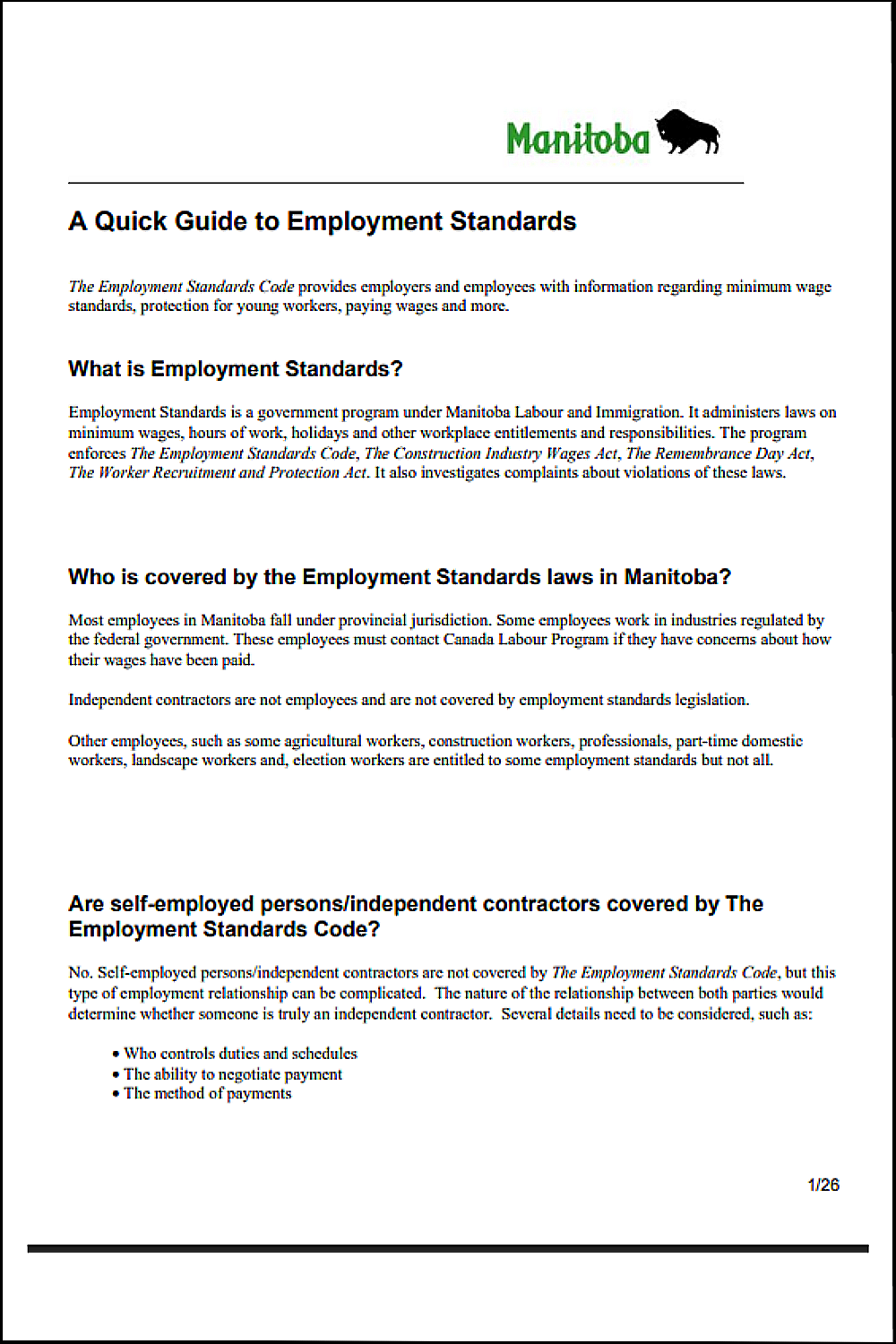
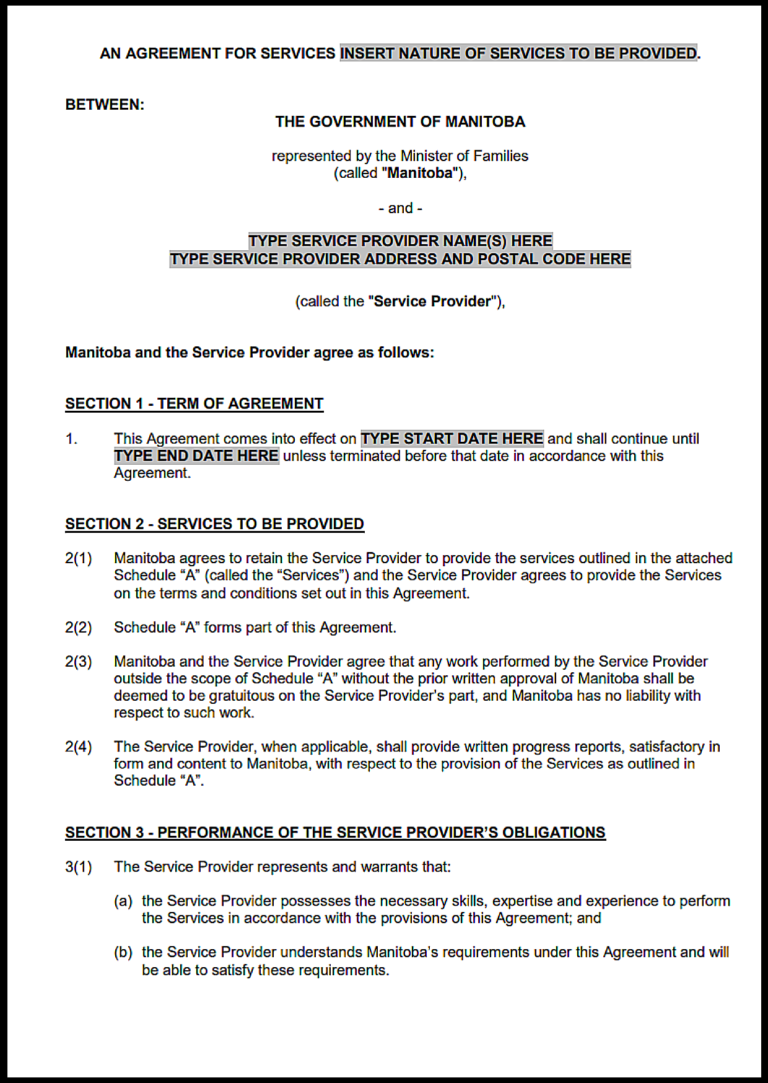
This template is designed for Manitoba contractor relationships and includes practical clauses that help support independent contractor classification.
Manitoba Independent Contractor Laws, Worker Classification Rules & CRA Risks
| Topic / Issue | Manitoba Legal Rule | Governing Statute |
|---|---|---|
| Governing legal framework | Manitoba does not have a standalone Independent Contractor Act; contractor relationships are mainly governed through exclusion from employment legislation and common law principles. | The Employment Standards Code, C.C.S.M. c. E110 |
| Federal tax framework | Independent contractor taxation and CRA classification issues fall under federal tax law. | Income Tax Act, R.S.C., 1985, c. 1 (5th Supp.) |
| Legal signing authority | Individuals, sole proprietors, partnerships, and authorized corporate officers may legally sign contractor agreements. | Manitoba common law commercial principles |
| Witness requirements | Manitoba law generally does not require witnesses for independent contractor agreements. | Manitoba common law principles |
| Notarization requirements | Manitoba law generally does not require notarization or execution under seal for contractor agreements. | Manitoba common law principles |
| Age requirement | Parties generally must be at least 18 years old to enter a fully binding commercial contract. | The Age of Majority Act, C.C.S.M. c. A7, Section 1 |
| Mental capacity requirement | Parties must understand the nature and consequences of the agreement at signing. | Manitoba common law principles |
| Lawsuit limitation period | Breach of contract claims generally must begin within 2 years after discovery of the issue. | The Limitation of Actions Act, C.C.S.M. c. L150, Section 6(1) |
| Mandatory wording requirements | Manitoba law does not require statutory boilerplate wording for independent contractor agreements. | Manitoba common law principles |
| Worker classification review | Courts and regulators review the real working relationship instead of relying only on contract labels. | The Employment Standards Code, C.C.S.M. c. E110 |
| Independent contractor status factors | Agreements should clearly address control of work, scheduling, ownership of tools, chance of profit, and risk of loss. | Manitoba common law worker-classification principles |
| Government filing requirements | Independent contractor agreements are private commercial contracts and are not publicly filed with Manitoba agencies. | Manitoba common law principles |
| Misclassification risk | A worker may legally be treated as an employee if the actual relationship reflects employment conditions. | The Employment Standards Code, C.C.S.M. c. E110 |
| Non-compete clause restrictions | Overly broad non-compete clauses may be unenforceable as unreasonable restraints of trade. | Manitoba common law restraint of trade principles |
| Valid consideration requirement | New contractor terms may fail if no fresh legal consideration is provided during contract changes or renewals. | Manitoba common law contract principles |
| Manitoba age difference | Manitoba recognizes full commercial contracting capacity at age 18, unlike some provinces where the threshold is 19. | The Age of Majority Act, C.C.S.M. c. A7 |
| Manitoba limitation difference | Manitoba applies a strict 2-year limitation period for contract disputes. | The Limitation of Actions Act, C.C.S.M. c. L150 |
One of the most important Manitoba contractor rules is that calling someone an “independent contractor” does not automatically make them one legally. Manitoba authorities and the CRA look closely at how the relationship actually works in practice. If a business controls work hours, supervises the worker daily, supplies all tools, or prevents outside clients, the worker may legally be treated as an employee instead. That can create serious financial consequences involving payroll taxes, CPP and EI reassessments, overtime claims, and Employment Standards liability.
The two-year lawsuit limitation period is also important because Manitoba businesses must respond quickly when payment disputes or contract breaches arise. Many companies also underestimate how dangerous overly broad non-compete clauses can become under Manitoba common law. Courts may refuse to enforce restrictions that unfairly block someone from earning a living. Small drafting mistakes, vague scopes of work, or missing tax responsibility clauses often create expensive disputes later. Download the free Manitoba Independent Contractor Agreement template below to help structure your contractor relationship properly.
An independent contractor agreement helps businesses define project terms, payment conditions, and work expectations for self-employed professionals. To better understand how these commercial documents are structured, you can review the main business contracts guide in Canada together with the legal enforceability guide for Manitoba contracts.
Why Contractor vs Employee Classification Matters So Much
Many businesses believe a signed contract alone decides worker status. It does not.
Under Manitoba law and federal tax principles, authorities look at how the relationship works in practice.
Key Factors Often Reviewed:
- Who controls how work is done
- Who owns the tools
- Who bears business risk
- Who controls profit opportunities
- Whether the worker operates independently
Common Misclassification Red Flags
If a contractor:
- Works fixed employee-style hours
- Uses company business cards
- Is directly supervised daily
- Has little financial risk
- Works exclusively like staff
Then legal reclassification risk rises.
Why This Matters
A failed contractor structure can trigger:
- CPP/EI liabilities
- Payroll tax reassessments
- Employment Standards claims
- Vacation pay issues
- Overtime disputes
Companies hiring outside professionals often use related agreements depending on the services being provided. Advisory projects may involve a consulting agreement, while creative professionals frequently work under a freelance contract template.
Key Clauses That Protect Independent Contractor Status
A well-written contract should clearly define independence.
Independent Status Clause
This helps state no employment relationship exists.
Control Clause
Businesses should clearly define that contractors control how services are delivered.
Tax Indemnification Clause
Independent contractors are generally responsible for:
- Income tax
- CPP
- EI (where applicable)
- GST/HST
Scope of Work
A vague scope often creates disputes. Businesses should clearly define:
- Deliverables
- Deadlines
- Performance expectations
Payment Terms
Both parties should always clarify:
- Rate
- Invoice dates
- Payment deadlines
- Late payment rules
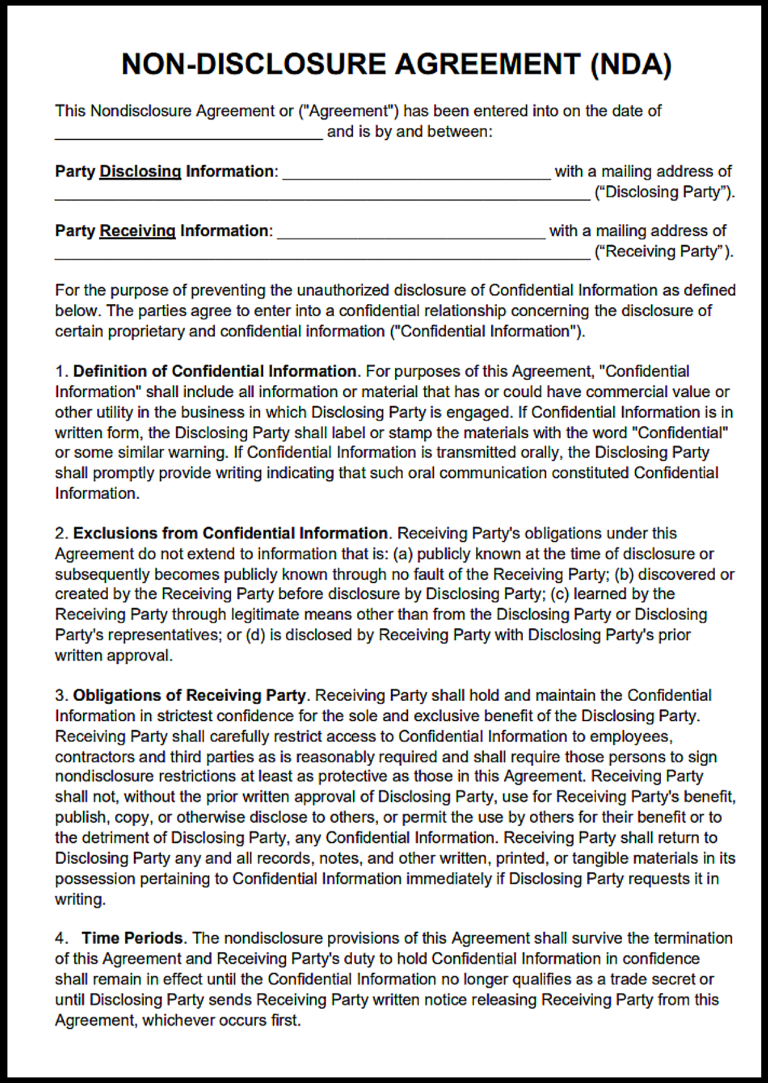
If confidential company information is shared during the project, businesses may also include a non-disclosure agreement to help protect internal business data.
Payment Structure, Invoicing, and Tax Rules
Payment structure affects both legal clarity and tax risk.
Common Models:
- Hourly
- Flat project fee
- Retainer
- Milestone-based
GST/HST Threshold
If contractor revenue exceeds $30,000, federal registration obligations may apply.
Contractor Tax Planning Risks
Poor planning can trigger:
- CRA audits
- Personal Services Business concerns
- Deduction limits
Practical Tip
Contractors should keep:
- Invoices
- Business expense records
- GST records
- Insurance documents
Manitoba Registration and Compliance Requirements
Some contractors need more than a contract.
Key Compliance Areas:
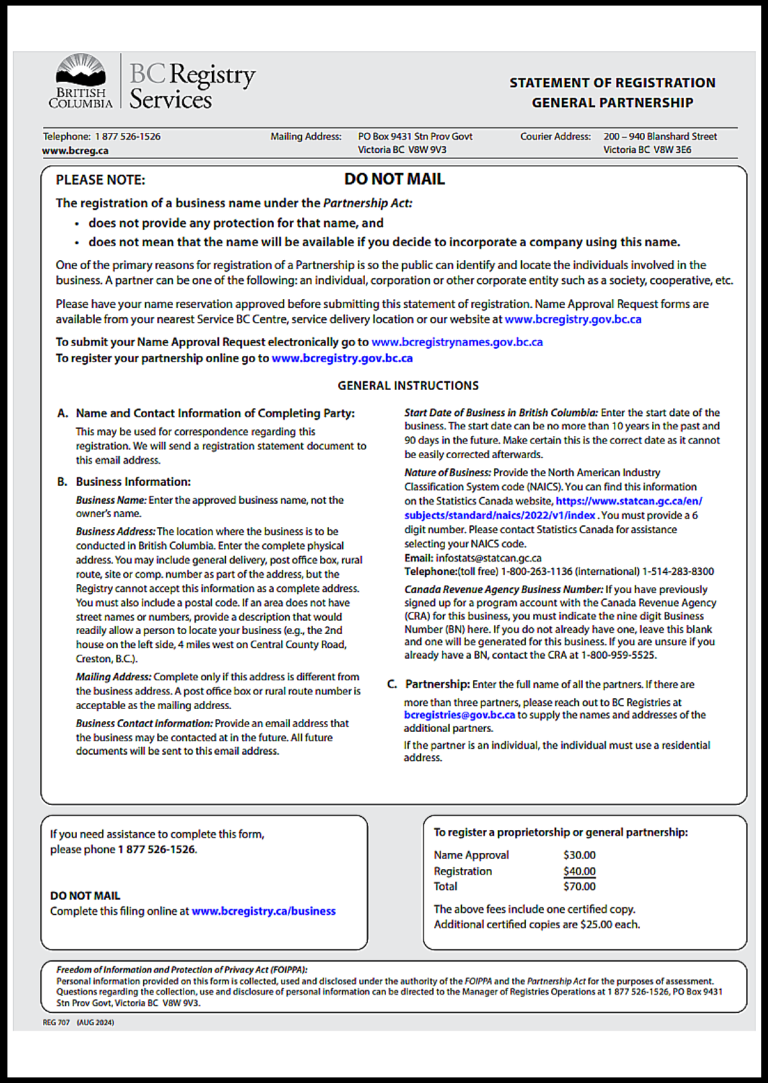
- Business name registration
- CRA Business Number
- Manitoba tax obligations
- Optional WCB coverage
- Safety compliance
Important Note
Under Manitoba safety law, certain worksite obligations may still apply even when someone is an independent contractor.
Non-Compete, Confidentiality, and IP Ownership
These clauses are often misunderstood.
Non-Compete Clauses
In Manitoba, overly broad restrictions may fail.
Confidentiality Clauses
These can help protect:
- Client lists
- Trade secrets
- Marketing plans
- Financial data
Intellectual Property Ownership
Without clear language, disputes can arise over:
- Website code
- Marketing content
- Designs
- Training materials
Practical Rule
Businesses should clearly define who owns final deliverables.
Common Legal Mistakes Businesses Make
Many businesses accidentally create employee-like structures.
Common Errors:
- Treating contractor like staff
- Missing tax clauses
- No termination terms
- Vague scope
- Overly restrictive exclusivity
- No IP ownership clause
Common Legal Mistakes Contractors Make
Contractors also create avoidable risks.
Common Errors:
- No GST registration when required
- Unregistered business names
- Poor invoicing systems
- Accepting employee-level control
- No insurance
- Weak payment protections
Termination Clauses and Breach Risks
Termination language often decides how painful a dispute becomes.
Ending for Convenience
Allows lawful exit with notice.
Ending for Cause
May involve:
- Non-payment
- Misconduct
- Confidentiality breach
- Failure to deliver
Important Protection
Both parties should always define:
- Notice periods
- Final invoice timing
- Return of materials
- IP transfer
Clause Comparison Table
| Clause Type | Main Purpose |
Common Risk if Missing
|
| Scope of Work | Defines services | Project disputes |
| Tax Clause | Protects classification | Tax liability |
| Payment Terms | Defines money flow |
Late or unpaid invoices
|
| Termination Clause | Defines exit rights | Legal conflict |
| IP Clause | Defines ownership |
Content ownership disputes
|
Real-Life Manitoba Contractor Disputes
Common examples include:
- CRA reclassification audits
- Web designer unpaid invoice disputes
- Construction subcontractor injury claims
- Consultant ownership conflicts
- Contractors treated like employees
Most disputes happen because expectations were unclear.
Step-by-Step: How to Fill Out a Manitoba Independent Contractor Agreement Properly
Practical Process:
- Identify both parties clearly
- Define services precisely
- Clarify contractor independence
- Set payment structure
- Add tax responsibility language
- Review termination rights
- Sign and store records
Small details often make the biggest legal difference.
FAQ
Is an independent contractor the same as self-employed?
Often yes, but legal classification depends on actual working conditions.
Can Manitoba contractors be reclassified as employees?
Yes. If facts suggest employee status, labels may not protect the business.
Do contractors need GST/HST registration?
Possibly, especially above federal thresholds.
Is WCB mandatory?
Not automatically in all contractor situations, but optional or sector-specific considerations may apply.
Are non-compete clauses enforceable?
Only when reasonably narrow and legally appropriate.