Manitoba Lease Renewal Agreement [Free Pdf, Template]
A Manitoba Lease Renewal Agreement is often used when a landlord and tenant want to continue a fixed-term tenancy without uncertainty about rent, dates, or occupancy rights. In Manitoba, renewal obligations under The Residential Tenancies Act can create unexpected results if the required process isn’t followed on time, particularly where a fixed-term tenancy may continue despite assumptions that it simply ends.
I’ve seen situations where a landlord failed to provide a renewal agreement within the required timeframe and the dispute later landed before the Residential Tenancies Branch, which had to determine whether the tenancy renewed automatically. That’s one reason generic Canadian lease templates can miss important Manitoba-specific requirements and deadlines.
This page explains how lease renewals work in Manitoba, when a renewal agreement should be used, and the key details landlords and tenants should address before signing.
Free Lease Renewal Agreement Template (Manitoba)
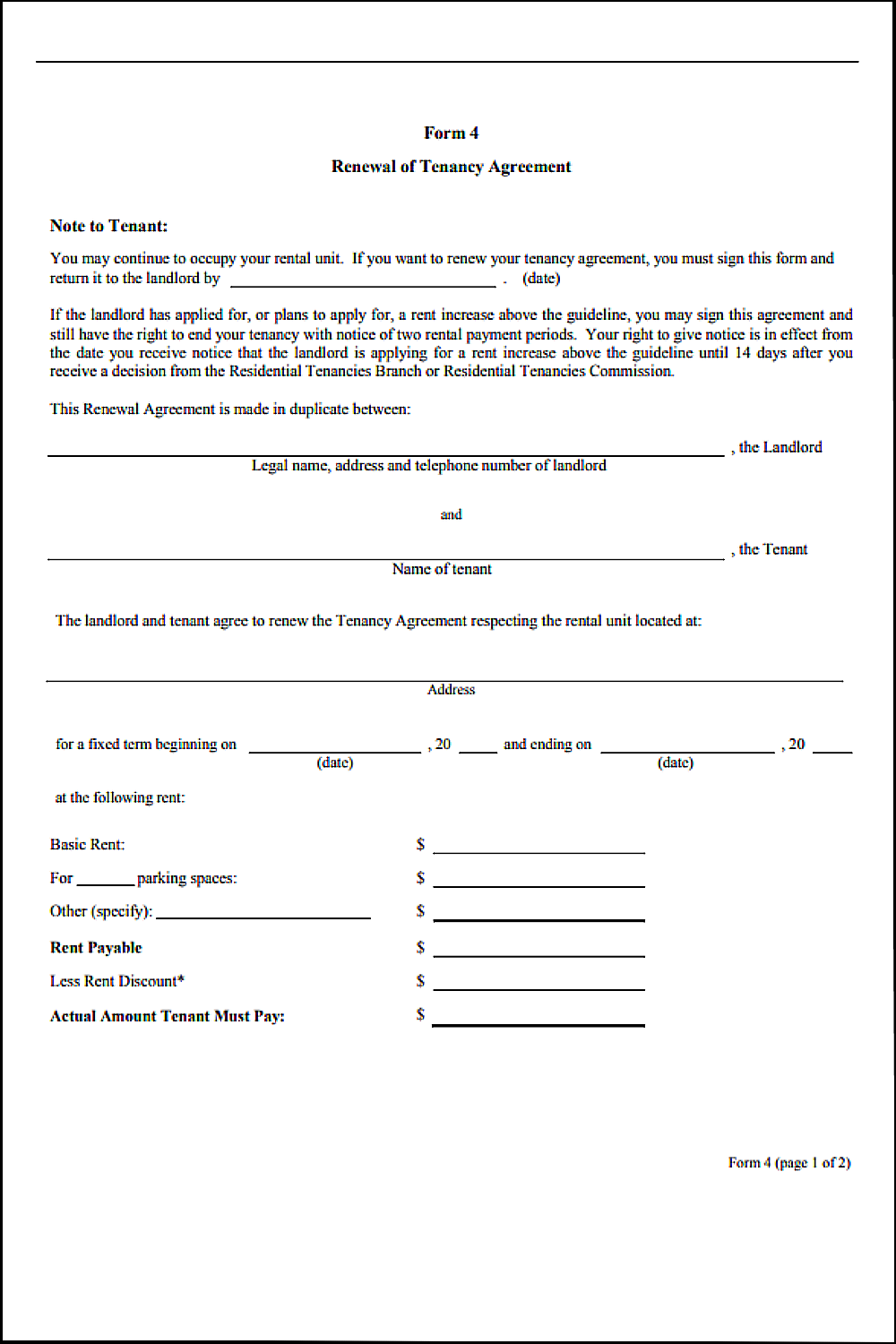
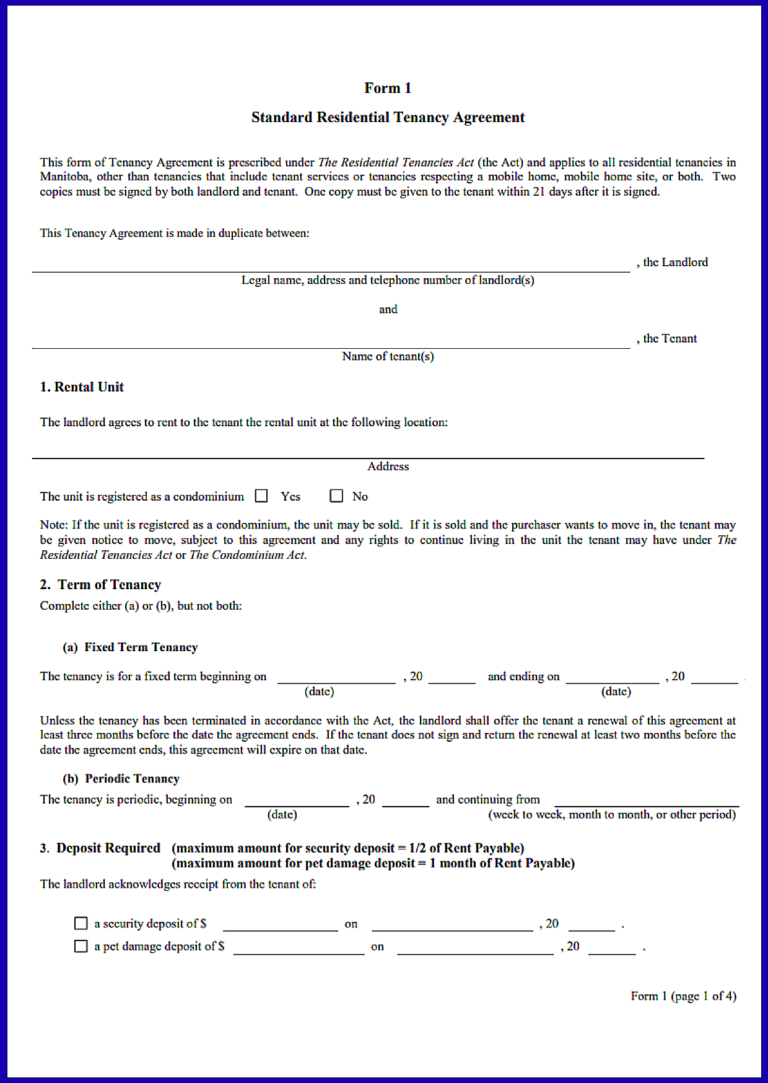
This template reflects Manitoba Form 4 principles for a Renewal of Tenancy Agreement.
Important: Landlords should ensure full compliance with Manitoba rental law and any above-guideline filing obligations through the official above-guideline increase process.
Manitoba Lease Renewal Deadlines, Rent Rules, and Invalid Renewal Terms
| Topic / Issue | Manitoba Legal Rule | Governing Statute |
|---|---|---|
| Governing legislation | Residential lease renewals are governed by Manitoba tenancy legislation and regulations. | The Residential Tenancies Act, C.C.S.M. c. R119 and Residential Tenancies Regulation, Man. Reg. 184/92 |
| Federal jurisdiction | Residential landlord-tenant matters fall entirely under provincial authority. | Constitution Act, 1867, s. 92(13) |
| 2026 rent increase guideline | Manitoba’s regulated annual rent increase guideline for 2026 is 1.8%. | Residential Tenancies Branch annual guideline orders |
| Who can legally sign | The landlord, authorized property manager or corporate agent, and all adult tenants named on the original lease may sign the renewal. | The Residential Tenancies Act, s. 1(1) and s. 20 |
| Witness requirements | Witnesses are not legally required for lease renewal validity. | Common law principles |
| Notarization requirement | Lease renewals do not require notarization or commissioning. | Common law principles |
| Age and mental capacity | Parties signing must generally be at least 18 years old and mentally capable of understanding the agreement. | The Age of Majority Act, C.C.S.M. c. A7, s. 1 and common law principles |
| Landlord renewal deadline | Landlords must offer renewal at least 3 months before the fixed-term lease expires. | The Residential Tenancies Act, s. 20(1) |
| Tenant response deadline | Tenants must sign and return the renewal at least 2 months before lease expiry. | The Residential Tenancies Act, s. 20(2) |
| Mandatory renewal form | Manitoba requires use of Form 4 – Renewal of Tenancy Agreement or a form containing identical prescribed information. | The Residential Tenancies Act, s. 20(1) |
| Rent increase disclosure wording | Renewal agreements with rent increases must disclose the current rent, new rent, percentage increase, provincial guideline percentage, and tenant objection rights. | The Residential Tenancies Act and prescribed Form 4 requirements |
| Rent increase notice requirement | Rent increases are invalid unless tenants receive clear 3 months’ written notice. | The Residential Tenancies Act |
| Tenant right to challenge above-guideline increases | Tenants may object to above-guideline rent increases at least 60 days before the increase takes effect. | The Residential Tenancies Act |
| Filing requirement for renewals | Standard lease renewals usually remain private contracts and do not require filing. | Private contract status |
| RTB filing for rent increases | Landlords must file Form 1A Notice of Rent Increase with the RTB within 14 days after serving the tenant. | The Residential Tenancies Act, s. 122(2) |
| Late renewal offer consequences | Missing the 3-month renewal deadline may trigger automatic renewal protections for the tenant. | The Residential Tenancies Act, s. 20(4) |
| Automatic renewal terms | If renewal deadlines are missed, the lease may automatically renew for the same term or up to 12 months under existing terms. | The Residential Tenancies Act, s. 20(4) |
| Illegal reduction of services | Renewal agreements cannot unfairly remove utilities, parking, storage, or similar benefits without proper adjustment approval. | Form 1 standard schedules, s. 5(a) and The Residential Tenancies Act, s. 76 |
| Invalid above-guideline rent increases | Rent increases above 1.8% without RTB approval or application are legally void. | The Residential Tenancies Act, s. 122 and s. 123 |
| Manitoba “sign-or-expire” rule | If a tenant fails to return a properly offered renewal 2 months before expiry, the tenancy may terminate at the end of the lease. | The Residential Tenancies Act, s. 20(2) |
| Manitoba dual reporting rule | Landlords must notify both the tenant and the RTB about rent increases. | The Residential Tenancies Act, s. 122(2) |
| Manitoba prescribed renewal forms | Manitoba strictly regulates renewal form wording and required tenant notices. | The Residential Tenancies Act and Form 4 requirements |
One of the biggest surprises in Manitoba lease renewal law is the province’s strict timing system. Unlike some provinces where fixed-term leases automatically become month-to-month, Manitoba requires landlords to offer renewals at least three months before the lease expires. Tenants must also respond on time. Missing these deadlines can completely change the legal outcome of the tenancy.
Another important rule involves rent increases during renewal. Landlords cannot simply insert a higher rent amount into the renewal paperwork without following Manitoba’s rent increase rules. If the increase goes above the 2026 guideline of 1.8% without RTB approval, that part of the agreement may become legally void.
The rules about reducing services are also important in real life. A landlord generally cannot renew the lease while suddenly removing parking, storage, or utilities without proper legal treatment. These issues often become major dispute points during RTB hearings.
Download the free Manitoba Lease Renewal Agreement template below to help avoid costly renewal mistakes and missed legal deadlines.
A lease renewal agreement is commonly used when landlords and tenants decide to extend an existing rental arrangement beyond the original lease term. To understand how renewal documents fit within provincial tenancy rules, you can review the complete lease agreement guide in Canada together with the Manitoba lease agreement laws guide before updating the contract.
Manitoba Lease Renewal Timeline
| Timeline |
Legal Requirement
|
| 3 months before expiry |
Landlord must offer renewal
|
| 2 months before expiry |
Tenant must sign and return
|
| Missed landlord deadline |
Automatic renewal protections may apply
|
| Missed tenant deadline |
Lease may end or legal consequences may change
|
If the landlord fails to properly offer renewal and the tenant stays, Manitoba law may automatically renew the lease for the same term or up to 12 months, depending on circumstances.
Late paperwork can also affect rent increase timing.
This document is usually connected with the original Manitoba lease agreement signed at the beginning of the tenancy. Landlords may also review a rent receipt template to confirm payment history before approving the renewal process.
What Must Be Included in a Valid Lease Renewal
A lease renewal is not just a signature page.
New Rent Disclosure
The agreement should clearly state:
- Current rent
- New rent
- Increase amount
- Percentage increase
Even if rent stays the same, this should still be disclosed.
Lease Term Length
In most rental situations:
- Renewal should usually match the same lease length
- Changes generally require mutual consent
Existing Benefits and Obligations
Landlords are not allowed to remove services unfairly.
Examples:
- Parking
- Laundry
- Utilities
- Storage
Mandatory Legal Statements
A valid renewal should confirm:
- Ongoing Residential Tenancies Act compliance
- Tenant rights regarding above-guideline increases where applicable
For flexible occupancy arrangements, some property owners may instead consider a month-to-month lease agreement or a sublease agreement template depending on the tenant’s future housing plans.
Rent Increases During Renewal (Where Many Mistakes Happen)
Many lease renewal disputes involve rent increases.
For 2026:
- Manitoba’s guideline = 1.8%
If a landlord wants to exceed this amount:
- RTB filing may be required
- Above-guideline application deadlines matter
Why Renewal and Rent Increase Are Connected
A renewal often includes updated rent, but legal rent control rules still apply.
Landlords are not allowed to hide unlawful rent increases inside renewal paperwork.
Tenant Protection
If rent exceeds the guideline:
- Tenants may still have legal options
- Manitoba law may preserve certain termination rights
No Unilateral Lease Changes (Major Tenant Protection)
A lease renewal is generally a continuation—not a legal excuse to redesign the tenancy unfairly.
Landlords cannot typically:
- Remove parking without consent
- Remove laundry without agreement
- Shift snow removal duties unfairly
- Add surprise fees
- Cut services without compensation or legal agreement
Examples of Invalid Renewal Terms
- “Parking removed, same rent”
- “Tenant now pays all utilities unexpectedly”
- “Laundry access removed”
Under Manitoba law, lease character protections matter.
Automatic Renewal vs New Lease
This is a major point of confusion.
Renewal:
- Continues tenancy
- Often same term
- Similar obligations
New Lease:
- More renegotiation
- Potentially broader changes
- Must still follow Manitoba law
Key Rule
Landlords cannot refuse renewal simply because they want a different tenant unless lawful termination grounds exist.
Common Lease Renewal Mistakes
Many disputes come from preventable errors.
Common landlord mistakes:
- Offering renewal late
- Wrong rent calculations
- Missing disclosures
- Illegal service reductions
- Above-guideline filing failures
Common tenant mistakes:
- Missing response deadline
- Ignoring paperwork
- Misunderstanding automatic renewal
Practical tip:
Always calendar key dates months in advance.
Real-Life Manitoba Lease Renewal Disputes
Tenant Signs but Challenges Rent Increase
This may happen if the increase exceeds guidelines.
Landlord Misses Notice Date
Automatic renewal or delayed rent increases may result.
Parking Removed Unfairly
Tenant may dispute reduced services.
Fixed-Term Confusion
Some tenants assume renewal is automatic when deadlines still matter.
Lease Ends but Tenant Stays
Legal status depends heavily on Manitoba law and prior compliance.
Step-by-Step: How to Complete a Manitoba Lease Renewal Properly
Practical Completion Checklist
| Step | Action |
| 1 |
Review current lease
|
| 2 |
Confirm expiry dates
|
| 3 |
Calculate lawful rent
|
| 4 | Use Form 4 |
| 5 |
Disclose all changes
|
| 6 |
Sign before deadlines
|
Precision prevents disputes.
Financial and Practical Considerations
Lease renewal affects more than paperwork.
For Landlords:
- Vacancy risk
- Turnover costs
- Legal compliance
- Rent planning
For Tenants:
- Budgeting
- Housing security
- Service continuity
- Relocation choices
Mistakes can cost both sides more than proper planning.
FAQ
Does a landlord have to offer lease renewal in Manitoba?
For many fixed-term tenancies, yes—specific legal deadlines usually apply.
What happens if a tenant does not respond?
The tenancy may terminate or legal consequences may change depending on timing.
Can rent increase during renewal?
Yes, but Manitoba rent rules and guidelines still apply.
Can landlords change lease terms?
Not unilaterally. Major changes usually require consent or lawful basis.
What is automatic renewal?
If landlords fail to properly renew, Manitoba law may automatically continue tenancy protections.