Manitoba Lease Agreement Explained: Rules, Terms & Free Template
A Manitoba Lease Agreement does much more than record the monthly rent—it establishes the terms that often determine how a dispute will be resolved months or even years later. Under Manitoba’s Residential Tenancies Act, tenancy agreements are expected to contain prescribed information, yet many landlords still rely on generic lease forms that overlook requirements specific to the province.
In practice, I’ve seen disagreements over renewal rights, included services, and deposit arrangements reach the Residential Tenancies Branch because the original agreement didn’t clearly capture what the parties intended. When that happens, a missing clause or incomplete form can carry far more weight than most people expect.
This page explains the Manitoba lease form requirements, key terms to include, provincial rules that affect residential tenancies, and how to create an agreement that reflects Manitoba law from the start.
Last Updated: September 2026
Table of Contents
ToggleFree Manitoba Lease Agreement Template
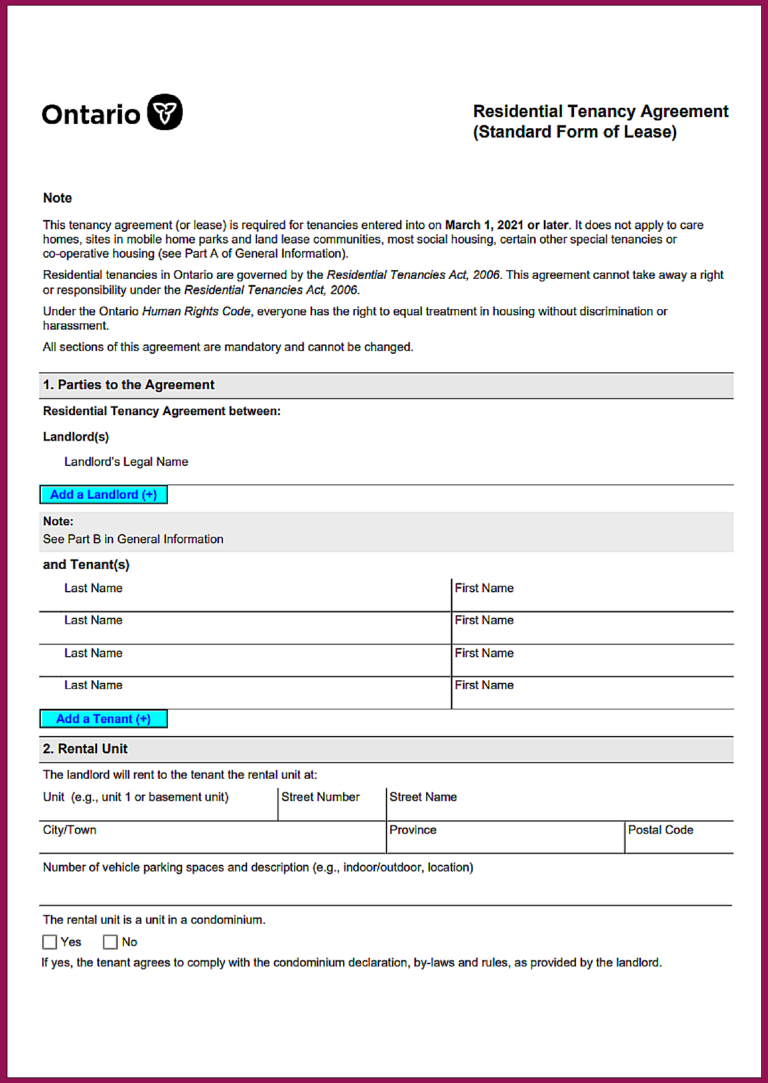
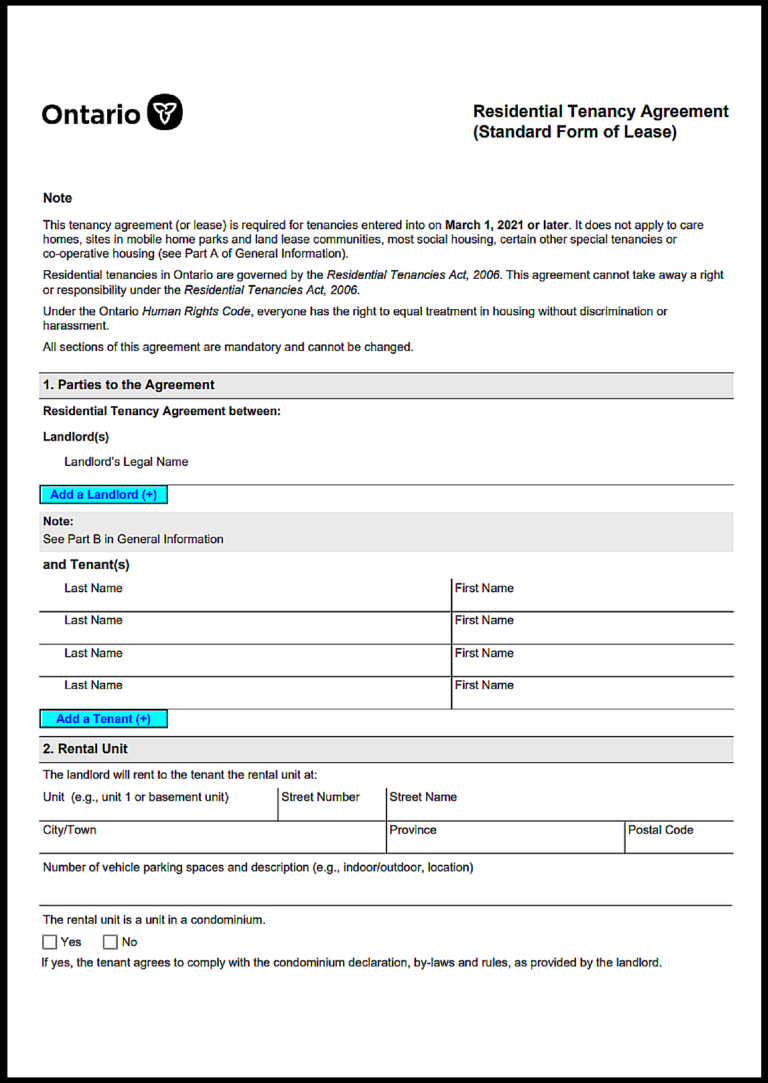
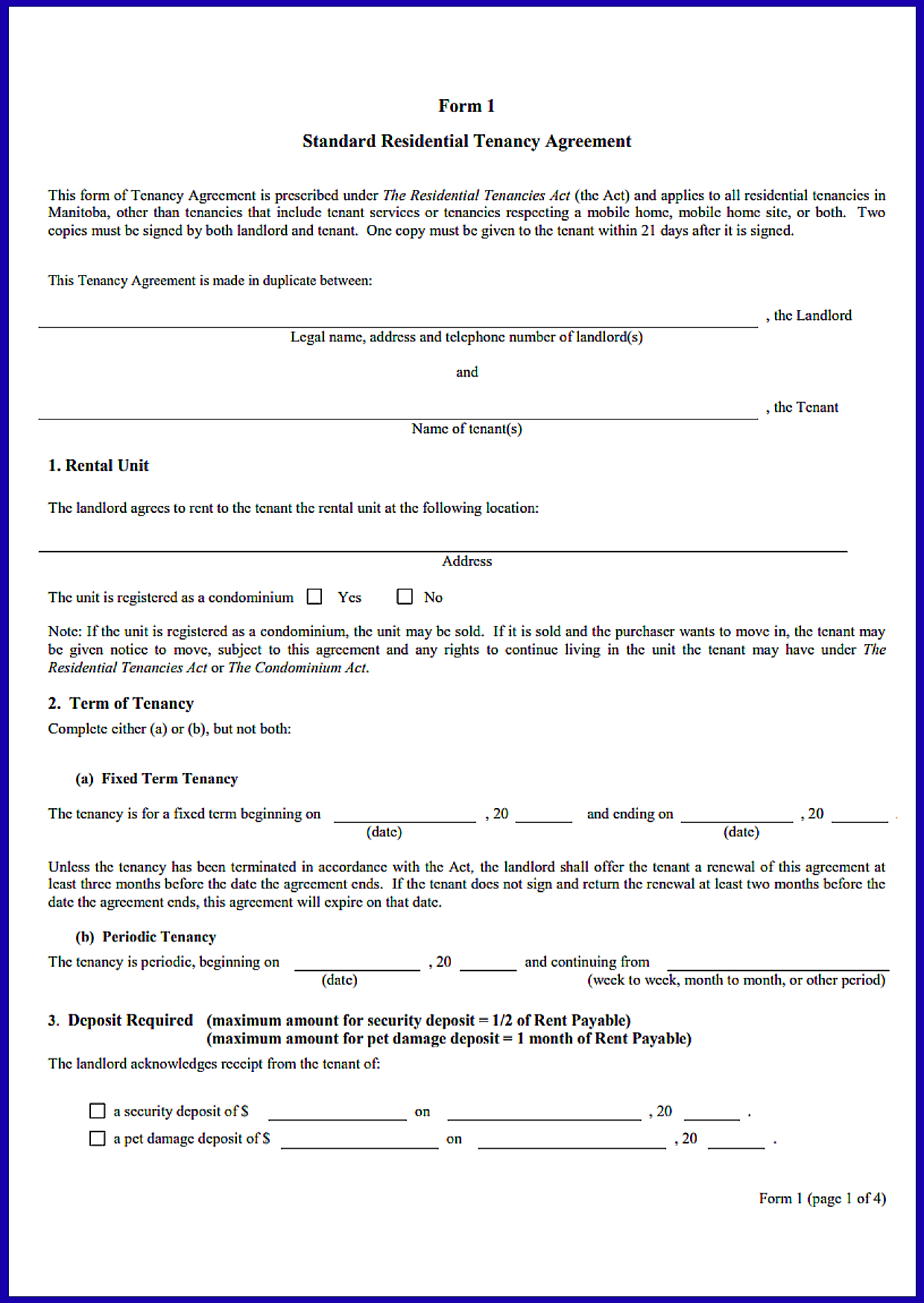
Below is a simple version of a Manitoba lease agreement based on the required structure. It is designed for common residential rentals like apartments, houses, basement suites, and condos.
Manitoba Lease Agreement Rules That Actually Cause Disputes
| Topic / Issue | Manitoba Legal Rule | Governing Statute |
|---|---|---|
| Governing legislation | Residential tenancy agreements are governed by Manitoba’s Residential Tenancies Act and related regulations. | The Residential Tenancies Act, C.C.S.M. c. R119; Residential Tenancies Regulation, Man. Reg. 71/2010 |
| Federal jurisdiction | Residential tenancy agreements in Manitoba are primarily governed by provincial law, although federal laws can apply to particular issues. | Provincial tenancy legislation |
| Who can legally sign | A written tenancy agreement must be signed by the landlord and tenant or their agents. | The Residential Tenancies Act, s. 7(2) |
| Witness requirements | The Residential Tenancies Act requires the written agreement to be signed by the landlord and tenant or their agents; it does not impose a general witness requirement. | The Residential Tenancies Act, s. 7(2) |
| Notarization requirement | The Residential Tenancies Act does not impose a general notarization or commissioning requirement for an ordinary written tenancy agreement. | The Residential Tenancies Act, s. 7 |
| Age and mental capacity | Manitoba RTB guidance states that minors can enter tenancy agreements because a rental unit is considered a necessary. Parties should also have the legal capacity to enter the agreement. | The Residential Tenancies Act; Manitoba tenancy guidance |
| Deadline for signed copy | The landlord must give the tenant a copy signed by both parties within 21 days after the tenant signs the written tenancy agreement and gives it to the landlord. | The Residential Tenancies Act, s. 8 |
| Mandatory lease format | Manitoba requires written residential tenancy agreements to use the prescribed form or contain all of the information required by the prescribed form. | The Residential Tenancies Act, s. 7; Residential Tenancies Regulation |
| Security deposit limit | Security deposits cannot exceed one-half of one month’s rent. | The Residential Tenancies Act, s. 29 |
| Pet damage deposit limit | A pet damage deposit may be up to one month’s rent, subject to Manitoba’s statutory rules. | The Residential Tenancies Act, s. 29.1 |
| Late fee limits | A landlord may charge up to $10 for the day rent is due and up to $2 for each day afterward, to a maximum of $100, if the required written notice has been given. | The Residential Tenancies Act, s. 69(4); Residential Tenancies Regulation |
| Custom lease clauses | A landlord may use its own tenancy agreement if it contains the prescribed information and does not conflict with Manitoba tenancy legislation. | The Residential Tenancies Act, ss. 7 and 11 |
| Filing requirements | Ordinary residential tenancy agreements generally do not require government filing or registration with the Residential Tenancies Branch. | Manitoba tenancy legislation |
| Long-term lease registration | Leases for a term longer than three years are subject to Manitoba’s land-registration framework; registration of a leasehold interest involves the applicable land-titles and registry legislation. | Manitoba land-registration legislation |
| Invalid non-standard leases | If a written agreement is not in the prescribed form, Manitoba law deems it to include the prescribed provisions, and any provision inconsistent with the Act or prescribed form is void. | The Residential Tenancies Act, s. 7(4) |
| Prohibited financial clauses | Landlords cannot require post-dated cheques, charge late fees above the regulated amount, or include clauses that make rent payable before the payment date specified in the tenancy agreement. | The Residential Tenancies Act, ss. 15, 16 and 69(4) |
| Waiving tenant rights | A tenancy agreement cannot contract out of statutory tenant protections where the Act makes the protection mandatory. | The Residential Tenancies Act |
One Manitoba rule is easy to overlook: written tenancy agreements must comply with the prescribed form requirements. The Residential Tenancies Branch also confirms that a landlord may use its own agreement if it contains the prescribed information. If a custom lease leaves out required information or conflicts with the Act, section 7 controls the result.
The deposit and late-fee rules are also important. A security deposit cannot exceed half of one month’s rent, while a pet damage deposit can be up to one month’s rent under the applicable statutory rules. Late fees are separately regulated.
These rules matter because small wording mistakes can turn into disputes over rent, utilities, repairs, deposits, or entry. The landlord must also give the tenant a properly signed copy within the statutory 21-day period.
Download the free Manitoba Lease Agreement template below and make sure your rental paperwork follows Manitoba rules from the start.
To understand how this rental document fits within provincial tenancy rules, you can review the complete lease agreement guide in Canada along with the Manitoba lease agreement laws guide, which explains common lease terms and landlord obligations.
Types of Lease Agreements in Manitoba
The agreement you use depends on the type of tenancy. Manitoba also has prescribed forms for standard residential tenancies, tenant-service tenancies, mobile-home sites, assignments, subletting and renewals.
Fixed-Term Lease Agreement
This lease has a clear start and end date, such as a one-year term.
It is common for apartments and long-term rentals.
A fixed-term tenancy gives the agreement a specified end date, but Manitoba’s statutory renewal and termination rules still apply.
Month-to-Month Rental Agreement
This is a periodic agreement with no fixed end date.
It continues according to the statutory rules governing periodic tenancies and notice.
Useful for tenants and landlords who prefer an ongoing tenancy rather than a defined fixed term.
Sublease Agreement
A tenant rents the unit to another person temporarily.
Important: The landlord’s written consent is generally required.
Subletting means the original tenant intends to return to the unit, while assignment generally means the tenant transfers the tenancy and leaves permanently.
Room Rental Agreement
Used when renting one bedroom in a shared home.
The agreement should identify the rented space and explain arrangements for shared areas such as the kitchen and bathroom.
Roommate Agreement
This is not between landlord and tenant.
It is between roommates to divide rent, bills, and household responsibilities.
It can help clarify arrangements between occupants, but it does not replace the landlord-tenant agreement where the Residential Tenancies Act applies.
Commercial Lease Agreement
Used for business properties.
Residential tenancy laws generally do not apply to commercial leases.
Different legal rules apply to commercial property arrangements.
Condominium Lease Agreement
Used for condo rentals.
Before a prospective tenant enters the tenancy agreement, the landlord must give the written condominium notice required by section 56.1 of The Residential Tenancies Act.
Condo bylaws, declarations, and rules may also apply to the tenancy.
Lease Renewal Agreement
Used when extending an existing lease.
It can help record changes to rent, term, or other agreed conditions, subject to Manitoba’s statutory rules.
This type of rental contract is often used together with a Manitoba rental agreement form during tenant screening, while ongoing tenancy records are commonly supported by a Manitoba rent receipt template.
Real-Life Situations Where Manitoba Lease Agreements Are Used
Renting an Apartment in Winnipeg
A Winnipeg fixed-term tenancy still falls under Manitoba’s Residential Tenancies Act.
The written agreement must use the prescribed form or contain the prescribed information, and the security deposit cannot exceed half of the first month’s rent.
Parking, laundry, utilities, and other charges should be clearly identified where applicable.
Students Sharing a Rental Home
Where several students are named as tenants, the written tenancy agreement should clearly identify the parties and agreed responsibilities.
Separate roommate arrangements can address how occupants divide expenses, but they do not replace the landlord-tenant agreement.
Renting a Basement Suite to a Relative
A family relationship does not by itself answer whether Manitoba’s Residential Tenancies Act applies.
Where the Act applies, the parties should use the prescribed residential tenancy form or a compliant agreement and clearly record rent, services, and other terms.
Temporary Relocation or Work Assignments
A Manitoba sublet generally requires the landlord’s written consent, which cannot be withheld unreasonably, subject to statutory exceptions.
The Residential Tenancies Act also provides rules and prescribed forms for assignments and subletting.
Renting Out a Condominium Unit
Before a prospective tenant enters the tenancy agreement, the landlord must give the written condominium notice required by Manitoba law.
Tenants may also be required to comply with applicable condominium declarations, bylaws, and rules.
In shared housing situations, landlords and tenants may also benefit from using a Manitoba roommate agreement to clarify financial responsibilities and occupancy arrangements.
Key Elements of a Valid Manitoba Lease Agreement
Names of All Parties
The full legal names of the landlord and tenants should be included.
The written agreement should clearly identify the parties who are entering into the tenancy.
Rental Property Description
Include:
- Full address
- Unit number
- Parking or storage details, where applicable
Rent Details and Payment Terms
Clearly state:
- Monthly rent
- Due date
- Accepted payment methods
- Separate charges, such as parking or laundry, where applicable
Security and Pet Deposits
Under Manitoba law:
- Security deposit = maximum half of one month’s rent
- Pet damage deposit = maximum one month’s rent
- Security and pet damage deposits are subject to separate statutory limits
Lease Term Information
Mention:
- Fixed-term or periodic tenancy
- Move-in date
- Renewal expectations
The agreement should also make clear whether the tenancy is fixed-term or periodic and identify the applicable dates.
Utility and Maintenance Responsibilities
Clearly define who pays for:
- Heat
- Water
- Electricity
- Snow removal
- Lawn care
The agreement should also identify services included in the rent and responsibilities that remain with the landlord or tenant under Manitoba law.
Rules About Pets, Smoking, and Guests
Pet terms should be clearly stated in the tenancy agreement.
A landlord may prohibit pets where the applicable tenancy rules permit the restriction, but service animals and other statutory protections must be considered.
Entry and Privacy Rules
For permitted non-emergency entry, landlords generally must give written notice at least 24 hours and no more than two weeks beforehand, specifying the purpose and a reasonable time.
A landlord may enter without the ordinary advance notice where an emergency exists and entry is necessary.
Assignment and Subletting Rights
An assignment or subletting generally requires the landlord’s written consent, which cannot be withheld unreasonably, subject to Manitoba’s statutory exceptions and prescribed forms.
Signatures and Dates
Both landlord and tenant, or their agents, must sign the written tenancy agreement.
The Residential Tenancies Act does not impose a general notarization requirement for an ordinary residential tenancy agreement.
How to Create or Complete a Manitoba Lease Agreement
Choose the Correct Lease Type
Match the agreement to your situation, such as a fixed-term tenancy, periodic tenancy, assignment, or sublease.
Use Manitoba’s Required Standard Form
Under Manitoba law, a written residential tenancy agreement must use the prescribed form or contain all of the information required by the prescribed form.
A landlord may use its own tenancy agreement if it contains the prescribed information and does not conflict with Manitoba tenancy legislation.
Add Property and Tenant Information
Fill in all details carefully.
Make sure the parties, rental unit, rent, term, included services, and other important terms are accurately recorded.
Review Deposit and Rent Rules
Make sure:
- Deposits are within the applicable legal limits
- No illegal fees are added
- Rent and payment terms comply with Manitoba law
Discuss Special Terms Before Signing
Talk about:
- Pets
- Parking
- Utilities
- Shared spaces
Any additional term should be consistent with Manitoba’s Residential Tenancies Act and the prescribed tenancy requirements.
Sign and Share Copies
Both parties should keep a signed copy.
The landlord must provide the tenant with a copy signed by both parties within the statutory 21-day period.
Store the agreement safely for future reference.
Manitoba Lease Laws Every Landlord and Tenant Should Know
Manitoba has detailed residential tenancy laws. Even if something is not written in the lease, mandatory statutory rules can still apply.
The Residential Tenancies Branch (Manitoba) (RTB) handles residential tenancy information and disputes.
Manitoba’s Mandatory Standard Lease Rule
Under Manitoba law, a written residential tenancy agreement must use the prescribed form or contain all of the information required by the prescribed form.
If a written agreement does not comply, Manitoba law provides specific consequences. Prescribed provisions may be deemed to form part of the agreement, while inconsistent provisions may be void.
Deposit Limits and Tenant Protections
- Security deposit: maximum ½ month’s rent
- Pet damage deposit: maximum 1 month’s rent
- Security and pet damage deposits are governed by separate statutory limits
Rules About Rent Increases
For units subject to rent regulation, rent increases generally must follow the annual guideline and require at least three months’ written notice.
The 2026 rent increase guideline is 1.8% for units subject to the guideline, effective January 1, 2026; exemptions apply to certain rental units.
Landlord Entry Rules
- Written notice generally required at least 24 hours and no more than two weeks before permitted non-emergency entry
- Notice must specify the purpose and a reasonable time
- Emergency entry may occur without the ordinary advance notice where necessary
Illegal Charges and Prohibited Clauses
|
Prohibited Action
|
What the Law Says
|
| Application fees |
Landlords cannot require or receive payment for taking, processing or accepting a tenancy application or investigating a prospective tenant’s suitability
|
| Post-dated cheques |
Cannot be required, although a tenant may voluntarily provide one
|
| Excessive deposits |
Deposit amounts must comply with Manitoba’s statutory limits
|
| Entry without notice |
Not allowed except where a statutory exception, such as an emergency, applies
|
| Custom lease terms overriding law |
A tenancy term that conflicts with mandatory Manitoba tenancy protections may be void or unenforceable
|
A violation may result in a remedy or penalty where the applicable provision of Manitoba’s legislation authorizes one. The exact amount depends on the provision and enforcement process involved.
Common Mistakes in Manitoba Lease Agreements
Using a Generic Canadian Lease Instead of Manitoba’s Form
A generic Canadian lease may omit information required under Manitoba law.
For a written residential tenancy agreement, use the prescribed form or ensure that a custom agreement contains all required information and complies with the Act.
Charging Illegal Fees
Landlords cannot charge:
- Application fees prohibited by Manitoba law
- Extra deposits beyond applicable statutory limits
- Late fees above the regulated amount
Forgetting Condo Disclosure Language
Before a prospective tenant enters into a condominium tenancy agreement, the landlord must provide the written notice required by section 56.1.
The issue is not simply whether the lease contains a particular sentence. Manitoba’s condominium disclosure rules require specific information and documents in applicable circumstances.
Leaving Utility Responsibilities Unclear
Unclear terms can lead to disputes over bills.
The agreement should clearly identify which utilities and services are included in the rent and which are the tenant’s responsibility.
Ignoring Subletting Rules
A landlord should not unreasonably refuse a tenant’s assignment or subletting request where the statutory rules apply.
Written consent and the applicable Manitoba requirements should be followed.
Not Listing All Occupants
The written agreement should clearly identify the parties to the tenancy.
Where other occupants live in the unit, the landlord and tenant should also understand the distinction between a tenant and an occupant.
Adding Unenforceable Clauses
Examples include:
- Clauses attempting to remove statutory entry rights
- Mandatory payment terms prohibited by law
- Clauses attempting to waive tenant rights protected by the Residential Tenancies Act
Choosing the Right Manitoba Lease Agreement
If You Want Long-Term Stability
A fixed-term agreement gives the tenancy a specified end date.
However, Manitoba’s statutory renewal and termination rules still apply, so the end date should not be treated as the only rule governing what happens next.
If Flexibility Is More Important
A periodic tenancy can continue without a fixed end date.
The parties remain subject to Manitoba’s statutory rules concerning rent, notice, termination, and other tenancy matters.
If a Tenant Is Leaving Temporarily
A sublease may be appropriate where the original tenant intends to return.
The landlord’s written consent and Manitoba’s statutory requirements must be followed.
If Several People Share One Home
A roommate agreement can record how occupants divide rent, utilities, chores, and other household responsibilities.
It does not replace the landlord-tenant agreement where the Residential Tenancies Act applies.
If Renting a Single Bedroom
A room rental arrangement should clearly identify the rented space and the shared areas.
Whether the Residential Tenancies Act applies depends on the circumstances of the living arrangement.
If the Property Is Used for Business
A commercial lease is generally used for business premises.
Residential tenancy legislation generally does not govern ordinary commercial leases.
If Renting a Condo Unit
A condominium lease should account for the statutory condominium disclosure requirements and applicable condominium declarations, bylaws, and rules.
FAQs About Manitoba Lease Agreements
Is a written lease required in Manitoba?
A tenancy agreement can be oral, written, or implied in circumstances recognized by Manitoba law. However, when the agreement is written, Manitoba requires it to comply with the prescribed-form requirements under section 7.
Does Manitoba require a standard lease form?
Written residential tenancy agreements must use the prescribed form or contain all of the information required by the prescribed form. A landlord may use its own agreement if it contains the prescribed information and complies with Manitoba tenancy legislation.
How much can a landlord charge for a security deposit?
The maximum security deposit is half of one month’s rent.
A pet damage deposit is governed separately and may be up to one month’s rent under Manitoba law.
Can landlords charge rental application fees?
No. Manitoba law prohibits landlords from requiring or receiving payment for taking, processing, or accepting a tenancy application or investigating a prospective tenant’s suitability.
Are verbal rental agreements enforceable?
A tenancy agreement can be oral, written, or implied in appropriate circumstances. However, written agreements provide clearer evidence of the agreed terms and are subject to Manitoba’s prescribed information requirements.
Can a tenant sublet a rental unit in Manitoba?
Generally, a tenant needs the landlord’s written consent to sublet or assign the tenancy. The landlord cannot unreasonably withhold consent, subject to the statutory rules and exceptions.
What happens if a lease contains illegal terms?
A term that conflicts with Manitoba’s Residential Tenancies Act or applicable prescribed requirements may be void or unenforceable. The exact consequence depends on the provision involved.
Can a landlord require post-dated cheques?
No. A landlord cannot require a tenant to provide a post-dated cheque, although a tenant may voluntarily provide one.
Do condo rentals require special disclosures?
Yes. Before a prospective tenant enters into a condominium tenancy agreement, the landlord must provide the written notice required by section 56.1 and provide applicable condominium documents required by Manitoba law.
Can a minor sign a lease agreement in Manitoba?
Yes. Manitoba Residential Tenancies Branch guidance states that minors can enter into tenancy agreements because a rental unit is considered a necessary. A guarantor is not stated as a general legal requirement.
Legal Disclaimer
This content is for informational and educational purposes only.
It is not legal advice.
Laws may change over time. Always consult:
- Manitoba Residential Tenancies Branch
- A licensed Manitoba lawyer
- A qualified housing professional
Review the latest Manitoba regulations before signing any lease agreement.