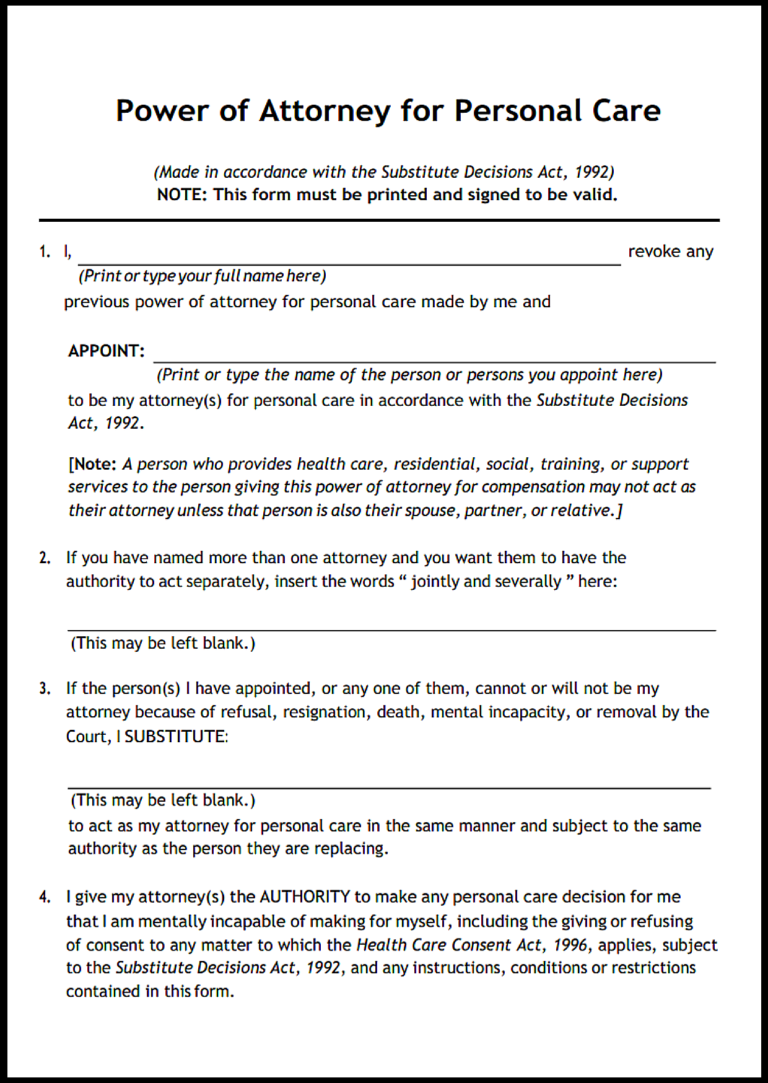
Living Will vs Power of Attorney British Columbia (Free Guide)
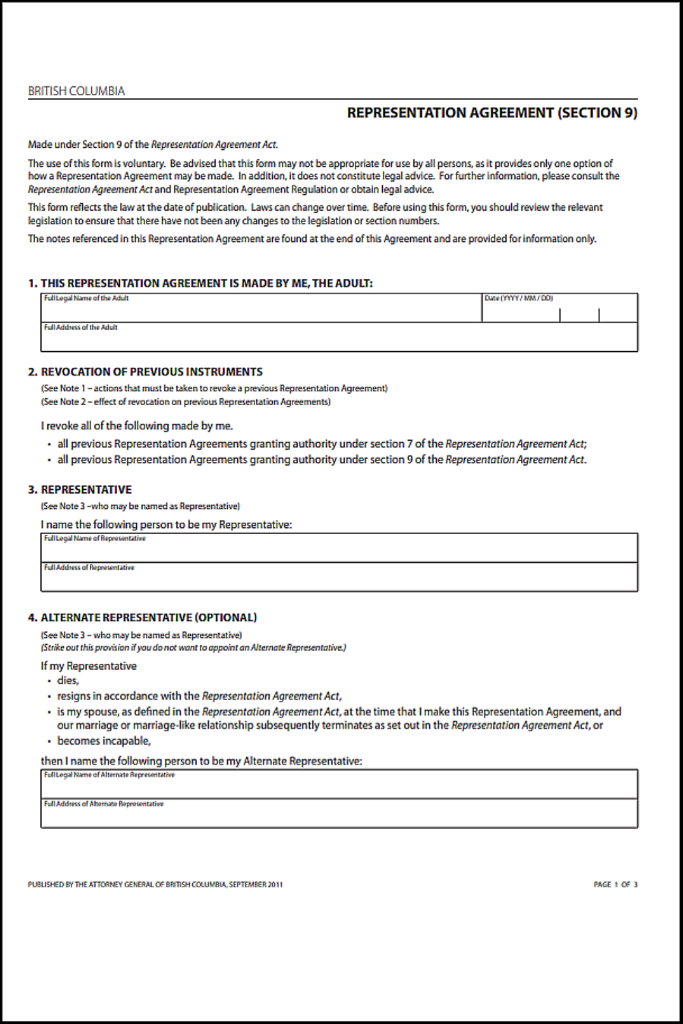
Tip: In most estate planning situations, individuals prepare all three sections together so there is no confusion later.
Critical British Columbia Rules That Separate Living Wills From Power of Attorney
| Topic / Issue | British Columbia Legal Rule | Governing Statute |
|---|---|---|
| Governing Law for Living Will Equivalent | In British Columbia, the statutory document commonly described as a living will is an Advance Directive governed by Part 2.1 of the Health Care (Consent) and Care Facility (Admission) Act. Representation Agreements are governed separately under the Representation Agreement Act. | Health Care (Consent) and Care Facility (Admission) Act; Representation Agreement Act |
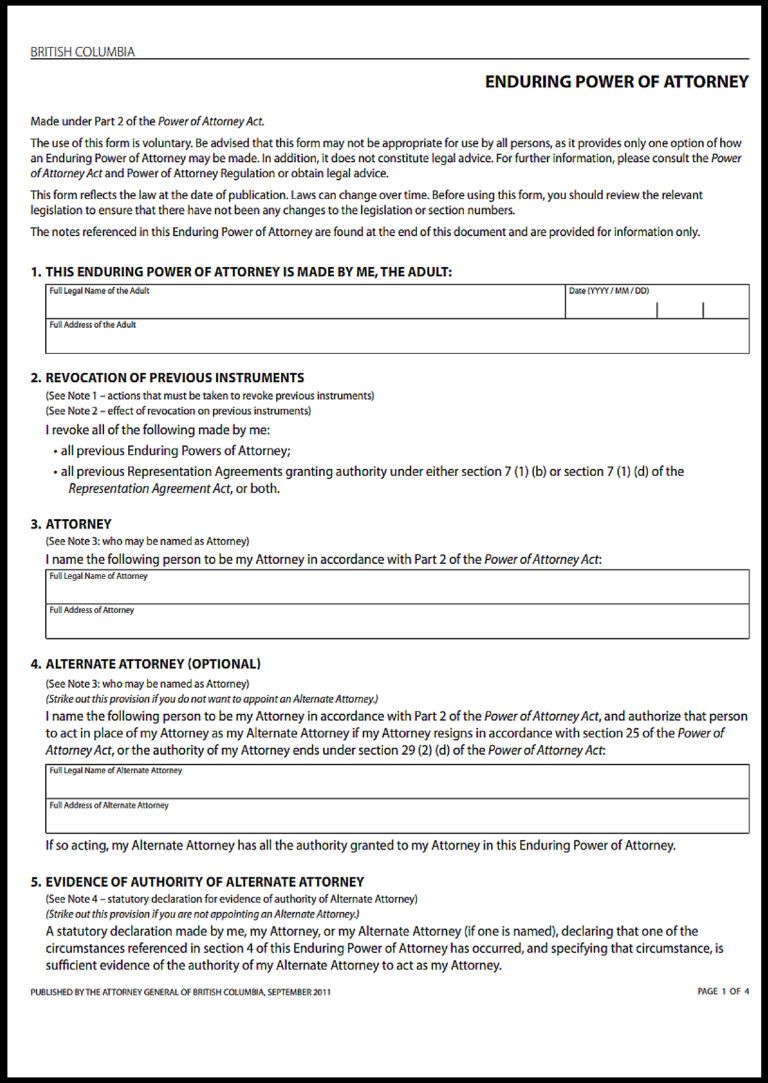
| Governing Law for Enduring POA | An Enduring Power of Attorney is governed by BC’s Power of Attorney Act and authorizes an attorney to act for the adult in relation to the adult’s financial affairs. | Power of Attorney Act |
| Jurisdiction Type | These incapacity-planning documents are governed by British Columbia legislation. | Health Care (Consent) and Care Facility (Admission) Act; Representation Agreement Act; Power of Attorney Act |
| Electronic Signing & Remote Witnessing | British Columbia has alternative electronic-presence processes for certain personal-planning documents, but an Advance Directive remains subject to the execution requirements in s. 19.5 of the Health Care (Consent) and Care Facility (Admission) Act. | Health Care (Consent) and Care Facility (Admission) Act, s. 19.5; Power of Attorney Regulation; Representation Agreement Regulation |
| Who Can Sign an Advance Directive | A capable adult must make the Advance Directive. If the adult is physically unable to sign, another person may sign on the adult’s behalf while the adult is present and directs the signing, subject to the statutory restrictions. | Health Care (Consent) and Care Facility (Admission) Act, s. 19.5 |
| Who Can Sign an Enduring POA | The capable adult must execute the Enduring Power of Attorney, and an attorney must sign in accordance with the Act before exercising authority. | Power of Attorney Act, ss. 16–17 |
| Witness Rules for Advance Directive | Two witnesses are normally required. Only one witness is required if the witness is a lawyer or a member in good standing of the Society of Notaries Public of British Columbia. | Health Care (Consent) and Care Facility (Admission) Act, s. 19.5 |
| Witness Rules for Enduring POA | Two witnesses are normally required, subject to the statutory exception permitting one qualified lawyer or BC notary witness. | Power of Attorney Act, s. 16 |
| Disqualified Witnesses for Advance Directive | A person providing personal care, health care or financial services to the adult for compensation generally cannot witness the Advance Directive. Certain relatives, employees or agents of that person, anyone under 19, and a person unable to understand the adult’s communication without interpretive assistance are also restricted. | Health Care (Consent) and Care Facility (Admission) Act, s. 19.5 |
| Disqualified Witnesses for POA | The Power of Attorney Act restricts who may witness an Enduring Power of Attorney, including the attorney and certain people related to or associated with the attorney. | Power of Attorney Act, s. 16 |
| Notarization Rules | An Advance Directive or ordinary Enduring Power of Attorney does not generally have to be notarized merely to be valid, although special execution requirements can apply in particular transactions. | Health Care (Consent) and Care Facility (Admission) Act, s. 19.5; Power of Attorney Act, s. 16 |
| Real Estate Exception | If an Enduring Power of Attorney is to be effective for purposes of the Land Title Act, it must satisfy the applicable execution and Land Title Act requirements. | Power of Attorney Act; Land Title Act |
| Age Requirement | For these BC incapacity-planning documents, an adult is generally a person who is 19 or older. | Health Care (Consent) and Care Facility (Admission) Act; Power of Attorney Act |
| Capacity Requirement for Advance Directive | The adult must understand the scope and effect of the health-care instructions and the consequences of giving or refusing consent through the Advance Directive. | Health Care (Consent) and Care Facility (Admission) Act, s. 19.1 |
| Capacity Requirement for POA | The adult must satisfy the statutory capacity requirements for making an Enduring Power of Attorney, including understanding the nature of the adult’s property and financial obligations and the authority being granted. | Power of Attorney Act, s. 12 |
| Expiration Rules | These documents do not simply expire after a fixed number of years; revocation and termination are governed by the applicable legislation and the circumstances. | Health Care (Consent) and Care Facility (Admission) Act, s. 19.6; Power of Attorney Act, s. 29 |
| Mandatory Advance Directive Statement | The Advance Directive must indicate that the adult knows that a health care provider may not provide health care refused in the directive and that a person may not be chosen to make decisions about health care for which the adult has given or refused consent in the directive. | Health Care (Consent) and Care Facility (Admission) Act, s. 19.4 |
| Mandatory Enduring POA Clause | An Enduring Power of Attorney must state that the attorney’s authority continues despite the adult’s incapability, subject to the requirements of the Act. | Power of Attorney Act, s. 14 |
| Filing Requirements | An Advance Directive does not require general government registration merely to take effect, and an Enduring Power of Attorney is subject to any filing or transaction-specific requirements that apply to its intended use. | Health Care (Consent) and Care Facility (Admission) Act; Power of Attorney Act |
| Land Title Filing Requirement | Where an attorney executes an instrument for registration under the Land Title Act, the applicable Land Title Act requirements for the Power of Attorney must be satisfied. | Land Title Act |
| Invalid Combined Documents | If an adult has both an Advance Directive and a Representation Agreement, s. 19.3 of the Health Care (Consent) and Care Facility (Admission) Act determines how the Advance Directive operates in relation to health care over which the representative has decision-making authority. | Health Care (Consent) and Care Facility (Admission) Act, s. 19.3 |
| Attorney Signature Requirement | Before a person may exercise authority as an attorney under an Enduring Power of Attorney, that person must sign the document in accordance with s. 17 of the Power of Attorney Act. | Power of Attorney Act, s. 17 |
| Caregiver Witness Problem | Compensated personal-care or health-care providers and certain related persons are restricted from witnessing an Advance Directive under s. 19.5. | Health Care (Consent) and Care Facility (Admission) Act, s. 19.5 |
| Direct-to-Doctor Effect | When the statutory conditions in s. 19.7 are met, a health care provider may rely on an applicable Advance Directive instruction. If the instruction does not address the decision or is too unclear, s. 19.8 may require substitute consent instead. | Health Care (Consent) and Care Facility (Admission) Act, ss. 19.7–19.8 |
| BC Age Difference | British Columbia generally uses age 19 as the age of adulthood for these documents. | Health Care (Consent) and Care Facility (Admission) Act; Power of Attorney Act |
A common mistake is treating an Enduring Power of Attorney as a health-care document. Under BC law, an Enduring Power of Attorney concerns the adult’s financial affairs, while health-care authority may arise through an Advance Directive or Representation Agreement. The distinction becomes especially important when an adult has more than one planning document because BC law specifically addresses how an Advance Directive interacts with a Representation Agreement.
Another major issue is execution. An attorney must sign an Enduring Power of Attorney in accordance with the Power of Attorney Act before that person can exercise the authority granted to them. Advance Directives also have specific witness restrictions, including restrictions affecting compensated personal-care and health-care providers and certain people connected to them.
Understanding the difference between a living will and a power of attorney is an important part of creating a complete estate plan. The British Columbia living will template and British Columbia power of attorney template serve distinct legal purposes.
Living Will vs Power of Attorney – Key Difference
Here is a clear comparison to help you understand quickly:
| Feature | Living Will (Advance Directive) |
| Purpose | Gives or refuses consent to specified health care |
| Control | Your written instructions apply when the statutory conditions are met |
| Type of Decisions | Specified health-care decisions covered by the directive |
| When It Works | When you are incapable of giving or refusing consent and the statutory requirements are met |
| Legal Authority | Has effect subject to Part 2.1 of BC’s health-care consent legislation |
Living Will (Advance Directive in BC)
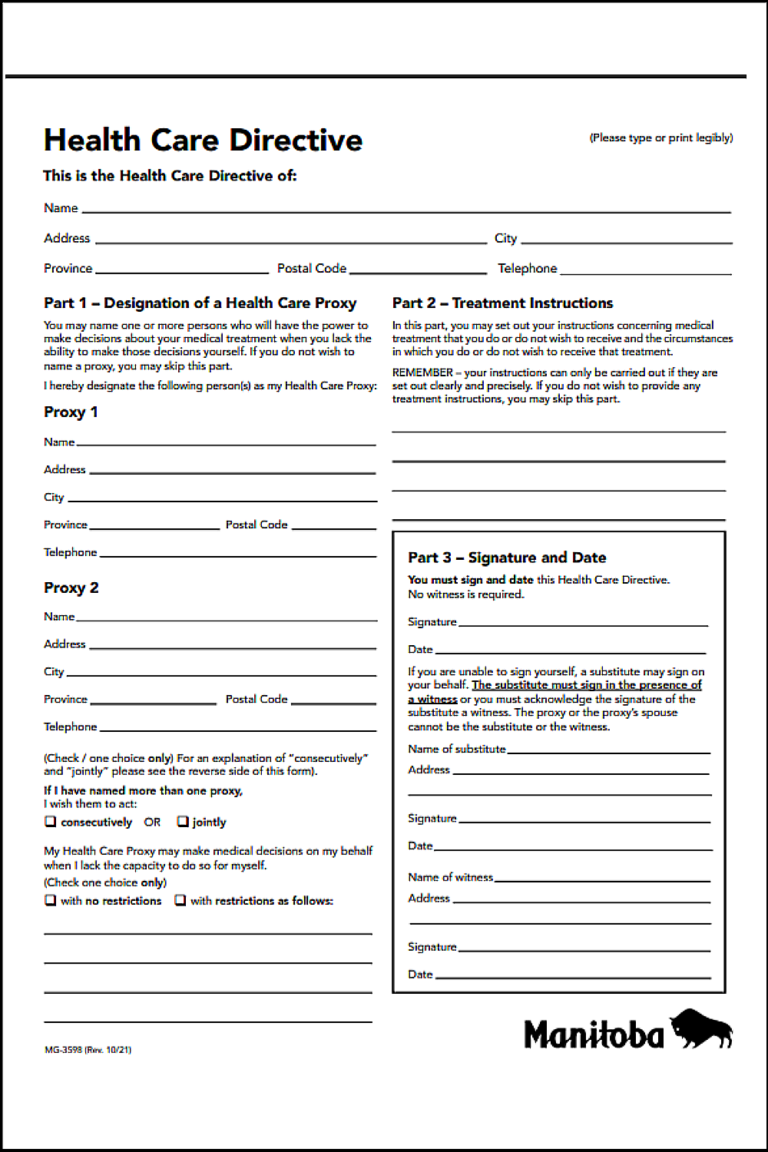
A living will is a written document where you clearly state your medical wishes.
Under British Columbia law, the statutory term is an Advance Directive.
You do not need to appoint someone to give the instructions contained in an Advance Directive. When you are incapable of giving or refusing consent, an applicable Advance Directive may be relied on under the conditions set out in Part 2.1 of the Act.
Power of Attorney (POA)
A power of attorney is a legal document that gives another person, called an attorney, authority to act on your behalf within the powers granted by the document.
British Columbia uses different legal documents for different areas of incapacity planning:
- Enduring Power of Attorney for financial affairs
- Representation Agreement for authority that can include health care, personal care and, depending on the agreement, certain financial or legal matters
While a living will focuses on health-care instructions, an Enduring Power of Attorney deals with financial affairs. A Representation Agreement is a separate BC legal instrument that can give another person decision-making authority within the scope of the agreement.
What Is a Living Will in British Columbia?
In British Columbia, the statutory document commonly referred to as a living will is an Advance Directive.
Under provincial health-care consent legislation, it allows an adult to give or refuse consent in advance to health care described in the directive.
The directive becomes relevant when the adult is incapable of giving or refusing consent to the health care at issue and the statutory conditions for relying on the directive are satisfied.
When You Need a Living Will
You may consider an Advance Directive as part of advance care planning, including when:
- You have a serious illness
- You are preparing for major medical treatment
- You want to document health-care instructions in advance
The practical advantage is that your own instructions can be available if you later become incapable of making the relevant health-care decision.
What Decisions It Covers
An Advance Directive can give or refuse consent to health care described in the document. Depending on your wishes and the treatment described, instructions may address matters such as:
- Life-sustaining treatment
- Artificial nutrition or hydration
- Resuscitation-related treatment
- Pain relief and comfort-focused treatment
Clarity matters. Section 19.8 addresses circumstances where an instruction does not apply to the health-care decision at issue or is too unclear to determine whether the adult gave or refused consent.
Many individuals who create incapacity-planning documents also prepare inheritance-related documents. However, wills and incapacity-planning documents serve different legal purposes and should not be treated as interchangeable.
What Is Power of Attorney in British Columbia?
A power of attorney allows another person to act for you within the financial authority granted by the document.
In British Columbia, it is important to distinguish an Enduring Power of Attorney from a Representation Agreement because they are governed by different legislation.
Enduring Power of Attorney (Financial)
An Enduring Power of Attorney can continue to authorize the attorney to act despite the adult’s later incapability, provided the document satisfies the requirements of the Power of Attorney Act.
Depending on the authority granted, financial affairs can include matters such as:
- Banking
- Paying bills
- Managing property
- Handling investments
Whether you need an Enduring Power of Attorney depends on your circumstances and the financial authority you want another person to have if you later become incapable.
Representation Agreement (Medical POA in BC)
A Representation Agreement is a BC legal instrument that can authorize a representative to make or help make health-care and personal-care decisions, depending on the authority granted.
Depending on the type and terms of the agreement, authority may include:
- Health-care decisions
- Personal-care decisions
- Certain routine financial or legal matters
A Representation Agreement can exist alongside an Advance Directive, but BC law contains specific rules governing how the documents interact.
When Should You Use Each Document? (Real-Life Scenarios)
Scenario 1 – Medical Emergency
If you are incapable of giving or refusing consent in a hospital:
- An applicable Advance Directive may provide your own instructions about specified health care
- A representative may have decision-making authority if you have a valid Representation Agreement covering the matter
Which document controls a particular health-care decision depends on the statutory rules, including the interaction between an Advance Directive and Representation Agreement.
Scenario 2 – Financial Management
If you become incapable of managing your financial affairs, an attorney acting under a valid Enduring Power of Attorney may, within the authority granted:
- Pay bills
- Manage bank accounts
- Handle property
Without an appropriate planning document, family members may need to use another legal decision-making process, which can include a court application depending on the circumstances.
Scenario 3 – Long-Term Incapacity
In a situation involving long-term incapacity:
- An Advance Directive may address specified health-care decisions
- An Enduring Power of Attorney may provide authority over financial affairs
- A Representation Agreement may provide authority over health care, personal care and other matters within its statutory scope
These documents can address different areas of incapacity planning, but their legal effect depends on the authority granted and the applicable BC legislation.
Can You Have Both in British Columbia?
Yes. Whether you need both depends on the decisions you want covered and the authority you want another person to have.
They serve different functions:
- Advance Directive = your own instructions giving or refusing consent to specified health care
- Enduring Power of Attorney = authority given to an attorney over financial affairs
- Representation Agreement = authority given to a representative within the scope permitted by the agreement and BC law
Using more than one document can address different types of decisions, but the effect depends on the authority granted in each document and how the documents operate together under BC law.
Depending on their circumstances, some people choose to prepare:
- Advance Directive
- Representation Agreement
- Enduring Power of Attorney
Legal Rules in British Columbia You Must Follow
Under British Columbia law, each document has its own statutory requirements.
| Requirement | Rule in BC |
| Age |
Generally 19 or older
|
| Capacity |
The applicable statutory capacity requirements must be satisfied
|
| Witnessing |
Advance Directives require witnessing under s. 19.5; Enduring Powers of Attorney and Representation Agreements have their own execution requirements
|
| Clarity |
Advance Directive instructions must sufficiently address the health-care decision to which they are intended to apply
|
| Validity |
Depends on the statutory requirements and the terms and circumstances applicable to the particular document
|
Laws That Apply
These documents are principally governed by:
- Representation Agreement Act
- Power of Attorney Act
- Health Care (Consent) and Care Facility (Admission) Act
British Columbia residents can also review the official BC Government incapacity planning guidance for information about Advance Directives, Representation Agreements and Enduring Powers of Attorney.
How to Fill Out These Documents (Step-by-Step)
For Living Will
- Describe the health care to which your instructions apply
- Avoid vague wording that makes it difficult to determine whether you gave or refused consent
- Be specific about the treatments and circumstances you want covered
Rather than relying only on a broad statement such as “no chance of recovery,” describe the treatment and circumstances as specifically as possible. Section 19.8 is particularly important because an Advance Directive may not apply if the instruction does not address the health-care decision at issue or is too unclear.
For Power of Attorney
- Choose an appropriate attorney
- Clearly define the authority being granted
- State when the attorney may exercise that authority
An Enduring Power of Attorney must state whether the attorney may exercise authority while you are capable or only while you are incapable. Its effective date can also depend on a date or event specified in the document.
Common Mistakes to Avoid
The most important mistakes depend on the document being prepared. For an Advance Directive, the execution and witness requirements in s. 19.5 matter, while unclear or non-applicable health-care instructions can create problems under s. 19.8.
Avoid:
- Treating an Enduring Power of Attorney as authority for health-care decisions
- Choosing an inappropriate attorney or representative
- Failing to review documents after important changes
- Writing Advance Directive instructions that are too vague to apply
- Failing to follow the execution and witnessing requirements for the particular BC document
Careful drafting matters because these documents may be relied on only after the adult has become incapable of making the relevant decision.
Risks of Not Having Either Document
If you do not prepare an appropriate incapacity-planning document, the applicable BC substitute decision-making rules may become important. The consequences depend on the type of decision and whether another legal authority already exists.
Possible issues can include:
- Health-care decisions being made through the applicable substitute-consent framework
- Disagreement or uncertainty among family members
- A need to use another legal process for certain decision-making authority
- Difficulty managing financial affairs when no person has appropriate authority
The legal process depends on the type of decision involved, so the absence of one particular document does not automatically mean a court application will always be required.
Living Will vs Representation Agreement vs POA (BC Specific)
This distinction is particularly important because British Columbia uses separate statutory instruments for different types of incapacity planning.
Advance Directive vs Representation Agreement
An Advance Directive records the adult’s own instructions giving or refusing consent to specified health care.
A Representation Agreement gives a representative authority within the scope of the agreement.
Both can affect health-care decision-making, and s. 19.3 of the Health Care (Consent) and Care Facility (Admission) Act specifically addresses how an Advance Directive operates when the adult also has a Representation Agreement.
Representation Agreement vs POA
A Representation Agreement can cover health care, personal care and, depending on its provisions, certain financial or legal matters.
An Enduring Power of Attorney concerns the adult’s financial affairs.
Their authorities are different, but they can overlap in some areas, so the exact powers granted by each document matter.
FAQs
Is a living will legally binding in BC?
An Advance Directive can have legal effect in British Columbia when it satisfies the statutory requirements and applies to the health-care decision at issue. Section 19.8 addresses situations where instructions do not apply or are too unclear.
Is representation agreement the same as medical POA?
“Medical power of attorney” is a useful informal comparison, but British Columbia legislation uses the term Representation Agreement. Depending on its terms and statutory basis, a Representation Agreement can grant authority over health care, personal care and certain other matters.
Can family override a living will?
A family member does not simply override a valid applicable Advance Directive. However, the effect can depend on whether a Representation Agreement exists and whether the circumstances addressed by s. 19.8 apply.
When does POA take effect?
An Enduring Power of Attorney must state whether the attorney may exercise authority while you are capable or only while you are incapable. Its effective date can also depend on a date or event specified in the document.
Do I need a lawyer in British Columbia?
A lawyer is not necessarily required to prepare these documents, but each document must satisfy its applicable statutory execution requirements. Legal advice can be particularly useful where the documents grant complex authority, must interact with one another, or will be used in significant property transactions.