Notarizing Affidavit British Columbia [Free PDF Template]
Notarizing affidavit British Columbia means getting your affidavit officially witnessed and verified by a legal authority so it can be accepted by courts, government offices, and other institutions.
In simple terms, notarization makes your affidavit legally valid. Without it, your document is usually not accepted. Under British Columbia law, an affidavit must be sworn or affirmed in front of an authorized official—otherwise, it has no legal weight.
I’ve seen people in British Columbia sign affidavits at home or in front of the wrong person, only to have the document rejected when they urgently needed it for court or government filing. When someone is already stressed and dealing with legal paperwork for the first time, even a small notarization mistake can create expensive delays and force them to start over.
For example, if you are submitting documents for a court case, immigration file, or property matter, your affidavit must be properly notarized. If not, it can be rejected, causing delays or even legal issues.
Last Updated: September 2026
Table of Contents
ToggleFree Notarizing Affidavit Template (British Columbia)
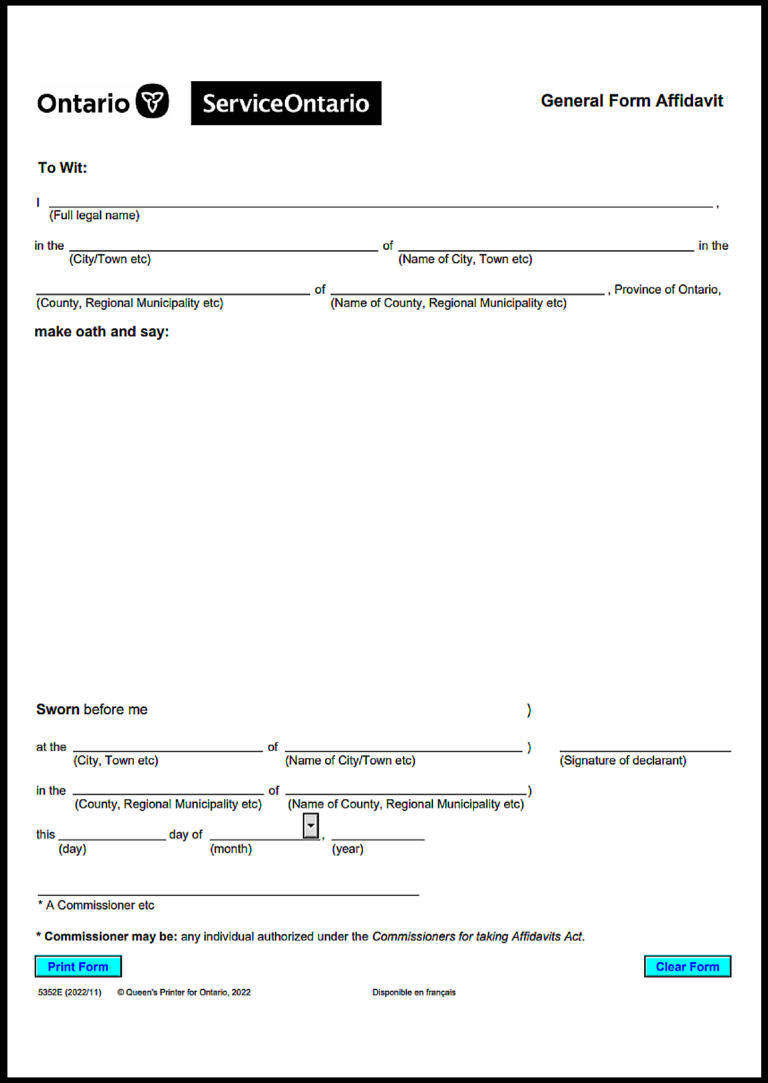
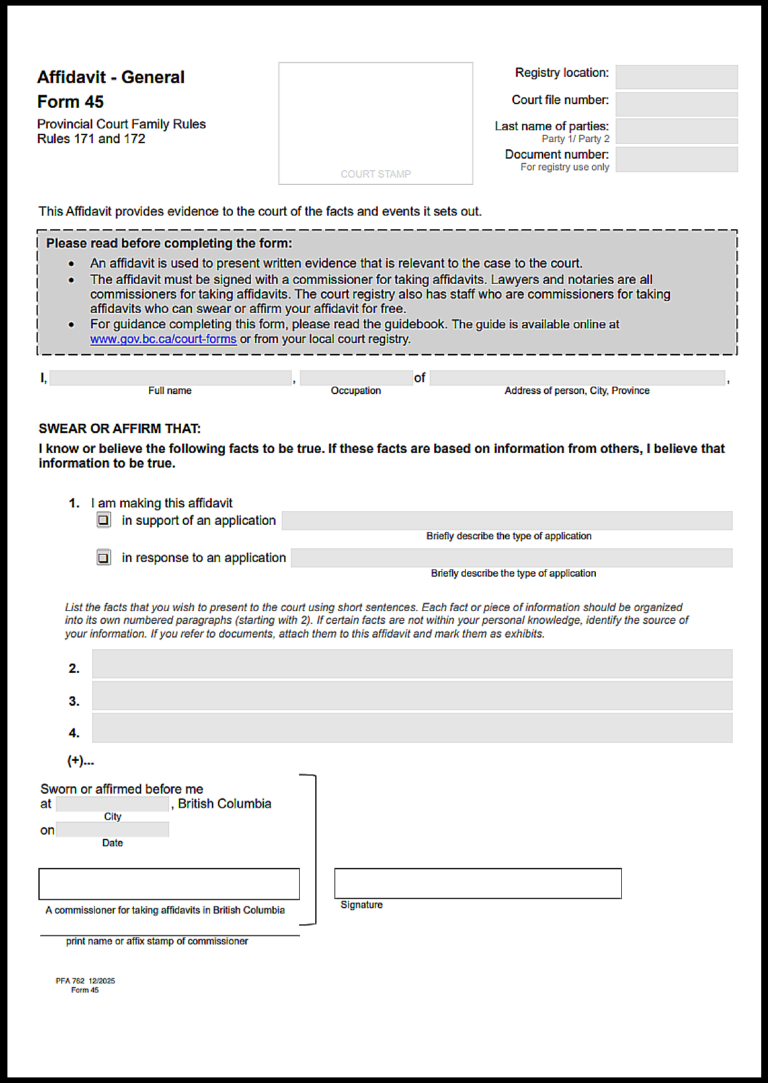
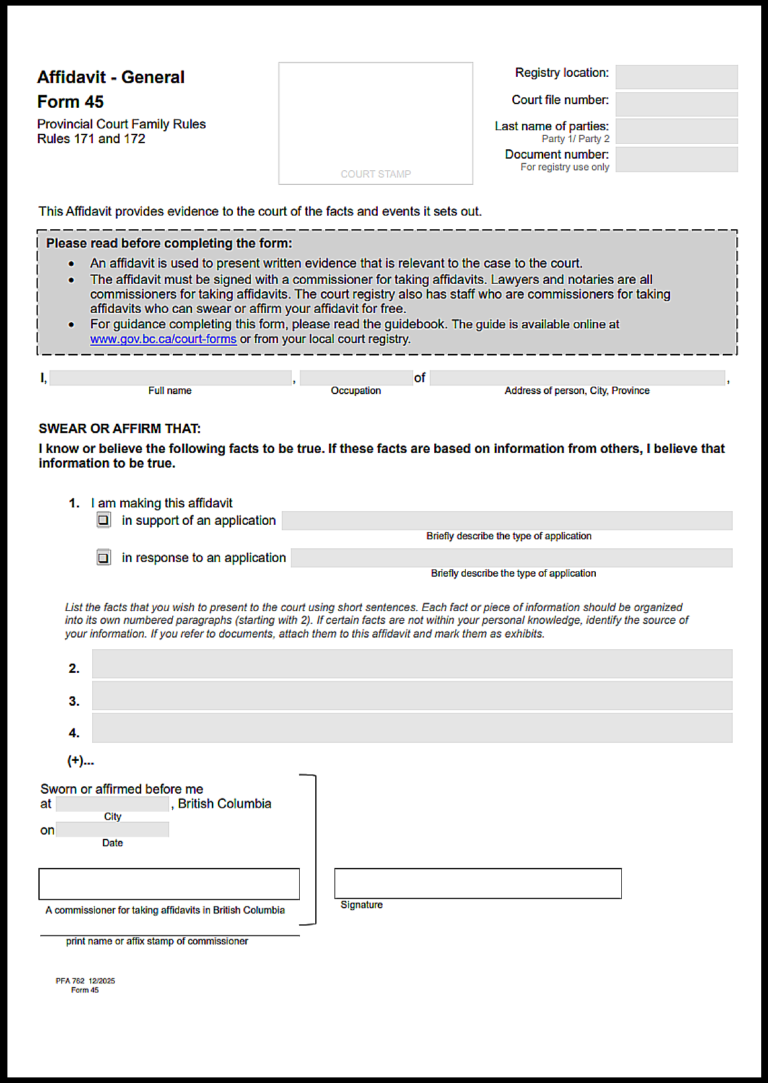
You can copy and use the template below. This format is accepted in most affidavit situations in British Columbia.
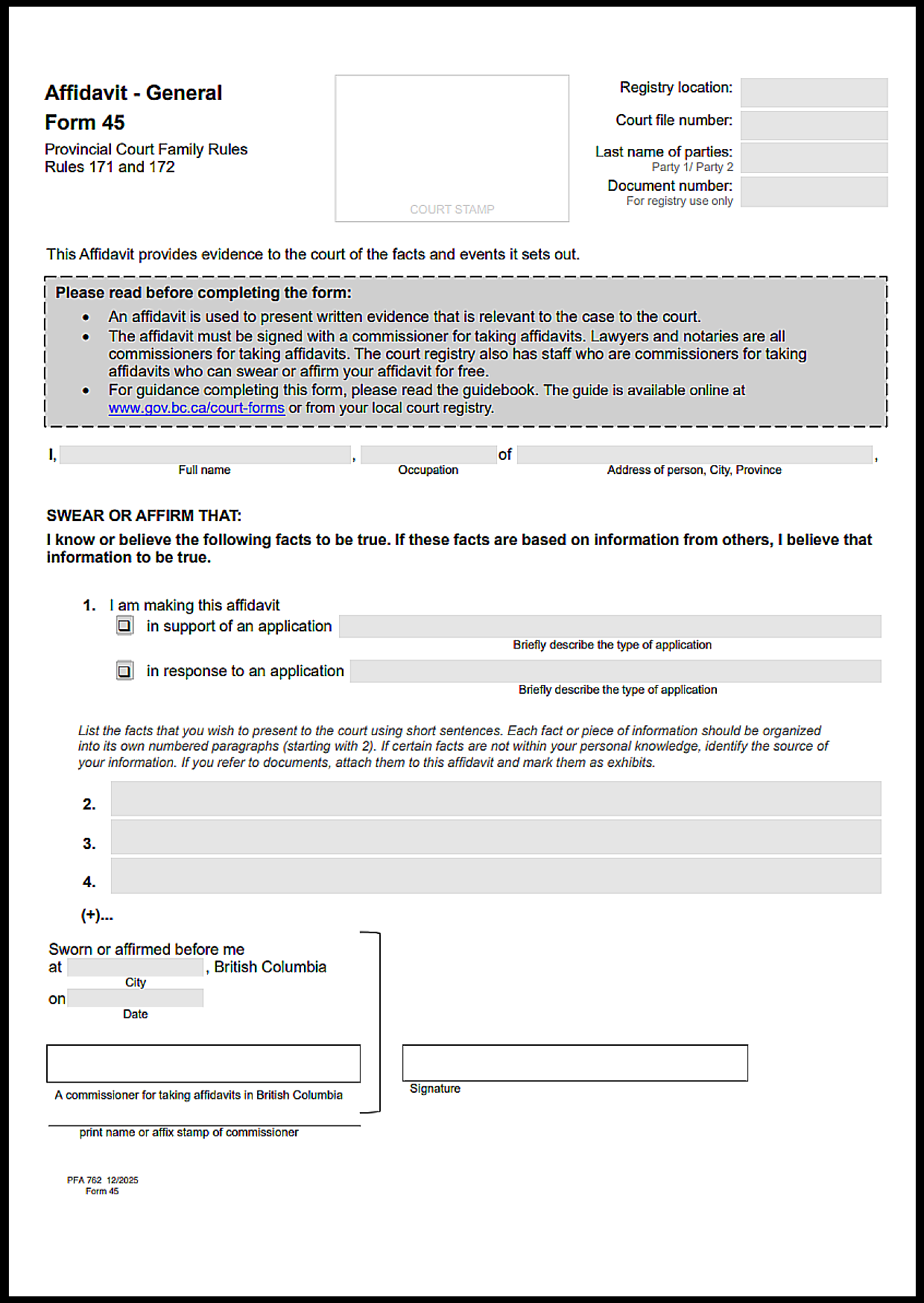
This template works for most personal, legal, and administrative uses, but always check if your specific situation requires a special format.
British Columbia Affidavit Notarization Rules, Witness Standards & Filing Requirements
| Topic / Issue | British Columbia Legal Rule | Governing Statute |
|---|---|---|
| Governing legislation | Affidavits in British Columbia are governed by the Evidence Act and, when used in court, the applicable court rules. Federal legislation and procedural rules may also apply in federal proceedings. | Evidence Act, RSBC 1996, c. 124; Canada Evidence Act, RSC 1985, c. C-5; Supreme Court Civil Rules, BC Reg 168/2009 |
| Recent remote commissioning update | BC Supreme Court rules permit affidavits to be sworn or affirmed by video conference in specified circumstances, subject to the requirements of the applicable rule. | Supreme Court Civil Rules, Rule 22-2(6.1) |
| Who can sign (Deponent) | The person making the affidavit must swear or affirm its contents and sign it in accordance with the applicable rules. | Supreme Court Civil Rules, Rule 22-2 |
| Witness requirements | An affidavit must be sworn or affirmed before a person authorized to take affidavits. A separate ordinary witness is not required. | Evidence Act; Supreme Court Civil Rules |
| Authorized commissioners | Practising lawyers, notaries public, and other persons authorized under the Evidence Act may take affidavits in British Columbia. | Evidence Act, including s. 60 |
| Age of deponent | The Evidence Act does not establish the article’s stated general age rule for affidavit deponents. Requirements concerning a person’s ability to make an affidavit depend on the applicable law and circumstances. | Evidence Act; applicable rules |
| Mental capacity | The person making the affidavit must understand the statement being made and the oath or solemn affirmation being administered. | Evidence Act; applicable rules |
| Filing deadlines | An affidavit used in a court proceeding must be filed and, where required, served according to the deadlines and procedures applicable to that proceeding. | Applicable court rules and orders |
| Standard jurat wording | A court affidavit must contain the jurat or statement required by the applicable court rules, including the required date and location information. | Supreme Court Civil Rules, Rule 22-2 |
| Remote commissioning clause | For an affidavit sworn or affirmed by video conference under Rule 22-2(6.1), the affidavit must contain the statement required by that rule confirming the video-conference process. | Supreme Court Civil Rules, Rule 22-2(6.1) |
| Exhibit certification | Documents referred to as exhibits must be identified and marked in accordance with Rule 22-2. | Supreme Court Civil Rules, Rule 22-2(8)-(10) |
| Court filing requirements | An affidavit used in a BC court proceeding must be filed as required by the applicable court rules. Service requirements depend on the particular proceeding. | Supreme Court Civil Rules; applicable court rules |
| Land title filing | Some land-title transactions may require an affidavit or other supporting evidence. The exact filing and execution requirements depend on the Land Title Act process and LTSA requirements. | Land Title Act / LTSA requirements |
| Private matters | Affidavits used for private or administrative purposes are not automatically filed with a government office. Filing depends on the particular process. | Process-specific |
| Personal appearance requirement | The person making the affidavit must appear before the authorized person in the manner permitted by the applicable procedure, which may include video conference. | Supreme Court Civil Rules, Rule 22-2(6.1) |
| Occupation and address requirement | A BC Supreme Court affidavit must show the deponent’s name, address, and occupation under Rule 22-2(2)(a). | Supreme Court Civil Rules, Rule 22-2(2)(a) |
| Unauthorized commissioner issue | An affidavit should be sworn or affirmed before a person who is legally authorized to take affidavits. Problems with execution or authority can affect whether the document can be relied on for its intended purpose. | Evidence Act; applicable court rules |
| BC non-lawyer notaries | British Columbia has a regulated profession of Notaries Public whose members may provide the services authorized by the Notaries Act and other applicable law. | Notaries Act, RSBC 1996, c. 334 |
| Remote commissioning standards | BC court rules contain specific requirements for affidavits sworn or affirmed by video conference, including prescribed wording. | Supreme Court Civil Rules, Rule 22-2(6.1) |
For BC Supreme Court affidavits, Rule 22-2 sets out how the affidavit is made and requires the document to contain the identifying and procedural information prescribed by the rule. The same rule also permits video-conference commissioning in specified circumstances.
Land-title matters can involve additional execution requirements under the Land Title Act, but those requirements should not be presented as a universal notarization rule for every affidavit.
An affidavit that does not meet the execution or document requirements of the particular process can create procedural problems. However, not every defect automatically makes an affidavit unusable.
Notarizing an affidavit is commonly described as having a Notary Public handle the document, but the legally important step for an affidavit is proper swearing or affirming before a person authorized to take affidavits. To understand how affidavits are commonly used in legal matters, you can review the complete affidavit guide in Canada together with the British Columbia sworn affidavit template.
What Does “Notarizing an Affidavit” Mean in BC?
For a BC affidavit, the key execution steps are confirming the required identity information and properly swearing or affirming the statement before a person authorized to take affidavits.
- Your identity information is provided or verified as required
- Your statement is sworn or affirmed
The process is more than adding a signature. The statement must be properly sworn or affirmed before the person authorized to take the affidavit.
Signing vs Notarizing
| Action | Meaning | Legal Value |
| Signing | You add your signature to the document |
Does not by itself complete the affidavit process
|
| Swearing or affirming | You make the affidavit before an authorized person |
Completes the affidavit process when the required procedure is followed
|
The authorized person administers the oath or affirmation and completes the required statement. Identification may also be requested as part of the service or by the receiving organization.
Why Notarization Is Required
For an affidavit, the relevant legal step is proper swearing or affirming before a person authorized to take affidavits.
- Courts may require affidavits as sworn evidence
- A government office may require a sworn or otherwise verified document for a particular process
- An improperly completed statement may not satisfy the requirements of the particular process
If an affidavit is not properly sworn or affirmed before a person authorized to take affidavits, it may not satisfy the requirements of the particular process.
Different legal situations may require additional affidavit forms before the document is sworn or affirmed. Proof of address matters often involve an affidavit of residence, while identity verification may require an identity affidavit document.
When Do You Need to Notarize an Affidavit?
In affidavit situations, the document generally must be properly sworn or affirmed before a person authorized to take affidavits. Common uses include:
- Court cases – family disputes, civil claims, or evidence submissions
- Immigration documents – supporting statements or declarations where the relevant authority accepts an affidavit
- Property matters – ownership, transfers, or disputes where an affidavit is requested
- Identity verification – confirming identity, name, address, or other facts
If an affidavit is not properly sworn or affirmed:
- It may not satisfy the court’s requirements
- Your application can be delayed
- You may need to correct or redo the document
Who Can Notarize an Affidavit in British Columbia?
Not everyone is authorized to take affidavits. British Columbia law identifies the people who may exercise that authority.
Notary Public
A Notary Public in British Columbia is a regulated professional whose authorized services are defined by the Notaries Act and other applicable law.
Depending on the scope of their authority, a Notary Public may:
- Take affidavits
- Certify copies of documents
- Perform other authorized notarial services
They may be used for property, international, or other official documents where their services are appropriate.
Commissioner for Oaths
A commissioner’s authority depends on the office, appointment, or legislation under which the person acts.
They may:
- Take affidavits
- Administer oaths and affirmations
Commissioners can include lawyers and other persons authorized under BC law.
Key Difference
| Feature | Notary Public |
Commissioner for Oaths
|
| Scope | Statutory notarial powers and other authorized services |
Authority depends on appointment or office
|
| Services | Notarial services and affidavits, depending on the matter |
Affidavits and other authorized services
|
| Cost | Varies by provider or service |
Varies by provider or service
|
| Best for | Documents requiring notarial services or where a notary is requested |
Affidavits where a commissioner is authorized and appropriate
|
Simple rule:
Use a person authorized to take affidavits who is appropriate for the document and its intended use. A lawyer, commissioner, or notary may be appropriate depending on the circumstances.
Individuals preparing legal declarations may also benefit from reviewing the process for obtaining an affidavit in British Columbia before arranging notarization services.
Step-by-Step Process to Notarize an Affidavit
Step 1: Prepare Your Affidavit
Write your affidavit clearly:
- Use numbered paragraphs where required
- Include relevant evidence that complies with the applicable rules
- Keep sentences simple and direct
Knowingly making a false statement under oath or solemn affirmation, with intent to mislead, can constitute perjury where the requirements of section 131 of the Criminal Code are met.
Step 2: Bring Valid ID
The commissioner or notary may require identification before administering the oath or affirmation. The receiving organization may also have its own identification requirements.
Examples may include:
- Passport
- Driver’s license
- Other government-issued identification
Make sure your legal name and any former, alternate, or differently recorded names are stated accurately and explained where relevant.
Step 3: Visit a Notary or Commissioner
You may need to appear before the authorized person in person or, where permitted, by video conference under the applicable rules.
For BC Supreme Court affidavits, Rule 22-2(6.1) provides a video-conference process with prescribed wording.
Step 4: Take Oath or Affirmation
You will be asked to:
- Swear an oath, or
- Make a solemn affirmation instead of an oath
Both forms have the same force and effect where an oath is required.
Step 5: Sign in Front of Official
This is important:
- Do not sign the affidavit beforehand and treat it as already sworn
- Sign as part of the required execution process
The authorized person will administer the oath or affirmation and complete the required statement.
The document is then completed as an affidavit in accordance with the applicable procedure.
Oath vs Affirmation (Important Difference)
Many people get confused here, but the difference is straightforward.
- Oath → A sworn oath
- Affirmation → A solemn affirmation made instead of an oath
Both have equal legal force and effect under the applicable BC evidence rules.
Choose the form that is appropriate for you and permitted by the applicable procedure. The law treats a solemn affirmation as having the same force and effect as an oath.
Legal Requirements in British Columbia
The requirements for a BC affidavit depend on the purpose and proceeding.
- Must be sworn or affirmed before an authorized person
- Must contain truthful and accurate information
- Must contain the wording required by the applicable process
- Must be signed and completed in accordance with the applicable rules
Knowingly making a false statement under oath or solemn affirmation, with intent to mislead, can constitute perjury where the requirements of section 131 of the Criminal Code are met.
Common Mistakes That Make Affidavits Invalid
Common affidavit problems include:
- Signing before the affidavit is properly sworn or affirmed
- Failing to provide identification when it is required
- Writing unsupported or irrelevant statements
- Leaving important information incomplete
- Using a person who is not authorized to take affidavits
Some errors can cause an affidavit to be questioned, returned, or require correction, depending on how and where it is used. An irregularity does not automatically make an affidavit unusable in every circumstance.
What Happens If an Affidavit Is Not Properly Notarized?
If an affidavit is not properly sworn or affirmed:
- A court may not accept it for the intended purpose
- A government office may require correction or additional documents
- You may face delays
- You may need to redo part or all of the process
The exact consequence depends on the requirements of the court, authority, or organization receiving the affidavit.
In serious cases, knowingly making a false statement under oath or solemn affirmation, with intent to mislead, can constitute perjury where the requirements of section 131 of the Criminal Code are met.
Tips to Make Your Affidavit Strong and Acceptable
Before signing, check the requirements of the receiving court or organization.
- Keep language simple and clear
- Use the prescribed format where one is required
- Double-check names and dates
- Add supporting documents if needed or requested
- Review everything before signing
Clear drafting and careful execution can reduce avoidable problems, but acceptance still depends on the requirements of the particular court, authority, or organization.
FAQs
Can I notarize an affidavit online in BC?
BC Supreme Court rules permit affidavits to be sworn or affirmed by video conference in specified circumstances. The process must comply with Rule 22-2(6.1), including the required statement about the video-conference process. Whether a remote process is available for another organization or proceeding depends on its requirements.
How much does notarizing cost in British Columbia?
Fees vary by provider and by the service requested. Check the current fee charged by the commissioner, notary, or lawyer you plan to use.
Is notarization always required?
No. An affidavit generally needs to be properly sworn or affirmed before a person authorized to take affidavits, but a Notary Public is not the only person who may be authorized to take an affidavit. Some particular documents or processes may specifically require notarial services.
Can I write my own affidavit?
Yes. You can generally prepare your own affidavit, provided it meets the requirements of the court, authority, or organization for which it is intended.
How long is a notarized affidavit valid?
An affidavit does not have a universal expiry period simply because it has been sworn. A court, agency, or institution may impose its own recency requirement for a particular use.