How to Get Affidavit British Columbia + Free Template
How to get affidavit British Columbia? If you’re asking this, you’re likely dealing with a legal, financial, or personal situation where a written, sworn statement is required.
An affidavit is simply a written statement of facts that you swear or affirm to be true. Under British Columbia law, affidavits are commonly used in court cases, identity verification, property matters, and even immigration paperwork.
I’ve seen many people in British Columbia sign an affidavit before it’s properly sworn or leave out key facts, only to have the document rejected by the court, bank, or government office later. When you’re already stressed and dealing with legal paperwork for the first time, even a small mistake in an affidavit can create delays, extra costs, or questions about your credibility.
In this article, you’ll learn exactly how to create, swear, and use an affidavit in British Columbia — step by step, with a free template and practical legal tips.
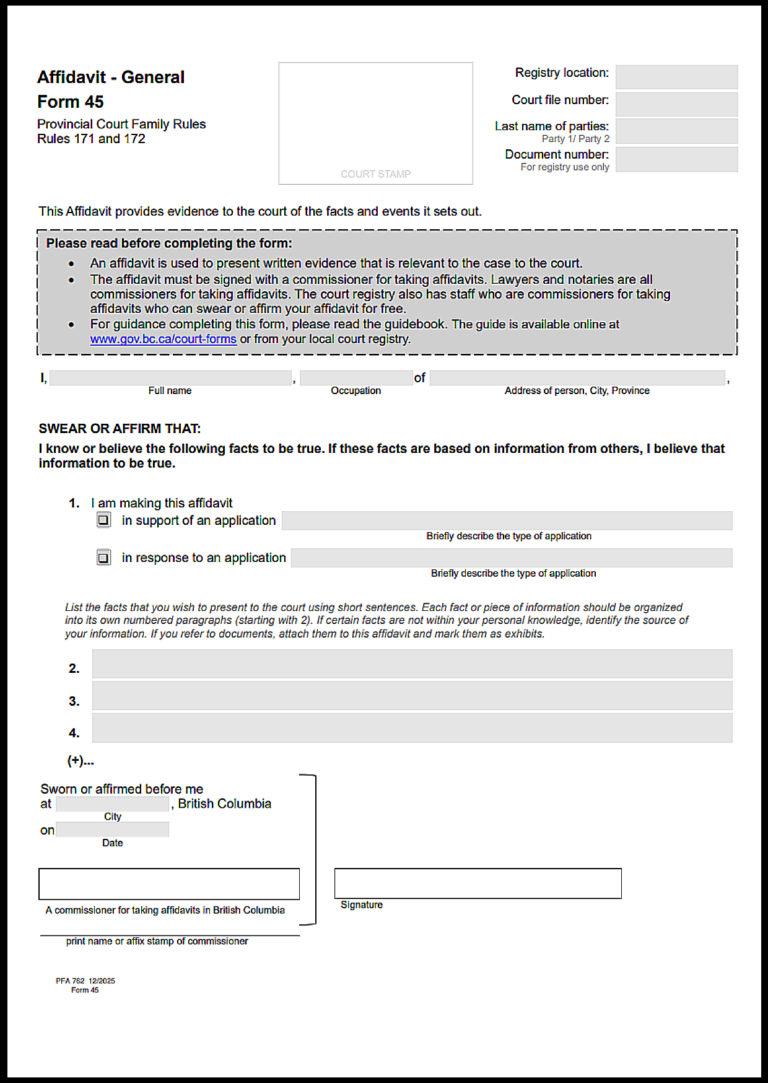
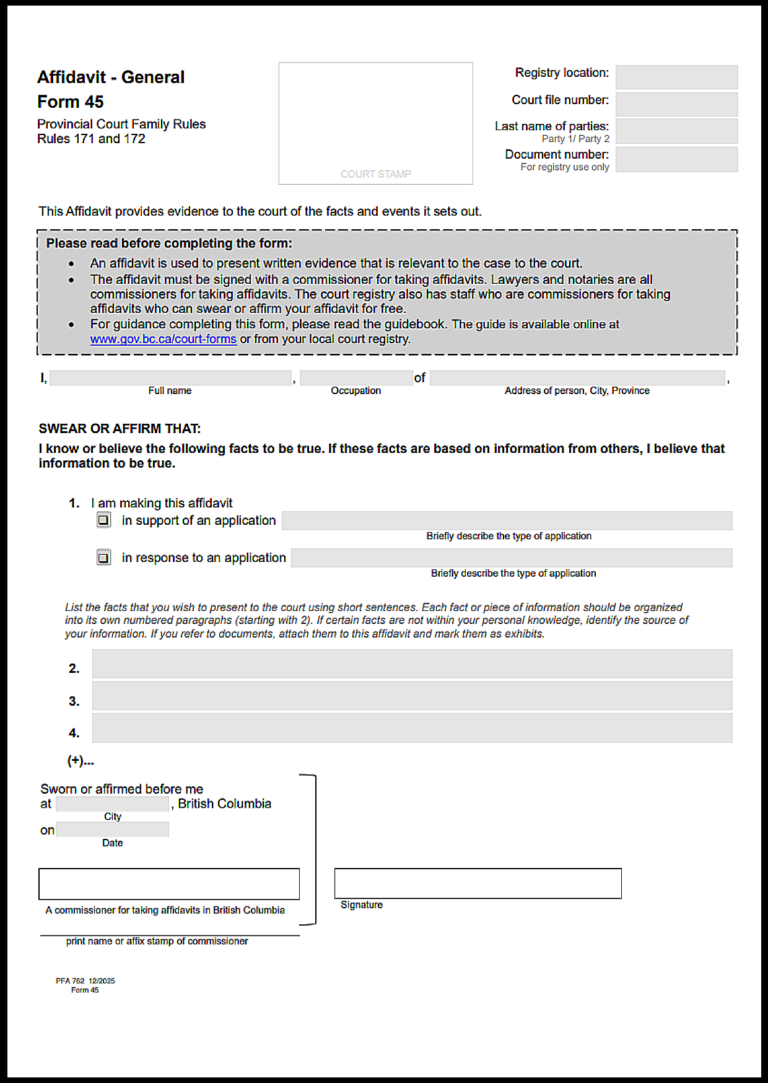
Free Affidavit Template (British Columbia)
Use this simple template to create your affidavit. You can copy and edit it based on your situation.
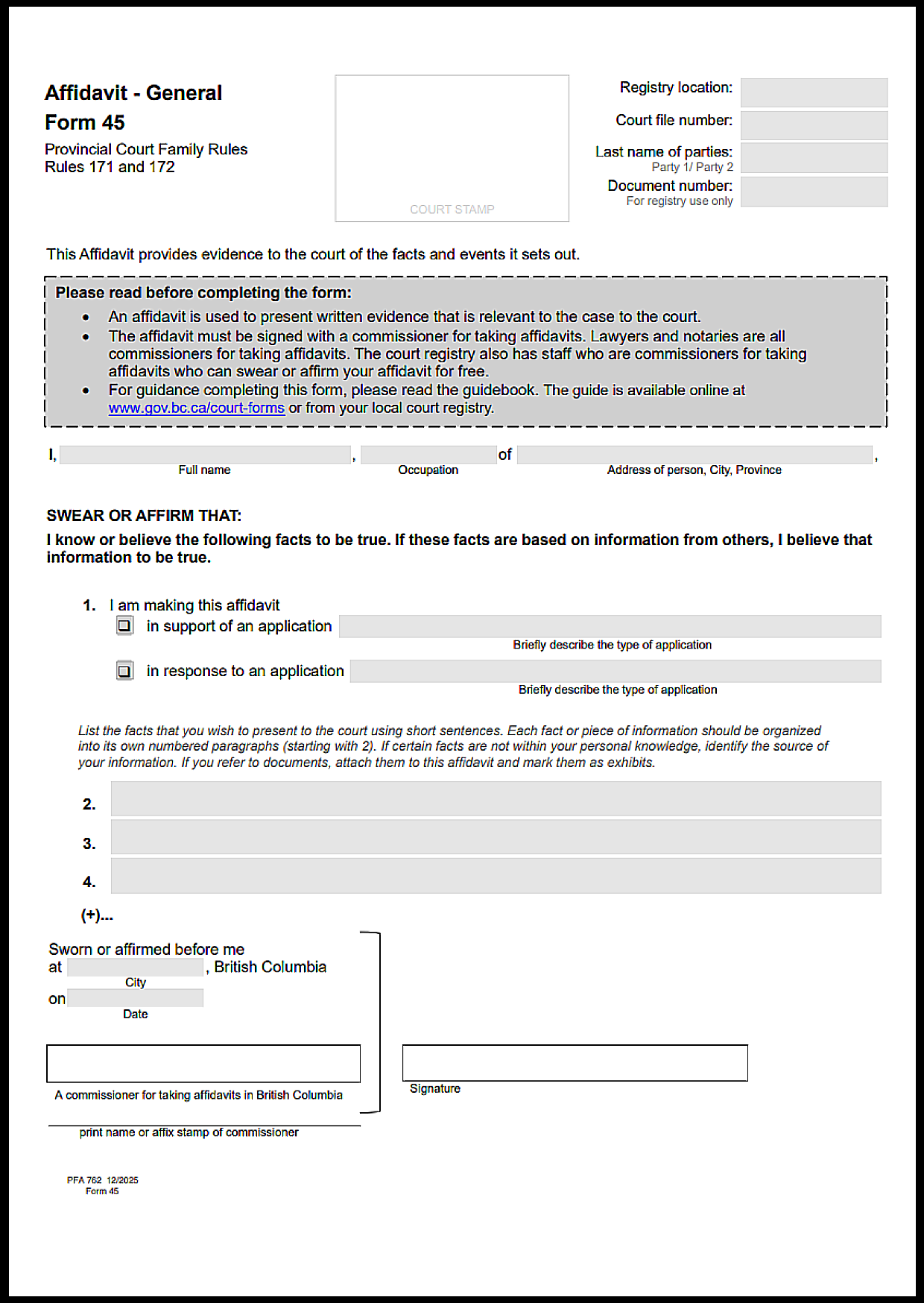
This format follows standard practice in British Columbia. You can adjust the content, but the structure should remain the same.
British Columbia Affidavit Process Rules, Filing Requirements & Legal Standards
| Topic / Issue | British Columbia Legal Rule | Governing Statute |
|---|---|---|
| Governing legislation | Affidavits in British Columbia are governed mainly by provincial law, with federal law applying for federal matters or courts. | Evidence Act, [RSBC 1996] c. 124; Canada Evidence Act, R.S.C. 1985, c. C-5; Supreme Court Civil Rules, BC Reg 168/2009 |
| Family court affidavit rules | Family affidavits follow separate family court procedures in BC. | Supreme Court Family Rules, BC Reg 169/2009, Rule 10-4 |
| Remote commissioning update | British Columbia permanently allows remote video commissioning of affidavits. | Evidence Act; Court Rules amendments (2020) |
| Who can sign (Deponent) | Any person with personal knowledge of the facts or information and belief in interlocutory matters may sign. | Supreme Court Civil Rule 22-2(1) |
| Witness requirements | Affidavits must be witnessed by a Commissioner for Taking Affidavits and do not require a second lay witness. | Evidence Act, s. 60 |
| Commissioner qualifications | Active lawyers, Notaries Public, and Court Registry staff may witness affidavits. | Evidence Act, ss. 56, 60 |
| Commissioner disqualification | A commissioner generally cannot witness a document if they are a party to the proceeding. | Governed by common law & Law Society Rules |
| Age and capacity requirement | The deponent must be at least 19 or use a litigation representative and must understand the oath. | Age of Majority Act, s. 1; Evidence Act, s. 20 |
| Filing timelines | Affidavits must be filed within timelines connected to the hearing or application. | Supreme Court Civil Rule 8-1(15) |
| Affidavit header requirement | The affidavit must include affidavit number, deponent name, and date in the top right corner. | Supreme Court Civil Rule 22-2(6) |
| Required opening statement | The affidavit must begin with the approved opening wording identifying the deponent. | Form 109, Supreme Court Civil Rules |
| Knowledge clause | Affidavits should state whether facts are based on personal knowledge or information and belief. | Standard practice under Rule 22-2 |
| Jurat requirement | The affidavit must include the city, date, and commissioner’s signature in the closing section. | Supreme Court Civil Rules |
| Remote commissioning wording | Video-sworn affidavits must confirm the deponent was in electronic presence of the commissioner. | Evidence Act, s. 63 |
| Court filing requirement | Court affidavits must be filed at the correct Supreme Court or Provincial Court registry. | Court registry requirements |
| Land title filing | Property-related affidavits are filed with the Land Title and Survey Authority of BC. | LTSA filing procedures |
| Private use affidavits | Affidavits for insurance or private matters generally remain private records. | Private administrative use |
| Exhibit marking requirement | Every exhibit must contain a signed exhibit stamp from the commissioner. | Supreme Court Civil Rule 22-2(8) |
| Personal appearance requirement | The deponent must appear physically or through approved video procedures before the commissioner. | Evidence Act, s. 63 |
| Legal argument prohibition | BC courts may strike affidavits containing opinions or legal arguments instead of facts. | Supreme Court Civil Rule 22-2(12) |
| BC notary system | British Columbia Notaries Public are a separate regulated profession with broader powers than some provinces. | Notaries Act |
| BC age of majority difference | British Columbia uses age 19 as the age of majority instead of 18. | Age of Majority Act, s. 1 |
| Mandatory Form 109 formatting | BC requires a specific affidavit format including affidavit numbering and deponent identification. | Form 109, Supreme Court Civil Rules |
One of the most important British Columbia affidavit rules is that the person signing must appear before the commissioner either physically or through the approved video process. Many affidavits become invalid because people sign them earlier at home or fail to follow the remote commissioning requirements under the Evidence Act.
Another strict BC rule involves formatting. Unlike many provinces, British Columbia requires affidavits to follow the mandatory Form 109 structure, including the affidavit number and deponent information in the top right corner. Courts can reject documents that do not meet these technical requirements properly.
The rule against legal arguments inside affidavits is also very important in real situations. British Columbia courts expect affidavits to contain facts only, not opinions or emotional arguments. If a person includes improper content, a judge may strike part or all of the affidavit, which can seriously weaken a court application or hearing.
These rules matter because even small affidavit mistakes can delay court matters, property filings, or financial claims. To avoid those problems, download the free British Columbia affidavit template below.
Getting an affidavit in British Columbia usually involves preparing a sworn statement and signing it before an authorized witness or notary public. To understand how these documents fit into broader legal procedures, you can review the main affidavit resource for Canada along with the guide to notarizing affidavits in British Columbia.
What Does “Getting an Affidavit” Mean in BC?
Many people think they need to “apply” for an affidavit. That’s not correct.
In most affidavit situations, you create the document yourself and then make it legally valid by swearing it.
There are three main parts:
- Writing the affidavit (your facts)
- Signing it in front of an authorized person
- Having it officially witnessed
For example, if you are submitting documents to court, you write your statement, then swear it before a commissioner. Only after that does it become a valid legal document.
Step-by-Step: How to Get an Affidavit in British Columbia
Step 1: Write Your Statement
Start by writing your affidavit in simple English.
- Use short sentences
- Stick to facts only
- Avoid opinions or guesses
- Use numbered paragraphs
Example:
Instead of writing “I believe he was late,” write “He arrived at 10:30 AM.”
Under British Columbia law, affidavits must contain facts you can swear are true.
Step 2: Prepare Identification
You must bring valid ID when swearing your affidavit.
Common accepted IDs:
- Passport
- Driver’s license
- Government-issued ID
The name on your ID must match the name in your affidavit. If it doesn’t, your affidavit may be rejected.
Step 3: Find a Commissioner for Oaths or Notary
You cannot complete an affidavit alone. It must be witnessed.
You can find authorized persons at:
- Law offices
- Service centers
- Some government offices
These professionals are legally allowed to witness your signature.
Step 4: Sign in Front of the Commissioner
This is very important:
Do NOT sign your affidavit before arriving.
The commissioner will:
- Check your ID
- Watch you sign
- Ask you to swear or affirm the truth
If you sign earlier, the affidavit may be invalid.
Step 5: Pay the Fee (if applicable)
Costs vary depending on where you go.
| Service Type |
Typical Cost in BC
|
| Commissioner for Oaths | $10 – $40 |
| Notary Public | $30 – $100+ |
| Some government services | Free |
Some locations offer free commissioning, especially for simple documents.
The exact affidavit format may vary depending on the purpose of the declaration being prepared. Some individuals may require an affidavit of residence form, while others may need an identity verification affidavit for administrative or legal matters.
Who Can Commission an Affidavit in British Columbia?
Under British Columbia law, only authorized individuals can witness affidavits.
These include:
- Commissioner for Oaths
- Notary Public
- Lawyers (in most cases)
Their role is not to verify your facts — but to:
- Confirm your identity
- Ensure you understand the document
- Witness your oath or affirmation
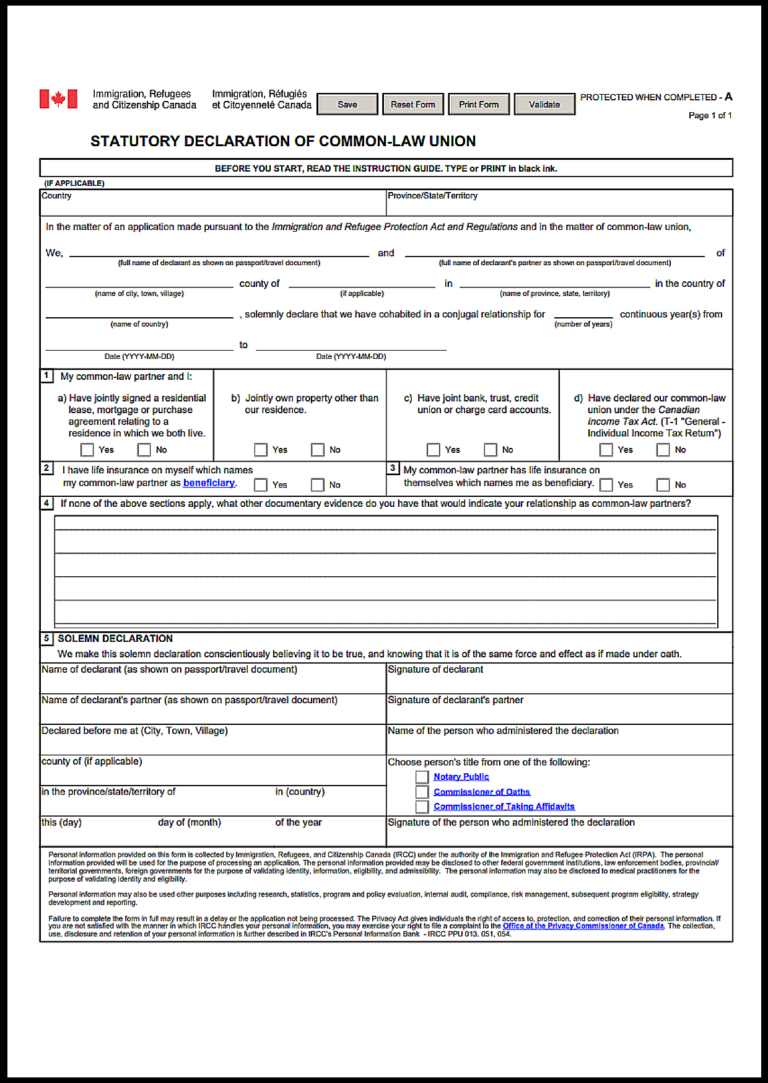
People comparing different types of sworn legal statements may also want to review the difference between affidavits and statutory declarations in British Columbia before choosing the appropriate document.
Oath vs Affirmation: What’s the Difference?
When signing an affidavit, you must either swear an oath or make an affirmation.
| Option | Meaning | When to Use |
| Oath | Religious promise |
If you follow a religion
|
| Affirmation | Non-religious promise |
If you prefer no religious reference
|
Both are legally valid in British Columbia. Choose the one you are comfortable with — the legal effect is the same.
Key Parts of a Valid Affidavit (Important Checklist)
Deponent Details
- Full legal name
- Address
- Must match ID
Statement of Facts
- Clear and numbered paragraphs
- No opinions or arguments
Swearing Clause
- Must include wording like “Sworn before me”
- Shows it was properly witnessed
Signatures
- Your signature (deponent)
- Commissioner’s signature
Quick checklist:
- Did you include only facts?
- Did you sign in front of a commissioner?
- Are all names and dates correct?
If any of these are missing, your affidavit may not be accepted.
Common Mistakes That Make an Affidavit Invalid
Many affidavits get rejected because of simple errors.
Avoid these:
- Signing before meeting the commissioner
- Including opinions instead of facts
- Missing signatures or dates
- Using incorrect names or details
- Not being physically present
Under British Columbia law, an improperly sworn affidavit may have no legal value.
When Do You Need an Affidavit in British Columbia?
Affidavits are used in many real-life situations.
Common examples:
- Court cases (family law, civil disputes)
- Identity verification
- Property or financial matters
- Immigration or travel documents
Example:
If you need to confirm your identity for a legal process, an affidavit of identity may be required.
Can You Create an Affidavit Online in BC?
Yes, you can prepare your affidavit online.
But there is a key rule:
It must still be sworn in front of an authorized person.
Some services offer virtual commissioning (video call). However:
- Not all institutions accept it
- It must follow BC legal standards
Be careful when using random templates online. Many do not meet British Columbia requirements.
Legal Rules for Affidavits in British Columbia
Under British Columbia law, affidavits must follow strict rules.
- The statement must be truthful
- You must swear or affirm it properly
- It must be witnessed by an authorized person
Providing false information is a serious offence. This is called perjury, and it can lead to fines or legal consequences.
Individuals are legally required to ensure their affidavit is accurate and honest.
What Happens After You Get the Affidavit?
Once your affidavit is completed:
- Submit it to the required authority (court, bank, government office)
- Keep copies for your records
- Use additional copies if needed
In some cases, you may need multiple affidavits for different purposes.
Frequently Asked Questions (FAQs)
How much does an affidavit cost in British Columbia?
Costs usually range from $10 to $100, depending on whether you use a commissioner or notary. Some services are free.
Can I write my own affidavit?
Yes. In most affidavit situations, individuals write their own statements and then swear them before a commissioner.
Do I need a lawyer for an affidavit?
No, not always. Simple affidavits do not require a lawyer. However, for complex legal matters, legal advice is recommended.
How long does it take to get an affidavit?
It can take as little as 15–30 minutes if your document is ready and you visit a commissioner.
Is an affidavit legally binding in BC?
Yes. Once sworn, an affidavit is a legally binding document. Providing false information can lead to serious legal consequences.