How to Write Contract British Columbia? (Free Guide)
How to Write Contract British Columbia is something many people search when they face confusion in business deals. Imagine hiring a freelancer without a written agreement—work gets delayed, payment terms are unclear, and both sides end up frustrated.
Under British Columbia law, a properly written contract protects both parties. It clearly sets expectations, reduces disputes, and makes agreements enforceable if something goes wrong.
This article will walk you step-by-step on how to write a clear, legally valid contract in British Columbia, along with a free template you can use.
In most business contract situations, problems happen when things are not written clearly. I have seen many people in British Columbia rely on verbal promises or copied online contracts, only to end up in disputes because key terms were missing or unclear. When clients come to me after payment problems or broken agreements, the biggest issue is usually that the contract was never written properly from the start.
A contract is not just paperwork—it is your protection. Whether you are hiring, selling, or partnering, a well-written contract helps avoid misunderstandings and legal issues later.

British Columbia Contract Laws, Validity Rules & Filing Requirements
| Topic / Issue | British Columbia Legal Rule | Governing Statute |
|---|---|---|
| Governing legislation | Contracts in British Columbia are governed by both provincial and federal laws depending on the subject matter of the agreement. | Law and Equity Act, RSBC 1996, c. 253; Business Practices and Consumer Protection Act, SBC 2004, c. 2; Canada Business Corporations Act, RSC 1985, c. C-44 |
| Interest rules in contracts | Federal law governs interest rates charged under contracts. | Interest Act, RSC 1985, c. I-15 |
| Who can legally sign | Any person with legal capacity may sign; corporations must use authorized signatories. | Business Corporations Act, s. 146 |
| Witness requirements | General private contracts usually do not require witnesses; land transfers require one witness. | No statutory requirement — governed by common law principles |
| Notarization | Most contracts do not require notarization unless connected to Land Title matters or Powers of Attorney. | No statutory requirement — governed by common law principles |
| Age requirement | The age of majority in British Columbia is 19 years, and contracts with minors are generally unenforceable against them. | Age of Majority Act, s. 1; Infants Act, s. 19 |
| Mental capacity | Parties must understand the nature and effect of the contract when signing. | Adult Guardianship Act, s. 3 |
| Time limits for legal claims | Legal action for breach of contract generally must start within 2 years from discovery of the claim. | Limitation Act, s. 6 |
| Consumer contract disclosures | Certain consumer contracts must include cancellation rights notices. | Business Practices and Consumer Protection Act, s. 19 and s. 46 |
| Land sale contracts | Contracts involving land must be written and signed to be enforceable. | Law and Equity Act, s. 59 |
| Private contract filing | Most private contracts do not require government filing to become effective. | Private contractual practice |
| Real estate registration | Land transfers must be registered with the Land Title and Survey Authority of BC to protect against third parties. | LTSA registration requirements |
| Security interest registration | Contracts creating security interests in personal property should be registered in the BC Personal Property Registry. | Personal Property Security Act |
| Minor contracts | Contracts signed by persons under 19 are generally unenforceable against the minor unless exceptions apply. | Infants Act, s. 19 |
| Unconscionable consumer contracts | Courts may cancel unfair consumer contracts where a supplier exploited vulnerability or ignorance. | Business Practices and Consumer Protection Act, s. 8 |
| Missing written land agreement | Contracts dealing with land become unenforceable if not written and signed. | Law and Equity Act, s. 59 |
| BC age of majority difference | British Columbia uses age 19 instead of age 18 like some other provinces. | Age of Majority Act, s. 1 |
| Discovery-based limitation rule | British Columbia uses a strict 2-year limitation period based on discovery of the claim. | Limitation Act |
| Officer witnessing for land documents | Land Title Office filings usually require witnessing by a lawyer or notary. | Land Title Act |
One of the biggest differences in British Columbia contract law is that the age of majority is 19, not 18. This surprises many people because contracts signed by someone under 19 may not be enforceable against them under the Infants Act. That can create serious risks for businesses or individuals entering agreements without checking age first.
Another important rule involves real estate contracts. In British Columbia, agreements involving land must be written and signed under the Law and Equity Act. Verbal property agreements can quickly fall apart because they are generally unenforceable. The province also follows a strict 2-year limitation period based on when the problem was discovered, which means waiting too long to take legal action can permanently block your claim.
Consumer contracts also face stricter scrutiny under the Business Practices and Consumer Protection Act. If a business takes advantage of a person’s ignorance or vulnerability, a court may set the agreement aside entirely.
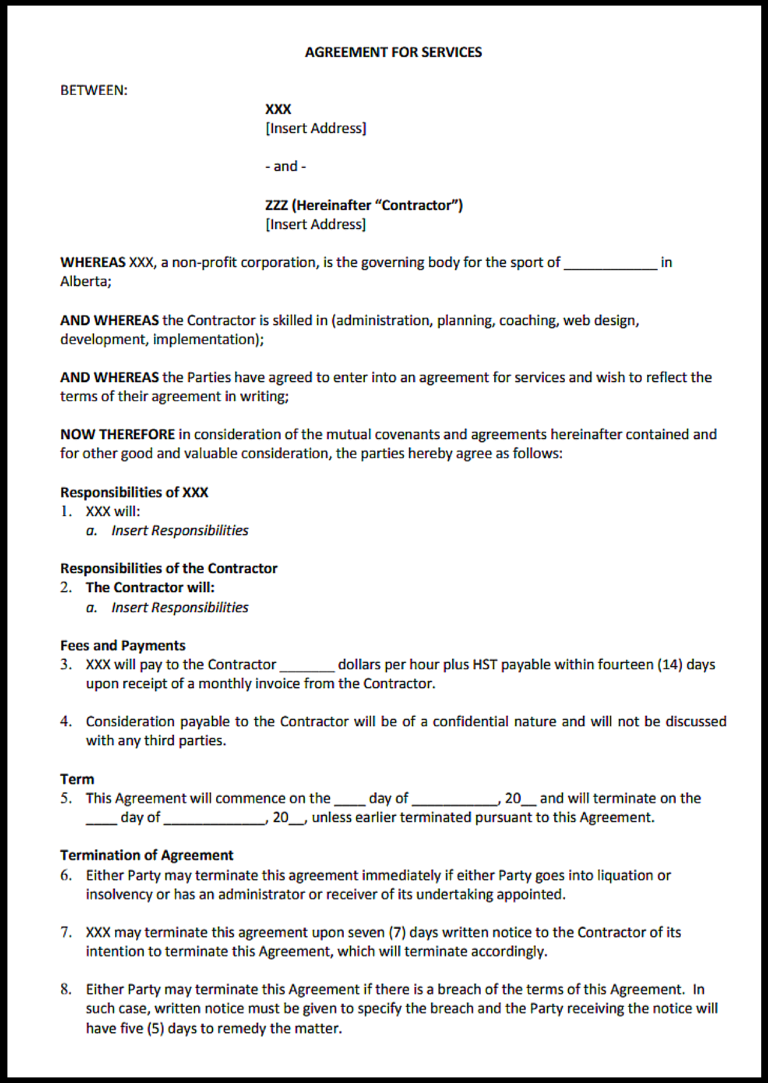
To avoid costly mistakes and create a properly structured agreement, download the free British Columbia contract template below.
Writing a clear legal agreement helps reduce misunderstandings and establish enforceable obligations between parties. To understand how different commercial contracts are commonly structured, you can review with the guide explaining legally binding contracts in British Columbia.
What Does “Writing a Contract” Mean in British Columbia?
A contract is a written agreement between two or more parties. It explains what each person agrees to do.
Under British Columbia law, contracts can be:
- Written
- Verbal
- Implied (based on actions)
However, written contracts are the safest because they provide clear proof.
Contracts are commonly used for:
- Business deals
- Freelancing work
- Service agreements
- Rentals and sales
Different industries may require specialized agreements depending on the nature of the working relationship. Businesses hiring service providers may use a service agreement template, while project-based collaborations often involve a consulting agreement or an independent freelance contract.
When Do You Need to Write a Contract?
You should write a contract whenever money, services, or responsibilities are involved.
Common situations include:
- Starting a business partnership
- Hiring freelancers or contractors
- Selling products or services
- Working with clients or vendors
Example: A small business owner hires a designer without a contract. The designer delivers late, and payment terms were never discussed. This leads to conflict that could have been avoided with a written agreement.
Legal Requirements for a Valid Contract in British Columbia
Under British Columbia law, a contract must meet certain conditions to be legally binding.
Key Requirements
| Requirement | What It Means |
Simple Example
|
| Offer & Acceptance | One party offers, the other agrees |
“I will design your logo for $500” → “I agree”
|
| Consideration | Something of value is exchanged |
Money for services
|
| Intention | Both parties intend legal agreement |
Not just a casual promise
|
| Capacity | Parties must be adults and mentally capable |
Not minors or incapable persons
|
| Legal Purpose | Must not involve illegal activity |
Cannot contract for unlawful work
|
If any of these are missing, the contract may not be enforceable.
Step-by-Step Guide to Writing a Contract
Step 1 – Clearly Identify the Parties
Write full legal names and addresses.
Also mention roles (client, contractor, vendor, etc.).
Step 2 – Define the Purpose of the Contract
Explain clearly what the agreement is about.
Avoid confusion by being specific.
Step 3 – Describe Responsibilities in Detail
State who will do what.
Bad example: “Complete the work”
Good example: “Design 3 logo concepts and deliver within 7 days”
Step 4 – Add Payment Terms
Include:
- Total amount
- Payment method
- Due date
Optional but useful:
- Late fees
- Advance payment terms
Step 5 – Set Timeline and Deadlines
Mention:
- Start date
- End date
- Milestones (if needed)
Step 6 – Include Termination Clause
Explain how either party can end the contract.
Example:
- Notice period (7 days, 14 days, etc.)
- Conditions for immediate termination
Step 7 – Add Optional Clauses
Depending on your agreement:
- Confidentiality clause
- Dispute resolution clause
- Liability limits
Step 8 – Add Governing Law (British Columbia)
This ensures that BC law applies if a dispute arises.
Step 9 – Signatures
Both parties must sign and date the contract.
Without signatures, enforcement becomes difficult.
When contracts involve confidential financial or operational information, parties frequently include a British Columbia NDA agreement to help protect sensitive business records.
Common Mistakes to Avoid When Writing a Contract
Many disputes happen due to simple mistakes.
Avoid these:
- Using unclear or vague language
- Not including payment terms
- Forgetting termination conditions
- Copy-pasting templates without editing
- Not signing the contract
- Ignoring British Columbia legal rules
Quick Comparison Table
| Mistake | Risk |
Better Approach
|
| Vague wording | Misunderstanding |
Use clear and detailed terms
|
| No payment terms | Payment disputes |
Define amount, date, method
|
| No termination clause | Stuck in bad deal |
Add exit conditions
|
| Unsigned contract | Hard to enforce | Always sign and date |
Special Considerations for British Columbia Businesses
Consumer Protection Rules
Contracts must be fair and transparent.
Hidden terms or misleading clauses may not be enforceable.
Electronic Contracts and E-Signatures
Under BC electronic transaction laws, digital contracts and e-signatures are valid.
This is useful for online businesses and remote work.
GST/PST Considerations
If applicable:
- Clearly mention taxes in payment terms
- Specify whether prices include or exclude GST/PST
What Happens If a Contract Is Poorly Written?
A poorly written contract creates real problems:
- Payment disputes
- Misunderstandings
- Legal conflicts
- Difficulty enforcing rights in court
Example: A contractor completes work, but the contract does not mention payment deadlines. The client delays payment, and there is no clear rule to enforce timely payment.
How to Make Your Contract Stronger and Safer
In most business contract situations, small improvements make a big difference.
Follow these tips:
- Use simple and clear language
- Be specific, not general
- Review everything before signing
- Keep copies for records
- Consider legal review for important agreements
FAQs
Is a handwritten contract legal in British Columbia?
Yes. As long as it meets legal requirements like offer, acceptance, and consideration, it is valid.
Do I need a lawyer to write a contract?
Not always. For simple agreements, templates work. For complex deals, legal advice is recommended.
Can I use a template for all contracts?
Yes, but you must customize it for your specific situation.
Is a verbal agreement enforceable?
Sometimes, but it is harder to prove in case of disputes.
What makes a contract legally binding?
Offer, acceptance, consideration, and intention to create legal relations.