Ontario Lease Agreement Laws (Free Download & Legal Guide)
Ontario Lease Agreement Laws are the rules that control how rental agreements work between landlords and tenants in Ontario. If you’re about to rent a place or list your property, understanding these laws is not optional — it protects you from legal trouble and money loss.
I’ve seen many Ontario tenants and landlords run into serious problems simply because they relied on verbal promises or outdated lease forms they found online. When disputes reach the Landlord and Tenant Board, small mistakes in the lease can quickly turn into expensive delays, unpaid rent issues, or notices that don’t legally hold up.
In simple terms, Ontario has strict rules under the Residential Tenancies Act (RTA). This article will walk you through everything clearly — plus give you a free, ready-to-use lease template so you don’t make costly mistakes.
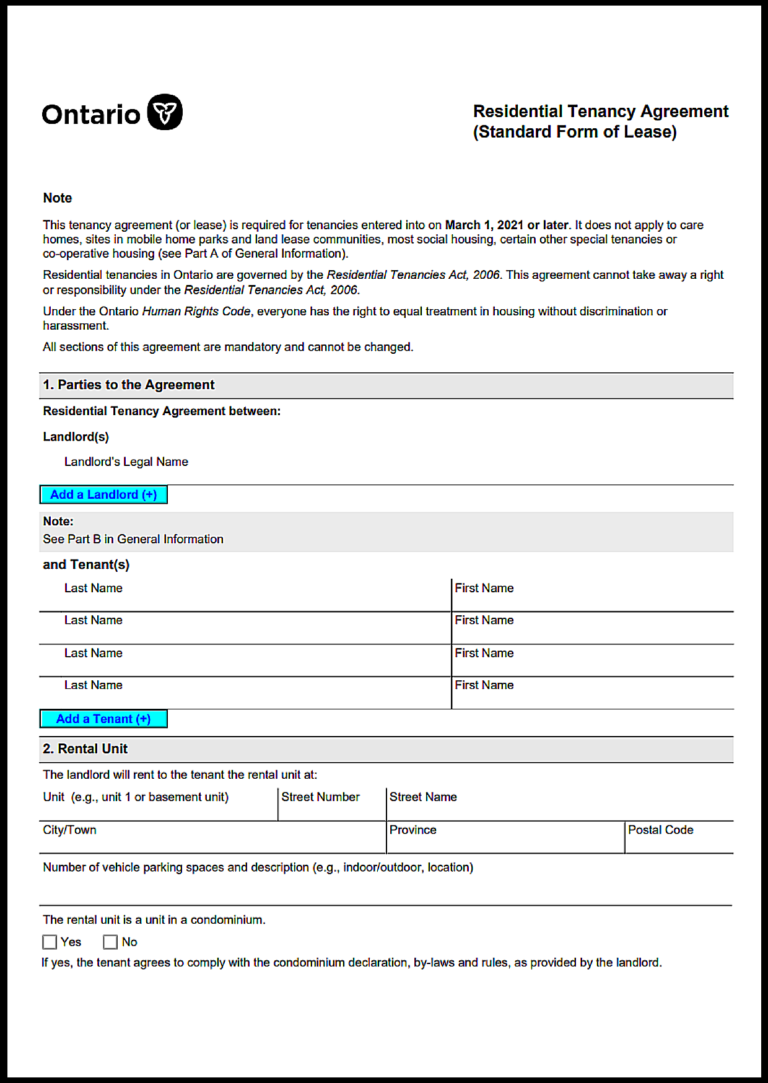
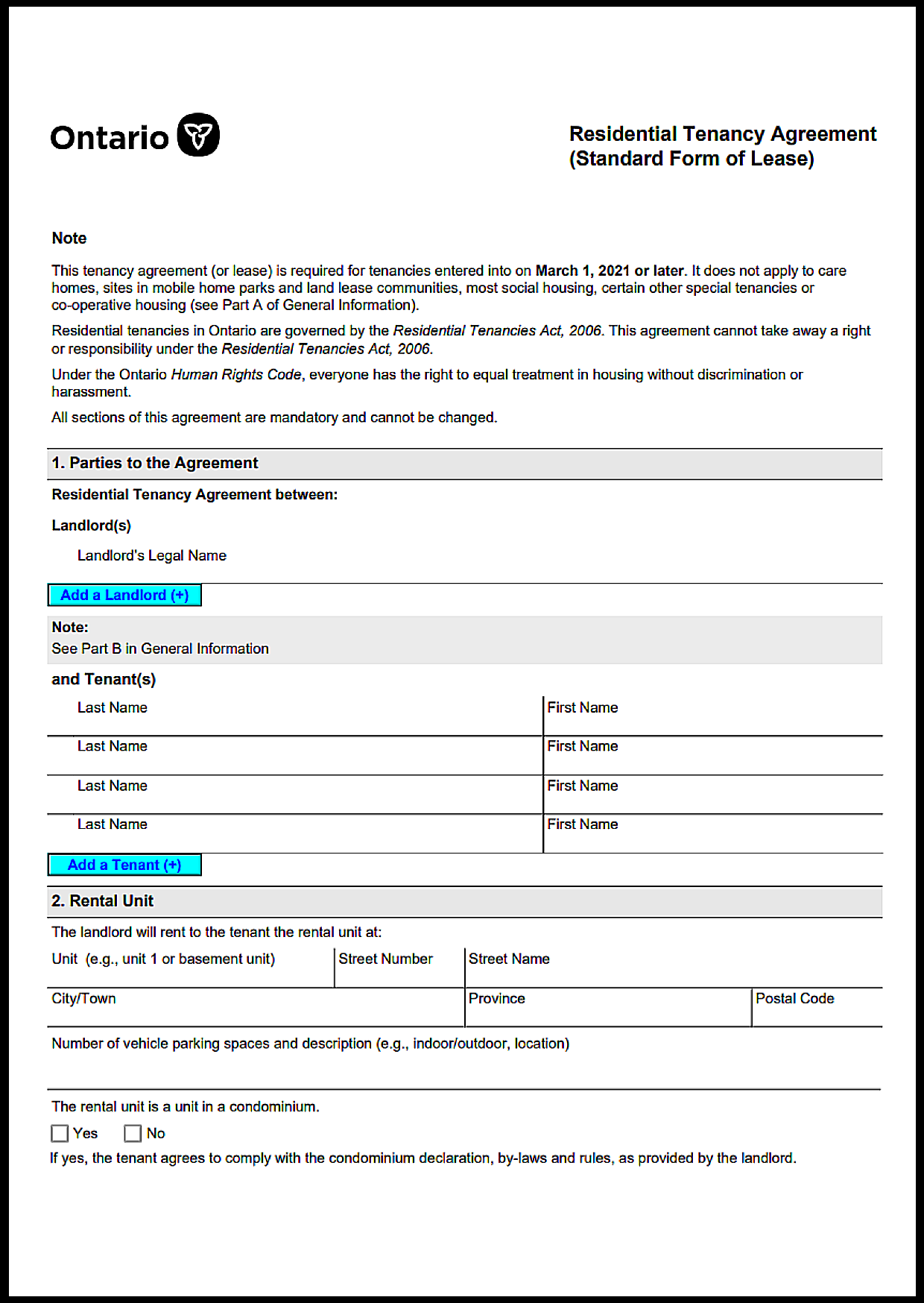
Free Ontario Lease Agreement Template
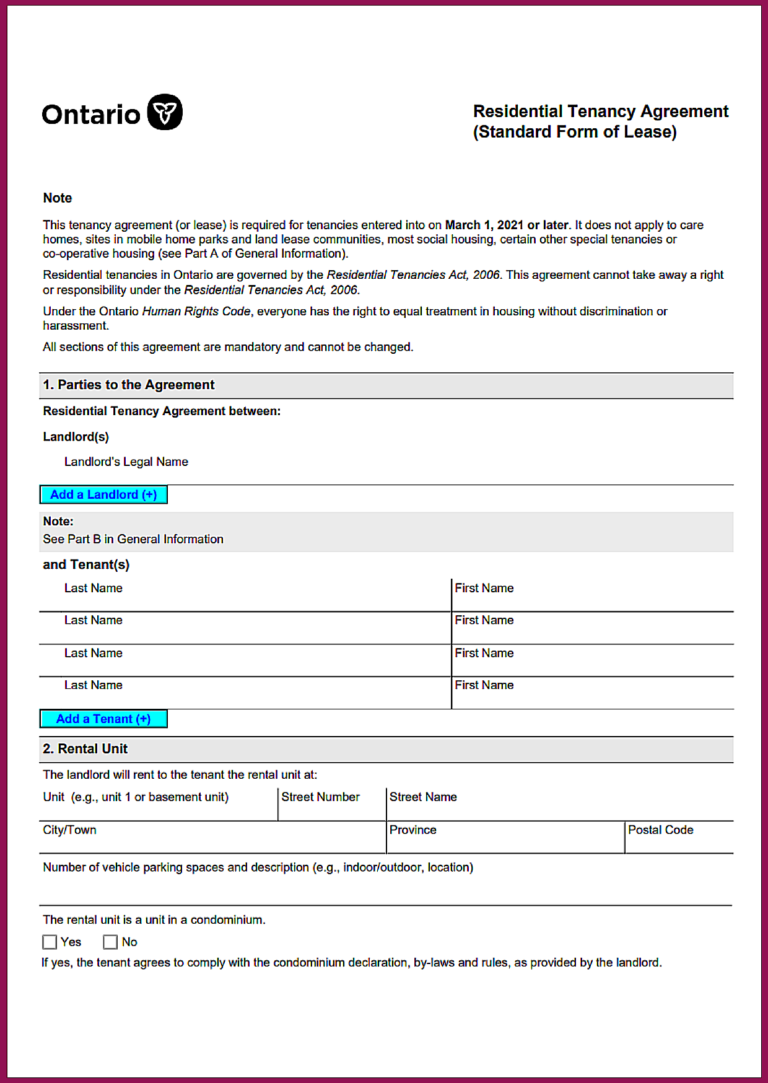
Statutory Compliance Warning: Under Section 12.1 of the Residential Tenancies Act, 2006, it is a strict regulatory violation to utilize a custom, drafted, or unofficial template for residential tenancies in Ontario. Landlords must exclusively utilize the official Ontario Standard Form of Lease (Form 2229E). Proffering an unofficial ‘templated’ alternative gives the tenant the immediate statutory right to demand the official form in writing.
If the landlord fails to supply Form 2229E within 21 calendar days of the demand, the tenant is legally authorized to withhold one month’s rent pursuant to s. 12.1(2) of the Act. If the landlord fails to provide the lease within 30 days after the withholding begins, the landlord forfeits that month’s rent entirely under s. 12.1(4).
Ontario Lease Agreement Laws Most Landlords & Tenants Miss
| Topic / Issue | Ontario Legal Rule | Governing Statute |
|---|---|---|
| Governing legislation | Residential tenancies are governed by Ontario’s Residential Tenancies Act, 2006. | Residential Tenancies Act, 2006, S.O. 2006, c. 17 |
| Federal involvement | Residential tenancy law falls under provincial jurisdiction only. | Residential Tenancies Act, 2006 |
| Recent amendments | The RTA was amended by Bill 60, the Fighting Delays, Building Faster Act, 2025, S.O. 2025, c. 14, introducing staggered operational enforcement dates throughout mid-to-late 2026. | Residential Tenancies Act, 2006, as amended by S.O. 2025, c. 14 |
| Who can sign | Any landlord, owner, heir, agent, or tenant paying rent may sign a lease. | Residential Tenancies Act, 2006, s. 2(1) |
| Witness requirement | Ontario law does not require witnesses for residential leases. | Common law principles |
| Notarization | Ontario residential leases do not require notarization. | Common law principles |
| Age requirement | The age of majority is 18, but some 16- and 17-year-olds may legally sign if withdrawn from parental control. | Age of Majority and Accountability Act, s. 1 |
| Mental capacity | A person signing the lease must understand the nature and effect of the agreement. | Substitute Decisions Act, 1992 |
| Lease copy deadline | Landlords must provide a signed lease copy within 21 days of signing. | Residential Tenancies Act, 2006, s. 12(1) |
| Rent increase notice | Landlords must provide at least 90 days written notice using the approved LTB form. | Residential Tenancies Act, 2006, s. 116(1) |
| Mandatory standard lease | Most private residential tenancies must execute the mandatory Standard Form of Lease (Form 2229E) prescribed by the Minister. | O. Reg. 10/18, s. 1 |
| Mandatory appendix | The regulatory “Appendix: General Information for Landlords and Tenants” must be integrated within the Standard Form of Lease and cannot be omitted. | O. Reg. 10/18, s. 2 |
| Standard terms | Mandatory core terms contained within Sections 1 through 14 of the Standard Form of Lease are non-waivable and legally unalterable. | O. Reg. 10/18, Schedule 1 |
| Landlord contact details | The landlord’s legal name and address for service must appear in the lease. | Residential Tenancies Act, 2006, s. 12(1) |
| Filing requirement | Standard residential leases are private agreements and are not filed with the government. | Residential Tenancies Act, 2006 |
| Long-term lease registration | Leases longer than three years may be registered on title to protect tenant interests. | Land Titles Act |
| Illegal lease clauses | Any lease clause that conflicts with the RTA is automatically void. | Residential Tenancies Act, 2006, s. 4 |
| Illegal deposits | Damage or security deposits are prohibited in Ontario residential rentals. | Residential Tenancies Act, 2006, ss. 105–106 |
| Failure to use standard form | Tenants may withhold one month’s rent if the landlord fails to provide the standard lease after written demand. | Residential Tenancies Act, 2006, s. 12.1 |
| Automatic month-to-month renewal | Fixed-term leases automatically become month-to-month unless proper notice is given. | Residential Tenancies Act, 2006, s. 38 |
| “No pets” clauses | “No pets” clauses are generally void and unenforceable in Ontario. | Residential Tenancies Act, 2006, s. 14 |
Ontario has some of the strictest residential lease rules in Canada, and a few of these laws surprise both landlords and tenants. One of the biggest is the rule banning damage deposits. Many landlords still ask for them, but Ontario law only allows a last month’s rent deposit and limited key deposits. If a landlord charges an illegal deposit, the tenant can challenge it and demand repayment later.
Another important rule is the automatic month-to-month renewal system. Many people wrongly assume a tenant must leave once the fixed lease ends. In Ontario, the tenancy usually continues automatically unless proper legal notice is given.
The mandatory standard lease is also extremely important in real life. If landlords refuse to provide the official form after a written request, tenants may legally withhold one month’s rent. Small paperwork mistakes can quickly create disputes, delays at the Landlord and Tenant Board, or unenforceable lease clauses.
Before signing anything, download the free Ontario lease agreement template and make sure your rental stays legally compliant.
What Ontario Lease Agreement Laws Actually Require
Under Ontario law, lease agreements are governed by the Residential Tenancies Act (RTA). This law applies to most rental homes, including:
- Apartments
- Houses
- Basement units
- Condos
When the RTA does NOT apply
Some exceptions include:
- Living accommodation where the tenant is required to share a bathroom or kitchen facility with the owner, or an immediate family member of the owner, and the owner or family member resides in the same principal residence (RTA, s. 5(i)).
-
Transient or short-term living accommodation provided in a hotel, motel, motor home, resort, tourist home, or seasonal trailer park (RTA, s. 5(a)).
-
Accommodation provided by an educational institution to its students or staff, subject to specific institutional designations and operational frameworks (RTA, s. 5(g)).
Why this matters
In most rental situations, landlords must:
- Use the standard lease form
- Follow strict rent and deposit rules
- Respect tenant rights
Verbal agreements are legal, but very risky. Without written proof, disputes become hard to resolve.
Is the Ontario Standard Lease Mandatory?
Yes — since 2018, the Ontario standard lease form is mandatory for most private residential rentals.
What if a landlord refuses?
Tenants have strong rights:
- You can request the standard lease in writing
- The landlord must provide it within 21 days
- If they don’t, you can withhold one month’s rent
This is a legal protection under Ontario law — many people don’t know this.
Key Legal Clauses Every Ontario Lease Must Include
Rent Rules (Legal Limits & Increases)
Under Ontario law:
- Rent must be clearly written in the agreement
- Rent increases are controlled annually
- Landlords must give 90 days’ notice
Illegal charges include:
- Extra hidden fees
- Charging for repairs caused by normal use
Security Deposit Laws
Ontario has strict rules here:
- Only last month’s rent deposit is allowed
- Damage deposits are NOT allowed
If a landlord asks for a damage deposit, it is illegal — even if written in the lease.
Lease Term Types
There are two main types:
- Fixed-term lease (e.g., 1 year)
- Month-to-month rental
After a fixed lease ends:
- It automatically becomes month-to-month
- No need to sign a new agreement
Maintenance & Repairs Responsibility
Landlords must:
- Keep the property in good condition
- Fix essential repairs (heating, plumbing, etc.)
Tenants must:
- Keep the unit clean
- Report damage quickly
Even if the lease says otherwise, landlords cannot avoid maintenance duties.
Rules About Pets & Guests
This surprises many people:
- “No pets” clauses are usually not enforceable
- Tenants can have guests without landlord permission
Restrictions must be reasonable — landlords cannot control personal life unfairly.
Understanding Ontario lease agreement laws is essential before using any lease template. These laws also impact documents like a legal eviction notice and rent increase notice. To stay compliant, review the tenant rights guide and learn how to write a lease agreement correctly.
What Makes a Lease Agreement Illegal in Ontario
Some lease agreements include clauses that are simply not allowed.
Common illegal terms:
- Charging damage or security deposits
- Forcing tenants to give up legal rights
- Adding penalties not allowed under RTA
- Discriminating against tenants
Real example
A landlord asks for:
- First month rent
- Last month rent
- $500 damage deposit
The damage deposit is illegal.
Even if the tenant signs, the clause is not valid under Ontario law.
How to Fill an Ontario Lease Agreement (Step-by-Step)
Step 1: Use the Standard Lease Form
Always start with Ontario’s official format.
Step 2: Add Accurate Tenant & Property Details
Double-check names, address, and contact info.
Step 3: Clearly Define Rent & Payment Terms
Include:
- Amount
- Due date
- Payment method
Step 4: Review Legal Clauses Carefully
Remove anything illegal or unclear.
Step 5: Sign & Share Copies
Both parties must sign and keep a copy.
Tip: Always keep a signed copy. It’s your legal proof if something goes wrong.
Common Mistakes Landlords & Tenants Make
These mistakes cause most rental disputes:
- Using outdated or custom lease forms
- Not tracking rent payments
- Ignoring rent increase rules
- Not understanding eviction laws
- Trusting verbal agreements
Avoid these, and you’ll prevent 80% of legal issues.
Real-Life Example (Simple Scenario)
Let’s say:
A tenant signs a lease and pays:
- First month rent
- Last month rent
- Damage deposit
Later, the tenant learns damage deposits are illegal.
What happens next?
Under Ontario law:
- The tenant can challenge the charge
- The landlord may be required to refund the amount
This is why understanding lease laws before signing is so important.
Ontario Lease vs Rental Agreement (Quick Comparison)
| Feature | Lease Agreement |
Rental Agreement
|
| Term | Fixed (e.g., 1 year) |
Usually month-to-month
|
| Stability | More stable | More flexible |
| Ending early | Harder | Easier |
| Use case | Long-term rentals |
Short-term or flexible stays
|
FAQs
Is a handwritten lease legal in Ontario?
Yes, a handwritten lease is legal if it follows the rules of the Residential Tenancies Act (RTA). However, using the standard lease form is always safer and avoids confusion.
Can a landlord increase rent anytime?
No, landlords cannot increase rent anytime they want. Rent increases must follow yearly guidelines and proper written notice must be given to the tenant.
What if a tenant breaks the lease early?
If a tenant ends the lease early, they may still need to pay rent. This continues until a new tenant is found or both parties agree on a solution.
Are verbal agreements valid?
Yes, verbal agreements are valid, but they are difficult to prove in case of disputes. It is always better to have everything written in a proper contract.
Can a landlord enter without notice?
No, landlords usually must give at least 24 hours written notice before entering the rental unit, except in emergency situations.