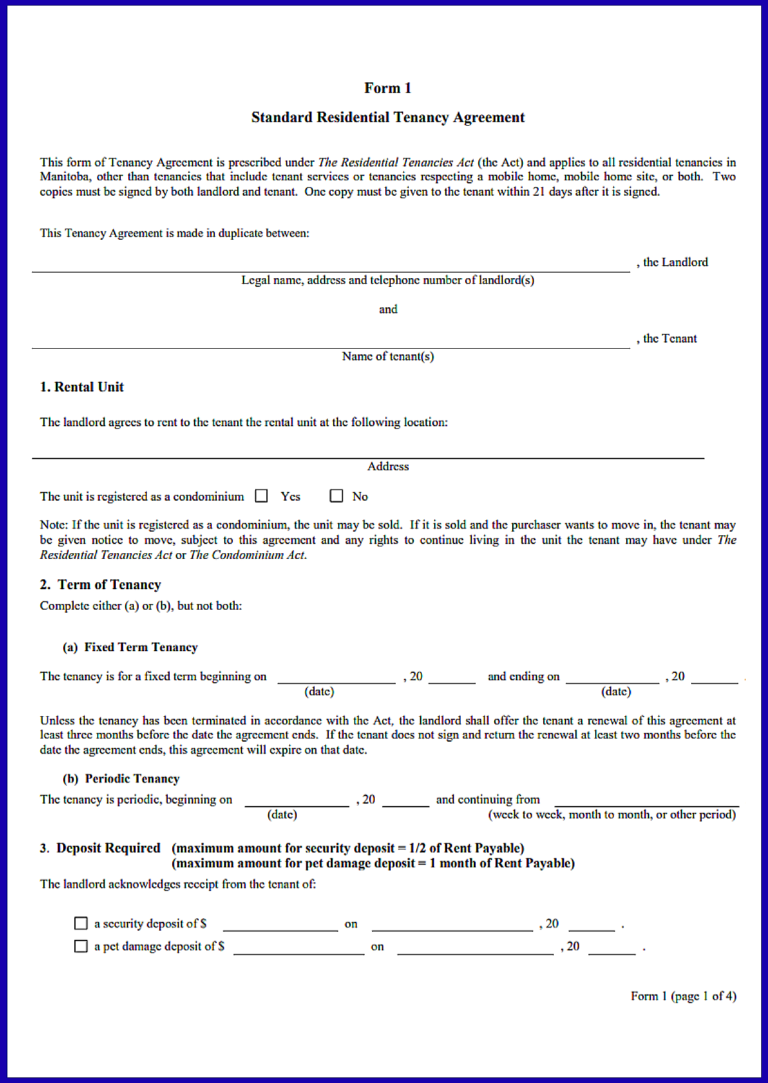
Free British Columbia Commercial Lease Agreement Template
British Columbia Commercial Lease Agreement is a legal contract used when a business rents property for commercial use in British Columbia. It clearly defines rent, responsibilities, and rights between the landlord and the business tenant.
I’ve seen commercial landlords and tenants in British Columbia end up in expensive disputes because important lease terms about rent increases, maintenance responsibilities, or early termination were never clearly written into the agreement. When someone is signing their first commercial lease, they often do not realize that B.C. commercial tenancy rules give far fewer protections than residential leases, which can create serious financial problems later.
A commercial lease agreement is a written contract between a landlord and a business tenant. It allows the tenant to use a property (like a shop, office, or warehouse) in exchange for rent.
Unlike residential leases, commercial leases are not governed by strict tenant protection laws. They are mostly based on contract terms agreed by both parties. This means more flexibility—but also more risk.
In British Columbia, having a proper written lease is very important. It helps avoid disputes, protects both sides, and clearly sets expectations.
Last Updated: August 2026
Table of Contents
ToggleFree British Columbia Commercial Lease Agreement Template
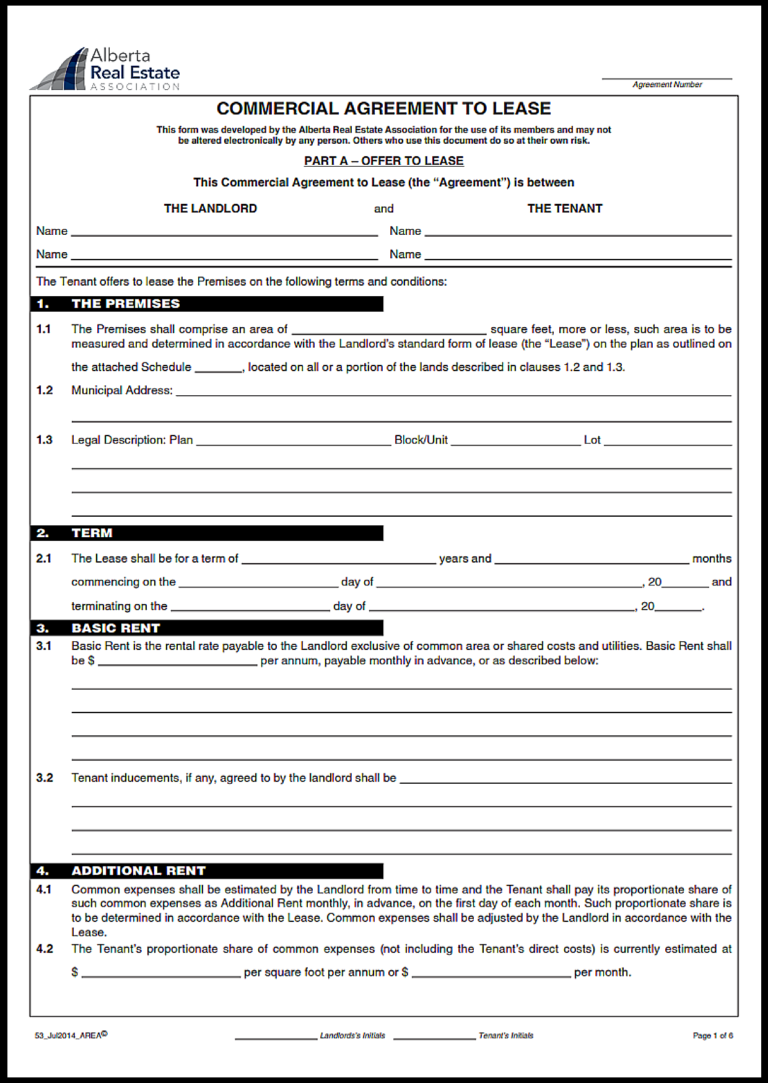
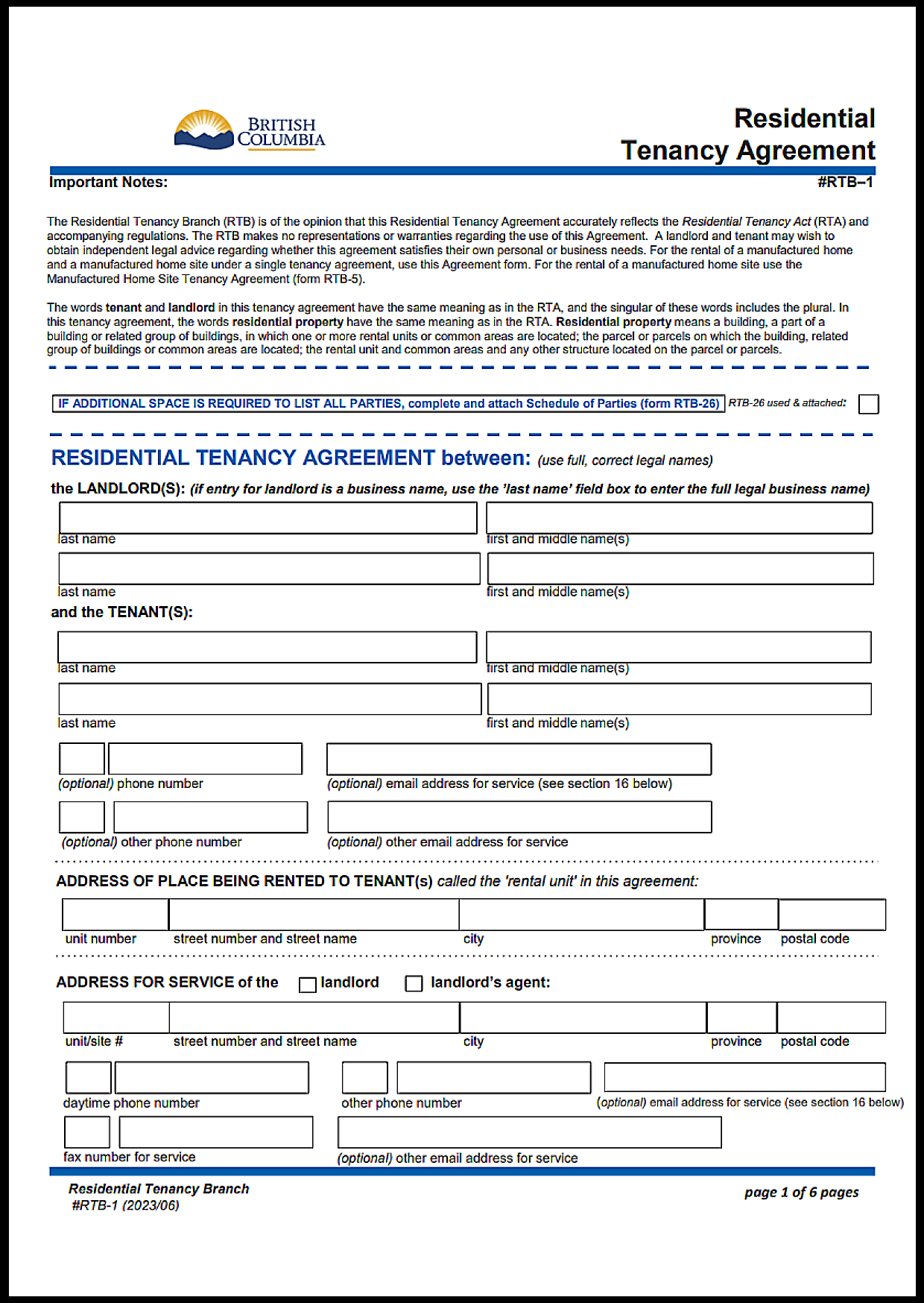
Use this simple template as a starting point. You can edit it based on your business needs.
British Columbia Commercial Lease Laws and Registration Rules
| Topic / Issue | British Columbia Legal Rule | Governing Statute |
|---|---|---|
| Governing legislation | Commercial leases in BC are primarily governed by the lease contract and applicable property and land-title law, including the Commercial Tenancy Act, Property Law Act, and Land Title Act. | Commercial Tenancy Act [RSBC 1996] c. 57; Property Law Act [RSBC 1996] c. 377; Land Title Act [RSBC 1996] c. 250 |
| Federal law impact | Federal law may affect tax or competition-related clauses in commercial leases. | Income Tax Act; Competition Act |
| 2024 amendments | The Land Title and Property Law Amendment Act, 2024 made changes affecting land-title and property-law matters, but its relevance depends on the particular transaction. | Land Title and Property Law Amendment Act, 2024 |
| Transparency declaration requirement | Certain leases with a term of more than 10 years can fall within the Land Owner Transparency Act’s definition of an interest in land, subject to the Act and applicable regulatory exemptions. | Land Owner Transparency Act (LOTA) |
| Who can sign | A commercial lease should be signed by the landlord and tenant or by persons properly authorized to bind them, including authorized corporate signatories where applicable. | Business Corporations Act; Common Law |
| Witness requirement | A witness is not necessarily required for every commercial lease simply because it is a lease, but additional execution and witnessing requirements can apply when an instrument is being registered under the Land Title Act. | Land Title Act, Part 5 |
| Notarization | If a lease is to be registered, the execution and witnessing requirements of the Land Title Act must be followed; notarization should not be described as a universal requirement for every commercial lease. | Land Title Act, Part 5 |
| Age and mental capacity | British Columbia’s age of majority is 19. The parties must also have the legal capacity required to enter the particular lease and must sign through properly authorized representatives where applicable. | Age of Majority Act |
| Distress for unpaid rent | The Commercial Tenancy Act contains statutory distress remedies for rent arrears, and the availability and timing of the remedy depend on the circumstances and statutory requirements. | Commercial Tenancy Act |
| Notice to quit | Commercial tenancy termination and notice requirements depend on the lease terms and applicable law; section 5 of the Commercial Tenancy Act is not a general one-month notice rule for month-to-month commercial tenancies. | Commercial Tenancy Act |
| Quiet enjoyment covenant | The lease should address possession and quiet enjoyment expressly rather than relying on an unqualified rule based only on particular wording such as “demise” or “let.” | Common law principles |
| Short-form lease wording | The lease should clearly identify the parties, premises, term, rent, and other material obligations rather than relying on an unsupported reference to a statute called the Leaseholds Rights Act. | Applicable contract and property law |
| Registration requirement | Registration is not required for every commercial lease in the same way. The Land Title Act contains specific rules about the effect of registration, including an exception for leases of 3 years or less where there is actual occupation. | Land Title Act |
| Registration protection | For longer commercial leases, registration can be important because the Land Title Act governs the effect of an unregistered interest in land, while the Property Law Act addresses delivery of a registrable lease instrument in specified circumstances. | Land Title Act; Property Law Act |
| Lack of exclusive possession | Whether an arrangement is a lease or a licence depends on the legal rights created by the agreement, including the nature of the tenant’s right to possession and control of the premises. | Common law principles |
| Uncertainty of premises or term | The lease should clearly identify the premises and term. Uncertainty can create enforceability or interpretation problems, although the legal effect depends on the wording and circumstances. | Common law; applicable property law |
| Illegal use | A lease involving an illegal purpose or prohibited use can create serious enforceability and termination issues, so the permitted use should be clearly stated and comply with applicable law. | Common law principles |
| BC registration rule difference | Under the Land Title Act, a lease or agreement for lease for a term not exceeding 3 years with actual occupation is excluded from the general rule in section 20(1) concerning unregistered instruments. | Land Title Act, s. 20 |
| Distress remedy difference | BC law retains statutory distress remedies for certain commercial rent arrears, although the remedies available to a landlord also depend on the lease and other applicable law. | Commercial Tenancy Act |
A commercial agreement should clearly describe the tenant’s right to occupy and control the premises. Whether an arrangement is legally a lease or a licence depends on the rights created by the agreement and the surrounding circumstances, so the wording should not leave possession rights uncertain.
Lease registration deserves particular attention for longer commercial terms. The Land Title Act governs the effect of an unregistered interest in land, while leases of 3 years or less with actual occupation are treated differently. The tenant should therefore check the registration position rather than assuming every commercial lease follows the same rule.
BC retains statutory distress remedies for certain commercial rent arrears. Because those remedies can affect business property, both parties should understand the default provisions in the lease and the statutory remedies that may be available.
Small drafting mistakes such as unclear premises, missing lease dates, or vague rent terms can lead to disputes. The free British Columbia Commercial Lease Agreement template can help organize the key commercial terms, but the completed lease should be reviewed for the particular transaction.
Business owners often use this agreement when renting office space, retail units, warehouses, or other commercial properties within British Columbia. Before finalizing long-term terms and operating conditions, it may help to review the provincial lease law overview for additional guidance on rental obligations and property-related legal requirements.
What Is a Commercial Lease Agreement in British Columbia?
A commercial lease gives a business contractual rights to occupy and use commercial premises. Depending on the transaction, the premises may be an office, retail unit, warehouse, industrial space, or another business property.
This includes:
- Offices
- Retail shops
- Warehouses
- Industrial spaces
Under British Columbia law, commercial leases are not covered by the Residential Tenancy Act. That law governs residential tenancy relationships rather than ordinary commercial leases.
This means:
- Terms are generally more negotiable, subject to applicable law and the lease
- There are fewer statutory protections than those provided to residential tenants under the Residential Tenancy Act
- The agreement depends heavily on what is written
Because of this, clarity in the lease is very important.
Unlike residential arrangements, commercial tenancies usually involve more detailed clauses related to maintenance costs, operating expenses, and permitted business activities. Landlords managing mixed-use properties may also use a formal payment tracking document to maintain accurate financial records throughout the lease period.
When Should You Use a Commercial Lease Agreement?
A commercial lease is appropriate when a business receives contractual rights to occupy commercial premises and the parties need to define rent, use, term, maintenance, insurance, renewal, and termination obligations.
Common situations include:
- Starting a new shop or office
- Renting space in a mall or building
- Expanding to a new location
- Subleasing part of a commercial space
Real-life examples:
- A small café renting a street-front shop in Vancouver
- A startup leasing a co-working office in downtown
Without a proper agreement, even small misunderstandings can lead to legal disputes.
Some businesses initially operate under shorter occupancy arrangements before committing to longer terms. In those situations, parties may temporarily rely on a flexible monthly rental setup or later transition into a renewed commercial tenancy agreement once both sides agree to continue the relationship.
Is a Commercial Lease Legally Valid in British Columbia?
A commercial lease can be enforceable when the parties have formed an enforceable agreement and the lease complies with applicable contract, property and land-title requirements.
Under British Columbia law, a valid contract must include:
- Offer (landlord offers the space)
- Acceptance (tenant agrees)
- Consideration (rent payment)
- Legal purpose
A written and signed commercial lease is strongly recommended. For contracts and dispositions of land outside the statutory 3-year exception, section 59 of the Law and Equity Act contains specific enforceability requirements. A signed lease is enforceable in court.
If terms are unclear, courts may interpret them—but that often leads to costly disputes.
Key Clauses Every BC Commercial Lease Must Include
Lease Term and Renewal Options
The lease term defines how long the tenant can stay.
- Fixed-term: e.g., 3 or 5 years
- Month-to-month: more flexible but less stable
Always include:
- Renewal options
- Notice period for renewal
Rent Structure and Additional Costs
Commercial rent is often more complex than residential rent.
There are two main types:
- Base rent – fixed monthly amount
- Triple Net (NNN) – tenant pays extra costs
Extra costs may include:
- Property taxes
- Maintenance fees
- Insurance
Make sure all costs are clearly written to avoid surprises.
Use of Property Clause
This clause defines what the tenant can do in the space.
Example:
- “Retail clothing store”
- “Food and beverage service”
This protects the landlord and helps ensure the tenant’s use complies with the lease and applicable laws.
Maintenance and Repairs
This is one of the most important parts.
Clearly define:
- Who handles structural repairs (roof, walls)
- Who handles interior repairs
In many commercial leases:
- Tenant pays for most maintenance
- Landlord handles major structural issues
These responsibilities are contractual, so the final lease should clearly state which party is responsible for each category of repair.
Exit and Termination Conditions
A good lease must explain how it can end.
Include:
- Early termination rules
- Notice period
- Penalties (if any)
Without this clause, leaving the lease early can be very expensive.
Insurance Requirements
Most commercial leases require insurance.
Common types:
- Liability insurance (protects against accidents)
- Property insurance (covers damage)
Tenants are often required to carry insurance.
Commercial Lease vs Residential Lease (Key Differences)
| Feature | Commercial Lease |
Residential Lease
|
| Governing Law | Contract-based and applicable property law |
Residential Tenancy Act
|
| Flexibility | Generally more negotiable |
More statutory restrictions
|
| Tenant Protection | Fewer statutory protections |
Greater statutory protections
|
| Negotiation | Generally more negotiable, subject to applicable law and the lease |
Standard statutory rules apply
|
Important Laws and Rules in British Columbia
Commercial leases in BC are primarily governed by the lease contract and applicable contract, property and land-title law.
- Contract law
- Property law
- Local zoning regulations
They are not covered by the Residential Tenancy Act (BC).
Also consider:
- Municipal bylaws (business restrictions)
- Zoning laws (what type of business is allowed)
Before signing, always confirm the property is approved for your business type.
Common Mistakes to Avoid
Before signing, check the provisions that most directly affect the business’s long-term cost and ability to operate:
- Not clearly defining rent (hidden costs later)
- Ignoring maintenance responsibilities
- No exit clause
- Not checking zoning rules
- Signing without legal review
Even small mistakes can lead to large financial losses.
Risks in Commercial Lease Agreements
Commercial leases carry real risks:
- Long-term financial commitment
- Rent increases without limits where the lease permits them
- Personal guarantees (risk to personal assets)
- Unclear terms leading to disputes
Unlike residential tenants covered by the Residential Tenancy Act, commercial tenants generally rely much more heavily on the negotiated lease terms and ordinary contract and property law.
How to Fill Out the Template (Step-by-Step)
Follow these simple steps:
- Add correct landlord and business details
- Clearly define rent and extra costs
- Specify how the property will be used
- Write clear maintenance responsibilities
- Double-check termination rules
- Sign and keep copies
Real-Life Example
Consider a retail tenant that signs a BC commercial lease stating that additional costs apply but never defining which costs are recoverable from the tenant.
The lease says “additional costs apply,” but does not explain them.
Later, the tenant is charged:
- Property taxes
- Maintenance fees
- Insurance
The total cost becomes much higher than expected.
If the lease had clearly defined all costs, this dispute could have been avoided.
FAQs
Is a written commercial lease required in BC?
A written and signed commercial lease is strongly recommended. For contracts and dispositions of land outside the statutory 3-year exception, section 59 of the Law and Equity Act contains specific enforceability requirements.
Can rent be increased anytime?
Commercial rent increases are generally governed by the lease terms rather than the residential statutory rent-increase regime. The lease should clearly state any escalation or rent-review mechanism.
Who pays for repairs?
It depends on the lease. Commercial leases often allocate structural repairs, interior repairs, maintenance, taxes, insurance, and operating costs differently, so those obligations should be stated clearly rather than assumed.
Can a tenant end the lease early?
The tenant’s ability to end the lease early depends primarily on the lease terms and any applicable legal rights. Check for a termination clause, break right, surrender provision, assignment right, or other contractual mechanism.
Are verbal agreements valid?
An oral arrangement may have legal consequences in some circumstances, but land-contract enforceability rules can apply. A written and signed commercial lease is therefore strongly recommended.